 Donate now
 Get a Call Back
 MENU
MENU 11 MIN READ
 SHARE
SHARE


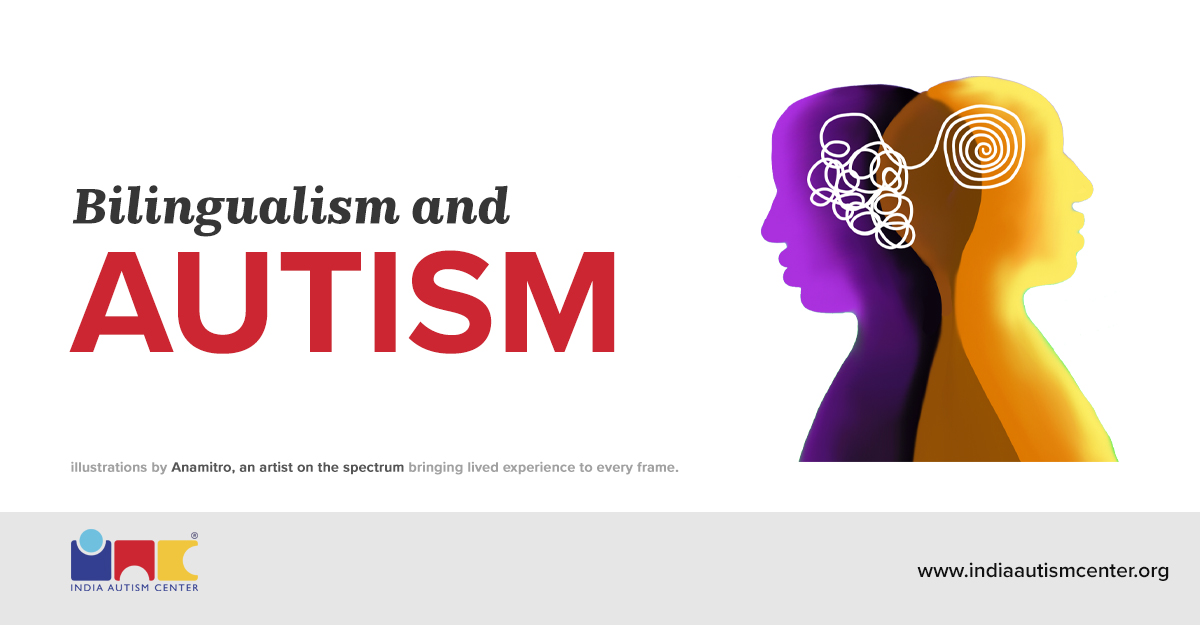
When it comes to bilingualism and autism, many parents ask the same question: “Will learning two languages confuse my autistic child?”
Well, some professionals suggest sticking to one language. Others encourage bilingual exposure. This uncertainty can feel overwhelming. I want to reassure you from the start: bilingualism and autism can work together — when done thoughtfully and with the right support.
In this blog, I will explain:
- What bilingualism means for autistic children
- The science behind bilingualism in autism spectrum disorder (ASD)
- The impact of bilingualism on autistic children
- The benefits and challenges
- Practical strategies for families
Understanding Bilingualism and Autism
Bilingualism simply means using or learning two languages regularly. In many families, this happens naturally. You may speak one language at home, and your child may hear another language at school or in the community.
Autism affects communication, social interaction and language processing. Because of this, many parents worry that learning two languages will slow down speech development or increase confusion.
However, research by PubMed shows that:

Autistic children can learn two languages without harming their communication development.
In fact, bilingualism and autism do not conflict. Instead, language development depends more on:
- Quality of interaction
- Consistency
- Emotional connection
- Professional support
Not on the number of languages alone.
Want to know more? Get in touch with us.
Bilingualism in Autism Spectrum Disorder: What Does Research Say?
When we talk about bilingualism in autism spectrum disorder, we rely on growing global research. Studies comparing monolingual and bilingual autistic children show something important:
- Bilingual autistic children do not have worse language outcomes
- They do not show higher levels of confusion
- They can differentiate between languages
- They can develop vocabulary in both languages over time
Some children may speak later. Others may mix languages at first. This is also seen in non-autistic bilingual children.
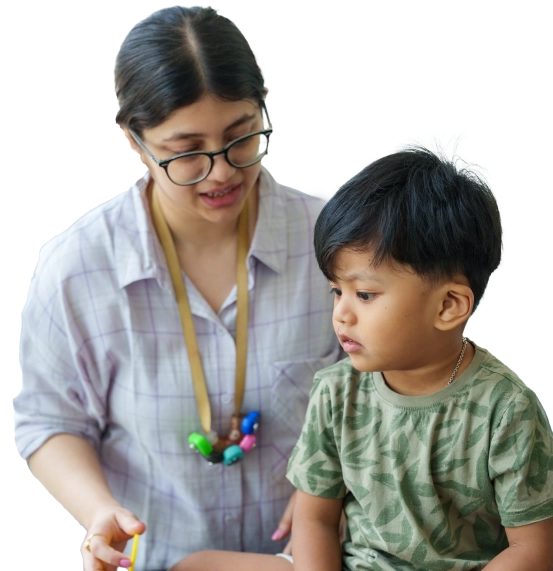
What truly matters is how language is taught and used. At India Autism Center (IAC), therapists use structured methods such as:
Speech and Language Therapy
Speech and language therapy helps autistic children build vocabulary, understand instructions and use words meaningfully. In bilingualism and autism, therapists support language development in both languages by strengthening comprehension, pronunciation and functional communication.
Play-based Learning
Play-based learning uses games, toys and daily activities to teach language in a natural and enjoyable way. For children experiencing bilingualism in autism spectrum disorder, play helps them connect words with actions and emotions across both languages without pressure.
Visual Communication Systems
Visual communication systems use pictures, symbols and visual schedules to support understanding and expression. These tools are especially useful in reducing confusion and improving the impact of bilingualism on autistic children who process visual information better than spoken words.
Social Interaction Training
Social interaction training focuses on teaching children how to start conversations, take turns and respond appropriately to others. This approach strengthens real-life communication skills and helps children manage bilingualism and autism in school and community settings.
Impact of Bilingualism on Autistic Children
The impact of bilingualism on autistic children is not the same for every child. It depends on several important factors, such as:
- Their cognitive level affects how easily they process and remember language.
- Their sensory profile, as some children are sensitive to sounds or struggle with auditory input.
- Their family environment, including how often and how naturally both languages are used at home.
- The support system available, such as access to trained therapists and structured intervention.
Because of these differences, bilingualism can bring both positive outcomes and certain challenges. Understanding both sides helps families make informed decisions.
Positive Impact
1. Stronger family bonds
When a child understands and uses the family’s natural language, communication within the household becomes easier and more meaningful. This allows grandparents, relatives and caregivers to interact with the child in a warm and familiar way. As a result, emotional connections grow stronger, and the child feels more included in everyday family life.
2. Better cultural identity
Language plays a key role in shaping identity. A bilingual autistic child who learns both the home language and the community language can feel connected to both worlds. This helps the child take part in cultural traditions, social gatherings and community activities, reducing feelings of isolation and strengthening their sense of belonging.
3. Cognitive flexibility
Switching between two languages encourages the brain to adapt and organise information more efficiently. This process may help improve attention, problem-solving skills and mental flexibility. For some autistic children, this can support better focus and improved ability to shift between tasks or ideas.
4. Social participation
Bilingualism can allow autistic children to communicate in different environments, such as at home, in school and in public settings. This makes it easier for them to join group activities, interact with peers and respond appropriately in social situations. As communication improves, confidence and independence may also increase.
Possible Challenges
1. Slower expressive speech at first
Some autistic children may take longer to develop spoken language when learning two languages at the same time. They may understand more than they can express, or use fewer words initially. This does not mean bilingualism is harmful; rather, it shows that the child may need extra time, repetition and structured support.
2. Code-mixing
Children may combine words from both languages within the same sentence. This behaviour is common in bilingual development and is not a sign of confusion. It usually reflects the child’s attempt to communicate using all the language tools available to them. With consistent exposure and guidance, children often learn to separate the two languages more clearly over time.
3. Higher processing load
Learning and managing two languages can place additional demands on memory and attention. For autistic children who already face challenges with processing information, this may require carefully planned teaching strategies. Visual supports, routine-based learning and simplified language input can reduce overload and make learning more manageable.
This is why professional guidance is essential. India Autism Center provides customised language programmes that take into account each child’s cognitive abilities, sensory needs and family background. Through structured therapy and family involvement, IAC helps ensure that bilingualism becomes a supportive tool rather than a source of difficulty for autistic children.
Want to know more? Get in touch with us.
Benefits of Bilingualism and Autism
Let us look closely at the benefits of bilingualism in autism when learning is guided properly.
1. Emotional Security
When you speak to your child in your most comfortable language, your tone, emotions and expressions become natural. This helps your child feel safe and understood.
IAC therapists encourage parents to:
- Speak in their strongest language
- Use daily routines as teaching moments
- Build language through shared experiences
2. Communication Opportunities
Learning two languages increases the number of people your child can communicate with. This builds:
- Confidence
- Social awareness
- Interaction skills
3. Brain Development
Language exposure activates different parts of the brain. For autistic children, this can support:
- Attention
- Memory
- Symbolic thinking
4. Long-Term Independence
Bilingual skills can help later in:
- Education
- Employment
- Community participation
Challenges in Bilingualism and Autism
While bilingualism offers advantages, it also presents challenges that must be addressed properly.
1. Speech Delay Anxiety
Parents often worry when their child speaks later than their peers. When two languages are involved, this worry can increase.
However, delay does not mean failure. It means:
- The child needs structured input
- Visual cues
- Repetition
- Motivation-based learning
IAC monitors language milestones carefully and adapts intervention plans accordingly.
2. Limited Exposure Time
Children need enough exposure to both languages. If one language dominates too much, the second language may remain weak.
Therapists at IAC help families create:
- Balanced exposure plans
- Daily language routines
- Play-based bilingual activities
3. Sensory and Processing Difficulties
Some autistic children struggle with:
- Sound sensitivity
- Auditory processing
- Verbal overload
In such cases, bilingualism must be introduced gradually. IAC uses:
- Visual supports
- Augmentative communication
- Structured language environments
Want to know more? Get in touch with us.
Strategies for Supporting Bilingualism in Autism Spectrum Disorder
Here are practical ways you can support bilingualism in autism spectrum disorder at home and in therapy.
1. One Person, One Language
You may choose to:
- Speak one language consistently
- Let another caregiver use a different language
This reduces confusion and supports clarity.
2. Use Visual Supports
Pictures, objects and gestures strengthen understanding.
IAC uses:
- Visual schedules
- Picture exchange systems
- Storyboards
These tools support bilingual comprehension.
3. Follow Your Child’s Interests
Language grows faster when linked to interests. If your child loves trains, animals or music, use those topics in both languages.
4. Avoid Pressure
Forcing speech can increase anxiety. Instead:
- Model language
- Encourage attempts
- Praise communication efforts
5. Work with Professionals
Speech therapists trained in autism understand:
- How to structure bilingual input
- When to focus on one language first
- How to generalise skills across languages
This is where IAC plays a vital role.
Role of IAC in Supporting Bilingualism and Autism
At India Autism Center, bilingualism is not seen as a barrier. It is seen as part of a child’s identity.
IAC supports bilingual autistic children by:
1. Individualised Language Assessment
Each child undergoes:
- Speech and language evaluation
- Cognitive assessment
- Sensory profiling
This helps therapists decide:
- Which language to prioritise
- How to introduce the second language
- What strategies to use
2. Family-Centred Therapy
IAC involves parents directly. Families are guided on:
- How to talk to their child
- Which language to use
- How to build routines at home
Therapy continues beyond the centre.
3. Structured Communication Programmes
IAC integrates:
- Speech therapy
- Behavioural intervention
- Occupational therapy
- Social communication training
This multi-disciplinary approach supports bilingual language growth.
4. School Readiness and Community Integration
Children learn language for:
- Classroom participation
- Peer interaction
- Daily life skills
This improves independence and confidence.
Common Myths About Bilingualism and Autism
Myth 1: Two languages will confuse my child
Fact: Children can separate languages naturally with time and exposure.
Myth 2: My child should master one language before learning another
Fact: Learning two languages together does not harm language development.
Myth 3: Bilingualism causes speech delay
Fact: Autism, not bilingualism, affects language speed.
Myth 4: Therapy must be only in English
Fact: Therapy works best when it respects the family’s language and culture.
IAC challenges these myths through education and evidence-based practice.
Conclusion
Bilingualism and autism can work well together when language learning is planned and supported properly. The key is not to limit a child to one language, but to introduce both languages in a structured and meaningful way. Consistent use of language at home, combined with professional guidance, helps children develop communication skills without feeling overwhelmed.
India Autism Center (IAC) supports bilingual development by creating individualised language programmes based on each child’s abilities and family language environment. Through therapy, parent training and visual communication strategies, IAC ensures that bilingualism strengthens connection, learning and independence rather than becoming a challenge.
With the right approach, bilingualism becomes a practical solution for improving communication and inclusion in autistic children.
Frequently Asked Question
Can bilingualism and autism work together without confusing a child?
Yes, bilingualism and autism can work together successfully when both languages are introduced in a structured and supportive way. Research shows that autistic children can learn two languages without harming their communication development, especially when guided by speech and language professionals.
What does research say about bilingualism in autism spectrum disorder?
Studies on bilingualism in autism spectrum disorder indicate that learning two languages does not negatively affect language or cognitive development. Autistic children exposed to more than one language can develop communication skills similar to those of monolingual autistic children when proper support is provided.
What is the impact of bilingualism on autistic children’s language development?
The impact of bilingualism on autistic children depends on factors such as their cognitive abilities, sensory needs and family environment. While some children may take longer to express themselves verbally, bilingual exposure can strengthen social connection, cultural identity and long-term communication opportunities.
How does India Autism Center (IAC) support bilingualism and autism?
India Autism Center (IAC) supports bilingualism and autism through individualised speech and language therapy, family-centred intervention and structured communication programmes. IAC helps children learn and use language in meaningful ways across both home and social settings, ensuring that bilingualism becomes a strength rather than a challenge.
For expert insights, support services, and inclusive learning initiatives, visit the India Autism Center.