
 Donate now
 Get a Call Back
 MENU
MENU 7 MIN READ
 SHARE
SHARE


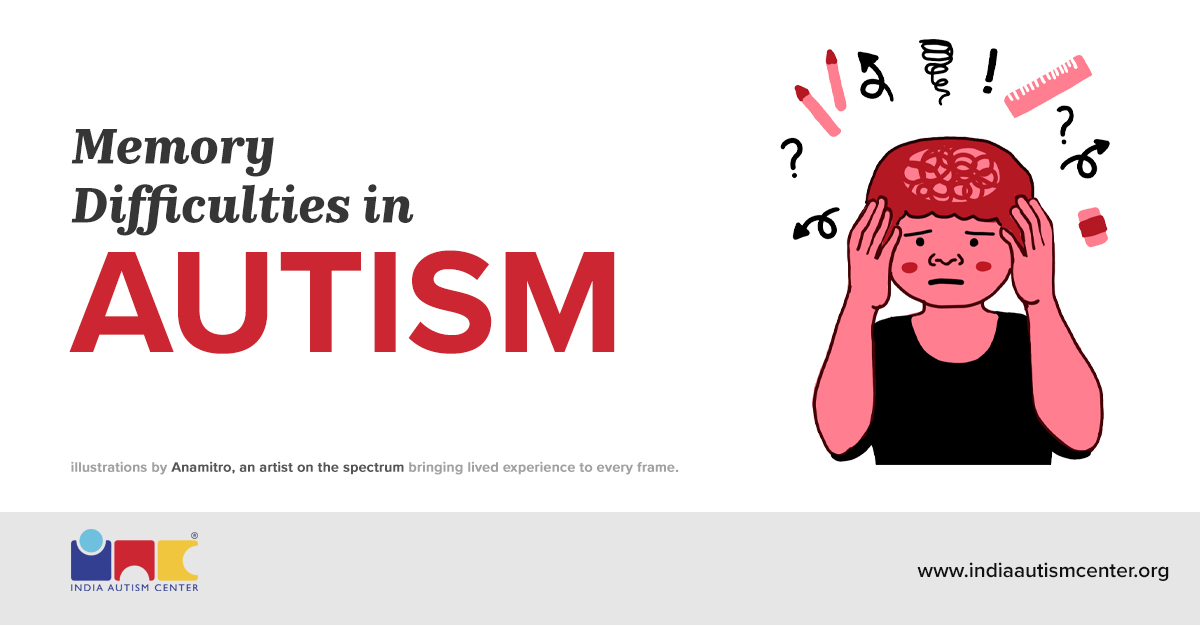
Memory plays a vital role in how we learn, communicate and manage daily life. We rely on memory to follow instructions, recall information, complete tasks and understand routines. In this blog, I will help you understand memory difficulties in autism, why they occur and how you can support your child effectively.
If you are a parent or caregiver, you may often wonder: Do autistic people struggle with memory? You might notice that your child remembers tiny details about favourite topics but forgets everyday instructions.
I will also explain how professional support from institutions like India Autism Center (IAC) can make a meaningful difference in managing autism memory problems in children.
Understanding Memory Difficulties in Autism
Before we explore strategies, we must understand what memory really means. Memory is not a single ability. It includes several types:
- Working memory – holding information in mind while using it
- Short-term memory – remembering something briefly
- Long-term memory – storing information over time
- Visual memory – remembering what we see
- Verbal memory – remembering spoken or written information
Autistic individuals may have strengths in some areas of memory and difficulties in others. For example, your child may remember dates, facts or images clearly but struggle to recall verbal instructions or daily routines.
This uneven profile often leads parents to ask, “Do autistic people struggle with memory?”
The answer is: sometimes, and in specific ways. Autistic people do not necessarily have poor memory overall. Instead, they may process and store information differently.
Do Autistic People Struggle with Memory?
Many parents observe that their child can remember songs, numbers or cartoon dialogues perfectly but forgets simple tasks like brushing teeth or packing a school bag. This pattern is common in memory problems in autism.
Autistic individuals may struggle with:
- Remembering multi-step instructions
- Recalling information without visual cues
- Transferring memory from one situation to another
- Organising information meaningfully
These challenges often relate to differences in executive functioning, attention and sensory processing rather than intelligence.
So, when you ask, “Do autistic people struggle with memory?”, it is important to understand that memory challenges are linked to how information is presented and processed.
Want to know more? Get in touch with us.
Memory Problems in Autism: Why Do They Happen?
There is no single cause of memory difficulties in autism. Instead, several factors work together:
1. Differences in Brain Processing
Autistic brains may process information more visually than verbally. This means spoken instructions can fade quickly, while pictures or written words stay longer.
2. Attention Difficulties
Memory depends on attention. If your child struggles to focus, the brain may not store information properly in the first place.
3. Sensory Overload
Noisy or busy environments can overwhelm the brain. When this happens, memory formation becomes harder.
4. Language Delays
If a child has limited receptive language, they may not fully understand what they are being asked to remember.
5. Anxiety and Stress
High anxiety can block memory recall. Many autistic children experience anxiety when routines change.
Autism Memory Problems in Children: Common Signs
You may notice autism memory problems in children through daily behaviours such as:
- Forgetting daily routines
- Difficulty remembering instructions
- Losing track of tasks
- Trouble recalling names or words
- Struggling to remember what happened yesterday
- Needing frequent reminders
At the same time, your child may show exceptional memory for:
- Favourite topics
- Visual patterns
- Songs or videos
- Numbers or letters
This contrast is part of how memory difficulties in autism present differently from child to child.
Practical Strategies for Coping with Memory Difficulties in Autism
Let me now share practical ways to support your child at home and school. These strategies work best when used consistently and with patience.
1. Use Visual Supports
Visuals reduce pressure on verbal memory. They help your child “see” what to do instead of remembering spoken instructions.
You can use:
- Picture schedules
- Visual timetables
- Step-by-step charts
- Colour-coded labels
For example, a morning routine chart with pictures for brushing teeth, bathing and dressing can support independence.
This approach is widely used at India Autism Center (IAC), where therapists design structured visual systems for each child’s needs.
2. Break Tasks into Smaller Steps
Large tasks overload working memory. Smaller steps are easier to remember.
Instead of saying:
“Get ready for school,”
say:
“Put on your uniform.”
Then:
“Pack your bag.”
Then:
“Wear your shoes.”
Clear steps reduce stress and improve success.
3. Repeat and Reinforce Information
Repetition strengthens memory pathways.
You can:
- Repeat instructions calmly
- Practise skills daily
- Review learning frequently
- Use the same words each time
Consistency builds familiarity and confidence.
Want to know more? Get in touch with us.
4. Use Multi-Sensory Teaching
Learning improves when more senses are involved.
Combine:
- Seeing (pictures)
- Hearing (spoken words)
- Doing (actions)
For example, teach brushing teeth by showing, saying and guiding the action physically.
At IAC, therapists use sensory-based teaching methods to strengthen memory retention.
5. Build Routines and Structure
Routines reduce memory load. When actions become habits, they require less recall.
Fixed routines for:
- Morning activities
- Meals
- Study time
- Bedtime
Help your child remember what comes next naturally.
6. Encourage Use of Memory Aids
Memory aids act as external memory tools.
These include:
- Reminder cards
- Phone alarms
- Checklists
- Sticky notes
- Visual cues
Teaching children to rely on tools empowers them rather than making them dependent.
7. Support Emotional Regulation
Stress blocks memory. Calm environments support learning.
You can:
- Reduce noise
- Offer breaks
- Validate feelings
- Use relaxation strategies
A regulated child remembers better.
The Role of Therapy in Improving Memory Difficulties in Autism
While home strategies help, professional support accelerates progress.
At India Autism Center (IAC), memory development is integrated into therapy programmes such as:
- Occupational Therapy – improves attention and sensory regulation
- Speech and Language Therapy – strengthens verbal memory
- Special Education – builds academic memory
- Behavioural Therapy – supports task completion
- Cognitive training – improves working memory
IAC follows an interdisciplinary approach. This means therapists work together to address memory difficulties holistically rather than in isolation.
Each child receives:
- Individual assessment
- Personalised goals
- Structured teaching
- Family training
- Regular monitoring
This coordinated approach makes IAC a vital support system for families managing memory problems in autism.
Do Autism Memory Problems in Children Improve Over Time?
Many parents worry about the future. You may ask, “Will my child always struggle with memory?”
The answer is encouraging:
With early intervention and consistent strategies, many children show significant improvement.
Memory can be strengthened through:
- Practice
- Structure
- Therapy
- Visual support
- Emotional regulation
At IAC, progress is tracked carefully, and goals evolve as children grow. Improvement may be gradual, but it is very real.
Conclusion
Memory difficulties in autism are not a sign of laziness or inability. They reflect a different way of processing the world. When you understand this, your response becomes supportive rather than corrective.
With practical strategies, emotional understanding, and professional support from institutions like India Autism Center, children with autism can develop stronger memory skills and greater independence.
You play the most important role in this journey. When you adapt the environment instead of blaming the child, learning becomes possible.
Frequently Asked Questions (FAQs)
Do autistic people struggle with memory?
Yes, some autistic people struggle with certain types of memory, especially working memory and verbal memory. However, they may have strong visual or factual memory. Memory difficulties in autism vary from person to person and depend on attention, sensory processing and learning style.
What causes memory difficulties in autism?
Memory difficulties in autism can be caused by differences in brain processing, attention challenges, sensory overload, language delays and anxiety. These factors affect how information is stored and recalled, leading to memory problems in autism, especially in daily routines and learning tasks.
What are common autism memory problems in children?
Memory difficulties in autism can be caused by differences in brain processing, attention challenges, sensory overload, language delays and anxiety. These factors affect how information is stored and recalled, leading to memory problems in autism, especially in daily routines and learning tasks.
What are common autism memory problems in children?
Parents can help by using visual schedules, breaking tasks into small steps, creating daily routines and using memory aids such as charts and checklists. Professional support from centres like India Autism Center (IAC) also helps children improve memory skills through structured therapy and personalised learning plans.
For expert insights, support services, and inclusive learning initiatives, visit the India Autism Center.