 Donate now
 Get a Call Back
 MENU
MENU 9 MIN READ
 SHARE
SHARE


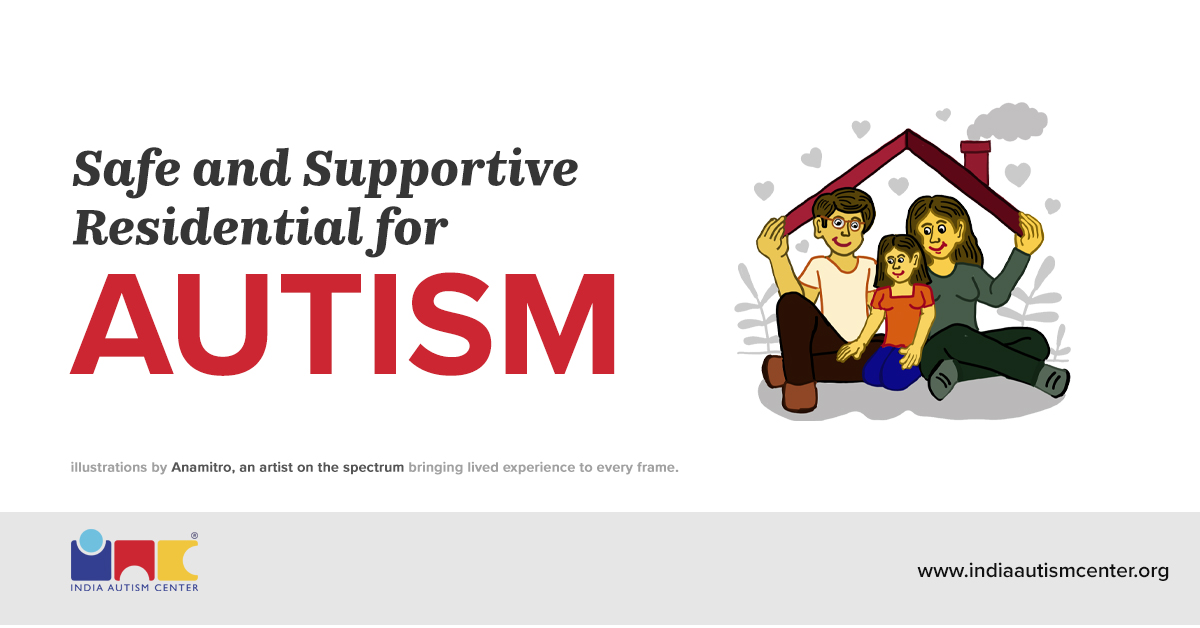
When you have a child or adult with autism, one of the biggest questions you may ask is: Where and how to find a safe and supportive residential facility for autism? For many families, this leads to exploring assisted living, residential campuses for autism, and environments designed specifically for neurodiverse individuals.
In this guide, I’ll walk you through everything you need to understand about creating and choosing a safe and supportive residential for autism
I’ll also show you how the India Autism Center (IAC) is making such supportive environments a reality.
What Does Safe and Supportive Residential Facility for Autism Mean?
When we talk about a safe and supportive residential facility for autism, we aren’t just talking about four walls and a roof. We are talking about environments built around sensory needs, safety, comfort, connection, and independence.
Since people with autism experience the world differently. Sounds, lights, textures, people, schedules, and everyday things that neurotypical people may take for granted can become sources of stress or confusion for autistic individuals.
That means good residential spaces, whether in your home, an assisted living community, or a dedicated campus, must be designed with these differences in mind.
Why Residential Facility for Autism Matters
Before deciding where the best place for an autistic person to live, it’s important to understand why these environments are different:
1. Sensory Needs and Comfort
Most individuals with autism spectrum disorder (ASD) have sensory differences. They may be:
- Sensitive to certain sounds
- Visually affected by bright lighting
- Distressed by sudden movements or loud noises
- Calmed by routines and predictable spaces
That is why spaces with quiet rooms, low sensory stimulation, and clear layouts make a big difference. Loud or chaotic spaces often cause anxiety or discomfort. Well-designed environments can reduce those stressors and help your loved one thrive.
2. Predictability and Structure
People with autism usually function best in settings with routine, order, and clarity. That’s why so many families ask:

Is an assisted living setup better than a typical group home?
A structured environment with consistent staff, clear routines, and predictable activities helps reduce anxiety and supports independence. This becomes especially important when transitioning from childhood living arrangements to adulthood.
3. Independence and Confidence
Real independence isn’t about doing everything without help. It’s about being safe, supported, and able to make choices. The right residential environment encourages independence while still providing care and support when needed.
Whether it’s vocational activities, daily life skills, or communication training, the right space helps your loved one grow and gain confidence.
Want to know more? Get in touch with us.
Key Features of a Safe and Supportive Residential Home
Let’s break down exactly what makes a home or residential campus truly suitable for autistic individuals.
1. Sensory-Friendly Design
Rooms and outdoor spaces should be calm, quiet, and predictable. This means:
- Minimal clutter
- Soft lighting
- Reduced noise levels
- Calm colour schemes
- Areas free from sudden sensory triggers
So, these considerations prevent sensory overload and help your loved one focus on what matters most: living comfortably and meaningfully each day.
2. Clear Layout and Navigation
Simple and intuitive floor plans help autistic individuals move around with confidence. Signage, wayfinding tools, and visual cues help people navigate independently.
This should be part of any residential campus for autism or a supportive community. It reinforces autonomy while reducing confusion and frustration.
3. Supportive Daily Structure
Supportive residential settings balance structure with flexibility. Which means:
- Daily routines with consistent schedules
- Structured mealtimes
- Therapy at scheduled times
- Free time for hobbies and social interaction
4. Therapeutic and Recreational Activities
High-quality residential facilities, such as those provided by India Autism Center, include programs that are part of life—not extras. Activities like:
- Art and music therapy
- Gardening and outdoor games
- Occupational therapy
- Swimming
- Drama and social bonding sessions
are all woven into daily life to support both enjoyment and development.
5. Skilled Staff and Continuous Support
A safe and supportive residential care for autism must have trained professionals who understand autism deeply. This includes:
- Therapists
- Caregivers trained in sensory needs
- Medical staff on site or available quickly
- Support for communication differences
Not to mention these ongoing support builds trust and helps residents explore independence confidently.
Want to know more? Get in touch with us.
Types of Residential Campus for Autism
Now that we know what good design looks like, let’s explore the types of residential environments you might consider:
1. At-Home Support
Many families choose to create a safe residential campus environment within their own home. Features might include:
- Sensory-friendly rooms
- Visual schedules
- Low-stimulus areas
- Family-supported routines
This is especially common for younger children or adults who prefer familiar surroundings.
2. Assisted Living for Autism
Assisted living gives individuals support with daily tasks while allowing them autonomy. It is perfect for people who are ready to live outside the family home but still need reliable daily care.
In assisted living environments tailored for autism, there might be:
- Support staff available 24/7
- Personalised care plans
- Assistance with life skills
This setup can be ideal for individuals transitioning into adulthood. It bridges the gap between full dependency and complete independence.
3. Family Living for Autism
A purpose-built residential campus for autism focuses entirely on peace of mind for neurodiverse individuals and their families. Family living is designed from the ground up to support:
- Sensory needs
- Safety and security
- Personal growth
This is where places like India Autism Center’s Samaavesh step in. It is built with holistic care in mind, combining living spaces, therapies, vocational training, and social opportunities all in one campus.
Why IAC’s Residential Facility for Autism Is Unique
Here’s what makes the India Autism Center stand out:
Purpose-Built Environment Just Outside Kolkata
IAC’s residential campus, called Samaavesh, is designed specifically for autistic individuals. It lies in a quiet, peaceful setting close to nature—perfect for minimising sensory stress and providing a calm atmosphere that families dream about.
Supportive Community Living
In the first place, at IAC, residents are part of a community. They live in homes that are designed with sensory needs in mind. These aren’t just bedrooms—they are spaces that help your loved one feel understood, safe, and supported every day.
Family-Friendly Housing Options
IAC even offers family living options, where parents or relatives can stay within the same residential ecosystem. So in this way, your autistic family member has continuity of care and connection, without daily travel stress.
Personalised Support and Holistic Care
The IAC team builds personalised plans for every resident. These include:
- Occupational therapy
- Speech and language support
- Vocational training
- Recreational programs
- Medical care with 24/7 emergency support
Importance of recreational activities in a residential facility for autism
At IAC, we also recognise the importance of recreational activities in a residential facility for autism. Together with art and music therapy, we offer a wide range of fun activities, including outdoor pursuits. Hobbies play a pivotal role in improving the quality of life of autism-impacted individuals.
Focus on Independence and Growth
Not only will your loved one live at IAC, but they will grow and evolve. With life skills training, real-life experiences, and opportunities to build confidence every day, IAC empowers residents to set and reach their life goals.
Top Architectural Features of IAC Samaavesh
Resident-Centric Security Measures
- Vehicle restrictions within residential and care zones
- Secured zones and time-restricted access to sensitive areas
- Soft, quiet, and intrusion-free security movement
- AI-assisted event detection with human validation
Security Mobility & Vehicle Policy
- Silent, predictable, and non-threatening mobility
- Limited diesel/petrol vehicles inside resident zones
- No sirens, horns, reverse beepers, or public address (PA) systems
AI Integration in Campus Security
- AI video analytics on CCTV & thermal cameras
- Human vs animal differentiation
- Crowd build-up, loitering & intrusion detection
Choosing the Right Residential Facility for You
When you ask “Where is the best place for an autistic person to live?”, the answer depends on individual needs and family preferences. But here’s a checklist that can help you decide:
- Is the environment quiet and sensory-friendly?
- Are the staff trained in autism and communication support?
- Is there a structured yet flexible daily routine?
- Are recreational and therapeutic activities included?
- Is there strong safety and security?
- Can the family stay connected or even live nearby?
Hence, we believe that recreational programmes are not just time fillers. They are an important part of autism therapy. These activities also help in forming friendships and bonds. An important social activity, again integral to autism therapy.
Conclusion
Choosing a safe and supportive residential facility for autism is one of the most important decisions you will make for your loved one’s future. Whether you start with home adaptations, explore assisted living, or choose a dedicated residential campus for autism, remember this:
Supportive environments do more than house a person—they nurture growth, empower independence, and celebrate individuality.
With this in mind, at the India Autism Center, we believe that every individual deserves a place where they can feel secure, valued, and understood. Through thoughtful design, caring professionals, and a community-centric approach, we make that belief real for every resident and family
Frequently Asked Questions (FAQs)
What is a safe and supportive residential facility for autism?
A safe and supportive residential for autism is a living environment designed to meet the sensory, emotional, and daily living needs of autistic individuals. It focuses on safety, predictable routines, sensory-friendly spaces, trained caregivers, and opportunities for independence. These homes help individuals feel secure while supporting their growth and well-being.
Where is the best place for an autistic person to live?
The best place for an autistic person to live depends on their individual needs, age, and level of independence. Some thrive at home with support, while others benefit from assisted living or a residential campus for autism. Purpose-built facilities like those developed by India Autism Center (IAC) offer structured care, therapy, and community living in a safe and calm environment.
How is assisted living different from a residential facility for autism?
Assisted living supports individuals who can manage some daily activities independently but still need help with routines, safety, or healthcare. A residential facility for autism is more specialised. It is designed specifically for autistic individuals and includes sensory-friendly infrastructure, autism-trained staff, therapy services, and structured daily programs tailored to neurodiverse needs.
Is there a safe residential home for an autistic child in Kolkata?
Yes, the India Autism Center (IAC) offers a thoughtfully designed residential campus for autism near Kolkata. It provides a safe, inclusive, and supportive living environment with therapy, education, vocational training, and medical support. IAC focuses on long-term care, independence, and quality of life for autistic individuals and peace of mind for families.
For expert insights, support services, and inclusive learning initiatives, visit the India Autism Center