 Donate now
 Get a Call Back
 MENU
MENU 8 MIN READ
 SHARE
SHARE


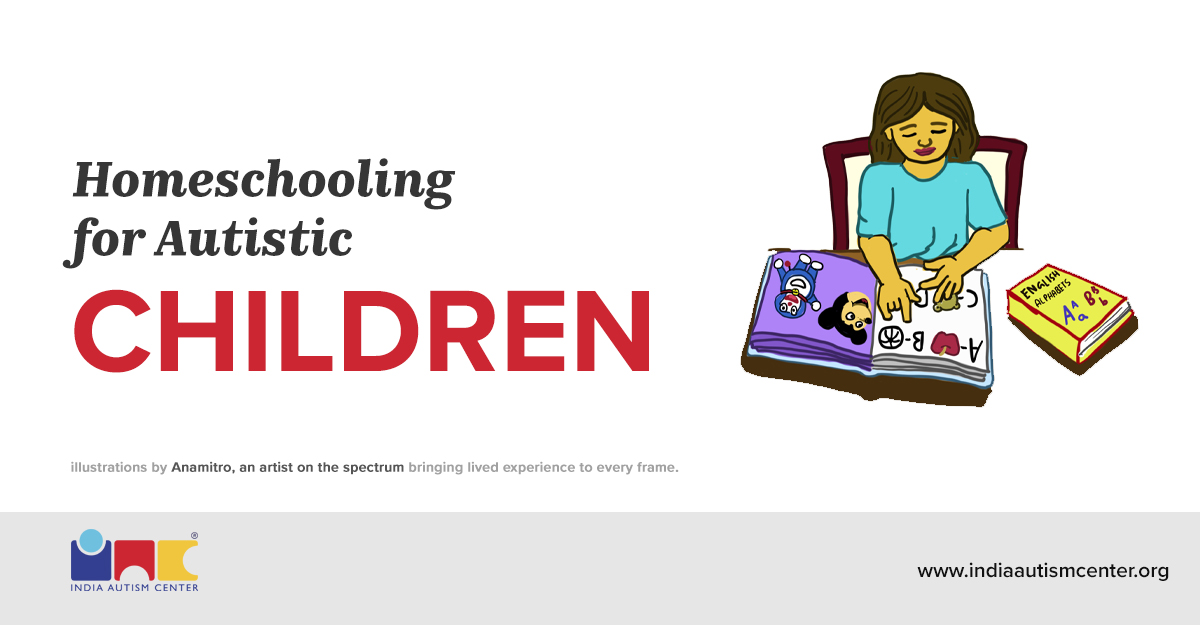
When your child is on the autism spectrum, education is not one-size-fits-all. Every child learns differently. Some thrive in classrooms. Others struggle with noise, social pressure, and rigid routines. That is why homeschooling for autistic children is becoming a trusted option for many families.
In this guide, I will help you understand homeschooling for autism, its benefits, and its challenges. If you are considering this path, you are not alone—and you are not without help.
What Is Homeschooling for Autistic Children?
Homeschooling for autistic children means teaching your child at home instead of sending them to a traditional school. You design the schedule, choose the pace and adapt the learning style.
Unlike conventional classrooms, homeschooling allows you to:
- Focus on your child’s strengths
- Reduce sensory overload
- Teach life skills alongside academics
- Include therapy within learning time
Most importantly, you create a safe learning space.
In homeschooling for autism, learning becomes flexible, personalised, and stress-free.
Why Parents Choose Homeschooling for Autism
Many parents choose homeschooling after seeing their child struggle in regular schools. Common issues include:
- Bullying
- Sensory overwhelm
- Anxiety
- Lack of special education support
- Poor teacher-student ratio
With homeschooling for autistic children, you remove these barriers.
Instead of forcing your child to fit the system, you adapt the system to your child.
Want to know more? Get in touch with us.
Understanding Learning Styles in Autism
Every autistic child learns differently. Some are visual learners. Some prefer routines. Others love repetition.
Homeschooling allows you to:
- Use visual aids
- Break lessons into small steps
- Repeat without pressure
- Teach through play
- Include movement and sensory breaks
This approach improves attention, retention, and confidence.
That is why homeschooling for autism works well for many families.
How to Start Homeschooling for Autistic Children
Starting may feel overwhelming. But it becomes manageable when broken into steps.
1. Know Your Child’s Needs
Ask yourself:
- Does my child struggle with social interaction?
- Do they have sensory sensitivities?
- What are their strengths?
These answers shape your teaching style.
2. Create a Flexible Routine
Children with autism benefit from structure. But they also need breaks.
A good schedule includes:
- Learning time
- Therapy time
- Play time
- Rest time
Routine builds security. Flexibility prevents burnout.
3. Choose the Right Curriculum
There is no single curriculum for homeschooling autistic children. However, good programs focus on:
- Functional academics
- Communication skills
- Emotional regulation
- Life skills
- Social understanding
You can combine:
- Online tools
- Worksheets
- Games
- Therapy-based learning
Role of Therapy in Homeschooling for Autism
Education and therapy should work together.
Many families combine homeschooling with:
- Occupational Therapy: Occupational therapy helps autistic children develop daily living skills such as dressing, writing, and self-care. It also improves motor coordination and supports independence in everyday activities.
- Speech Therapy: Speech therapy supports the development of communication skills, including speaking, understanding language, and non-verbal communication. It helps children express their needs and interact more confidently with others.
- Behavioural Therapy: Behavioural therapy focuses on improving positive behaviours while reducing challenging ones through structured techniques. It helps children learn social skills, emotional control, and appropriate responses to situations.
- Sensory Integration: Sensory integration therapy helps children manage sensitivity to sound, touch, light, or movement. It trains the brain to process sensory information more effectively, improving focus and comfort in daily environments.
This makes learning meaningful and practical.
For example:
- Math becomes money skills.
- Reading becomes daily communication.
- Writing becomes self-expression.
This is the strength of homeschooling for autism.
Want to know more? Get in touch with us.
Pros and Cons of Homeschooling a Child with Autism
Let us now look at the pros and cons of homeschooling a child with autism clearly and honestly.
| Pros of Homeschooling a Child with Autism | Cons of Homeschooling a Child with Autism |
|---|---|
| Reduced Stress and Anxiety – A home environment minimises sensory overload, bullying, and classroom pressure. | Parental Burnout – Parents take on the role of both teacher and caregiver, which can be physically and emotionally demanding. |
| Reduced Stress and Anxiety – A home environment minimizes sensory overload, bullying, and classroom pressure. | Limited Social Interaction – Children may have fewer chances to interact with peers unless planned social activities are included. |
| Flexible Schedule – You can choose study times that suit your child’s energy levels and attention span. | Need for Professional Guidance – Parents may require support from therapists and special educators to teach effectively. |
| Safe and Supportive Environment – Learning happens in a familiar and emotionally secure space. | Time-Consuming – Planning lessons and activities requires consistent effort and commitment. |
| Integrated Therapy – Therapy sessions can be included within daily learning routines for better outcomes. | Emotional Pressure on Parents – Slow or uneven progress can create stress and self-doubt for families. |
Teaching Life Skills Through Homeschooling for Autistic Children
Academic success is important. But life skills matter more.
Homeschooling allows you to teach:
- Dressing
- Cooking
- Money handling
- Time management
- Hygiene
- Emotional control
These lessons build independence.
In homeschooling for autism, education becomes preparation for real life.
Is Homeschooling for Autistic Children Right for You?
Ask yourself:
- Can I commit time daily?
- Do I have access to professional support?
- Does my child need a calmer environment?
If yes, homeschooling may help.
However, remember the pros and cons of homeschooling a child with autism. It works best with guidance.
Future Outcomes of Homeschooling for Autism
With the right support, children can:
- Develop independence
- Improve communication
- Gain confidence
- Learn practical skills
- Prepare for vocational paths
Education becomes meaningful, not stressful.
Want to know more? Get in touch with us.
Key Aspects to Consider Before Enrolling in an Accredited Homeschooling Program
Before enrolling your autistic child in an accredited homeschooling program, it’s crucial to consider several key aspects to ensure a successful and fulfilling educational experience tailored to their unique needs.
Here are some essential factors to keep in mind:
Program Flexibility
Look for accredited homeschool programs that offer flexibility in scheduling, pacing, and curriculum choices. Autistic children may thrive in environments that allow individualised instruction and accommodate their specific learning styles and preferences. Flexibility also enables parents to adjust the learning environment to accommodate sensory sensitivities and communication challenges.
Specialised Support Services
Seek out accredited homeschooling programs that provide specialised support services for autistic learners. These may include access to educational therapists, behaviour specialists, and speech-language pathologists who can offer tailored interventions and strategies to address core deficits associated with autism spectrum disorder (ASD). Additionally, inquire about social skills development, sensory integration, and emotional regulation resources.
Curriculum Adaptations
Evaluate the curriculum options available within the homeschooling program to ensure they meet your child’s academic goals and developmental needs. To enhance comprehension and engagement, look for materials incorporating visual supports, hands-on activities, and multisensory learning experiences. Consider supplementing the home school programs with resources specifically designed for autistic learners, such as social stories, visual schedules, and structured routines.
Peer Interaction Opportunities
While homeschooling provides a personalised learning environment, it’s essential to provide opportunities for socialisation and peer interaction. Look for homeschooling programs that offer organised activities, clubs, or co-op opportunities where autistic children can interact with peers in a supportive and inclusive setting. Additionally, explore online communities and support groups for homeschooling families with autistic children to connect with others facing similar challenges and share resources and strategies.
Parent Training and Support
Consider the level of support and training offered to parents within the homeschooling program. Parent education workshops, online forums, and individualised consultation can empower parents to support their autistic child’s learning and development effectively. Additionally, access to professional guidance and expertise can help navigate challenges and maximise the benefits of homeschooling for autistic children.
Conclusion
Homeschooling is not an escape from school. It is an alternative learning path.
- It allows your child to grow at their own pace.
- Guides them closely.
- Makes education nurturing.
However, success depends on support.
With structured programs and guidance from India Autism Center (IAC), families can transform homeschooling into a powerful learning journey.
- If you are exploring homeschooling for autistic children, remember this:
- You are not alone.
- You are not unprepared.
- And with the right help, your child can thrive.
Frequently Asked Questions (FAQs)
What is homeschooling for autistic children?
Homeschooling for autistic children is a personalized education approach where parents teach their child at home using flexible schedules and adapted learning methods. It allows children with autism to learn at their own pace while receiving emotional and therapeutic support.
Is homeschooling for autism better than regular schooling?
Homeschooling for autism can be better for children who struggle with sensory overload, anxiety, or social pressure in traditional schools. However, the choice depends on the child’s needs, learning style, and access to professional support.
What are the pros and cons of homeschooling a child with autism?
The pros of homeschooling a child with autism include personalised learning, reduced stress, and flexible routines, while the cons include limited social interaction, parental workload, and the need for expert guidance.
For expert insights, support services, and inclusive learning initiatives, visit the India Autism Center.