 Donate now
 Get a Call Back
 MENU
MENU 9 MIN READ
 SHARE
SHARE


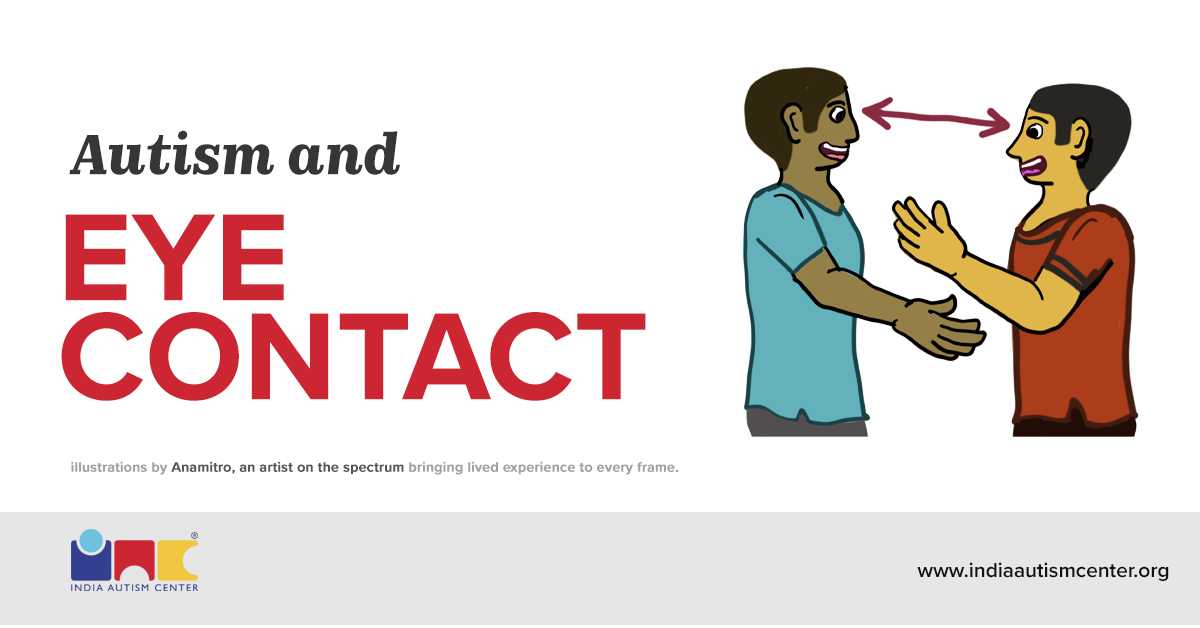
Eye contact is one of the most powerful forms of non-verbal communication. But when it comes to eye contact in autism, things work differently.
In this blog, I’ll guide you through the science, personal experiences, challenges, and practical strategies related to eye contact in autism—including for children and adults.
What Is Eye Contact and Why Does It Matter?
Eye contact helps people communicate without words. It builds social bonds. In neurotypical interactions, steady eye contact signals interest and attention.
However, eye contact in autism doesn’t always follow this pattern. Many autistic individuals find direct eye contact uncomfortable, overwhelming, or even stressful.
It’s important to know this: lack of eye contact should never be taken as a lack of interest or empathy. Instead, it often reflects sensory and social processing differences within the brain
Autism and Eye Contact: The Science Behind It
When we talk about autism and eye contact, research shows that underlying brain activity is different.
For instance, studies find that parts of the brain linked with social attention—like the dorsal parietal cortex—activate less in autistic individuals during eye contact. This may help explain why maintaining gaze feels harder or less natural.
In another piece of research, scientists suggest that autistic adults often engage in eye contact only with conscious effort, rather than automatically as neurotypical people do. Some even learn strategies to adapt or mask their eye contact in social situations.
This doesn’t mean autistic people don’t want connection. It means the experience of eye contact is different, not wrong.
Want to know more? Get in touch with us.
Eye Contact Challenges in Autism: What’s Really Going On?
1. Sensory Overload
For many autistic people, direct gaze can overwhelm the brain. Looking into someone’s eyes means processing a lot of sensory data at once. In addition to decoding eye expressions, the brain also handles sound, visual scene, and body language— all at the same time. This intense sensory load can feel exhausting or unpleasant.
2. Cognitive Load and Multitasking
Eye contact isn’t just visual. It requires attention while listening, thinking, and forming a response. For an autistic person, handling all these simultaneously can be hard. Many describe feeling mental overload when trying to talk and maintain eye contact at the same time.
3. Anxiety and Emotional Stress
Trying to meet social expectations for eye contact can trigger anxiety. Some people on the spectrum report that making eye contact feels like a performance rather than natural communication.
4. Misinterpretation by Others
In neurotypical culture, avoiding eye contact is often misunderstood as disinterest, evasion, or rudeness — none of which are accurate for many autistic people. This misunderstanding creates social pressure that only worsens eye contact challenges.
Why People With Autism Have Trouble Making Eye Contact
So, you may be wondering: Why do autistic people have trouble making eye contact? Let’s break it down.
- Brain differences in social processing: Social gaze activates different neural pathways in autistic people. This often makes eye contact less intuitive or more stressful.
- Sensory sensitivity: Some individuals find looking into eyes intensely stimulating or overwhelming.
- Different social motivation: For several autistic individuals, the social reward of eye contact doesn’t operate the same way it does for neurotypical people.
- Avoidance learned from experience: If someone is repeatedly criticised for not making eye contact, they might avoid it even more — not because they don’t care, but because it becomes linked to stress.
Want to know more? Get in touch with us.
7 Tips to Help Children with Autism Improve Eye Contact
1. Start with Comfortable Interactions
Choose settings that are calm, quiet, and free from distractions.
2. Use Visual Supports
Visual cues like cards, pictures, or social stories help children learn when eye contact can be useful.
3. Practice Short Moments First
Begin by encouraging brief moments of gaze and slowly build up, instead of expecting steady eye contact right away.
4. Pair Eye Contact with Positive Experiences
Celebrate small moments. Make it fun, not a test.
5. Encourage Alternative Signals
Teach children to show engagement with gestures, words, or by facing the speaker if eye contact feels too overwhelming.
6. Model Behaviour
Use modelling — showing examples through videos or games — so children can see where and when eye contact might be helpful.
7. Work with Therapists
Behavioural and social skills therapists can tailor planned routines that match a child’s needs.
These tips help nurture skills without pressure, making learning feel safe and encouraging
Since you read it this far, here is a bonus article for you: 10 Fun Sensory Activities for an Autistic Child
Autism and Eye Contact Activities:
Recognising the unique needs of each individual, we tailor these activities to foster a sense of comfort and build confidence in social interactions.
Interactive Games
Incorporating interactive games that involve eye-tracking exercises can be beneficial. These games, designed with input from therapists and educators, aim to make the process enjoyable while subtly encouraging eye contact.
Visual Supports
Introducing visual supports, such as social stories and visual schedules, can provide a structured framework that helps autistic individuals navigate social situations. These tools serve as aids in understanding the importance of eye contact and when it is most appropriate.
Our guide on Visual Therapy for Benefits covers in depth what vision therapy for autism is, how it works, and how it can help.
Modelling Techniques
Utilising modelling techniques involves demonstrating appropriate eye contact behaviour through videos or live interactions. This technique can be particularly effective for individuals with high-functioning autism who may benefit from observing and imitating social cues.
The Complex Relationship: Autism with Good and Poor Eye Contact
Contrary to common misconceptions, the lack of eye contact does not universally signify autism, nor does good eye contact necessarily exclude an individual from being on the spectrum.
Autism with Good Eye Contact
While some autistic individuals maintain good eye contact, it’s crucial to recognise that this does not negate their autism diagnosis. High-functioning autism, characterised by relatively mild symptoms and strong cognitive abilities, may include individuals who exhibit typical eye contact behaviour.
Poor Eye Contact Not Always Indicative of Autism
Conversely, the absence of eye contact does not automatically point to an autism diagnosis. Various factors, such as cultural differences, social anxiety, or sensory sensitivities, can contribute to poor eye contact in autistic individuals.
When it comes to eye contact, a study conducted by the National Institute of Mental Health and Neurosciences (NIMHANS) in Bangalore found that a significant number of autistic individuals in India exhibit challenges in establishing and maintaining eye contact. This underscores the importance of tailored interventions and support systems for this population.
Want to know more? Get in touch with us.
Common Myths About Eye Contact and Autism
Let’s clear up a few:
Myth 1: “All autistic people avoid eye contact.”
Not true. Some autistic individuals maintain eye contact comfortably, especially with people they trust.
Myth 2: “Good eye contact means you’re not autistic.”
Also false. High-functioning autism may include people who can or do make good eye contact. It has no diagnostic power on its own.
Myth 3: “Eye contact is essential for communication.”
While eye contact can be helpful, it isn’t the only way to show engagement. Many autistic people communicate just fine using other cues like facing the listener, nodding, verbal responses, or body language — all of which signal attentiveness and interest.
Conclusion
Understanding autism and eye contact helps us appreciate the diversity of human communication. Eye contact is a skill — not a marker of worth, interest, or empathy. For autistic individuals, especially those with sensory sensitivities or social processing differences, direct gaze can be overwhelming or mentally demanding.
You don’t need perfect eye contact to build trust, friendship, or connection. Instead, focus on shared understanding, mutual respect, and comfortable communication. When we do that, we open doors to real connection — one meaningful moment at a time.
Frequently Asked Questions (FAQs)
Why is eye contact difficult for people with autism?
Eye contact can feel uncomfortable or overwhelming for many autistic individuals. This happens due to differences in sensory processing and brain activity. For some, looking into someone’s eyes creates sensory overload or makes it harder to focus on what is being said. This is a common eye contact challenge in autism and does not indicate disinterest or lack of attention.
Is avoiding eye contact always a sign of autism?
No. Avoiding eye contact alone is not a diagnosis of autism. While eye contact in autism may differ from neurotypical patterns, many autistic individuals can make eye contact in certain situations. Similarly, non-autistic people may also avoid eye contact due to shyness, anxiety, or cultural norms.
How does eye contact differ in adults with autism?
Eye contact in adults with autism varies widely. Some adults avoid it because it feels stressful, while others consciously make eye contact as a learned social skill. In some cases, maintaining eye contact requires significant mental effort and can be tiring, even if it appears natural on the surface.
Do people with high-functioning autism make eye contact?
Yes, many individuals with high-functioning autism can make eye contact, especially in familiar or comfortable settings. However, eye contact may still feel unnatural or distracting. The ability to make eye contact does not reflect how well someone understands emotions or communicates.
Can children with autism be taught to improve eye contact?
Yes, children can be gently supported using structured and respectful methods. The focus should be on comfort, not forcing eye contact. Using play-based interactions, visual supports, and positive reinforcement are effective tips to help children with ASD improve eye contact, while also respecting their individual needs.
For expert insights, support services, and inclusive learning initiatives, contact India Autism Center for more information.