 Donate now
 Get a Call Back
 MENU
MENU 13 MIN READ
 SHARE
SHARE


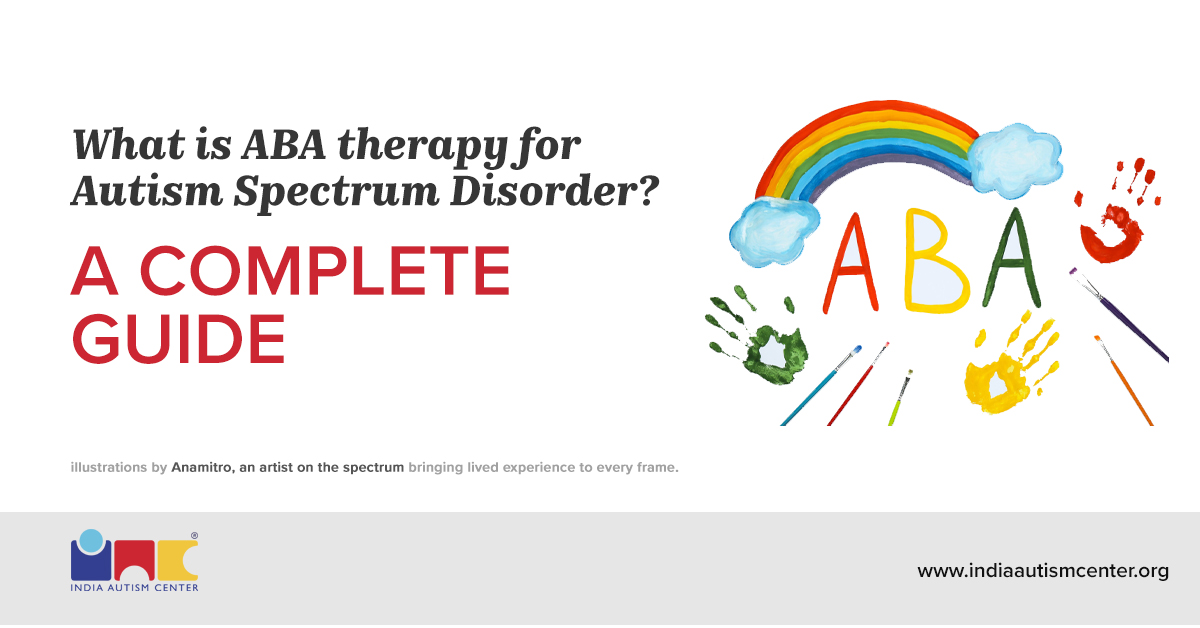
Is your child on the spectrum and is struggling to communicate? Are they finding it difficult to regulate their emotions, or are they having challenges with everyday tasks? These things not only affect the child but also the parent.
If you are a parent who is searching for support for a child with autism spectrum disorder, then you should opt for applied behaviour analysis or ABA therapy. ABA can be a powerful tool for providing your child with much-needed support. In this article, we are going to explain what ABA therapy is, how it can help children on the spectrum, and why it is a gold-standard intervention technique for autism.
Understanding Applied Behaviour Analysis
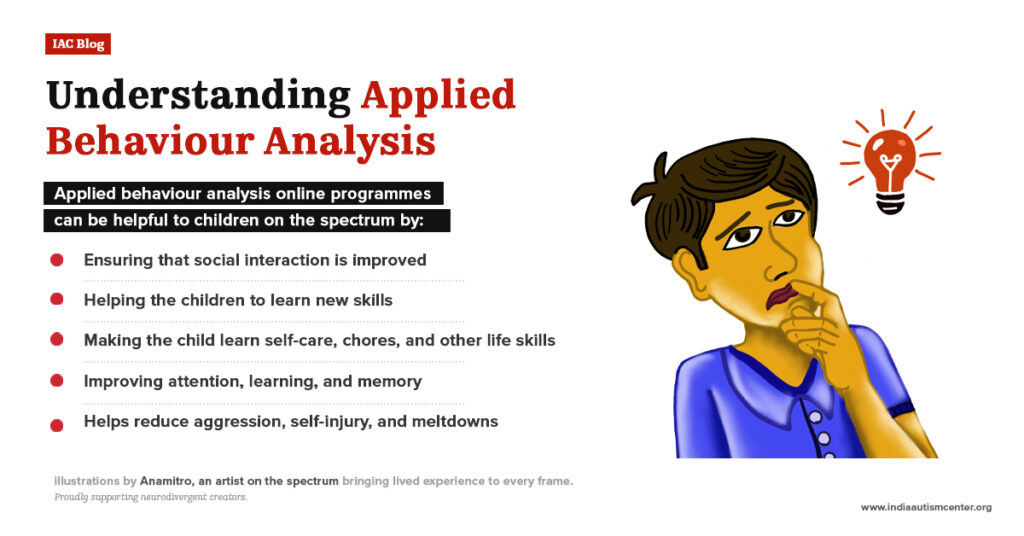
ABA therapy is the study of how behaviour works in real-life situations. It is a gentle, ethical, and effective approach that can help a person on the spectrum function independently.
ABA therapy works on the principle that children learn different behaviours, and since they learn them over time, it is possible to alter or strengthen them in positive ways. It is more of a guided-learning approach grounded in applied behaviour analysis.
It is important to understand that a child on the spectrum is not misbehaving; they are trying to communicate. ABA is a science-backed approach that helps decode what the child is trying to communicate and teaches a clear, safe, and more functional alternative.
Applied behaviour analysis online programmes can be helpful to children on the spectrum by:
- Improving social interaction.
- Helping the children to learn new skills.
- Making the child learn self-care, chores, and other life skills.
- Improving attention, learning, and memory.
- Helps reduce aggression, self-injury, and meltdowns.
How Applied Behaviour Analysis Therapy Works?

It is easier to understand applied behaviour analysis therapy once you see how it works. Applied behaviour analysis training is not a single technique or a fixed routine. It is a structured yet very flexible process that works. Careful observation, data, and a collaboration between therapists and parents guide it.
The primary focus is to help the individual learn meaningful skills that improve daily life. It helps reduce behaviours that often lead to frustration, distress, or limited independence. Let us understand how ABA therapy actually works step by step:
Step 1: Getting to Know the Individual
The first step is to understand the person, not just their behaviour. Before beginning teaching, a qualified professional (usually a Board Certified Behaviour Analyst) observes the child in their natural setting, such as home or school.
The professional also speaks to the parent or caregiver to understand the concerns. They also review the developmental history, routines and daily challenges. All these things ensure that applied behaviour analysis therapy works around the children’s real lives, not just based on labels or assumptions.
Step 2: Functional Behaviour Assessment (FBA).
The next step is to identify why a certain behaviour occurs. A functional behaviour assessment looks at different aspects, such as:
- What triggers a certain behaviour in the child?
- What does the behaviour look like in clear and observable terms?
- What happens immediately after the behaviour?
By understanding such patterns, it is easier to apply behaviour-analytic interventions that help address the course of behaviour.
Step 3: Designing an ABA Therapy Plan.
After the assessment is complete, the professionals create a personal therapy plan. This therapy plan is like a roadmap for better learning and processing. The ABA therapy plan outlines:
- The skills that the child needs to learn include communication, social skills, independence, and emotional regulation.
- Reduction or replacement of specific behaviours if needed.
- The teaching approach that suits the learner’s capabilities and style.
- On what basis will progress be measured and reviewed?
To bring great results, every goal in applied behaviour analysis therapy needs to be specific, realistic, and meaningful.
Step 4: Structures and Natural Methods to Teach
This is the most visible part of the ABA therapy. It is where the learning happens day by day. Based on the child’s needs, the professionals create strategies. Some of the most common strategies include:
- Positive Reinforcement: When the child displays a helpful behaviour, rewarding it encourages them. It can be praise, access to a favourite activity, or a favourite toy. This helps motivate the child to continue learning without pressure.
- Prompting and Fading: At first, they offer the child support to succeed. Then gradually reduce the support so they are more independent when doing a task.
- Task Analysis: Even everyday tasks, such as getting dressed or brushing their teeth, are further broken into smaller steps. Since the steps become more manageable, they feel less overwhelming.
- Natural Environment Teaching (NET): Children learn skills through everyday activities, making learning feel relevant and practical.
Step 5: Data Collection
One key defining feature of applied behaviour analysis online training programmes is that progress is always measured. In every session, the therapist collects different data, such as:
- How often does the behaviour occur?
- How often does the child on the spectrum need support?
- How independently is a skill performed?
- How consistent is the progress?
Collecting different data helps professionals identify areas that need support, understand which approach is working, and adjust strategies to ensure approaches remain effective and individualised.
Support is always evidence-based, which is a major reason parents often explore the question, “What is ABA therapy?”
Step 6: Generalising Skills Across Settings
For optimum results, it is important to learn skills across various settings. A key goal of applied behaviour analysis therapy is generality. It ensures that skills and learning remain consistent at home, school, and even in community settings.
Example: When the child learns to ask for help during applied behaviour analysis therapy sessions, it supports them in using the same skill with parents, teachers, and friends. It ensures that progress is visible and leads to real-world independence.
Step 7: Involving Parents
It is important to note that parents and caregivers can play an essential role in the success of ABA therapy. Therefore, applied behaviour analysis online programmes often include:
- Parent coaching sessions
- Guidance in reinforcing skills at home
- Support with managing routines and transitions
When parents get actively involved and trained, the collaboration will ensure consistency. It eventually supports skill development even after ABA therapy hours end, especially in applied behaviour analysis in home settings.
Step 8: Reviewing and Adapting
ABA therapy is not static. As the child grows, their needs change. Hence, the goals also need updating, the teaching approach is then open for alteration, and then making adjustments in support levels becomes easier.
This flexibility makes applied behaviour analysis equally effective for autism and ADHD across different life stages.
Myths and Facts About ABA Therapy: Separating Assumptions from Reality
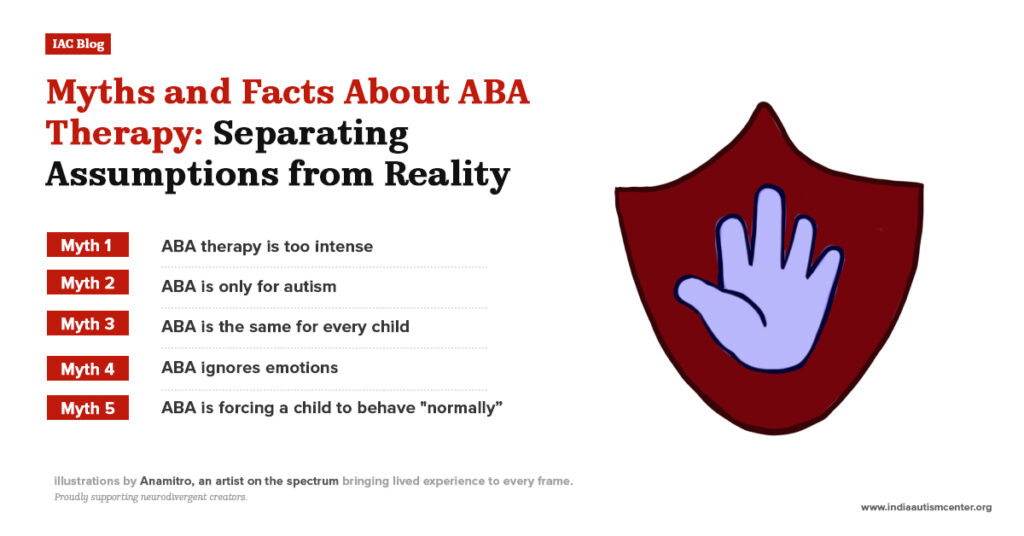
People often misunderstand Applied Behaviour Analysis, and there is also not much discussion about it. When parents hear about ABA therapy or an applied behaviour analysis online training programme, it is usually via social media or second-hand opinions; the data and descriptions are often outdated, or they cannot reflect how professionals practise modern applied behaviour analysis for ADHD.
However, for parents to make an informed decision, they must move past assumptions and examine what ABA therapy is today. So here we are, breaking down the most common assumptions and myths.
Myth 1: ABA therapy is too intense
Fact: The techniques and strategies used in applied behaviour analysis therapy are not based on a fixed formula.
In fact, they are as per the child’s needs. Some children see improvement from more structured support, while others seem to thrive with fewer hours. Modern applied behaviour analysis therapy aims to adjust session length and frequency, and to incorporate play, movement, and breaks.
Also, the therapy respects when there are signs of stress or fatigue. Thus, ABA therapy feels supportive and not exhausting.
Myth 2: ABA is only for autism
Fact: While applied behaviour analysis autism support is the most well-known application, ABA is not limited to autism. ABA therapy is also beneficial for other conditions like ADHD, anxiety, trauma, or substance abuse recovery.
Applied behaviour analysis training is a framework for understanding behaviour, not a diagnosis-specific treatment.
Myth 3: ABA is the same for every child
Fact: Applied behaviour analysis therapy uses an individualised approach. Not all applied behaviour analysis online programmes look the same.
It is important to know that ethical ABA therapy is as follows:
- The child’s strengths and interests
- Family values and cultural context
- Real-life priorities, not generic checklists
ABA therapy focuses on having personalised plans for daily living, social skills, and communication.
Myth 4: ABA ignores emotions
Fact: Applied behaviour analysis programmes do not ignore emotion; they work around it.
Applied behaviour analysis at home or the training centre focuses on observable behaviour because it is measurable and also changeable. Although ethical applied analysis therapy recognises the behaviour and the emotions behind it, such as anxiety, frustration or overwhelm.
So, instead of labelling emotions, ABA works to reduce situations that cause distress, teaches coping and regulation skills, and increases a child’s ability to communicate their emotions.
Myth 5: ABA is forcing a child to behave “normally:
Fact: Modern and improved applied behaviour analysis therapy and programmes are not about forcing a child to mask who they are.
Who can benefit from ABA? What Does Research Say?
ABA therapy is not just for a single group or condition. It is, in fact, a flexible, research-backed method that allows the child to learn meaningful skills and reduce behaviours that get in the way of daily life.
Here’s a closer look at who it helps, and what the science says.
For Children and Adults with Autism
Applied behaviour analysis training is most widely used to support individuals with Autism Spectrum Disorder. It helps to build essential life skills, such as communication, social interaction, and independent living.
ABA therapy teaches these skills in structured but natural ways that fit into real-life scenarios. As Lovaas (1987) found, “early and intensive behavioural intervention leads to significant improvements in language, learning, and adaptive behaviour.”
You would like to focus on the skills taught in a structured yet natural way. They fit well into real-life scenarios.
For Individuals with Intellectual and Developmental Disabilities
ABA is effective for people with intellectual disabilities or global developmental delays. Since it is structured and individualised, it allows therapists to work on practical skills while respecting each person’s pace and strengths.
Research shows that applied behaviour analysis can lead to meaningful improvements in social interaction and communication, making daily life more manageable and enriching.
For Teenagers, Adults, and Older Individuals Across Settings
Applied behaviour analysis interventions are not limited to young children. It can also support people at all stages of life, whether it’s helping a teenager navigate social situations, an adult improve work-related behaviours, or an older individual maintain independence.
The techniques used adapt well to different environments, including homes, schools, workplaces, and community programs, making it a lifelong support option.
What to Consider Before Starting ABA Therapy?
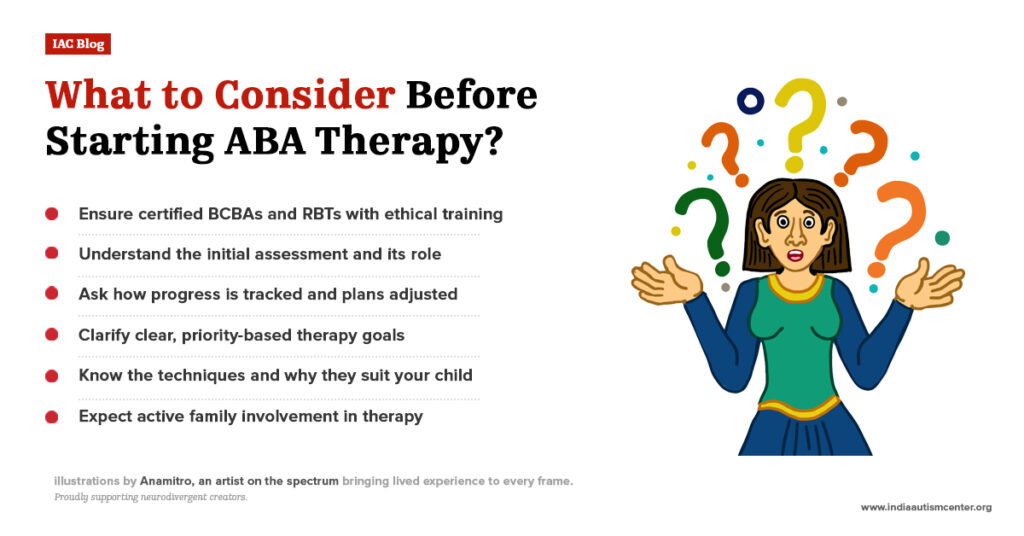
ABA therapy or applied behavioural science can be a powerful support. Getting started means knowing what to expect, asking thoughtful questions, and finding the approach that truly fits your needs.
The debate around Applied Behaviour Analysis continues to evolve. Critics have questioned whether it pressures autistic individuals to suppress who they are. But many families today describe a shift. ABA therapy, or applied behavioural science, focuses on building independence without changing a person’s core identity.
Parents like Stephanie Kenniburg share a different take on the ABA debate. She says, “ABA hasn’t tried to erase my son’s autism; it is about helping him thrive with the brain he has.” For Stephanie, applied behaviour analysis ASD is not about making her child ‘fit in’ by losing who he is; it is about giving him the tools to navigate the world on his own terms.
Here is what to look for before you begin:
- Make sure the team includes certified BCBAs and RBTs who possess training in ethical, effective practice.
- Understand the assessment. The first assessment sets the direction. It helps tailor therapy to your child’s specific needs.
- Find out the process of goal monitoring and what happens if things don’t work as planned, as data matters in applied behaviour analysis for autism.
- Always clarify the goals. Good therapy focuses on what’s most important right now, not everything at once.
- Know the techniques. Different children need different strategies. Ask about the method and how they fit your child.
- Families play a big role in autism spectrum disorder ABA therapy. You will probably be part of the process, not just watching from the sidelines, so get involved.
- Some programs need 20–40 hours a week. Make sure it works with your routine.
- Look into the costs. Ask about fees, insurance coverage, and what’s included in the plan.
- Therapy shouldn’t end when the session does. Check how skills can be useful in daily life.
- Make sure it is flexible. Therapy should adapt to your child, not the other way around.
Conclusion
Now you see that the applied behaviour analysis definition is more than just a therapy; it is a way to understand behaviour and make meaningful changes. It is about observing, learning, and building skills that lead to a more independent and, more importantly, a fulfilling life.
Whether it is improving communication, reducing challenging behaviours, or helping someone grow, applied behaviour analysis for adults or children is not age-specific. If you are considering applied behaviour analysis programmes, remember that it is all about what fits the person. Get clear on your goals, stay involved, and trust that with the right approach, change is within reach.
Frequently Asked Questions
What is applied behaviour analysis (ABA)?
Applied behaviour analysis, or ABA therapy for ASD, is a science-based, research-informed approach that studies how behaviour is learned and how it can be positively shaped. It primarily focuses on understanding why certain types of behaviour occur and on developing practical skills that improve communication, independence, and daily functioning.
How does autism spectrum disorder ABA therapy help children?
Autism spectrum disorder ABA therapy helps children build communication, social, emotional, and daily living skills. It reduces frustration by teaching children clearer ways to express needs and cope with changes in routine.
What is the difference between ABA and other behavioural therapies?
Unlike many therapies, applied behaviour analysis therapy is highly data-driven. Progress is measured continuously, and strategies are adjusted based on evidence, ensuring therapy remains personalised and effective.
What are the 7 dimensions of applied behaviour analysis?
The 7 dimensions of applied behaviour analysis are: applied, behavioural, analytic, technological, conceptually systematic, effective, and generality. Together, they ensure ABA is meaningful, measurable, and transferable to real life.
What does an applied behaviour analysis technician do?
An applied behaviour analysis technician works directly with the child or adult who is on the spectrum, delivering therapy sessions under supervision. They help practise skills, record progress, and maintain consistency across sessions.
Can applied behaviour analysis help adults?
Yes. Applied behaviour analysis for adults supports workplace behaviour, independence, social communication, and emotional regulation. Goals are self-directed and respect adult autonomy.
For expert insights, support services, and inclusive learning initiatives, visit the India Autism Center.