 Donate now
 Get a Call Back
 MENU
MENU 4 MIN READ
 SHARE
SHARE


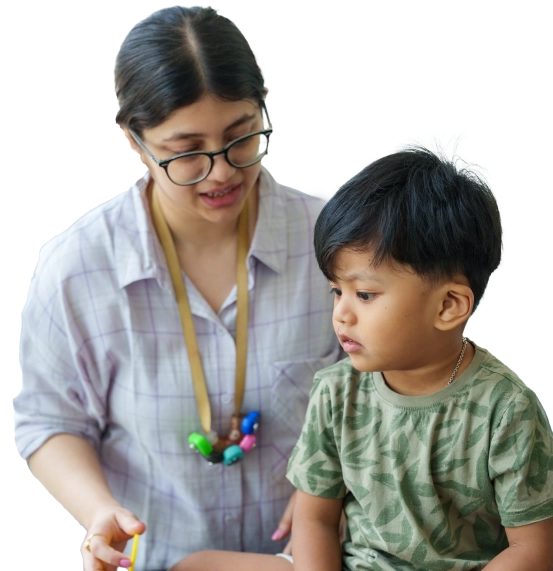
We need to focus on ability, not disability.
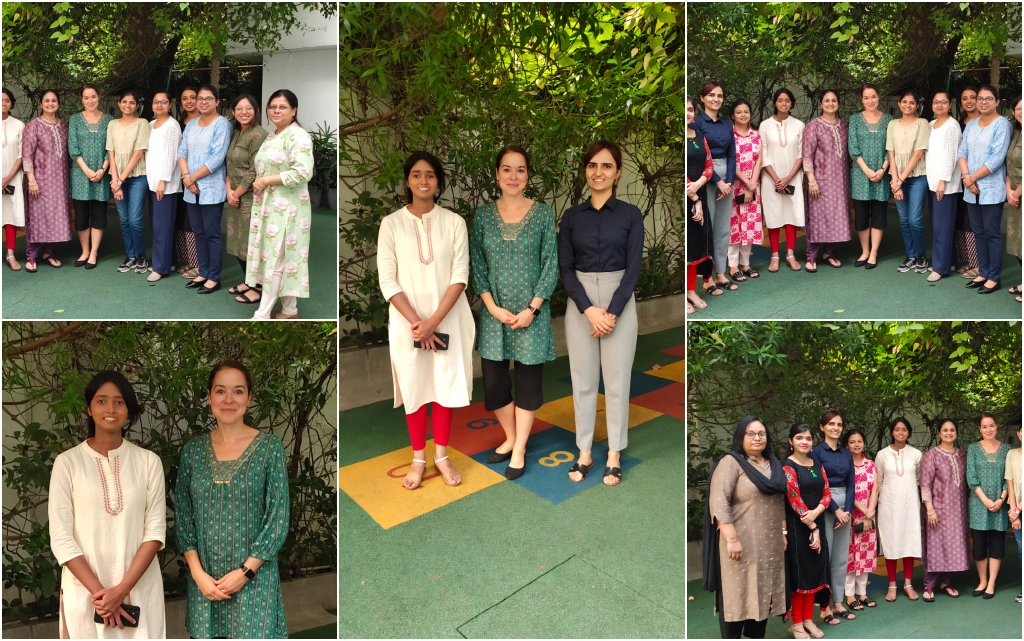
With this core principle in mind, we at IAC were delighted to host a sensory assessment workshop recently, with Dr. Teresa Tavassoli.
IAC organised this event to study the sensory needs of individuals with neurodevelopmental disorders. It was part of an internal training programme for the IAC team. Our researchers, the clinical and behaviour therapists at the daycare centre, and professionals from ASMC attended the event.
The event also included the participation of a valued research assistant from CHINTA(Centre for High Impact Neuroscience and Translational Applications).
What was the workshop about?
Dr. Teresa Tavassoli has developed an activity and evidence-based instrument. It accurately identifies clinically significant sensory symptoms in individuals with neurodevelopmental disorders. This programme is called Sensory Assessment for Neurodevelopmental Disorder (SAND).
The workshop lasted two days, during which Dr. Tavassoli trained the team. It covered the theoretical underpinnings of sensory sensitivity and reactivity and their impact on mental health.
She demonstrated the administration and scoring process of autism diagnosis and supervised team members during the process.
What was the relevance of the workshop?
Every autistic individual experiences sensory sensitivities uniquely.
Our sensory systems develop during early childhood and are key in regulating our interactions with the world around us. During the primary years of an individual’s life, we tend to rely on our sensory systems to regulate ourselves with our external environment.
Research has shown that there is a direct two-way relationship between sensory reactivity and depressive symptoms in young autistic non-verbal children. Research has also shown that anxiety is significantly correlated with sensory hyper-reactivity.
Hence, this workshop was of great value. By using the SAND test, our team will now be better equipped to measure the sensory needs of autistic individuals. It will help us and the families of autistic children understand their sensory needs better.
A successful workshop indeed!
We are thrilled with the workshop’s success and are incredibly grateful to Dr. Tavalossi.
We want to especially thank our Research Director, Professor Bhismadev Chakraborty, for helping us connect with her. Our sincerest thanks to ASMC, for allowing us to host the event on their premises.
Our utmost appreciation and thanks to the ASMC students and their parents for participating in the workshop. Thanks to their engagement, our goals for the event were achieved.
Our team gained expertise in assessing sensory needs and behaviours in individuals with neurodevelopmental disorders. This is crucial in developing targeted interventions for them.
The training emphasised the importance of evaluating sensory hyperreactivity, hyporeactivity and sensory-seeking behaviours across different sensory domains, including visual, tactile, and auditory modalities.
Call to Action!
Thanks to the workshop, our team at IAC now has a fresh perspective on sensory assessment for individuals with neurodevelopmental disorders.
What we have learned from the workshop and hope to implement is:
- Becoming more aware of the unique and different sensory needs of people on the spectrum.
- Encouraging more people, especially family members of individuals with neurodivergent disorders to watch Dr. Tavassoli’s podcast. She has in a very detailed manner explained how we can be more sensitive to the unique sensory needs of individuals with autism. Knowledge and information are powerful. The more the better!
- Encouraging people to watch our webinars/workshops and Insta Lives. All are organised by IAC.
If you are a family member of an individual with a neurodivergent disorder you might want to get to know these experts better.
It is our constant endeavour to learn more about neurodivergent individuals and ways to improve their quality of life. It is also our sincerest ambition to spread more awareness and help others learn more about the same.
We hope reading this helped you understand the significance of sensory assessment for neurodivergent individuals.