 Donate now
 Get a Call Back
 MENU
MENU 9 MIN READ
 SHARE
SHARE


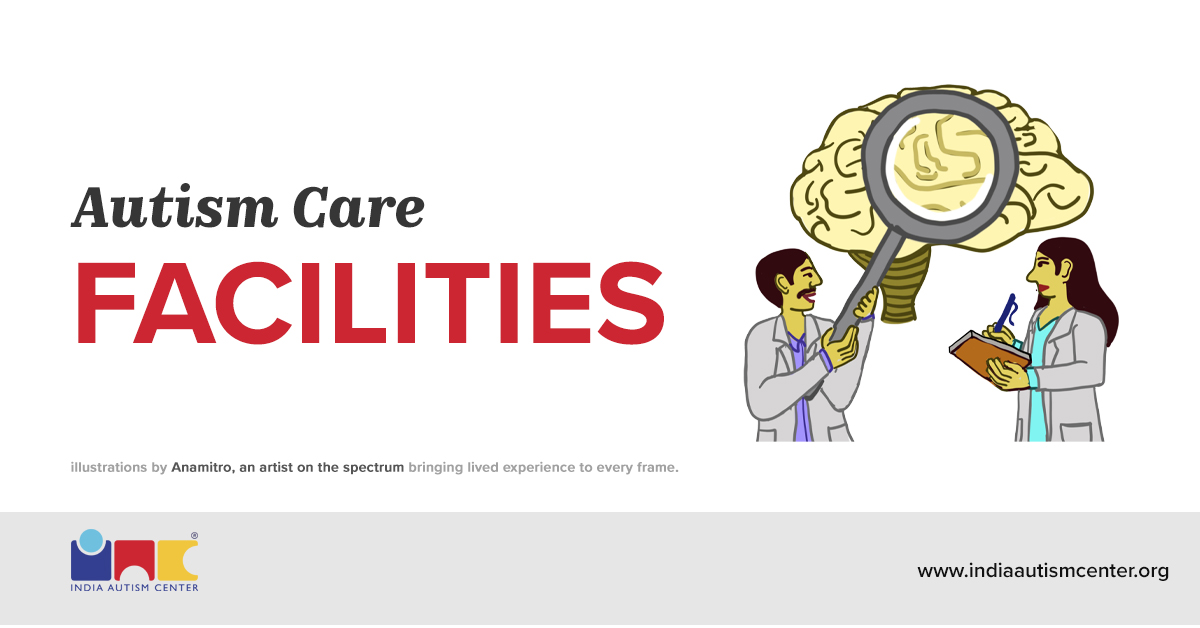
When you are searching for reliable support for a loved one with autism, the journey often feels overwhelming. You might ask yourself: Where do I find the right autism care facilities? What services are truly helpful? What will the long-term future look like?
If you’ve asked these questions, you’re not alone. Many families in India face similar concerns. The good news is that autism care facilities are evolving fast. Today, you can find structured environments, trained professionals, and dedicated communities that truly understand autism.
What Are Autism Care Facilities?
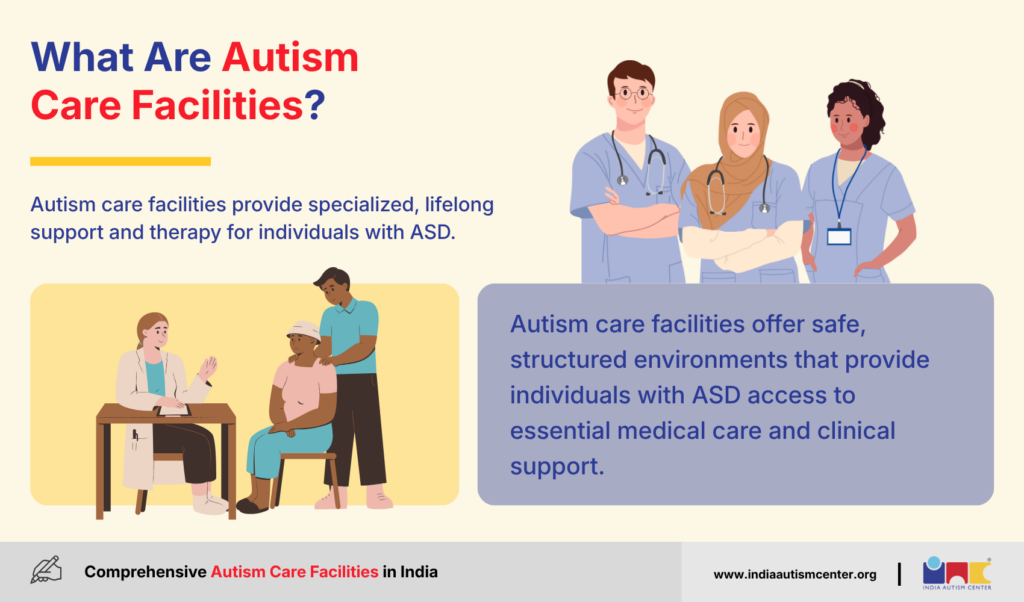
Simply put, autism care facilities are specialised centres designed to support people with Autism Spectrum Disorder (ASD). These facilities offer targeted services to help individuals grow, learn essential life skills, and live with dignity.
These services may include:
- Therapy and skill-building
- Safe and structured environments
- Clinical support and medical access
- Social, recreational, and vocational programs
- Long-term residence or community living options
The idea is not just therapy — it’s holistic and lifelong support.
Why Do Autism Care Facilities Matter?
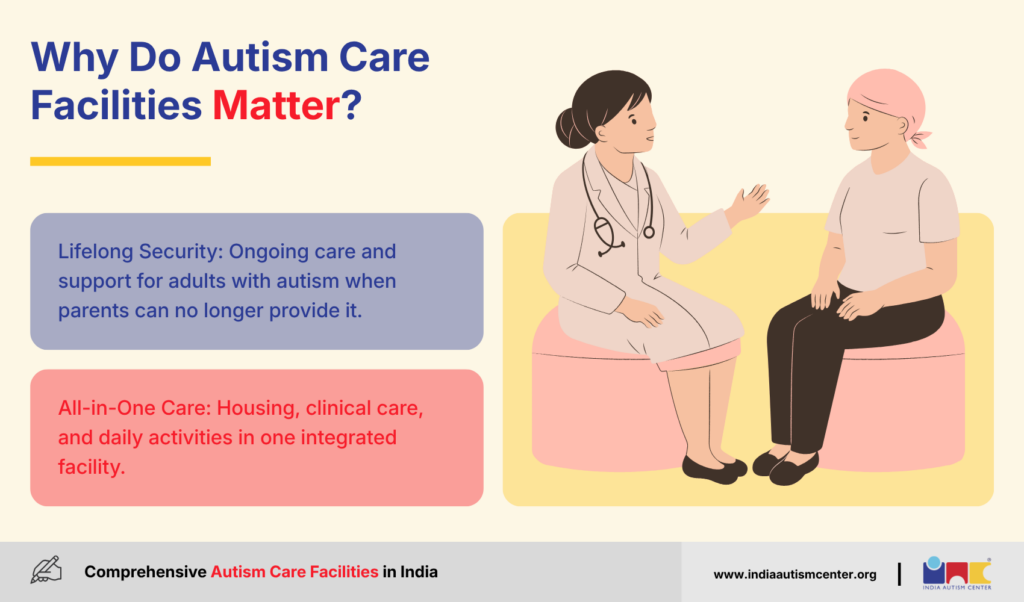
When I talk with families, one concern comes up again and again: What happens when parents grow older or are no longer around?
This is where autism residential facilities become crucial. They offer a secure future, with continuity of care and a structured environment where adults with autism can live meaningfully.
Most traditional systems quickly become fragmented — clinical care might be in one place, daycare in another, and no one looks at the big picture. That’s why comprehensive facilities are vital.
Want to know more? Get in touch with us.
The Landscape of Autism Care Facilities in India
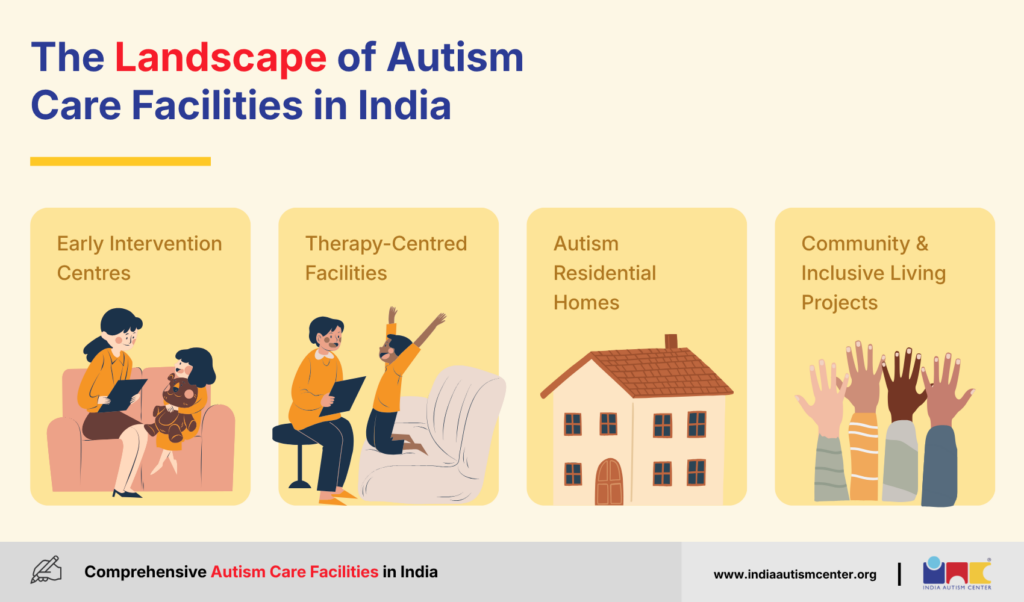
Over the past decade, more parents, professionals, and advocates have worked to expand autism infrastructure in India. But the reality remains that resources are still limited compared to other countries.
We now see a range of support options:
1. Early Intervention Centres
These focus on young children and help families with early assessments and therapies like speech, occupational therapy, and behavioural support.
They improve communication, behaviour, and social skills.
2. Therapy-Centred Facilities
Many centres in cities like Kolkata, Delhi, and Hyderabad specialise in evidence-based interventions such as Applied Behaviour Analysis (ABA), sensory integration therapy, and social skills groups. These support continuous growth throughout childhood and adolescence.
3. Autism Residential Homes
These facilities offer 24/7 living support for adolescents and adults who require ongoing care. They offer structured routines, personal safety, independence training, and opportunities for social interaction. This is especially crucial for individuals who may not thrive in unstructured environments.
4. Community & Inclusive Living Projects
Some newer facilities emphasise community integration, life skills training, and vocational outcomes so that adults with autism can meaningfully participate in society.
Despite this growth, India still needs more structured, well-equipped, and holistic autism care facilities in India, particularly for adult support.
What Should Quality Autism Care Facilities Offer?
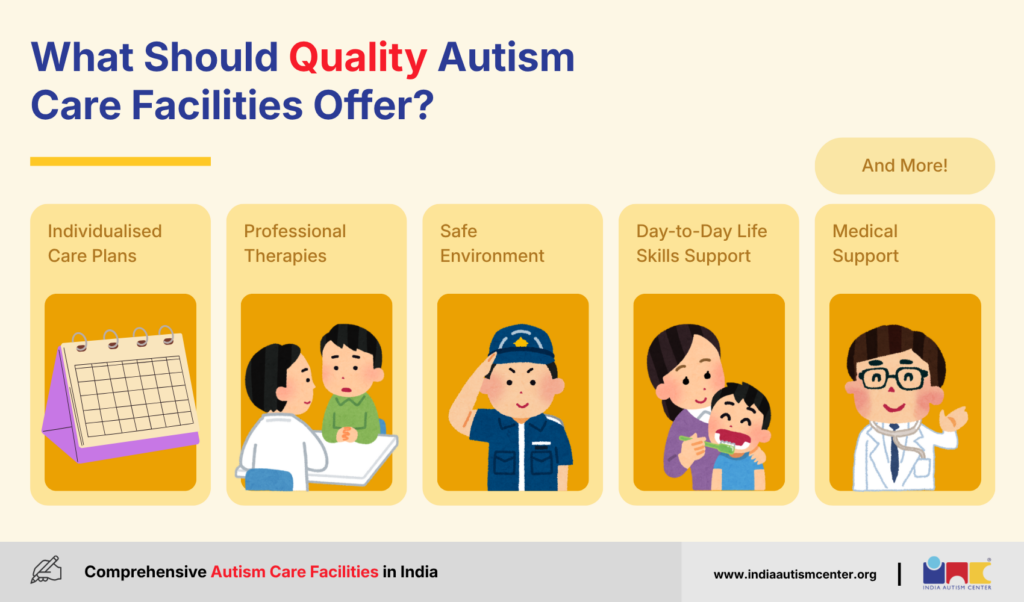
Whether you’re evaluating centres for your child or loved one, certain services are essential:
Individualised Care Plans
No two people with ASD are the same. A great facility evaluates needs and tailors plans accordingly.
Professional Therapies
These include behavioural therapy, speech and language therapy, occupational therapy, social skills training, and alternative holistic interventions.
Safe Environment
Security, supervision, and safety-focused design are core features of reputable facilities.
Day-to-Day Life Skills Support
Daily routines, personal care, community participation, and life skills matter just as much as therapy.
Medical Support
Ready access to healthcare professionals, ambulance services, and continuous medical monitoring when needed.
Recreational Activities
Engagement through art, music, sports, and vocational opportunities builds confidence and joy.
Autism Residential Homes: Growing Importance
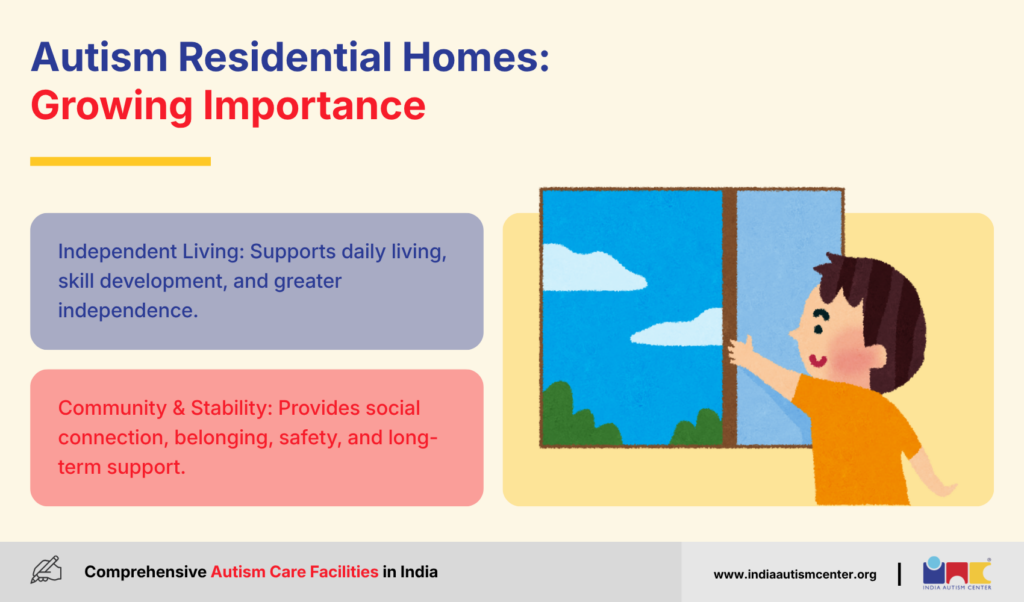
For many families, the biggest question is what comes after schooling ends. That’s where autism care facilities play a key role.
These homes offer:
- Supported daily living
- Social inclusion opportunities
- Skill development for independence
- Emotional and community connection
- Long-term stability and safety
Ultimately, a residential home isn’t just a “place to stay” — it’s a place to grow, belong, and thrive. Read our blog on Is a Residential Autism Program Worth the Cost?
Want to know more? Get in touch with us.
Introducing the India Autism Center (IAC)
We are a non-profit organisation based in Kolkata, founded in 2019. The incentive behind establishing the India Autism Center was personal, since our founders, Mr Suresh Somani and his wife, Mrs Namita Somani, are parents to a child with Autism Spectrum Disorder.
The challenges and struggles they faced while parenting a child with a neurodevelopmental disorder led to Mrs Namita Somani setting up the Amrit Somani Memorial Center in 2008.
While providing interventions to 100+ special students, it came to our notice that the increasingly urgent and critical needs of the ASD community in India were far beyond what ASMC could take on.
This led to the birth of the India Autism Center and our journey towards becoming the best autism center in India to provide autism intervention.
Samaavesh: A Model Autism Residential Community
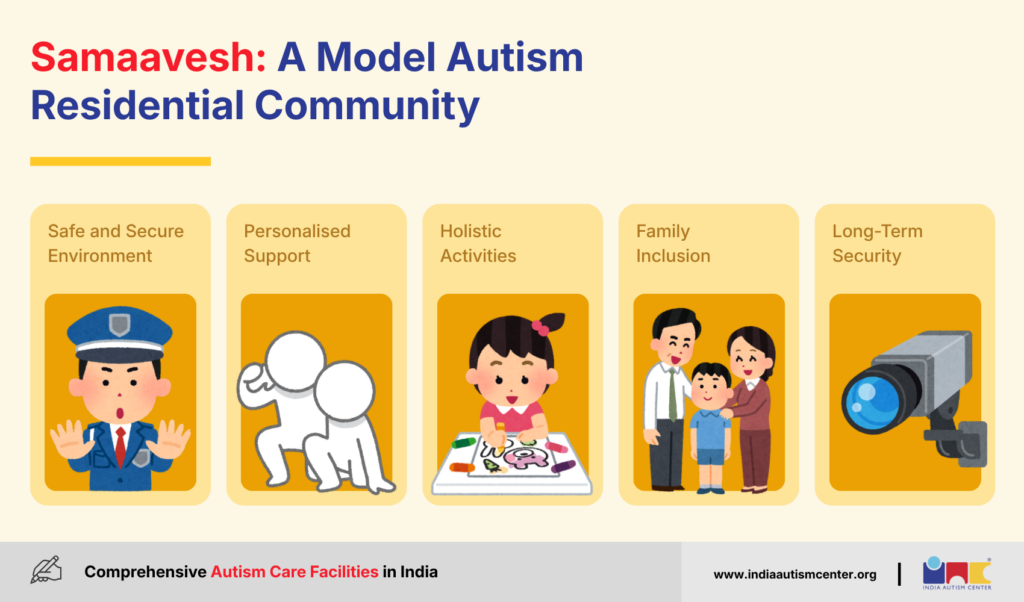
One of the standout initiatives by IAC is Samaavesh — a purpose-built residential campus dedicated to individuals with autism and related conditions. It’s more than a home; it’s a community designed with care and growth in mind.
Safe and Secure Environment
The campus prioritises safety with trained caregivers, supervision, and infrastructure that supports the well-being of residents.
Personalised Support
IAC builds individualised care plans for each resident with input from clinicians and specialists.
Holistic Activities
Residents engage in daily routines that mix clinical therapy with recreation, wellness, vocational experience, and community living.
Family Inclusion
A unique part of IAC’s model is the Family Living Program, where families can stay together while accessing on-site care.
Long-Term Security
IAC offers guidance on legal guardianship, financial planning, and trust formation — so families can secure future care for their loved ones.
Why Should You Choose the India Autism Center?
When you’re choosing a facility or support system, it helps to know what sets one apart.
Here’s what IAC brings to the table:
- We offer a wide range of clinical interventions that are essential for the holistic development of autistic individuals.
- Not only do we prioritise occupational therapy, which is aimed at learning essential life skills and encouraging independence, but our experts are trained to work with individuals to boost their sensory integration, motor skills, and other fine skills.
- We aim to offer various types of interventions and therapies, including clinical and therapeutic interventions. Our in-house faculty of experienced teachers and therapists will work to empower those with ASD. At the same time, our 24/7 medical facilities and multiple housing units on the campus will create a supportive and safe environment.
- We support the autistic individual and enable their parents, teachers, and caregivers with the required skills and tools. The goal is to optimise the autistic individual’s ecosystem.
- Our residential programmes will include family housing and daytime support.
We strive to create a community at our autism center that can address the real problems faced by families impacted by ASD. “Samaavesh”- a residential campus is currently being built to create a space where boundaries between families and their children on the spectrum are broken.
How to Choose the Right Autism Care Facility
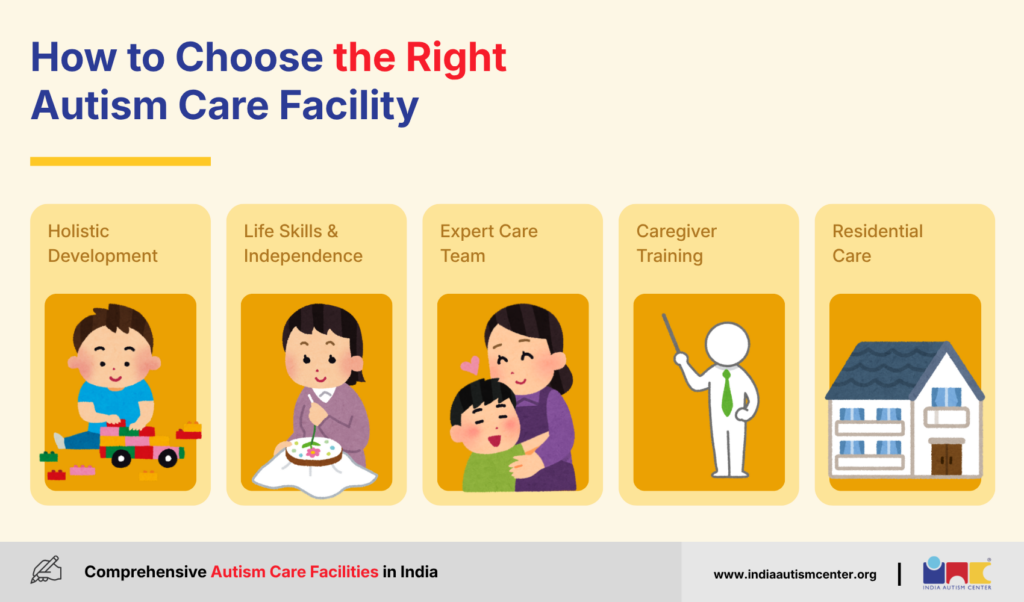
When you look for autism residential facilities in India, keep these tips in mind:
- Visit and observe the environment.
- Ask about personalised care plans.
- Check for trained staff and qualified therapists.
- Learn about daily routines and life-skills support.
- Understand safety and medical support.
- Ask about community and family engagement.
- Check long-term planning options — especially if you’re thinking about adulthood.
Because Choosing the Right Residential Care Facility for Autistic Adults is a make-or-break step in this journey,
📥 Free download: Printable daily routine chart for autistic children
Conclusion
Autism Care Facilities are more than buildings. They are communities of support, learning, safety, and opportunity. Whether it’s specialised therapy centres or Autism Residential Homes, these institutions are essential to ensuring a fulfilling life for individuals with autism.
Today, organisations like the India Autism Center are redefining what care looks like in India. From residential communities like Samaavesh to professional training and research, IAC is helping families find confidence, stability, and hope.
If you are exploring Autism Care Facilities in India, start with a clear understanding of your goals, your loved one’s needs, and what quality care should encompass. Then connect with centres that mirror your values and provide evidence-based, compassionate support.
Frequently Asked Questions (FAQs)
What are Autism Care Facilities, and how do they help?
Autism Care Facilities are specialised centres that support individuals with Autism Spectrum Disorder across different life stages. They provide therapies, structured routines, life-skills training, medical support, and safe environments. These facilities help individuals build independence, improve communication, and live with dignity while also supporting families.
Are there reliable Autism Care Facilities in India?
Yes, there are growing numbers of Autism Care Facilities in India, especially in major cities. These include therapy centres, day programs, and Autism Residential Homes for long-term support. Organisations like the India Autism Center (IAC) offer comprehensive care models that combine residential living, therapy, training, and community engagement.
Who should consider Autism Residential Homes?
Autism Residential Homes are ideal for adolescents and adults with autism who need continuous support, structured living, and long-term security. Families often consider residential homes when independent living is challenging or when planning for the future care of their loved ones.
How does the India Autism Center (IAC) support individuals and families?
The India Autism Center (IAC) provides holistic autism care through residential communities, professional training, research, and family-centred programs. IAC focuses on personalised care, safety, skill development, and long-term planning to ensure individuals with autism can live meaningful and supported lives.
For expert insights, support services, and inclusive learning initiatives, visit the India Autism Center.