 Donate now
 Get a Call Back
 MENU
MENU 17 MIN READ
 SHARE
SHARE


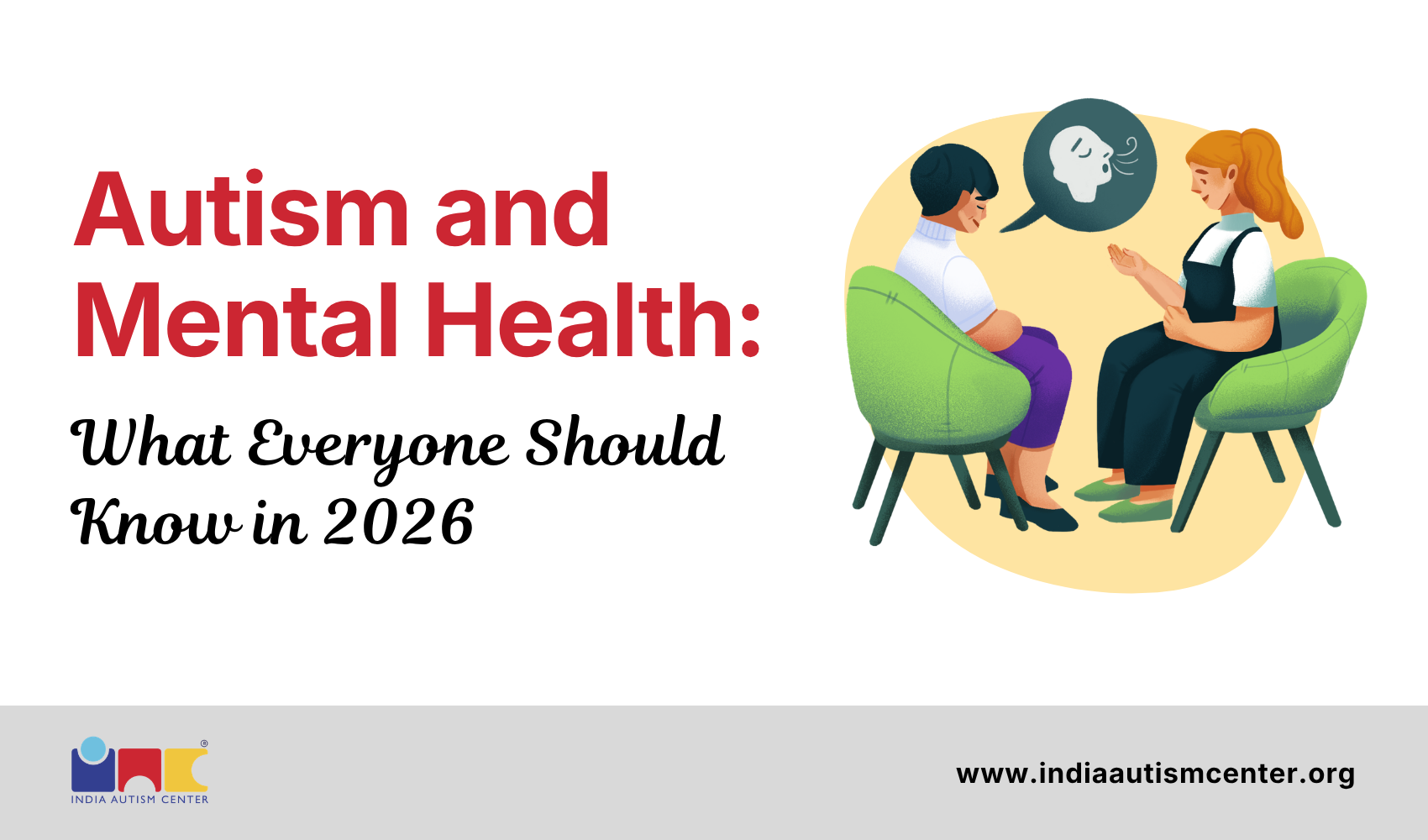
When we talk about autism and mental health, we must speak clearly, honestly, and with compassion. You may already know that autism affects how a person communicates, interacts socially, and experiences the world.
But did you know that many autistic people also face mental health challenges throughout their lives?
In this guide, I’ll explain the mental health problems faced by autistic people, why they happen, how they show up, and — most importantly — how you can support someone or yourself with empathy and practical help. Along the way, I’ll share how the India Autism Center (IAC) helps make support possible for autistic people and families in India.
What is Autism, and is Autism a Mental Health Disorder?
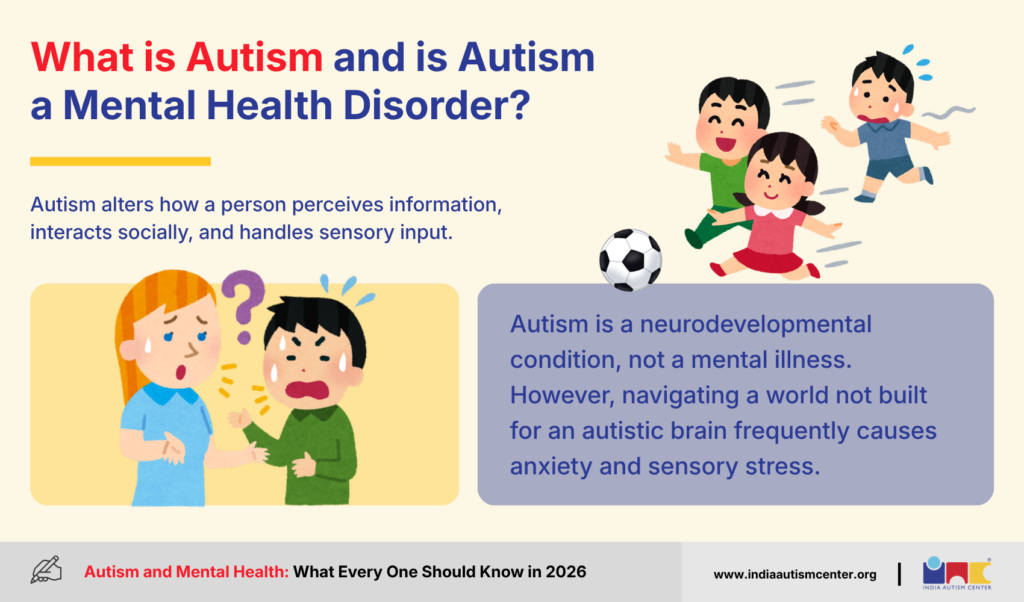
Let’s settle this clearly. Autism Spectrum Disorder (ASD) is a neurodevelopmental condition – it affects how the brain develops and processes information. It is not classified as a mental illness. The World Health Organization and the DSM-5 both categorise it separately from mental health disorders.
Autism changes how a person perceives sensory input, communicates, processes social information, and experiences the world. These are differences in brain wiring, present from birth.
So where does mental health come in? The problem is the mismatch. An autistic brain operating in a world designed for neurotypical people faces constant friction – overwhelming sensory environments, social rules that feel arbitrary, communication styles that don’t fit. Over months and years, that friction accumulates. The stress becomes chronic. And chronic stress, as we know, is one of the most reliable pathways to mental health difficulties.
Autism doesn’t cause anxiety or depression directly. But living in an unsupported, mismatched environment very often does. That’s the distinction that matters – and it’s also the one that points us toward solutions.
Why Autism and Mental Health Are Closely Linked
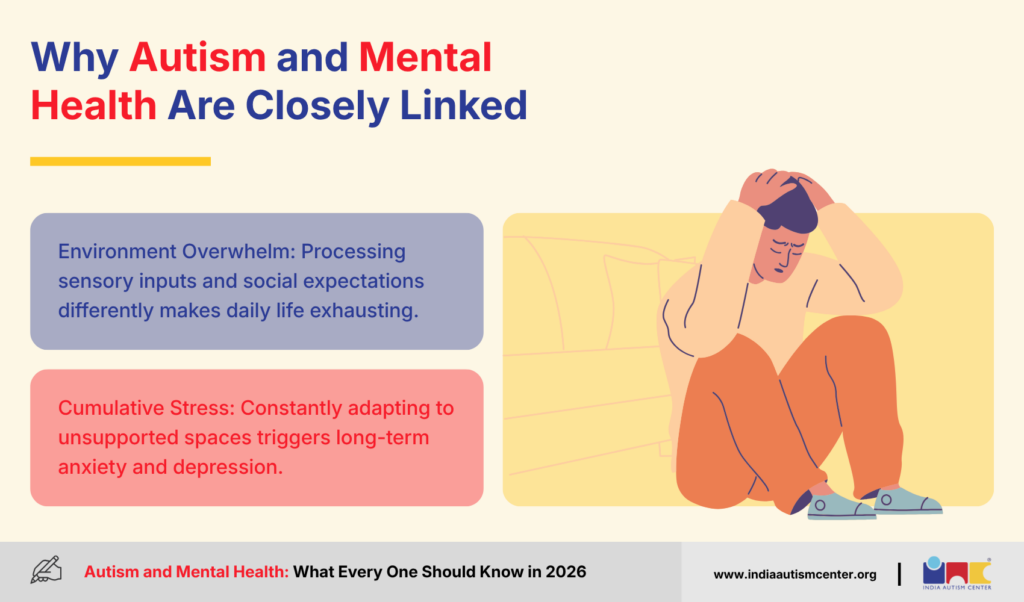
Think about what a typical day asks of an autistic person. Before 9 a.m., they may have already navigated a noisy household, the sensory assault of a school bus, the social demands of a classroom, and the pressure to make eye contact with a teacher. None of these are catastrophic events. But each one requires effort – often enormous, invisible effort.
This is the core of the problem. Everyday environments that neurotypical people move through without thinking can be genuinely exhausting for autistic individuals. Here’s what that looks like in practice:
- Loud noises – a pressure cooker, a crowded market, a school bell – may feel physically painful, not just unpleasant.
- Eye contact demands feel confusing or threatening, yet refusing it draws social criticism.
- Routine changes – a cancelled plan, a different route home, a substitute teacher – can trigger genuine panic.
- Social masking – suppressing autistic traits to fit in – drains enormous mental energy, day after day.
- Sensory processing issues in autism mean that even textures, smells, or lighting can create background stress that never fully switches off.
This cumulative load – sensory overload, social exhaustion, masking, and the constant effort of adapting – is what drives the high rates of anxiety, depression, and other mental health conditions we see in autistic people. Understanding this isn’t just academic. It tells us exactly where to intervene.
Want to know more? Get in touch with us.
How Common Are Mental Health Problems in People With Autism?
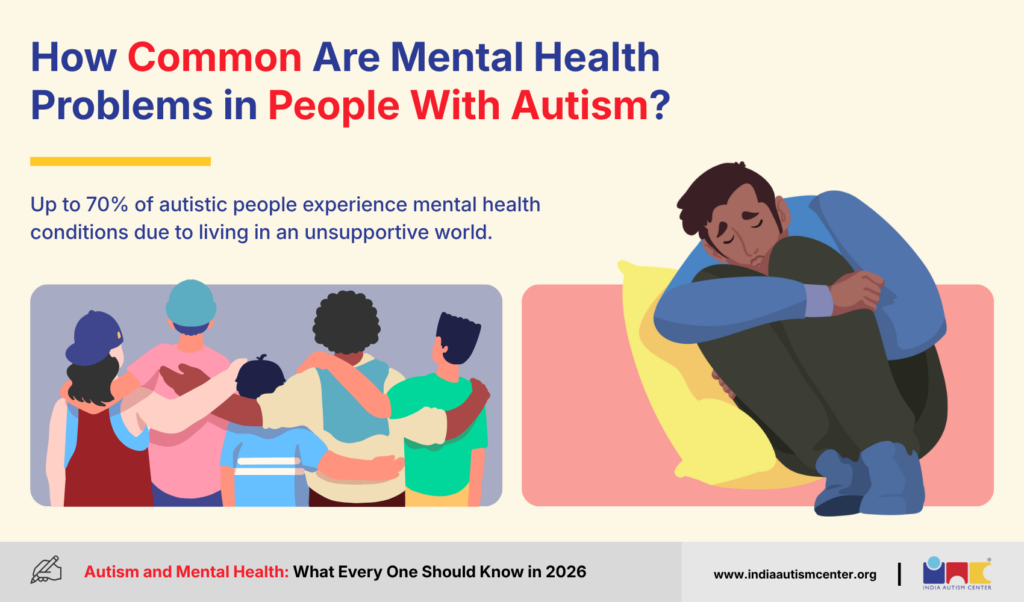
The numbers are striking. According to Autistica, the UK’s leading autism research charity, 7 in 10 autistic people have at least one mental health condition – including anxiety, depression, OCD, or ADHD. The World Health Organization’s autism fact sheet notes that co-occurring conditions, including epilepsy, depression, anxiety, and ADHD, are common across the autism spectrum.
For children specifically, Autism Speaks’ Medicaid data puts the figures in sharp relief:
- 35.3% of autistic children have co-occurring ADHD
- 17.1% have anxiety disorders
- 7.5% have depression
These are diagnosed rates – meaning the real numbers are almost certainly higher, because many co-occurring conditions go unrecognised. Research from Drexel University estimates that around 74% of autistic children have at least one co-occurring mental health condition, and nearly half have two or more.
The takeaway for families is this: if your autistic child or family member is also struggling emotionally, they are not unusual. They are part of a very large group of people whose mental health needs deserve the same attention as their autism support.
Let’s explore some of the most common mental health difficulties with autism that many individuals face — and how they show up.
Anxiety Disorders: Causes, Symptoms, Prevention, and Management
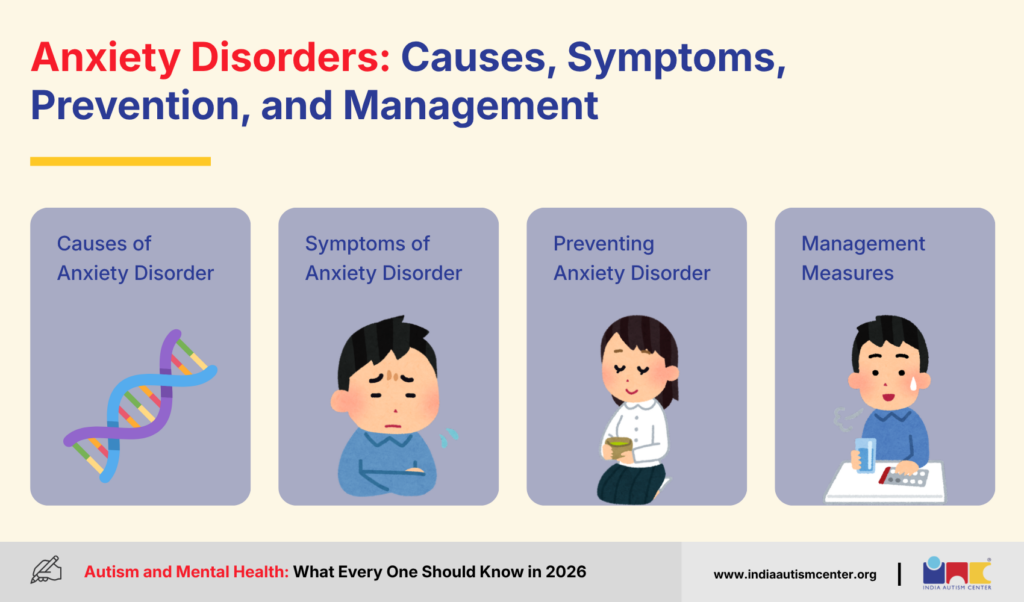
Anxiety disorders stand as one of the most prevalent mental health disorders globally, affecting millions of individuals, including those with autism.
Causes of Anxiety Disorder
Anxiety disorders stem from a multitude of factors, encompassing genetic predispositions, environmental stressors, and neurobiological abnormalities.
Genetic studies have highlighted the hereditary nature of anxiety disorders, with specific gene variations contributing to heightened vulnerability.
Moreover, adverse childhood experiences, such as trauma or neglect, can significantly increase the risk of developing anxiety disorders later in life. In the context of autism, social challenges, sensory sensitivities, and difficulties with transitions serve as potential triggers for exacerbating anxiety symptoms.
Symptoms of Anxiety Disorder
Recognising the symptoms of an anxiety disorder is crucial for early intervention and support. Common manifestations encompass physical and psychological symptoms, including excessive worry, restlessness, irritability, muscle tension, and difficulty concentrating.
Individuals may experience intrusive thoughts or catastrophic thinking patterns, leading to avoidance behaviours and social withdrawal. In autistic individuals, anxiety symptoms may manifest differently, often intertwined with sensory sensitivities, repetitive behaviours, and difficulties expressing emotions.
Heightened vigilance and hypervigilance in response to perceived threats are hallmark features of anxiety in individuals with autism.
Preventing Anxiety Disorder
While anxiety disorders cannot always be prevented, implementing proactive strategies can mitigate risk factors and promote resilience. Building strong social support networks and fostering open communication channels facilitates early identification and intervention.
Providing psychoeducation on anxiety management techniques equips individuals with coping skills to navigate stressful situations effectively. Establishing predictable routines and sensory-friendly environments offers stability and reduces anxiety triggers, particularly in the context of autism.
Management Measures for Anxiety Disorder
Effective management of anxiety disorders involves a multifaceted approach encompassing psychotherapy, medication, and lifestyle modifications.
Depression: Causes, Symptoms, Management, and Prevention
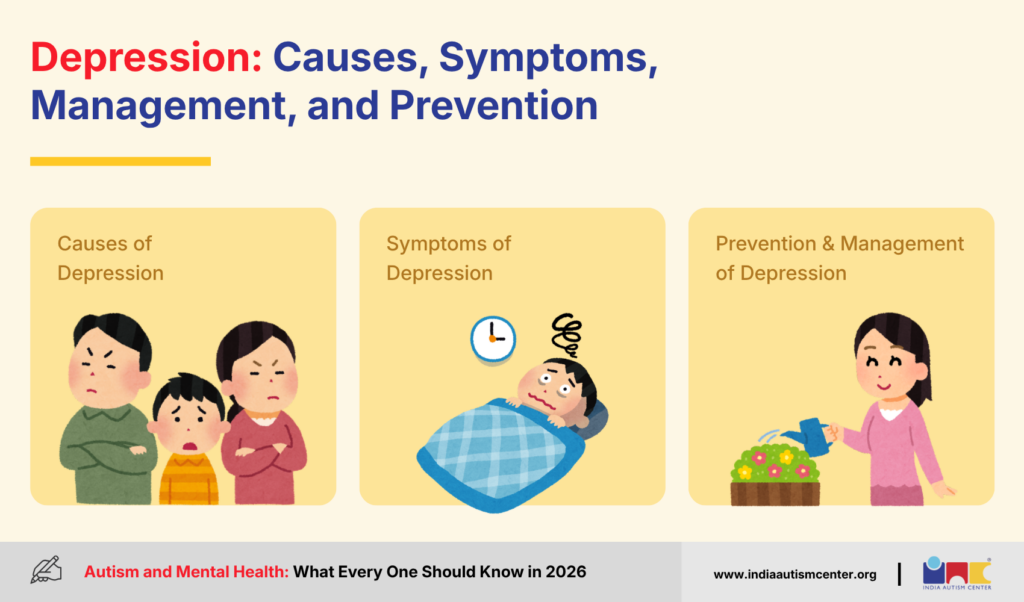
Depression, a prevalent mental health disorder, casts a profound shadow on the lives of millions worldwide, including individuals within the autism community. It is characterised by persistent feelings of sadness, hopelessness, and disinterest in once-pleasurable activities.
Causes of Depression
Depression arises from a complex interplay of biological, psychological, and environmental factors. Genetic predispositions, neurotransmitter imbalances, and alterations in brain structure and function contribute to susceptibility.
Adverse childhood experiences, chronic stressors, and social isolation amplify the risk of developing depression. In individuals with autism, the inherent challenges associated with the condition, such as difficulties in social interaction and sensory sensitivities, augment vulnerability to depression.
The co-occurrence of anxiety disorders and other mental health issues further complicates the etiological landscape.
Symptoms of Depression
Recognising the symptoms of depression is pivotal for timely intervention and support. Individuals may experience persistent feelings of sadness, emptiness, or irritability, accompanied by changes in appetite, sleep disturbances, and fatigue. Loss of interest in previously enjoyed activities, difficulty concentrating, and feelings of worthlessness or guilt are common manifestations.
In autistic individuals, depression symptoms may manifest alongside core features of autism, including repetitive behaviours, restricted interests, and communication challenges. Identifying subtle changes in behaviour, mood, and social interaction patterns is essential for early detection and intervention.
Prevention and Management of Depression
Preventing and managing depression entails a comprehensive approach encompassing psychotherapy, medication, lifestyle modifications, and social support.
Mindfulness-based interventions cultivate present-moment awareness and self-compassion, fostering resilience in adversity.
Pharmacotherapy, such as antidepressants, rebalances neurotransmitter levels and alleviates depressive symptoms under medical supervision.
In autistic individuals, tailored interventions addressing sensory sensitivities, social skills deficits, and communication challenges complement traditional therapeutic approaches. Establishing predictable routines, providing sensory accommodations, and facilitating peer interactions promote emotional regulation and mitigate depression risk factors.
Engaging in meaningful activities, pursuing interests, and fostering a sense of belonging within supportive communities nurture mental well-being and resilience.
Understanding ADHD: Causes, Symptoms, Prevention, and Management
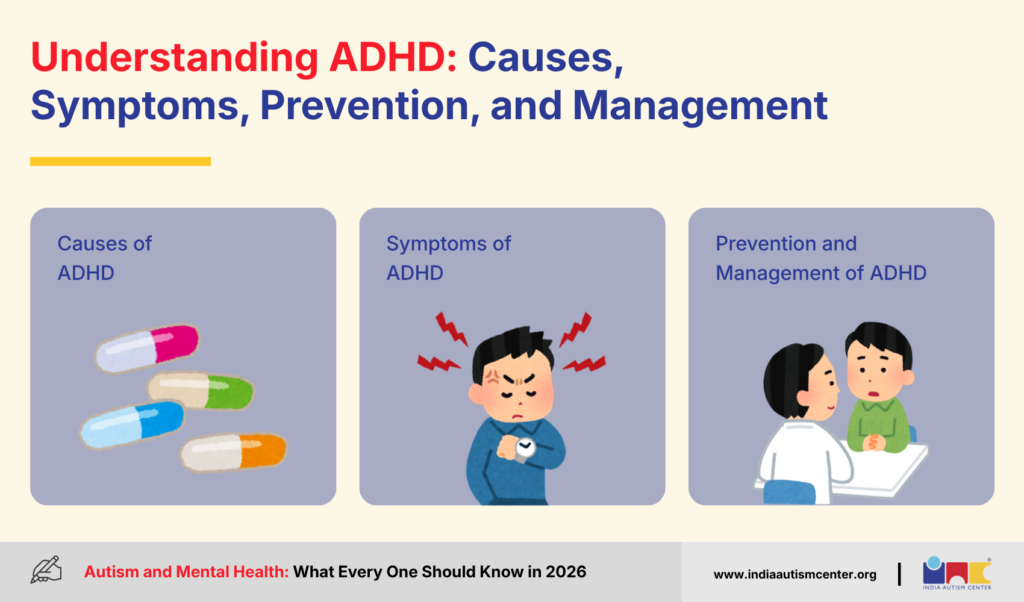
Attention-deficit/hyperactivity disorder (ADHD) stands as a prevalent mental health disorder affecting individuals of all ages and backgrounds, including those within the autism spectrum.
Within the realm of mental health diseases, ADHD presents unique challenges characterised by difficulties with attention, impulse control, and hyperactivity.
Causes of ADHD
ADHD arises from a combination of genetic, environmental, and neurobiological factors. Genetic studies have identified hereditary components contributing to ADHD susceptibility, with specific gene variations influencing neurotransmitter activity and brain development.
Prenatal exposure to environmental toxins, maternal substance use, and maternal stress during pregnancy also increase the risk of ADHD.
In autistic individuals, the co-occurrence of ADHD may stem from overlapping neurodevelopmental pathways and shared genetic vulnerabilities.
Symptoms of ADHD
Recognising the symptoms of ADHD is crucial for early identification and intervention. Individuals may exhibit inattention, characterised by difficulty sustaining attention on tasks, organising activities, or following instructions.
Hyperactivity manifests as excessive fidgeting, restlessness, and difficulty engaging in quiet activities. Impulsivity results in hasty decision-making, interrupting others, and difficulty waiting for turns.
In autistic individuals, ADHD symptoms may intersect with core features of autism, including sensory sensitivities and difficulties with executive functioning, exacerbating challenges in daily functioning.
Remember, there is a bit of a difference between ADHD and Autism. Read this article on ADHD vs Autism for more clarity.
Prevention and Management of ADHD
Preventing and managing ADHD involves a multifaceted approach encompassing behavioural interventions, medication, and environmental modifications.
Behavioural therapy, such as behavioural parent training and school-based interventions, teaches individuals coping skills, organisational strategies, and impulse control techniques.
Environmental modifications, including structured routines, clear expectations, and sensory accommodations, create supportive environments conducive to attention and focus.
Medication, such as stimulants and non-stimulants, rebalances neurotransmitter levels and improves attention and impulse control under medical supervision.
In autistic individuals, tailored interventions addressing sensory sensitivities, social skills deficits, and executive functioning challenges complement ADHD management strategies.
Visual supports, such as visual schedules and timers, facilitate task completion and transition management.
Sensory accommodations, including noise-cancelling headphones and fidget tools, alleviate sensory overload and promote attention regulation.
Collaboration between caregivers, educators, and mental health professionals ensures comprehensive support and intervention tailored to the individual’s needs.
Obsessive-Compulsive Disorder (OCD): Causes, Symptoms, Prevention, and Management
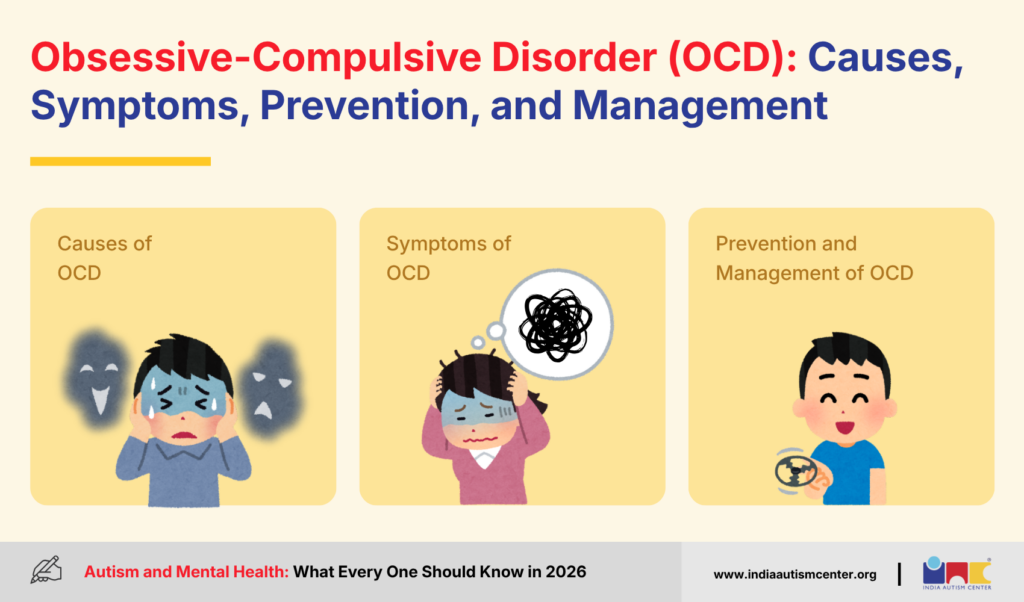
Obsessive-compulsive disorder (OCD) is a challenging mental health disorder that affects individuals across diverse backgrounds, including those within the autism spectrum.
Causes of OCD
OCD arises from a combination of genetic, neurobiological, and environmental factors.
Genetic studies have identified hereditary components contributing to OCD susceptibility, with specific gene variations influencing brain chemistry and neural circuitry implicated in obsessions and compulsions.
Neuroimaging studies have revealed alterations in brain regions involved in decision-making, impulse control, and fear response regulation in individuals with OCD.
Environmental factors, such as childhood trauma, parental modelling of anxious behaviours, and life stressors, may exacerbate OCD symptoms.
Symptoms of OCD
Recognising the symptoms of OCD is essential for early identification and intervention. Individuals may experience intrusive thoughts, images, or urges that cause significant distress or anxiety, often revolving around themes of contamination, symmetry, or harm.
Compulsive behaviours serve as temporary relief mechanisms aimed at reducing anxiety or preventing perceived harm, despite being excessive or irrational. Common compulsions include repetitive checking behaviours and mental rituals like counting or praying.
In autistic individuals, OCD symptoms may intersect with core features of autism, including rigidity in routines, sensory sensitivities, and difficulties with uncertainty.
Prevention and Management of OCD
Preventing and managing OCD involves a comprehensive approach encompassing cognitive-behavioural therapy (CBT), medication, and lifestyle modifications. Exposure and response prevention (ERP), a specialised form of CBT, involves gradual exposure to feared stimuli while refraining from engaging in compulsive behaviours, facilitating habituation and symptom reduction.
Cognitive therapy assists individuals in challenging irrational beliefs and cognitive distortions perpetuating OCD symptoms. Selective serotonin reuptake inhibitors (SSRIs), a class of antidepressants, rebalance neurotransmitter levels and alleviate OCD symptoms under medical supervision.
In individuals with autism, tailored interventions addressing sensory sensitivities, communication challenges, and executive functioning deficits complement OCD management strategies.
Visual supports, such as visual schedules and anxiety thermometers, help individuals anticipate and manage anxiety-provoking situations. Sensory accommodations, including fidget tools and relaxation techniques, promote self-regulation and reduce compulsive behaviours triggered by sensory overload.
Collaboration between mental health professionals, caregivers, and educators ensures holistic support tailored to individual needs.
Sensory Processing Issues: Causes, Symptoms, Prevention, and Management
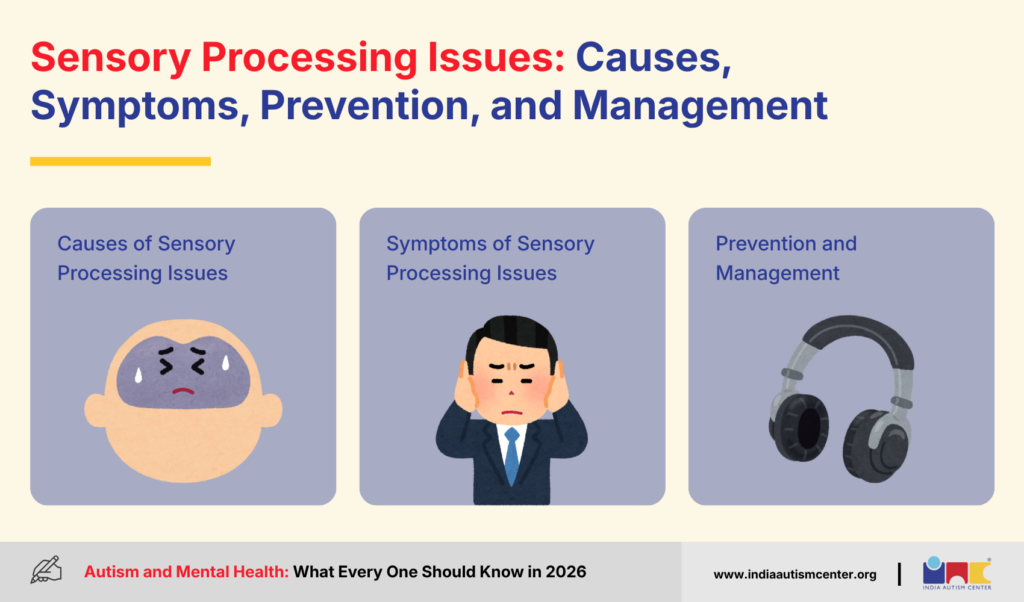
Sensory processing issues present unique challenges within the realm of mental health, impacting individuals across diverse backgrounds, including those within the autism spectrum.
Causes of Sensory Processing Issues
Sensory processing issues stem from genetic, neurobiological, and environmental factors.
Genetic studies have identified hereditary components contributing to sensory processing differences, with specific gene variations influencing sensory perception and neural processing.
Neurobiological abnormalities in brain regions responsible for sensory integration and modulation may contribute to sensory processing difficulties.
Environmental factors, such as prenatal exposure to toxins, prematurity, and early childhood experiences, may also influence sensory processing abilities.
Symptoms of Sensory Processing Issues
Recognising the symptoms of sensory processing issues is essential for early identification and intervention. Individuals may exhibit hypersensitivity or hyposensitivity to sensory stimuli across various modalities, including auditory, visual, tactile, olfactory, and proprioceptive sensations. Hypersensitive individuals may experience aversive reactions to loud noises, bright lights, or certain textures, leading to avoidance behaviours or meltdowns.
Hypersensitive individuals may seek out intense sensory input or exhibit diminished responses to pain or temperature changes. In autistic individuals, sensory processing issues may intersect with core features of autism, including repetitive behaviours, restricted interests, and difficulties with transitions.
Prevention and Management of Sensory Processing Issues
Preventing and managing sensory processing issues involves a multifaceted approach encompassing environmental modifications, sensory integration therapy, and sensory accommodations. Creating sensory-friendly environments with controlled lighting, sound, and tactile experiences reduces sensory overload and promotes comfort and regulation.
Sensory integration therapy, conducted by occupational therapists, involves structured activities designed to improve sensory processing abilities and enhance adaptive responses to sensory stimuli.
Sensory accommodations, such as weighted blankets, noise-cancelling headphones, and fidget tools, provide individuals with sensory modulation strategies to regulate arousal levels and promote engagement in daily activities.
Visual supports, such as visual schedules and social stories, help individuals anticipate and prepare for sensory-rich environments. Social narratives and role-playing activities facilitate social skills development and promote successful interactions in sensory-rich contexts.
Collaboration between caregivers, educators, and occupational therapists ensures comprehensive support and intervention tailored to the individual’s sensory processing needs.
Here is a comprehensive blog on All You Need to Know About Sensory Challenges in Autistic Individuals.
Want to know more? Get in touch with us.
What You Can Do: Practical Strategies for Support
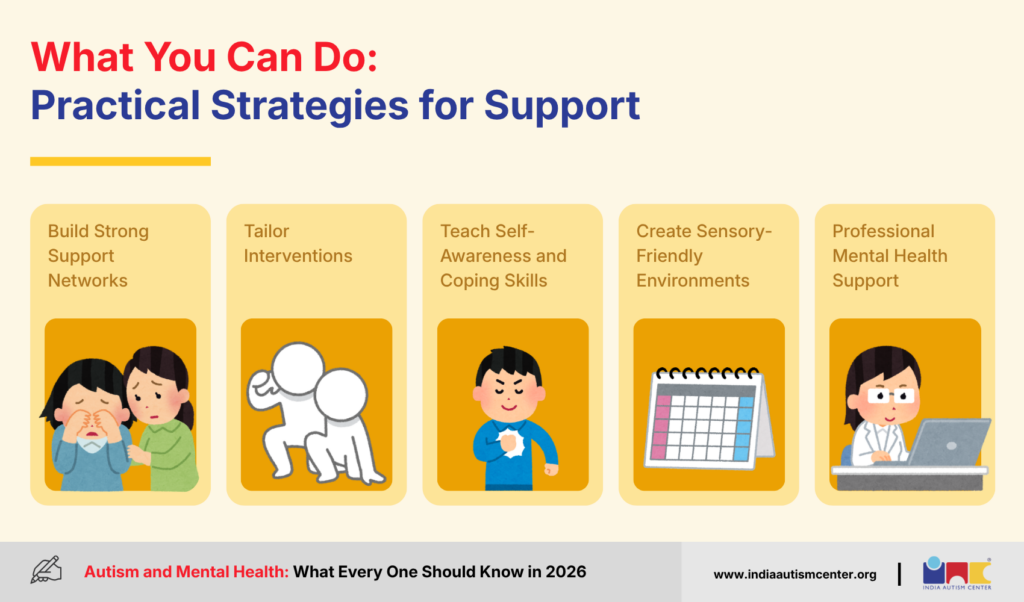
What You Can Do: Practical Strategies for Families
Understanding the problem is step one. Here’s what to actually do.
1. Build Strong Support Networks
Isolation is one of the biggest risk factors for mental health problems in autism – for the autistic person and for the caregiver. Connecting with other families who truly understand makes a measurable difference.
India-relevant tip: IAC’s parent support groups in Kolkata bring together families navigating similar challenges. Peer support from parents who’ve been through it is often more practically useful than any amount of reading.
2. Tailor Interventions
One size genuinely does not fit all. An intervention that works brilliantly for one autistic child may be useless or even harmful for another. Support must match the individual’s sensory profile, communication style, and specific co-occurring conditions.
India-relevant tip: Under the RPWD Act 2016, autistic children are entitled to reasonable accommodations in school – including modified exam formats, extra time, and quiet rooms. If your child also has a diagnosed mental health condition, that can be separately certified under UDID, potentially unlocking additional support. Ask your school and your clinician about this explicitly.
3. Teach Self-Awareness and Coping Skills
Autistic emotional regulation is a learnable skill – but it needs to be taught in autism-friendly ways. Visual emotion charts (a simple “feelings thermometer” with pictures) help children identify what they’re feeling before it escalates. Breathing cards with visual instructions work better than verbal reminders in the middle of distress.
India-relevant tip: Laminate a simple breathing card and put it somewhere visible in your home – near the dining table, on the bedroom door. Practise the technique during calm moments, not just crises.
4. Create Sensory-Friendly Environments
You don’t need to redesign your home. Small changes make a real difference.
India-relevant tips for Indian households:
- Designate one room or corner as a low-stimulation space – no TV, softer lighting, minimal clutter.
- During festivals like Diwali or Holi, prepare your child in advance with social stories about the sounds and crowds. Have a quiet retreat ready.
- If the kitchen is a sensory flashpoint (pressure cookers, strong smells), give advance warning before cooking begins.
5. Seek Professional Mental Health Support
This is where the difference between general support and specialist support becomes critical. A therapist who isn’t trained in autism will often miss the ways that anxiety, depression, or OCD present differently in autistic clients. Autism-aware mental health support consistently produces better outcomes.
India-relevant tip: Look for RCI-registered psychologists with specific experience in autism. In many Indian cities, this is a short list – which is exactly why IAC’s integrated team matters. If you’re not in Kolkata, ask about remote consultations, which have become far more accessible post-pandemic.
The Role of IAC in Supporting Mental Health
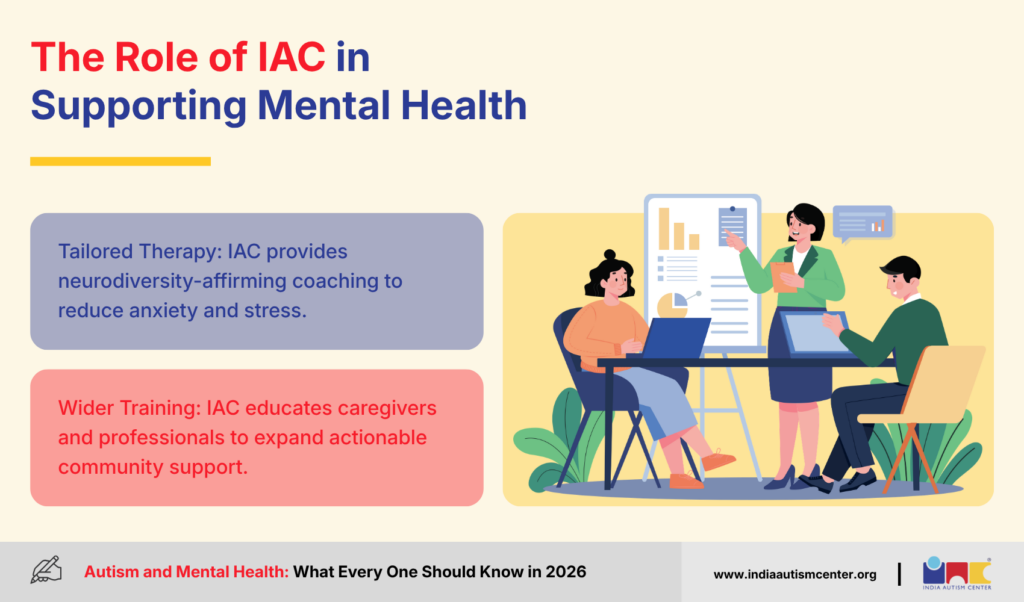
At IAC, we see every day what happens when autistic people get the right support. I want to be clear:
- IAC doesn’t treat autism as a disorder.
- We support autistic individuals to understand themselves and thrive.
- We provide therapy, training, and resources that respect autism as neurodiversity.
Through person-centred services — from counselling to life skills coaching — IAC helps autistic individuals and families manage stress, reduce anxiety, and build confident lives. We also train caregivers and professionals in understanding mental health in autistic people so that supportive environments can spread beyond our centre.
In simple terms: IAC makes autism support real, accessible, and meaningful for people who need help navigating their mental health. Because understanding without action isn’t enough
Conclusion
Mental health challenges are common in autistic individuals, but they are not inevitable. With compassion, targeted strategies, supportive communities, and organisations like IAC working every day to raise awareness and provide help, we can change lives.
If you’re reading this because you care — thank you. Start with one step: understand, support, and reach out.
Autism and mental health matter — for every autistic life.
Frequently Asked Questions (FAQs)
Is autism a mental health disorder?
No, autism is not a mental health disorder. It is a neurodevelopmental condition that affects communication, behaviour, and sensory processing. However, autism and mental health are closely linked because many autistic people experience mental health challenges such as anxiety or depression.
What mental health challenges are commonly faced by autistic people?
Some common mental health challenges faced by autistic people include anxiety, depression, ADHD, and emotional regulation difficulties. These mental health problems in people with autism often occur due to sensory overload, social stress, or lack of appropriate support.
Why are mental health difficulties more common in people with autism?
Mental health difficulties with autism are more common because autistic individuals often face social misunderstandings, sensory sensitivities, and constant pressure to adapt to environments that are not designed for their needs. Over time, this can affect emotional well-being.
How can mental health in autistic adults be supported?
Autism-friendly therapy, structured routines, sensory-safe environments, and strong social support can support mental health in autistic adults. Organisations like India Autism Center play an important role by offering tailored services and guidance for long-term mental well-being.
Useful Sources
Autistica – Mental health and autism
World Health Organization – Autism fact sheet
Disclaimer: This article is intended for educational and informational purposes only. It is not a substitute for professional medical advice, diagnosis, or treatment. If you are pregnant or have concerns about medication use during pregnancy, please consult a qualified healthcare provider. If your child has received an autism diagnosis and you have questions about causes or support, please reach out to a trained specialist or an autism-focused organisation for guidance.
For expert insights, support services, and inclusive learning initiatives, visit the India Autism Center.