 Donate now
 Get a Call Back
 MENU
MENU 11 MIN READ
 SHARE
SHARE


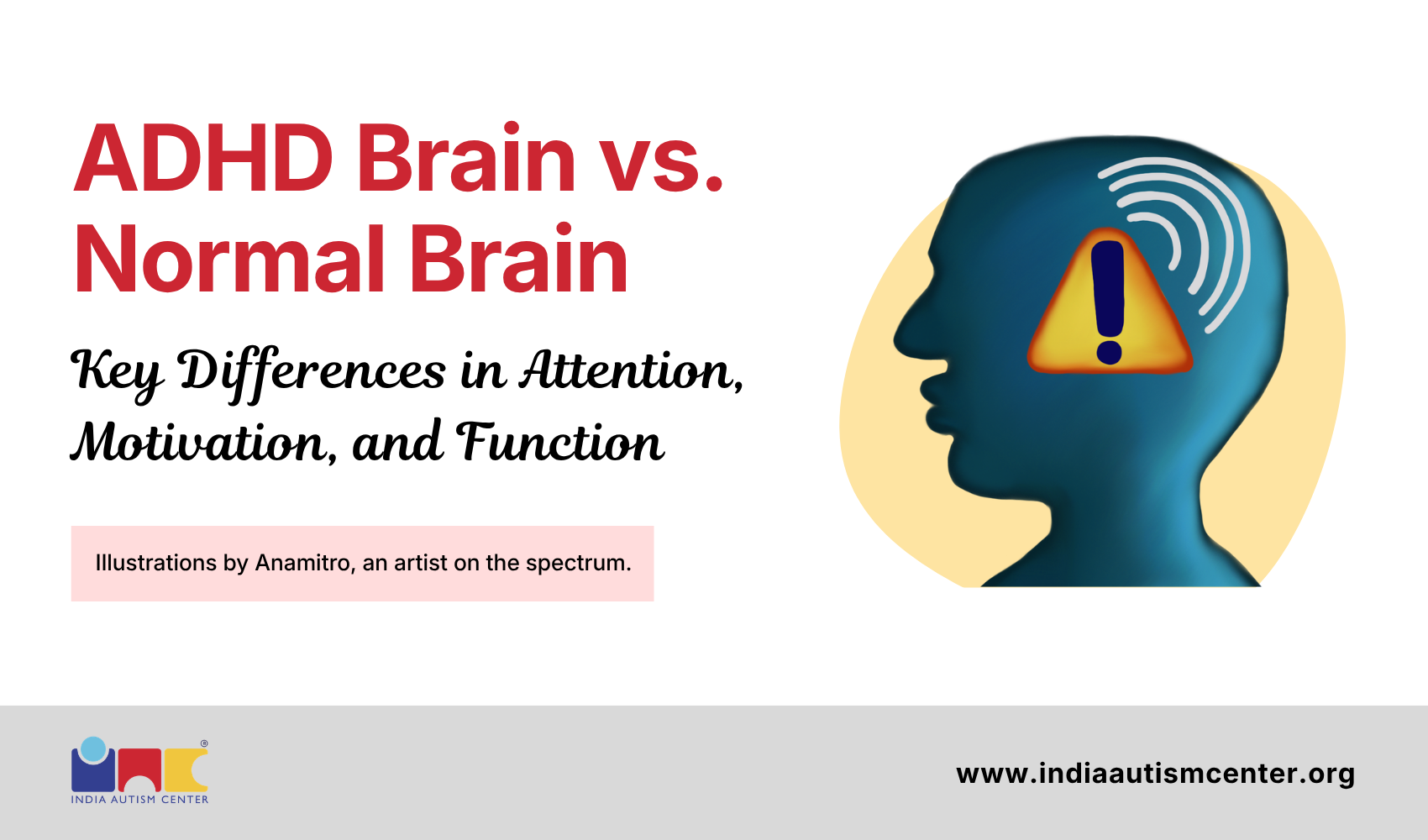
Around 5% of children globally are estimated to have Attention Deficit Hyperactivity Disorder(ADHD), making it one of the most common neurodevelopmental conditions. But what actually happens inside the brain? The phrase ADHD brain vs. normal brain can make it sound as though there are two completely different types of brains.
In reality, ADHD involves differences in how several brain networks regulate attention, motivation, impulse control, and executive function. These differences can affect how a person starts tasks, manages distractions, responds to rewards, and controls behaviour.
Understanding the ADHD brain vs. normal brain comparison can therefore help replace misconceptions with a more accurate picture of ADHD.
What Is the Key Difference Between an ADHD Brain and a Typical Brain?
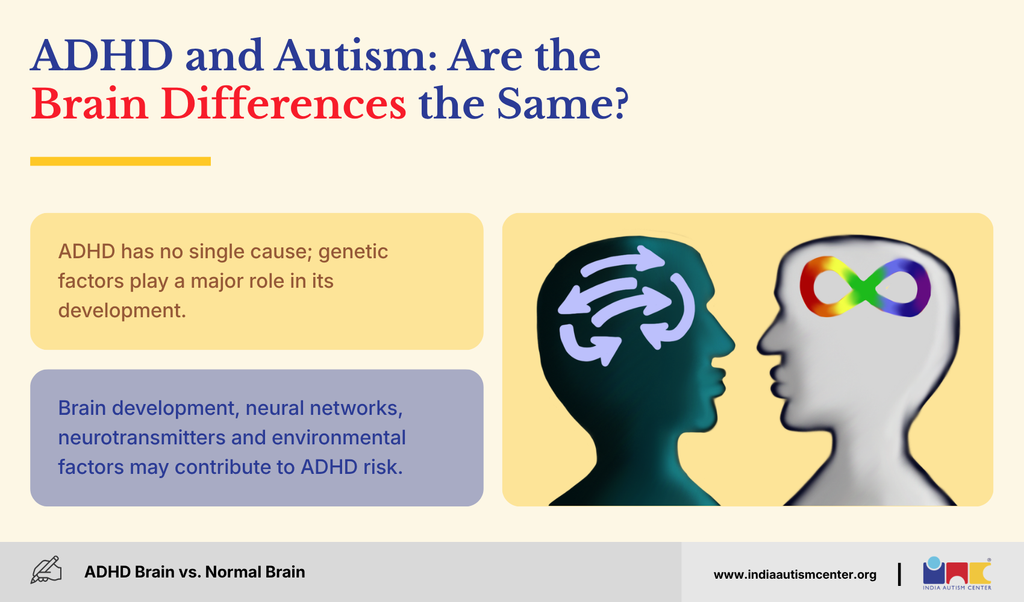
The first thing to clarify is that there is no single brain scan that can diagnose ADHD. Clinicians diagnose ADHD through a comprehensive assessment that considers symptoms, developmental history, functioning across settings, and how those symptoms affect everyday life.
NICE specifically states that ADHD should not be diagnosed solely from rating scales or observational data.
When researchers compare groups of people with and without ADHD, they find differences in the development and functioning of several brain systems. These include networks involved in:
- sustained attention
- executive function
- response inhibition
- working memory
- motivation and reward processing
- planning and cognitive control
These findings help explain why someone with ADHD may know exactly what they need to do but still struggle to begin, sustain, or complete a task.
It is also important not to interpret these differences as evidence that an ADHD brain is damaged or inferior. ADHD is a neurodevelopmental condition, meaning that brain development and functioning follow a pattern associated with ADHD. Individual differences are substantial, and not everyone with ADHD experiences the same difficulties.
How Does Attention Work Differently in ADHD?
Attention is often described as a simple ability that someone either has or lacks. It is more complicated than that.
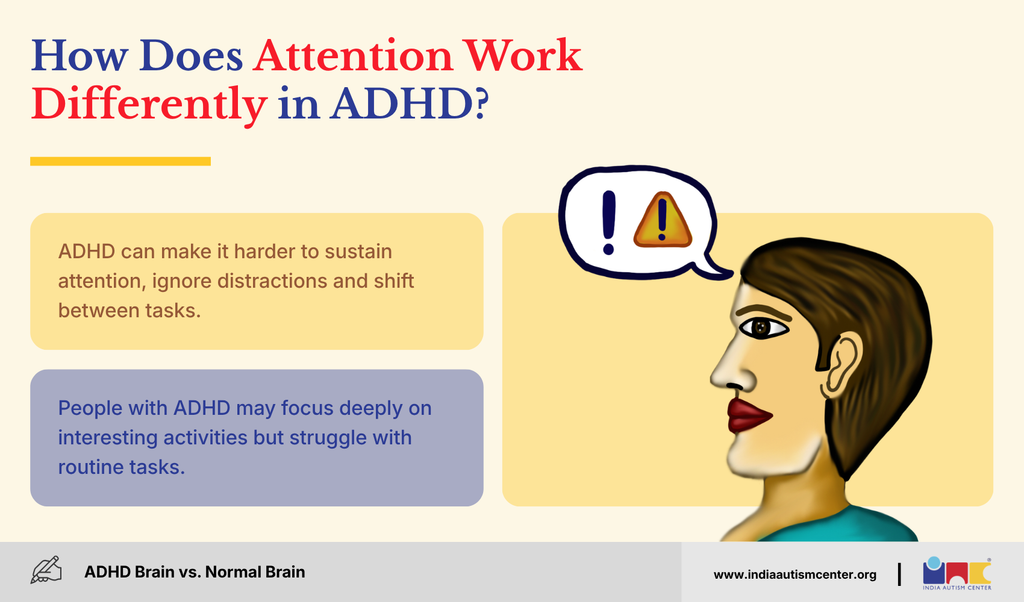
A person without ADHD can also become distracted, lose focus during a boring task or become deeply absorbed in something interesting. The difference in ADHD is that difficulties regulating attention tend to be more persistent and impairing.
The ADHD brain vs. normal brain comparison becomes particularly useful when looking at attention regulation rather than attention itself.
Someone with ADHD may find it difficult to:
- maintain attention during repetitive activities
- ignore irrelevant sights, sounds, or thoughts
- shift attention appropriately between tasks
- listen to lengthy instructions
- remember information while simultaneously completing a task
This does not mean that people with ADHD cannot concentrate. In fact, they may sometimes concentrate intensely on an activity that is highly interesting or rewarding. This is one reason why describing ADHD simply as an “attention deficit” can be misleading.
The difficulty is often better understood as a problem with attention regulation.
For example, a child might spend an hour completely absorbed in a favourite activity but struggle to spend ten minutes completing routine homework. An adult may become deeply focused on an engaging work project while repeatedly postponing an administrative task.
The ability to focus is therefore not necessarily absent. The challenge is regulating where, when, and for how long attention is directed.
ADHD Brain vs. Normal Brain: What Happens With Motivation and Reward?
One of the most important areas in the ADHD brain vs. normal brain discussion is motivation.
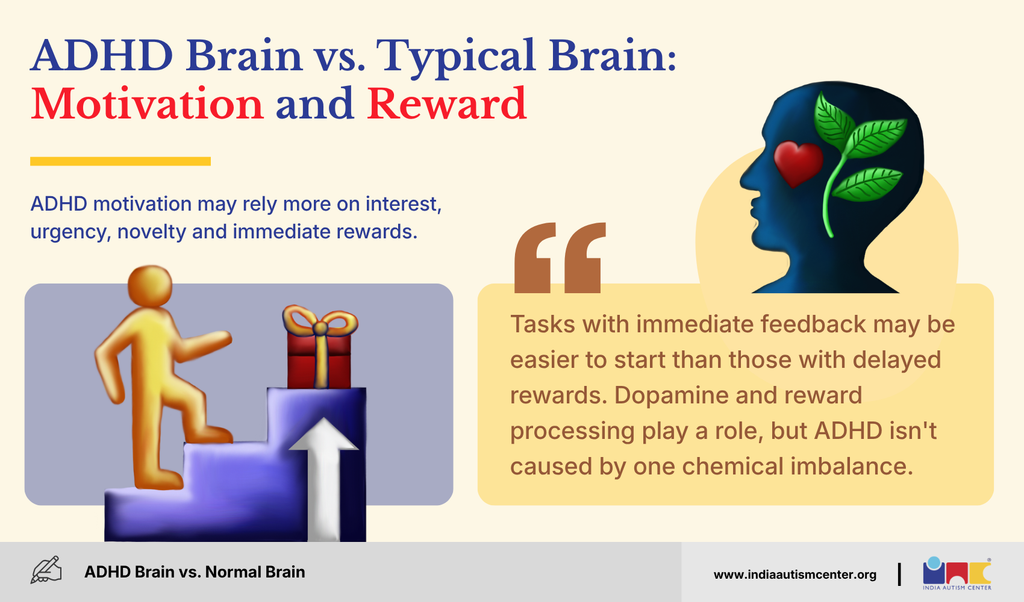
People with ADHD may depend more on immediate interest, novelty, urgency or reward when engaging with a task. A task that provides immediate feedback can feel much easier to start than one where the reward comes weeks or months later.
This is why a person with ADHD might procrastinate on an important assignment but suddenly work intensely as the deadline approaches.
Research has linked ADHD with differences in reward processing and dopamine signalling. However, it would be inaccurate to say that ADHD is caused by “not having enough dopamine”. A 2024 review of the dopamine evidence concluded that dopamine is involved in ADHD, but that the evidence does not support a simple explanation of ADHD as a universally hypo-dopaminergic state.
Dopamine is involved in several processes relevant to ADHD, including motivation, reward, learning and aspects of cognitive control. Other neurotransmitter systems, particularly noradrenaline, are also important.
This helps explain why what causes ADHD in the brain cannot be reduced to one chemical or one brain region. ADHD reflects complex interactions between brain development, genetics, neurochemistry, and environmental factors.
What Causes ADHD in the Brain?
A common question is, what causes ADHD in the brain?
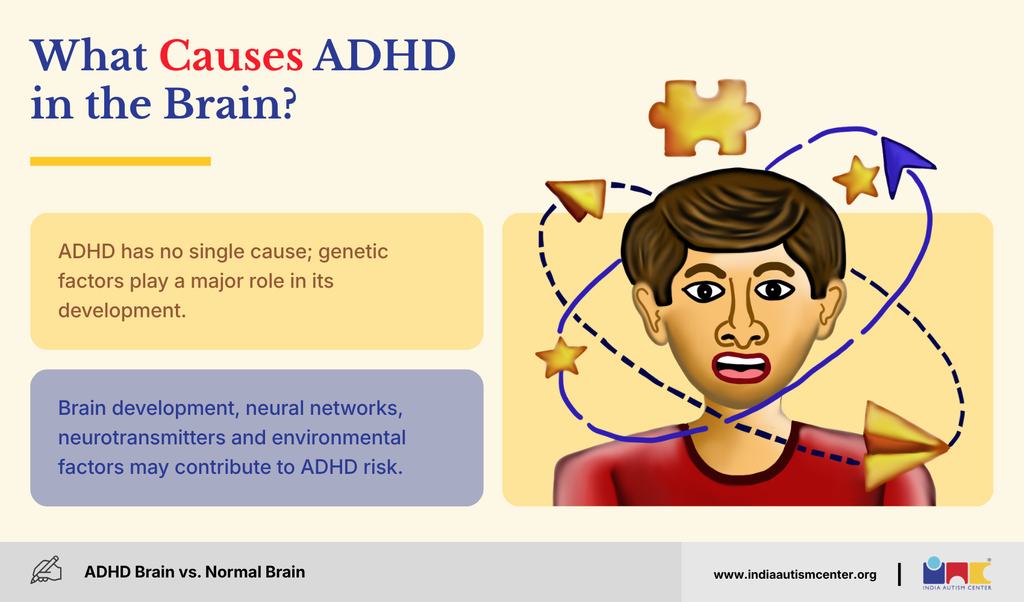
The most accurate answer is that ADHD does not have one single brain-based cause.
Genetic factors play a major role, while differences in brain development, neural networks, and neurotransmitter systems are also involved. Researchers have identified associations between ADHD and systems responsible for executive control, attention, reward and response inhibition.
Some environmental and developmental factors can also increase the likelihood of ADHD. These include factors such as premature birth and certain prenatal exposures. However, an environmental factor increasing risk does not mean it independently causes ADHD in every individual.
Importantly, ADHD is not primarily caused by poor parenting, laziness, lack of discipline, or low intelligence.
The condition also cannot be identified simply by looking at a person’s brain structure. Brain-imaging findings are valuable for research, but they are not currently a standalone diagnostic test.
Executive Function: A Major Difference in Everyday Functioning
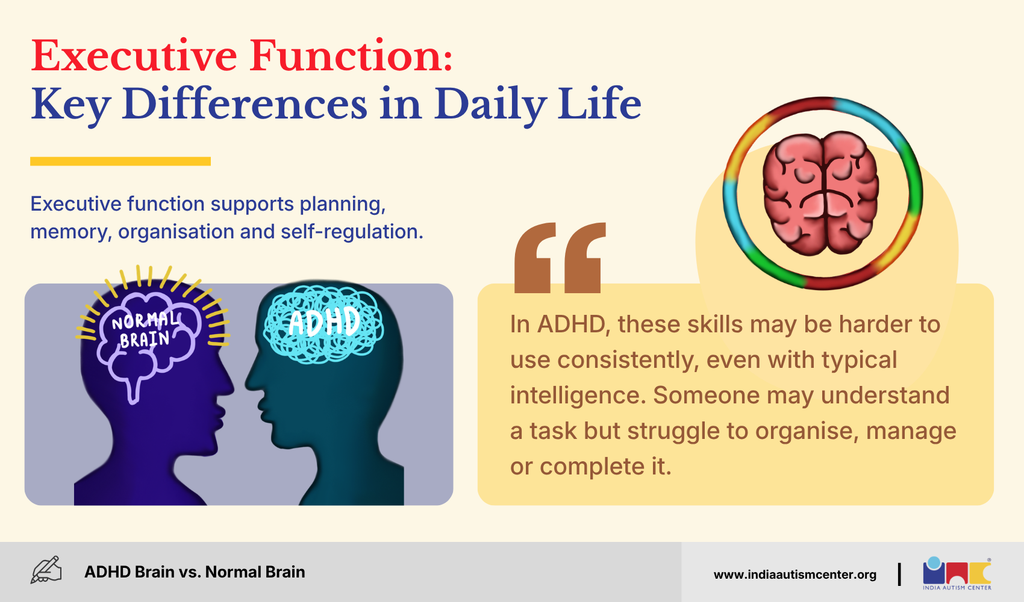
Executive function essentially refers to a group of mental processes that help us regulate behaviour and work towards goals.
These include skills such as:
- planning
- organising
- working memory
- inhibiting impulses
- shifting between tasks
- monitoring progress
- initiating activities
Executive function difficulties are particularly important when understanding the ADHD brain vs. the normal brain because they can affect everyday life even when a person’s intelligence is completely typical.
A student may understand a maths problem but forget to submit the completed homework. An adult may have an excellent long-term plan but struggle to organise the smaller steps needed to carry it out.
This is sometimes called the gap between knowing what to do and being able to do it consistently.
Research reviews have identified executive-function difficulties as an important feature associated with ADHD, although these difficulties vary considerably between individuals.
This is also an important area when considering neurodevelopmental conditions more broadly, because executive-function challenges can occur in conditions other than ADHD.
ADHD Brain vs. Normal Brain: How Does Impulse Control Differ?
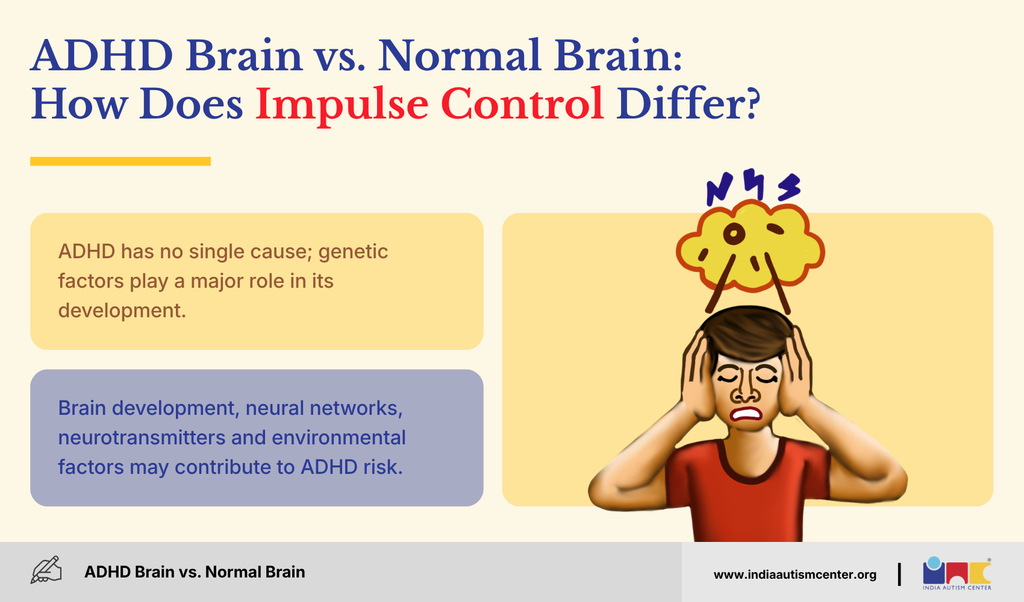
Another important difference concerns inhibitory control, or the ability to pause before responding. Everyone acts impulsively occasionally. In ADHD, impulsivity can be more frequent and impairing.
A person may:
- interrupt conversations
- answer before a question has been completed
- make rapid decisions
- struggle to wait
- act on an immediate thought before considering longer-term consequences
This involves more than simply behaving badly. Response inhibition depends on coordinated activity across brain networks involved in cognitive control.
NICE describes impulsivity, inattention and hyperactivity as core manifestations of ADHD and emphasises that symptoms must cause meaningful impairment across important areas of life for a diagnosis to be made.
Does ADHD Affect Memory?
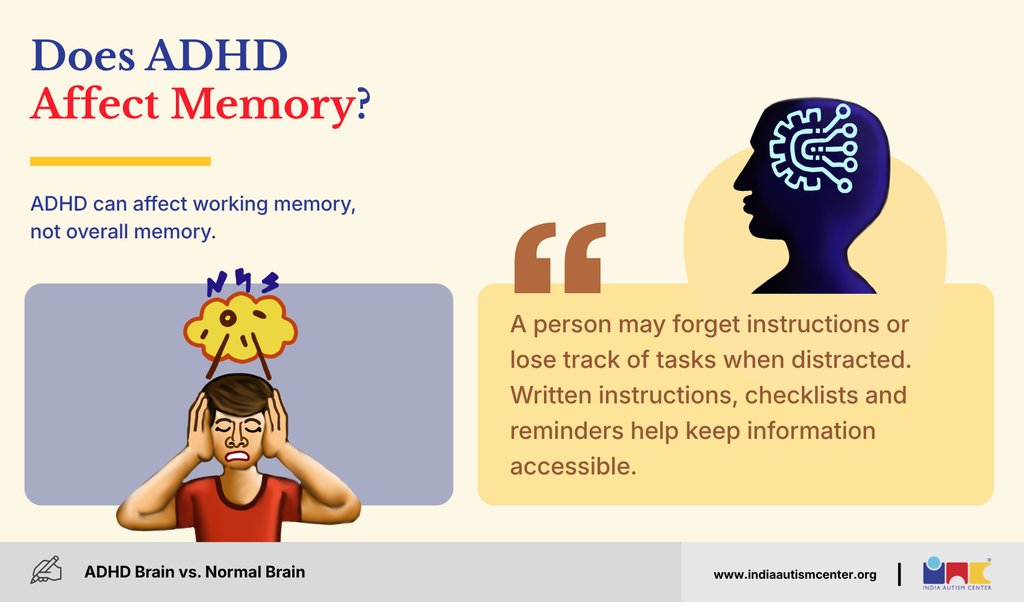
ADHD does not mean that a person has a generally poor memory.
Instead, difficulties often involve working memory, the ability to hold and manipulate necessary information temporarily while completing a task.
For example, a child may hear three instructions but forget the second one before completing the first. An adult might open an email to complete a task, become distracted by another message, and forget what they originally intended to do.
This is one reason why externalising information can help. Written instructions, checklists and reminders reduce the amount of information that has to be actively maintained.
ADHD and Autism: Are the Brain Differences the Same?
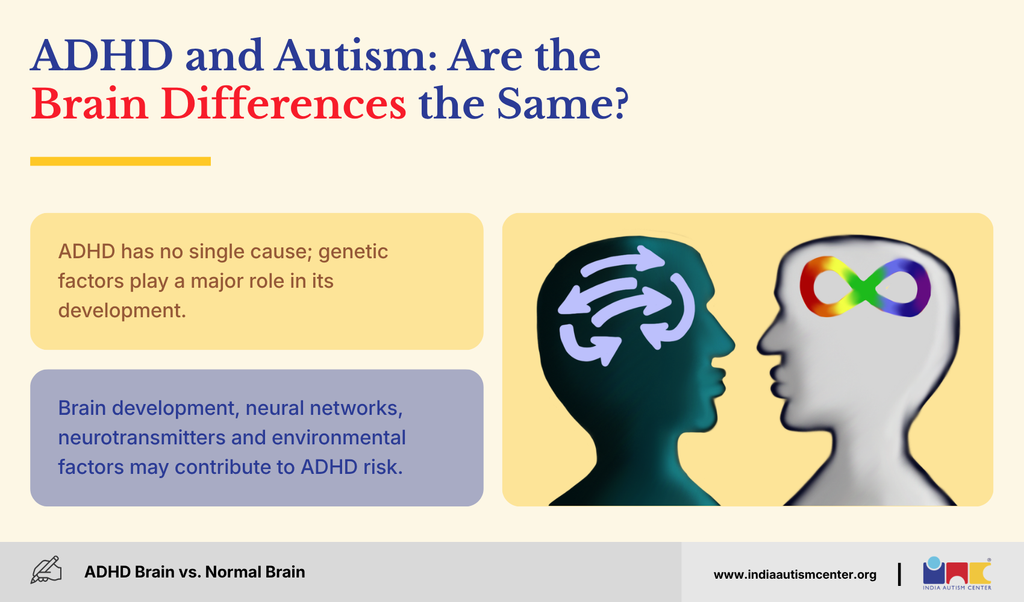
ADHD and autism are separate neurodevelopmental conditions, but they can occur together and can share some features.
Both may involve differences in executive function, attention regulation and self-regulation. However, they are not the same condition and should not be diagnosed based on one overlapping characteristic.
NICE recognises ADHD as one of the neurodevelopmental conditions that can coexist with autism.
This is particularly important because someone may have both ADHD and autism. In such cases, understanding the individual’s complete developmental profile is more useful than trying to fit every behaviour into one diagnosis.
Parents who are exploring developmental differences may also find information on autism assessment and autism screening tools useful, particularly when questions about attention, communication and behaviour overlap. Screening, however, does not replace a comprehensive clinical assessment.
Can the ADHD Brain Be “Fixed”?
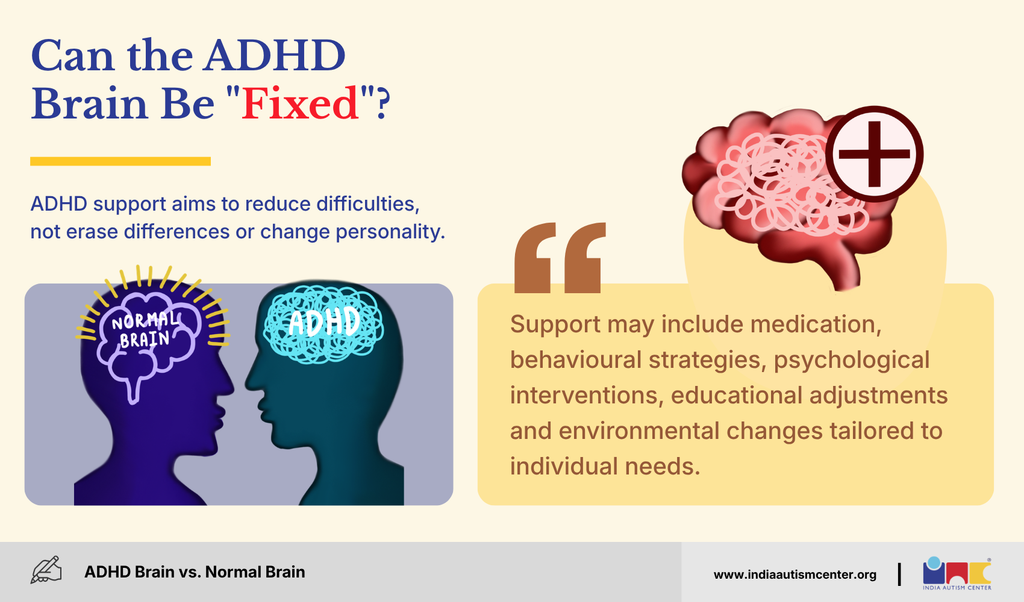
The idea that the ADHD brain needs to be “fixed” is misleading.
ADHD is a neurodevelopmental condition, not a character flaw. Treatment aims to reduce impairment and help the person function effectively, rather than change their personality or erase every difference.
Depending on age, needs and circumstances, support can include medication, behavioural approaches, psychological interventions, educational adjustments and environmental modifications.
NICE recommends an individualised approach that considers symptoms, functional impairment, coexisting conditions and the person’s educational, occupational and social circumstances.
For children, support may also involve parents, teachers and other professionals. The most useful plan usually focuses on the person’s actual difficulties rather than applying a single strategy to everyone with ADHD.
What the ADHD Brain Comparison Really Tells Us
The biggest lesson from the ADHD brain vs. normal brain comparison is that attention and self-regulation are not simply matters of willpower.
A person with ADHD may have the knowledge and ability to complete a task but struggle with the brain processes required to initiate, sustain, organise, or regulate that task. At the same time, research does not support a simplistic picture in which every person with ADHD has the same brain structure or the same neurotransmitter abnormality.
ADHD is heterogeneous. Symptoms and their severity differ between individuals, and the way ADHD appears can change across development. Understanding this complexity helps families, teachers and employers move away from labels such as “lazy”, “careless” or “unmotivated” and towards practical support.
How India Autism Center Supports Understanding of Neurodevelopmental Differences
India Autism Center takes an evidence-informed and individualised approach to understanding autism and related neurodevelopmental conditions. Its work brings together residential care, training and research, with an emphasis on personalised support rather than one-size-fits-all solutions.
For families exploring ADHD, autism or overlapping developmental concerns, accurate information is an important first step. IAC’s resources cover topics including ADHD in children, assessment, autism screening and executive functioning. Its research also examines executive function, including impulse control and mental flexibility.
Professional assessment remains important when symptoms interfere with learning, relationships, work, or daily functioning. The goal is not simply to identify a label, but to understand the individual’s strengths, challenges, and support needs.
Conclusion
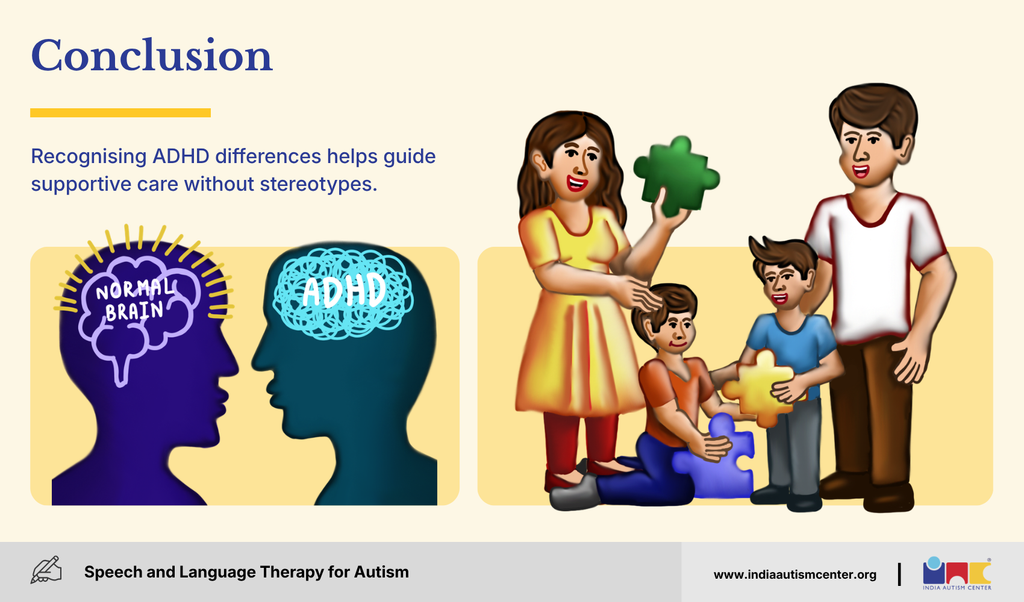
The ADHD brain vs. normal brain comparison is most useful when it helps us understand differences without turning them into stereotypes. ADHD involves complex differences in attention regulation, executive function, reward processing, and impulse control, influenced by genetics and neurodevelopment. It does not mean that a person is less intelligent or incapable of focusing.
Understanding what causes ADHD in the brain also requires moving beyond simple explanations about dopamine or one particular brain region. ADHD is a complex condition that needs individualised assessment and support. With appropriate interventions, environmental changes and understanding, people with ADHD can learn, work, build relationships and pursue their goals successfully.
Frequently Asked Questions
1. What are some of the key differences between an ADHD brain and a typical brain?
The main difference is not that one brain can focus and the other cannot. ADHD involves differences in regulating attention, impulses, motivation, and executive functions, which can make certain tasks more difficult.
2. What causes ADHD in the brain?
There is no single cause. Genetics, brain development, neurotransmitter systems, and certain developmental or environmental risk factors can contribute to ADHD.
3. Is ADHD caused by low dopamine?
Not simply. Dopamine signalling is involved in ADHD, but current evidence does not support the idea that everyone with ADHD has “low dopamine”. ADHD involves multiple interacting neural systems.
4. Can someone with ADHD concentrate for a long time?
Yes. People with ADHD can concentrate intensely, particularly when an activity is interesting, novel, or rewarding. ADHD is primarily a difficulty with regulating attention, not an inability to pay attention.
5. Does ADHD affect intelligence?
No. ADHD does not determine intelligence. A person with ADHD can have any level of intellectual ability.
6. Is ADHD a lifelong condition?
ADHD begins during childhood, although symptoms and their impact can change with age. Some people continue to experience significant symptoms and impairment into adulthood.