 Donate now
 Get a Call Back
 MENU
MENU 10 MIN READ
 SHARE
SHARE


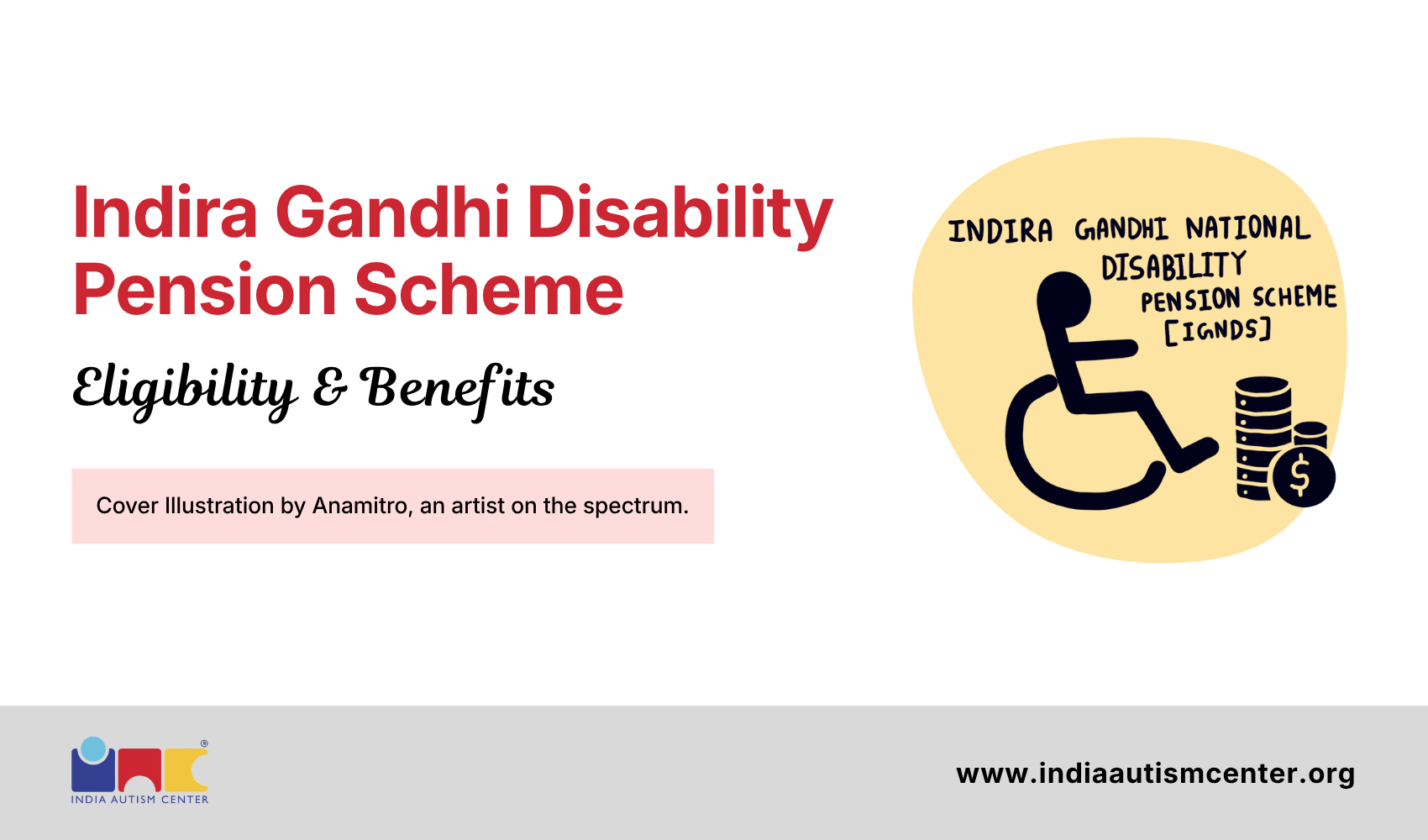
For many persons with disabilities, regular financial support can make everyday living more manageable and reduce dependence on family members.
In India, the Indira Gandhi National Disability Pension Scheme (IGNDPS) is a central component of the National Social Assistance Programme (NSAP) for eligible persons with severe or multiple disabilities from households meeting the prescribed poverty criteria.
The latest Ministry of Rural Development annual report states that the scheme provides central assistance of ₹300 per month for eligible beneficiaries aged 18 to 79 years.
What Is the Indira Gandhi Disability Pension Scheme?
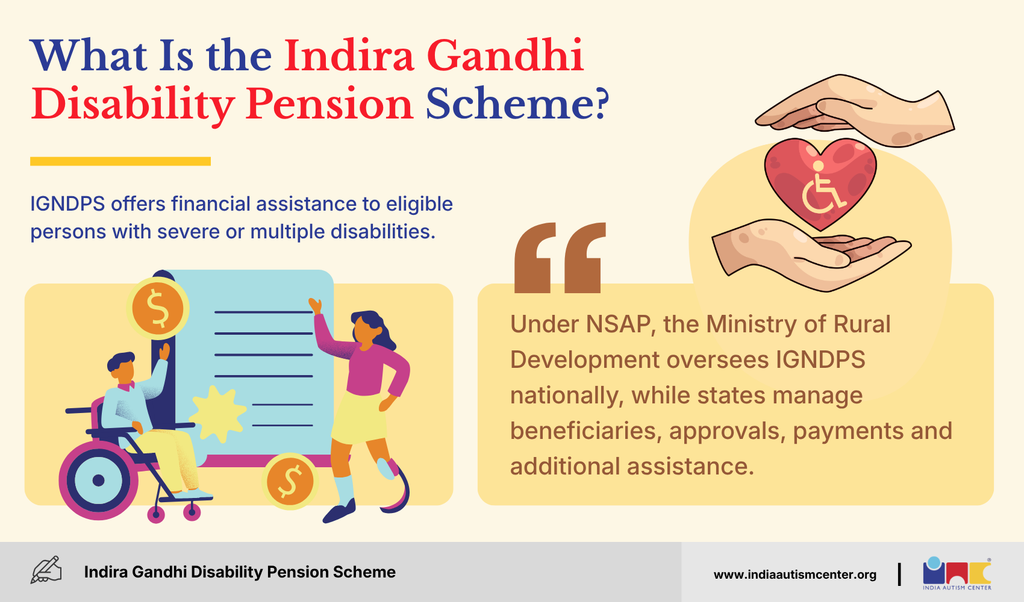
The full form of IGNDPS is Indira Gandhi National Disability Pension Scheme. The Indira Gandhi Disability Pension Scheme is a social assistance programme under NSAP.
The scheme is administered at the national level by the Ministry of Rural Development, while identification of beneficiaries, sanction and disbursement are handled by the respective State or Union Territory authorities. States and UTs can also provide additional assistance from their own resources.
The scheme is intended to provide a basic level of income support to vulnerable persons with disabilities. It is important to understand that the central pension is not necessarily the final amount received by a beneficiary. States may add their own contribution, and the actual disability pension amount can therefore differ across states.
Who Is Eligible for the Indira Gandhi Disability Pension Scheme?
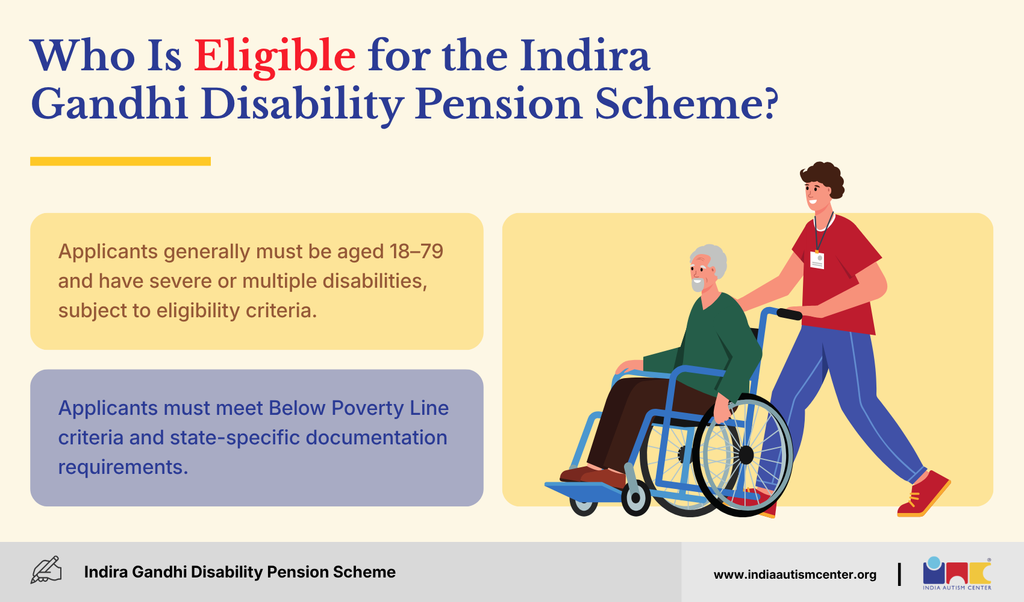
Under the current central NSAP framework, the main eligibility conditions for IGNDPS are:
- The applicant should generally be 18 to 79 years old.
- The person should have a severe or multiple disability as specified under the scheme.
- The person should belong to a household living below the poverty line (BPL) according to the criteria prescribed by the Government of India.
- The applicant must satisfy the applicable verification and documentation requirements of the State or UT administering the scheme.
The Ministry of Rural Development’s 2023-24 Annual Report confirms that IGNDPS covers persons aged 18 to 79 years with severe and multiple disabilities who belong to families living below the prescribed poverty line.
A crucial point is that having a disability does not automatically mean that a person qualifies for IGNDPS. The central scheme has specific requirements relating to disability, age and household economic status. State governments may also operate separate disability pension schemes in India with different eligibility conditions.
What Is the Disability Pension Amount Under IGNDPS?
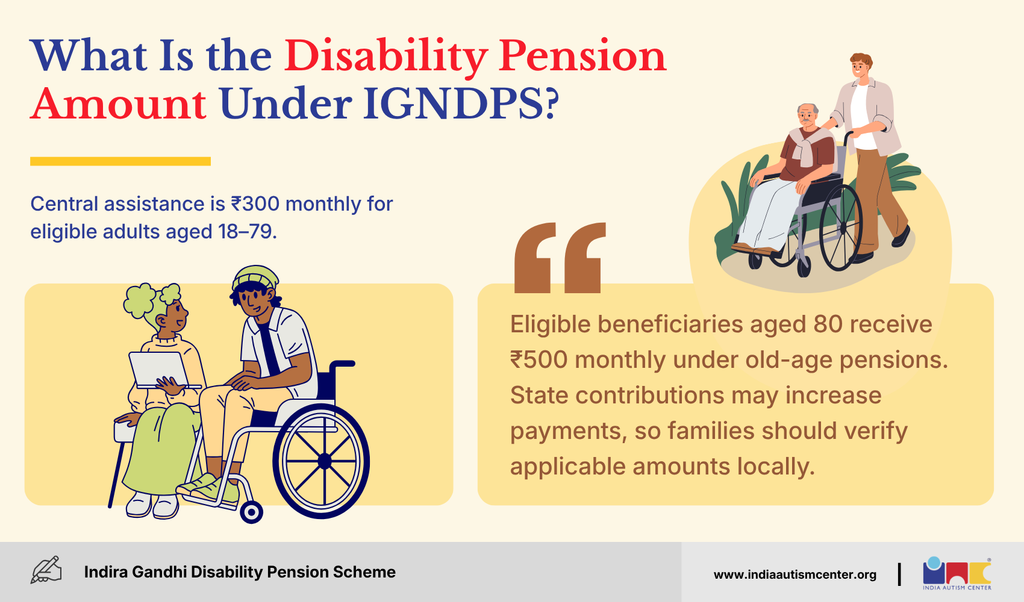
The central government currently provides:
| Beneficiary category | Central assistance |
| Eligible persons aged 18 to 79 years | ₹300 per month |
| Eligible beneficiaries after attaining 80 years | ₹500 per month |
The disability pension amount received by an individual may be higher because State and UT governments can provide additional assistance. The Ministry of Rural Development notes that States/UTs have the option to provide at least an equal contribution from their own resources under the three NSAP pension schemes.
Therefore, families should not assume that ₹300 is the final monthly pension in every state. The applicable State or UT welfare department should be checked for the current total payment.
What Are the Benefits of the Indira Gandhi Disability Pension Scheme?
The primary benefit is regular financial assistance to eligible persons with disabilities. Although the central contribution is modest, it can help with everyday expenses and provide a degree of financial independence.
The scheme can be particularly relevant for people who have limited earning opportunities because of severe or multiple disabilities. Depending on the State’s implementation, beneficiaries may also receive additional support through state-funded welfare programmes.
It is useful to view IGNDPS as one part of a broader social-security system rather than as a scheme designed to cover all disability-related expenses. Other support may include rehabilitation, assistive devices, healthcare, education-related assistance and caregiver support.
Is a Disability Certificate Required?
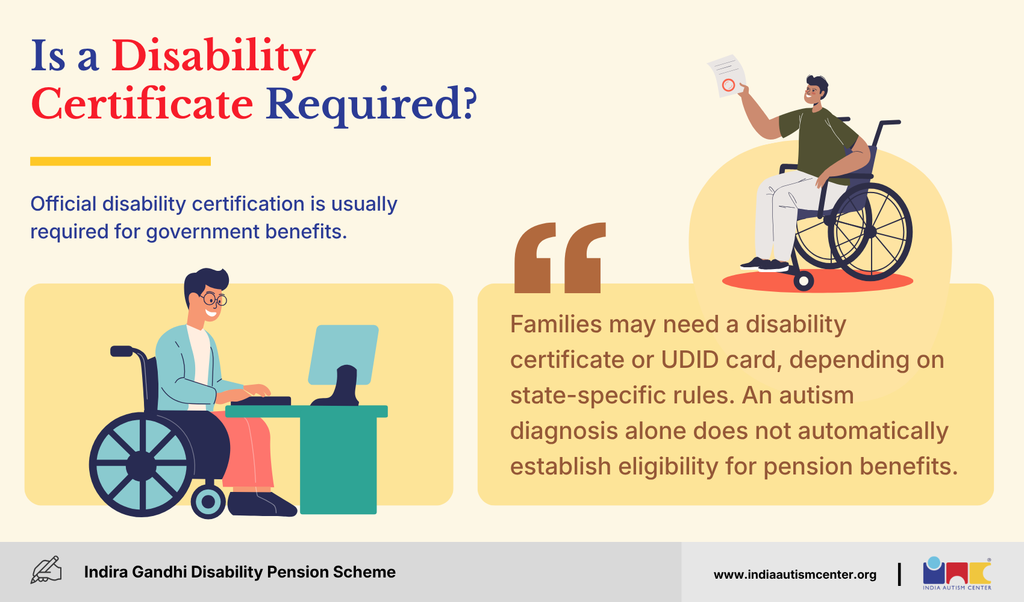
A person applying for disability-related government benefits generally needs official certification of their disability. The exact documents required for IGNDPS applications can vary according to the State or UT’s process.
For families supporting an autistic person, obtaining a disability certificate and UDID card can be an important practical step. Autism spectrum disorder is recognised as a specified disability as per the Rights of Persons with Disabilities Act, 2016, but a clinical diagnosis and government disability certification are not the same thing.
The certification process assesses the disability according to government-prescribed procedures. India Autism Center’s guide to obtaining an autism disability certificate explains the relationship between autism diagnosis, disability assessment and the UDID process.
This distinction matters because eligibility for a particular government benefit depends on the rules of that scheme. A diagnosis by itself should not be treated as automatic proof of eligibility for a pension.
How to Apply for the Indira Gandhi Disability Pension Scheme?
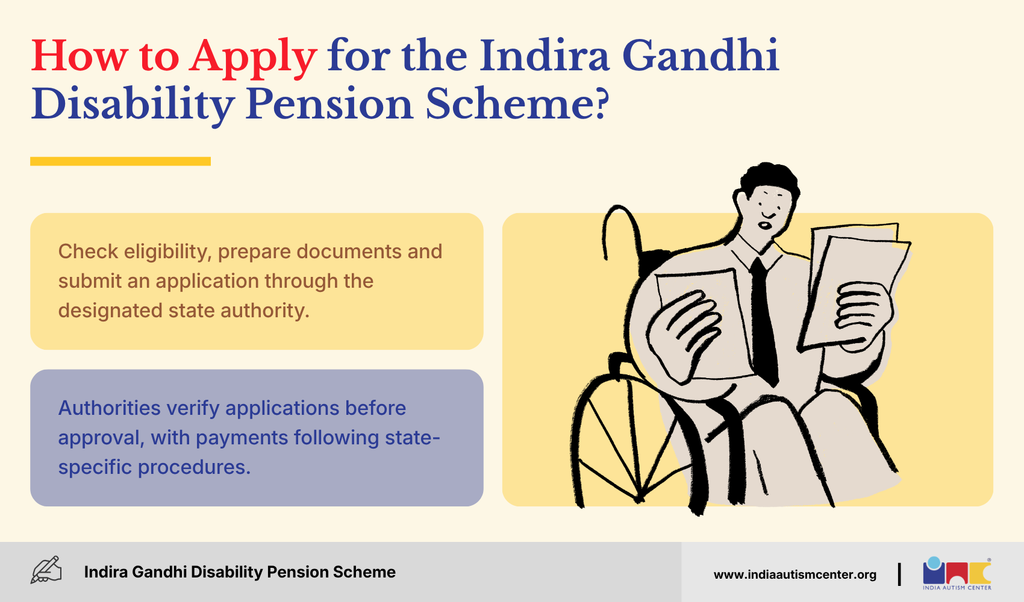
There is no single application procedure that is identical across every State and UT. NSAP is implemented through State and UT authorities, and applications may be processed through social welfare departments, local government bodies or designated online portals.
A typical process involves:
1. Check eligibility
Confirm the applicant’s age, disability status and household eligibility under the applicable BPL criteria.
2. Keep documents ready
These may include identity and address documents, disability certificate or UDID details, bank or post-office account details and income or BPL-related documents where required.
3. Submit the application
Apply through the designated State or UT department, local authority or online service, depending on the state.
4. Verification
The application and supporting documents are verified by the relevant authorities.
5. Sanction
Once approved, the beneficiary is enrolled under the applicable pension system.
6. Receive the pension
Payment is made according to the State or UT’s prescribed disbursement mechanism.
For example, the National Government Services Portal lists State-specific online services for applying for disability pensions in several states, demonstrating that the application route is not uniform across India.
Applicants should therefore avoid relying on an application procedure described for another state. Applicants can also check the disability pension status online.
Which Documents Are Needed for the Application?
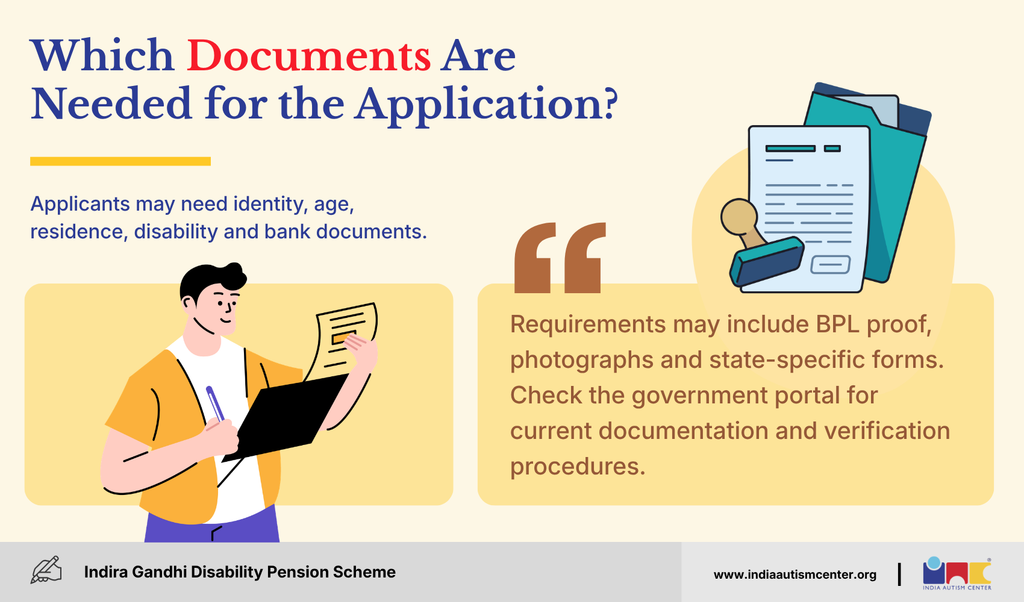
The exact document list can vary, but applicants may be asked for:
- Aadhaar or another accepted identity document
- Disability certificate and/or UDID details
- Proof of age
- Proof of residence
- Bank or post-office account details
- BPL or other economic-status documentation, where applicable
- Passport-sized photograph
- Any State-specific pension application or supporting documents
It is sensible to check the relevant State or UT portal before submitting the application because documentation requirements and verification procedures can change.
Does Autism Qualify for Disability Pension?
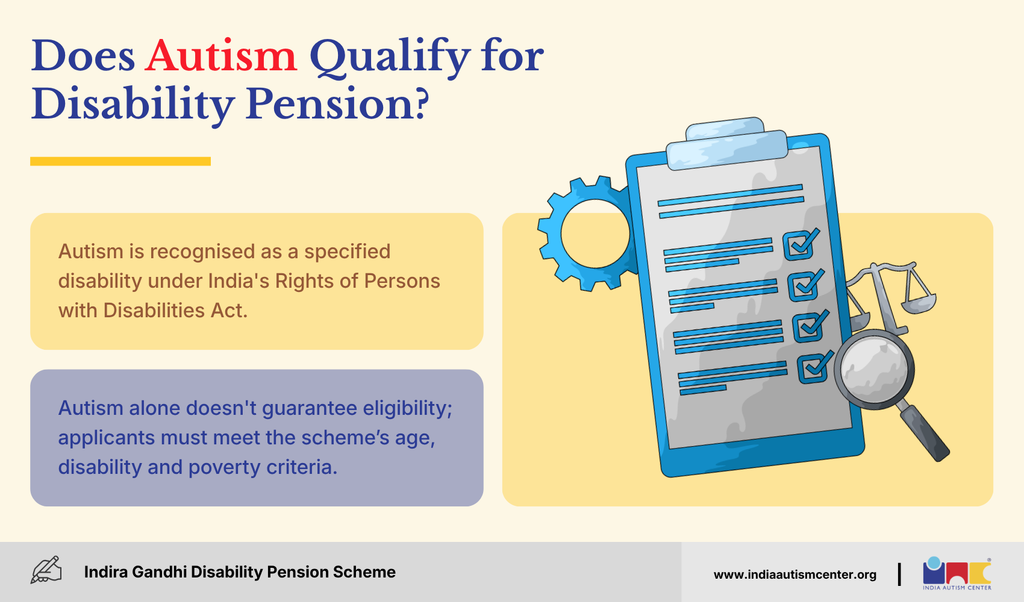
Autism spectrum disorder is recognised as a specified disability under India’s disability law. However, autism alone does not automatically establish eligibility for IGNDPS.
The central IGNDPS eligibility criteria refer specifically to severe or multiple disabilities and the prescribed BPL condition. Therefore, an autistic person or their caregiver should check whether the person’s certified disability and household circumstances meet the requirements of the scheme.
This is also why obtaining appropriate disability certification is important. A disability certificate records the recognised disability and the assessment made by the competent authority. A UDID card provides a standardised disability identity that can help people access applicable government services.
For families navigating several forms of support, it is worth exploring the wider government schemes for persons with disabilities rather than relying on one pension alone. India Autism Center’s updated guide to disability schemes covers programmes involving healthcare, rehabilitation, assistive devices, care and financial support.
IGNDPS vs State Disability Pension Schemes
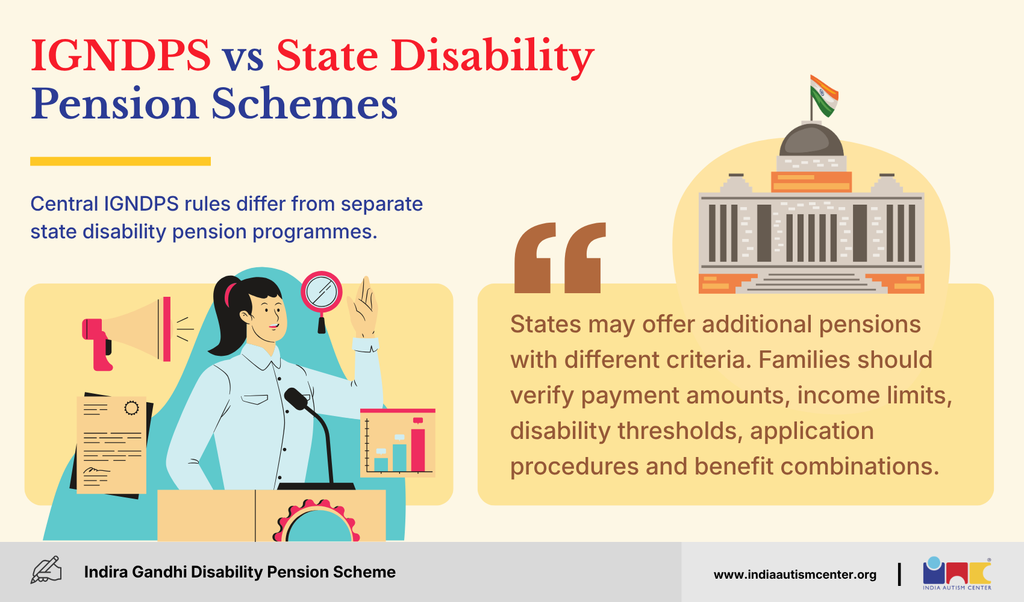
One common source of confusion is the difference between the central IGNDPS and state-level pension programmes.
IGNDPS is part of NSAP and has nationally prescribed central assistance and eligibility requirements. State governments can supplement the central assistance and may also run separate pension programmes.
As a result, two people with similar disabilities living in different states may receive different amounts or may encounter different application requirements.
Before applying, families should therefore check:
- Whether the person qualifies for IGNDPS
- Whether the State offers an additional disability pension
- Whether both benefits can be received simultaneously
- Whether the State has a separate income ceiling or disability threshold
- Which department or local authority accepts applications
This approach can prevent a common mistake: assuming that every pension for a disabled person in India follows the same rules.
How Can Families Use Disability Pension Support Effectively?
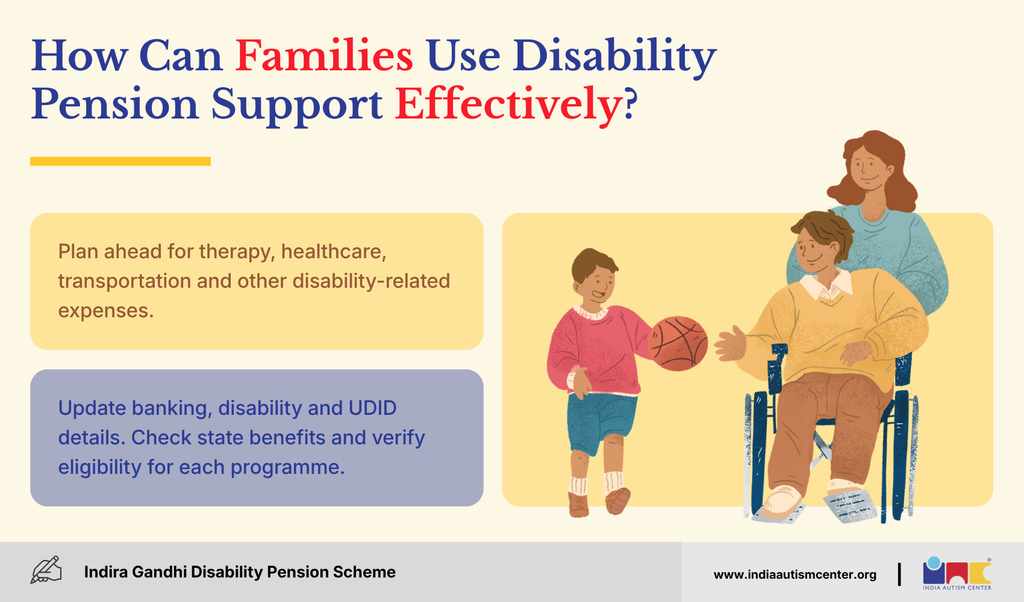
A disability pension is intended to provide basic financial assistance, but families may need to plan carefully because the amount may not cover all disability-related expenses.
For a person with autism or another disability, regular costs can include therapy, assistive devices, transportation, healthcare, educational support and other services.
Families can therefore consider the pension as one part of a broader financial and support plan. Keeping the beneficiary’s bank account, disability certificate, UDID details and other documents updated can help avoid unnecessary delays in accessing benefits.
It is also important to check whether the State or Union Territory provides additional financial assistance or other welfare schemes for persons with disabilities.
For children and young adults with disabilities, parents should also think beyond immediate expenses and explore long-term financial planning, especially where the individual may require continuing support in adulthood.
Depending on eligibility, families may be able to combine different forms of government assistance, healthcare support, rehabilitation services and social security benefits.
Most importantly, families should verify each scheme’s eligibility separately. Receiving a disability certificate or one government benefit does not automatically establish eligibility for every other programme.
Checking the latest information with the relevant government department can help families access support without relying on outdated eligibility rules or pension amounts.
India Autism Center: Supporting Families Beyond Government Schemes
At India Autism Center, we believe that understanding autism should go beyond diagnosis.
Families often need practical information about disability certification, government schemes, financial planning, education, healthcare and long-term support. Reliable information can help parents and caregivers make informed decisions without feeling overwhelmed by complicated systems.
For autistic individuals and their families, government support can form one part of a wider support plan. Understanding the disability certificate, UDID card, available welfare schemes and long-term financial needs can make it easier to plan for different stages of life.
India Autism Center aims to provide accessible, evidence-informed resources that help families understand these pathways and advocate for meaningful inclusion.
Conclusion
The Indira Gandhi Disability Pension Scheme, officially the Indira Gandhi National Disability Pension Scheme (IGNDPS), provides central financial assistance to eligible persons aged 18 to 79 years with severe or multiple disabilities who belong to households meeting the prescribed BPL criteria.
The current central assistance is ₹300 per month, with ₹500 applicable from age 80 under the old-age pension framework.
However, the actual disability pension amount may be higher where the State or UT provides additional assistance. Because eligibility and application procedures can vary at the state level, applicants should always verify the latest requirements with the relevant government authority before applying.
Frequently Asked Questions
1. What is the IGNDPS full form?
IGNDPS stands for Indira Gandhi National Disability Pension Scheme. It is a component of the National Social Assistance Programme.
2. What is the disability pension amount under IGNDPS?
The central assistance is ₹300 per month for eligible persons aged 18 to 79 years
3. Who can apply for the Indira Gandhi Disability Pension Scheme?
The central criteria cover persons aged 18 to 79 years with severe or multiple disabilities who belong to households living below the prescribed poverty line, subject to applicable verification requirements.
4. Is autism covered under disability pension schemes in India?
Autism is a specified disability under the RPwD Act, 2016. However, eligibility for IGNDPS depends on the scheme’s specific disability, age and economic criteria.
5. Is a disability certificate required for pension?
Applicants generally need official evidence of disability, with the precise documentation determined by the implementing State or UT.
6. Is the Indira Gandhi Disability Pension Scheme available in every state?
IGNDPS is a central NSAP component implemented through States and UTs. Application procedures and additional state benefits can differ.
7. Can a person receive more than ₹300 per month?
Yes. The State or UT may provide additional assistance from its own resources so that the total pension can differ from the central contribution.