 Donate now
 Get a Call Back
 MENU
MENU 21 MIN READ
 SHARE
SHARE


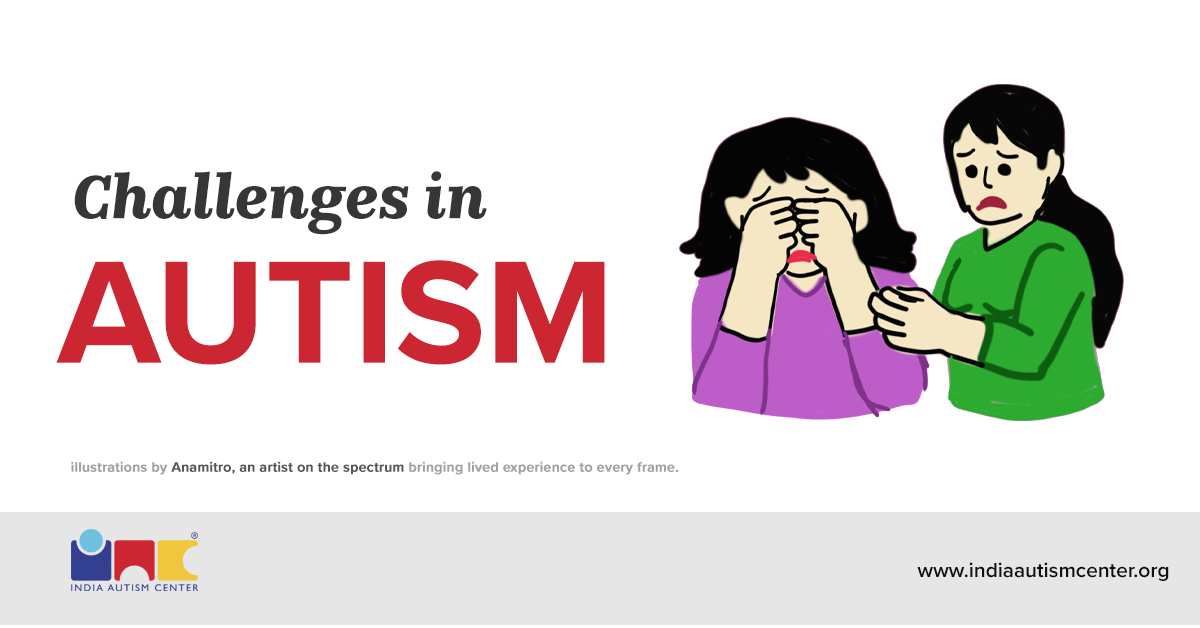
As someone who cares about autism, whether you are a caregiver, family member, educator, or someone on the autism spectrum, you’ve probably been worried about the challenges in autism:
- What are the real challenges in autism?
- How do these challenges affect daily life?
- What can we do to support autistic individuals better?
In this article, I’ll take you through a detailed, compassionate, and educational journey into the challenges of autism in everyday life. I’ll break down the key areas where autistic people often struggle, what these struggles look like day to day, and how you can understand them better.
What Is Autism Spectrum Disorder?
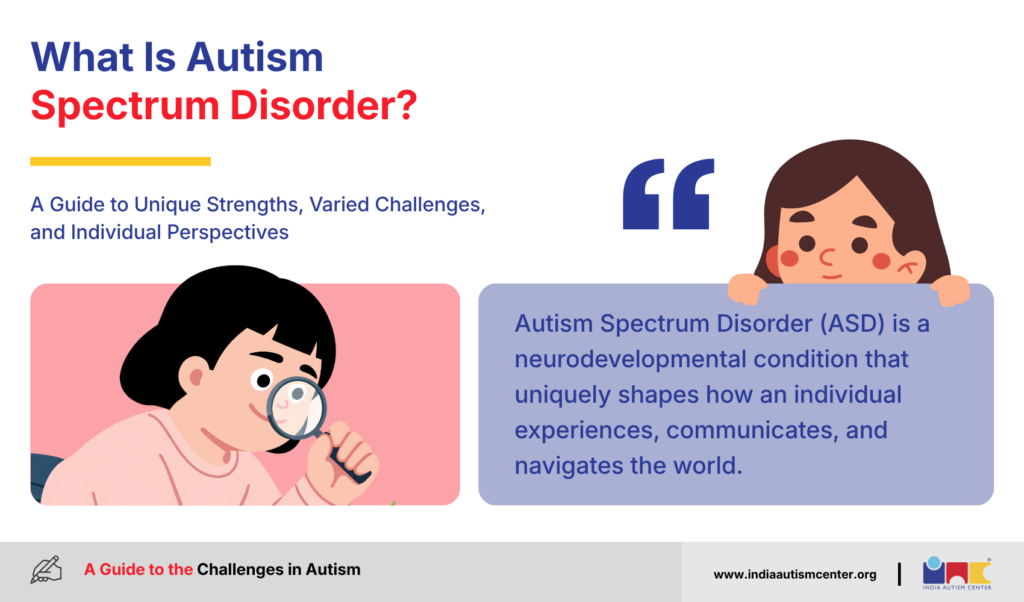
Autism Spectrum Disorder (ASD) is a neurodevelopmental condition that affects the way a person thinks, communicates, and experiences the world. It is called a “spectrum” because no two autistic individuals are the same. Each person has unique strengths, needs, and challenges.
At the core of autism, people may face differences in social communication, sensory processing, behaviour, and learning, but how these show up can vary widely from person to person.
Social Communication Challenges

One of the most discussed challenges autistic people face involves communication and social interaction.
Autistic individuals often find it hard to:
- Understand social cues like facial expressions or tone of voice.
- Maintain eye contact comfortably.
- Take part in back-and-forth conversations.
- Interpret sarcasm or indirect speech.
Sometimes, a person may not speak at all. Others may have advanced speech but still struggle with the social rules of communication.
Why is it a challenge in everyday life
You might feel misunderstood or unable to express your own thoughts clearly. This can lead to frustration, social isolation, or anxiety, especially in group settings.
That doesn’t mean autistic people don’t want connection. It means the way they connect is different. Many communicate through alternative methods, gestures, pictures, technology, or Augmentative and Alternative Communication (AAC).
Want to know more? Get in touch with us.
Sensory Processing: A Hidden Everyday Challenge

Another major set of challenges in autism involves sensory sensitivities. Many autistic individuals process sensory information differently from others.
This can include:
- Hypersensitivity — extreme sensitivity to lights, sounds, textures, or smells.
- Hyposensitivity — needing more intense sensory input to feel comfortable.
These sensory reactions are more than just preferences — they can deeply affect everyday life.
Imagine trying to concentrate when fluorescent lights make your head throb, or eating dinner when food textures feel unbearable. These are real struggles for many autistic people.
Challenges of autism in everyday life include:
- Overwhelm in crowded or noisy places.
- Avoiding certain foods because of how they feel.
- Difficulty wearing certain clothes due to texture sensitivity.
Sensory overload can also lead to shutdowns or meltdowns — intense reactions that are often misunderstood by others. These reactions are not “bad behaviour”; they are nervous system responses to overwhelming stimuli.
Routine, Change, and Predictability

Many autistic people prefer structure and routine. Predictability creates safety. Change can feel threatening or disorienting.
Imagine if your daily schedule suddenly changed — like missing your usual bus, or plans shifting at the last minute. For someone with autism, this can be far more stressful than it sounds.
Some common everyday challenges include:
- Anxiety when routines are interrupted.
- Stress about new environments or unfamiliar tasks.
- Resistance to change, even when the change is positive.
Routines help reduce anxiety and offer a sense of control. Without routine, the brain has to work harder to predict what will happen next — and that extra effort can be exhausting.
Executive Functioning and Daily Tasks

Executive functioning is a set of mental skills — like planning, organising, initiating tasks, and following through.
Many autistic individuals struggle with one or more of these skills. That can make everyday tasks feel overwhelming:
- Planning a schedule
- Organizing belongings
- Starting a task (even when you want to)
- Switching between tasks
This is another challenge in autism that often goes unnoticed because it affects thinking processes rather than outward behaviours.
For example, something as simple as cooking dinner can become stressful if planning, timing, and multi-step thinking are hard.
Behaviour Challenges in Autism

When we talk about behaviour challenges in autism, we’re not talking about “bad” behaviour. Rather, we’re talking about behaviours that arise from unmet needs or communication differences.
Behaviour challenges may include:
- Aggression or self-injury
- Repetitive behaviours (like rocking or hand-flapping)
- Difficulty regulating emotions
- Shutdowns or meltdowns when overwhelmed
These behaviours often occur because something else is triggering stress — sensory overload, anxiety, or difficulty expressing a need.
For example, a child may hit when they are overstimulated and unable to communicate that they need a quiet space.
Helpful strategies usually involve:
- Understanding the cause of the behaviour
- Building communication tools
- Creating predictable routines
- Teaching self-regulation skills
Behaviour challenges in autism are often a form of communication — a way of showing distress when words aren’t enough.
Want to know more? Get in touch with us.
Sleep and Biological Challenges

Sleep problems are very common among autistic individuals. Research indicates that up to 80% of autistic children experience sleep disturbances, compared to 25-40% in the general population.
These challenges can include:
- Trouble falling asleep
- Frequent nighttime waking
- Irregular sleep cycles
Poor sleep affects energy, emotion regulation, concentration, and behaviour the next day.
Sleep issues might occur due to sensory sensitivities, anxiety, or neurological differences. Addressing them often involves creating calming bedtime routines and sensory-friendly sleep environments.
Gastrointestinal and Eating Challenges

Many autistic people experience gastrointestinal (GI) problems such as constipation, stomach pain, or diarrhoea. Research suggests that GI symptoms can occur in nearly half to most autistic children.
Additionally, food refusal is common and is often linked to sensory sensitivities — certain textures, smells, or combinations may be intolerable.
In everyday life, this can make mealtime stressful or limited, affecting nutrition, family routines, and social eating situations.
Social Isolation and Misunderstanding
When you struggle with social communication and sensory processing, everyday environments — classrooms, workplaces, public places can feel intimidating.
Autistic people often experience:
- Misunderstandings in conversations
- Difficulty making or keeping friends
- Feeling left out or unseen
Many adults with autism report stress when navigating social cues that others take for granted.
Social differences are one of the hardest challenges autistic people face because they affect connection, something we all need.
Autism and Food Refusal

Food refusal, a significant concern for many families with autistic individuals, is often linked to sensory sensitivities, rigid eating habits, or gastrointestinal discomfort. In the Indian context, where traditional diets may differ significantly from the Western norm, addressing food-related challenges about autism and food refusal requires a culturally sensitive approach.
We work closely with nutritionists and behavioural therapists to develop personalised plans that accommodate sensory preferences while ensuring balanced nutrition. By promoting a nuanced understanding of food-related challenges, we aim to empower families to create nourishing environments for their autistic loved ones.
In India, where cultural nuances play a significant role in shaping behavioural expectations, we emphasise culturally competent approaches to autism and behaviour problems. By working with psychologists and behaviour analysts, we equip families and caregivers with tools to navigate and address challenging behaviours, fostering a more inclusive and understanding society.
Here is our guide on Autism Therapies at Home, which might help you address some of these challenges.
Autism Challenges in the Classroom
School can be one of the most demanding environments an autistic child faces – and one of the least adapted for how their brain works. If your child comes home exhausted, dysregulated, or refusing to go back, the classroom environment itself may be the source.
Sensory Overload in School
A typical Indian classroom is a sensory minefield: fluorescent lights that flicker, 30 children talking at once, the smell of chalk and tiffin boxes, a uniform that scratches. For an autistic child with sensory sensitivities, this isn’t background noise – it’s a constant physiological assault.
Sensory overload reduces attention, increases anxiety, and makes learning nearly impossible. It also frequently triggers meltdowns that teachers misread as behavioural problems.
What helps:
- Seating away from high-traffic, noisy areas
- Permission to use noise-cancelling headphones during independent work
- Access to a calm-down space – even a quiet corner
- Reduced visual clutter around the child’s desk
Social Interaction Difficulties with Peers
Playground and lunch break can be the hardest parts of the school day. Unstructured social time, implicit social rules, rapidly shifting group dynamics – these are exactly the situations autistic children find most confusing and exhausting.
Peer rejection and bullying are real risks. Autistic children are significantly more likely to be bullied, and the social isolation compounds the mental health challenges they already face.
What helps:
- Structured social activities with clear rules (board games, shared projects) rather than open-ended play
- A trusted peer buddy system
- Teacher awareness of social dynamics – not just academic performance
Executive Function Challenges
Transitions, task-switching, starting a new activity, organising materials, remembering what homework was set – these are all executive function tasks, and they’re consistently difficult for autistic students.
This is not defiance. A child who can’t start their essay isn’t being lazy. Their brain is genuinely struggling with task initiation.
What helps:
- Visual schedules showing the day’s sequence
- First/then boards for transitions (“First maths, then break”)
- Chunking large tasks into small, numbered steps
- Extra time – not as a special favour, but as a reasonable accommodation
- Advance notice of any change to routine
Communication Barriers with Teachers
Many autistic children struggle to ask for help, especially in a busy classroom. They may not be able to formulate the question quickly enough, may fear the social exposure of speaking up, or may genuinely not know what they don’t understand.
What helps:
- A private signal system (a card on the desk) the child can use to indicate they need help without speaking
- Written instructions alongside verbal ones
- Regular, low-key check-ins from the teacher rather than waiting for the child to initiate
Special Interests: Challenge and Strength
A child who can talk for 45 minutes about dinosaurs but won’t engage with the maths worksheet is not being difficult. Special interests are a genuine neurological feature – and a powerful teaching tool.
The challenge is when rigidity around interests disrupts learning. The strength is that interest-based learning dramatically increases engagement and retention. A maths problem about dinosaur weights is the same maths problem. Use what works.
For Parents Advocating in Indian Schools
- Request a written Individual Education Plan (IEP) or support plan – you are entitled to ask for this
- Document specific challenges with concrete examples, not just general descriptions
- Bring information to teachers rather than assuming they know – most haven’t had autism-specific training
- Build a relationship with one key teacher or counsellor who becomes your child’s advocate within the school
Masking and Camouflaging in Autism
If your child seems “fine” at school but falls apart the moment they get home, you may already be witnessing masking – even if you didn’t have a word for it.
Masking (also called camouflaging) is the conscious or unconscious suppression of autistic traits to appear neurotypical. It looks like forcing eye contact, scripting conversations in advance, copying peers’ gestures, or laughing at jokes you don’t understand – all to avoid standing out.
Why It Happens
The drive to mask is rarely a free choice. It’s a survival response.
Autistic individuals learn early that their natural way of being – stimming, speaking bluntly, needing quiet – draws negative attention. Social pressure, fear of rejection, bullying, and the relentless message that “normal” is better all push people toward hiding who they are. In India, where social conformity is deeply valued and autism awareness is still growing, that pressure can be especially intense.
Who Is Most Affected
Masking is more common – and more damaging – in certain groups:
- Girls and women are diagnosed with autism far later than boys, partly because they tend to mask more effectively. Many aren’t identified until their 20s, 30s, or beyond.
- Late-diagnosed adults who spent decades masking without understanding why they were exhausted.
- Autistic people in high-demand social environments – competitive schools, workplaces, joint families.
The Mental Health Cost
This is where it gets serious. A 2024 systematic review found a significant correlation between camouflaging and higher anxiety, depression, and poorer psychological wellbeing. A separate 2024 meta-ethnography described masking as cognitively exhausting – leaving people “burnt out” and unable to manage basic daily activities.
Autistic burnout is real. It’s not laziness or a bad attitude. It’s the accumulated cost of performing neurotypicality for months or years without a break.
The mental health toll includes:
- Chronic anxiety and social anxiety
- Depression
- Identity confusion (“I don’t know who I really am”)
- Suicidal ideation in severe cases
- Complete withdrawal from activities that once felt manageable
Why Unmasking Matters
When an autistic person feels safe enough to unmask – to stim, to be direct, to say “I need a break” – their wellbeing improves measurably. Creating that safety isn’t weakness. It’s the most protective thing a family, school, or therapist can do.
The goal isn’t to make autistic people perform neurotypicality better. It’s to build environments where they don’t have to.
Alexithymia: When Emotions Are Hard to Name
Imagine not knowing whether you’re hungry, sad, or overwhelmed – just feeling a vague, uncomfortable pressure inside with no label attached. For many autistic individuals, this isn’t a metaphor. It’s Tuesday.
Alexithymia is the difficulty identifying and describing one’s own emotional states. The word comes from the Greek: a (no) + lexis (word) + thymos (emotion). It’s not that the person doesn’t feel – it’s that the internal signal and the language for it are disconnected.
How Common Is It?
Very. A systematic review and meta-analysis found a weighted prevalence of ~50% in autistic individuals, compared to roughly 5% in the general population. Some clinical studies of autistic adults report rates as high as 55–66%. It’s not a fringe experience – it’s something half the autistic community navigates every day.
Crucially, alexithymia is a separate condition that co-occurs with autism. Not every autistic person has it, and not everyone with alexithymia is autistic. But the overlap is substantial.
How It Shows Up in Daily Life
Alexithymia isn’t always obvious from the outside. Look for patterns like:
- Not recognising hunger or thirst until it becomes urgent or physical (headache, shaking)
- Describing emotions in physical terms – “my chest feels tight” instead of “I’m anxious”
- Appearing flat or unresponsive in emotionally charged situations – not because they don’t care, but because they can’t access the feeling in real time
- Delayed emotional processing – realising they were upset about something hours or days after it happened
- Difficulty understanding why they’re having a meltdown – the body is in crisis but the mind can’t name the cause
This creates real problems with self-care. If you can’t identify that you’re exhausted, you won’t rest. If you can’t name grief, you can’t seek comfort.
Impact on Relationships
Partners, parents, and friends often misread alexithymia as coldness, indifference, or emotional unavailability. It isn’t. The autistic person may care deeply but simply lack the internal map to navigate their own emotional landscape – let alone communicate it to someone else.
This misreading causes enormous relational damage. Families benefit enormously from understanding that “I don’t know how I feel” is a genuine, neurological reality – not an excuse.
Practical Ways to Support Someone with Alexithymia
- Use body-based check-ins: “What does your body feel like right now?” is often more accessible than “How are you feeling?”
- Offer emotion vocabulary without pressure: emotion wheels, feeling charts, or simple lists give a starting point without demanding introspection
- Don’t push for immediate emotional responses – give processing time, sometimes hours
- Name emotions you observe gently: “It looks like that was frustrating – is that right?” lets them confirm rather than generate
- Work with an occupational therapist or psychologist trained in interoception – the sense of the body’s internal states – which is often the root of alexithymia in autistic individuals
Co-occurring Conditions in Autism
Autism rarely arrives alone. For most autistic individuals, the challenges in autism are compounded by one or more co-occurring conditions – and understanding this is essential to getting the right support.
This isn’t about making autism seem worse than it is. It’s about being honest so families stop chasing one diagnosis while missing three others.
Anxiety Disorders
Anxiety is the most common co-occurring condition in autism. Estimates vary widely – from 20% to as high as 84% depending on the study and population – but the clinical reality is consistent: most autistic people experience significant anxiety.
In autism, anxiety doesn’t always look like worry. It can appear as rigidity, meltdowns, refusal, physical complaints (stomach aches, headaches), or increased stimming. Standard anxiety treatments often need modification to work for autistic individuals – cognitive approaches that rely on abstract self-reflection can fall flat when alexithymia is also present.
ADHD
ADHD and autism overlap more than most people realise. A meta-analysis found ADHD in approximately 38–40% of autistic individuals. The two conditions share some features – distractibility, impulsivity, difficulty with transitions – but they’re neurologically distinct and require different support strategies.
When both are present, executive function challenges are amplified. Organisation, task initiation, and emotional regulation all become significantly harder. Missing an ADHD diagnosis in an autistic child means missing a major piece of the support puzzle.
Depression
Depression affects autistic individuals at far higher rates than the general population, particularly in adolescence and adulthood. The causes are multiple: chronic social exclusion, the exhaustion of masking, repeated failure in environments not built for them, and the grief of late diagnosis.
Depression in autism can be harder to identify because it may not present as sadness. Look for increased withdrawal, loss of interest in special interests (a significant red flag), changes in eating or sleep, and increased irritability.
Epilepsy
Epilepsy affects approximately 12–35% of autistic individuals – a rate dramatically higher than in the general population. Seizures can be subtle (absence seizures, staring episodes) and are sometimes mistaken for inattention or dissociation. Any unexplained episodes of unresponsiveness in an autistic child warrant neurological evaluation.
OCD
Obsessive-compulsive disorder co-occurs with autism and is frequently misdiagnosed – or missed entirely, because repetitive behaviours are already expected in autism. The key clinical distinction: OCD-driven repetition is ego-dystonic (the person doesn’t want to do it and finds it distressing), while autistic repetition is often ego-syntonic (it feels regulating and comforting). Getting this distinction right matters enormously for treatment.
Eating Disorders and Feeding Difficulties
Sensory sensitivities, rigidity around food textures and presentation, and difficulties with interoception all make autistic individuals – particularly girls and women – vulnerable to eating disorders. ARFID (Avoidant/Restrictive Food Intake Disorder) is especially common and is frequently unrecognised in autistic children.
Why Co-occurring Conditions Are Missed
Diagnostic overshadowing is real: clinicians attribute everything to autism and stop looking. Families are told “that’s just the autism” when a child is actually in the grip of a treatable anxiety disorder or a depressive episode.
Holistic, multi-disciplinary care – involving psychiatry, psychology, occupational therapy, speech-language pathology, and neurology working together – is not a luxury. For most autistic individuals, it’s a necessity.
How to Support Someone Facing These Challenges
You love this person. You’re doing everything you can. And some days it still feels like you’re failing. You’re not – but you may need a different toolkit.
Supporting an autistic family member well isn’t about fixing them. It’s about building a world they can function in.
Environmental Adaptations
The environment is often the problem, not the person. Start there.
- Reduce sensory load: lower lighting where possible, use noise-cancelling headphones, create a designated quiet space at home – even a corner with a tent or curtain counts
- Build predictable routines: autistic individuals regulate better when they know what’s coming. A consistent daily structure – same wake time, same meal sequence, same bedtime routine – reduces baseline anxiety significantly
- Give advance warning of changes: “In 10 minutes we’re leaving” is more respectful and more effective than a sudden transition
- Designate a safe retreat space: somewhere the person can go when overwhelmed, without judgment
Communication Adaptations
How you communicate matters as much as what you say.
- AAC (Augmentative and Alternative Communication): for non-speaking or minimally verbal individuals, tools like picture exchange systems, communication boards, or apps like Avaz (developed in India) can transform daily life. AAC doesn’t replace speech – it builds it
- Visual schedules: picture or symbol-based daily schedules reduce the cognitive load of transitions and help with task initiation
- Low-demand approaches: reduce the number of direct questions and commands. Offer choices. Narrate rather than interrogate (“I’m going to get your shoes now” rather than “Why aren’t your shoes on?”)
- Written communication: for many autistic individuals, text or written notes are easier to process than spoken language, especially when stressed
Emotional Support: Validate, Don’t Fix
When your child or family member is in distress, the instinct is to solve it. Resist that instinct first.
Validation comes before problem-solving. “That sounds really hard” lands before “Here’s what you should do.” Feeling heard is regulating. Being immediately redirected is not.
- Avoid dismissing sensory experiences (“It’s not that loud”)
- Don’t force eye contact or physical affection during distress
- Sit with them in the difficulty before moving toward solutions
When to Seek Professional Help
Seek evaluation promptly if you notice:
- Persistent self-harm or talk of not wanting to be alive
- Complete withdrawal from previously enjoyed activities
- Significant regression in skills
- Suspected seizure activity
- Eating that is severely restricted or causing physical health concerns
- A caregiver who is burning out – your wellbeing is part of the support system
Conclusion

The challenges in autism — from behaviour challenges in autism to sensory sensitivities and communication differences — are real and impactful. But they are also understandable once we learn to see the world differently.
To improve everyday life for autistic individuals, we need:
- Awareness
- Patience
- Empathy
- Adapted support systems
Every person with autism has a story, a set of challenges, and enormous potential. With understanding and action, we can make life more inclusive — not just for autistic individuals, but for all of us who share this world.
Frequently Asked Questions (FAQs)
What are the most common challenges in autism?
The most common challenges in autism include difficulties with social communication, sensory sensitivities, emotional regulation, and adapting to change. Many autistic individuals also experience behaviour challenges in autism, such as meltdowns or repetitive behaviours, especially when they feel overwhelmed or unable to communicate their needs.
How do the challenges of autism affect everyday life?
The challenges of autism in everyday life can impact daily routines, school, work, and social interactions. Simple tasks like going to a crowded place, following an unpredictable schedule, or participating in conversations may feel stressful due to sensory overload, anxiety, or communication differences.
What behaviour challenges do autistic people commonly face?
Behaviour challenges in autism may include meltdowns, shutdowns, self-stimulating behaviours, aggression, or difficulty managing emotions. These behaviours are not intentional or negative; they are often a response to stress, sensory discomfort, or unmet communication needs.
Are the challenges autistic people face the same for everyone?
No, the challenges autistic people face vary widely because autism is a spectrum. Each person experiences different strengths and challenges depending on factors like age, environment, level of support, and individual sensory and communication needs.
Disclaimer: This article is intended for educational and informational purposes only. It is not a substitute for professional medical advice, diagnosis, or treatment. If you are pregnant or have concerns about medication use during pregnancy, please consult a qualified healthcare provider. If your child has received an autism diagnosis and you have questions about causes or support, please reach out to a trained specialist or an autism-focused organisation for guidance.
For expert insights, support services, and inclusive learning initiatives, visit the India Autism Center.
Useful Sources
Camouflaging and mental health – 2024 systematic review: pmc.ncbi.nlm.nih.gov/articles/PMC8992925
Alexithymia prevalence in autism – meta-analysis: pmc.ncbi.nlm.nih.gov/articles/PMC6331035
Alexithymia and autism – Autistica explainer: autistica.org.uk/what-is-autism/anxiety-and-autism-hub/alexithymia
ADHD and autism co-occurrence – CHOP research: chop.edu/news/rates-adhd-remain-high-adulthood-among-patients-autism
Co-occurring conditions overview – Autism Australia: autismaustralia.org.au/navigating-autism/autism-and-co-occurring-conditions
AAC in India – Avaz app: play.google.com/store/apps/details?id=com.avazapp.autism.en_in.avaz
Executive function and autism in the classroom: autismspeaks.org/executive-functioning
Autistic strengths – Autistica: autistica.org.uk/what-is-autism/autistic-strengths
Strengths-based approach research – Molecular Autism 2021: pmc.ncbi.nlm.nih.gov/articles/PMC7907419