 Donate now
 Get a Call Back
 MENU
MENU 32 MIN READ
 SHARE
SHARE


The world is always buzzing with sights, sounds, smells, and textures. Many people find it natural to process the constant stream of sensory input. However, for autistic individuals, this same sensory world can feel intense, unpredictable, or even overwhelming.
A bright supermarket light, the scratchy texture of a shirt, or the mixed smells in a food court may be enough to trigger discomfort or anxiety. It might come as a surprise to many, but food can also become a sensory experience, sometimes soothing, sometimes stressful.
It is therefore necessary to understand the autism food list. You can consider it as a personalised, balanced, sensory-aware guide that turns mealtimes from a struggle into a predictable, comforting routine.
So, let’s understand the whole concept step by step.
What is an Autism Food List?
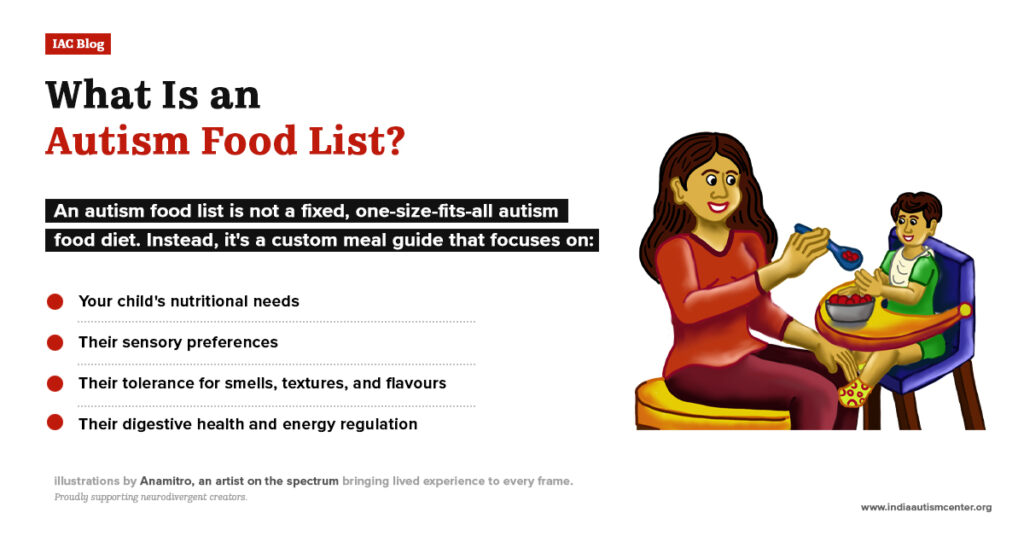
An autism food list is not a rigid prescription. It’s a personalised, living guide – built around your child’s unique sensory profile, digestive health, and nutritional gaps.
Food is a sensory experience before it’s a nutritional one. The smell of a tadka, the slimy texture of okra, the unexpected crunch inside a soft idli – any of these can trigger distress in a child with heightened sensory sensitivity. At the same time, the gut-brain axis research published in journals like Nature Neuroscience (2023) confirms that what happens in the gut genuinely influences mood, attention, and behaviour in autistic individuals.
So a good autism food list works on three levels simultaneously:
- Sensory comfort – textures, temperatures, and smells that don’t overwhelm
- Gut health – foods that support a balanced microbiome and smooth digestion
- Nutritional completeness – ensuring the child isn’t missing key vitamins and minerals because of selective eating
The goal isn’t perfection. It’s a calmer, more predictable relationship with food – for your child and for you.
The goal is to ensure that autistic individuals eat foods that nourish the body, calm the senses, and avoid those that may cause discomfort or overstimulation. Hence, it is essential to select a comprehensive autism care facility that focuses on providing autism diet plans curated with care.
Food Groups That Belong on Every Autism Food List
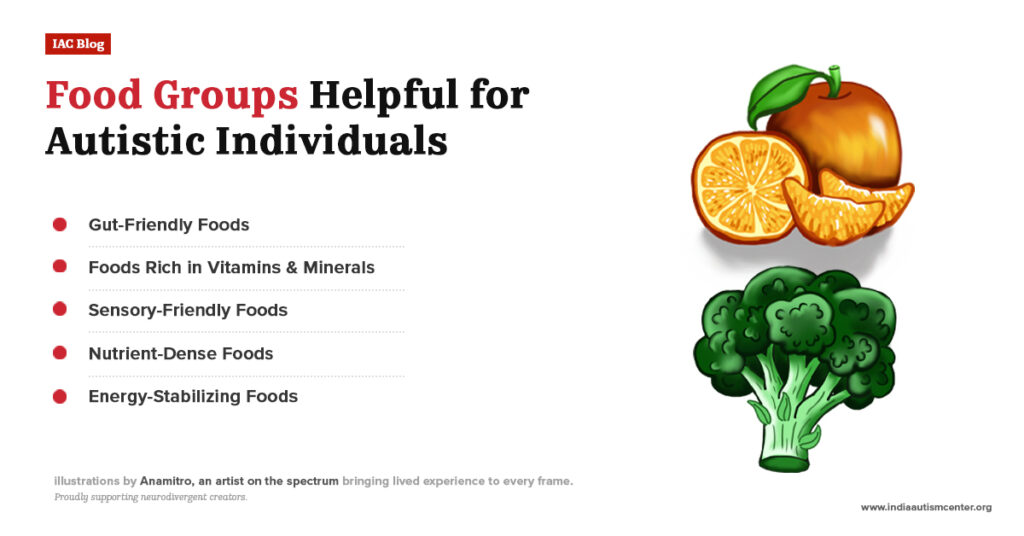
Gut-Friendly Foods
The gut-brain connection is one of the most important – and most underappreciated – dimensions of autism nutrition. Studies consistently show that autistic children have higher rates of GI symptoms: constipation, bloating, irregular bowel movements, and gut dysbiosis (an imbalance in gut bacteria). These symptoms don’t just cause physical discomfort; they can directly worsen irritability, sleep, and focus.
The good news? Indian cuisine is naturally rich in gut-friendly foods.
Fermented foods (excellent for the microbiome):
- Homemade curd – far more probiotic-rich than commercial yoghurt
- Buttermilk (chaas) – light, easy to digest, soothing
- Idli and dosa batter – naturally fermented overnight; the fermentation process increases B vitamins and digestibility
- Naturally fermented achar (pickle) – use sparingly due to salt; avoid commercial brands with preservatives
Fibre-rich vegetables (keeps digestion smooth):
- Okra (bhindi) – mucilaginous fibre that soothes the gut lining
- Bottle gourd (lauki) – very easy to digest, mild flavour
- Pumpkin (kaddu) – soft when cooked, naturally sweet, high in fibre
- Spinach (palak) – iron + fibre, blends well into dal and khichdi
Prebiotic foods (feed the good bacteria):
- Garlic and onion – powerful prebiotics; cook them into everyday sabzis
- Banana – ripe bananas provide soluble fibre; slightly unripe bananas are even richer in resistant starch
Foods Rich in Vitamins & Minerals
Nutrients like Vitamin B6, Vitamin C, and Magnesium play a real role in brain function and mood regulation. Back in the 1970s, Dr Bernard Rimland – founder of the Autism Research Institute – reported that in one controlled study, 12 of 16 autistic individuals showed measurable improvement when supplemented with high-dose B6 and magnesium, and regressed when the supplements were replaced with placebos. Later systematic reviews have found the evidence base too small to make a firm recommendation, but food-first approaches to these nutrients carry no risk and plenty of benefit.
Indian food sources by nutrient:
| Nutrient | Indian Food Sources |
|---|---|
| Vitamin B6 | Chickpeas (chana), bananas, sunflower seeds |
| Vitamin C | Amla (the richest natural source – one amla = ~600 mg Vit C), guava, oranges |
| Magnesium | Ragi (finger millet), pumpkin seeds, spinach |
These foods integrate easily into everyday cooking. Ragi can go into rotis, porridge, or ladoos. Amla can be given as murabba, juice, or dried candy. Chickpeas work in chaat, chilla, or simply boiled with a squeeze of lemon.
Sensory-Friendly Foods
For many autistic children, the real barrier to eating isn’t flavour – it’s texture. Soft, predictable textures are almost universally easier to accept because they require less chewing, produce no unexpected crunch sounds, and feel consistent in the mouth.
Soft carbs (the backbone of a sensory-friendly autism meal plan India):
- Mashed sweet potato – naturally sweet, smooth, and filling
- Soft idli – the softer the better; add a little extra water to the batter
- Dal khichdi – the ultimate comfort food; moong dal version is easiest to digest
- Banana – portable, predictable, no preparation needed
Mild proteins:
- Paneer – soft, mild, takes on any flavour; paneer bhurji is a favourite
- Boiled or scrambled egg – consistent texture, easy to season mildly
- Moong dal – the gentlest of all lentils on the gut
Smooth fruits:
- Chiku (sapodilla) – naturally sweet, smooth, no seeds to navigate
- Stewed apple – warm, soft, mildly sweet; great for children who reject cold foods
Nutrient-Dense Foods
Brain development doesn’t pause because eating is difficult. These foods pack the most nutritional value per bite – important when a child’s food variety is limited.
Omega-3 fatty acids (brain and nervous system):
- Flaxseeds (alsi) – grind them fresh and add to rotis or porridge
- Walnuts – two to three walnuts daily; can be powdered and mixed into food
- Fatty fish – sardines (tarli), rohu, catla are safer Indian options with lower mercury
Iron (energy, focus, and haemoglobin):
- Ragi – one of the best plant-based iron sources; 3.9 mg per 100g
- Spinach – pair with Vitamin C (amla, lemon) to boost absorption
- Jaggery (gud) – use as a sweetener instead of sugar; contains iron and minerals
Zinc (immune function and neurological development):
- Pumpkin seeds – a small handful daily covers a significant portion of zinc needs
- Sesame seeds (til) – use in chutneys, laddoos, or sprinkled on rice
Energy-Stabilizing Foods
Blood sugar swings are a real but underappreciated trigger for behavioural shifts in autistic children. A spike from white bread or a mithai followed by a crash can look like irritability, aggression, or inability to focus – when it’s actually a physiological response to unstable glucose.
The fix is simple: swap refined carbs for complex ones.
Complex carbs that stabilise energy:
- Brown rice – slower to digest than white rice; swap gradually
- Oats (daliya) – excellent for breakfast; keeps energy steady for hours
- Ragi roti – low glycaemic index, high in calcium and iron
- Jowar and bajra rotis – traditional Indian millets that are naturally gluten-free and nutrient-dense
Protein-carb combinations that work well:
- Dal chawal – the classic; protein from dal slows glucose absorption from rice
- Curd rice – probiotic + complex carb in one bowl
- Besan chilla – high protein, low glycaemic, quick to make
How to Create an Autism Food List (Step-by-Step)
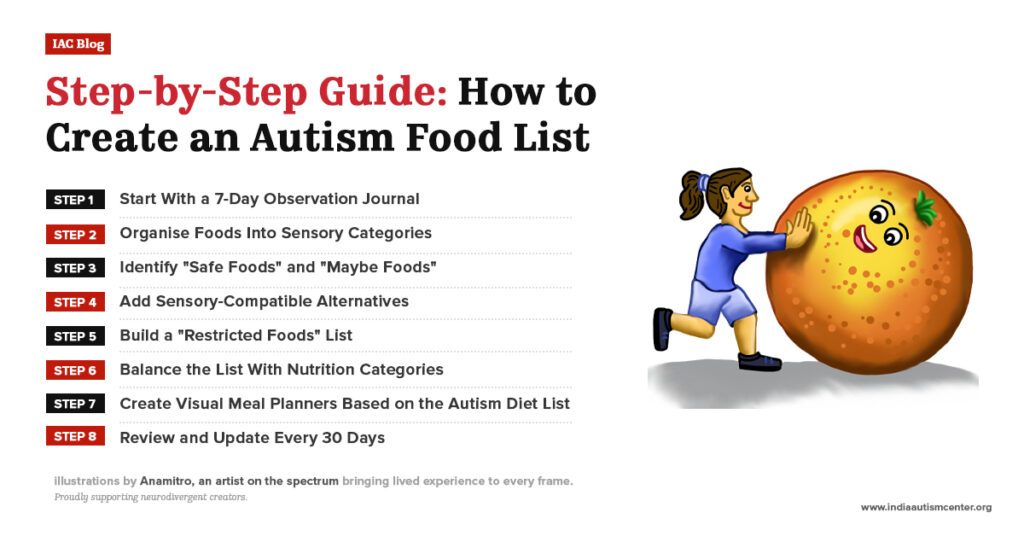
Creating the right autism diet plan is not just a routine task but a structured approach that helps manage several aspects, including nutrition, behaviour, sensory needs, and daily wellbeing.
Many parents struggle with autism food aversion, autism food sensitivity, selective eating, restricted textures, and unpredictable preferences.
Here is a step-by-step guide to help you create a practical, sensory-informed, and health-focused autism diet list while keeping individual comfort and nutritional balance in mind.
Step 1: Start With a 7-Day Observation Journal
When you start to create an autism diet list, you first have to invest some time in observing your child’s eating habits. It will help you to create a baseline for understanding diet and autism patterns.
Here are some things that you need to track:
- Consistently accepted foods (autism-safe foods)
- Foods causing refusal or distress (autism food refusal, autism and food aversion)
- Sensory responses such as gagging, rejecting textures, or preferring only white/beige foods
- Temperature and texture preferences (autism and food textures, food textures and autism)
Tracking these patterns will help to understand the core of autism food issues, identifying where food aversions, autism or autism and food selectivity are strongest. This also confirms whether food aversion is a sign of autism in your child.
Step 2: Organise Foods Into Sensory Categories
Mealtime anxiety in autistic children can be managed with a strong sensory diet for autism or an autism sensory diet. It is necessary to classify food options by sensory features rather than standard nutritional groups.
Sensory-based categories:
- Crunchy foods
- Soft/pureed foods
- Liquids & smooth foods
- Warm vs. cold foods
- Low-odor foods
Categorising by sensations helps align your sensory diet for autism with daily meals. It also helps address food aversions and autism, particularly when a child rejects foods based on smell, texture, or appearance.
Step 3: Identify “Safe Foods” and “Maybe Foods”
The foundation of the autism-friendly foods section in your final chart is incomplete without understanding which foods are safe.
Here is an example for better understanding:
Safe Foods (Autism Safe Foods / Safe Foods Autism)
- These are eaten without resistance and can be used to anchor meals.
Maybe Foods
- These are foods accepted occasionally or under specific conditions.
It is important to understand the difference to reduce stress during meals. It will be quite helpful in creating a structure for your personalised autism food plate or autism-safe food framework.
Step 4: Add Sensory-Compatible Alternatives
After identifying safe food, it is now time to introduce similar sensory alternatives. This prevents nutritional gaps while respecting autism and food sensitivities.
Examples:
- If crunchy foods are preferred: roasted chickpeas, veggie sticks
- If smooth foods are preferred: pureed soups, blended porridges
- If warm, bland foods are preferred: soft rice, khichdi
This step supports gradual progress in tackling autism-related food aversion, food refusal, and food selectivity.
Step 5: Build a “Restricted Foods” List
Along with other important considerations like safe foods for autism, maybe foods, and sensory-compatible foods for autism. It is equally important to recognise the foods to avoid for people with autism.
The food options that you must keep in the restricted autism food list include:
- Allergic reactions (autism and food allergies)
- Digestive discomfort
- Sensory overload
- Behavioural triggers
Here are some examples for you:
- Artificial dyes
- Highly processed snacks
- Foods with strong smells
- Certain dairy or gluten items, depending on sensitivity (autism and gluten-free diet)
Knowing which foods to avoid with autism helps ensure the autism diet plan remains supportive and consistent.
Step 6: Balance the List With Nutrition Categories
A proper diet for autism spectrum disorder must consider nutrition, sensory needs, and health conditions.
Nutrients that are essential in an autism diet plan include:
- Proteins
- Carbohydrates
- Fruits
- Vegetables
- Fats
As a parent, you can explore diet options such as:
- Gluten-free diet for autism
- GAPS diet autism (Gut and Psychology Syndrome diet)
- Keto diet and autism, or autism and ketogenic diet
Step 7: Create Visual Meal Planners Based on the Autism Diet List
Meal planners help to support predictability and reduce anxiety.
Some examples of visual tools include:
- Picture-based autism food plate
- Weekly charts using food images
- Step-by-step meal sequences
- Colour-coded portion guides
These tools reinforce structure and help the child engage better with their autism-friendly foods.
Step 8: Review and Update Every 30 Days
Even the best plans take time, as eating preferences often evolve. Here are the steps you can take:
Recheck:
- Newly accepted foods
- New sensory challenges
- Increasing or decreasing levels of autism food sensitivity
- Updated notes on autism and food textures
This ensures your autism diet list and autism nutrition diet stay relevant and supportive.
The GFCF Diet for Autism: A Complete India Guide
The Gluten-Free, Casein-Free (GFCF) diet is one of the most widely explored dietary approaches for autism. It removes gluten (a protein found in wheat and related grains) and casein (the primary protein in dairy) from the child’s diet entirely.
Why do families try it?
The theoretical basis is the opioid peptide hypothesis: when gluten and casein are incompletely digested – possibly due to increased intestinal permeability (commonly called “leaky gut”) – the resulting peptides may cross into the bloodstream and act on opioid receptors in the brain, potentially affecting behaviour and cognition. This is a hypothesis, not a proven mechanism. Research on gut permeability in autism, including a 2021 review in Frontiers in Psychiatry, does show increased intestinal permeability in a subset of autistic individuals – but causality remains unresolved.
What we do know from clinical experience: some families report meaningful improvements in focus, GI symptoms, and behaviour after removing gluten and casein. Others see no change. Dr Susan Hyman, Professor of Paediatrics at the University of Rochester, puts it plainly: “While some parents report behavioural improvements with gluten-free, casein-free diets, controlled studies have not consistently demonstrated significant benefits. Dietary changes should be approached cautiously and under professional supervision to ensure nutritional adequacy.”
⚠️ Medical disclaimer: Always consult a paediatric dietitian before starting a GFCF diet. Removing dairy without a plan can cause calcium and Vitamin D deficiencies. Removing wheat without substitutes can reduce fibre and B vitamins. A dietitian ensures your child’s nutrition stays complete.
What to Remove on a GFCF Diet
Gluten sources to eliminate:
- Wheat atta, maida, suji (semolina), and daliya (broken wheat)
- All bread, biscuits, and bakery items (including Marie biscuits, Parle-G, cream crackers)
- Pasta and noodles (Maggi, Yippee, and similar)
- Ready-to-eat upma mixes, halwa mixes, and most namkeen (many contain besan mixed with maida)
- Malted drinks like Horlicks and Bournvita (contain barley malt)
Casein sources to eliminate:
- Cow’s milk and buffalo milk
- Paneer, cheese, butter, cream, khoa
- Curd and buttermilk (yes, even these – casein is present)
- Ghee – this one is debated. Ghee is clarified butter with most milk proteins removed; some families on GFCF tolerate it, others don’t. Start by removing it and reintroduce after 4–6 weeks to observe.
Hidden gluten in Indian packaged foods – watch these:
- Kurkure and similar puffed snacks (often contain wheat flour)
- Most commercially available namkeen and chakli
- Soy sauce (used in Chinese-style Indian cooking)
- Many Indian pickles and chutneys with added thickeners
- Instant soup mixes and masala packets
Always read ingredient labels. Look for: wheat flour, maida, atta, semolina, barley, malt, modified starch (if source unspecified).
Indian GFCF Substitutes
The good news for Indian families: our traditional grain repertoire is naturally GFCF-friendly.
Gluten-free grains and flours:
- Rice and rice flour – the foundation; rice-based idli and dosa are naturally GFCF
- Ragi (finger millet) flour – for rotis, porridge, and ladoos
- Jowar (sorghum) flour – for soft rotis and bhakri
- Bajra (pearl millet) flour – for rotis; pairs well with ghee (if tolerated)
- Besan (chickpea flour) – for chilla, kadhi, and snacks
Dairy substitutes:
- Coconut milk – rich, creamy, works well in curries and porridge
- Almond milk – mild flavour; use in smoothies and porridge
- Oat milk – check labels carefully; some oat milks contain gluten from cross-contamination
- Rice milk – the most hypoallergenic option
GFCF Indian dishes that work beautifully:
- Rice-based idli and dosa (use rice + urad dal batter, no wheat)
- Ragi mudde or ragi porridge
- Jowar bhakri with vegetable sabzi
- Besan chilla with tomato and coriander
- Rajma or chana with rice
- Khichdi made with moong dal and rice
How to Transition to GFCF in India: A 4-Week Plan
Don’t remove everything at once. A sudden shift overwhelms the child and makes it impossible to identify what’s actually helping.
Week 1: Remove casein (dairy) first. Replace cow’s milk with coconut milk or almond milk. Stop paneer, curd, and butter. Maintain all other foods.
Week 2: Remove obvious gluten sources – wheat roti, bread, biscuits. Replace with rice, ragi roti, or jowar bhakri. Keep a daily food and behaviour diary.
Week 3: Audit packaged foods. Check every label. Remove hidden gluten sources (Maggi, Kurkure, Horlicks, namkeen).
Week 4: Assess. Have behaviour, GI symptoms, or sleep changed? Consult your dietitian with your diary notes before deciding to continue.
Important Components for Your Autism Diet Chart
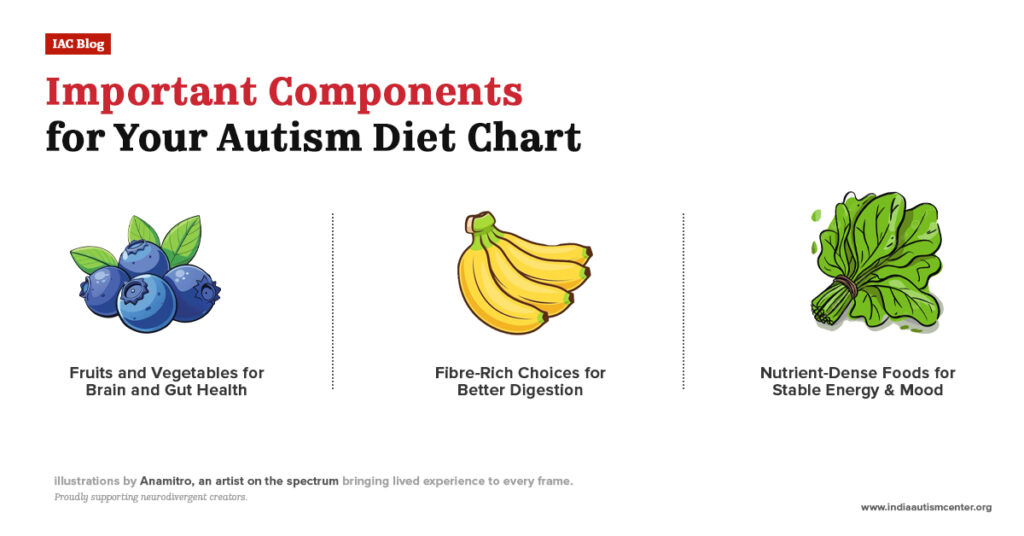
A meal that feels routine to others can become overwhelming when strong smells, unexpected textures, or loud surroundings mix with heightened sensory sensitivity.
Ananya, a young individual with autism, recounts her experience at a mall food court:
“The moment I stepped in, the heavy aroma of food filled the air, overwhelming my senses. The greasy dishes on display felt like they were closing in on me, while the clatter of trays and the hum of conversations grew deafening. Panic took over, my chest tightened, my legs refused to move, and tears spilt down my face. My mother’s voice reached me, full of concern, but I couldn’t respond. She carried me home. Tomorrow was another day.”
Stories like this are evidence of why an autism diet chart can have a considerable impact.
The right food choices not only add nutrition but also bring comfort, predictability, and calm.
Balanced meals can:
- Reduce sensory discomfort
- Support digestion and reduce anxiety
- Improve focus and energy stability
- Minimise meltdowns triggered by food textures or smells
A well-designed chart also helps you identify what foods to avoid with autism, like:
- Highly processed snacks
- Strong-smelling or intensely flavoured foods
- Hard-to-chew textures
Fruits and Vegetables for Brain and Gut Health
Food directly influences attention, mood, and digestion, three areas many autistic individuals struggle with. Adding nutrient-dense produce to the autism diet chart strengthens both brain and gut function.
What it Essentially Helps With
- Berries protect brain cells and improve memory.
- Oranges boost immunity and support cognitive health.
- Spinach and kale provide iron and folate to support better concentration.
- Broccoli and cauliflower can aid in detoxification and support gut strength.
- Carrots and bell peppers increase immunity with beta-carotene.
Quick Reference Table
| Food | Benefit |
| Blueberries | Protects brain cells, boosts memory |
| Spinach | Provides iron for energy and focus |
| Oranges | Enhances immune + brain function |
| Broccoli | Supports gut health + detoxification |
Fibre-Rich Choices for Better Digestion
Digestive issues, including constipation, gas, or bloating, are quite common in individuals with autism. A fibre-rich section in your autism diet chart helps manage this discomfort and promote regular bowel movements.
Why Fibre Matters
- Supports smoother digestion
- Feeds healthy gut bacteria
- Reduces inflammation
- Prevents constipation
Top Fibre-Boosting Foods
- Apples can help in nurturing good gut bacteria
- Bananas improve digestion with soluble fibre
- Sweet potatoes deliver prebiotic fibre
- Brussels sprouts reduce inflammation and aid detoxification
Quick Reference Table
| Food | Provides soluble fibre, aids digestion |
| Apples | Feeds gut bacteria, prevents constipation |
| Bananas | Provides soluble fiber, aids digestion |
| Sweet Potatoes | Supports gut health with prebiotics |
| Brussels Sprouts | Reduces inflammation + detoxifies |
Nutrient-Dense Foods for Stable Energy & Mood
Energy crashes and sudden mood swings often have a nutritional root. Including slow-release, nutrient-dense foods in an autism diet chart supports stable energy levels and reduces irritability.
How These Foods Help:
- Apples and berries provide slow-release natural sugars
- Bananas stabilise nerve and muscle function
- Carrots and squash offer long-lasting carbohydrates
- Spinach and bell peppers supply magnesium to calm the nervous system
Quick Reference Table
| Food | How It Helps |
| Apples | Provides steady energy release |
| Bananas | Regulates nerve + muscle function |
| Carrots | Slow-digesting carbs for sustained energy |
| Spinach | Magnesium-rich food that reduces hyperactivity |
Thinking About Starting an Autism-Friendly Diet? Start Here.
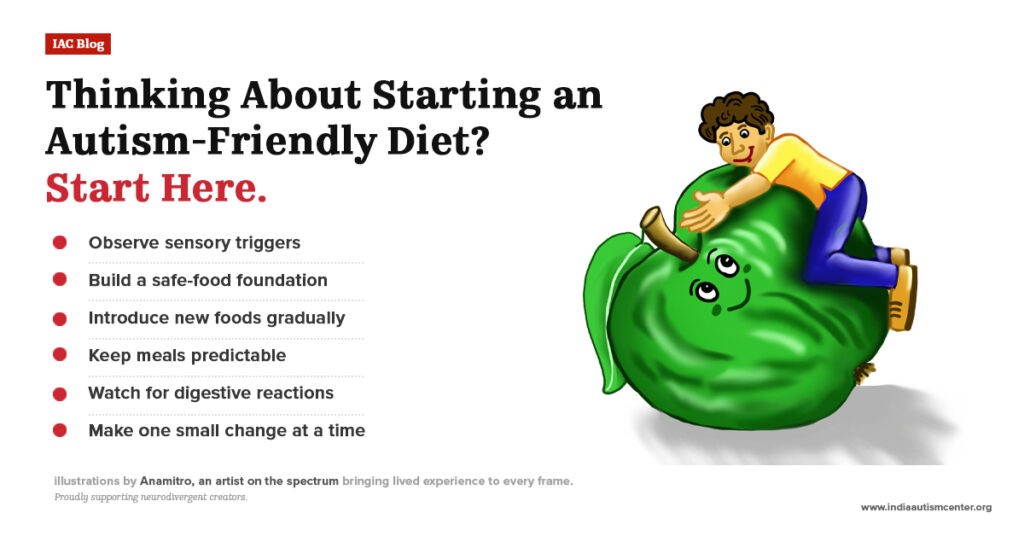
When you are thinking of creating an autism-friendly diet. It doesn’t need to have complicated restrictions. It is more important to understand your child’s sensory world and their relationship with meals.
Here is how you can begin:
- Observe sensory triggers: Which smells, textures, or temperatures cause discomfort?
- Build a safe-food foundation: Use foods your child already accepts as a base.
- Introduce new foods gradually: Match new foods to the texture, temperature, or colour of their preferred items.
- Keep meals predictable: Visual meal charts reduce anxiety and increase acceptance.
- Watch for digestive reactions: Bloating, hyperactivity, or fatigue can reveal intolerances.
- Make one small change at a time: Progress is slow, but the payoff is big.
Tips for Making Fruits and Vegetables Easier to Eat
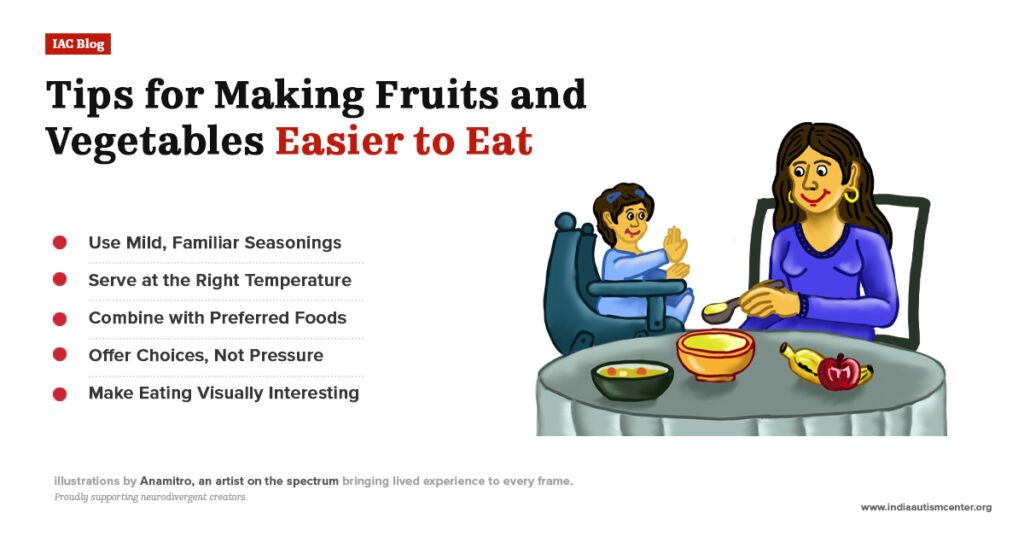
New foods can feel unfamiliar or even overwhelming. The key is to introduce them in ways that feel safe and inviting.
Small changes in flavour, temperature, and pairing can make a big difference.
Use Mild, Familiar Seasonings
A sprinkle of cumin, a dash of cinnamon, or a squeeze of lemon can enhance taste without overpowering. Mild spices make vegetables more flavourful while keeping them easy to accept.
Serve at the Right Temperature
Cold foods may feel refreshing, while warm foods can be more soothing. Some may prefer room temperature for a neutral experience. Experiment to see what works best.
Combine with Preferred Foods
Pairing new fruits or vegetables with a familiar favourite can increase acceptance. Mix finely chopped spinach into dal, blend carrots into dosa batter, or serve cucumbers alongside a favourite dip.
Offer Choices, Not Pressure
Giving options allows more control. Instead of saying, “Eat your carrots,” try, “Would you like roasted carrots or carrot sticks?” The freedom to choose makes mealtimes more comfortable.
Make Eating Visually Interesting
Colours, shapes, and arrangement matter. A fruit salad with vibrant mango and pomegranate may be more appealing than plain apple slices. Fun shapes, like cucumber rounds or star-cut watermelon, can add curiosity and engagement.
Foods to Avoid in Autism
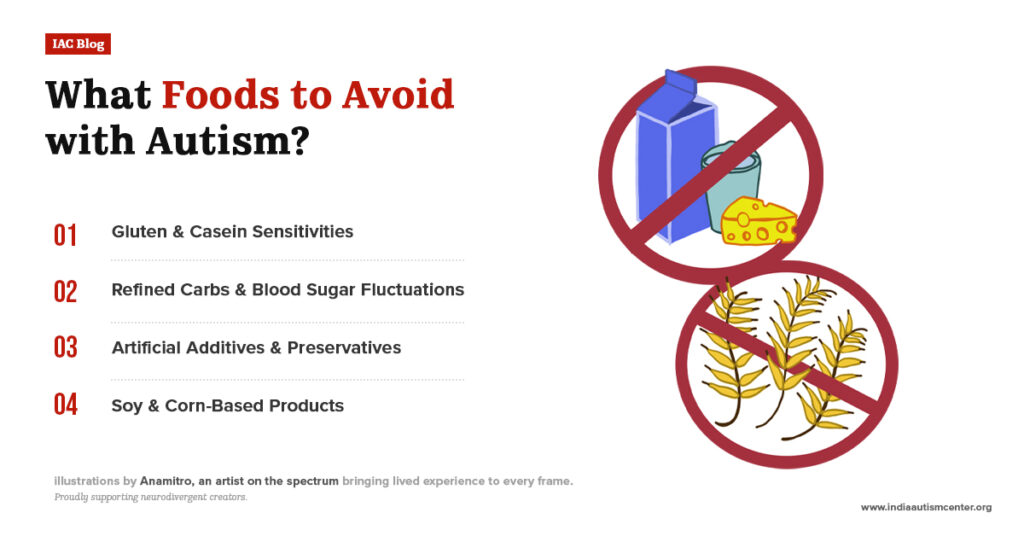
The gut–brain connection plays a major role in how autistic individuals feel, focus, and respond to sensory input. Certain foods may worsen discomfort, trigger irritability, or intensify sensory overwhelm. That’s why identifying foods to avoid with autism is the first step toward creating calmer mealtimes and better daily balance.
One of the leading voices in this area, Dr Susan Hyman, Professor of Paediatrics at the University of Rochester, reminds us:
“While some parents report behavioural improvements with gluten-free, casein-free diets, controlled studies have not consistently demonstrated significant benefits. Dietary changes should be approached cautiously and under professional supervision to ensure nutritional adequacy.”
Every autistic individual is unique; what works beautifully for one may not work for another. With that balanced lens, here are the key food categories many families explore and why:
Gluten & Casein (if on GFCF)
Already covered above. The key point: if you’re not on a full GFCF protocol, you don’t need to eliminate these entirely – but reducing highly processed wheat products (biscuits, white bread, maida-based snacks) and commercial dairy is sensible for any child.
Refined Carbs & Sugar
This is the category that affects almost every autistic child, regardless of diet protocol. Refined carbohydrates – maida, white bread, polished white rice in excess, packaged biscuits, mithai, and sugary drinks – cause rapid blood sugar spikes followed by crashes. That crash often looks like a meltdown, aggression, or sudden fatigue.
Common Indian culprits to reduce:
- Maida-based snacks: samosa, kachori, puri, bhatura
- White bread sandwiches and toast
- Packaged biscuits (Parle-G, Bourbon, Hide & Seek)
- Mithai: barfi, gulab jamun, jalebi (very high sugar + maida)
- Sugary drinks: packaged juices, cold drinks, flavoured milk
Better swaps:
- Ragi or jowar roti instead of maida-based items
- Jaggery or dates instead of refined sugar
- Homemade fruit chaat instead of packaged sweets
- Coconut water instead of packaged juice
Artificial Additives & Preservatives
Artificial colours, MSG (monosodium glutamate), and chemical preservatives are linked to increased hyperactivity in children in general – and the concern is amplified for autistic children who may already have heightened sensory and neurological sensitivity.
Indian products to watch:
- Maggi noodles and similar instant noodles (MSG, refined flour, high sodium)
- Kurkure, Lays, and similar chips (artificial flavours, MSG)
- Packaged fruit juices with added colours (look for E102, E110, E122 on labels)
- Ready-to-eat Chinese-style sauces (soy sauce, schezwan sauce – MSG-heavy)
- Flavoured milk drinks with artificial colours
Rule of thumb: If the ingredient list has more than 8–10 items and includes numbers (E-codes), it’s worth avoiding.
Soy & Corn Products
Soy contains phytoestrogens (plant-based oestrogen-like compounds) that some researchers flag as a concern for children with hormonal sensitivity. It is also a common allergen. Corn, particularly in its processed form (corn syrup, corn starch), is a high-glycaemic ingredient that can spike blood sugar.
Hidden soy sources: soy sauce, tofu, soy milk, many packaged biscuits and breads (soy lecithin is a common emulsifier – check labels).
Hidden corn sources: corn syrup in packaged sweets and drinks, corn starch in gravies and sauces, cornflour-coated fried snacks.
High-Mercury Fish
Fish is an excellent source of omega-3s and protein – but certain large predatory fish accumulate mercury, which is a neurotoxin. Shark (mori), swordfish, and king mackerel are the main ones to avoid.
Safer Indian fish options with lower mercury:
- Rohu and catla – freshwater fish, widely available, low mercury
- Sardines (tarli) – small fish, very low mercury, high omega-3
- Pomfret (paplet) – moderate mercury, fine in moderation (once or twice a week)
- Hilsa (ilish) – moderate; fine in moderation
Supplements That Support Autism – What the Research Says
⚠️ Important disclaimer: Supplements should only be given under medical supervision. Dosing varies significantly by age, weight, and individual nutritional status. Never self-supplement based on general guidelines alone. Always get a blood test first to confirm deficiency before supplementing.
Omega-3 Fatty Acids (DHA/EPA)
DHA (docosahexaenoic acid) is the primary structural fat in the brain. EPA (eicosapentaenoic acid) has anti-inflammatory properties. Both are found in fatty fish and in smaller amounts in flaxseed and walnuts.
What the research says: An umbrella review of meta-analyses published in Nutrition Reviews (2024) found that omega-3 supplementation showed the most consistent signal for hyperactivity in children under 8 years, particularly with supplementation lasting more than 14 weeks. Effects on core autism symptoms (social communication, repetitive behaviours) were inconsistent. The honest answer: omega-3s may help some children with attention and hyperactivity, but they’re not a treatment for autism itself.
Food sources first: Flaxseeds (grind fresh), walnuts, sardines, rohu.
Supplement note: If supplementing, look for a combined DHA+EPA formula. A typical paediatric dose is 500–1,500 mg combined DHA+EPA daily, but confirm with your doctor. Fish oil capsules are the most bioavailable form.
Vitamin D
India is a sun-rich country – and yet Vitamin D deficiency is remarkably common, including in autistic children. A case-control study from Northern India found significantly lower serum Vitamin D levels in children with ASD compared to healthy controls. Multiple international reviews confirm the association: lower Vitamin D correlates with greater autism symptom severity on standardised scales like CARS and ATEC.
What this means practically: Get your child’s Vitamin D (25-OH) levels tested. If deficient (below 20 ng/mL), supplementation is warranted. The typical supplementation range for children is 400–1,000 IU daily, but children with significant deficiency may need higher doses under medical supervision.
Food sources: Fatty fish, egg yolk, fortified foods. Sun exposure (15–20 minutes of direct morning sun on arms and legs) also helps – though this is often insufficient alone for children with ASD who may avoid outdoor time.
Vitamin B6 + Magnesium
Dr Rimland’s work in the 1970s and 1980s suggested that high-dose B6 combined with magnesium improved behaviour, speech, and social interaction in a subset of autistic individuals. Later systematic reviews found the evidence base too small and methodologically limited to make a definitive recommendation – but the food-first approach to both nutrients is safe and sensible.
B6 food sources: Chickpeas, bananas, sunflower seeds, potatoes.
Magnesium food sources: Ragi, pumpkin seeds, spinach, almonds.
Supplement note: If a paediatrician recommends B6 supplementation, it is typically given alongside magnesium (magnesium reduces the risk of B6-related side effects like peripheral neuropathy at high doses). Do not supplement high-dose B6 without medical guidance.
Probiotics
The gut-brain axis is bidirectional: the gut microbiome influences brain chemistry, and brain states influence gut function. Multiple studies have found altered microbiome composition in autistic children – lower levels of Lactobacillus and Bifidobacterium species in particular.
What probiotics can do: Reduce GI symptoms (constipation, bloating, diarrhoea), potentially improve mood and behaviour through gut-brain signalling. The evidence for direct behavioural improvement is preliminary but promising.
Indian food sources first (always preferable):
- Homemade curd – the best natural source of Lactobacillus
- Buttermilk (chaas) – lighter and often better tolerated than curd
- Idli and dosa – fermented, though the probiotic count varies
Supplement note: If recommending a probiotic supplement, strains most studied in autism include Lactobacillus acidophilus, Lactobacillus rhamnosus, and Bifidobacterium longum. Dosing is typically 1–10 billion CFU daily. Consult a paediatrician for the right strain and dose for your child’s age.
Zinc
Zinc deficiency is common in Indian children generally – and particularly so in autistic children, who often have restricted diets. It plays a role in immune function, gut integrity, and neurological development. Low zinc has been associated with increased repetitive behaviours and impaired social cognition in some studies.
Food sources: Pumpkin seeds (the richest plant source), sesame seeds (til), rajma, chickpeas, eggs.
Supplement note: Zinc supplementation in children is typically 5–10 mg elemental zinc daily, but excess zinc can interfere with copper absorption. Test before supplementing, and supplement only under medical supervision.
Meal Planning Using an Autism Food List
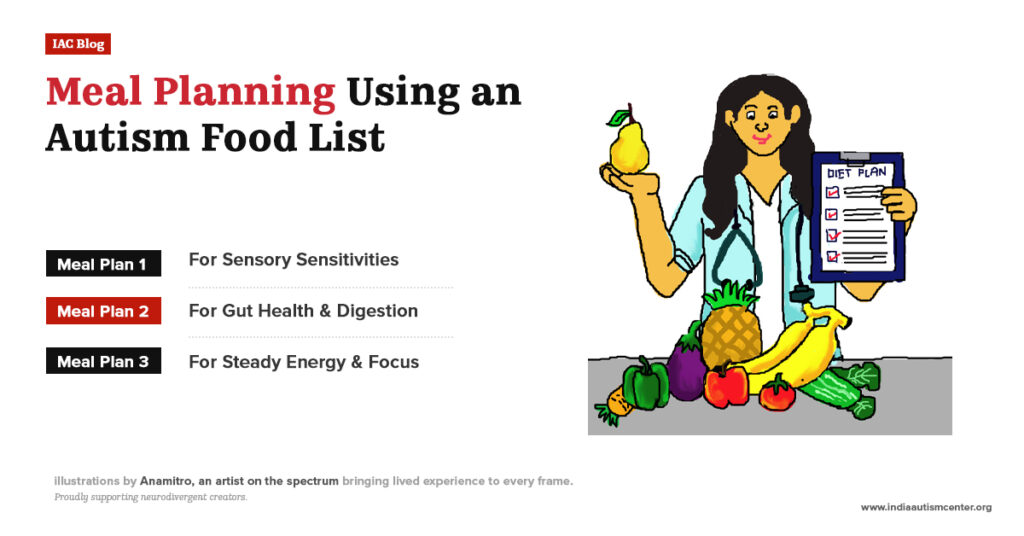
Once you know what to avoid, planning meals becomes easier, calmer, and more predictable. Here are three simplified meal plans, each crafted for a specific need, sensory ease, gut support, and steady energy.
Meal Plan 1: For Sensory Sensitivities
Soft, neutral-flavoured foods that reduce overwhelm and feel comfortable to chew.
- Breakfast: Soft scrambled eggs + mashed sweet potato + banana
- Snack: Homemade yoghurt with honey
- Lunch: Moong dal khichdi + soft carrots
- Snack: Smooth peanut butter on rice cakes
- Dinner: Well-cooked quinoa + mild paneer curry + steamed zucchini
Meal Plan 2: For Gut Health & Digestion
Fibre-rich, gut-friendly meals that reduce constipation, bloating, and discomfort.
- Breakfast: Ragi porridge + soaked almonds
- Snack: Papaya with coconut
- Lunch: Brown rice + rajma + sautéed methi
- Snack: Roasted makhana
- Dinner: Jowar roti + bottle gourd sabzi + homemade buttermilk
Meal Plan 3: For Steady Energy & Focus
Slow-digesting carbs + proteins + healthy fats to prevent energy crashes and support attention.
- Breakfast: Oats with flaxseeds, walnuts & stewed apples
- Snack: Besan chilla + mint chutney
- Lunch: Quinoa + grilled chicken + roasted bell peppers
- Snack: Banana–peanut butter–almond milk smoothie
- Dinner: Bajra roti + palak paneer + cucumber salad
How to Create Your Child’s Autism Diet Chart (Step-by-Step)
A good autism diet chart is a tool, not a rulebook. Here’s how to build one that actually works.
Step 1: Keep a 7-day observation journal. Before changing anything, watch and record. Note which foods are accepted without resistance, which cause gagging or refusal, and which seem to affect behaviour or digestion. This is your baseline.
Step 2: Sort foods by colour code. Use a simple three-colour system:
- 🟢 Green = Safe – accepted consistently, no negative reactions
- 🟡 Yellow = Try – sometimes accepted, or worth introducing gradually
- 🔴 Red = Avoid – causes distress, refusal, or negative physical reactions
Step 3: Identify safe foods and maybe foods. Safe foods anchor every meal. Maybe foods are introduced slowly, one at a time, alongside a safe food. Never introduce two new foods in the same week – you won’t know which one caused a reaction.
Step 4: Add sensory-compatible alternatives. If your child only accepts soft foods, find soft versions of nutritious foods (mashed sweet potato instead of raw carrot; soft idli instead of bread). Match the texture, not just the nutrition.
Step 5: Build a restricted foods list. This isn’t punishment – it’s information. Foods that consistently cause meltdowns, GI distress, or refusal go here. Review this list monthly; preferences change.
Step 6: Create a visual meal planner. Autistic children thrive on predictability. A picture-based weekly chart – showing what’s for breakfast, lunch, and dinner each day – reduces mealtime anxiety dramatically. Use printed photos of actual dishes your child eats, not generic clip art.
Step 7: Review every 30 days. Taste preferences evolve. A food that was red last month might be yellow this month. Update the chart regularly and celebrate every small expansion.
Tips to Make Fruits & Vegetables Easier to Eat
Getting an autistic child to eat vegetables is one of the most common struggles parents share with us. The key is not pressure – it’s strategy.
Use mild, familiar seasonings. A pinch of jeera, a squeeze of lemon, or a tiny bit of jaggery can make vegetables feel familiar. Avoid strong spices, pungent smells, or anything that changes the colour of the food unexpectedly.
Serve at the right temperature. Many autistic children have strong temperature preferences. Some want everything warm; others prefer room temperature. Find your child’s preference and stick to it – at least initially.
Combine with preferred foods. Finely chop spinach into dal (it disappears into the texture). Blend carrots into dosa batter. Mash pumpkin into khichdi. The vegetable is present nutritionally without being a sensory challenge.
Offer choices, not pressure. “Do you want lauki or pumpkin today?” is far more likely to succeed than “You have to eat your vegetables.” Choice creates a sense of control, which reduces anxiety.
Try smoothie bowls. Blend banana, mango, and a handful of spinach into a thick smoothie. Pour into a bowl, top with a few familiar safe foods (like a few pieces of banana). The green colour may be a hurdle initially – introduce gradually.
Make vegetable parathas. Grate lauki, carrot, or beetroot into ragi or jowar dough. The vegetable is hidden inside the familiar texture of a soft roti.
Fruit chaat with chaat masala. For children who accept some flavour complexity, a mild fruit chaat with a tiny pinch of chaat masala and lemon can make fruits feel exciting rather than plain.
Final Words
Always remember, mealtime challenges don’t have to turn into battles. Understanding this can help you stay calm and use the coping strategies we discussed earlier to defuse tension.
To get a clearer perspective, introduce new foods alongside familiar favourites and take it slow. Just like we discussed. Involving your child in choosing alternatives and planning “Plan B” options helps build cooperation and flexibility.
Keep trusting the process!
Every small step you take is moving you closer to easier meals and a more peaceful, balanced mealtime for everyone.
Frequently Asked Questions (FAQs)
Is milk good for autism?
This depends on the individual child. Milk is a rich source of calcium, Vitamin D, and protein – nutrients that are important for any growing child. However, some autistic children show sensitivity to casein, the primary protein in cow’s milk, which may manifest as GI symptoms (bloating, loose stools, constipation) or, in some cases, behavioural changes. If your child has no GI issues and tolerates dairy well, there’s no evidence-based reason to remove it. If you suspect a casein sensitivity, discuss a structured elimination trial with a paediatric dietitian – don’t remove dairy without a nutritional plan in place, as calcium and Vitamin D deficiency are real risks.
Can diet really improve autism symptoms?
Diet is not a cure for autism, and it’s important to be clear about that. But the right autism-friendly foods can meaningfully reduce some of the factors that worsen daily functioning: GI discomfort, blood sugar instability, nutritional deficiencies, and sensory overwhelm at mealtimes. Families who work with a dietitian to address gut health, reduce processed foods, and ensure nutritional completeness often report calmer behaviour, better sleep, and improved focus – not because diet changed the autism, but because it removed unnecessary physical stressors. Think of it as reducing the load, not changing the diagnosis.
What is the best breakfast for an autistic child in India?
There’s no single best breakfast – it depends on your child’s sensory profile and nutritional needs. That said, a few combinations work well for most children: soft idli with mild coconut chutney (sensory-friendly, fermented, easy to digest), ragi porridge with jaggery (iron-rich, low glycaemic, smooth texture), or moong dal chilla with a banana (high protein, naturally gluten-free, soft). The key principles for any autism-friendly breakfast: predictable texture, mild flavour, no sudden sensory surprises, and a protein source to stabilise energy through the morning.
Which foods trigger autism symptoms or meltdowns?
Food-triggered meltdowns are usually linked to one of three mechanisms: sensory overload (unexpected texture, temperature, or smell), blood sugar spikes and crashes (from refined carbs and sugar), or GI discomfort (from foods the child is sensitive to). Common Indian culprits include packaged biscuits and namkeen (refined carbs + artificial additives), sugary drinks and mithai (rapid blood sugar spikes), strong-smelling foods like certain fish preparations or heavily spiced curries (sensory overload), and dairy or gluten in children with specific sensitivities. Keep a food-behaviour diary for two weeks – patterns usually become clear.
Is the GFCF diet safe for all autistic children?
No – and this is important. The GFCF diet is not appropriate for every autistic child, and it carries real nutritional risks if not managed properly. Removing dairy without calcium and Vitamin D substitutes can affect bone development. Removing wheat without adequate fibre replacements can worsen constipation. The diet also adds significant complexity to family mealtimes and can increase food restriction in children who are already selective eaters. The GFCF diet should only be started after a consultation with a paediatric dietitian, with a clear plan for nutritional monitoring and a defined trial period (typically 3–6 months) to assess whether it’s actually helping.
What vitamins are most important for autism?
Based on current research, the vitamins and minerals most commonly deficient in autistic children – and most worth investigating – are: Vitamin D (deficiency is very common; associated with symptom severity), Vitamin B6 (involved in neurotransmitter synthesis; explored since Dr Rimland’s work in the 1970s), Magnesium (often low; supports nervous system calm), Zinc (immune and neurological function; commonly deficient in Indian children), and Omega-3 fatty acids (DHA for brain structure; EPA for inflammation). The right approach is to test first, then supplement under medical supervision. Food-first strategies – ragi, amla, pumpkin seeds, flaxseeds, homemade curd – should always be the foundation.
Useful Sources
Sanctuary for Kids, Food for the Brain Foundation
NIH/NCBI – Vitamin B6 and Magnesium in Autism
Frontiers in Psychiatry – Gut-Brain Axis and ASD (2021)
PMC – Vitamin D and Autism Outcomes Review (2022)
Nutrition Reviews – Omega-3 Umbrella Review (2024)
ABC News / Dr Susan Hyman on GFCF diet
Massachusetts General Hospital Lurie Center – Omega-3 and Autism
For expert insights, support services, and inclusive learning initiatives, visit the India Autism Center.