 Donate now
 Get a Call Back
 MENU
MENU 23 MIN READ
 SHARE
SHARE


You’ve probably seen the ‘classic portrayal’ of autism spectrum disorder (ASD). The textbook symptoms. The checklists. Maybe even real-life experiences supporting someone with a diagnosis.
But then you hear the term borderline autism spectrum disorder, and you stop in your tracks.
Is that even a thing?
Clinically, no. You won’t find it listed in the DSM-5 (Diagnostic and Statistical Manual of Mental Disorders). Yet many people identify with traits that feel almost autistic – but don’t meet the full criteria for diagnosis.
This in-between space is where the term borderline autism often comes in. And in this article, we’ll unpack what borderline autism means, why it’s frequently misunderstood, how to recognize the signs across every stage of life, and what to actually do about it.
So, let’s begin.
What Is Borderline Autism Spectrum Disorder?
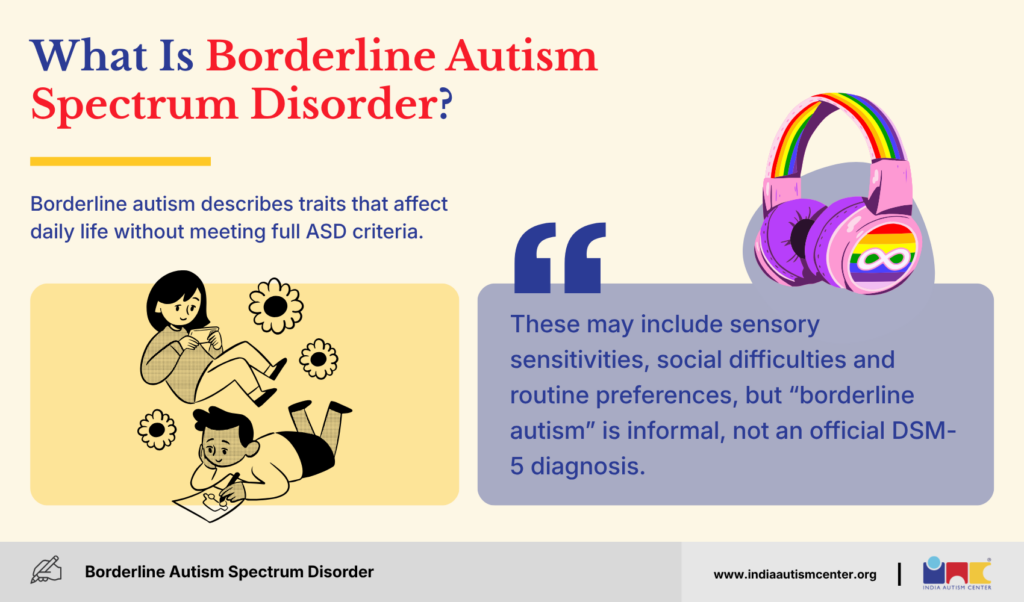
Borderline autism spectrum disorder describes individuals who display certain signs of autism spectrum disorder but do not meet the full diagnostic criteria outlined in the DSM-5.
In other words, it is not an official diagnostic category but rather an informal term sometimes used by clinicians, educators, and families.
The common characteristics of borderline autism may include:
- Sensory sensitivities (e.g., strong reactions to sounds, lights, textures, or smells)
- Difficulty interpreting social cues or navigating social situations
- A strong preference for routine and predictability
Even though these individuals may not receive an autism diagnosis, their borderline autistic symptoms can still significantly affect daily functioning, relationships, and emotional well-being.
📥 Free download: Printable daily routine chart for autistic children
Describing Borderline Autism Through a Clinical Lens
From a professional perspective, borderline autism significantly overlaps with the mildest form of autism, known as Autism Spectrum Disorder Level 1 (ASD 1).
The difference is largely in degree, not kind. For example:
- A child who just meets the diagnostic threshold may receive an ASD Level 1 diagnosis
- Another child with nearly identical traits, but slightly less pronounced, may remain undiagnosed, despite still struggling with borderline autistic symptoms.
Why the Term ‘Borderline’ Can Be Confusing
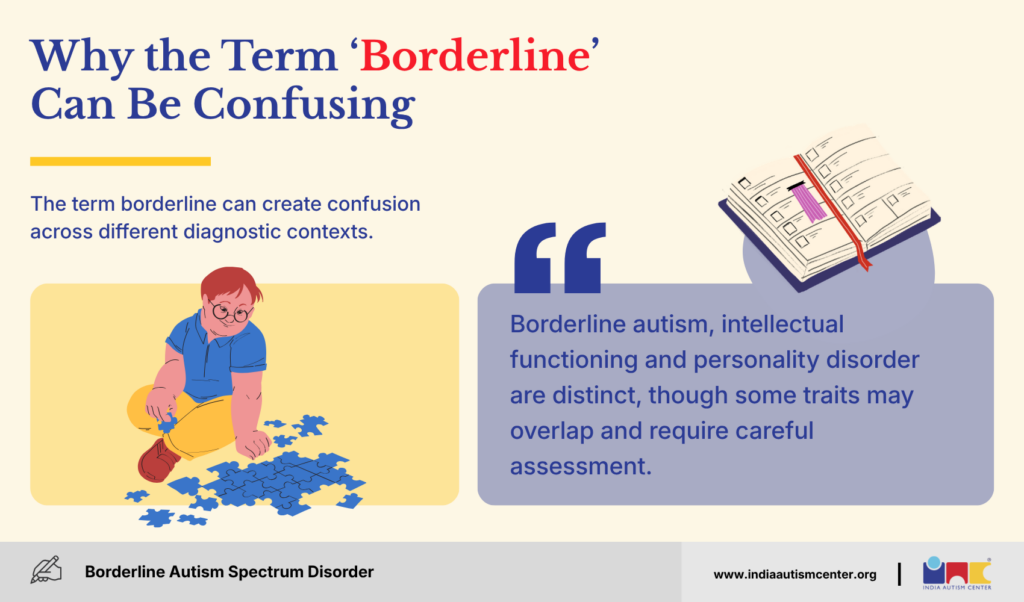
The term ‘borderline’ is also used in other diagnostic contexts, such as borderline intellectual functioning or borderline personality disorder (BPD).
While these conditions have completely different clinical meanings, in practice, traits can sometimes overlap. This makes assessment more complex.
As Puja Dutta, an RCI-registered clinical psychologist at India Autism Center, explains,

Borderline autism, borderline IQ, and borderline personality disorder are distinct terms. But we often see overlaps in clinical settings. The traits, such as social difficulties, emotional dysregulation, and cognitive challenges, often intersect. Without a thorough assessment, these profiles are easy to confuse or miss altogether.
That’s why it is crucial to view each person carefully and as an individual. Labels alone do not provide the complete picture. Understanding how someone thinks, feels, and operates in different areas of their life is essential.
Where Does ‘Borderline’ Sit on the Autism Spectrum? The DSM-5 Explained
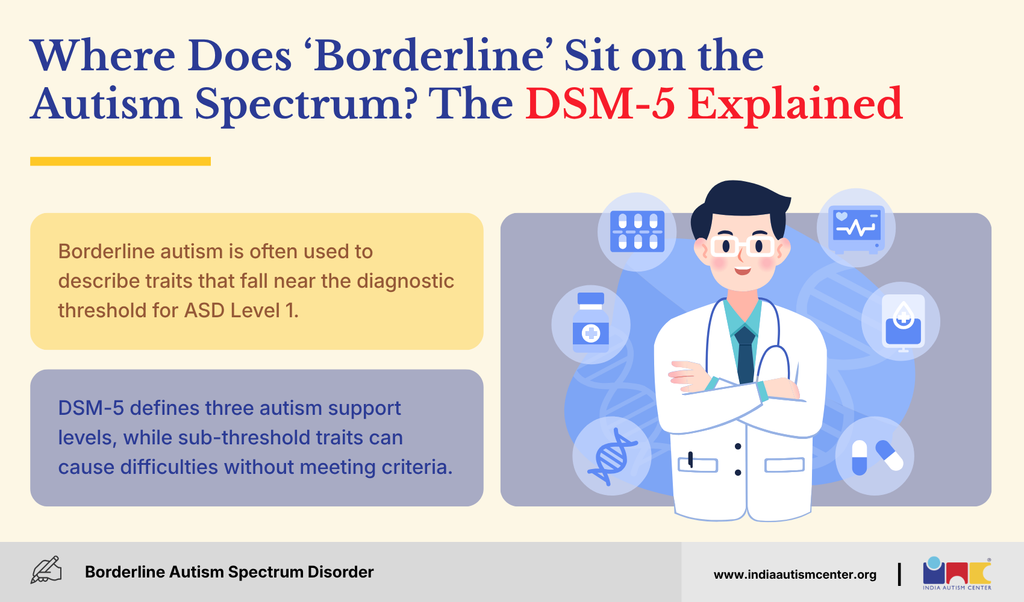
When people say “borderline autism,” they’re usually describing someone who sits at or just below the threshold for an official ASD Level 1 diagnosis. To understand that, you need to understand how the DSM-5 actually structures autism.
The DSM-5 replaced the old patchwork of separate diagnoses (Asperger’s, PDD-NOS, autistic disorder) with a single umbrella: Autism Spectrum Disorder, rated across three severity levels. The level describes how much support a person needs – not how “autistic” they are, and not their intelligence or potential.
Here’s how the three levels break down:
| Level | Label | Support Needed | Key Traits |
|---|---|---|---|
| Level 1 | “Requiring support” | Minimal – person can function independently in many areas but struggles noticeably in social situations and with change | Difficulty initiating conversations, rigid routines, narrow interests; challenges visible to others |
| Level 2 | “Requiring substantial support” | Moderate – significant difficulties even with support in place | Marked deficits in verbal and nonverbal communication; distress at routine changes; repetitive behaviors obvious to casual observers |
| Level 3 | “Requiring very substantial support” | High – severe difficulties across most areas of daily life | Very limited functional communication; extreme distress at change; repetitive behaviors significantly interfere with daily functioning |
Borderline autism maps closest to Level 1 – or to what clinicians call “sub-threshold Level 1.” This means the traits are present and causing real difficulties, but they don’t quite reach the frequency, intensity, or breadth required for a formal ASD diagnosis.
A few things worth knowing:
- Severity levels can change over time. A child assessed at Level 2 may function at Level 1 levels in adulthood with the right support.
- The level is not fixed to the person – it describes their support needs in a given context. Someone with Level 1 traits may need far more support in a noisy open-plan office than in a quiet, structured home environment.
- Sub-threshold does not mean “not struggling.” Many people who don’t qualify for any ASD level still experience genuine functional impairment. That’s precisely why the borderline autism conversation matters.
Want to know more? Get in touch with us.
From Asperger’s to PDD-NOS: Why the Old Labels Still Matter
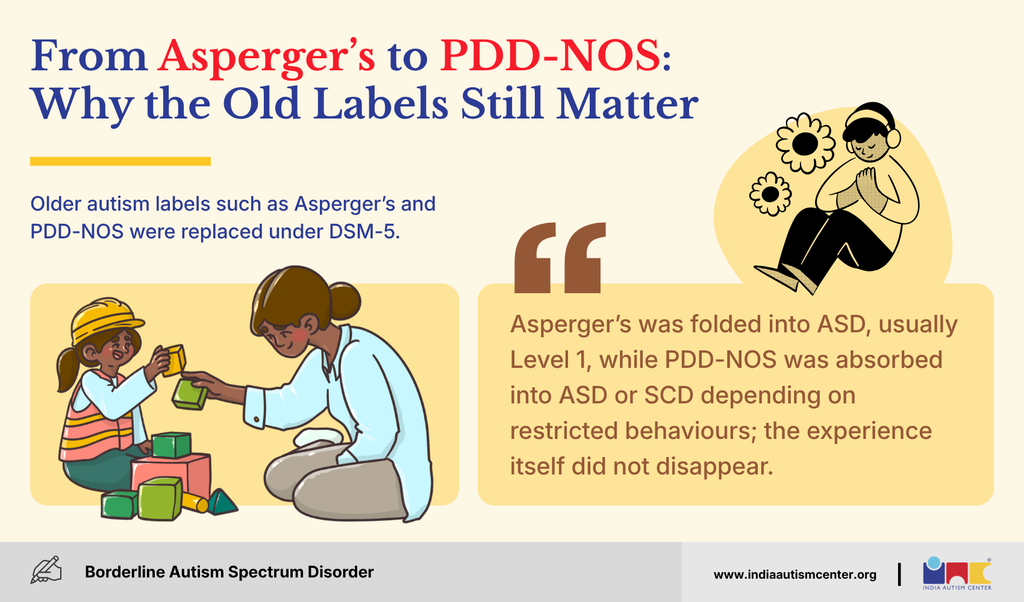
If you’re an adult who grew up feeling different – socially awkward, intensely focused on specific interests, easily overwhelmed by sensory input – you may have been given a diagnosis that no longer officially exists.
Asperger’s Syndrome
Asperger’s syndrome was a DSM-IV diagnosis (pre-2013) used for individuals who showed the social and behavioral features of autism but had no significant language delay and average or above-average intellectual ability. In everyday terms: people who were clearly wired differently, but who could talk, learn, and often excel academically.
When the DSM-5 arrived in 2013, Asperger’s was folded into the single ASD diagnosis – most commonly mapping onto what is now called ASD Level 1. The diagnosis no longer exists as a separate category in DSM-5.
But here’s the thing: many adults who were diagnosed with Asperger’s in the 1990s and 2000s still identify with that label. It carries meaning for them. It shaped their self-understanding. And clinically, it still describes a real profile – one that sits squarely in the borderline autism territory that this article is about.
PDD-NOS: The Original “Borderline” Diagnosis
Pervasive Developmental Disorder – Not Otherwise Specified (PDD-NOS) was the DSM-IV’s catch-all category. It was used when someone showed some autistic traits but didn’t meet the full criteria for autistic disorder or Asperger’s. Sound familiar?
PDD-NOS was, in effect, the original “borderline autism” diagnosis. It acknowledged that the spectrum had edges – that some people were clearly affected but didn’t fit neatly into the defined boxes.
Under DSM-5, PDD-NOS has been absorbed into ASD (usually Level 1) or, in cases where repetitive behaviors were absent, into Social Communication Disorder (more on that below).
What Are These People Called Now?
Under DSM-5:
- A person previously diagnosed with Asperger’s syndrome would typically now receive an ASD Level 1 diagnosis – or, if their traits have become less impairing over time, may not meet criteria at all.
- A person previously diagnosed with PDD-NOS may now receive ASD Level 1, Social Communication Disorder, or, in some cases, no diagnosis – depending on whether restricted/repetitive behaviors are present.
- A person who was never diagnosed but always felt “borderline” may now be assessed under the current DSM-5 framework and land anywhere from ASD Level 1 to SCD to no formal diagnosis.
The label has changed. The experience hasn’t.
Social Communication Disorder (SCD): When It’s Not Quite Autism
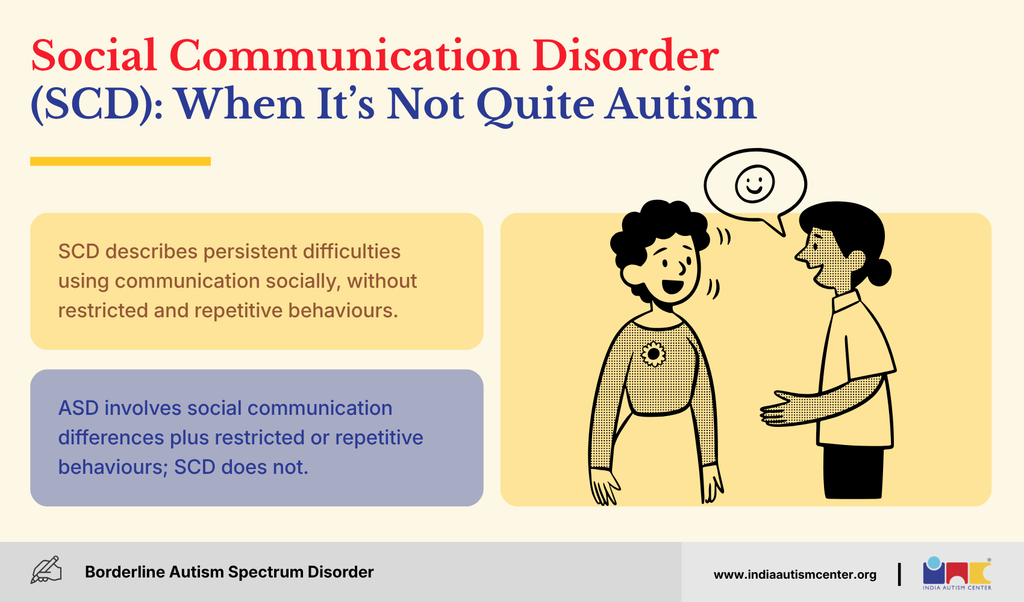
Here’s a category that most people – including many parents and even some clinicians – haven’t heard of: Social Communication Disorder (SCD).
Introduced in DSM-5 in 2013, SCD describes persistent difficulties with the social use of language and communication. Think: trouble reading conversational context, difficulty adjusting communication style for different audiences, struggling to follow the unwritten rules of conversation.
The Key Distinction from ASD
The single most important difference between SCD and ASD is this: SCD lacks the restricted, repetitive behaviors criterion.
In ASD, a diagnosis requires both:
1. Social communication deficits, AND
2. Restricted/repetitive behaviors or interests (including sensory sensitivities)
SCD covers only the first. If someone has social communication difficulties but has never shown repetitive behaviors, rigid routines, or intense narrow interests – and doesn’t have sensory sensitivities – SCD may be the more accurate fit.
This matters enormously in borderline autism cases. Many people who feel “almost autistic” – who struggle socially but don’t rock, don’t have intense special interests, and adapt reasonably well to change – may actually meet criteria for SCD rather than ASD.
Why This Matters in Practice
The practical implications are significant:
- SCD is real and impairing. Children with SCD struggle in school, particularly with reading comprehension, peer relationships, and group work. Adults with SCD often find workplace communication exhausting and confusing.
- SCD has far less research behind it than ASD. Because it’s a newer category, the evidence base for SCD-specific interventions is thin. Most of the support infrastructure – therapy approaches, school accommodations, community resources – was built for ASD.
- Many “borderline autism” cases are actually SCD. If you’ve been told “you have some autistic traits but not enough for a diagnosis,” SCD is worth exploring with your clinician.
One important note: DSM-5 makes ASD and SCD mutually exclusive. If ASD criteria are met (including a history of repetitive behaviors, even if they’ve faded), SCD should not be diagnosed. The history matters – which is why a thorough developmental assessment, not just a snapshot of current functioning, is essential.
Want to know more? Get in touch with us.
Borderline Autism Spectrum Disorder Signs and Symptoms Across Ages
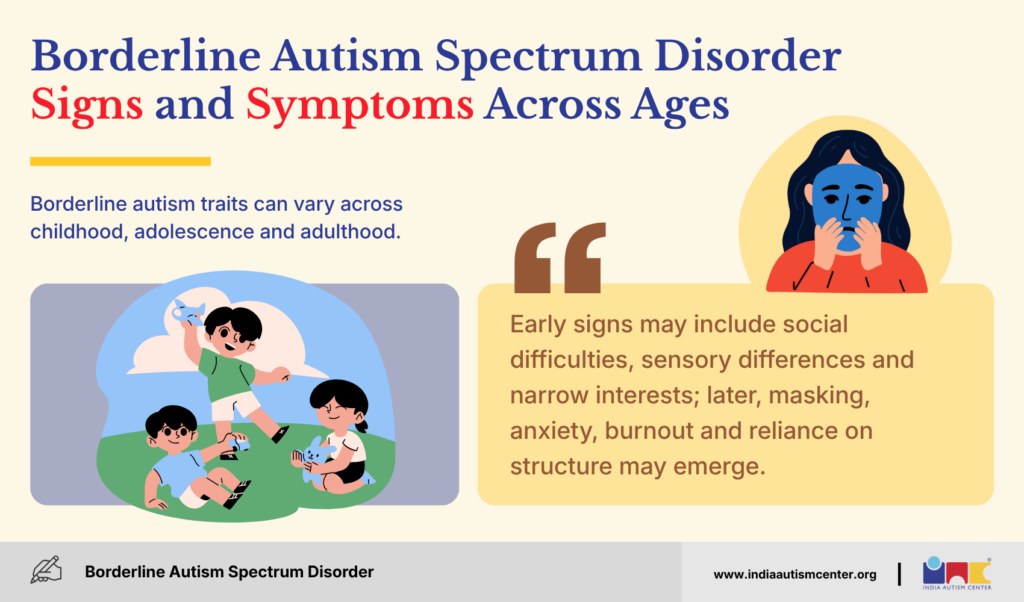
Borderline autism spectrum disorder often reveals itself gradually. Less as one defining moment and more as a slow layering of subtle signs.
What starts as sensitivity in early childhood may evolve into social exhaustion in adolescence and emotional burnout in adulthood.
Let’s break down the most common borderline autism symptoms across ages, so you can better understand how the presentation may change over time.
Borderline Autism Traits in Childhood (Ages 2–12)
In early and middle childhood, the signs can be subtle. As a result, they are often misinterpreted as shyness, sensitivity, or personality traits.
Common symptoms may include:
- Wants to join but doesn’t know how: Prefers solo or parallel play; struggles with group activities or sharing.
- Unusual speech patterns: No major delays, but may speak in a formal tone, echo others’ words, or use advanced vocabulary in an oddly stilted way.
- Overreacts to small changes: Distressed when routines shift, clothing feels uncomfortable, or environments change unexpectedly.
- Deep, narrow interests: Talks extensively about specific topics (e.g., trains, dinosaurs, weather systems) without gauging others’ interest.
- Heightened sensory sensitivities: Overreacts to sounds, textures, smells; may cover ears, avoid certain clothes or foods.
- Masking at school, releasing at home: Imitates peers to blend in during the school day, but pays the emotional cost later – meltdowns, shutdowns, or exhaustion at home.
- Literal interpretation of language: Misses humor, metaphors, or sarcasm, causing social misunderstandings.
- Motor coordination challenges: Struggles with handwriting, sports, or balance – sometimes overlooked as simple clumsiness.
A Note on Sensory Processing: Both Directions Matter
Most people only know about sensory hyper-responsivity – the child who covers their ears at a hand dryer, refuses scratchy fabrics, or gags at certain food textures. That’s real, and it’s common.
But sensory hypo-responsivity is equally part of the picture, and it’s far less discussed. Hypo-responsive children actually seek out intense sensory input:
- Craving spicy or very salty foods
- Seeking deep pressure – wanting to be squeezed, wrapped tightly, or buried under heavy blankets.
- Enjoying loud music or environments that others find overwhelming
- Chewing on clothing, pencils, or objects (this is why some people with borderline autism chew on things – it’s oral sensory seeking, not a habit to simply stop)
- Bumping into things or seeking rough physical play
A child who seems to have no sensory issues may actually be hypo-responsive – getting less signal from their environment and compensating by seeking more. Both profiles can appear in the same child, in different sensory domains.
Borderline Autism Symptoms in Teens (Ages 13–19)
During the teenage years, social demands become dramatically more intense. The unwritten rules multiply. Friendships get more complex. And the gap between those who navigate this naturally and those who don’t becomes harder to paper over.
The traits commonly appear as follows:
- Worn out by friendships: Tries to maintain social circles but finds interaction confusing and draining – every conversation requires conscious effort that peers seem to expend effortlessly.
- Heightened emotional responses: Experiences intense mood swings, shutdowns, or outbursts tied to sensory overload or social stress – often misread as teenage drama or emotional immaturity.
- Uncertain self-identity: Feels different but can’t pinpoint why; may adopt different personas in different settings, leaving them unsure of who they actually are.
- Coping through routines: Uses repetitive behaviors, rituals, or familiar structures to self-soothe – a playlist that must be listened to in order, a specific route home, a pre-exam ritual.
- Uneven school performance: Excels in certain subjects (often those with clear rules and correct answers) but struggles with time management, organization, and adapting to change.
- Increased anxiety: The effort of masking, combined with the social complexity of adolescence, often produces significant anxiety – which is frequently treated as the primary problem while the underlying profile goes unrecognized.
This is also the age at which the female presentation diverges most sharply from the male – which we’ll cover in detail below.
Signs of Borderline Autism in Adults (20s and Beyond)
By adulthood, individuals often rely on structure and self-management. While they may function well outwardly, challenges often persist internally – sometimes invisibly, until something breaks the equilibrium.
Borderline autism in adults typically manifests in:
- Socializing feels scripted: Maintains relationships but requires conscious effort, leaving them mentally drained after even enjoyable interactions.
- Miscommunication in close relationships: Difficulty reading emotional cues or managing mismatched expectations in dating and friendships – partners often describe feeling unheard or emotionally disconnected.
- Burnout after high performance: Alternates between peak productivity and emotional crashes, often misunderstood as laziness, mood instability, or burnout from overwork.
- Difficulty with ambiguity: Feels uneasy with unclear instructions, open-ended tasks, or unpredictable environments – thrives with explicit expectations and consistent structure.
- Identity shaped by masking: Unsure of authentic self due to years of role-playing to fit societal norms – a common experience in adults who receive late diagnoses.
- Focused but inflexible interests: Deep engagement in certain topics or hobbies, sometimes limiting adaptability in work or social contexts.
- Persistent sensory sensitivities: Overwhelm from loud noises, crowded spaces, or strong smells – even if well-hidden and managed through avoidance strategies.
- Reliance on structure: Uses strict routines, lists, or plans to maintain emotional stability and reduce anxiety.
Executive Function Challenges in Borderline Autism
One of the most impairing – and least discussed – features of borderline autism in adults is executive dysfunction. This refers to difficulties with the cognitive processes that govern goal-directed behavior.
In borderline autism presentations, executive function challenges often include:
- Task initiation: Knowing exactly what needs to be done, but being unable to start. Not laziness – the brain genuinely struggles to fire the starting signal, especially for tasks that feel ambiguous or emotionally loaded.
- Cognitive flexibility: Difficulty shifting from one task, idea, or plan to another. When something unexpected happens, the mental gears don’t shift smoothly – they grind.
- Working memory: Losing track of multi-step instructions, forgetting what was just said in a meeting, or needing to re-read the same paragraph multiple times.
- Time blindness: A distorted sense of time passing – hours can disappear into a focused task (hyperfocus), or a 10-minute job can expand to fill an entire afternoon.
How is this different from ADHD executive dysfunction? The overlap is real – and many people have both. But the pattern tends to differ:
- In ADHD, executive dysfunction is most pronounced around attention regulation and impulse control – starting tasks is hard because the reward signal is weak, not because the plan is unclear.
- In autism, executive dysfunction tends to center on cognitive flexibility and set-shifting – the difficulty isn’t just starting; it’s adapting when the plan changes. Transitions are particularly costly.
This distinction matters for planning support. Executive function coaching for autism tends to focus on building predictable structures and reducing transition demands, rather than the stimulation-based strategies that work better for ADHD.
Alexithymia: When You Can’t Name What You Feel
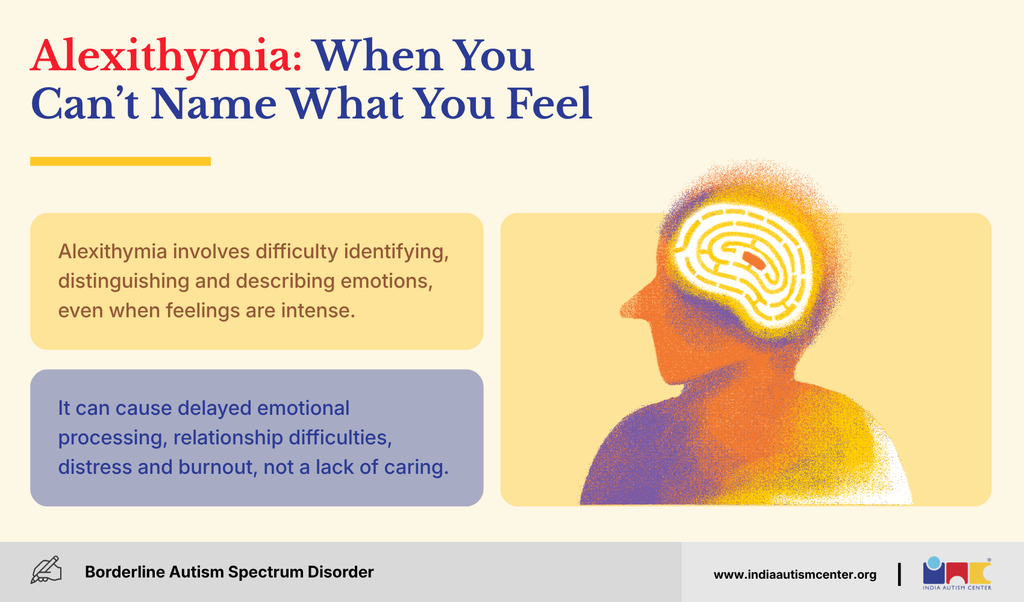
There’s another layer to the adult borderline autism experience that rarely gets named: alexithymia.
Alexithymia literally means “no words for feelings.” It describes difficulty identifying, distinguishing, and describing one’s own emotional states. It’s not that the emotions aren’t there – they are, often intensely. It’s that the internal signal doesn’t translate into a recognizable label.
Research consistently finds alexithymia in approximately 40–65% of autistic people, with some studies of adult autism clinic samples reporting rates as high as 66%. A 2019 systematic review by Kinnaird et al. in European Psychiatry confirmed this elevated prevalence across multiple study designs.
In borderline autism presentations, alexithymia shows up as:
- Relationship difficulties: Partners feel shut out; the person with alexithymia genuinely doesn’t know what they’re feeling, let alone how to communicate it.
- Delayed emotional processing: Realizing hours or days later what emotion they were experiencing in a given moment.
- Physical symptoms instead of emotional ones: Headaches, stomach aches, or fatigue as the body’s way of signaling emotional distress that the mind can’t name.
- Autistic burnout: Extended periods of exhaustion, withdrawal, and reduced functioning – often triggered by sustained emotional demands the person couldn’t recognize or manage in real time.
Alexithymia is not the same as not caring. It’s a processing difference, not an empathy deficit. Understanding this distinction can transform how families and partners relate to someone with borderline autism traits.
Think You Need a Diagnosis for Borderline Autism? Here’s What to Do
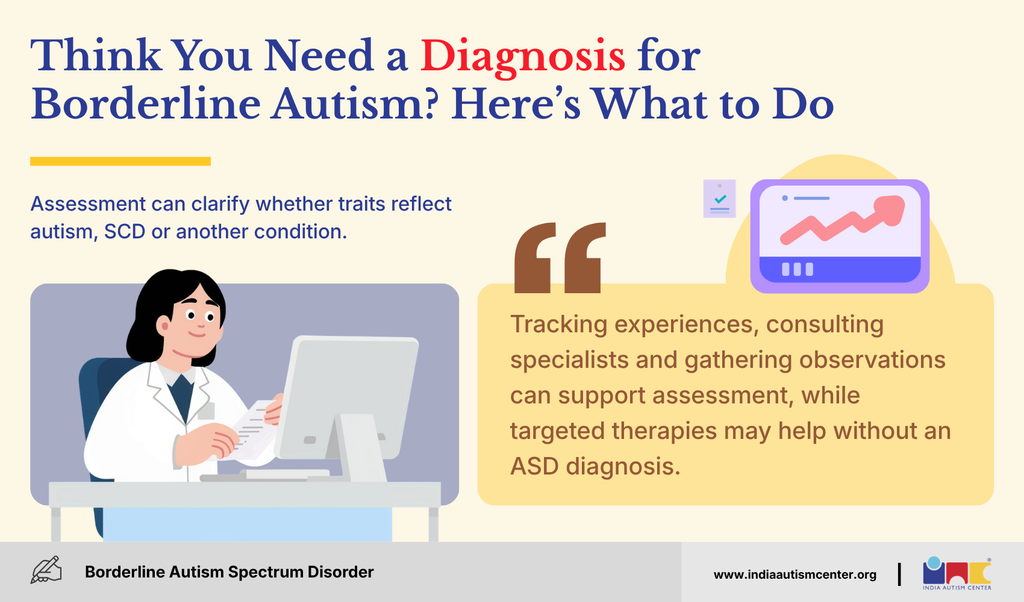
Seeking a borderline autism diagnosis can feel like navigating uncharted territory.
These borderline autism traits might not meet full DSM-5 criteria, but can still impact relationships, school, work, and mental health. Left unrecognized, they can lead to chronic stress, burnout, and even misdiagnoses such as anxiety, ADHD, or personality disorders.
As Puja explains,
We need to treat mental health like physical health. If something feels off, have it checked out. Just as we schedule regular physical check-ups, developmental and mental health check-ins should be routine, too.
Having said that, here’s a step-by-step roadmap to get started:
Track Daily Experiences
Keep a journal to record the specific challenges you encounter in daily life, focusing on:
- Social interactions
- Sensory sensitivities
- Rigid or repetitive routines
For example, if you feel drained after socializing or overwhelmed by small disruptions, write it down. These patterns will support your case for a clinical autism assessment.
This brings us to the next step.
Consult a Qualified Specialist
Different professionals can guide the process of identifying borderline autism or related conditions:
- Clinical or Rehabilitation Psychologist: They can conduct comprehensive psychological assessments using autism-specific diagnostic tools, such as the Indian Scale for Assessment of Autism (ISAA) and the Childhood Autism Rating Scale (CARS), among others.
- Developmental Pediatrician: This specialist focuses on childhood development and is skilled in identifying early signs of autism and how these traits evolve.
- Psychiatrist: They can evaluate individuals for autism as well as for co-occurring conditions like anxiety, attention deficit hyperactivity disorder (ADHD), or mood disorders. They may also manage medications if necessary.
Gather Outside Observations
If you’re a parent seeking answers for your child, observations from teachers, special educators, or caregivers can offer valuable context.
For adults, feedback from a partner or close friend can offer valuable context.
Prepare for a Nuanced Outcome
Not everyone who identifies with autism will receive an ASD diagnosis. For example, in cases with subthreshold traits, you may be directed toward symptom-based interventions rather than a formal autism care pathway.
That could include:
- Speech therapy for communication support
- Occupational therapy for sensory and daily living skills
- Social skills training for confidence in group settings
- Behavioral therapy for regulation
- Parent–Child Interaction Therapy (PCIT) to strengthen relationships
- Executive function coaching for organization and planning
Explore Broader Supports
Even if you don’t meet all the diagnostic criteria for autism, there are still various types of support that can help make daily life easier.
Here are some lesser-talked-about supports to consider:
- Psychoeducation Workshops: Designed for parents, teachers, and caregivers to better understand sensory needs, emotional regulation, and effective ways to provide support without causing overwhelm.
- Visual Supports: Tools such as visual schedules, social stories, and checklists can help reduce anxiety and assist with transitions and planning.
- Life Coaching or Skill-Building Programs: These programs focus on fostering independence in areas such as time management, self-advocacy, and job readiness, making them especially beneficial for teens and adults navigating ambiguous situations.
- Alternative Learning Spaces: Montessori, Waldorf-inspired, or flexible learning centers provide environments that respect diverse sensory and cognitive styles.
- Parent Support Networks: These local or online communities offer guidance, emotional support, and shared experiences.
- Inclusive Recreation or Movement Therapies: Activities like art therapy, dance movement therapy, or structured sports groups are designed to support neurodivergent individuals in a low-pressure, expressive environment.
Take the M-CHAT-R/F Assessment 👉 M-CHAT-R/F for toddlers
Why So Many Females Relate to Borderline Autism
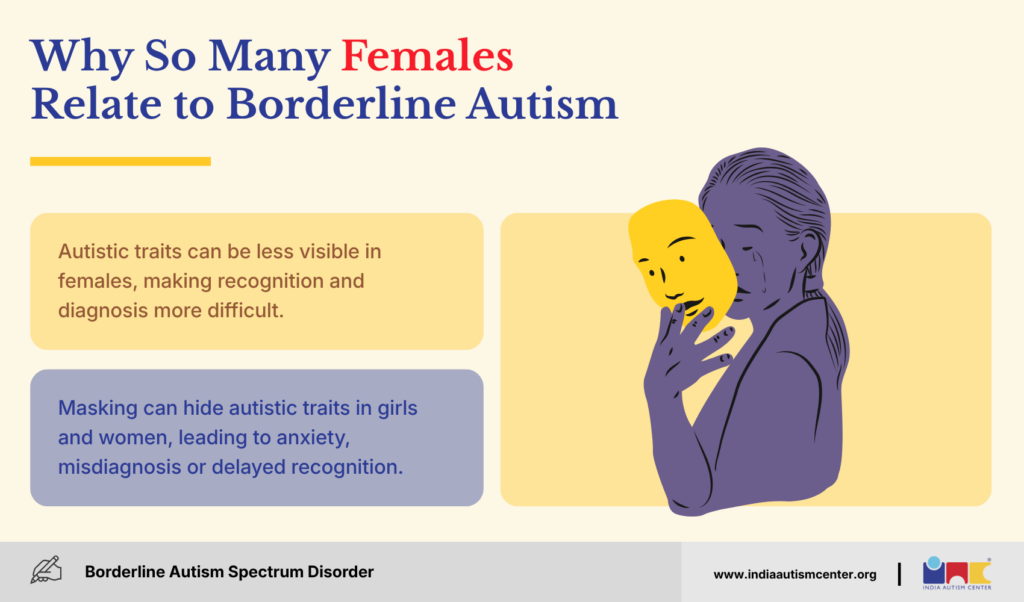
Borderline autism traits are prevalent in females. After all, signs of autism in women often present in less visible and harder-to-detect ways compared to males.
As Puja puts it,
Many girls exhibit internalizing symptoms that are not always recognized as signs of autism. Consequently, these children are often labeled as shy, sensitive, or moody, which leads to their actual needs being overlooked. By adolescence, they find themselves in a challenging situation and struggle to cope while remaining undiagnosed.
One of the biggest reasons for this under-recognition is masking or camouflaging. This refers to the deliberate effort to appear ‘typical’ in social situations.
Common masking-related patterns in autistic females include:
- Mimicking social behaviors to fit in
- Suppressing repetitive movements (like rocking, fidgeting, or tapping)
- Relying on strict routines for comfort
Over time, constant masking can lead to emotional fallout. This is frequently misinterpreted as depression, anxiety disorders, borderline personality traits, or simply stress.
The rise in adult diagnoses, especially among women, shows that this pattern is finally being recognized.
The concept of borderline autism has played a key role here for several reasons:
- It helps those who exhibit borderline autistic traits but do not meet the strict criteria for a diagnosis
- It addresses individuals who may have been misdiagnosed or overlooked during childhood
- It provides support for people who need assistance, even if they do not have a formal ASD label
By understanding the female presentation of autism, especially at the borderline level, we can enable earlier recognition, reduce misdiagnosis, and create support systems that meet their needs.
Parting Words: You Don’t Need an Autism Diagnosis to Deserve Support
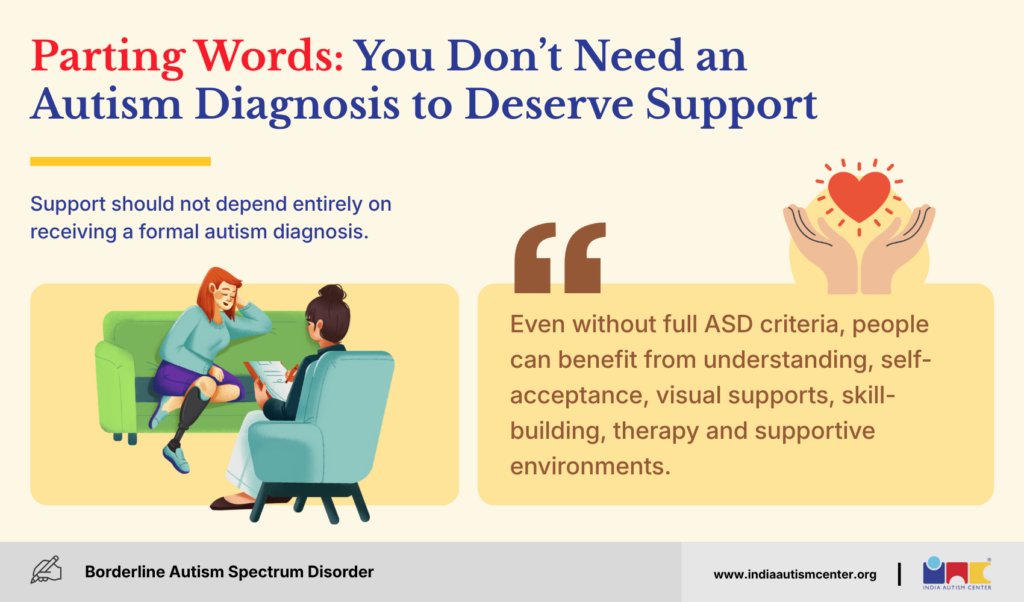
While borderline autism spectrum disorder is not an official clinical term, the experiences it describes are real, valid, and deserving of empathy.
Whether or not you meet every diagnostic criterion, your struggles and needs matter. Access to support, understanding, and self-acceptance is just as essential for those in the grey areas of the spectrum as it is for those with a formal diagnosis.
For further assistance, feel free to contact us.
Frequently Asked Questions
Is ADHD borderline autism?
No. ADHD and borderline autism are distinct conditions. While they may share features like inattention, impulsivity, or difficulties with social interactions, they are not the same. However, ADHD and autism can co-occur, which sometimes makes diagnosis more complex.
Can borderline be mistaken for autism?
Yes. Borderline personality disorder or other emotional regulation difficulties can sometimes be confused with autism. Both may involve challenges with relationships, communication, and managing emotions. That said, autism is a neurodevelopmental condition present from early childhood, while borderline personality disorder usually develops in adolescence or early adulthood. A professional evaluation is key to distinguishing between them.
What is the lowest form of autism?
There is no ‘lowest form’ of autism. Autism exists on a spectrum, and clinicians sometimes refer to ‘Level 1 autism’ (also called mild autism) to describe individuals who require minimal support. These individuals may still face difficulties with social communication or flexibility, but often manage daily life independently.
Can a child with mild autism live a normal life?
Yes. Many children with mild autism (or Level 1 autism) can live independent and fulfilling lives. With early intervention, therapy, and the right support systems, they often learn coping strategies that help them navigate social, academic, and professional challenges.
How serious is mild autism?
Mild autism is not considered serious in the sense of preventing independence. However, it can still significantly impact social relationships, school performance, or workplace adaptation if left unsupported. The seriousness depends on the individual’s environment, available resources, and coping strategies.
Do kids outgrow mild autism?
Autism is a lifelong condition, so children do not outgrow it. However, with timely early intervention and ongoing support, many children with mild autism develop skills that reduce the visibility of their challenges. They may appear to outgrow traits, but in reality, they’ve learned strategies to adapt.
Why do some people with borderline autism chew on objects?
Chewing or mouthing objects is common in individuals with borderline autism. It can serve as a self-soothing behavior to manage anxiety, sensory overload, or restlessness. Chewing provides oral sensory input that helps regulate emotions. Offering safe alternatives like chewable jewelry can help meet this sensory need.
Can borderline autism be cured?
No. Autism, including borderline or mild presentations, cannot be cured. It is a lifelong neurodevelopmental condition. However, with therapy, structured support, and coping strategies, many individuals learn to manage challenges effectively and thrive in personal and professional life. The focus is on support and empowerment, not a cure.
Disclaimer: This article is intended for educational and informational purposes only. It is not a substitute for professional medical advice, diagnosis, or treatment. If you are pregnant or have concerns about medication use during pregnancy, please consult a qualified healthcare provider. If your child has received an autism diagnosis and you have questions about causes or support, please reach out to a trained specialist or an autism-focused organisation for guidance.
For expert insights, support services, and inclusive learning initiatives, visit the India Autism Center.