 Donate now
 Get a Call Back

 MENU
 11 MIN READ
 SHARE


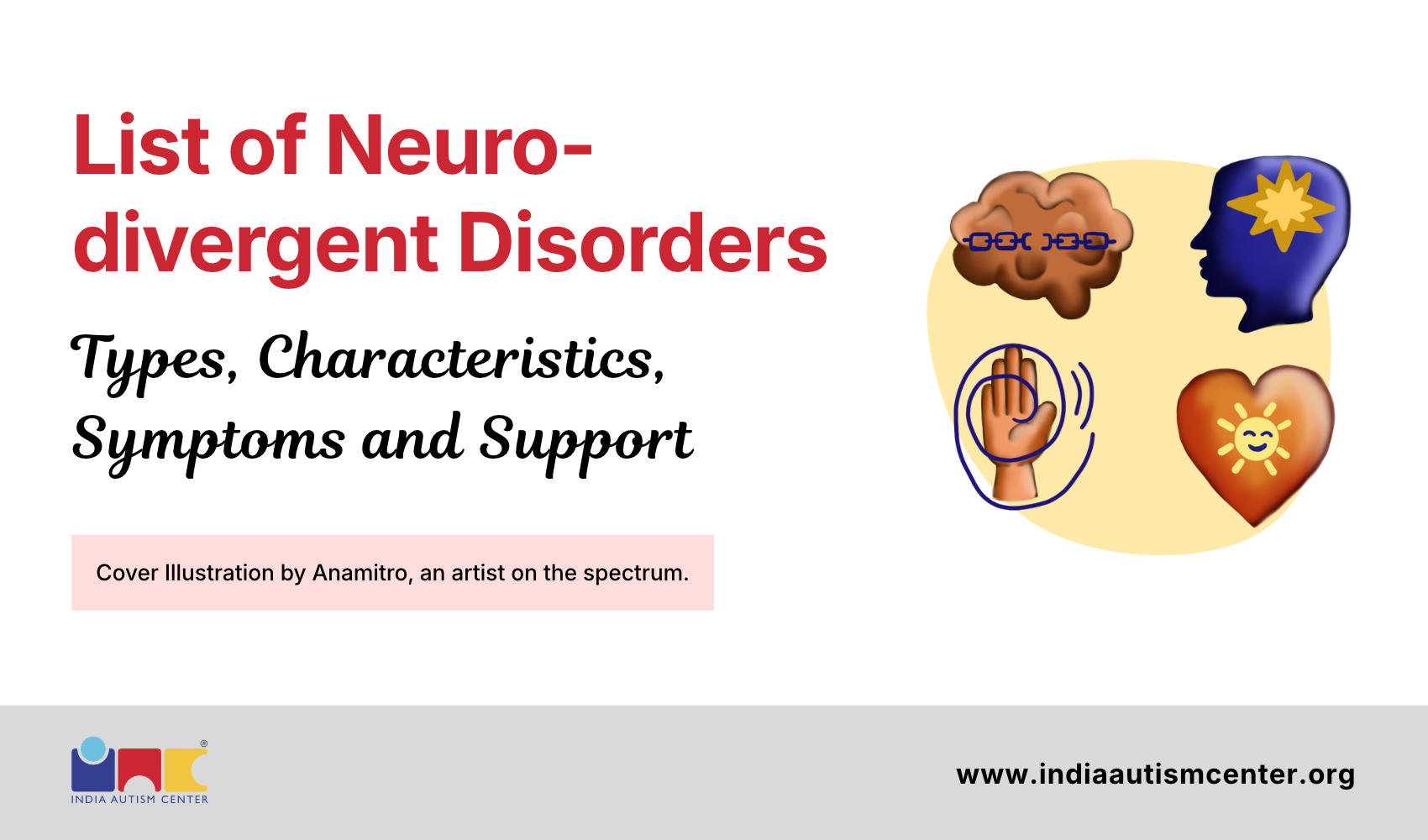
Research published in the Postgraduate Medical Journal estimates that about 15-20% of the global population is neurodivergent. This means millions of people experience differences in how they think, learn, communicate, process information and interact with the world.
The list of neurodivergent disorders includes recognised conditions including Autism Spectrum Disorder (ASD), dyslexia, dyscalculia, dyspraxia and Attention Deficit Hyperactivity Disorder (ADHD). Understanding these conditions, their characteristics and how they overlap can help individuals and families identify support requirements and make informed decisions about assessment and care.
What Is Neurodivergence?
Neurodivergence describes differences in how the brain develops, processes information and functions. It is an umbrella term used for individuals whose cognitive, behavioural or neurological functioning differs from what is considered typical.
Neurodivergence is not a medical diagnosis. Instead, it encompasses several developmental, learning and neurological conditions that can influence attention, communication, memory, movement, sensory processing and learning.
The concept is closely connected to neurodiversity, which recognises that differences in how human brains function are a natural part of human variation. Rather than viewing every difference as a deficit, the neurodiversity perspective encourages society to recognise individual strengths while addressing the challenges people may experience.
No universally agreed list of neurodivergent conditions exists. However, autism, ADHD, dyslexia, dyspraxia, dyscalculia and Tourette syndrome are among the most commonly recognised examples.
List of Neurodivergent Disorders: 10 Common Conditions
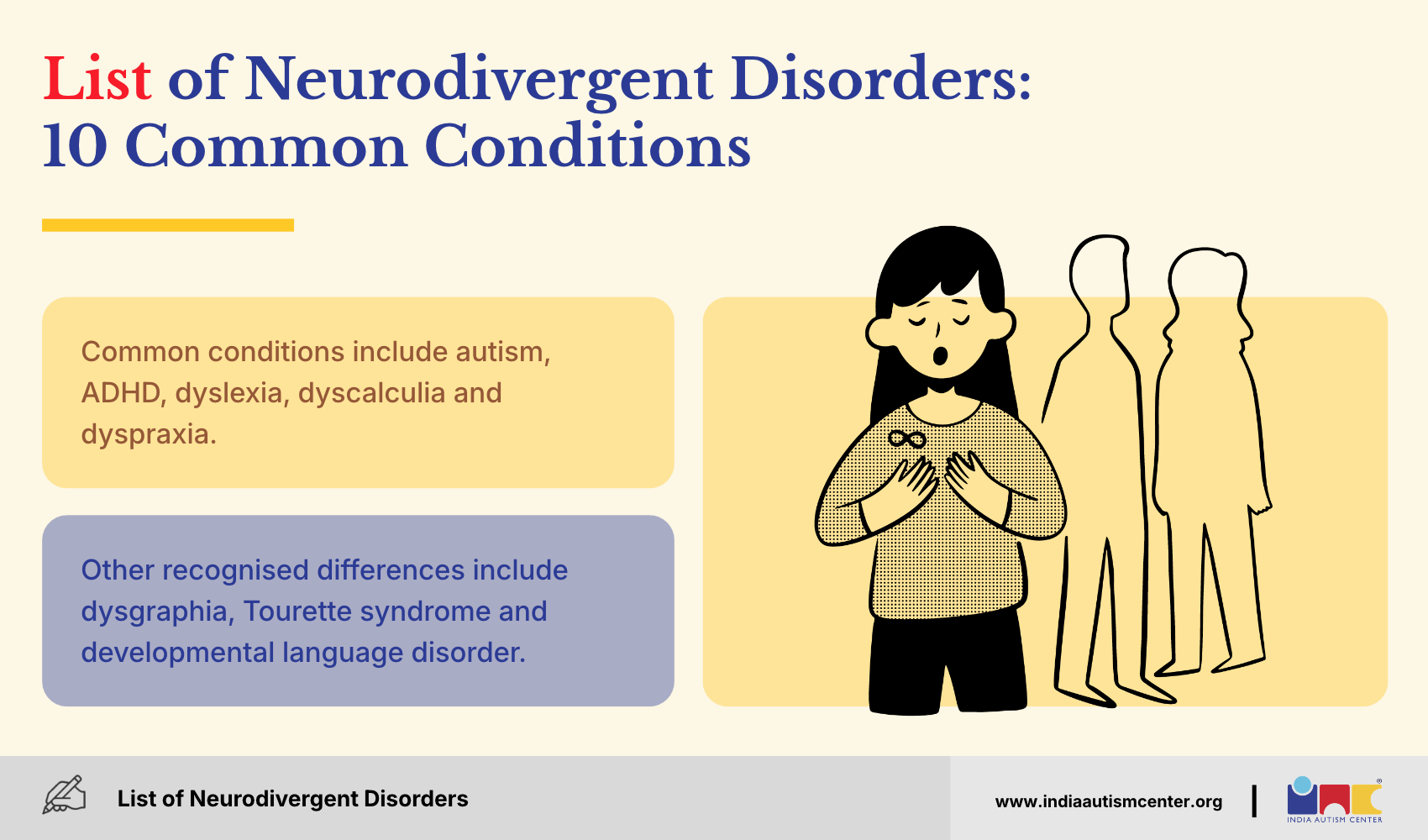
The following neurodivergent conditions list covers commonly recognised neurodevelopmental and learning differences. Each condition has distinct characteristics, although some individuals may experience more than one.
1. Autism Spectrum Disorder (ASD)
Autism Spectrum Disorder (ASD), commonly known as autism, is a neurodevelopmental condition which can affect social communication, interaction, behaviour and sensory processing.
Autism is described as a spectrum because its characteristics and support requirements vary significantly. Some autistic individuals live independently with minimal support, while others require assistance with communication, daily activities and learning.
Common characteristics include:
- Differences in verbal and non-verbal communication.
- Difficulty interpreting social cues and unspoken expectations.
- Repetitive movements or behaviours, including stimming.
- Strong interests in particular subjects or activities.
- Sensitivity to sounds, lights, textures and smells.
- A preference for familiar routines and predictable environments.
Autism is not really an illness that needs to be cured. Individualised support, including speech and language therapy, occupational therapy and appropriate educational interventions, can help autistic individuals develop skills and manage everyday challenges.
2. Attention Deficit Hyperactivity Disorder (ADHD)
Attention Deficit Hyperactivity Disorder (ADHD) is essentially a neurodevelopmental condition associated with persistent patterns of inattention, hyperactivity and impulsivity.
ADHD can affect children and adults, although its characteristics may change with age. It is generally recognised in three presentations:
- Predominantly inattentive presentation: Difficulty sustaining attention, organising activities and following instructions.
- Predominantly hyperactive-impulsive presentation: Restlessness, excessive talking and difficulty controlling impulses.
- Combined presentation: There can be a combination of both inattentive and hyperactive-impulsive characteristics.
People with ADHD may also experience difficulties with executive functioning, which includes planning, prioritising, managing time and regulating emotions.
Behavioural interventions, psychological support, practical adjustments and medication, where clinically appropriate, can help individuals manage ADHD-related challenges.
3. Dyslexia
Dyslexia is known to be a specific learning difficulty that affects reading, spelling and accurate or fluent word recognition. It is associated with differences in language processing, particularly phonological processing.
Common characteristics include:
- Difficulty connecting letters with their corresponding sounds.
- Slow or effortful reading.
- Frequent spelling errors.
- Difficulty recognising unfamiliar words.
- Challenges with reading fluency.
Dyslexia does not indicate low intelligence or a lack of learning ability. Structured literacy instruction, additional learning time and assistive technology can help individuals develop effective reading and writing skills.
4. Dyscalculia
Dyscalculia is a specific learning difficulty which ends up affecting the understanding and use of numbers. Individuals with this condition may find mathematical concepts difficult to understand, even with regular teaching and practice.
Some common characteristics include:
- Difficulty understanding numerical relationships.
- Problems remembering mathematical facts.
- Challenges performing calculations.
- Difficulty estimating quantities and distances.
- Problems understanding time, money and measurements.
Visual learning techniques, practical examples and individualised mathematics instruction can help individuals understand numerical concepts and manage everyday calculations.
5. Dyspraxia (Developmental Coordination Disorder)
Dyspraxia, clinically known as Developmental Coordination Disorder (DCD), affects the acquisition and execution of coordinated motor skills. It can influence physical movement, motor planning and the organisation of everyday activities.
Individuals may experience difficulty with:
- Handwriting and using cutlery.
- Maintaining balance and coordination.
- Learning new physical activities.
- Dressing and managing personal care.
- Organising and sequencing movements.
Occupational therapy, physiotherapy and appropriate environmental adjustments can help improve coordination and support independence.
6. Dysgraphia
Dysgraphia is a learning-related difficulty that affects handwriting and written expression. It may make it challenging to translate thoughts into written language, organise sentences or produce legible handwriting.
Some common characteristics include inconsistent letter formation, irregular spacing, difficulty spelling words and discomfort during prolonged writing.
Dysgraphia may occur alongside dyslexia or ADHD. Keyboard-based writing, assistive technology and targeted educational support can help individuals communicate their ideas more effectively.
7. Tourette Syndrome
Tourette Syndrome (TS) is a neurological condition characterised by multiple motor tics or at least one vocal tic, with symptoms beginning before the age of 18 and persisting for more than a year.
Tics are sudden, repetitive movements or sounds that a person may find difficult to control.
Examples include:
- Repeated blinking or facial movements.
- Shoulder shrugging or head movements.
- Throat clearing.
- Repeated sounds or vocalisations.
Tourette syndrome can occur alongside ADHD and Obsessive-Compulsive Disorder (OCD). However, not everyone requires treatment. Support is generally based on how frequently tics occur and whether they interfere with everyday activities.
8. Developmental Language Disorder (DLD)
Developmental Language Disorder (DLD) is a neurodevelopmental condition that affects the overall ability to understand and use language. It can influence both spoken communication and language-based learning.
Individuals with DLD may experience difficulty understanding complex instructions, learning new vocabulary, forming grammatically correct sentences and expressing their thoughts.
These challenges can affect classroom participation, academic progress and social interactions. Speech and language therapy is known to help individuals develop communication skills and strategies suited to their needs.
9. Intellectual Developmental Disorder
Intellectual Developmental Disorder, also known as Intellectual Disability, is a neurodevelopmental condition involving significant limitations in intellectual functioning and adaptive behaviour.
It can affect reasoning, problem-solving, learning and the ability to manage everyday activities independently.
Individuals may require support with communication, academic learning, personal care, social interactions and decision-making. The level of assistance required varies considerably.
It is worth noting that intellectual disability is not synonymous with autism. An autistic person may or may not have an intellectual disability.
10. Specific Learning Difficulties and Other Learning Differences
Beyond dyslexia, dyscalculia and dysgraphia, individuals may experience other learning-related differences that influence how they process and use information.
Hyperlexia is one example. It involves an unusually early or advanced ability to recognise and read written words, sometimes alongside difficulties understanding language. It can occur in autistic individuals but is not exclusive to autism.
These differences highlight why a person’s reading ability, comprehension, communication and overall learning profile should be assessed separately rather than assumed to develop at the same pace.
What Is the Difference Between Neurodivergence and Neurotypical?
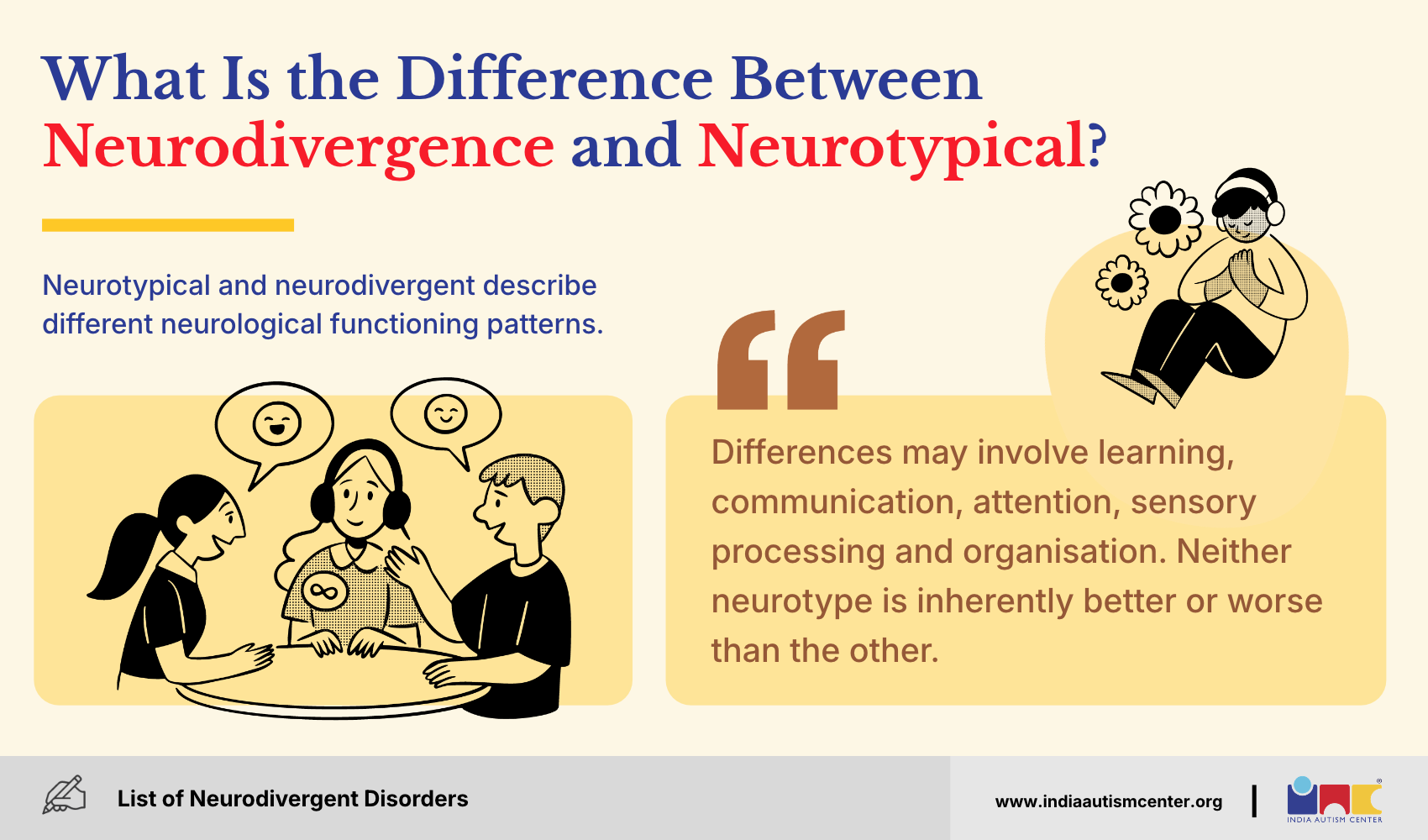
The difference between neurodivergence and neurotypical relates to how an individual’s brain processes information, responds to sensory experiences, communicates and performs everyday cognitive activities.
Neurotypical describes individuals whose cognitive and behavioural patterns generally align with commonly expected developmental and social norms. Neurodivergent describes individuals whose neurological functioning differs from these patterns.
| Area | Neurotypical | Neurodivergent |
|---|---|---|
| Learning | May respond well to conventional teaching approaches | May benefit from alternative learning methods. |
| Communication | Generally follows commonly expected communication patterns | May communicate or interpret language differently. |
| Attention | Generally follows expected attention patterns | May experience differences in attention regulation. |
| Sensory processing | Usually responds within commonly expected sensory ranges | May experience heightened or reduced sensory responses. |
| Social interaction | Generally follows familiar social conventions | May interpret social cues and interactions differently. |
| Organisation | May manage planning and routines without significant difficulty | May require additional strategies for planning and organisation. |
Neither neurotype is inherently better or worse. These terms describe differences rather than levels of intelligence, ability or personal worth.
Neurodivergent individuals do not necessarily experience difficulties in every area. A person may have strong verbal skills, excellent memory or exceptional attention to a particular interest while experiencing challenges elsewhere.
What Are the Common Signs of Neurodivergence?
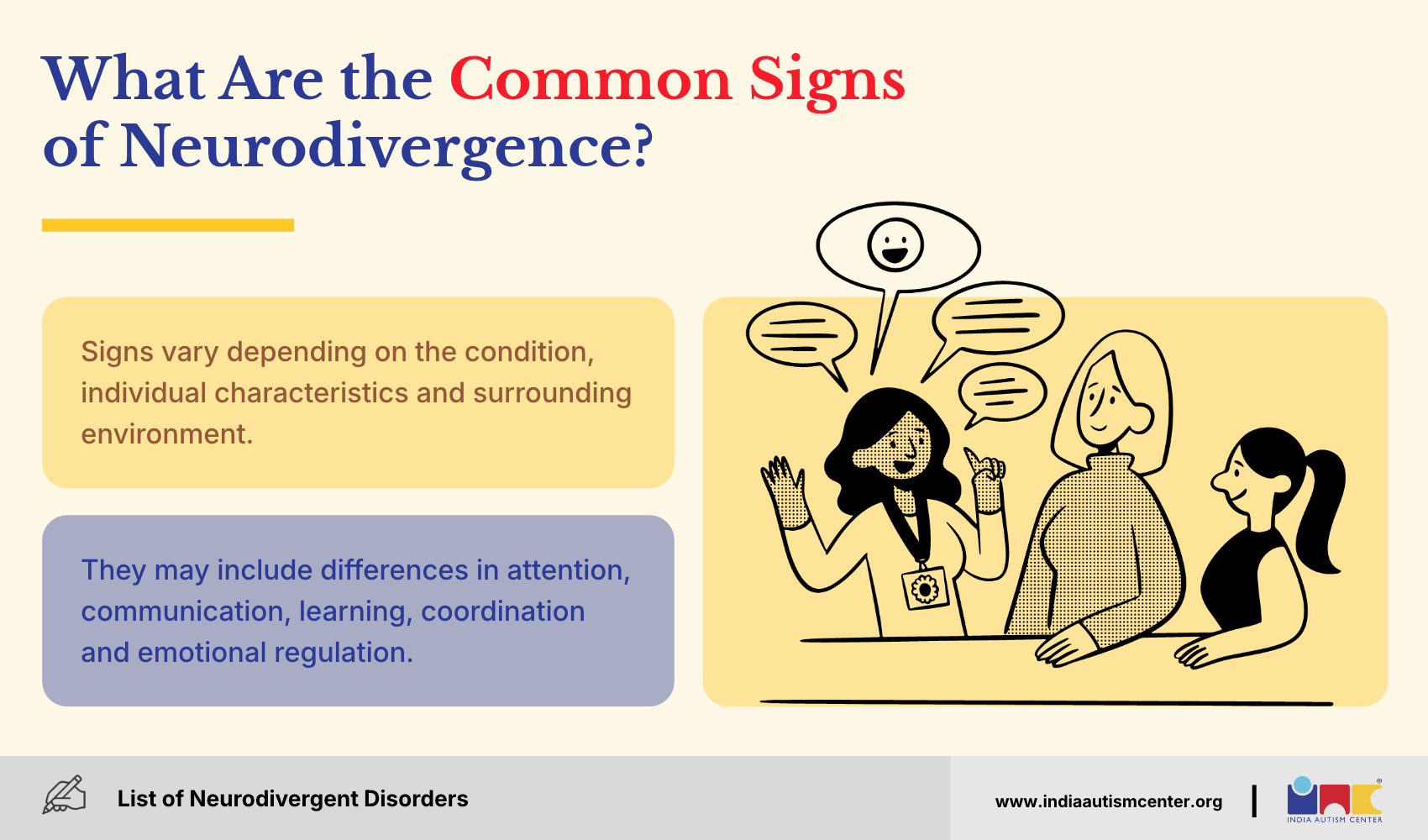
No single set of symptoms identifies every neurodivergent person. Characteristics depend on the specific condition, its presentation, the individual’s age and their environment.
However, some commonly observed differences include:
- Difficulty maintaining attention, organising tasks or managing time.
- Differences in social communication and interaction.
- Sensitivity to sounds, bright lights, smells or textures.
- Challenges with reading, writing, spelling or mathematical concepts.
- Repetitive movements or even a strong preference for routines.
- Difficulty with coordination and motor planning.
- Differences in emotional regulation and executive functioning.
How Are Neurodivergent Conditions Diagnosed?
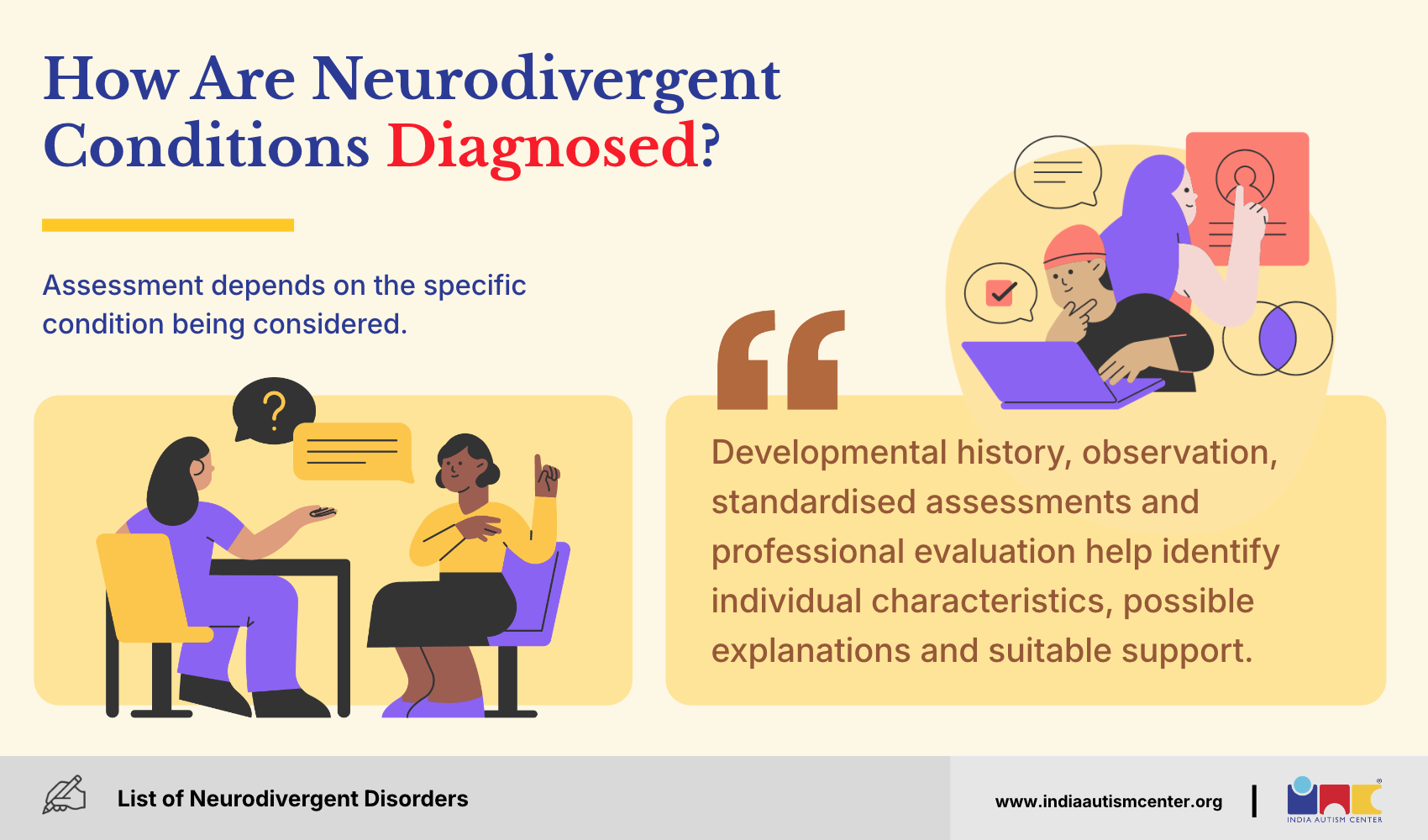
Neurodivergence itself does not have a single diagnostic test because it is an umbrella term rather than a medical diagnosis. The assessment process depends on the specific condition being considered.
A typical assessment may involve:
1. Developmental history: Understanding early milestones, communication, learning patterns and behaviour.
2. Observation: Identifying differences in attention, social interaction, movement, language or sensory responses.
3. Standardised assessments: Using appropriate screening questionnaires and diagnostic tools.
4. Professional evaluation: Consulting qualified specialists to assess the individual’s characteristics and consider other possible explanations.
5. Support planning: Identifying strengths, challenges and suitable interventions or adjustments.
For children, parents and teachers can provide valuable information about developmental and behavioural differences across home and school environments. For adults, childhood experiences, educational history and workplace challenges can help inform the assessment.
Importantly, screening tools are not diagnostic tests. A positive screening result indicates that further evaluation may be appropriate, not that an individual definitely has a particular condition.
How Can Neurodivergent Individuals Be Supported?
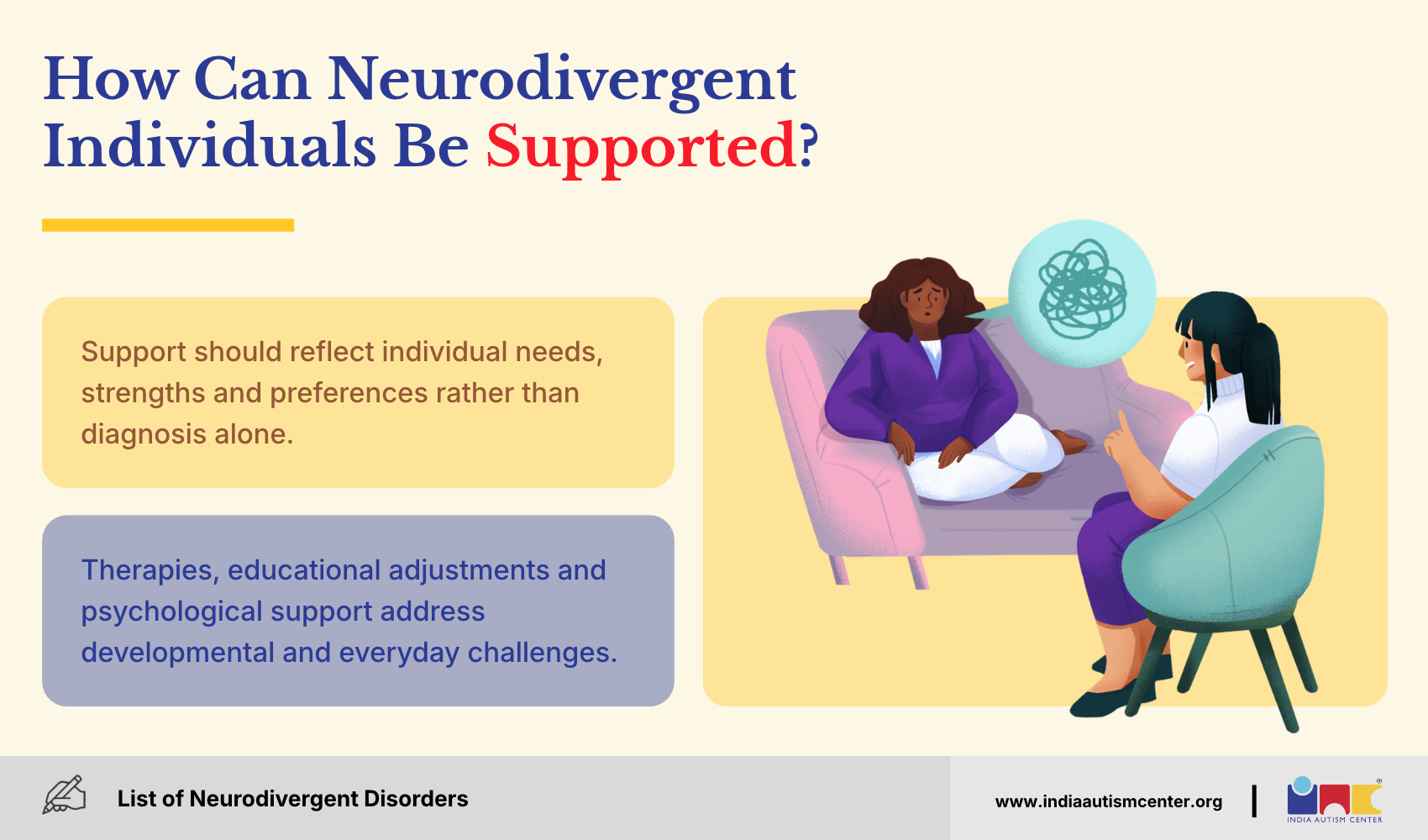
Support should be based on an individual’s needs, not their diagnosis alone. Early identification can help children access appropriate developmental interventions, while adults may benefit from workplace adjustments, psychological support and practical strategies.
Some approaches include:
- Speech and language therapy: Supports language development, communication and social communication skills.
- Occupational therapy: Helps with motor coordination, sensory needs and everyday living activities.
- Individualised educational support: Includes structured teaching, assistive technology, additional learning time and accessible classroom environments.
- Psychological support: Can help individuals manage anxiety, emotional difficulties and challenges associated with everyday functioning.
- Behavioural interventions: May help develop communication, adaptive and functional skills when they are appropriate, evidence-based and tailored to the individual.
Family involvement is equally important. Parents and caregivers can support children by understanding their communication preferences, recognising sensory needs, maintaining predictable routines where helpful and encouraging independence without unnecessary pressure.
The aim is not to make every neurodivergent individual behave like a neurotypical person. It is to provide the right support, reduce avoidable barriers and help individuals participate meaningfully in everyday life.
How India Autism Center Supports Neurodivergent Individuals
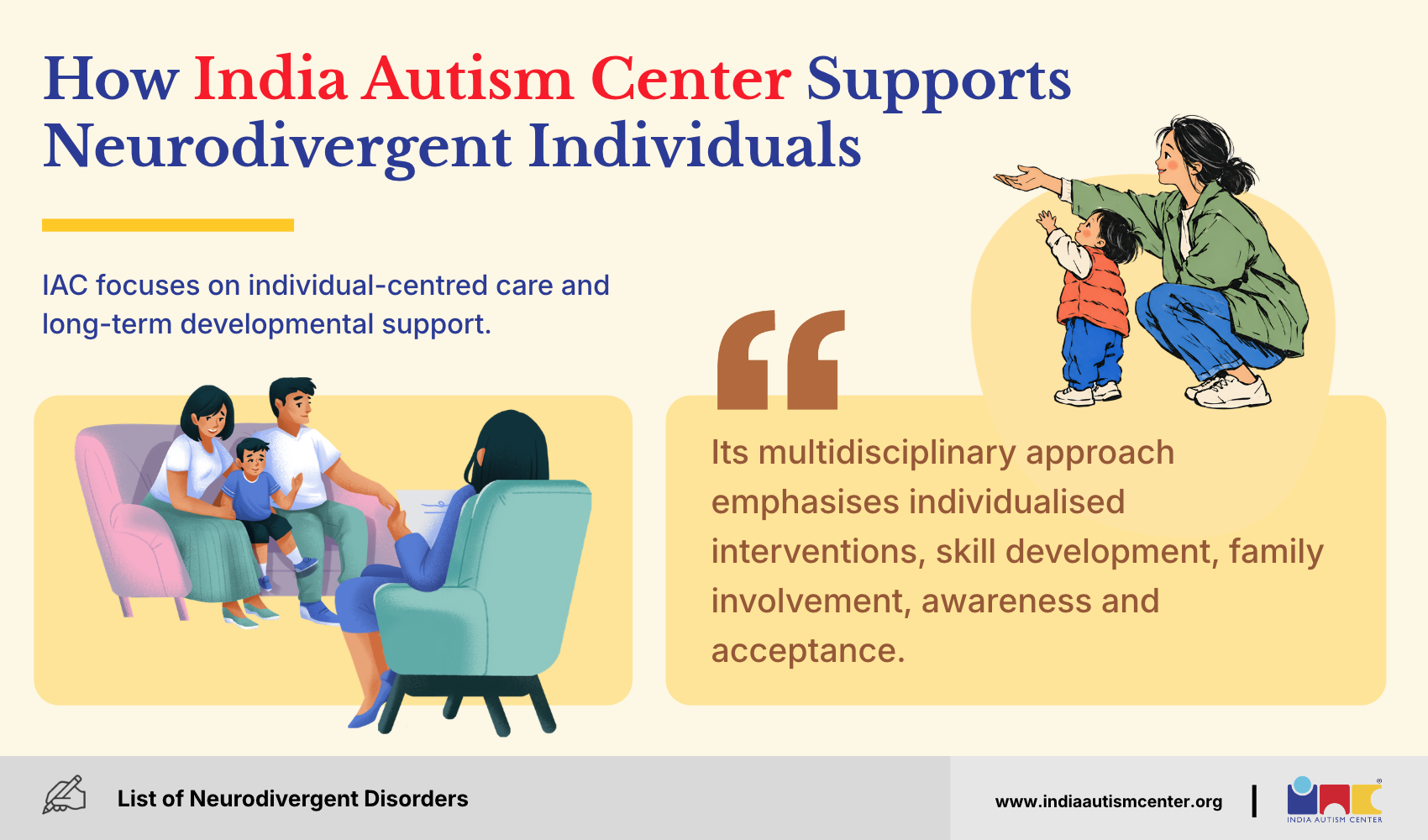
Understanding neurodivergence requires looking beyond diagnostic labels and recognising each individual’s abilities, developmental needs and potential. India Autism Center believes in an individual-centred approach that places the well-being and long-term development of neurodivergent individuals at the forefront.
Through a multidisciplinary approach to autism care and developmental support, we focus on individualised interventions, skill development, family involvement and opportunities to build greater independence. We also emphasise the importance of awareness, acceptance and creating supportive environments where individuals can learn and thrive. By recognising differences rather than defining people by their diagnoses, India Autism Center aims to contribute to a more inclusive society.
Conclusion
The list of neurodivergent disorders includes several developmental, learning and neurological conditions, each with distinct characteristics and support requirements. Autism, ADHD, dyslexia, dyscalculia, dyspraxia and Tourette syndrome are among the commonly recognised examples.
However, understanding neurodivergence goes beyond identifying a condition. It involves recognising individual differences, understanding co-occurring conditions and providing appropriate support without overlooking personal strengths. Greater awareness can help families, educators and communities create environments where neurodivergent individuals feel understood, accepted and empowered.
Frequently Asked Questions
1. Is autism considered a form of neurodivergence?
Yes. Autism is one of the most widely recognised forms of neurodivergence. It affects social communication, interaction, behaviour and sensory processing. However, its characteristics and support requirements differ from one individual to another.
2. Is ADHD a neurodevelopmental disorder or neurodivergence?
ADHD is a neurodevelopmental disorder and is commonly included under the broader umbrella of neurodivergence. It affects attention regulation, impulse control and activity levels.
3. Can neurodivergence develop in adulthood?
Neurodevelopmental conditions generally originate during childhood, although they may not be recognised or diagnosed until adulthood. Acquired neurological differences can also occur later in life following an injury or illness.
4. Is neurodivergence a disability?
Neurodivergence is not automatically a disability. However, some neurodivergent conditions can substantially affect everyday functioning and may meet the relevant legal criteria for disability. This depends on the individual’s circumstances and support requirements.