 Donate now
 Get a Call Back

 MENU
 11 MIN READ
 SHARE


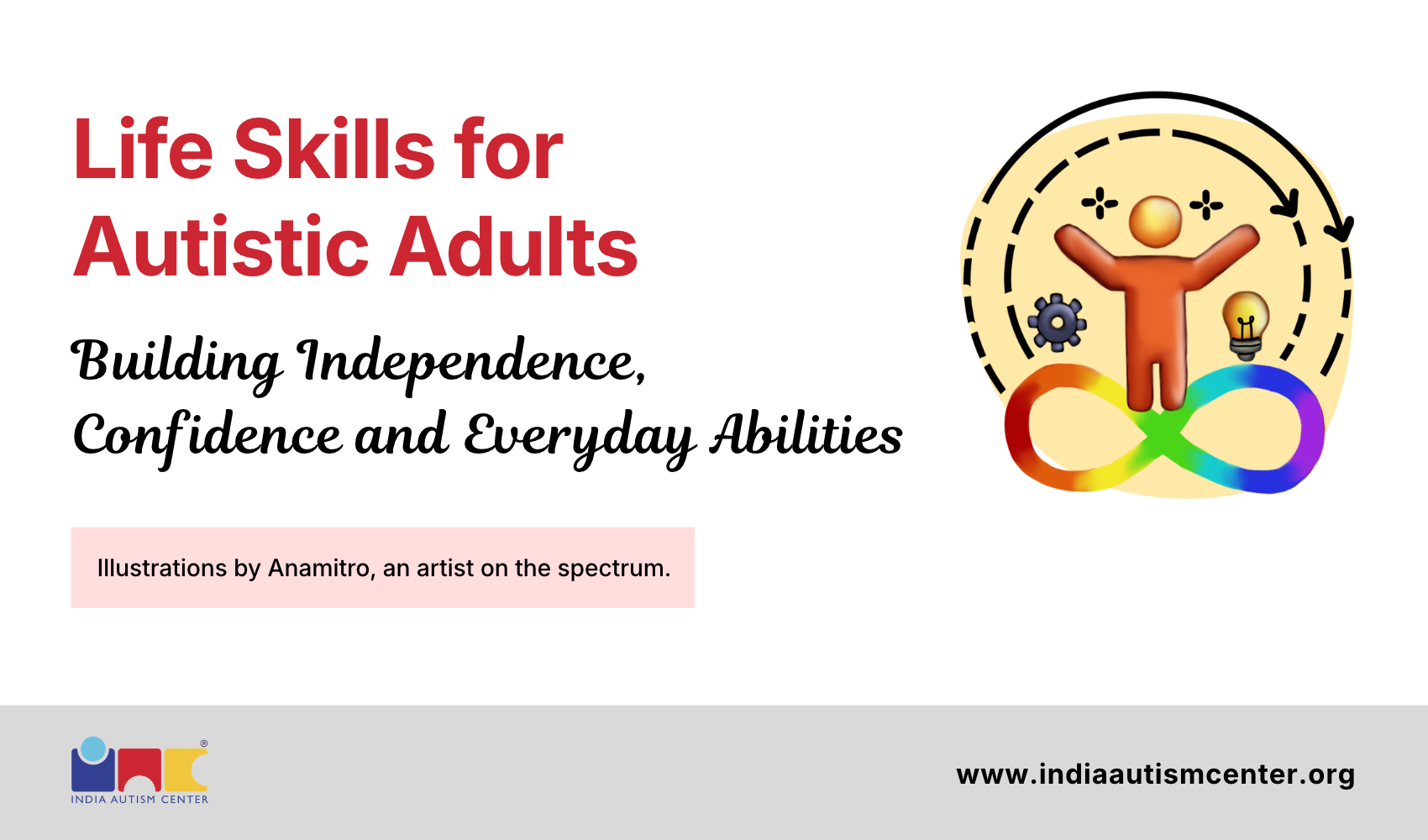
Independence is not defined by how much an autistic adult can manage without help. It is about having the skills, confidence and support to make choices and participate in everyday life.
Yet developing these abilities can require more structured learning and practice.
A 2023 study which was published in the National Library of Medicine, which followed 121 autistic individuals into early adulthood, found that only 5% were living independently at age 23.
This finding highlights that practical life skills, personalised support, and opportunities to practise everyday responsibilities matter for autistic adults to become independent in different walks of life.
How Everyday Life Skills Shape Independence in Autistic Adults?
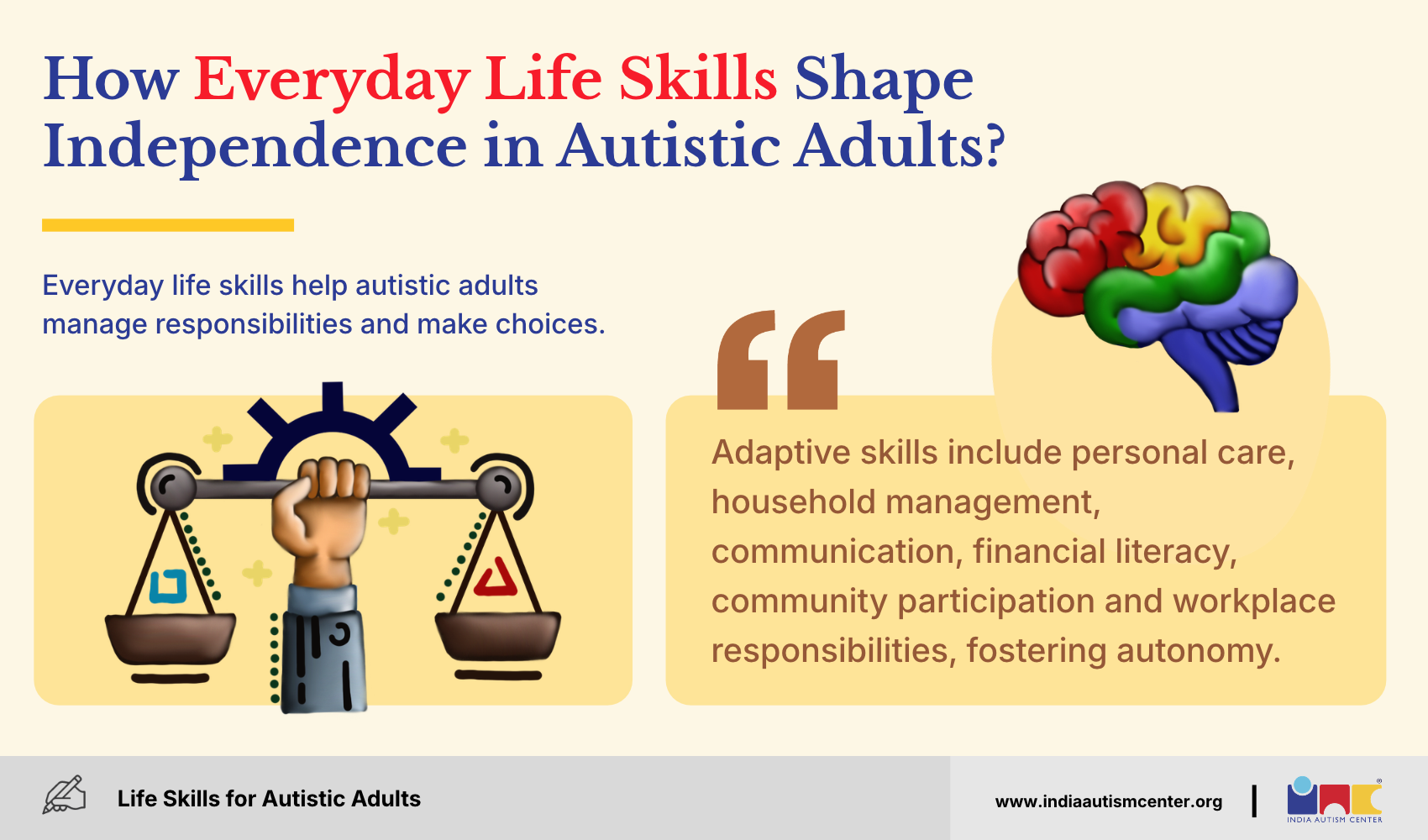
Everyday responsibilities involve more than knowing how to perform individual tasks. Preparing a meal, for instance, requires planning, gathering ingredients, following instructions, managing time and cleaning up afterwards.
Similarly, travelling independently involves route planning, recognising landmarks, understanding transport information and responding to unexpected situations.
These abilities are broadly known as adaptive skills. They include personal care, household management, communication, financial literacy, community participation and workplace responsibilities.
For adults with Autism Spectrum Disorder (ASD), developing these abilities can make everyday activities more manageable and create opportunities for greater autonomy. However, independence does not necessarily mean living alone or managing every responsibility without assistance.
Some individuals may need occasional reminders, while others benefit from regular or ongoing support.
The goal of life skills training for autism should be to help individuals develop abilities that are meaningful to their circumstances, preferences and long-term goals.
7 Essential Life Skills That Help Autistic Adults Navigate Everyday Life
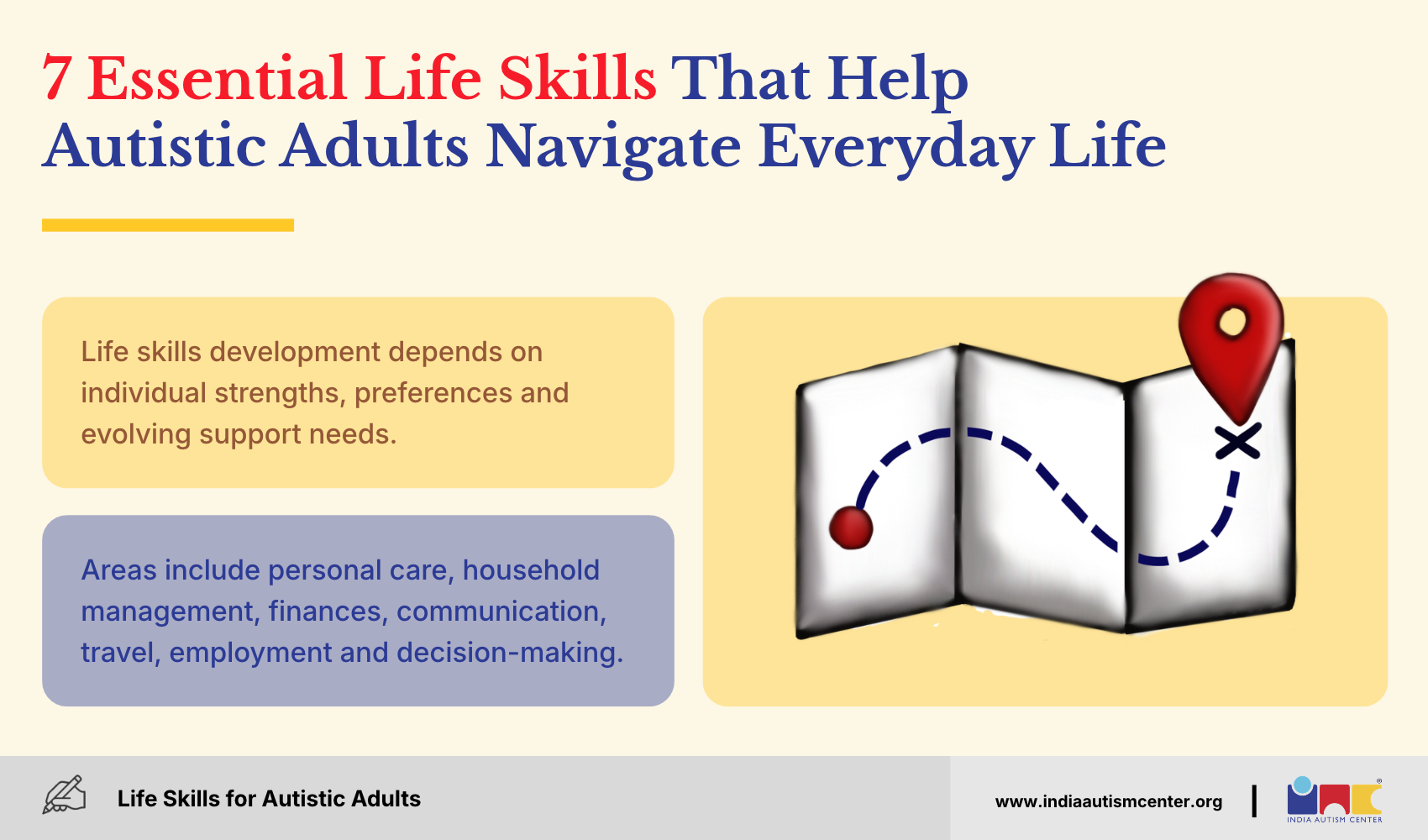
The skills an autistic adult needs will depend on their strengths, sensory preferences, communication style and living arrangements. Some may already manage personal care independently but need help with financial planning or travelling. Others may require more comprehensive support.
Here are seven important areas to consider when developing daily life skills for autistic adults.
1. Personal Care and Self-Management
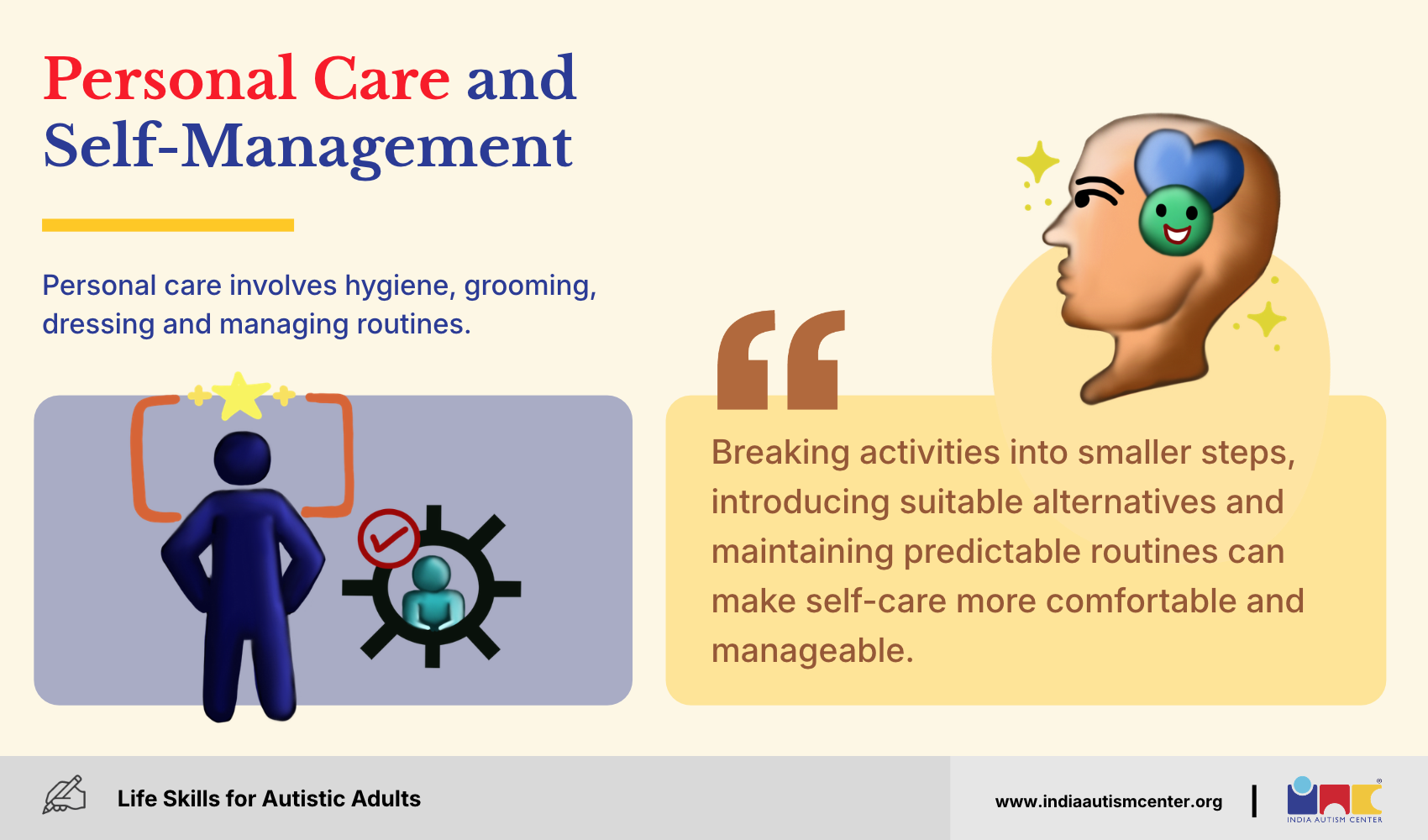
Personal care is an important part of everyday independence and an important life skill for autistic adults. However, activities that appear straightforward can involve multiple steps, sensory challenges and changes in routine.
Self-care skills for autistic adults may include:
- Maintaining personal hygiene, including bathing, brushing teeth and washing hands.
- Choosing appropriate clothing and managing dressing routines.
- Looking after hair, nails and other grooming needs.
- Following regular sleep and meal routines.
- Recognising health concerns and attending medical appointments.
- Managing prescribed medication safely, with appropriate assistance where needed.
Sensory sensitivities can sometimes make these activities uncomfortable. For example, an individual may dislike the different textures of toothpaste, the sound of an electric toothbrush or even the sensation of water on their skin.
Introducing suitable alternatives, breaking activities into smaller steps and maintaining predictable routines can make personal care easier to manage.
📥 Free download: Printable Essential Life Skill Worksheet for autistic children
2. Household Management and Domestic Responsibilities
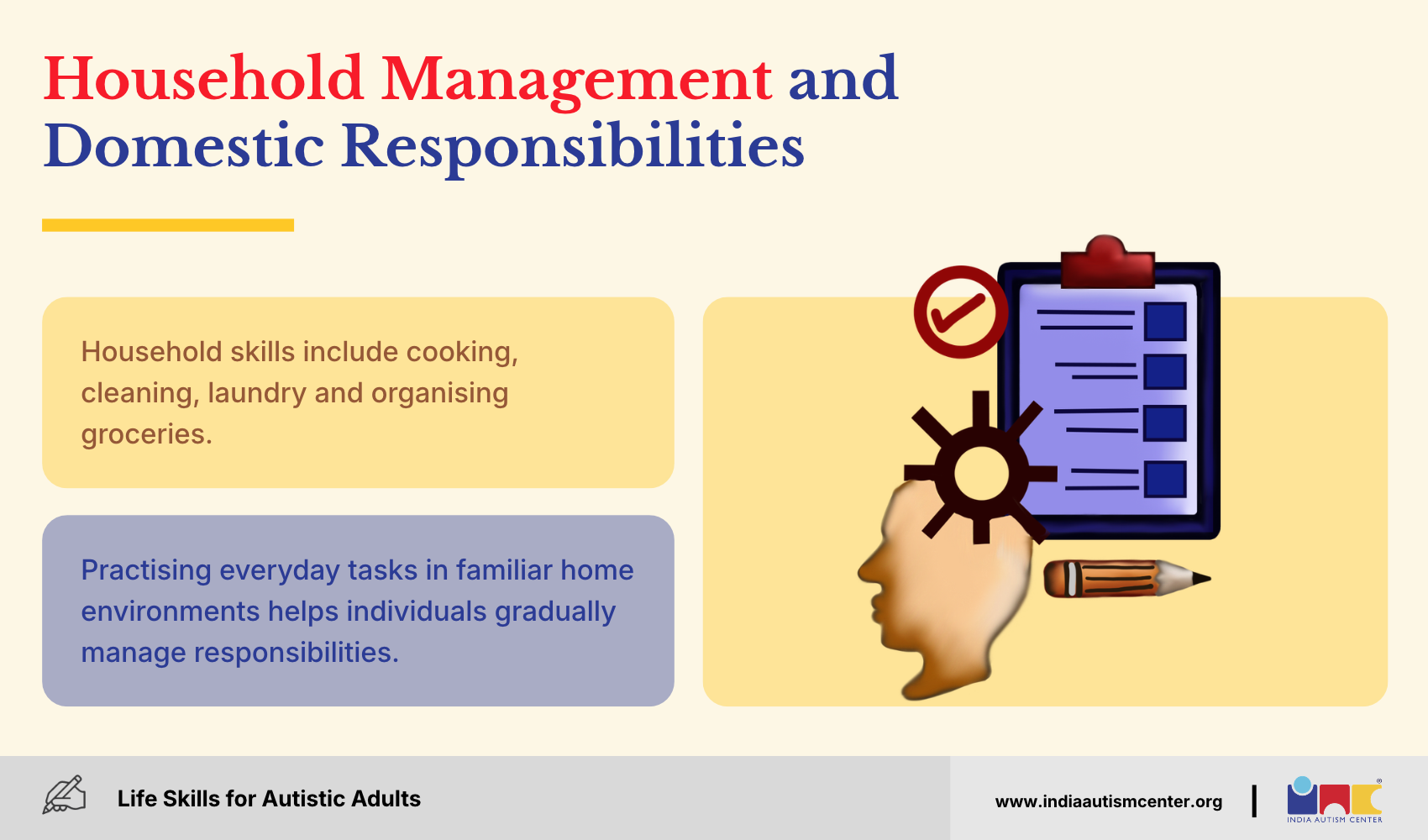
Managing a home involves several responsibilities that require planning, organisation and consistency. These are particularly important daily living skills for autistic adults who wish to live independently or in supported accommodation.
Useful household skills include preparing simple meals, following recipes, washing dishes, doing laundry, cleaning personal spaces and organising groceries.
For example, learning to prepare breakfast can begin with identifying the ingredients, collecting utensils and following a visual sequence. Once the individual becomes comfortable with each step, they can gradually take responsibility for the entire activity.
Practising these tasks in the actual home environment can help individuals understand how different steps work together.
3. Money Management and Financial Literacy
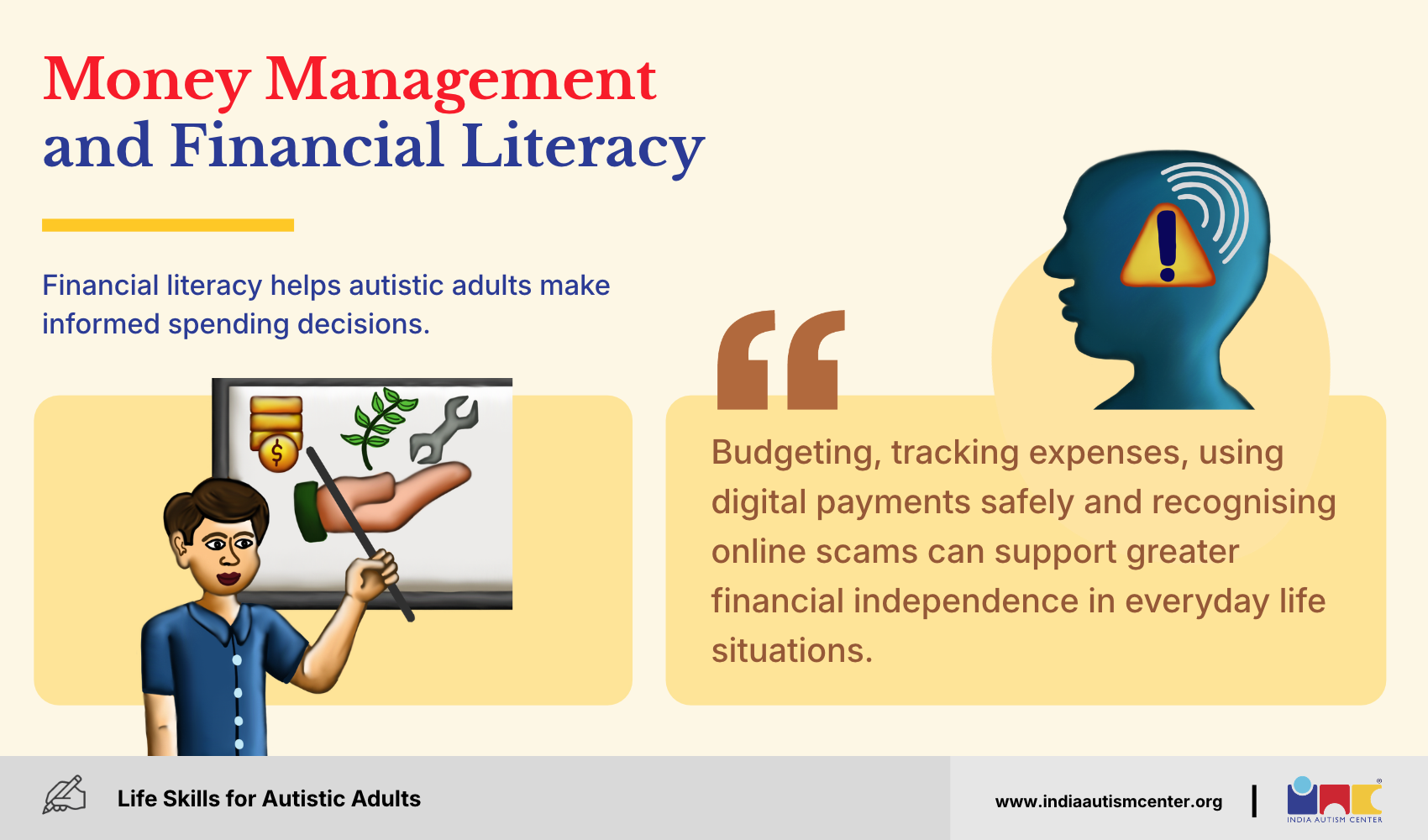
Financial independence involves more than recognising currency. Autistic adults may need opportunities to practise budgeting, spending decisions and financial planning.
Important abilities include understanding the value of money, identifying essential expenses, making purchases, checking change and keeping track of spending.
They should also learn how to:
- Create a basic monthly budget.
- Use cash, debit cards and digital payment methods safely.
- Understand bank statements and account balances.
- Recognise suspicious messages, online scams and financial exploitation.
- Save money towards planned purchases and emergencies.
In India, practical learning can include using UPI (Unified Payments Interface) payments safely, checking transaction confirmations and understanding why OTPs (One-Time Passwords), PINs and banking passwords should never be shared.
4. Communication and Social Interaction
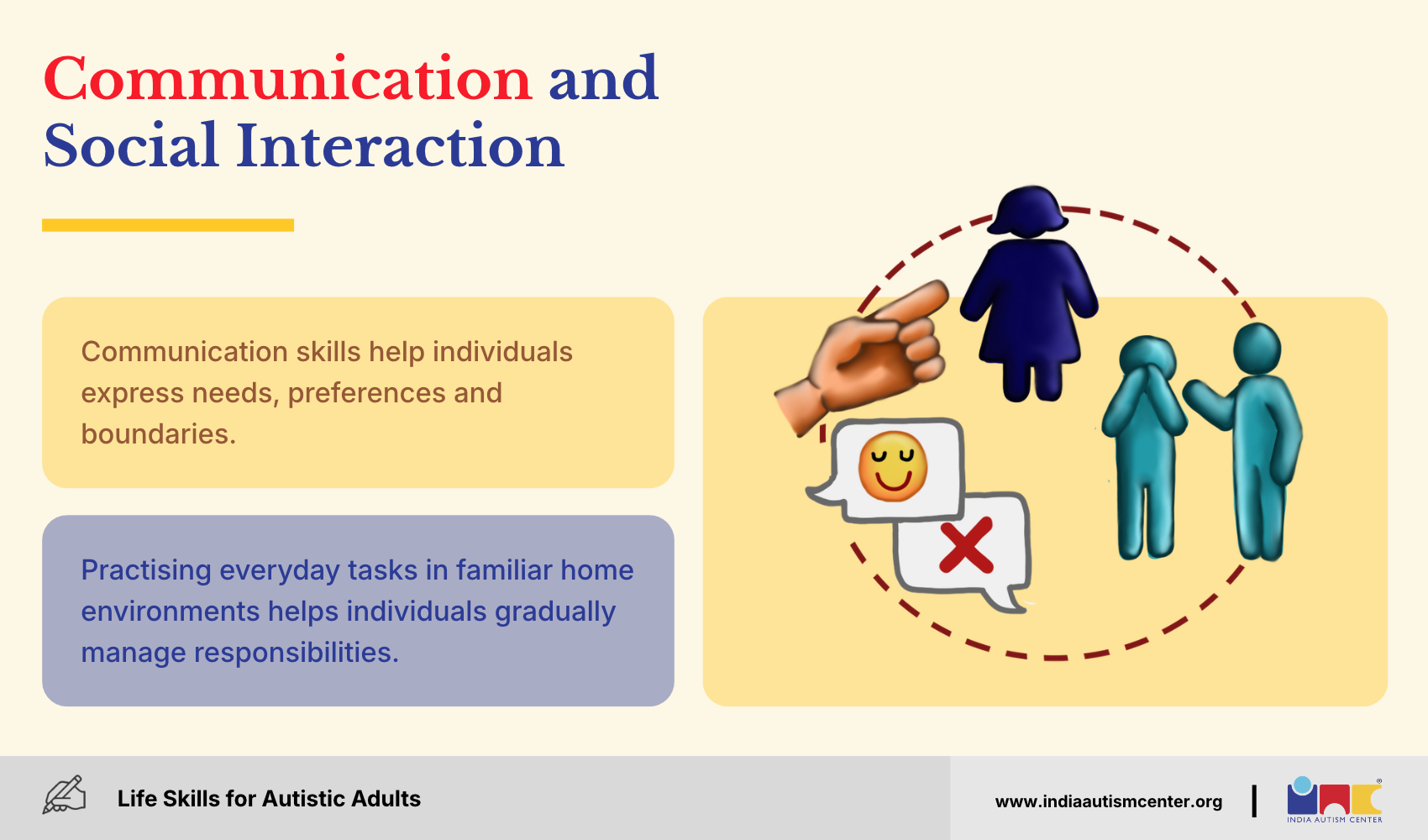
Communication plays quite an important role in building relationships, accessing services and managing everyday situations.
Some autistic adults communicate verbally, while others use Augmentative and Alternative Communication (AAC), writing, communication devices or other methods.
Useful communication skills include expressing preferences, asking for assistance, understanding personal boundaries, communicating discomfort and participating in conversations.
Learning how to interact with shopkeepers, healthcare professionals, colleagues and neighbours can also make everyday situations easier to navigate.
The objective should not be to make autistic adults imitate neurotypical social behaviour. Instead, communication support should help them express themselves, understand others and advocate for their needs.
5. Travel and Community Navigation
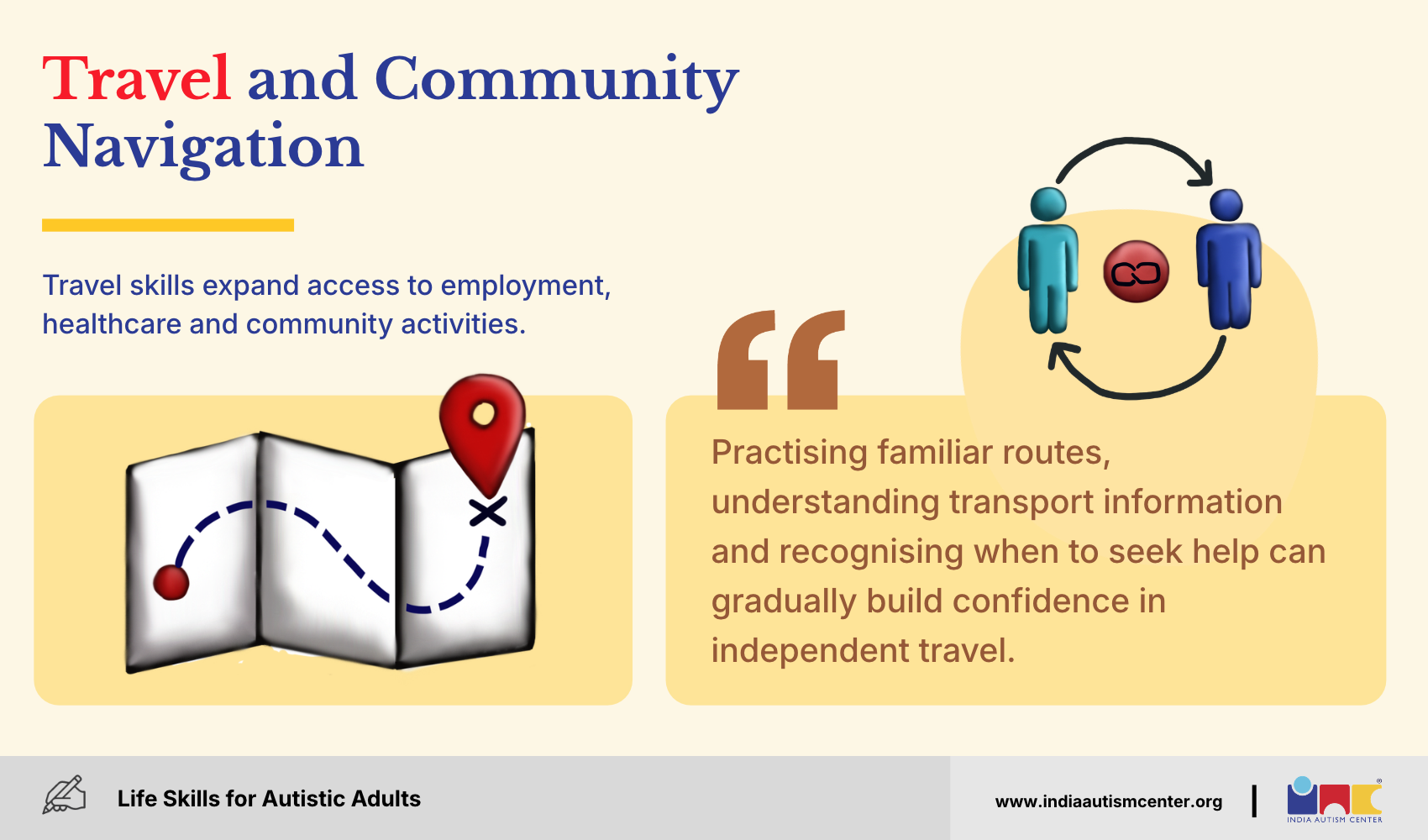
Being able to travel safely can expand access to employment, healthcare, education and recreational activities.
Independent living skills in autism programmes should include opportunities to practise:
- Recognising familiar routes, landmarks and transport signs.
- Reading maps and public transport information.
- Using buses, trains, metro services and ride-hailing applications.
- Planning journeys and managing travel time.
- Following road safety rules.
- Identifying trusted people and knowing how to seek help if lost.
In Indian cities, practising familiar routes using local buses, suburban trains or metro services can be particularly useful. Initially, a family member or support professional can accompany the individual, then gradually reduce support as appropriate.
6. Vocational and Workplace Skills
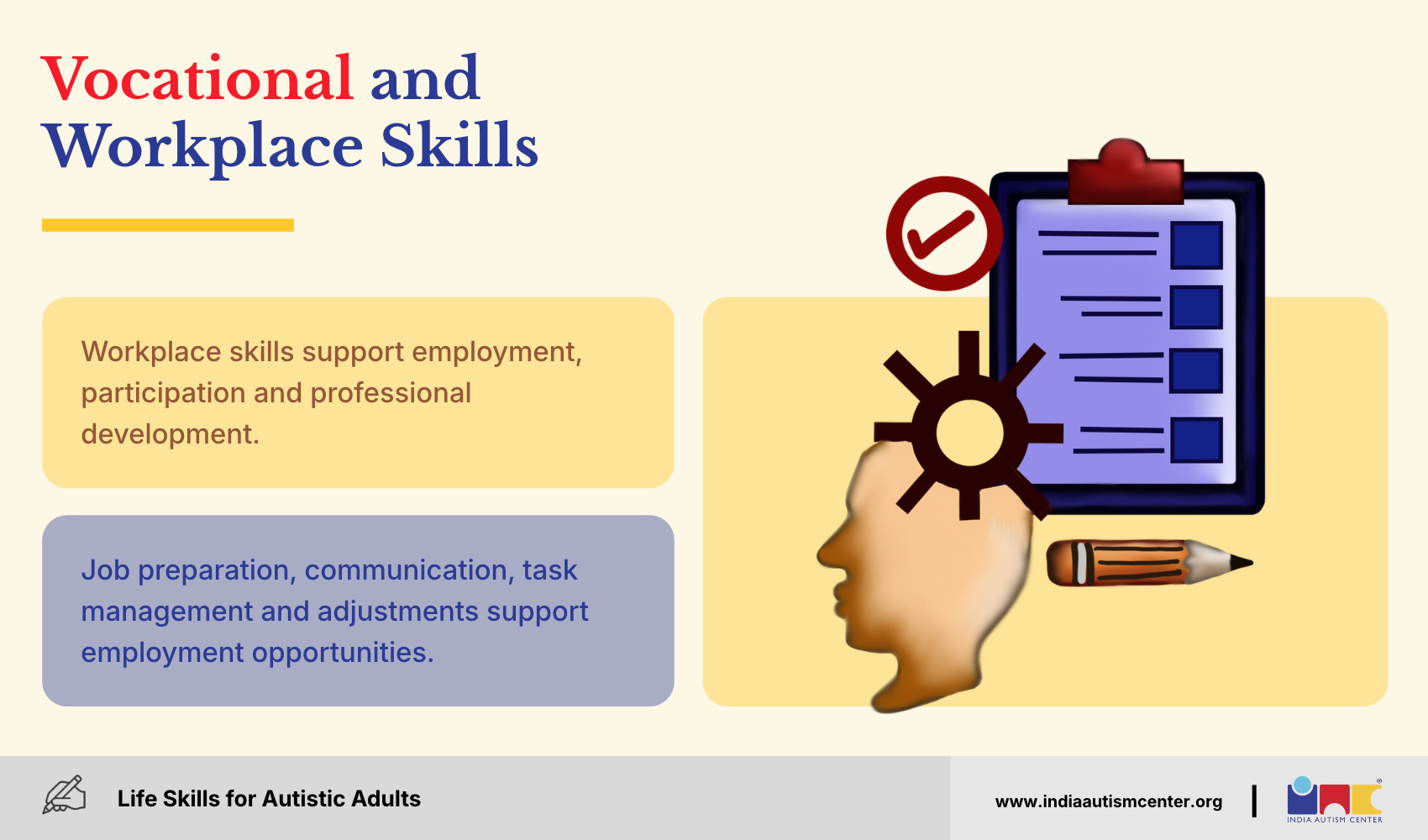
Employment can provide financial opportunities, social participation and a sense of purpose. However, entering and maintaining a job may require more than having the technical ability to perform a particular role.
Vocational skills for autistic adults can include preparing a CV, practising job interviews, following workplace instructions, completing assigned tasks and managing schedules and deadlines.
Individuals may also benefit from learning how to communicate with supervisors, understand professional boundaries, manage breaks and request reasonable workplace adjustments.
These adjustments might include written instructions, predictable schedules, quieter workspaces or additional time to process information.
Employment support should focus on matching opportunities to an individual’s strengths and interests rather than expecting every autistic adult to follow the same career path.
7. Time Management and Decision-Making
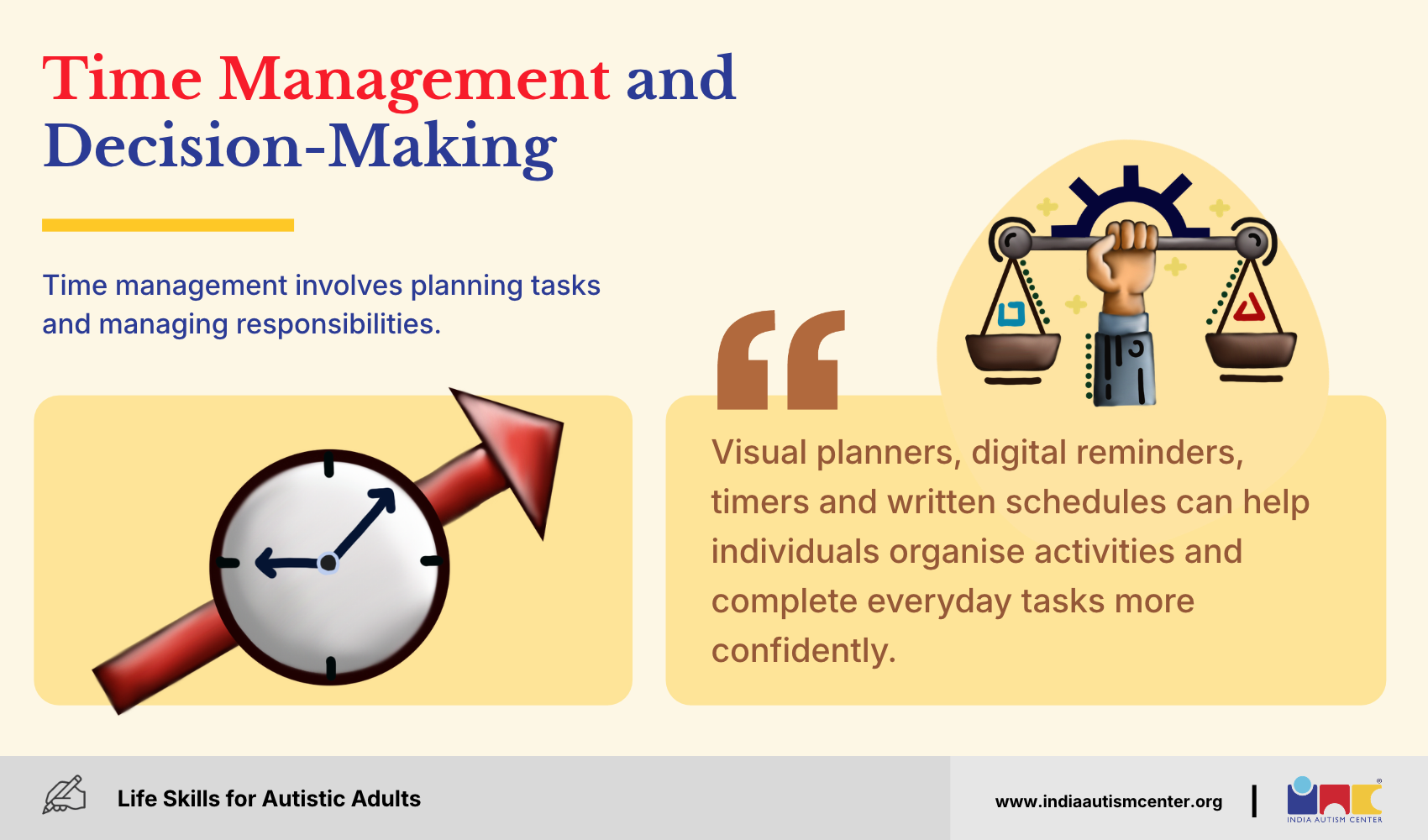
Executive functioning essentially refers to the mental processes involved in planning, organising, remembering instructions, managing time and switching between activities.
Some autistic adults may understand what needs to be done but struggle to decide when to begin or how to organise the steps.
Visual planners, digital reminders, timers and written schedules can help individuals manage responsibilities. Breaking larger activities into smaller tasks can also make them easier to complete.
For example, a weekly planner can help an individual remember laundry days, meal preparation, appointments and household responsibilities without relying entirely on verbal reminders.
How to Teach Practical Life Skills to Autistic Adults?
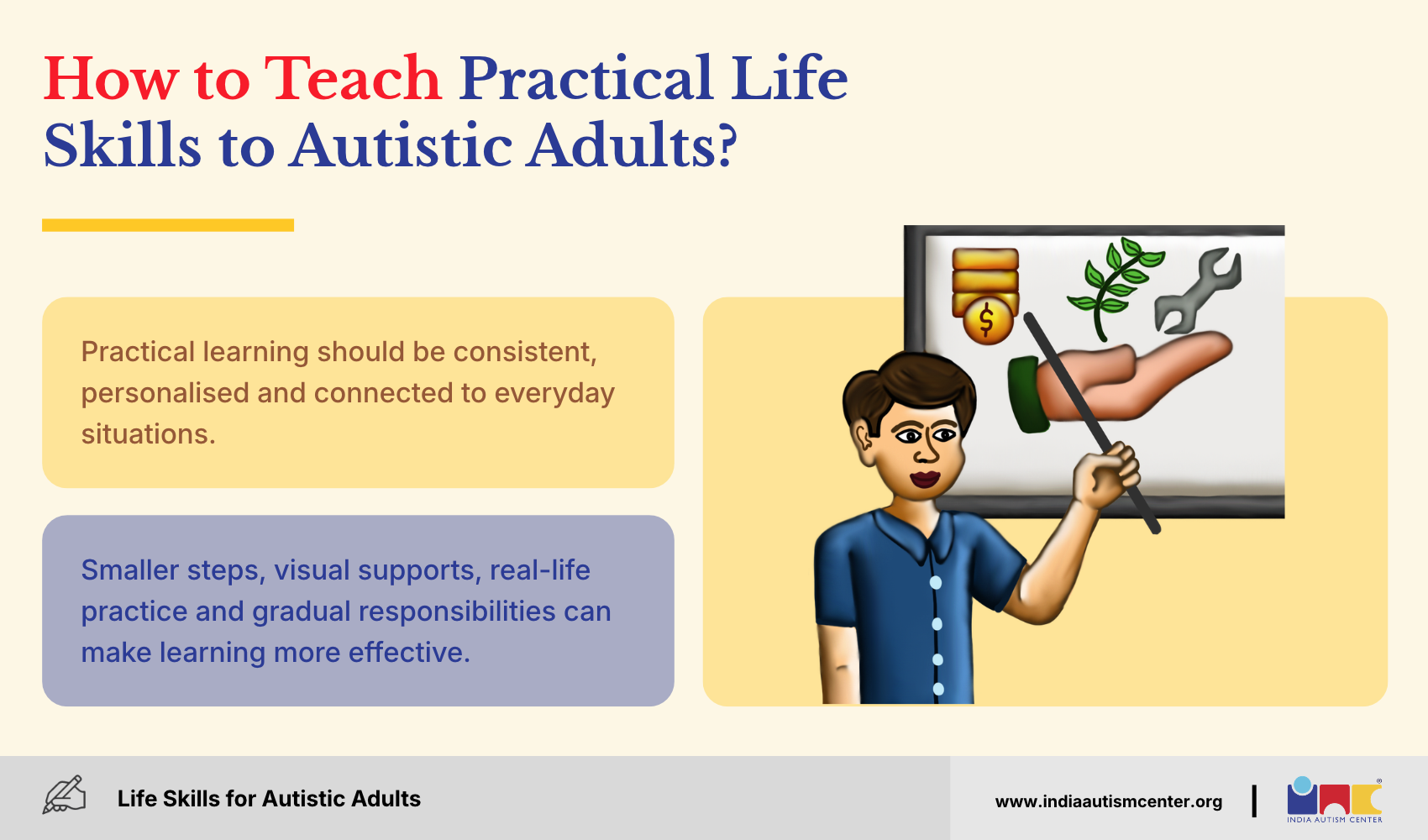
Developing new abilities requires consistency, patience and an understanding of how an individual learns. Effective life skills training for autism should be practical, personalised and connected to situations the person encounters regularly.
The following approaches can make learning more effective.
Break activities into smaller steps: Task analysis involves dividing a complex activity into manageable steps. For example, preparing a cup of tea can involve collecting a cup, boiling water, adding a tea bag and pouring the water. Each step can be taught and practised separately.
Use visual supports and demonstrations: Picture cards, written instructions, checklists, video demonstrations and colour-coded schedules can provide useful reminders. Demonstrating an activity before asking the individual to perform it can also improve understanding.
Practise in real-life environments: Practise cooking in a kitchen, shopping in a real shop, and travelling along familiar routes. This helps individuals to apply what they learn to everyday situations.
Encourage choice and self-advocacy: Allow autistic adults to participate in decisions about their routines, activities and goals. Encourage them to express preferences, communicate discomfort and request assistance.
Introduce responsibilities gradually: Avoid introducing too many new activities at once. Begin with familiar tasks and gradually increase complexity as confidence develops.
Autism Independent Living Checklist: Skills to Assess and Practise
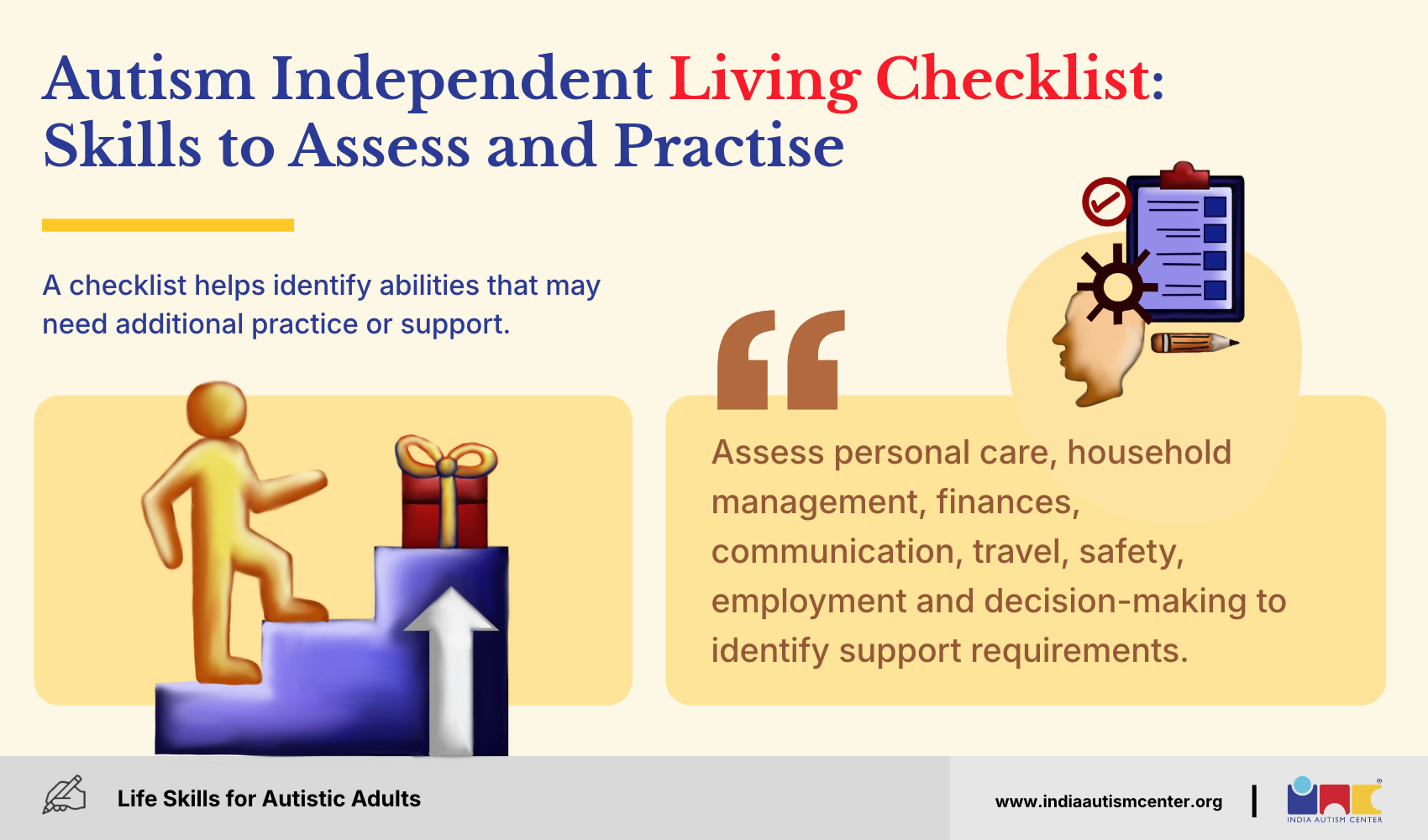
An autism independent living checklist can help families, caregivers and professionals identify areas where an individual may benefit from additional practice or support.
| Skill Area | Abilities to Assess |
|---|---|
| Personal care | Bathing, dressing, grooming and maintaining hygiene |
| Household management | Cooking, cleaning, laundry and organising belongings |
| Financial management | Budgeting, shopping and using digital payments safely |
| Communication | Expressing needs, asking for help and understanding boundaries |
| Travel | Using public transport and following familiar routes |
| Health and safety | Recognising emergencies and seeking medical assistance |
| Employment | Following instructions, managing time and completing tasks |
| Decision-making | Making everyday choices and communicating preferences |
Not every individual needs to master every skill independently. Some may perform certain activities without assistance but require reminders or supervision for others. The checklist should therefore identify the level of support required rather than simply classifying a skill as achieved or not achieved.
What Professional Support Can Help Autistic Adults Develop Life Skills?
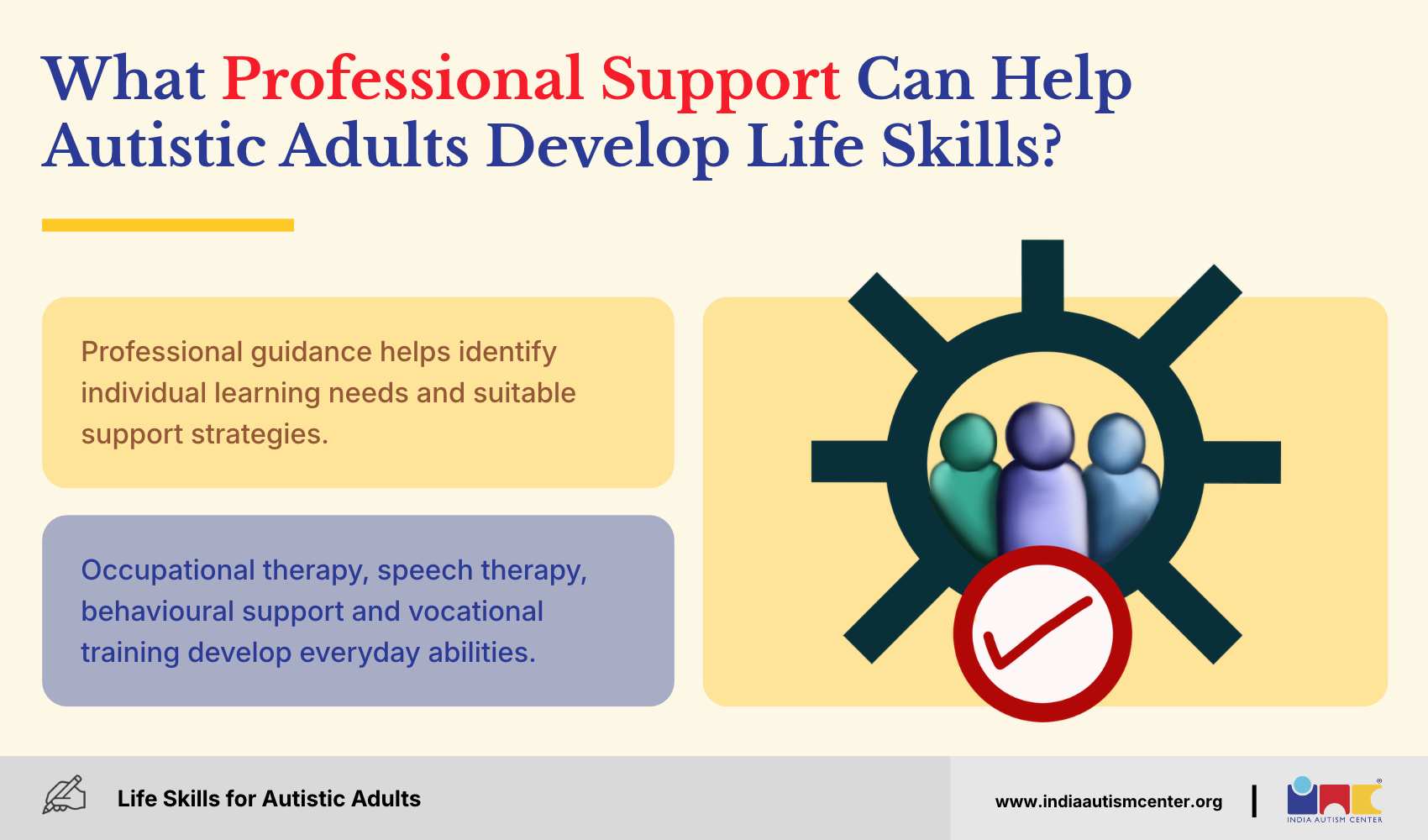
Professional guidance can help identify learning needs and develop appropriate strategies. Depending on the individual’s needs, different professionals may support life skills for autistic adults.
Occupational therapy: Occupational therapy can help with personal care, household activities, sensory processing, motor coordination and practical independence.
Speech and language therapy: Speech and language therapy can support functional communication, understanding instructions, expressing needs and using alternative communication methods.
Structured educational and behavioural support: Individualised behavioural therapy and approaches can help individuals learn multi-step activities, establish routines and practise everyday responsibilities.
Vocational training: Job-readiness programmes can develop workplace communication, task completion, time management and role-specific abilities.
It is also important to consider co-occurring conditions such as Attention Deficit Hyperactivity Disorder (ADHD), anxiety and learning disabilities, where relevant. These may influence how an individual approaches everyday responsibilities and the support they need.
How Parents and Caregivers Can Encourage Greater Independence?
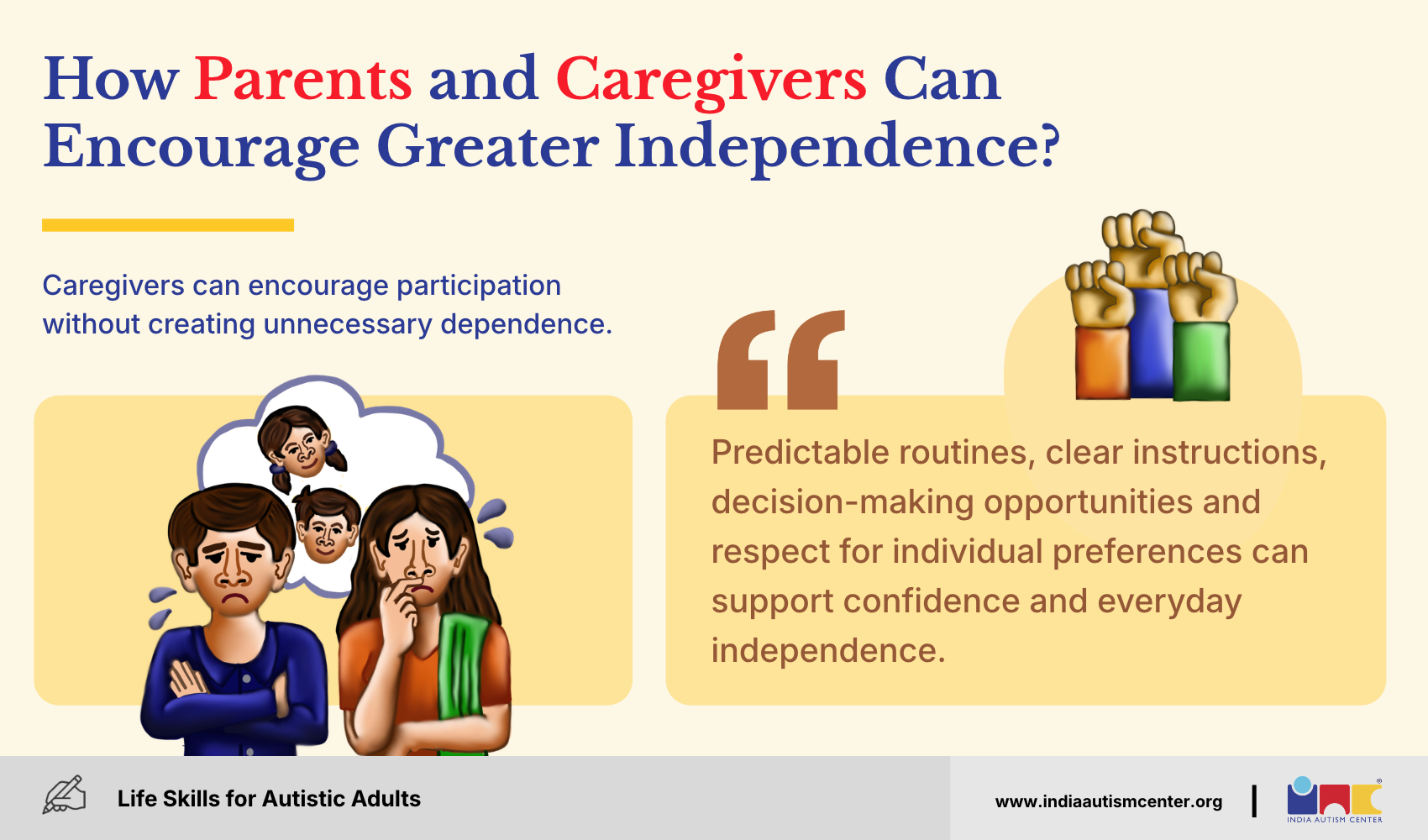
Family members and caregivers play an important role in helping autistic adults practise everyday responsibilities. However, support should encourage participation rather than create unnecessary dependence.
Some practical ways to help include:
- Involving the individual in everyday household activities instead of completing every task on their behalf.
- Maintaining predictable routines while preparing them for unavoidable changes.
- Offering clear instructions and allowing sufficient processing time.
- Recognising effort and progress, even when a task takes longer to complete.
- Providing opportunities to practise decision-making and problem-solving.
- Respecting sensory preferences, communication styles and personal boundaries.
It is equally important to recognise when an individual needs assistance. Independence should never come at the expense of safety, comfort or wellbeing.
How India Autism Center Supports Autistic Adults in Building Independence
At India Autism Center (IAC), the focus is on helping individuals with autism develop meaningful abilities, confidence and independence through personalised, lifelong support. Our approach combines individual assessments, multidisciplinary care and structured learning opportunities.
Through services such as occupational therapy, speech and language therapy and vocational training, IAC addresses different aspects of everyday functioning.
The objective is not to expect every individual to live independently without assistance. It is to create opportunities for autistic individuals to participate in daily life, exercise choice and achieve the highest level of independence possible for them.
Conclusion
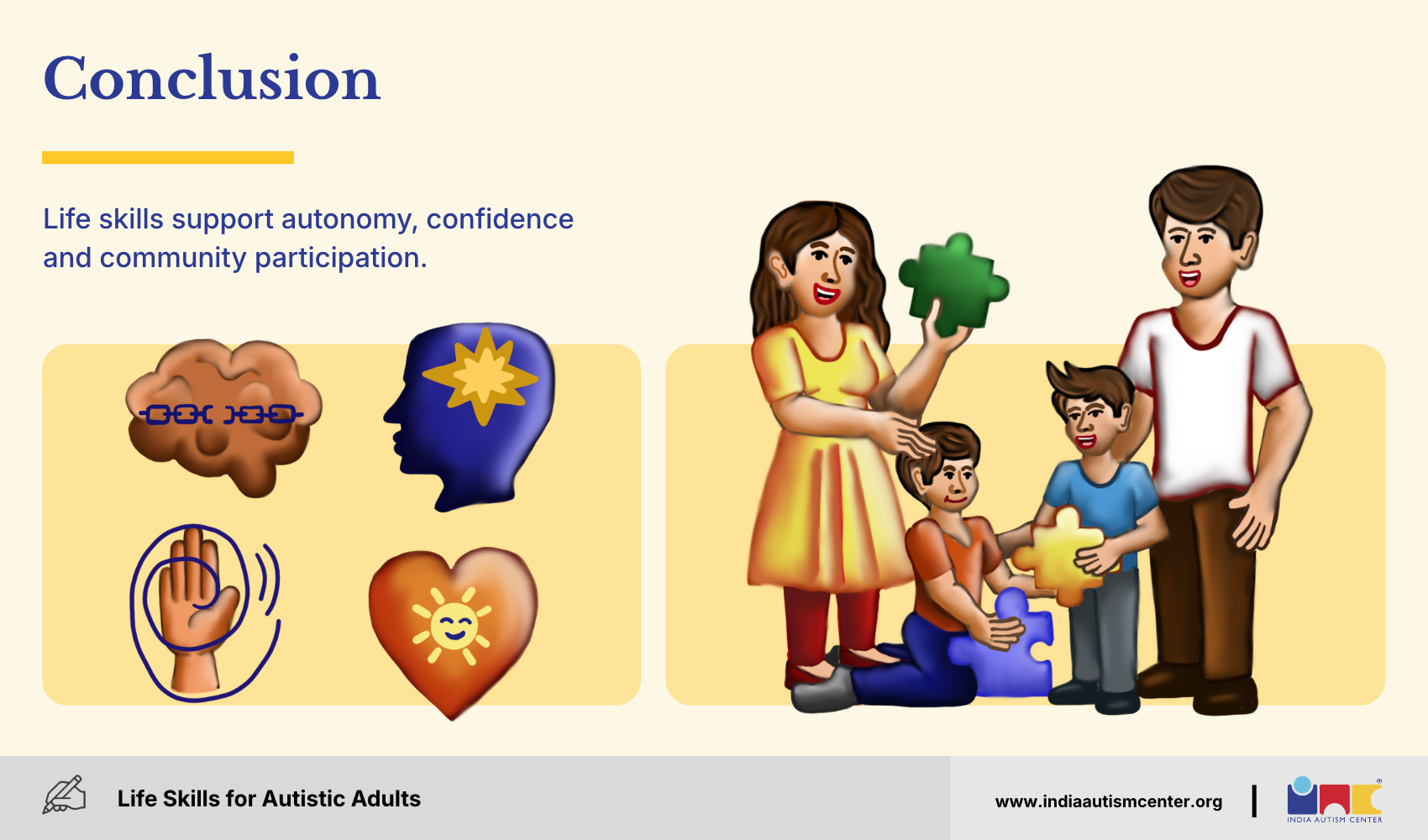
Developing life skills is an ongoing process that can help autistic adults manage everyday responsibilities, explore employment opportunities and participate more confidently in their communities. From personal care and financial literacy to communication and household management, every skill can contribute to greater autonomy.
The most effective approach is individualised, practical and consistent. With appropriate guidance, opportunities to practise and access to the right support, autistic adults can develop abilities that make everyday life more manageable and fulfilling.
Frequently Asked Questions
1. Can autistic adults learn independent living skills?
Yes. Autistic adults can develop independent living skills at different stages of life. The abilities they acquire and the support they need depend on their individual strengths, learning preferences and support requirements.
2. What are the most important daily living skills for autistic adults?
Important daily living skills include personal hygiene, dressing, cooking, cleaning, managing money, using public transport, communicating needs and maintaining personal safety. The priorities should be based on the individual’s everyday responsibilities.
3. Is it too late to teach life skills to an autistic adult?
No. Learning does not stop in adulthood. With structured instruction, repeated practice and appropriate support, autistic adults can develop new abilities and improve existing ones.
4. How can occupational therapy help autistic adults become independent?
Occupational therapy can help autistic adults develop practical abilities such as cooking, dressing, organising daily routines and managing household activities. It can also address sensory needs and executive functioning difficulties that affect everyday participation.
5. Do all autistic adults need help with independent living?
No. Support requirements vary considerably. Some autistic adults live independently, while others benefit from supported accommodation, assistance with specific responsibilities or continuous care. The appropriate arrangement should reflect individual needs and preferences.