 Donate now
 Get a Call Back
 MENU
MENU 27 MIN READ
 SHARE
SHARE


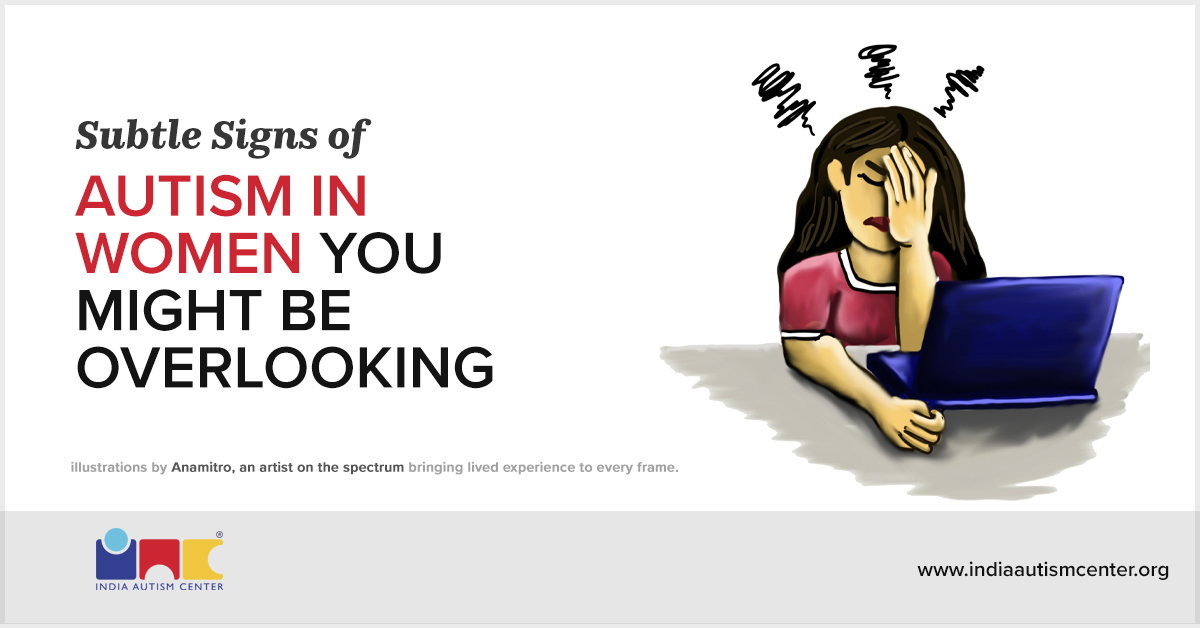
Autism doesn’t always look the way we expect it to.
The image most people carry – a child who avoids eye contact, lines up toys, and resists all social interaction – is real, but it’s incomplete. It describes one presentation. Mostly male. Mostly visible. And it has dominated clinical thinking for decades.
For women and girls, autism tends to show up differently. More socially motivated. Better at mimicking. Quieter in its distress. A woman can be deeply autistic and still hold a conversation, maintain friendships, hold down a job – and spend every waking moment exhausted by the effort of it all.
That exhaustion has a name: masking. And it’s one of the main reasons the signs of autism in women are so consistently missed.
In India, the situation is compounded by cultural factors – the expectation that girls will be compliant, emotionally attuned, and socially adaptable. These are exactly the traits that autistic girls learn to perform. The result is that thousands of women across India are living with undiagnosed autism, cycling through misdiagnoses of anxiety, depression, or personality disorders, never quite understanding why the world feels so much harder for them than it seems to for everyone else.
This article is for them. And for the families, teachers, and clinicians who want to understand what they’re actually looking at.
Female Autism Checklist
This checklist is the most practical place to start. It’s organised across five categories that reflect how autism actually presents in women and girls – not how it presents in the male-dominated studies that shaped early diagnostic criteria.
Work through it honestly. You don’t need to tick every item. Autism is a spectrum, and presentations vary enormously.
Important: This checklist is not a diagnostic tool. It cannot tell you whether you are autistic. What it can do is help you recognise patterns worth exploring with a qualified specialist.
Category 1: Social Interaction
- ☐ You find social situations draining, even when you enjoy them
- ☐ You feel like you’re always slightly out of step with others, even in familiar groups
- ☐ You study other people carefully to figure out how to behave, rather than knowing intuitively
- ☐ You prefer one-on-one conversations to group settings
- ☐ You have intense, sometimes overwhelming friendships that can end abruptly
- ☐ You feel like an outsider even when you are technically included
- ☐ You find it easier to connect with people who are significantly older or younger than you
- ☐ You struggle to maintain friendships over time, even when you want to
- ☐ You often replay conversations afterward, analysing what you said or should have said
- ☐ You feel more comfortable with animals, children, or fictional characters than with adult peers
Category 2: Communication
- ☐ You take language literally and are often confused by sarcasm, idioms, or implied meanings
- ☐ You use formal or precise language in casual settings, sometimes described as “speaking like a book”
- ☐ You rehearse conversations in your head before having them
- ☐ You find it difficult to know when to speak in a group conversation – you either interrupt or stay silent
- ☐ You have a strong, distinctive speaking style that others sometimes find unusual
- ☐ You struggle to make small talk and find it pointless or exhausting
- ☐ You are very honest and direct in ways that sometimes upset people unintentionally
- ☐ You find phone calls significantly harder than face-to-face or written communication
Category 3: Sensory Sensitivities
- ☐ Certain clothing textures, seams, or labels feel genuinely painful or unbearable
- ☐ Loud environments – markets, weddings, classrooms – cause you real distress, not just mild discomfort
- ☐ You are highly sensitive to smells that others don’t seem to notice
- ☐ Bright or flickering lights (tube lights, screens) cause headaches or overwhelm
- ☐ You have strong food aversions related to texture, temperature, or smell rather than taste alone
- ☐ You seek out specific sensory experiences – certain fabrics, repetitive movements, particular sounds – for comfort
- ☐ You are very sensitive to physical pain, temperature, or touch
- ☐ You hold yourself together in public but “crash” at home after a sensory-heavy day
Category 4: Masking and Camouflaging
- ☐ You have spent years watching others and copying their behaviour, mannerisms, or speech patterns
- ☐ You have a different “version” of yourself for different social contexts – work, family, friends – and switching between them is exhausting
- ☐ You suppress the urge to move, fidget, or make sounds in public even when it helps you feel calmer
- ☐ You force yourself to make eye contact even though it feels uncomfortable or distracting
- ☐ After social events, you need significant time alone to recover
- ☐ You feel like you are performing rather than simply being yourself in most social situations
- ☐ You have a strong fear of being “found out” or exposed as somehow different or wrong
- ☐ You are not sure who you actually are when the performance stops
Category 5: Emotional Regulation and Executive Function
- ☐ You experience intense emotional reactions that feel disproportionate to the situation
- ☐ You often understand your feelings only hours or days after an event, not in the moment
- ☐ Unexpected changes to plans cause significant distress, even minor ones
- ☐ You have strong, all-consuming interests that you pursue with intense focus
- ☐ You struggle to start tasks, even ones you want to do – often described as “task paralysis”
- ☐ You lose track of time easily, either hyperfocusing for hours or struggling to manage basic schedules
- ☐ You find it hard to manage multiple responsibilities at once (work, home, relationships)
- ☐ You have a strong need for routine and feel destabilised when it breaks down
If you checked several items across multiple categories, consider speaking with a specialist. This checklist is not a diagnostic tool – but it is a meaningful starting point.
Identifying Signs of Autism in Women
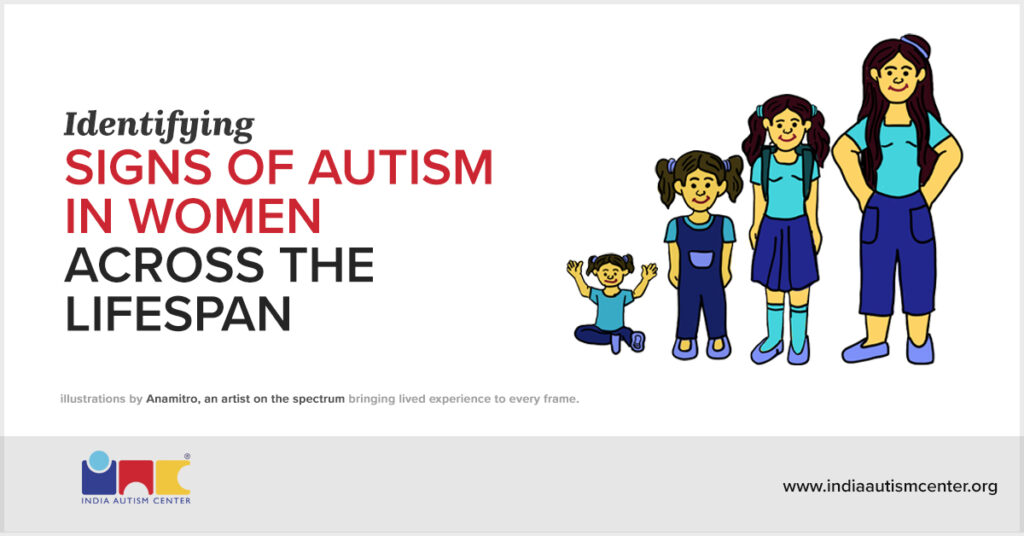
Let’s start by tracing how female autism signs show up at different life stages.
Early Signs of Autism in Girls: Infancy and Toddlerhood (0–2 years)
Autism signs in girls can be subtle early on. But beneath the surface, they start to emerge as:
- Inconsistent responses to their name or social cues
- Unusual reactions to sensory input
- Delayed gestures or babbling despite developing spoken language on time
- Fixation on specific objects or textures, such as rubbing fabrics, staring at lights
- Repetitive behaviours like hand flapping, clapping, and stimming
Subtle Signs of Autism in Preschool Years (3–5 years)
Preschool years often bring new social demands, and with them, more noticeable autism signs in young girls.
But these can be misread as quirks or shyness. So, watch for:
- Engaging in rich pretend play, but often alone or with rigid storylines
- Echoing others’ speech or actions without initiating their own ideas
- Avoiding noisy or overstimulating settings like playgrounds or parties
- Early masking behaviors, such as mimicking peers to fit in
- Strong attachments to routines
- Eye contact discomfort (either avoiding it or holding it too long unnaturally)
Subtle Signs of Autism in Females During Childhood (6–12 years)
At school age, autism signs in girls become more nuanced.
As Dr. Wendy Nash, a child and adolescent Psychiatrist, notes,

A lot of autistic girls get ruled out because they may share a smile or may have a bit better eye contact, or they’re more socially motivated. It can be a more subtle presentation.
The most common signs include:
Social Challenges
- Appears friendly but struggles with forming deeper friendships
- Overthinks conversations and fears social rejection
- Prefers adults or solitary play over peers
- Feels like an outsider, even when included
Sensory Issues
- Avoids certain clothing textures or sounds
- Sensitive to smells, loud environments, or certain foods
- Holds in discomfort during the day but melts down at home
Executive Dysfunction
- Difficulty following multi-step instructions or organizing schoolwork
- Frequently loses personal items or misses deadlines
- Procrastinates not out of laziness, but due to overwhelm
Stimming and Self-Soothing Behaviors
- Engages in repetitive behaviors like hair twirling, tapping, or humming
- May be dismissed as nervous habits rather than recognized as self-regulation
How Signs of Autism in Girls Shift in Teenage Years (13–19 years)
Puberty and growing social pressures amplify hidden struggles. Many teenage girls with autism experience anxiety, burnout, or mental health issues.
Here are the common symptoms they develop during this period:
Autism Masking or Camouflaging
- Forces eye contact despite discomfort
- Rehearses social scripts and facial expressions
- Bottles up emotions in public and breaks down privately
- Shifts behavior dramatically between different environments
- High masking autism in women often leads to chronic exhaustion and anxiety
Emotional Regulation Challenges
- Emotional instability
- Criticized for being ‘too sensitive’ or ‘overdramatic’
- Intense emotional reactions such as shutdowns, rage, or withdrawal
Obsessive Interests and Special Focus Areas
- Deep fixation on niche topics
- Uses interests as coping mechanisms or emotional anchors
- Intense attachments to people, such as friends, celebrities, or fictional characters
Sleep Disturbances
- Light sleeper, prone to waking up easily
- Relies on strict bedtime routines or sensory aids to sleep
- Difficulty falling asleep due to overstimulation or racing thoughts
Recognising Autism Signs in Adult Women (20s and Beyond)
The signs of undiagnosed autism in adult women start surfacing only when lifelong coping strategies break down.
What happens then?
Executive Dysfunction Becomes More Apparent
- Overwhelmed by basic life tasks, such as cooking, cleaning, and planning
- Misses deadlines or hyperfocuses to the point of exhaustion
- Constantly battles mental fatigue, trying to manage daily life
Sensory and Sleep Challenges Persist
- Avoids crowded spaces due to sensory overload
- Struggles with chronic fatigue from poor-quality sleep
- Menstrual cycles, pregnancy, or menopause may intensify the symptoms
Masking, Burnout, and Identity Struggles
- Feels disconnected from their authentic self
- Burnout manifests as anxiety, depression, or emotional shutdown
- Questions identity after years of masking: “Who am I without this act?”
Stimming and Self-Regulation Continue Quietly
- Quiet stimming, like fidgeting, doodling, or skin picking, used for self-soothing
But even when these signs of autism in women appear, they often go unnoticed.
Why? Let’s find out.
📥 Free download: Printable daily routine chart for autistic children
Why Do Signs of Autism in Females Often Go Undiagnosed?
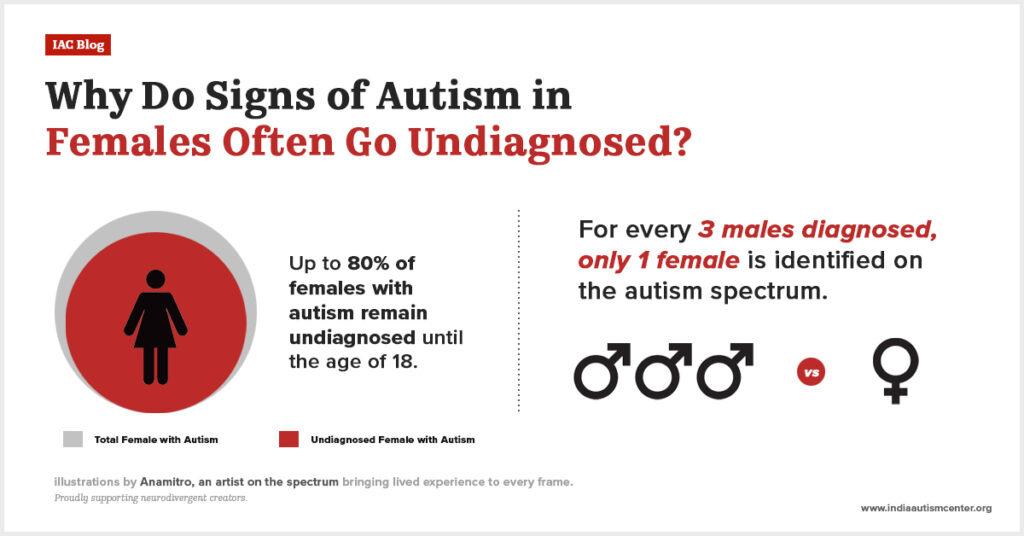
A 2017 study found that for every 3 males diagnosed, only 1 female is identified on the autism spectrum. But these numbers don’t tell the full story.
A 2022 study goes even further. It suggests that up to 80% of females with autism remain undiagnosed until the age of 18.
But why such a massive gap?
Three key reasons explain this:
Biological Differences in How Autism Appears in Women
Autism signs in women often present differently from those in men. This difference begins with biology.
Unlike the textbook male traits of obvious social withdrawal or repetitive behaviors, autism in women shows up in:
- Struggling quietly to read social cues
- Masking confusion with memorized responses
- Expressing emotions in ways that seem typical
These nuances don’t align with traditional diagnostic checklists. As a result, women with autism often fly under the radar.
Social Conditioning
From a young age, girls are often taught to observe, adapt, and blend in.
Over time, they:
- Mimic peer behaviors without true understanding
- Rehearse conversations, facial expressions, and social scripts
- Hide sensory discomfort or emotional overwhelm
And it’s this exact social camouflaging or masking that leads even trained professionals to miss the signs of autism in women.
Male-Centric Diagnostic Tools and Research Bias
Here’s a glaring problem most people don’t realize. The most commonly used diagnostic tools, like the Autism Diagnostic Observation Schedule (ADOS), were designed and validated predominantly using male participants.
For instance, the original validation sample for ADOS consisted of 170 males and only 36 females with autism spectrum disorder (ASD).
This creates a critical blind spot. After all, what doesn’t get measured doesn’t get diagnosed.
As a result, subtle, female-specific signs of autism simply don’t register on tests designed for male-pattern presentations.
That said, the sooner these signs are recognized, the better the outcomes. And this is where early intervention for autism comes in.
Role of Early Intervention For Autism In Girls
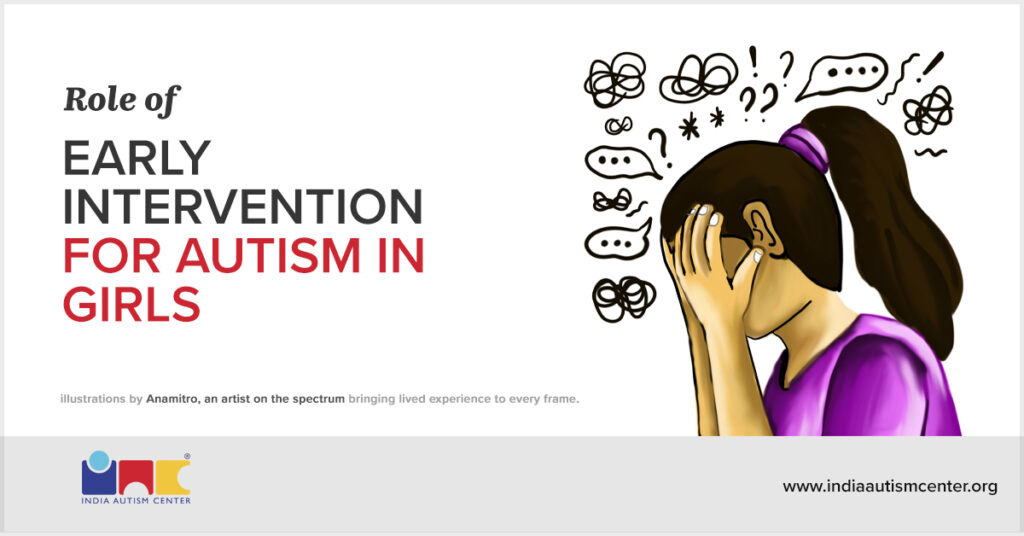
It means providing support and therapies to young children, ideally before the age of 3.
This critical window of neuroplasticity allows the brain to adapt, learn, and grow at an accelerated pace.
What Is Early Intervention For Autism in Girls?
For girls, whose autism signs often appear milder or get masked by social imitation, early intervention helps in:
- Managing sensory sensitivities
- Supporting emotional regulation
- Building healthy social interaction patterns
- Developing effective communication strategies
- Strengthening adaptive functioning, daily living skills, and motor skills
Early Intervention Strategies for Autism in Girls
This first step is to consult a developmental pediatrician, clinical psychologist, or rehabilitation psychologist and request a developmental screening.
If screening indicates potential concerns, early autism intervention should begin immediately.
Here are the strategies that can make a difference:
- Speech and language therapy to develop expressive communication
- Occupational therapy (OT) for sensory regulation, motor skills, and daily tasks
- Behavioral therapy to nurture emotional regulation and functional behaviors
- Play-based therapy to support learning naturally
- Social skills training to foster connections
- Cognitive training to enhance reasoning and problem-solving skills
- Parental coaching to empower families to reinforce learning at home
It is important to note that not every child or adult will need every form of therapy. The right combination depends on developmental stage, profile, and goals. A multidisciplinary team typically assesses this and creates a phased, personalized intervention plan.
Autism and Comorbidities in Women
Autism rarely travels alone. In women especially, it tends to arrive with company – and the company often gets diagnosed first.
Anxiety Disorders
Anxiety is the most common comorbidity in autistic women. It makes complete sense: living in a world that doesn’t accommodate your neurology, constantly performing a version of yourself that isn’t real, never quite knowing if you’ve said the right thing – this is an anxiety-generating existence. Generalised anxiety disorder, social anxiety, and panic disorder are all common. The critical clinical point is that standard anxiety treatments (CBT, medication) may help manage symptoms but will not address the root cause if autism is unrecognised.
ADHD
ADHD co-occurs with autism in approximately 39% of autistic individuals, and in women, both conditions are frequently missed simultaneously. Where autism drives the need for predictability and routine, ADHD introduces impulsivity and difficulty sustaining attention – creating an internal conflict that many women describe as exhausting. The masking load doubles. Women with both conditions often develop even more sophisticated camouflaging strategies, making both conditions harder to identify.
Depression
Chronic masking, social isolation, repeated misunderstanding, and the accumulated weight of years of unmet needs all contribute to depression in autistic women. Depression in this context is not simply a mood disorder – it’s often a direct consequence of living undiagnosed and unsupported. Treating it with antidepressants alone, without addressing the autism, provides limited and temporary relief.
Eating Disorders
Research consistently shows elevated rates of eating disorders – particularly anorexia nervosa and ARFID (Avoidant/Restrictive Food Intake Disorder) – in autistic women. The connections are multiple: sensory sensitivities around food texture and smell, the need for control in a world that feels unpredictable, the use of food restriction as a regulatory strategy. Studies suggest that up to 20–35% of women with anorexia may be autistic, many of them undiagnosed at the time of treatment.
PTSD and Trauma
Autistic women are at elevated risk of trauma and victimisation – partly because difficulties reading social cues make it harder to identify dangerous situations, and partly because years of being told that their perceptions are wrong can make them doubt their own experiences. PTSD in autistic women can look atypical, with sensory triggers, shutdown responses, and dissociation features that don’t fit standard PTSD presentations.
The clinical takeaway: When a woman presents with multiple, overlapping mental health diagnoses that haven’t fully responded to treatment, autism should be on the differential. Comorbidities mask autism – but they also point toward it.
Autism Diagnosis in Women: Consultation and Next Steps
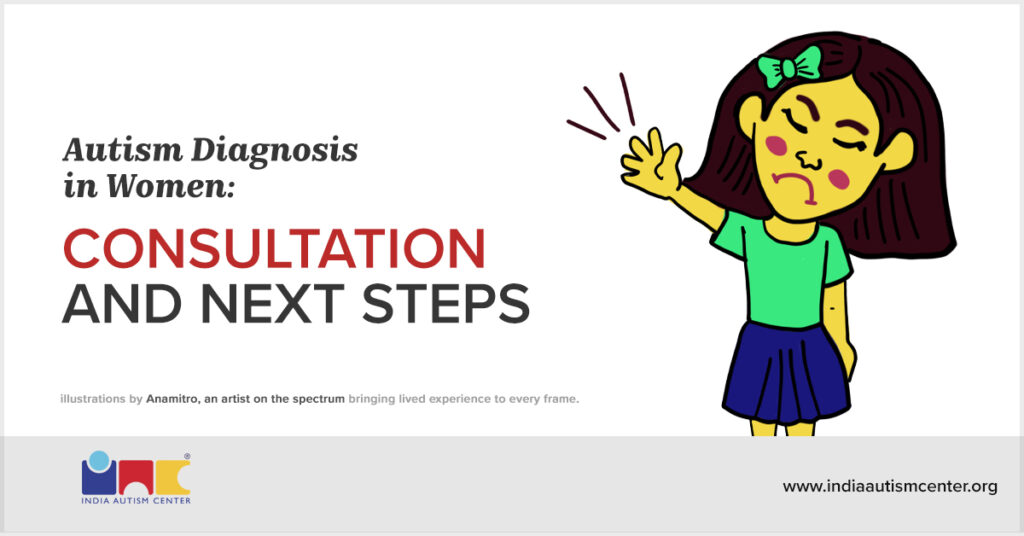
A formal autism diagnosis typically happens after the age of 3. This process can bring clarity, but only when backed by the right professional guidance and a structured pathway.
Here’s a clear, actionable roadmap:
Step 1: Consult the Right Specialist
The first move should be connecting with a licensed clinical psychologist, rehabilitation psychologist, or developmental pediatrician.
Why?
Well, these professionals are trained to spot the often subtle or masked signs of autism in women. They also recommend diagnostic tools suited to an individual’s specific profile.
Step 2: Undergo a Comprehensive Autism Assessment
Autism diagnosis isn’t based on a single appointment or one-off observation. It requires a multi-dimensional evaluation that includes:
Parental Interviews and Developmental History
Early life milestones, social behaviors, and past experiences help clinicians map patterns.
Direct Behavioral Observation
How one interacts, plays, communicates, and responds across different settings gives clinicians valuable insights beyond verbal reports.
Review of Previous Records
Past therapy notes, academic reports, or psychological evaluations provide context and reveal longstanding patterns often missed earlier.
Standardized Diagnostic Tools
Depending on age and presentation, tools such as the Indian Scale for Assessment of Autism (ISAA), Childhood Autism Rating Scale–Second Edition (CARS-2), or Autism Diagnostic Observation Schedule (ADOS-2) are administered.
Final Diagnostic Report and Team Review
A multidisciplinary team reviews all findings and prepares a comprehensive report. Because female autism signs often present differently, this forms the foundation for both understanding the needs and planning the next steps.
Step 3: Building a Holistic Autism Support Team
Getting a diagnosis is just the beginning. Effective support requires a multidisciplinary approach that may include:
- Speech-language therapy
- Occupational therapy
- Special education support
- Psychological support
- Play or other non-conventional therapies
- Medical consultation
It’s again important to understand that not every strategy is needed at every stage. The right combination depends on developmental age, current challenges, and personal strengths.
A qualified multidisciplinary team will prioritize interventions based on ongoing assessments to ensure that support remains relevant, adaptive, and person-centered.
Step 4: Create a Personalized Autism Intervention Plan
Diagnosis without action is incomplete. What matters is crafting an individualised, strengths-based support plan that evolves with needs. This is especially crucial for women and girls who’ve often been misdiagnosed, overlooked, or misunderstood.
However, the support needs may evolve over time as the individual develops. Certain new needs may surface while the previous ones get stabilised.
Reality of Autism Diagnosis in Women
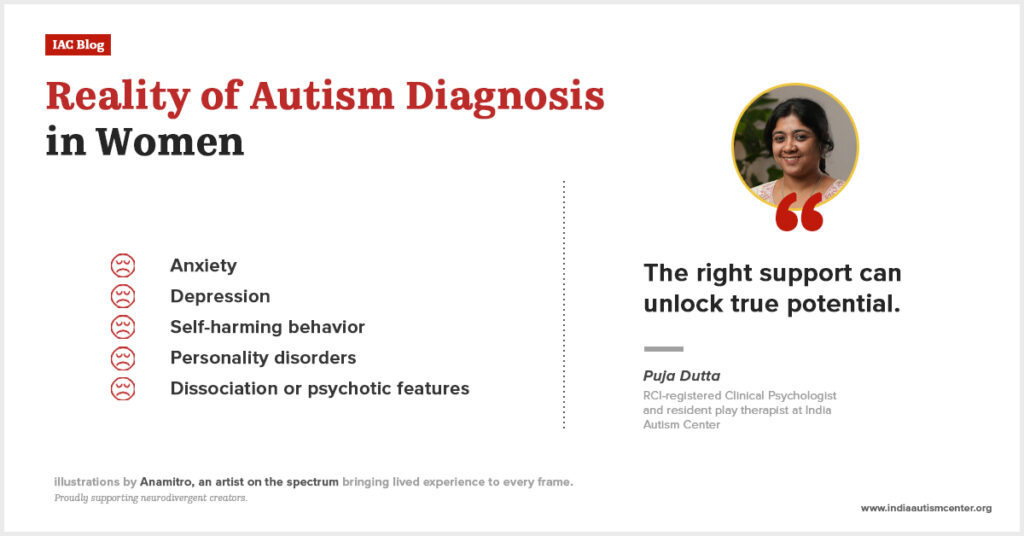
For many women, especially those with high-functioning autism, the diagnostic journey rarely follows a clear or timely path. Unlike the structured process typically seen in early childhood diagnoses, autism diagnosis in adult women often begins in reverse.
It’s not the signs of autism that prompt an evaluation. It’s the fallout from years of being misunderstood.
Many autistic women quietly struggle for decades, confused by their internal experiences. Their traits are often misread as personality quirks or signs of unrelated mental health issues.
Over time, this leads to secondary conditions, such as:
- Anxiety
- Depression
- Self-harming behavior
- Personality disorders
- In some cases, dissociation or psychotic features
Often, it is these comorbid challenges that prompt women to seek professional help, rather than autism itself. Only after a thorough evaluation do clinicians identify the deeper, underlying presence of autism spectrum disorder.
Although this route is long and exhausting, it also brings clarity.
As Puja Dutta, a clinical psychologist at the India Autism Center, puts it,
At this phase, the right support can unlock true potential.
While individual support matters, change at the policy level is equally crucial for lasting impact.
The Reality of Autism Masking in Women
Masking is not a quirk. It’s not a coping strategy in the ordinary sense of that phrase. It is a full-time neurological performance – and for many autistic women, it has been running continuously since early childhood.
What Masking Actually Is
Hull et al. (2020) defined camouflaging in autism as a set of strategies used to compensate for or hide autistic characteristics in social situations. These strategies include:
- Assimilation – trying to fit in with others; copying behaviour, speech patterns, and mannerisms
- Compensation – developing workarounds for social difficulties, such as scripting conversations or memorising social rules
- Masking – actively hiding autistic traits, such as suppressing stimming, forcing eye contact, or performing emotions that aren’t felt
For autistic women, these strategies often begin in early childhood – sometimes as young as 3 or 4 years old. By adulthood, they are so deeply embedded that many women don’t recognise them as strategies at all. They simply feel like “who I am.”
How Masking Develops
Masking develops in response to feedback. A girl who flaps her hands and is laughed at learns to stop. A girl who talks too directly and is told she’s rude learns to soften. A girl who doesn’t understand a social situation and is excluded learns to watch more carefully and copy more precisely.
Each of these adaptations is rational. Each of them costs something. And the cumulative cost, over years and decades, is enormous.
The Cost of Chronic Masking
Research consistently links high levels of camouflaging with:
- Increased anxiety and depression
- Higher rates of suicidal ideation
- Autistic burnout
- Identity fragmentation – a profound uncertainty about who you actually are beneath the performance
The concept of autistic burnout is particularly important here. It’s distinct from ordinary burnout or depression, though it can resemble both. It typically involves a loss of previously managed skills, extreme fatigue, increased sensory sensitivity, and withdrawal from social life. It often follows a period of sustained high masking – a new job, a relationship, a move, a major life change that required the performance to intensify.
Women in autistic burnout are often at their most vulnerable. They may present to mental health services in crisis. Without a clinician who recognises what’s happening, they are likely to receive another misdiagnosis rather than the support they actually need.
Why Unmasking Matters
Unmasking – gradually allowing autistic traits to surface in safe contexts – is not about becoming “more autistic.” It’s about reducing the cognitive and emotional load of constant performance. It’s about finding out who you actually are.
This is slow, careful work. It requires a safe environment, often therapeutic support, and frequently a period of grief for the years spent performing. But women who have gone through it consistently describe it as transformative – a shift from exhausted performance to something that finally feels like living.
Global Shifts in Policy to Better Recognise Signs of Autism in Women
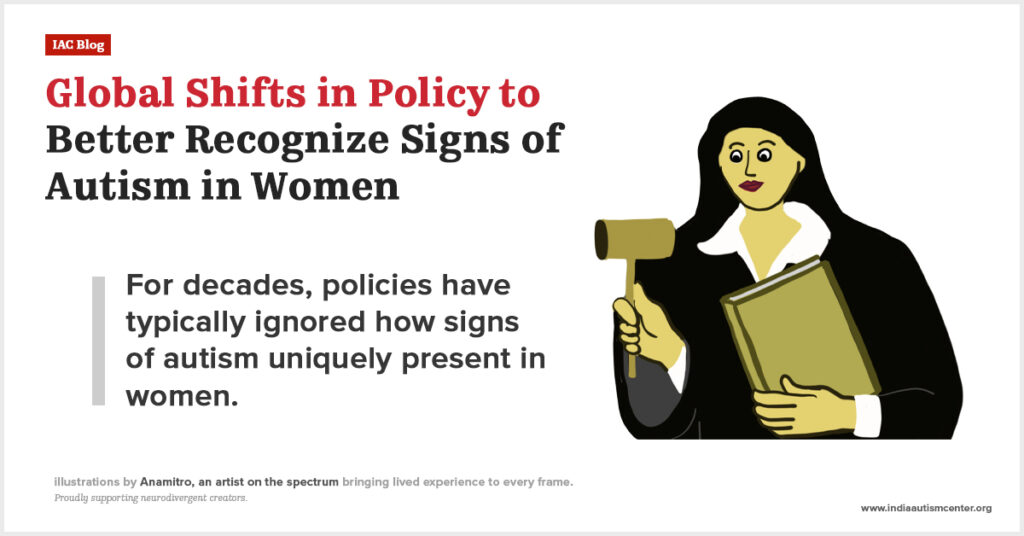
For decades, policies have typically ignored how signs of autism uniquely present in women.
But that’s starting to change.
In India: Small Steps with Big Potential
The Rights of Persons with Disabilities Act (RPwD), 2016, officially recognized autism as a disability in India. It mandates inclusion in education, employment, and healthcare.
Yet, the law remains gender-blind in practice.
It says nothing about how autism in women may appear differently. No mention of masking, camouflaging, or female-specific diagnostic needs.
That silence is finally breaking.
Karnataka and Kerala have piloted training programs for teachers and health workers to teach them to recognize the subtle autism signs in girls.
West Bengal is leading a grassroots initiative. Its Department of Women and Child Development launched a new autism screening tool, available in Bengali, Hindi, and English.
As Sarmistha Bhattacharya, a rehabilitation psychologist at the India Autism Center, explains,
The biggest strength of this tool is accessibility. It equips frontline workers to identify early signs of autism. Girls who might otherwise go unnoticed are finally getting flagged for support.
These pilot initiatives go beyond checklists. These also encourage early screenings in schools and healthcare centers.
Global Momentum: Changing the Diagnostic Lens
Internationally, the shift is sharper.
In the UK, the National Autism Strategy (2021–2026) directly calls for better identification of autism in women and girls. It pushes for tools that reflect their lived experiences.
In Australia, the National Disability Insurance Scheme (NDIS) funds diagnostic assessments designed to move beyond outdated male-centered models.
For women who spent years doubting themselves or being misdiagnosed, this shift signals a long-overdue validation.
And it’s just the start.
Getting an Autism Diagnosis in India – A Practical Guide
Getting diagnosed as an autistic woman in India is possible. It takes persistence, and the system has real limitations – but the pathway exists.
Who to Consult
The right starting point depends on age and access:
- Developmental paediatrician – for girls up to approximately 18 years; the most appropriate first contact for childhood presentations
- Clinical psychologist or rehabilitation psychologist – can conduct comprehensive assessments at any age; look for someone with specific experience in autism and female presentations
- Psychiatrist – particularly relevant for adult women who have existing mental health diagnoses; a psychiatrist can assess for autism alongside comorbidities
Avoid the temptation to start with a general physician or GP for autism concerns. Most are not trained to recognise female autism presentations and may redirect you toward anxiety or depression treatment instead.
What the Assessment Involves
A proper autism assessment is not a single appointment. It typically includes:
- Detailed developmental history – early milestones, school experiences, social development, family history; for adult women, this may involve parents or siblings providing retrospective information
- Direct behavioural observation – how you communicate, interact, and respond across different contexts
- Standardised diagnostic tools – in India, commonly used tools include:
- ADOS-2 (Autism Diagnostic Observation Schedule, 2nd edition) – the gold standard observational assessment
- ADI-R (Autism Diagnostic Interview–Revised) – a structured interview with caregivers
- Vineland Adaptive Behavior Scales – assesses daily living skills and adaptive functioning
- ISAA (Indian Scale for Assessment of Autism) – developed specifically for the Indian population
- CARS-2 (Childhood Autism Rating Scale, 2nd edition) – used across age groups
- Review of previous records – school reports, therapy notes, prior psychological assessments
- Multidisciplinary team review – ideally, findings are reviewed by a team including a psychologist, psychiatrist, and other relevant specialists
Early Intervention and Support for Autistic Women in India
“Early intervention” is a phrase most people associate with young children. But for autistic women who receive a late diagnosis, early intervention means something different: getting the right support as soon as possible after recognition, regardless of age.
Why Identification Matters at Any Age
The research on early childhood intervention is clear: support provided before age 5, during the critical window of neuroplasticity, produces the best outcomes for autistic children. This is why identifying autism in girls during infancy and early childhood is so important – and why the current diagnostic gap, with 80% of autistic women undiagnosed until age 18, represents a genuine public health failure.
But identification at 25, 35, or 45 still matters. It changes how a woman understands herself. It changes what support she seeks and receives. It changes the conversations she has with her family, her employer, her doctor. A late diagnosis is not a consolation prize – it is a genuine turning point.
Types of Support
Occupational therapy (OT): Particularly valuable for sensory processing difficulties, executive function challenges, and daily living skills. A good OT will work with the individual’s specific sensory profile – not trying to eliminate sensory needs, but finding ways to accommodate and manage them.
Speech-language therapy: Relevant not just for communication difficulties but for social communication – understanding pragmatics, navigating conversation, developing strategies for workplace communication.
CBT adapted for autism: Standard CBT assumes a level of emotional awareness and social understanding that autistic women may not have in the same form. Autism-adapted CBT works more explicitly with thought patterns, uses structured frameworks, and accounts for the role of sensory and social overload in emotional dysregulation.
Peer support: Connecting with other autistic women – in person or online – is consistently described by late-diagnosed women as one of the most valuable forms of support. The experience of being understood without having to explain yourself is not something that can be replicated in a clinical setting.
Family and caregiver education: In the Indian context, where family involvement in an individual’s life is often deep and ongoing, educating family members about autism in women is not optional – it’s essential. Families who understand what autism actually looks like in women are better equipped to support rather than inadvertently undermine.
Conclusion
Recognising the signs of autism in women is just the beginning. What comes next is finding support that actually fits.
Start small. Find professionals who understand how the signs of autism in women show up. Then, join spaces where you don’t have to explain yourself.
You’re not meant to do this alone.
At school or work, ask for simple accommodations. These small shifts can change everything. And you don’t need a formal diagnosis to advocate for yourself.
If you need further assistance, feel free to contact us.
Frequently Asked Questions
How do autistic females behave?
Autistic women may appear socially competent but often struggle beneath the surface. They might have trouble reading social cues, dislike sudden changes, and feel emotionally drained from trying to fit in.
How do I tell if I’m an autistic female?
If you often feel out of sync in social settings, rely on routines, or copy others to avoid judgment, these could be signs. A formal assessment with an autism-informed specialist can offer clarity.
What does high-functioning autism look like in a woman?
It often appears as someone who performs well at work or school yet feels overwhelmed by social situations, struggles to manage emotions, and needs solitude to recover from everyday demands.
At what age does autism show in women?
Signs can start in early childhood, but they’re often subtle and misread. This leads to many girls being diagnosed much later, often in their teens or adulthood.
What can be mistaken for autism in girls?
Autism in girls is frequently misdiagnosed as anxiety, Attention-Deficit/Hyperactivity Disorder (ADHD), Obsessive Compulsive Disorder (OCD), or simply viewed as personality traits like shyness, perfectionism, or sensitivity.
What are the signs of autism in adult women?
Adult women may experience mental fatigue, social burnout, difficulties in relationships, heightened sensitivity to sound or touch, and a constant need to keep up a ‘normal’ appearance.
What are the signs of high masking autism in women?
Women who mask may script conversations, force themselves to make eye contact, suppress stimming behaviors, and constantly scan social environments to avoid making mistakes.
What are the signs of undiagnosed autism in adult women?
Undiagnosed women often feel misunderstood, anxious in social settings, and emotionally depleted. They may have a long history of misdiagnoses, like depression or general anxiety.
What are the signs of autism in females during childhood?
Look for intense routines, sensory sensitivities, solitary or scripted play, and mimicry of peers. Many girls also hold stress at school and release it at home.
What are the signs of autism in adult females?
Adult females may continue to mask their traits, face chronic sensory stress, struggle with daily life management, and question their identity due to years of adapting.
How can women get tested for autism?
Start by speaking to a developmental pediatrician or clinical psychologist experienced in diagnosing women. Assessments usually include interviews, behavior analysis, and standardized tools adapted for females.
Disclaimer: This article is intended for educational and informational purposes only. It is not a substitute for professional medical advice, diagnosis, or treatment. If you are pregnant or have concerns about medication use during pregnancy, please consult a qualified healthcare provider. If your child has received an autism diagnosis and you have questions about causes or support, please reach out to a trained specialist or an autism-focused organisation for guidance.
Useful Sources
Nash, W. (n.d.). Autistic Girls: Overlooked and Undiagnosed. Child Mind Institute
Disclaimer: This article is intended for educational and informational purposes only. It is not a substitute for professional medical advice, diagnosis, or treatment. If you are pregnant or have concerns about medication use during pregnancy, please consult a qualified healthcare provider. If your child has received an autism diagnosis and you have questions about causes or support, please reach out to a trained specialist or an autism-focused organisation for guidance.
For expert insights, support services, and inclusive learning initiatives, visit the India Autism Center.