
 Donate now
 Get a Call Back
 MENU
MENU 51 MIN READ
 SHARE
SHARE


Occupational therapy (OT) is a healthcare profession that helps people build the skills they need for daily life. It focuses on independence in everyday activities — dressing, eating, writing, playing, working, and socialising. Occupational therapists work with children and adults who face physical, sensory, cognitive, or developmental challenges. I’ve put together this guide to answer every major question I get asked about occupational therapy, from what it is to how it helps autistic children.
This guide covers the full picture: what occupational therapy actually involves, the different types of OT available, how it compares to physiotherapy, and how it supports specific conditions like autism, Attention Deficit Hyperactivity Disorder (ADHD), cerebral palsy, and neurological injuries. I’ve also included practical sections on finding a provider near you, home-based activities you can start today, and the training pathways available if you’re considering OT as a career or want to support a family member more effectively. Wherever a question naturally leads to another question, I’ve tried to answer that too, so you can find what you need in one place.
What Is Occupational Therapy?
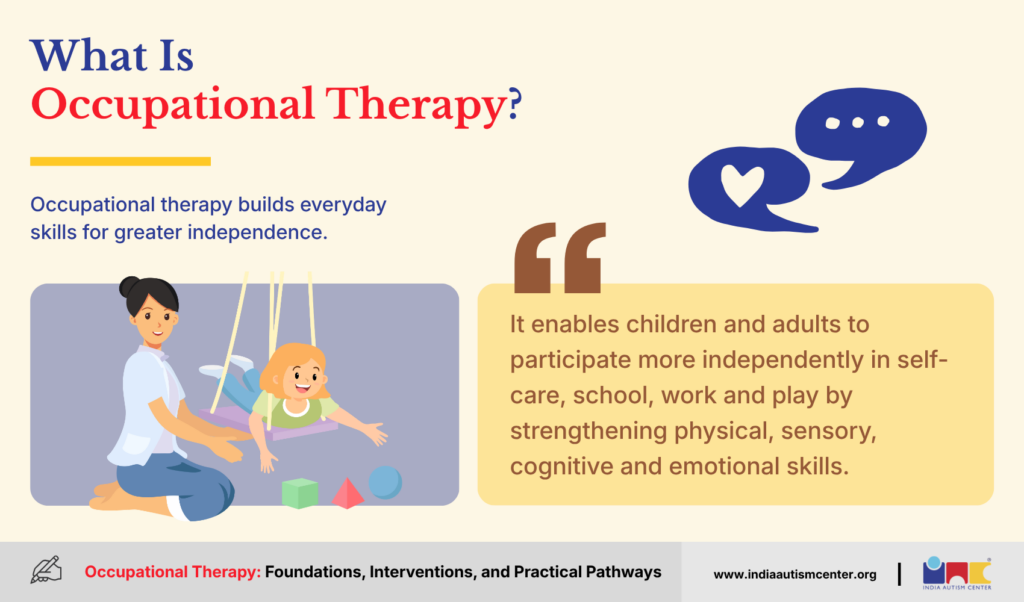
Occupational therapy (OT) is a healthcare profession that helps people of all ages participate in the everyday activities, or “occupations,” that matter to them. These occupations include self-care tasks, schoolwork, play, and employment. An occupational therapist assesses a person’s physical, sensory, cognitive, and emotional abilities. They then design a treatment plan to build the specific skills that person needs.
A quick example helps illustrate this. A 5-year-old who cannot hold a spoon steadily, an adult recovering from a wrist fracture who cannot type, and a retired person struggling to climb their own stairs safely all face different problems — but all three fall under occupational therapy’s scope, because each involves a barrier to a meaningful daily activity.
The word “occupation” in occupational therapy does not just mean a job. It refers to any activity that occupies a person’s time and gives their life structure and meaning. This includes:
- Self-care activities — bathing, dressing, eating, toileting
- Productive activities — school work, chores, employment
- Leisure activities — play, hobbies, social participation
Occupational therapy is grounded in the idea that engaging in meaningful activity improves health and wellbeing. A person who cannot button their shirt, hold a pencil, or sit through a classroom lesson faces real barriers to daily life. OT addresses these barriers directly, using hands-on, practical methods.
📥 Free download: Printable daily routine chart for autistic children
Who Is Occupational Therapy For?
Occupational therapy is not limited to one age group or condition. Here is a quick reference table.
| Population | Common Reasons for OT |
| Infants and toddlers | Developmental delay, feeding difficulties, low muscle tone |
| Children | Autism, ADHD, learning disabilities, cerebral palsy, sensory processing disorder |
| Adults | Stroke recovery, workplace injury, mental health conditions |
| Older adults | Arthritis, dementia, fall prevention, post-surgical recovery |
A Brief History of Occupational Therapy
Occupational therapy emerged in the early 20th century from the observation that purposeful activity supports recovery and mental health. It grew out of work in psychiatric hospitals and rehabilitation settings after World War I, where therapists used craft and activity-based interventions to help injured soldiers regain function. Today, OT is practised in hospitals, schools, homes, and specialised centres across the world, including in India.
Core Principles Behind Occupational Therapy
Every occupational therapy program, regardless of setting, is built on a few consistent principles. Understanding these helps families know what to expect from treatment.
- Person-centered goals: Therapy targets what matters to the individual and family, not a generic checklist.
- Activity-based learning: Skills are taught through real or simulated versions of the actual task, not abstract drills.
- Graded challenge: Therapists adjust task difficulty step by step, so the person is always working just beyond their current ability.
- Holistic assessment: OT considers physical, sensory, cognitive, and emotional factors together, not in isolation.
- Environmental adaptation: When a skill cannot be fully built, therapists modify the environment or task instead — for example, using adaptive utensils.
- Family and caregiver involvement: Because most daily activity happens outside the clinic, therapists actively involve caregivers in goal-setting and home strategies rather than treating therapy as something that happens only in isolated sessions.
- Ongoing reassessment: Goals are not fixed. As a person’s skills change, the therapist revisits and updates the plan to keep it relevant and appropriately challenging.
These principles explain why two children with the same diagnosis can end up with very different therapy plans. Occupational therapy responds to the individual, not the label.
Where Is Occupational Therapy Delivered?
Occupational therapy takes place in several settings, depending on the person’s needs and available services.
| Setting | Typical Use Case |
| Hospital-based OT | Post-surgical recovery, stroke rehabilitation, acute care |
| Outpatient clinic | Ongoing pediatric or adult therapy on a regular schedule |
| School-based OT | Support for a child’s classroom participation and school tasks |
| Home-based OT | Therapy delivered in the person’s own environment, often for young children or older adults |
| Community/residential settings | Long-term support for daily living skills, including residential care campuses |
Each setting has advantages. Clinic-based OT often has access to specialized equipment like sensory gyms, while home-based OT allows the therapist to address real daily routines directly in context.
Want to know more? Get in touch with us.
What Are the Types of Occupational Therapy?
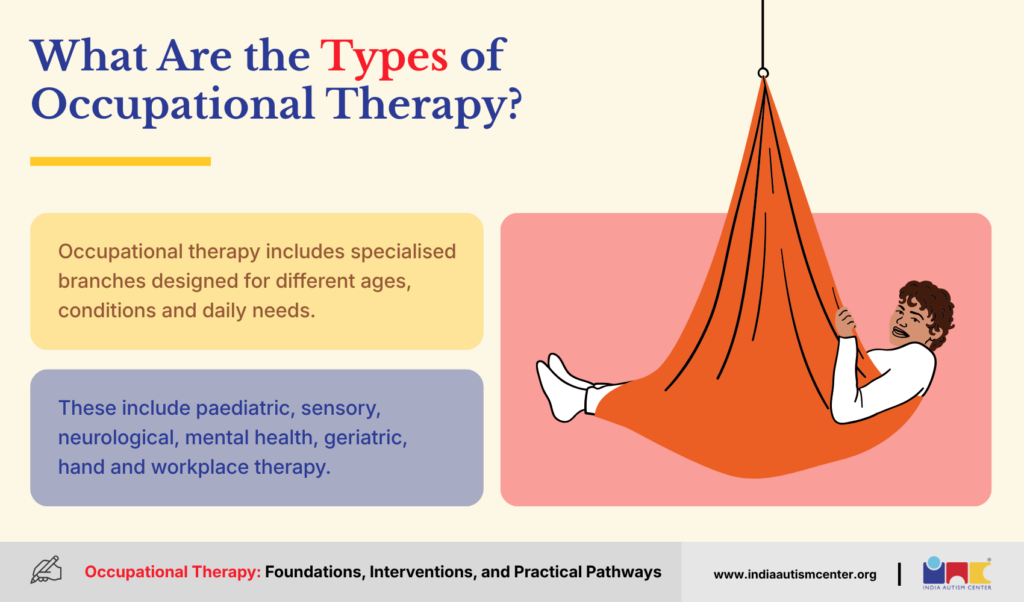
Occupational therapy has several specialised branches, each targeting a different population or set of challenges. The main types are pediatric OT, sensory integration therapy, neurological rehabilitation OT, mental health OT, geriatric OT, hand therapy, and vocational OT. Each uses OT’s core principles but applies different tools and settings.
It’s worth noting that these categories often overlap in real-world practice. A single occupational therapist might specialize primarily in pediatrics while also incorporating sensory integration techniques, or a neuro-rehabilitation therapist might address mental health alongside physical recovery after a stroke. Understanding the categories helps you identify which type of expertise best matches your specific need, even if the therapist you choose works across more than one area.
Pediatric Occupational Therapy
Pediatric OT works with infants, children, and teenagers. It targets developmental milestones, fine and gross motor skills, sensory processing, self-care independence, and school readiness. This is the most common type of OT sought by parents of autistic or developmentally delayed children.
Sensory Integration Therapy
Sensory integration therapy is a specialized approach within pediatric OT. It helps children who struggle to process sensory information from their environment — sound, touch, movement, and light. Therapists use structured sensory activities, often in a sensory gym, to help the brain organize sensory input more effectively.
Neurological / Neuro-Rehabilitation OT
This branch supports people recovering from stroke, traumatic brain injury, spinal cord injury, or progressive neurological conditions like Parkinson’s disease or multiple sclerosis. The goal is to rebuild motor control, cognitive function, and independence in daily tasks after neurological damage.
Mental Health OT
Mental health occupational therapy supports people managing conditions such as anxiety, depression, or trauma. Therapists help clients build routines, coping strategies, and skills for social and occupational participation. This branch is less well known in India but is a growing area of practice.
Geriatric OT
Geriatric OT focuses on older adults. It addresses fall prevention, arthritis management, dementia-related care, and adaptations for aging in place. Therapists often recommend home modifications and assistive devices to keep older adults safe and independent.
Hand Therapy
Hand therapy is a specialized form of OT (sometimes delivered by physiotherapists too) that treats injuries and conditions affecting the hand, wrist, and upper limb. It combines splinting, exercise, and functional training after fractures, surgeries, or repetitive strain injuries.
Vocational / Workplace OT
Vocational OT helps people return to work after injury or illness, or adapt their workplace to accommodate a disability. It may involve ergonomic assessments, job coaching, or building work-related routines.
School-Based OT
School-based occupational therapy is delivered within an educational setting. Therapists work directly with teachers and students to support classroom participation. Common focus areas include handwriting, sitting tolerance, using classroom tools, and managing sensory input in a busy classroom environment. This type of OT is closely tied to a child’s academic success, not just their physical development.
Home Health OT
Home health occupational therapy is delivered in a person’s own home, often for older adults recovering from surgery, illness, or injury. Therapists assess the home environment directly and recommend modifications — grab bars, ramps, or furniture rearrangement — to support safety and independence. This type of OT is also common for very young children who benefit from therapy within their natural daily routine.
Feeding and Oral Motor Therapy
Some occupational therapists specialize in feeding therapy, which addresses difficulties with chewing, swallowing, and accepting different food textures. This is common for children with autism, Down syndrome, or general developmental delay, and often overlaps with speech-language therapy.
| Type of OT | Who It’s For | Common Goals |
| Pediatric OT | Children with developmental, sensory, or motor challenges | Milestones, self-care, school readiness |
| Sensory Integration Therapy | Children with sensory processing difficulties | Sensory regulation, attention, comfort |
| Neuro-Rehabilitation OT | Stroke, brain injury, neurological conditions | Motor recovery, cognitive function |
| Mental Health OT | Anxiety, depression, trauma | Routine building, coping skills |
| Geriatric OT | Older adults | Fall prevention, independence, safety |
| Hand Therapy | Hand/wrist/upper limb injuries | Strength, range of motion, function |
| Vocational OT | Adults returning to work | Job skills, ergonomics, accommodations |
What Are the Advantages of Occupational Therapy?
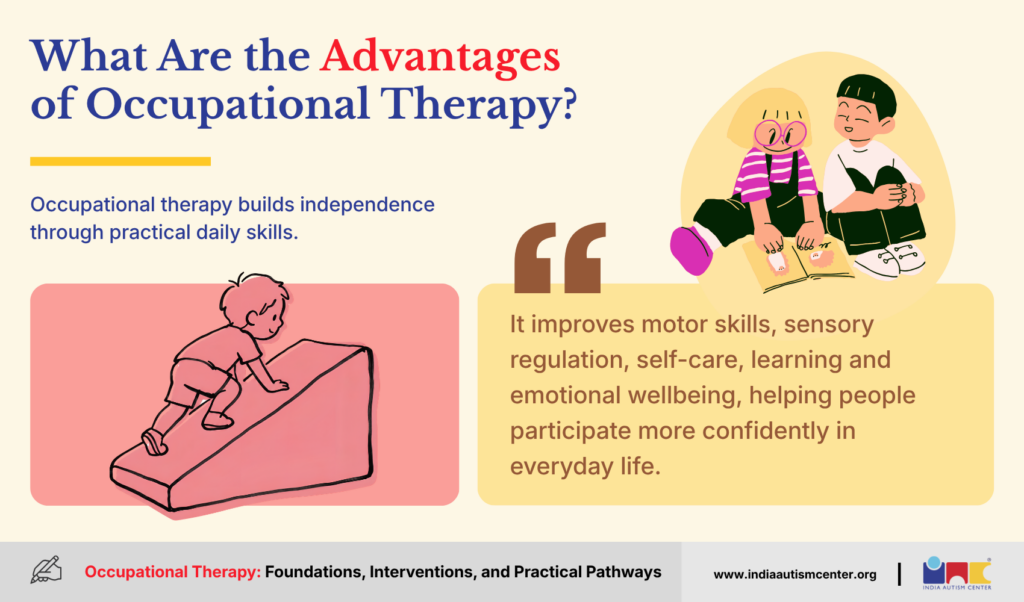
Occupational therapy improves a person’s independence, confidence, and quality of life by building practical, everyday skills. The benefits extend across physical, sensory, cognitive, and emotional domains. Below are the core advantages I see reported most often by families and clients.
Greater Independence in Daily Activities
OT directly targets activities of daily living (ADLs) — dressing, eating, bathing, and toileting. Many children and adults gain the ability to complete these tasks without assistance after consistent OT sessions.
Improved Fine and Gross Motor Skills
Occupational therapists use targeted exercises to strengthen fine motor skills (handwriting, buttoning, using scissors) and gross motor skills (running, jumping, balance). These skills support both academic performance and physical safety.
Better Sensory Regulation
For children with sensory processing differences, OT helps the nervous system respond more calmly to sound, touch, and movement. This reduces meltdowns, avoidance behaviors, and sensory overload.
Improved Social Participation and Communication
OT often incorporates play-based and group activities that build turn-taking, joint attention, and cooperative play. These skills support friendships and classroom participation.
Better School and Work Performance
By addressing attention, motor coordination, and organizational skills, OT helps children keep up with classroom demands and helps adults manage job responsibilities.
Stronger Emotional Regulation and Confidence
As children and adults master new skills, they build self-esteem. OT also teaches specific strategies for managing frustration, anxiety, and emotional overwhelm.
Summary list of key benefits:
- Increased independence in self-care
- Improved fine and gross motor coordination
- Better sensory processing and regulation
- Stronger social and communication skills
- Improved academic and work performance
- Greater emotional regulation and self-confidence
- Reduced caregiver burden over time
Benefits by Age Group
The advantages of occupational therapy look different depending on the person’s age and needs. Here’s a quick breakdown.
| Age Group | Key Benefits |
| Infants and toddlers | Stronger developmental foundation, improved feeding, better muscle tone |
| School-age children | Handwriting readiness, classroom participation, peer play skills |
| Teenagers | Independent self-care, organizational skills, vocational readiness |
| Adults | Return to work, injury recovery, mental health support |
| Older adults | Fall prevention, safer daily routines, continued independence at home |
Long-Term Advantages Beyond the Individual
Occupational therapy also benefits families and caregivers, not just the person receiving therapy. As a child or adult becomes more independent, caregiver stress often decreases. Families report spending less time assisting with tasks the person can now do alone, and more time on shared activities. This ripple effect is one reason occupational therapy is considered a long-term investment rather than a short-term fix.
A Real-World Example of OT Benefits
Consider a 6-year-old who struggles to get dressed independently, avoids messy play due to tactile sensitivity, and has difficulty holding a pencil correctly. Over several months of consistent occupational therapy, this same child might progress to dressing with minimal help, tolerating a wider range of textures, and forming letters legibly. Each of these gains reduces daily friction for both the child and the family — which is the practical, cumulative nature of OT’s benefits.
Is Occupational Therapy Evidence-Based?
Yes. Occupational therapy is grounded in decades of research across pediatrics, neurology, and rehabilitation medicine. Techniques like sensory integration therapy, task-based training, and adaptive equipment use are supported by peer-reviewed clinical studies. That said, outcomes vary by individual, and a good therapist will track progress against measurable goals rather than relying on general assumptions about what “should” work.
Want to know more? Get in touch with us.
Occupational Therapy vs Physiotherapy: What’s the Difference?
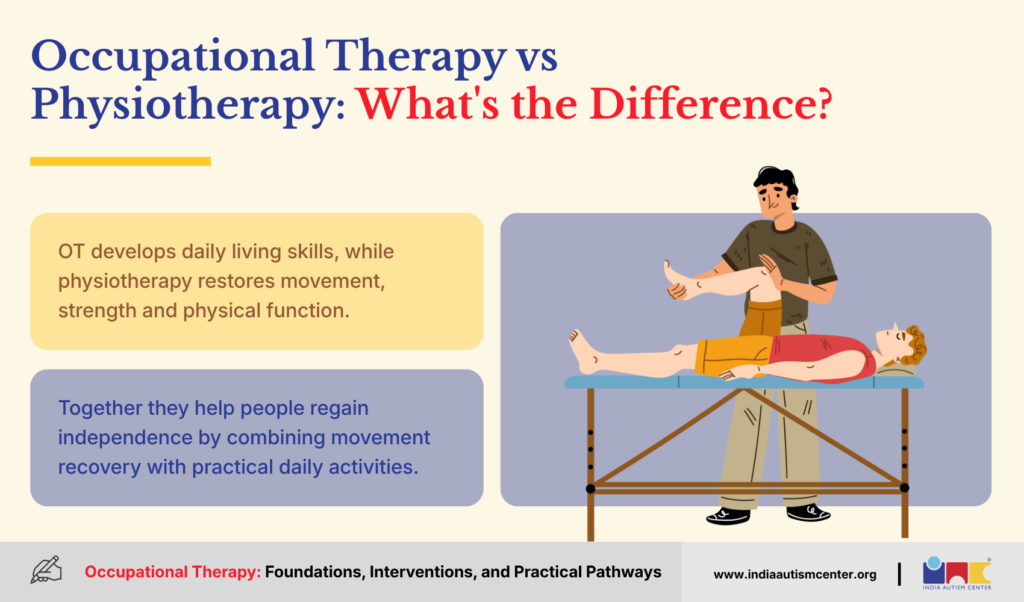
Occupational therapy focuses on helping people perform daily activities independently, while physiotherapy focuses on restoring physical movement, strength, and function. Both professions often work with the same patients, especially after injury or in developmental care, but their goals and methods differ.
Core Distinction
Physiotherapy asks: “Can this person move their body correctly?” Occupational therapy asks: “Can this person use their body to do what they need to do in daily life?” A physiotherapist might help a stroke patient regain arm strength. An occupational therapist would then help that same patient use their arm to cook a meal or get dressed.
Comparison Table
| Factor | Occupational Therapy | Physiotherapy |
| Primary focus | Independence in daily activities | Physical movement and function |
| Common techniques | Task-based training, sensory integration, adaptive equipment | Exercise, manual therapy, movement re-training |
| Typical conditions | Autism, developmental delay, stroke, hand injuries, mental health | Sports injuries, joint pain, post-surgical recovery, mobility issues |
| Session format | Activity-based, often play-based for children | Exercise-based, often clinical/gym setting |
| Example goal | Independently buttoning a shirt | Regaining full shoulder range of motion |
When Do You Need One, the Other, or Both?
Many children and adults benefit from both therapies together, especially after a stroke, a traumatic injury, or in complex developmental conditions. A physiotherapist rebuilds the physical foundation. An occupational therapist then applies that foundation to real-world tasks. India Autism Center often coordinates OT alongside speech therapy and other disciplines for exactly this reason — see the section on multidisciplinary care below.
A Worked Example: Stroke Recovery
Consider a patient recovering from a stroke that has weakened one arm. A physiotherapist works on rebuilding muscle strength, range of motion, and coordination in that arm through targeted exercises. Once the patient regains some physical capacity, an occupational therapist helps them apply it — practicing how to hold a spoon, button a shirt, or write with the affected hand. Neither discipline replaces the other; they build on each other in sequence.
A Worked Example: Autism
For an autistic child, a physiotherapist might address low muscle tone or gross motor delays like an unsteady walking pattern. An occupational therapist would then address how that child uses their body for daily tasks — sitting still at a desk, managing a bookbag, or navigating a busy classroom. In practice, many autistic children see an occupational therapist rather than a physiotherapist, since motor planning and sensory regulation, not physical strength, are usually the primary challenge.
Occupational Therapy vs Speech Therapy
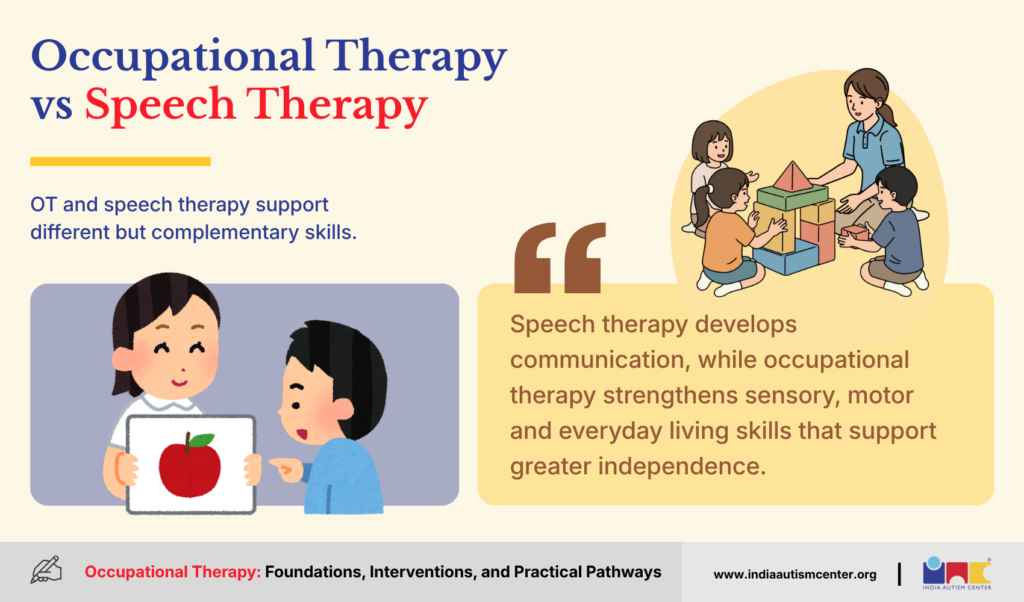
Families often ask how OT compares to speech-language therapy, especially since both are common in autism care. Speech therapy focuses on communication — language development, articulation, and social communication skills. Occupational therapy focuses on functional and sensory skills — motor coordination, sensory regulation, and daily task independence. The two disciplines frequently overlap, particularly around feeding therapy and social play, which is why many families search for combined “speech and occupational therapy” services under one roof.
What Is Occupational Therapy for Kids?
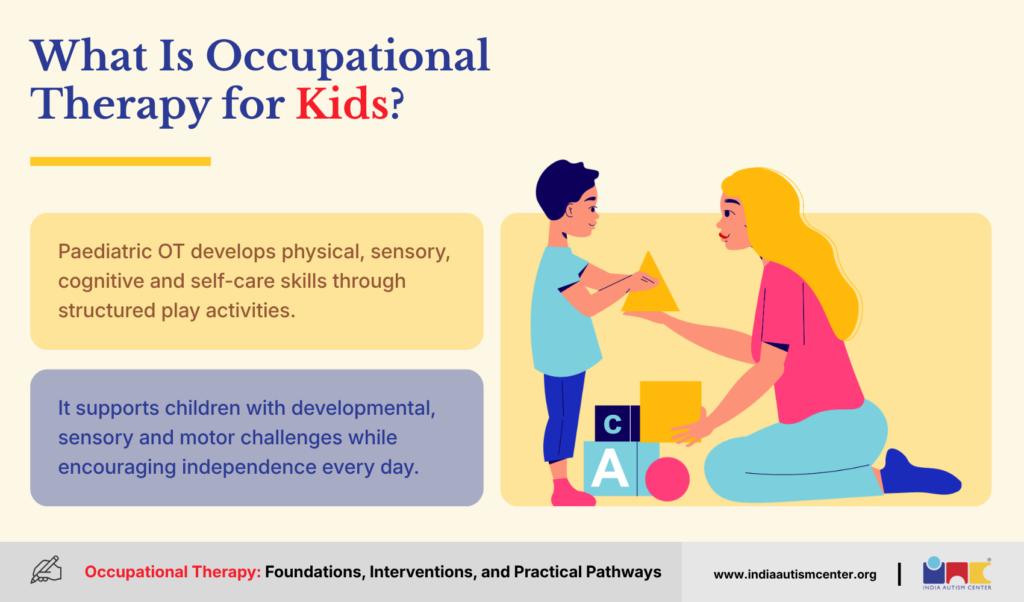
Occupational therapy for kids helps children build the physical, sensory, cognitive, and social skills needed for school, play, and daily self-care. Pediatric OT differs from adult OT mainly in its methods: sessions are play-based, engaging, and structured around a child’s developmental stage rather than adult tasks.
How Pediatric OT Differs From Adult OT
Pediatric occupational therapists use toys, games, and movement-based activities instead of clinical exercises. Sessions often look like play, but every activity is chosen to target a specific skill — grip strength, balance, attention, or sensory tolerance. Therapy rooms for children frequently include swings, trampolines, and tactile play equipment.
Common Conditions Addressed in Pediatric OT
- Autism spectrum disorder
- ADHD (Attention-Deficit/Hyperactivity Disorder)
- Cerebral palsy
- Down syndrome
- Developmental delay
- Sensory processing disorder
- Learning disabilities and dyspraxia
Signs a Child May Need Occupational Therapy
Parents often ask how to know if their child needs OT. Here are common signs to watch for:
- Delayed developmental milestones (sitting, walking, talking)
- Difficulty with fine motor tasks like holding a pencil or using scissors
- Extreme sensitivity to textures, sounds, or light
- Frequent clumsiness or poor balance
- Difficulty with self-care tasks like dressing or brushing teeth
- Trouble with handwriting compared to peers
- Frequent meltdowns triggered by sensory input
- Avoidance of certain textures, foods, or clothing
If a child shows several of these signs, a formal OT evaluation is worth pursuing.
Occupational Therapy for Learning Disabilities and Dyspraxia
Dyspraxia, also called developmental coordination disorder, affects a child’s ability to plan and execute physical movements. Children with dyspraxia often appear clumsy, struggle with handwriting, and find sports or physical education challenging. Occupational therapy addresses these difficulties directly through motor planning practice, broken down into small, sequential steps.
For children with broader learning disabilities, OT often supports the physical and organizational side of learning — handwriting speed, using classroom tools, sitting posture, and managing school materials — working alongside special education support that addresses the academic content itself.
How a Pediatric OT Evaluation Works
An occupational therapy evaluation is a structured process. It typically follows these steps:
- Referral or intake — a parent, doctor, or teacher raises a concern.
- Initial assessment — the therapist observes the child and uses standardized assessment tools to measure motor skills, sensory processing, and daily functioning.
- Parent interview — the therapist gathers developmental history and daily routine information from caregivers.
- Goal-setting — the therapist and family agree on specific, measurable goals.
- Therapy plan — a session schedule and activity plan is created, often reviewed every few months.
This process ensures therapy is targeted rather than generic. It also gives parents a clear picture of what to expect.
Developmental Milestones OT Therapists Track
Occupational therapists often reference typical developmental milestones when assessing a child. This does not mean every child must hit each milestone exactly on schedule, but a large or persistent gap is a signal worth investigating.
| Age | Typical Milestone |
| 6–12 months | Sitting independently, transferring objects between hands |
| 12–18 months | Walking, using a pincer grasp to pick up small objects |
| 2–3 years | Scribbling with a crayon, stacking blocks, feeding with a spoon |
| 3–4 years | Using scissors with help, dressing with some independence, drawing simple shapes |
| 4–5 years | Copying letters, buttoning clothes, hopping on one foot |
| 5–6 years | Writing name, tying shoelaces (with practice), using cutlery independently |
Want to know more? Get in touch with us.
What Does a Pediatric OT Session Actually Look Like?
A typical pediatric OT session lasts 30 to 60 minutes. Sessions usually include a warm-up sensory or movement activity, followed by structured skill-building tasks, and often end with a preferred or calming activity. Therapists track progress against the goals set during evaluation and adjust activities as the child improves. Parents are frequently invited to observe or participate, especially toward the end of a session, so they can carry strategies home.
A Sample Session Structure
| Segment | Approximate Time | Purpose |
| Warm-up / sensory activity | 5–10 minutes | Regulate the child’s nervous system before structured work |
| Core skill-building tasks | 20–30 minutes | Target specific goals from the therapy plan |
| Challenge or new skill introduction | 5–10 minutes | Gently extend the child just beyond their current ability |
| Calming / preferred activity | 5–10 minutes | End the session positively, reinforcing engagement |
| Parent handoff | 5 minutes | Share observations and home practice suggestions |
This structure is a general guide rather than a fixed formula — an experienced therapist adapts session flow in real time based on how the child is responding that day.
Occupational Therapy and Autism: What Role Does It Play?
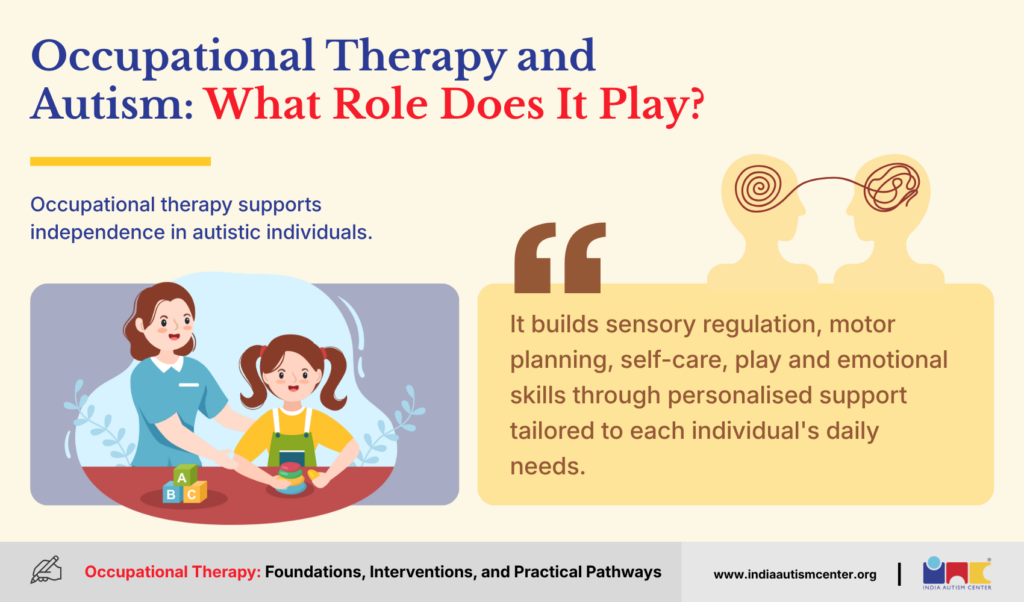
Occupational therapy is one of the most important interventions for autistic children, helping them build sensory regulation, motor skills, and independence in daily life. OT does not treat autism itself — autism is not a condition to be cured — but it directly addresses the practical challenges that many autistic children and adults experience.
Why Occupational Therapy Matters in Autism Care
Autistic children often experience differences in sensory processing, motor planning, and self-regulation. These differences can make everyday tasks — getting dressed, eating a meal, sitting in a classroom — genuinely difficult. Occupational therapy targets these specific challenges with structured, individualized support.
Core Occupational Therapy Goals for Autistic Children
- Sensory regulation — helping the child manage sensory input without becoming overwhelmed
- Motor planning — improving the ability to plan and execute physical movements
- Social participation — building skills for play, turn-taking, and shared attention
- Self-care independence — dressing, feeding, toileting, and hygiene
- Emotional regulation — recognizing and managing big emotions
Occupational Therapy and Sensory Processing
Many autistic children experience sensory processing differences. Some are hypersensitive to sound, touch, or light. Others seek out intense sensory input through movement or pressure. Occupational therapists use sensory integration therapy to help the nervous system process this input more comfortably.
A common tool is the “sensory diet” — a personalized schedule of sensory activities built into the child’s day. This might include swinging, deep-pressure activities like weighted blankets, or tactile play. The goal is not to eliminate sensory differences but to help the child regulate more comfortably.
Common Sensory Processing Patterns
Occupational therapists generally categorize sensory responses into a few broad patterns, though many children show a mix of these depending on the sense involved.
| Pattern | What It Looks Like | Common OT Strategy |
| Sensory over-responsive | Distress from loud sounds, certain textures, or bright lights | Gradual desensitization, predictable warnings before sensory input |
| Sensory under-responsive | Doesn’t notice pain, temperature, or being touched | Increasing sensory input intensity, alerting activities |
| Sensory seeking | Craves movement, spinning, crashing, or deep pressure | Structured, safe outlets for sensory-seeking behavior |
| Poor sensory discrimination | Difficulty distinguishing between similar sensory inputs | Activities that build precision, like sorting textures by feel |
Identifying which pattern applies — and it’s often a different pattern for different senses — allows the therapist to build a genuinely individualized sensory diet rather than a one-size-fits-all activity list.
Occupational Therapy to Improve Eye Contact
Parents sometimes ask specifically about occupational therapy and eye contact. It’s worth being clear here: eye contact is not a required goal of OT, and many autistic individuals communicate effectively without sustained eye contact. Where a family and therapist do choose to work on this, OT typically approaches it indirectly, through:
- Building joint attention — sharing focus on an object or activity with another person
- Structured, low-pressure social play that naturally encourages glancing and shared engagement
- Following the child’s comfort level, never forcing eye contact
A neurodiversity-affirming approach prioritizes a child’s comfort and genuine engagement over eye contact as a performance metric.
Occupational Therapy Fine Motor Activities for Autism
Fine motor skills — the coordination of small muscles in the hands and fingers — are a common OT focus for autistic children. Typical fine motor goals include:
- Pencil grip and handwriting readiness
- Using scissors safely and accurately
- Buttoning, zipping, and other dressing skills
- Manipulating small objects (beads, blocks, puzzle pieces)
I’ve included a fuller list of specific fine motor and sensory activities in the home activities section below, including a downloadable resource.
Occupational Therapy and Play Skills in Autism
Play is one of the primary “occupations” of childhood, and many autistic children need direct support to develop play skills. Occupational therapists work on:
- Parallel play — playing alongside another child before moving to interactive play
- Turn-taking — structured games that build patience and shared engagement
- Symbolic/pretend play — using objects to represent something else, a skill that doesn’t always develop automatically
- Flexible play — tolerating changes to a game or activity without distress
Play-based goals are often woven into sensory and motor activities, so a single session might build fine motor skills and turn-taking at the same time.
Occupational Therapy and Transitions
Many autistic children find transitions — moving from one activity to another — genuinely difficult. Occupational therapists often build transition strategies into therapy, including visual schedules, countdown warnings, and consistent routines. These strategies reduce distress during predictable daily transitions like leaving the house, switching classroom activities, or ending screen time.
Occupational Therapy and Meltdowns
A meltdown is often the result of sensory or emotional overload, not defiance. Occupational therapists help identify a child’s specific triggers and build a regulation plan — a set of strategies the child and caregivers can use before overload occurs. This might include a quiet space, a sensory tool, or a specific calming activity. Understanding the sensory root of a meltdown, rather than treating it purely as a behavior to correct, is central to how OT approaches this challenge.
A Note on Outcomes
Every autistic child’s OT journey looks different. Some children make rapid progress in a specific skill; others need years of consistent support across multiple areas. At India Autism Center, we’ve seen that consistency between clinic sessions and home practice tends to produce the strongest, most sustainable gains — which is why we emphasize caregiver training alongside direct therapy.
A Neurodiversity-Affirming Approach
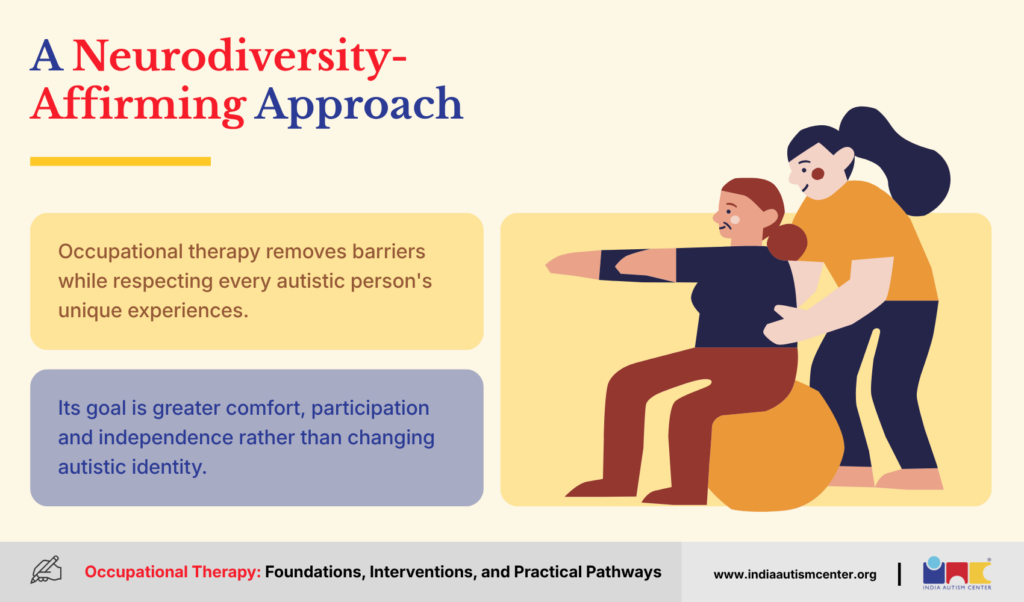
It’s worth stating clearly: the goal of occupational therapy for autistic individuals is not to make them appear “less autistic.” The goal is to reduce genuine barriers to comfort, independence, and participation, while respecting each child’s individual way of experiencing the world. A skilled therapist distinguishes between skills that meaningfully improve a child’s quality of life and goals that exist only to satisfy external expectations.
What Does the Research Say About OT and Autism?
Research on sensory integration therapy and pediatric occupational therapy has grown substantially over the past two decades. Studies generally support OT’s effectiveness for improving specific, measurable outcomes — such as fine motor skills, sensory processing responses, and functional independence in daily tasks. Research is more mixed on broader claims, such as OT’s direct impact on core autism traits like social communication, which is one reason OT is typically delivered as part of a coordinated, multidisciplinary approach rather than a standalone intervention for autism as a whole.
Families evaluating therapy options should ask providers how they track outcomes and what specific, measurable goals therapy is targeting — rather than relying on general claims about effectiveness.
How Occupational Therapy Fits Into a Broader Autism Support Plan
Occupational therapy is rarely the only support an autistic child receives. It typically sits alongside:
- Speech and language therapy — for communication development
- Special education — for academic learning support
- ABA or other behavioral support — for structured skill-building and behavior guidance
- Family/caregiver training — for consistency between therapy and home life
A well-coordinated plan ensures these disciplines reinforce each other rather than working in isolation. This is the model India Autism Center follows across its therapy and residential programs.
Occupational Therapy for ADHD and Other Conditions
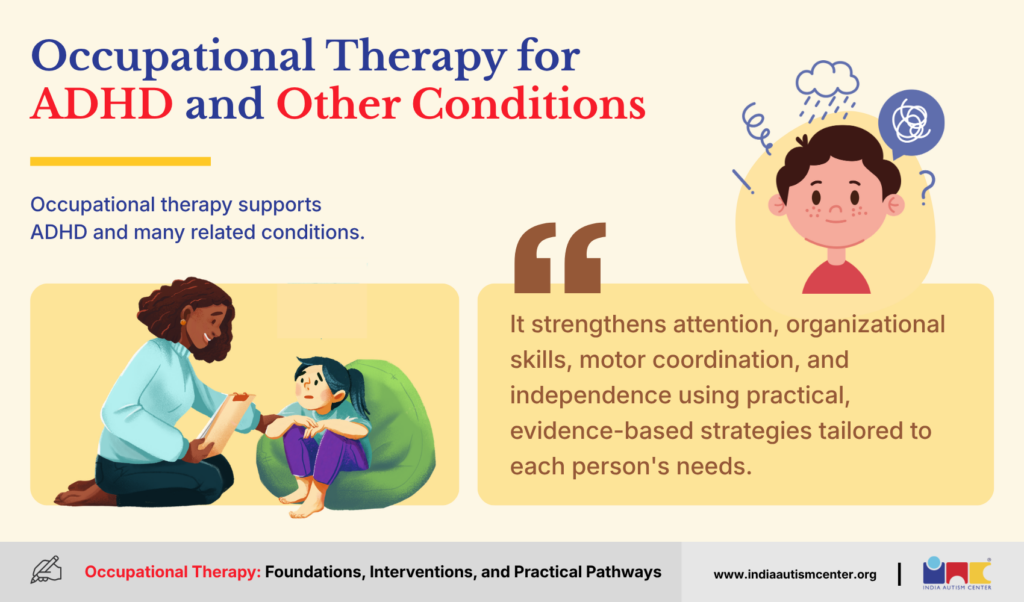
Occupational therapy helps people with ADHD build attention regulation, motor coordination, and executive function skills needed for daily tasks. While ADHD is primarily managed through behavioral strategies and, in some cases, medication, OT plays a valuable supporting role — especially for children who also show motor coordination difficulties.
How Occupational Therapy Supports ADHD
Occupational therapists working with ADHD typically target:
- Attention regulation — strategies to sustain focus during tasks
- Motor coordination — many children with ADHD also show fine or gross motor delays
- Organizational skills — managing time, materials, and multi-step tasks
- Self-regulation — managing impulsivity and emotional responses
- Sensory strategies — some children with ADHD also have sensory processing differences
OT for ADHD often overlaps with school-based support, since classroom performance is a major area of concern for families.
Practical OT Strategies Used for ADHD
Occupational therapists working with children who have ADHD often introduce practical, repeatable strategies rather than one-off exercises. Common examples include:
- Movement breaks built into study or homework routines
- Fidget tools used purposefully rather than as a distraction
- Visual timers to build awareness of time and task duration
- Checklist systems for multi-step tasks like getting ready for school
- Weighted or textured seating tools to support sustained sitting
These strategies aim to work with a child’s attention profile rather than against it, making daily tasks more achievable without constant correction.
Occupational Therapy for Cerebral Palsy
Cerebral palsy affects muscle control and movement. Occupational therapy for children with cerebral palsy focuses on:
- Adaptive techniques for self-care tasks
- Fine motor skill-building within the child’s physical capacity
- Use of assistive devices and adaptive equipment
- Positioning and seating recommendations for daily activities
Occupational Therapy for Down Syndrome
Children with Down syndrome often experience low muscle tone (hypotonia), which affects motor development. OT for Down syndrome typically addresses:
- Building strength and stability for fine and gross motor tasks
- Feeding and oral motor skill development
- Self-care independence at an age-appropriate pace
- Sensory processing support, where relevant
Understanding The Difference Between Autism and Down Syndrome
Occupational Therapy for Developmental Delay
For children with general developmental delay, OT helps close the gap between a child’s current skills and typical developmental milestones — across motor, sensory, and self-care domains. Early intervention tends to produce the strongest outcomes, which is why pediatricians often recommend an OT evaluation as soon as a delay is suspected.
Want to know more? Get in touch with us.
Occupational Therapy and Neurological Conditions
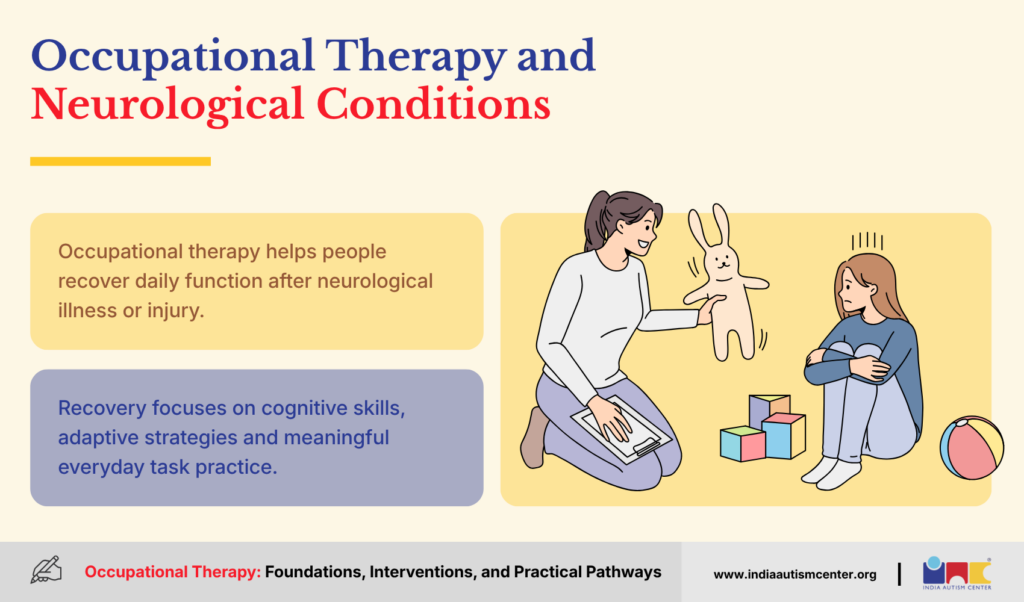
Occupational therapy plays a significant role in neurological rehabilitation. OT for neurological conditions helps people recover function after damage to the brain or nervous system. Common conditions include:
- Stroke — relearning daily tasks with one-sided weakness or coordination loss
- Traumatic brain injury — rebuilding cognitive and physical function
- Parkinson’s disease — managing tremors, rigidity, and daily task performance
- Multiple sclerosis — adapting to fluctuating physical and cognitive symptoms
Neuro-rehabilitation OT often includes cognitive retraining, adaptive equipment recommendations, and task-specific practice. If you’re looking for a structured overview of this area, we’ve put together a downloadable PDF on occupational therapy and neurological conditions — see the resources section below.
What Does Neuro-Rehabilitation OT Involve?
Recovery after a neurological event is rarely linear, and occupational therapy is typically delivered in stages:
- Acute stage — working on basic functional tasks, often bedside in a hospital setting
- Sub-acute stage — structured outpatient therapy focused on rebuilding specific skills
- Chronic/maintenance stage — ongoing support to maintain gains and adapt to permanent changes
Cognitive retraining is a significant part of this work, particularly after traumatic brain injury or stroke. Therapists may work on memory strategies, problem-solving, and attention alongside physical tasks like dressing or cooking.
ABA and Occupational Therapy: How Do They Work Together?
Families exploring autism intervention often ask about ABA (Applied Behavior Analysis) and occupational therapy together. These are two distinct disciplines with different focuses, but they frequently complement each other.
| Factor | Occupational Therapy | ABA Therapy |
| Primary focus | Functional skills for daily life | Behavior change through reinforcement |
| Common goals | Motor skills, sensory regulation, self-care | Communication, social skills, behavior reduction |
| Methods | Sensory integration, task-based activities | Structured teaching, reinforcement schedules |
| Typical setting | Sensory gym, clinic, home | Clinic, home, school |
Common misconception: ABA and OT are not competing approaches. Many autistic children benefit from both, delivered by a coordinated team. An OT might address the sensory reasons a child avoids a task, while an ABA program addresses the specific behavioral steps to build a new skill. Coordination between the two teams produces better outcomes than either discipline working in isolation.
A Worked Example: ABA and OT Together
Consider a child who refuses to wear socks every morning. An occupational therapist might identify a sensory sensitivity to the seam or fabric texture as the root cause, and introduce seamless socks or a desensitization activity. An ABA therapist might separately build a structured routine with reinforcement to support the child through the dressing process each morning. Used together, the sensory barrier is reduced and the behavioral routine is reinforced — addressing the issue from both angles at once.
What Tools and Equipment Does an Occupational Therapist Use?
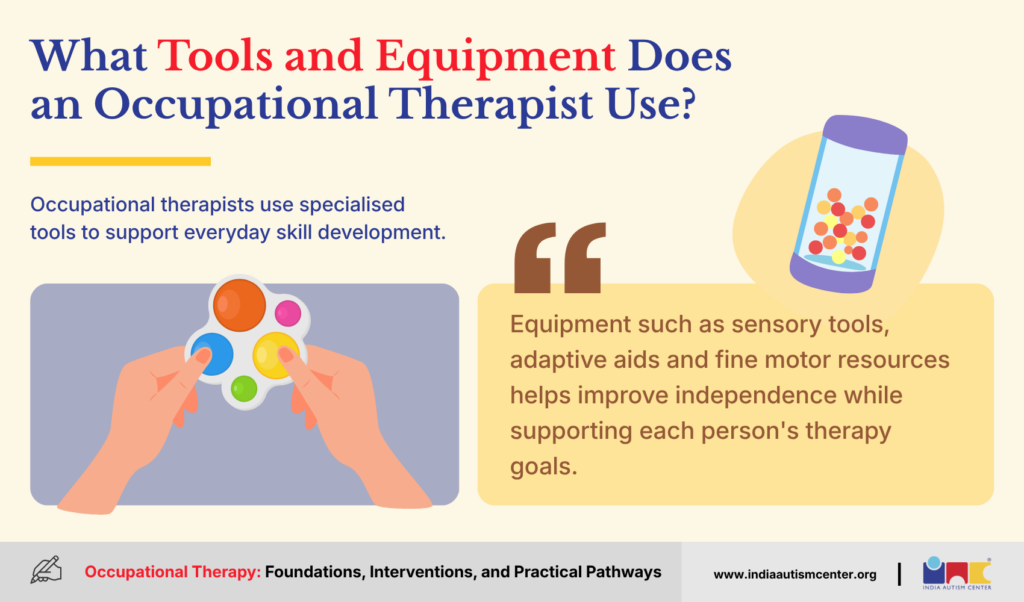
Occupational therapists use a range of tools, from simple household objects to specialized sensory and adaptive equipment, chosen specifically to target each person’s goals. The exact tools depend on the person’s age, condition, and therapy setting.
Common Sensory Integration Equipment
Sensory gyms, often found in pediatric OT clinics, typically include:
- Suspended swings — for vestibular (movement and balance) input
- Trampolines — for gross motor and proprioceptive (body-awareness) input
- Crash pads and ball pits — for deep-pressure sensory input
- Textured mats and tunnels — for tactile exploration and motor planning
- Weighted blankets and lap pads — for calming, deep-pressure sensory input
Fine Motor and Handwriting Tools
- Pencil grips and adapted writing tools
- Therapy putty and stress balls for hand strengthening
- Scissors designed for developing grip strength
- Peg boards and lacing cards
Adaptive Daily Living Equipment
For adults and older adults, occupational therapists often recommend adaptive equipment to support independence:
| Equipment | Purpose |
| Reachers/grabbers | Retrieving objects without bending or overreaching |
| Built-up utensil handles | Easier grip for people with reduced hand strength |
| Button hooks and zipper pulls | Independent dressing with limited fine motor control |
| Shower chairs and grab bars | Safety during bathing |
| Adapted keyboards or writing aids | Supporting work or communication tasks |
Assessment Tools
Beyond physical equipment, occupational therapists use standardized assessment tools to measure a person’s current abilities against typical developmental or functional benchmarks. These structured tools ensure the evaluation is objective and allow progress to be tracked consistently over time, rather than relying only on informal observation.
Common Myths About Occupational Therapy
Several misconceptions persist about what occupational therapy actually does, who it’s for, and how it works. Clearing these up helps families make more informed decisions about seeking care.
Myth: Occupational Therapy Is Only About Finding a Job
This is one of the most common misunderstandings, largely due to the word “occupational.” In reality, OT addresses any meaningful daily activity, including self-care, play, and school participation — not just employment. Vocational OT is only one small branch of the field.
Myth: Occupational Therapy Is the Same as Physiotherapy
As covered earlier in this guide, OT and physiotherapy have distinct goals. Physiotherapy rebuilds physical function; occupational therapy applies that function to real daily tasks. They frequently work together but are not interchangeable.
Myth: Occupational Therapy Can “Cure” Autism
Occupational therapy does not treat or cure autism, because autism is not a disease to be cured. OT addresses specific, practical challenges — sensory regulation, motor skills, self-care — that can make daily life easier for an autistic child or adult.
Myth: Only Children Need Occupational Therapy
While pediatric OT is highly visible, adults and older adults make up a significant share of occupational therapy clients, particularly for stroke recovery, mental health support, and age-related conditions.
Myth: Occupational Therapy Results Are Immediate
Meaningful progress in occupational therapy usually takes consistent effort over weeks or months, not a single session. Families who understand this from the outset tend to have more realistic expectations and better long-term outcomes.
Myth: Home Practice Isn’t Necessary If a Child Attends Clinic Sessions
As covered in the home activities section of this guide, consistent home practice significantly speeds progress. Clinic sessions alone, without reinforcement at home, generally produce slower results.
Why Multidisciplinary Centers Often Work Better
Many families searching for “speech and occupational therapy near me” are really looking for coordinated, multidisciplinary care. A child with autism, for example, may need occupational therapy, speech therapy, and special education support at the same time. When these disciplines work under one roof, therapists can coordinate goals, share observations, and avoid conflicting strategies.
This is also true for the ABA-and-OT combination discussed above. A multidisciplinary team — OT, speech therapy, special education, and behavioral support — tends to produce more consistent, faster progress than fragmented care across multiple unconnected providers.
How a Multidisciplinary Team Coordinates Care
In a well-run multidisciplinary center, therapists don’t just work in the same building — they actively coordinate. This typically includes:
- Shared assessment data, so every therapist understands the full picture of a child’s needs, rather than each discipline working from a partial, siloed view.
- Joint goal-setting, aligning OT, speech, and behavioral goals so they reinforce each other instead of pulling in different directions.
- Regular case discussions among the therapy team, where specific challenges and strategies are reviewed together.
- Consistent strategies across disciplines, so a child isn’t taught conflicting approaches to the same challenge — for example, one team using a calm-down strategy that another team unintentionally undermines.
Families benefit from this coordination directly: fewer repeated intake processes, more consistent messaging, and a single point of contact for progress updates.
Questions to Ask Before Choosing a Provider
Before committing to a provider, it’s worth asking a few direct questions:
- What is your therapist’s specific experience with my child’s condition? A general pediatric OT background is useful, but hands-on experience with autism, ADHD, or your specific concern makes a meaningful difference in how quickly a therapist identifies the right approach.
- How do you measure and report progress? Ask whether progress is tracked against specific, written goals, and how often you’ll receive updates.
- Is a full evaluation included before therapy begins? Be cautious of any provider that starts a “standard program” without first assessing the individual.
- Do your therapists coordinate with other disciplines, such as speech therapy or special education? This matters most if your child receives more than one type of therapy.
- What does a typical session look like, and how long is the recommended program? A clear, honest answer here — rather than a vague estimate — is a good sign of a provider that plans treatment carefully rather than extending sessions indefinitely.
- What happens if progress stalls? A strong provider should be able to describe how they adjust a plan when a goal isn’t being met, rather than repeating the same approach indefinitely.
Occupational Therapy in Kolkata
India Autism Center provides occupational therapy services in Kolkata, West Bengal, as part of a coordinated, multidisciplinary autism care model. Our OT services are delivered alongside speech therapy, special education, and behavioral support, so families do not need to manage separate, disconnected providers.
If you’re searching for occupational therapy in Kolkata specifically for a child with autism, developmental delay, or sensory processing needs, our team conducts a full evaluation before recommending a therapy plan — following the same evaluation process outlined earlier in this guide.
Cost of Occupational Therapy in India
The cost of occupational therapy in India varies based on several factors:
- Session length and frequency — longer or more frequent sessions cost more overall
- Setting — hospital-based OT, private clinics, and home-based OT are priced differently
- Therapist specialization — specialized sensory integration or neuro-rehabilitation sessions may cost more than general OT
- Location — metro cities generally have higher session rates than smaller towns
- Package vs. per-session pricing — many centers offer discounted rates for multi-session packages
Families should ask providers for a clear breakdown of costs during the initial consultation, including whether assessment fees are separate from ongoing therapy fees. It’s also worth asking whether any government schemes or insurance provisions apply to your situation, since coverage for therapy services varies.
Budgeting for Long-Term Therapy
Because occupational therapy for developmental conditions is often a long-term commitment, it helps to plan financially beyond just the first few sessions. Consider asking providers about:
- Package pricing for multi-month commitments, which is often more economical than paying per session
- Sliding-scale or need-based pricing, offered by some non-profit and community-based centers
- Combined therapy packages, where OT is bundled with speech therapy or special education at a lower combined rate
- Government disability certificates or schemes, which may unlock specific benefits or subsidized services depending on your state and the specific diagnosis involved
Planning for the full duration of a therapy program, not just the initial sessions, helps families avoid interrupting care due to unexpected cost pressure later on.
Want to know more? Get in touch with us.
Occupational Therapy Activities You Can Do at Home
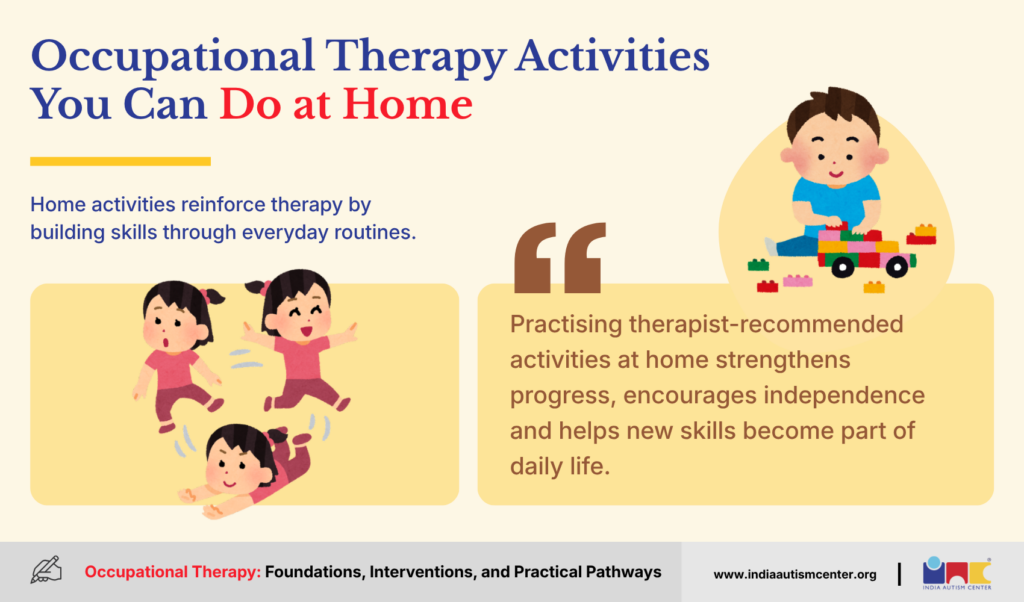
Home-based occupational therapy activities reinforce the skills a child or adult practices in clinical sessions, helping progress carry over into daily life. Consistent home practice, guided by a therapist’s recommendations, tends to produce faster and more lasting results than clinic sessions alone.
Why Home Practice Matters
A child typically spends far more hours at home than in a therapy clinic. Skills practiced only during a weekly session are unlikely to generalize to daily life without reinforcement. Occupational therapists usually send home a specific set of activities tailored to the child’s current goals — the general categories below reflect common recommendations, but always follow your own therapist’s individualized plan.
General Home OT Activities by Skill Area
| Skill Area | Sample Home Activities |
| Fine motor | Playdough manipulation, threading beads, using tongs to pick up small objects, coloring within lines |
| Gross motor | Animal walks (bear crawl, crab walk), obstacle courses, jumping on a trampoline, balance beam walking |
| Sensory regulation | Weighted blanket time, sensory bins (rice, sand, water beads), swinging, deep-pressure hugs |
| Self-care / ADL practice | Practicing buttons on a spare shirt, brushing teeth with a visual schedule, pouring water between cups |
| Handwriting readiness | Tracing shapes, pre-writing patterns, using thick grip crayons, chalk drawing on vertical surfaces |
Autism-Specific Home OT Activities
For autistic children specifically, occupational therapists often recommend activities that combine sensory regulation with motor and social goals:
- Sensory play — sand, water, or textured sensory bins to build tolerance to different textures
- Motor planning games — obstacle courses that require sequencing multiple movements
- Deep-pressure activities — weighted lap pads, tight hugs, or rolling in a blanket (“burrito roll”)
- Joint-attention games — simple turn-taking games like rolling a ball back and forth
- Visual schedules — using pictures to guide a child through self-care routines step by step
Occupational Therapy Fine Motor Activities List
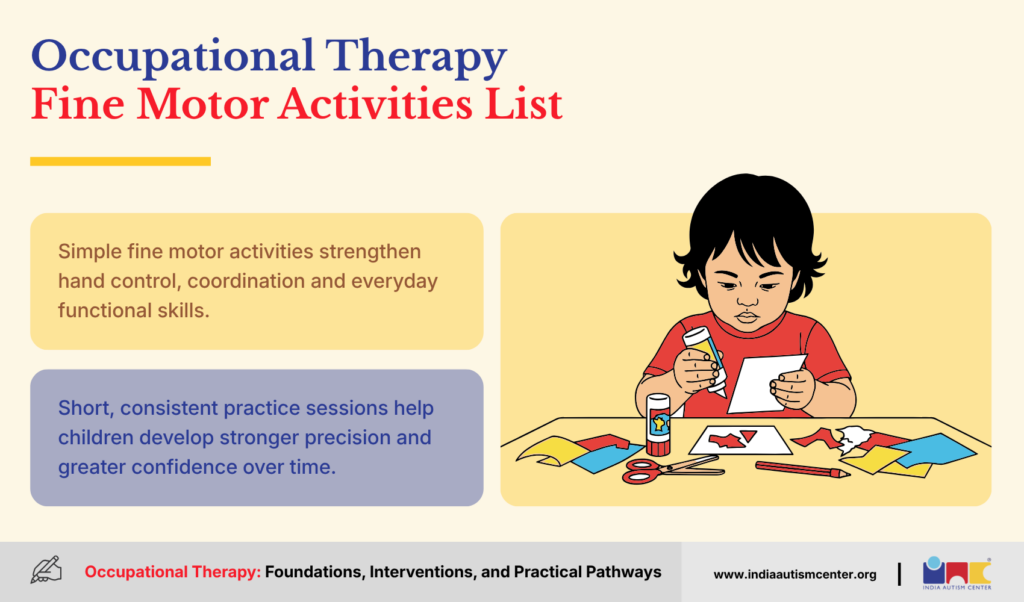
Since fine motor skills come up frequently as a specific concern, here is a focused list:
1. Clothespin pinching games — clip clothespins onto a cardboard edge to build pincer grip strength
2. Tearing paper for collage activities — builds bilateral hand coordination
3. Stringing large beads onto a shoelace — supports hand-eye coordination and grip control
4. Squeezing a spray bottle to water plants — strengthens the small muscles used for pencil grip
5. Using tweezers to sort small objects — refines precision grip
6. Rolling, pinching, and flattening playdough — builds general hand strength
7. Stacking small blocks or coins — supports precision and hand stability
8. Practicing scissor cuts on thick paper strips — builds foundational scissor skills before more complex cutting tasks
These activities work best in short, frequent sessions — five to ten minutes at a time — rather than one long weekly practice block.
Downloadable Resource
We’ve compiled a printable list of occupational therapy activities for autism, organized by skill area, as a free downloadable PDF. It includes step-by-step instructions for each activity and is designed for caregivers to use between therapy sessions
Home Activities by Age Group
Activities should match a child’s developmental stage. Here’s a general guide, though your therapist’s individual recommendations should always take priority.
| Age Group | Focus | Sample Activities |
| Toddlers (1–3 years) | Sensory exploration, basic motor skills | Water play, stacking cups, crawling tunnels |
| Preschoolers (3–5 years) | Fine motor readiness, self-care basics | Playdough, dressing practice, simple puzzles |
| School-age (6–10 years) | Handwriting, coordination, independence | Cutting shapes, obstacle courses, chore participation |
| Teenagers | Executive function, independence, vocational skills | Meal prep tasks, time-management tools, organizational systems |
Building a Simple Home Sensory Routine
Many families find it useful to build a consistent sensory routine into the day, rather than relying on activities only when a child is already distressed. A simple structure might include a calming activity in the morning, an alerting/movement activity mid-day, and a calming wind-down activity before bed. Your occupational therapist can help tailor this routine to your child’s specific sensory profile.
A Safety Note
Home activities should support, not replace, professional therapy. If a child shows signs of significant delay, sensory distress, or regression, consult a qualified occupational therapist before relying on home-based activities alone. A therapist can also confirm which activities are appropriate for your child’s specific needs, since the wrong activity at the wrong developmental stage can be ineffective or even frustrating for the child.
How Long Does Occupational Therapy Take?
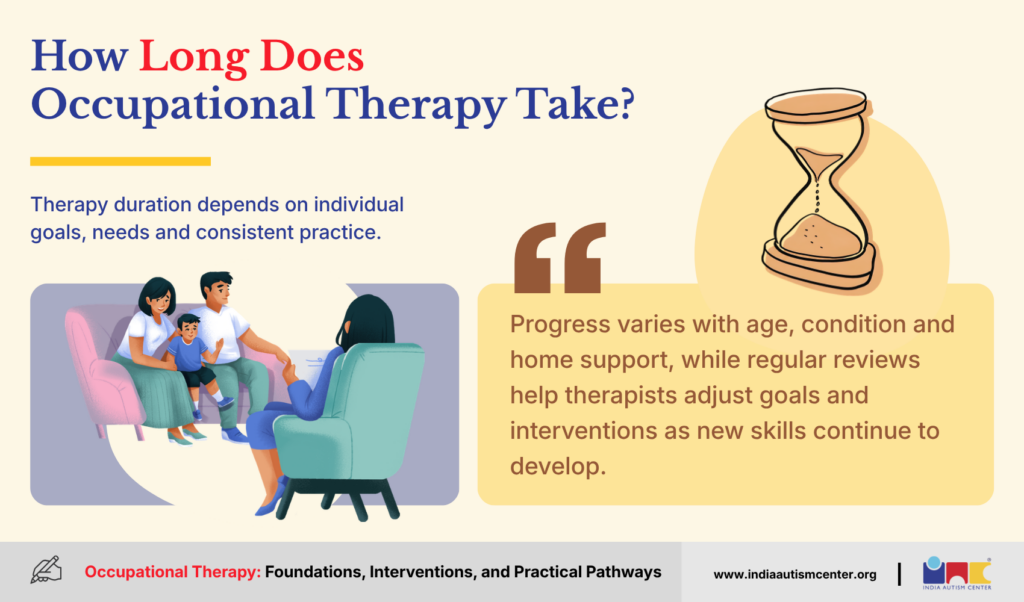
The length of an occupational therapy program depends on the condition being treated, the person’s age, and how consistently home strategies are followed. Some people need a few months of therapy; others, particularly children with complex developmental needs, benefit from ongoing support over several years.
Factors That Influence Therapy Duration
- Severity and complexity of the condition — a mild motor delay resolves faster than a complex, multi-domain developmental profile
- Age at which therapy starts — earlier intervention generally shortens the overall timeline
- Consistency of home practice — regular reinforcement between sessions speeds progress
- Frequency of sessions — weekly therapy typically shows faster gains than monthly sessions
- Presence of co-occurring conditions — a child with autism and ADHD may need a longer, more layered program than a child with a single, isolated concern
Typical Program Lengths by Condition
| Condition | Typical Program Length |
| Mild fine motor delay | A few months of weekly sessions |
| Sensory processing differences | Six months to over a year, often ongoing |
| Autism spectrum disorder | Long-term, often years, with evolving goals |
| Post-stroke recovery | Weeks to months, intensive in early stages |
| Hand injury rehabilitation | Several weeks to a few months |
How Progress Is Measured
Occupational therapists track progress against the specific goals set during evaluation, not against a generic autism or ADHD checklist. Progress reviews typically happen every 8 to 12 weeks, and goals are updated as the person’s needs change. Families should expect regular, honest updates — including when a goal has been met or when a different approach is needed.
How Do I Prepare a Child for Their First Occupational Therapy Session?
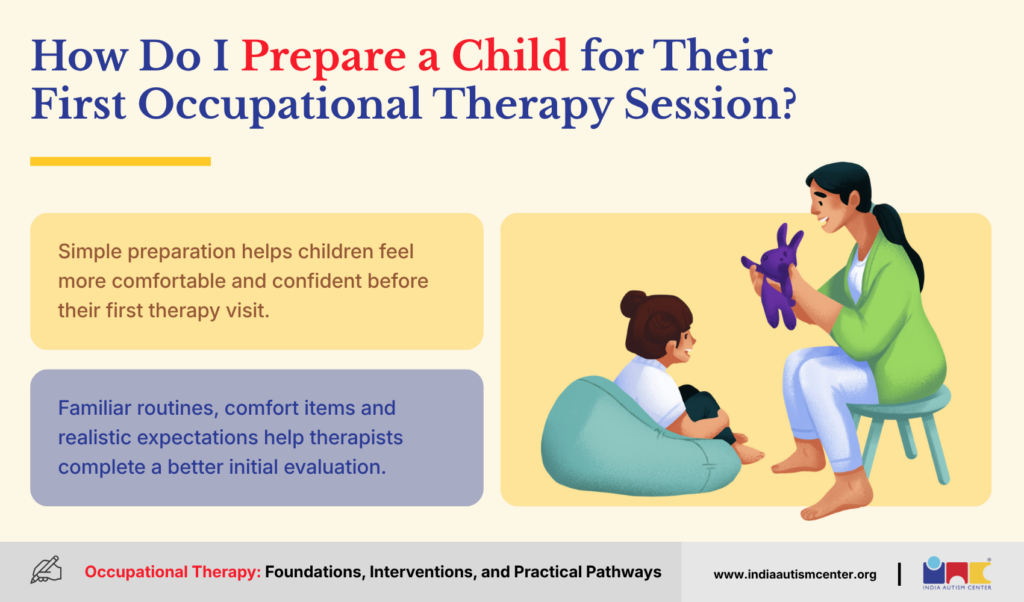
Preparing a child for their first occupational therapy session involves explaining the visit in simple terms, bringing comfort items, and setting realistic expectations for both the child and yourself. A little preparation reduces anxiety and helps the therapist get a more accurate first impression of the child’s needs.
Before the Appointment
- Explain the visit simply. Use short, concrete language: “We’re going to a room with fun toys and games.”
- Avoid over-promising. Don’t describe it only as “playing,” since the child may feel confused when structured tasks begin.
- Bring comfort items. A favorite toy, blanket, or snack can ease first-visit anxiety.
- Share your child’s routine. Write down typical daily habits, triggers, and preferences to share with the therapist.
- Expect some resistance. First sessions can involve tears or reluctance, especially for sensory-sensitive children. This is normal and does not predict how future sessions will go.
During the Appointment
Parents are often invited to stay in the room, particularly for younger children. The therapist will likely spend part of the session simply observing the child at play, alongside more structured assessment tasks. It’s normal for a first session to feel less “productive” than later sessions — a large part of the first visit is building rapport and gathering baseline information.
After the Appointment
Ask the therapist for a plain-language summary of what they observed and what the next steps look like. If home activities are recommended, request clear, written instructions rather than relying on memory alone.
Want to know more? Get in touch with us.
How Does Occupational Therapy Support Mental Health?
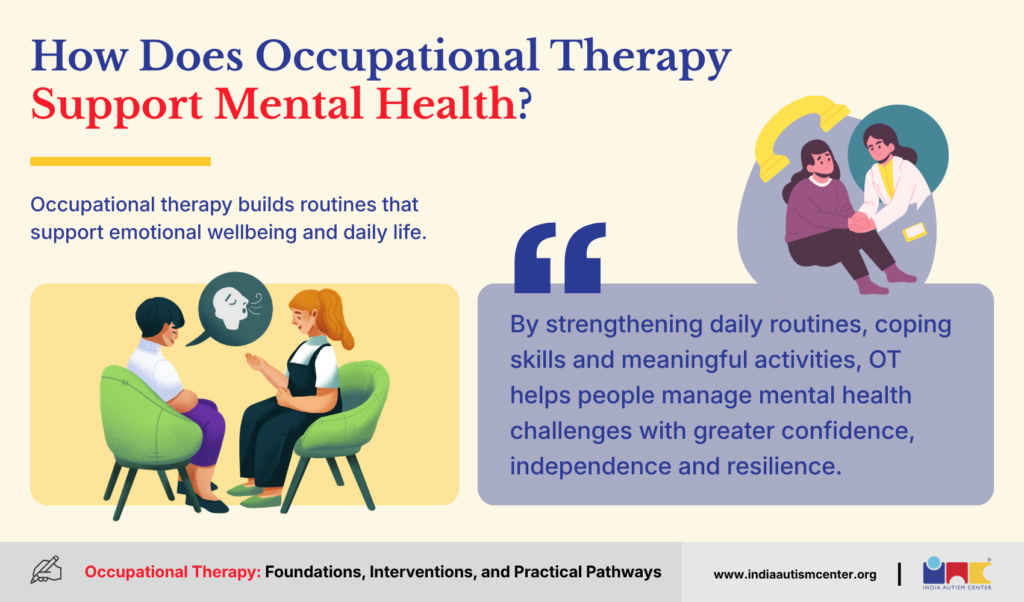
Occupational therapy supports mental health by helping people build routines, coping strategies, and meaningful daily activity, which are all closely linked to emotional wellbeing. This branch of OT is less widely known in India but plays a growing role in conditions like anxiety, depression, and trauma recovery.
Why Daily Routine Matters for Mental Health
People experiencing depression or anxiety often lose their daily structure — sleep patterns shift, self-care tasks are neglected, and meaningful activity drops away. Occupational therapists help rebuild this structure step by step, starting with small, achievable routines rather than large lifestyle changes all at once.
Common Mental Health OT Interventions
- Routine-building — establishing consistent sleep, meal, and activity patterns
- Graded activity plans — slowly reintroducing meaningful tasks and social engagement
- Coping strategy development — practical tools for managing anxiety or emotional overwhelm in daily situations
- Work or school re-entry support — structured plans for returning to responsibilities after a mental health crisis
- Sensory-based regulation techniques — similar to pediatric sensory strategies, adapted for adult self-regulation
Who Benefits From Mental Health OT
Mental health occupational therapy is often used alongside psychiatric or psychological treatment, not as a replacement for it. It’s particularly useful for people who understand the coping strategies discussed in therapy but struggle to apply them consistently in daily life — which is exactly the practical, activity-based gap OT is designed to fill.
Occupational Therapy for Older Adults
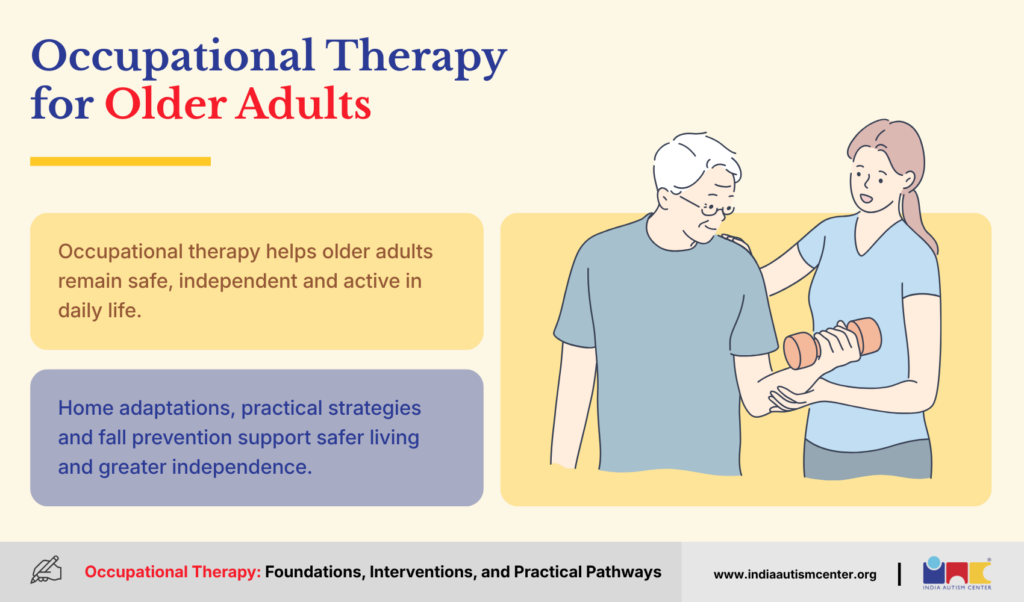
Occupational therapy helps older adults stay safe and independent at home by addressing fall risk, physical limitations, and daily task difficulty. As covered earlier under geriatric OT, this branch focuses heavily on practical, environment-based solutions rather than purely clinical exercises.
Fall Prevention Strategies
Falls are a leading cause of injury among older adults, and occupational therapists play a direct role in prevention. Common strategies include:
- Home safety assessments — identifying trip hazards, poor lighting, and unsafe furniture layouts
- Bathroom modifications — grab bars, non-slip mats, and raised toilet seats
- Mobility aid training — proper use of canes, walkers, or wheelchairs
- Balance and strength activities — targeted exercises to reduce fall risk over time
Supporting Independence in Daily Living
For older adults managing arthritis, early-stage dementia, or post-surgical recovery, occupational therapists focus on adapting daily tasks rather than forcing a return to previous methods. This might include:
- Recommending adaptive utensils for arthritis-related grip difficulty
- Creating simplified daily routines and visual reminders for early-stage dementia
- Teaching energy conservation techniques for people managing chronic fatigue or cardiac conditions
- Advising on home layout changes that reduce unnecessary physical strain
Why Early OT Involvement Matters for Seniors
Families often wait until after a fall or hospitalization to involve an occupational therapist. Earlier involvement — as soon as mobility concerns or minor daily task difficulties appear — tends to prevent more serious injuries and delays the need for more intensive, round-the-clock care.
Can Occupational Therapy Be Delivered Online?
Occupational therapy can be delivered online through telehealth, especially for consultations, caregiver coaching, and follow-up sessions, though hands-on assessment often still requires an in-person visit. Telehealth OT expanded significantly over the past few years and remains a useful option for families with limited access to local providers.
When Telehealth OT Works Well
- Caregiver coaching — guiding parents through home activities in real time
- Follow-up sessions — reviewing progress and adjusting a therapy plan
- Consultation and triage — helping a family decide whether an in-person evaluation is needed
- Rural or remote access — reaching families without a nearby specialized center
When In-Person OT Is Necessary
Hands-on assessment, sensory integration equipment, and certain physical techniques generally require an in-person setting. Most providers use a hybrid model — in-person evaluation and core sessions, supplemented by telehealth check-ins and caregiver coaching between visits.
Group vs Individual Occupational Therapy: Which Is Better?
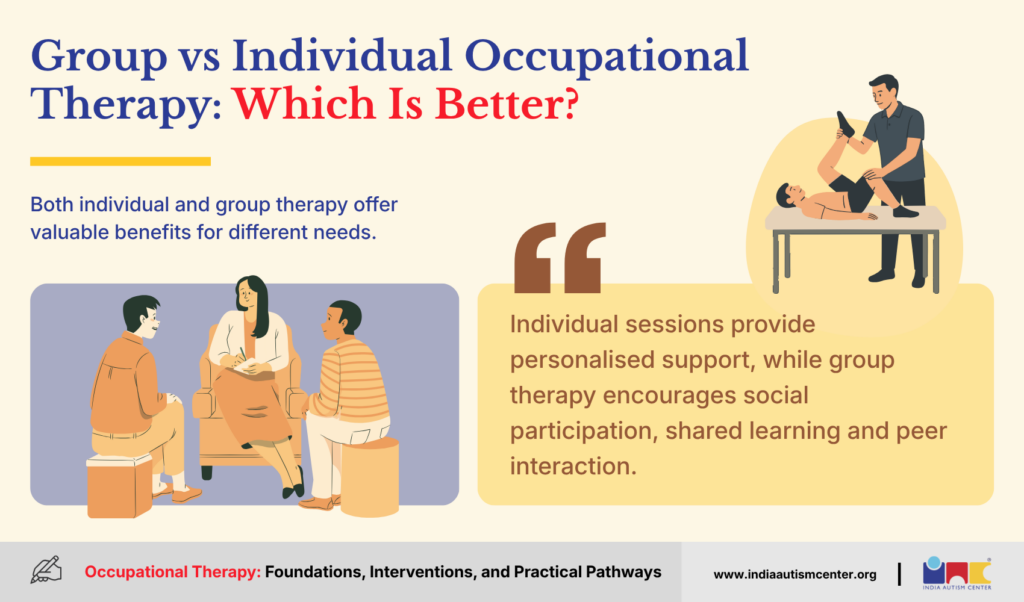
Individual occupational therapy allows for a fully personalized treatment plan, while group therapy adds social and peer-interaction benefits that individual sessions cannot replicate. Many therapy programs use a combination of both.
Advantages of Individual OT
- Fully tailored to one person’s specific goals
- Faster pace of skill-building, without waiting for group turns
- More direct therapist attention and real-time adjustment
Advantages of Group OT
- Builds social skills like turn-taking, sharing, and cooperative play alongside motor and sensory goals
- Offers peer modeling — children often learn by watching others
- Can reduce cost per session compared to one-on-one therapy
How to Decide
A therapist typically recommends a starting format based on the evaluation. Children who need intensive, individualized skill-building often start with one-on-one sessions before transitioning into group settings once foundational skills are in place. Adults recovering from injury may also benefit from group sessions focused on shared goals like community reintegration.
How Can Parents Track Occupational Therapy Progress at Home?
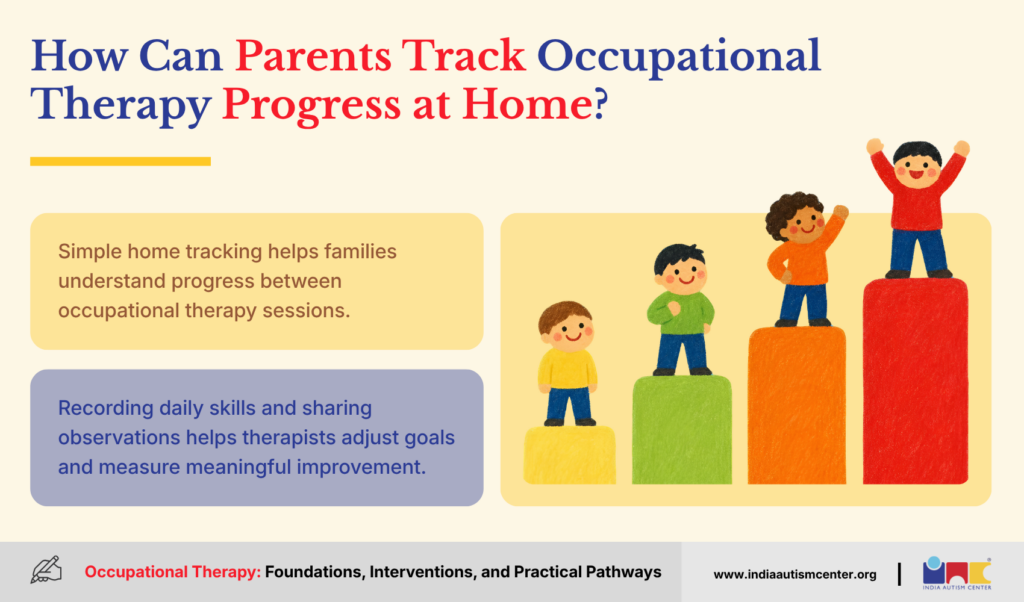
Parents can track occupational therapy progress at home by keeping a simple log of specific skills, noting frequency and independence level, and sharing observations with the therapist regularly. Consistent tracking helps therapists adjust goals accurately and gives families a clear sense of progress over time.
A Simple Home Tracking Method
- Pick 2–3 specific skills to track at a time, rather than trying to monitor everything at once
- Note independence level — did the child need full help, partial help, or no help at all?
- Record frequency, not just success — a skill practiced daily shows different progress than one attempted weekly
- Share notes before each therapy session, so the therapist can adjust the plan based on real-world data, not just clinic observations
Signs of Meaningful Progress
- The child attempts a task without being prompted — a strong sign that a skill is becoming internalized rather than performed only on request.
- A previously distressing activity becomes tolerable or neutral — this often shows up gradually, as shorter meltdowns or quicker recovery rather than a sudden absence of distress.
- A skill demonstrated in the clinic now appears at home or school — this generalization across settings is one of the clearest indicators that therapy is translating into real-world function.
- The child recovers from a sensory upset more quickly than before — even if the trigger still causes some distress, a faster return to calm reflects genuine regulation progress.
Progress in occupational therapy is not always linear, and plateaus are normal. Regular, honest communication with the therapist helps families understand whether a plateau is temporary or signals a need to adjust the approach.
Want to know more? Get in touch with us.
Occupational Therapy Glossary: Key Terms Explained
Occupational therapy uses specific terminology that can be confusing for families new to the field. Here is a quick-reference glossary of terms used throughout this guide.
| Term | Definition |
| Activities of daily living (ADLs) | Basic self-care tasks like eating, dressing, bathing, and toileting |
| Sensory integration | The brain’s process of organizing and responding to sensory information from the environment |
| Sensory diet | A personalized schedule of sensory activities designed to help regulate a person’s nervous system |
| Fine motor skills | Coordination of small muscles, typically in the hands and fingers |
| Gross motor skills | Coordination of large muscle groups, used for movements like walking, jumping, and balance |
| Motor planning (praxis) | The ability to plan, sequence, and carry out unfamiliar physical movements |
| Proprioception | The body’s sense of its own position and movement in space |
| Vestibular system | The sensory system responsible for balance and spatial orientation, located in the inner ear |
| Joint attention | Sharing focus on an object or activity with another person |
| Adaptive equipment | Tools or devices modified to help a person complete daily tasks more independently |
| Graded activity | A task adjusted in difficulty to match a person’s current ability, increasing gradually over time |
| Occupational profile | A summary of a person’s daily roles, routines, and goals, gathered during evaluation |
Understanding these terms can help families follow therapy discussions more easily and ask more specific, informed questions during sessions.
Frequently Asked Questions About Occupational Therapy
What is occupational therapy?
Occupational therapy is a healthcare profession that helps people build the skills needed for daily activities, including self-care, school, work, and play. Therapists assess a person’s abilities and design individualized treatment plans.
What is the difference between occupational therapy and physiotherapy?
Occupational therapy focuses on independence in daily activities, while physiotherapy focuses on restoring physical movement and strength. They often work together, especially after injury or in developmental care.
How does occupational therapy help autism?
Occupational therapy helps autistic children with sensory regulation, motor planning, self-care independence, and social participation. It does not treat autism itself but addresses specific practical challenges.
What are some occupational therapy activities I can do at home?
Common home activities include playdough manipulation, sensory bins, obstacle courses, and self-care practice like buttoning or pouring. Always follow your therapist’s specific recommendations.
Is occupational therapy the same as ABA therapy?
No. Occupational therapy focuses on functional skills like motor coordination and sensory regulation, while ABA focuses on behavior change through structured reinforcement. Many children benefit from both, delivered by a coordinated team.
How do I find a good occupational therapist near me?
Look for a therapist registered with the Rehabilitation Council of India, with relevant experience in your specific condition, a proper evaluation process, and — ideally — a multidisciplinary setting if you need coordinated care.
How much does occupational therapy cost in India?
Cost varies by session length, setting (hospital, private clinic, or home-based), therapist specialization, and location. Ask providers for a clear cost breakdown, including assessment fees, during your initial consultation.
At what age should a child start occupational therapy?
Early intervention produces the strongest outcomes. If a child shows signs of developmental delay, sensory sensitivity, or motor difficulty, an evaluation is worth pursuing as soon as concerns arise, often well before school age.
Can adults benefit from occupational therapy?
Yes. Adults use occupational therapy after strokes, traumatic injuries, or for mental health support, as well as for age-related conditions like arthritis or dementia-related care.
What qualifications should an occupational therapist have?
In India, occupational therapists typically hold a Bachelor of Occupational Therapy (BOT) degree and register with the Rehabilitation Council of India (RCI). Many pursue further specialization through a Master of Occupational Therapy (MOT) or certification courses.
Does occupational therapy help with handwriting?
Yes. Occupational therapists commonly work on handwriting readiness, including pencil grip, letter formation, and hand strength, especially for children who struggle to keep up with classroom writing demands.
Can occupational therapy help with picky eating?
Yes, in many cases. Feeding difficulties, including extreme food selectivity, are often linked to sensory or oral-motor challenges that occupational therapists address through structured feeding therapy.
How is occupational therapy different from special education?
Special education focuses on academic learning and curriculum-based instruction, while occupational therapy focuses on the physical, sensory, and functional skills a child needs to access that learning. The two often work together in a school or clinical setting.
What should I bring to a first occupational therapy appointment?
Bring any prior developmental or medical records, a list of specific concerns or questions, and information about the person’s daily routine. For children, a favorite comfort item can also help during the first session.
Is occupational therapy covered by insurance in India?
Coverage varies by insurer and policy. Some health insurance plans and government schemes partially cover therapy costs for specific diagnoses, so it’s worth checking directly with your provider and insurer about what applies to your situation.
Can occupational therapy be done online?
Yes, partially. Telehealth OT works well for caregiver coaching, follow-ups, and consultations, but hands-on assessment and sensory equipment-based sessions usually require an in-person visit.
What’s the difference between individual and group occupational therapy?
Individual sessions offer a fully personalized plan and faster pace, while group sessions add peer interaction and social skill-building. Many programs combine both formats over time.
How often should occupational therapy sessions happen?
Frequency depends on the person’s needs, but weekly sessions are common for children with ongoing developmental goals. Your therapist will recommend a schedule based on your evaluation results.
Does occupational therapy help with sensory processing disorder specifically?
Yes. Sensory integration therapy, a specialized branch of OT, is specifically designed to help the nervous system process sensory input like sound, touch, and movement more comfortably.
Can occupational therapy help adults with anxiety or depression?
Yes. Mental health occupational therapy helps adults rebuild daily routines, develop coping strategies, and re-engage with meaningful activity, often alongside psychiatric or psychological treatment.
What happens if my child doesn’t cooperate during a session?
This is common, especially in early sessions. Experienced pediatric therapists adjust their approach, build rapport gradually, and use the child’s interests to encourage participation over time.
Is a doctor’s referral required for occupational therapy?
This depends on the provider and, in some cases, on insurance requirements. Many private OT clinics accept self-referrals directly from families, though a pediatrician or physician referral can help clarify specific concerns beforehand.
Final Thoughts on Choosing an Occupational Therapy Path
Occupational therapy is a broad, flexible field — which is exactly why it can feel overwhelming at first. Whether you’re a parent noticing early signs of developmental delay, an adult recovering from an injury, or a caregiver supporting an aging family member, the right starting point is almost always the same: a proper evaluation with a qualified therapist.
From there, the specific type of OT, the frequency of sessions, and the home strategies you use will all be shaped by that individual assessment, not by a generic program. I’d encourage you to use this guide as a reference as you go through that process — to understand the terminology, ask informed questions, and know what reasonable progress looks like along the way.
If you’re specifically exploring occupational therapy for autism, developmental delay, or related conditions in Kolkata, our team at India Autism Center is happy to walk you through what a coordinated, multidisciplinary evaluation and therapy plan would look like for your family.
Key Takeaways: Occupational Therapy at a Glance
- Occupational therapy builds independence in daily activities like self-care, school, work, and play.
- It differs from physiotherapy, which focuses on physical movement rather than functional daily tasks.
- OT has several types, including pediatric, sensory integration, neuro-rehabilitation, mental health, geriatric, hand therapy, and vocational OT.
- For autistic children, OT targets sensory regulation, motor planning, self-care, and social participation — not a “cure” for autism.
- OT also supports children with ADHD, cerebral palsy, Down syndrome, and developmental delay, each with tailored goals.
- ABA and occupational therapy are distinct but complementary disciplines, often used together for autism support.
- Home practice significantly speeds progress and should reinforce, not replace, professional therapy.
- Choosing a provider means checking qualifications, evaluation process, and multidisciplinary coordination, whether searching locally or in a specific city like Kolkata.
- Occupational therapy courses range from full degree programs to caregiver training workshops — the right choice depends on your goal.
- Progress varies by individual, and realistic expectations, consistent tracking, and open communication with your therapist all support better outcomes.
Disclaimer: This article is intended for general educational purposes only and does not constitute medical or therapeutic advice. Every individual’s needs are different, and any decisions about occupational therapy, diagnosis, or treatment should be made in consultation with a qualified occupational therapist or healthcare professional. If you have concerns about a child’s development or your own health, please seek a professional evaluation.