 Donate now
 Get a Call Back
 MENU
MENU 11 MIN READ
 SHARE
SHARE


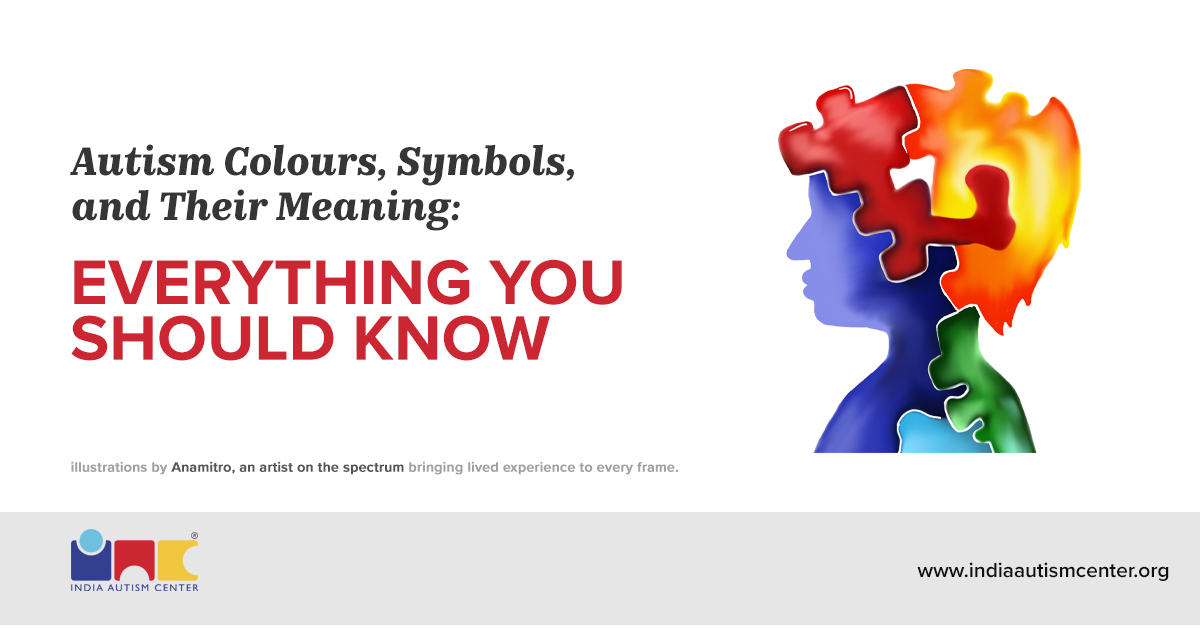
Understanding autism goes far beyond diagnoses, therapies, and support plans. Over the years, autism colours and autism symbols have emerged as powerful tools to spread awareness, express identity, and promote acceptance.
For parents, caregivers, educators, and well-wishers, knowing the autism colours, which colour represents autism awareness, and the meanings behind common autism symbols can help make conversations about autism more respectful, informed, and inclusive.
This detailed guide explains the origins, meanings, and ongoing debates around autism awareness colours, the well-known autism blue, the rising popularity of the autism rainbow, and newer representations such as the butterfly autism symbol.
The History of Autism Symbols
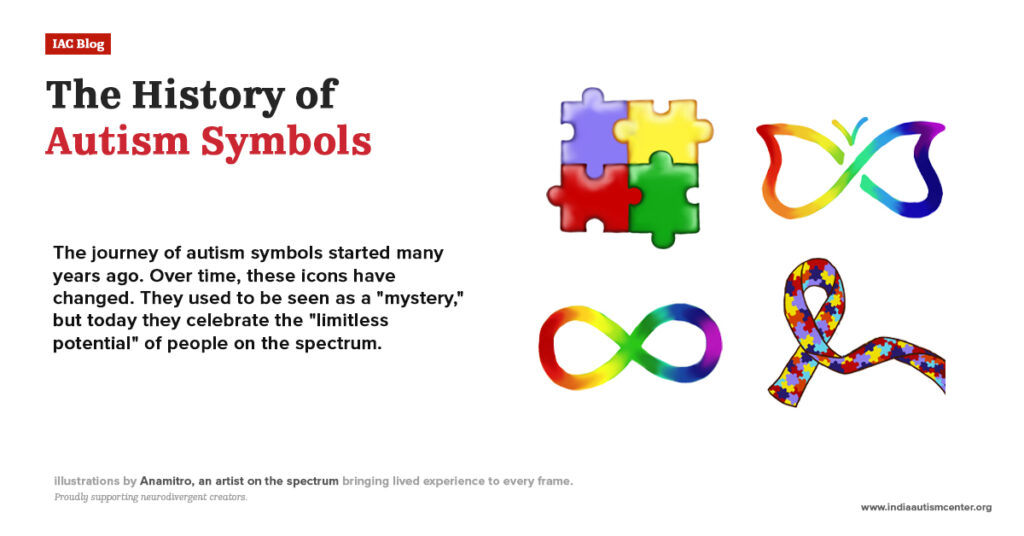
The journey of autism symbols started many years ago. Over time, these icons have changed. They used to be seen as a “mystery,” but today they celebrate the “limitless potential” of people on the spectrum.
The Original Puzzle Piece
The most well-known autism symbol is the puzzle piece. It was created in 1963. At that time, people thought autism was a “puzzling” condition.
While many older groups still use the puzzle piece, many autistic adults today do not like it. They feel it suggests that a person is “missing a piece” or needs to be fixed. However, for many families, it was the first symbol that helped them access resources.
The Move to the Infinity Symbol
In modern times, you will see a big shift toward the autism rainbow infinity loop. This symbol resembles a figure eight lying on its side. Unlike the puzzle piece, the infinity loop has no beginning and no end.
It represents the “infinite” different ways the human brain can work. It tells us that being autistic is just a different, natural way of being.
Why Autism Colours and Symbols Matter?
Autism is essentially a neurodevelopmental condition that affects communication, behaviour, sensory processing, and social interaction. As per the World Health Organisation, about 1 in 127 individuals worldwide is estimated to be on the autism spectrum. In India, awareness and diagnosis are increasing, but misconceptions remain.
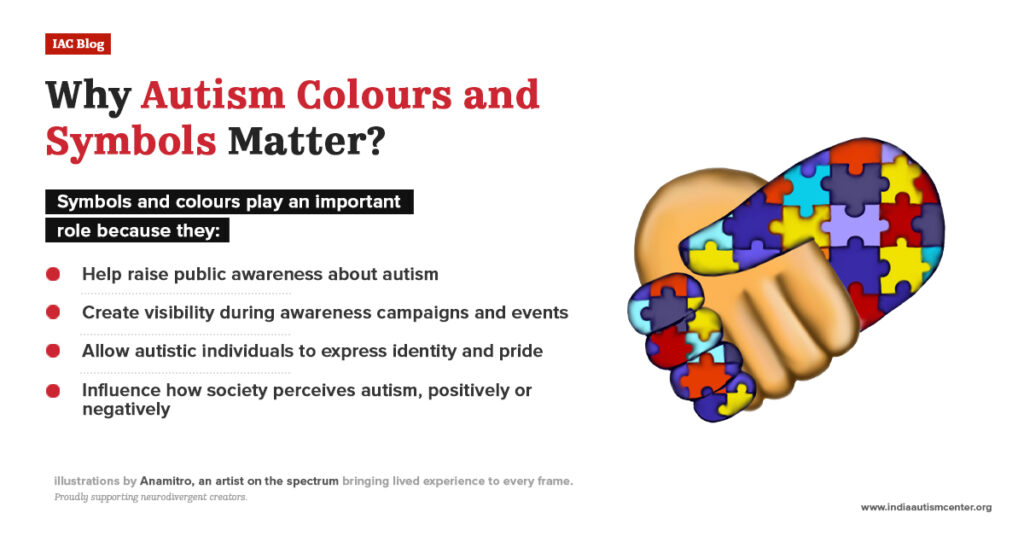
Symbols and colours play an important role because they:
- Help raise public awareness about autism
- Create visibility during awareness campaigns and events
- Allow autistic individuals to express identity and pride
- Influence how society perceives autism, positively or negatively
When used thoughtfully, autism colours and symbols can promote understanding rather than stereotypes.
Decoding Autism Colours: What Do They Represent?
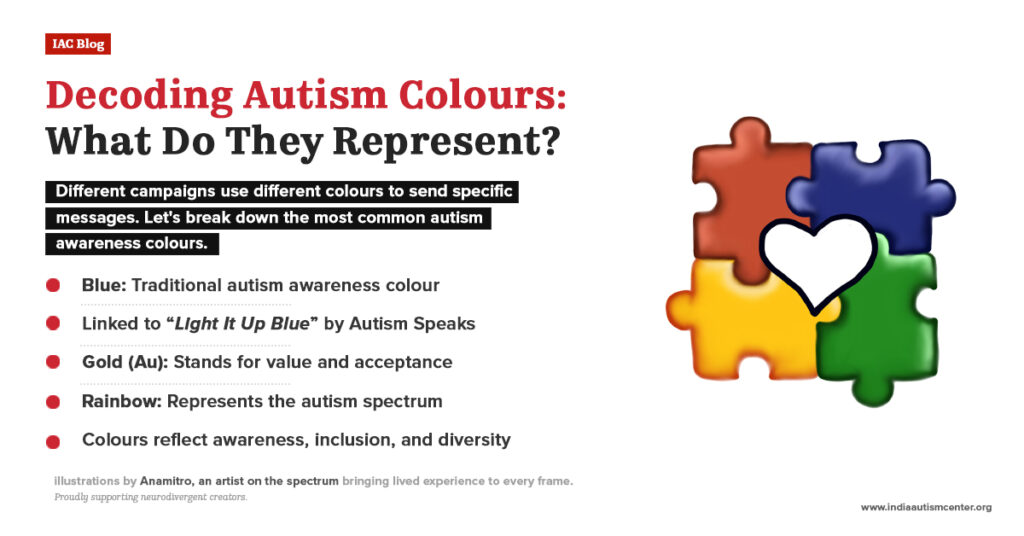
If you have ever searched online for “What colour is for autism?”, you might have found different answers. This is because different campaigns use different colours to send specific messages. Let’s break down the most common autism awareness colours.
The Autism Blue Colour
For a long time, the blue colour for autism was the predominant shade worldwide. This became popular through the “Light It Up Blue” campaign started by Autism Speaks.
- The Meaning: Blue was chosen to stand for calmness, trust, and authority. It was meant to bring a sense of peace to a condition that can sometimes feel chaotic for families.
- The Context: It is the primary colour for autism, used every year on April 2nd for World Autism Awareness Day.
The Shift: Recently, people have started moving away from using only the autism bluecolour. One reason is that blue was originally used because people wrongly thought autism only happened to boys. Today, we know that girls and non-binary individuals are also on the spectrum, leading to a demand for more inclusive autism awareness colours.
The “Go Gold” Movement
In science and chemistry, the symbol for gold is Au. Interestingly, these are the first two letters of the word “autism.” This clever connection led many advocates to adopt gold as a colour for autism.
- Value and Excellence: Using gold conveys that autistic people are precious and have great value.
- Acceptance over Awareness: While blue is often linked to “awareness” (knowing autism exists), gold is linked to “acceptance” (respecting and supporting autistic people as they are).
The Vibrant Autism Rainbow
The autism rainbow is perhaps the most accurate way to represent the community. Because autism is a “spectrum,” no two children are the same. Each person has a different mix of sensory needs, communication styles, and talents.
- The Symbolism: Just as a rainbow has many colours that blend into one another, the autism spectrum has many strengths and challenges.
Why Parents and Autistic Individuals Prefer the Autism Rainbow
There are several parents out there who feel that the autism rainbow:
- Feels more inclusive and positive
- Reflects real-life diversity
- Aligns with acceptance-focused approaches
This is why the autism rainbow is increasingly used by educational institutions, advocacy groups, and families who value neurodiversity.
The Butterfly Autism Symbol: A Sign of Growth and Hope
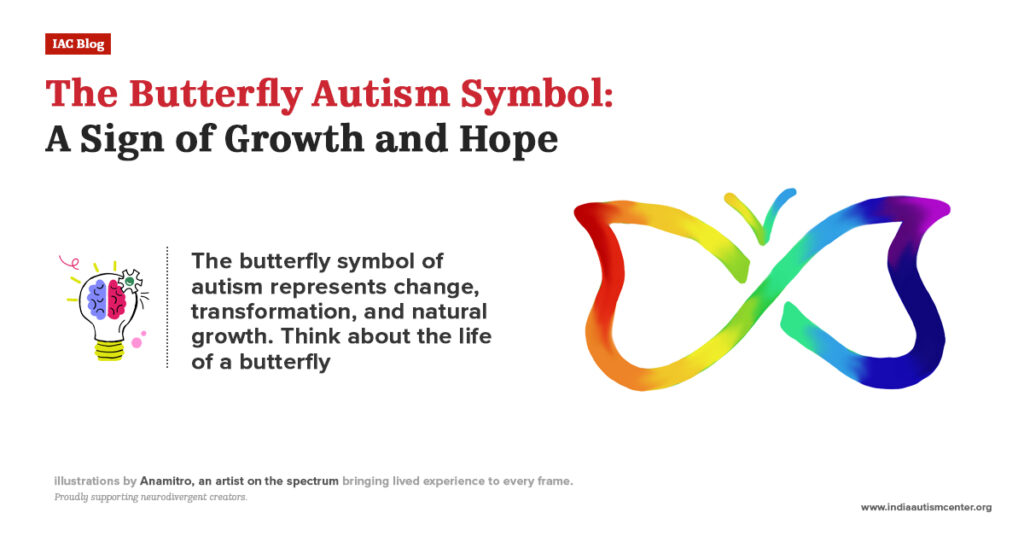
One of the most beautiful and gentle icons used today is the butterfly autism symbol. This symbol is very popular with parents of young children and early intervention centres because of its positive message.
Why the Butterfly?
The butterfly symbol of autism represents change, transformation, and natural growth. Think about the life of a butterfly: it starts as a caterpillar, enters a cocoon, and eventually emerges with beautiful wings. This journey is a perfect metaphor for an autistic child.
The butterfly autism symbol is often preferred to the puzzle piece because it feels more alive and hopeful. The butterfly symbol reminds us that every child grows and learns in their own special way and at their own pace. If a child is non-verbal at age three but begins to communicate at age six, that is their “butterfly moment.”
The butterfly autism symbol also represents the beauty of being unique. No two butterflies have the same wing pattern, just as no two children on the spectrum have the same personality. The butterfly symbol encourages parents to focus on what their child can do, rather than what they struggle with.
Many teachers use the butterfly symbol in classrooms to create an environment where every student feels special. The butterfly autism symbol helps people focus on the potential for beauty and flight in every human being.
Because it is so meaningful, the butterfly symbol of autism is frequently used in stories about success and neurodivergent pride. When you see the butterfly autism symbol, remember that with the right support and a little patience, every child can spread their wings.
Infinity Symbol and Neurodiversity: Accepting the Differences
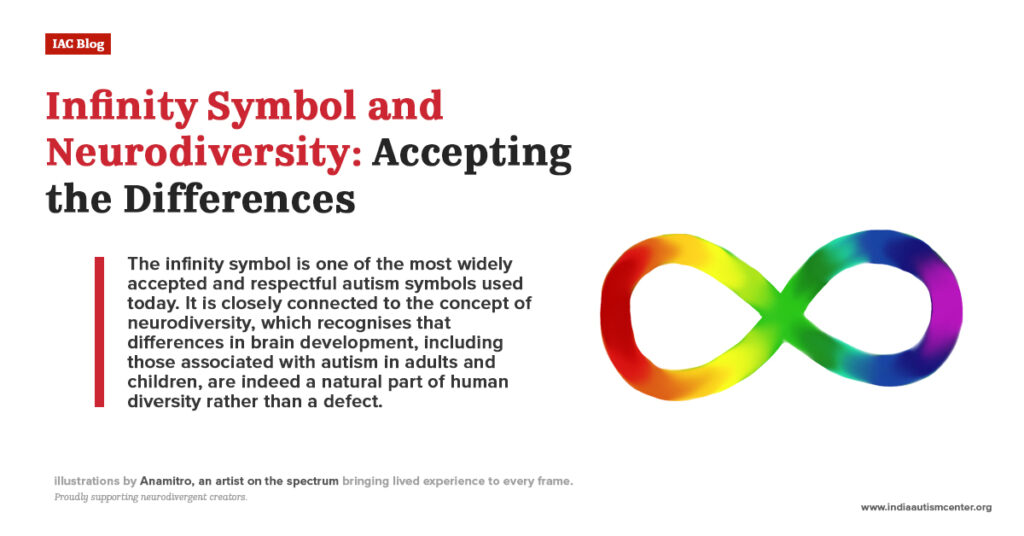
The infinity symbol is one of the most widely accepted and respectful autism symbols used today. It is closely connected to the concept of neurodiversity, which recognises that differences in brain development, including those associated with autism in adults and children, are indeed a natural part of human diversity rather than a defect.
To represent autism, the symbol of infinity signifies the limitless variety within the autism spectrum itself. It essentially reflects the idea that every autistic person is unique. There is no singular experience which can clearly define autism, and thus the loop of the infinity symbol visually represents this diversity.
The infinity symbol is often shown in rainbow colours, thereby linking it to the autism rainbow and also reinforcing messages of inclusion, acceptance, and respect. It aims to remind society that autism is lifelong, and understanding and support should extend beyond childhood.
Many families and autistic adults prefer this symbol because it promotes dignity and belonging, without suggesting that autistic individuals are incomplete or need to be fixed.
The Autism Awareness Ribbon: A Sign of Growth and Hope
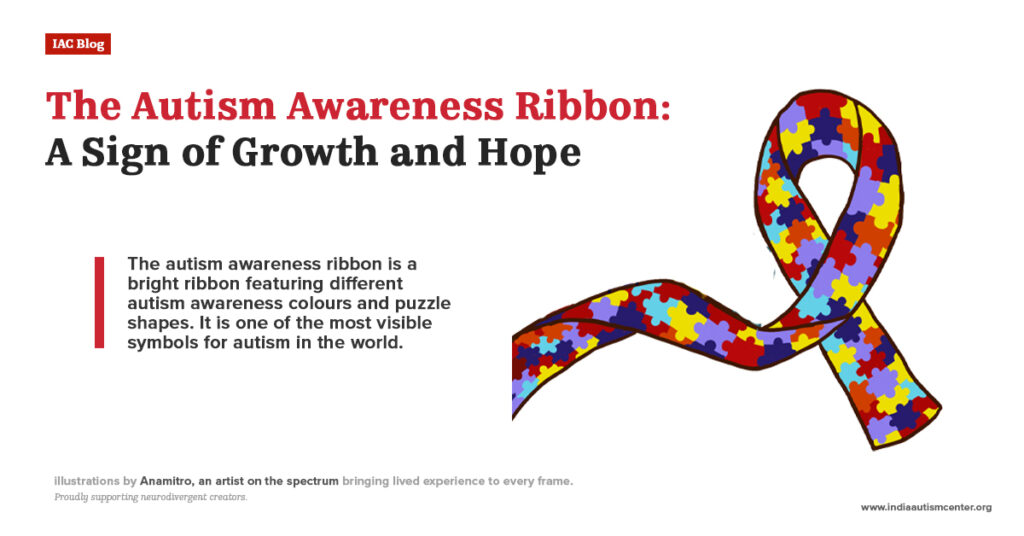
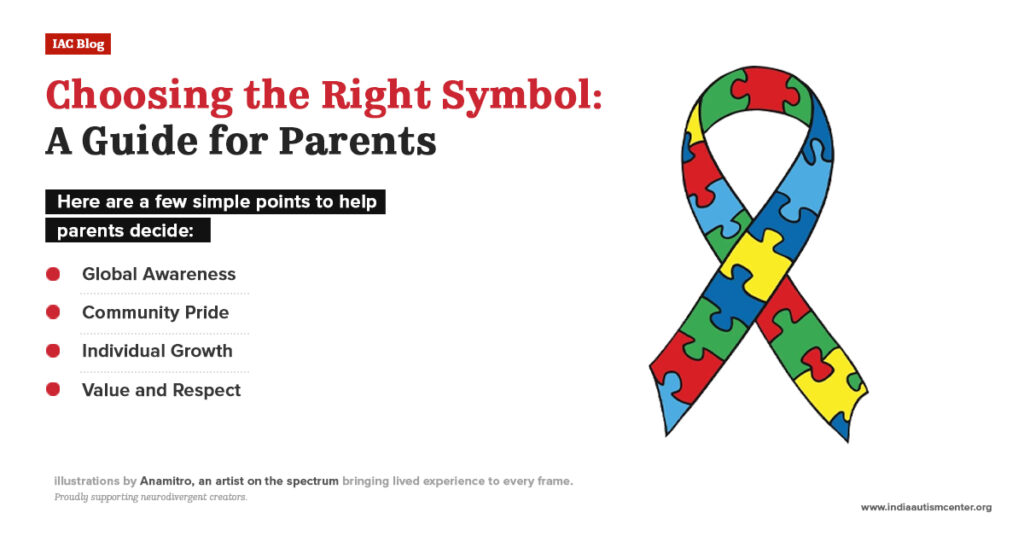
The autism awareness ribbon is a bright ribbon featuring different autism awareness colours and puzzle shapes. It is one of the most visible symbols for autism in the world.
It usually features bright primary colours like red, yellow, and blue. The bright colours are meant to show “hope.” The different shapes and colours show that families from all walks of life, regardless of race, age, or background, are part of the autism community.
What Colour Is Autism Awareness Today?
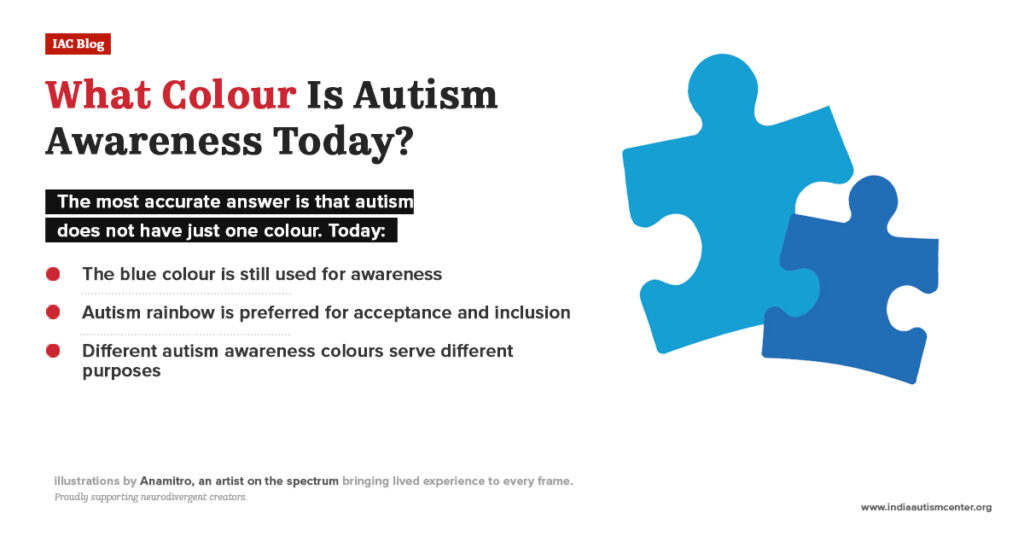
Many people still ask, What colour is autism awareness? The most accurate answer is that autism does not have just one colour.
Today:
- The blue colour is still used for awareness
- Autism rainbow is preferred for acceptance and inclusion
- Different autism awareness colours serve different purposes
Understanding what colour is for autism depends on whether the goal is awareness, acceptance, or advocacy.
Choosing the Right Symbol: A Guide for Parents
Choosing an autism symbol can feel confusing, especially with so many options. There is no “perfect” symbol. What matters most is choosing one that feels respectful and supportive of your child.
Here are a few simple points to help parents decide:
- Global Awareness: Use the autism blue colour. It is the most recognised colour for autism used by major organisations and the public.
- Community Pride: Choose the autism rainbow infinity sign. This celebrates neurodiversity and the idea that different brains are a natural part of life.
- Individual Growth: Use the butterfly autism symbol. Families love the butterfly autism symbol for milestones because it represents a child spreading their wings. The butterfly autism symbol highlights beauty and potential.
- Value and Respect: Use Gold. Based on the chemical symbol “Au,” gold represents the “gold standard” of valuing a child exactly as they are.
Common Misunderstandings About Autism, Colours, and Symbols
Autism colours and symbols are often well-intended, but they are frequently misunderstood. These misunderstandings can lead to confusion for parents and, at times, even unintentionally reinforce stereotypes. Getting clarity on these points can help families and communities use autism representation more thoughtfully.
1. There is only one colour for autism
Many people believe there is a single colour for autism, usually blue. In reality, there are multiple autism colours, each representing different ideas such as awareness, acceptance, and neurodiversity.
2. Blue represents all autistic individuals
The autism blue colour is widely used for awareness, but autism affects people of all genders and backgrounds. Blue does not reflect the full diversity of the autism spectrum.
3. All autism symbols are universally accepted
Not all autism symbols are viewed the same way. While there are parents out there who still prefer the puzzle piece, many autistic adults prefer symbols like the infinity sign or the autism rainbow that focus on acceptance rather than confusion or deficiency.
4. Using a symbol automatically shows understanding
Only wearing or sharing autism awareness colours or symbols does not always mean someone understands autism. Actual support comes essentially from respectful behaviour, inclusion, and, more importantly, listening to autistic voices.
5. Symbols are permanent and cannot change
Autism representation evolves as understanding grows. Newer symbols for autism, such as the infinity symbol or the butterfly autism symbol, reflect a shift toward dignity, growth, and acceptance.
Understanding the misconceptions above can greatly help parents and communities in choosing autism colours and symbols that genuinely support inclusion and respect.
Conclusion
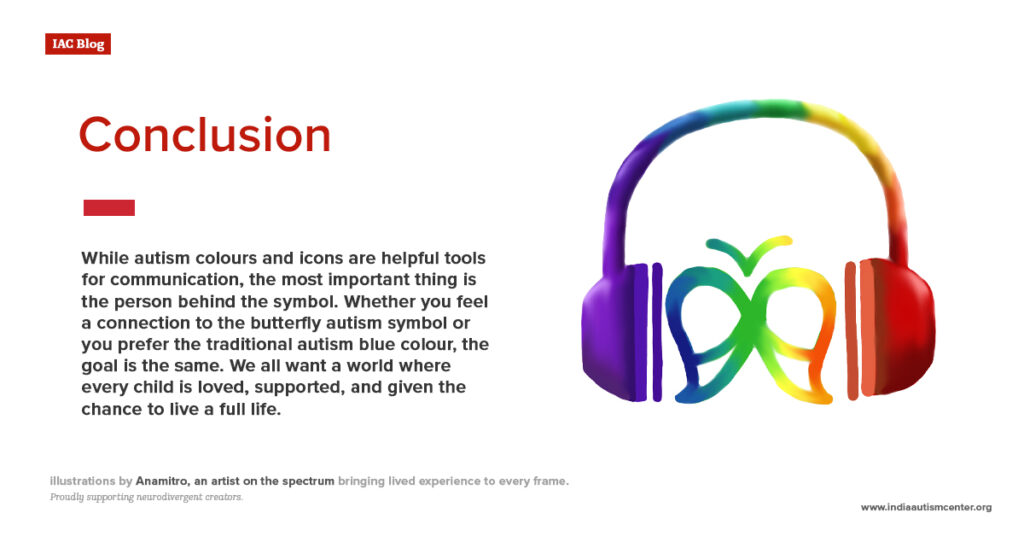
While autism colours and icons are helpful tools for communication, the most important thing is the person behind the symbol. Whether you feel a connection to the butterfly autism symbol or you prefer the traditional autism blue colour, the goal is the same. We all want a world where every child is loved, supported, and given the chance to live a full life.
Organisations like the India Autism Centre work hard to provide the resources and therapy needed to support this growth. Learning about the colour spectrum for autism is a great first step in your journey. When parents understand these autism symbols, they can help others better understand their children, too.
By using simple language and positive icons, we can replace fear with understanding and “awareness” with true belonging.
Frequently Asked Questions
What colour is autism awareness?
Traditionally, blue is considered the colour of autism awareness, especially during Autism Awareness Month in April. However, many people now prefer other colours that focus on acceptance rather than awareness alone.
Why do many families prefer the autism rainbow?
Many families prefer the autism rainbow because it feels more inclusive and positive. It reflects individuality and avoids focusing only on the challenges.
Why is the infinity symbol often shown in rainbow colours?
Rainbow colours highlight diversity and inclusion. Together, the infinity symbol and autism rainbow emphasise acceptance and respect for all autistic individuals.
Should parents follow trends when choosing autism symbols?
Parents do not need to follow trends. It is more important to choose symbols that feel respectful and align with their child’s needs and values.
Is using autism colours enough to support autistic people?
No. Using colours or symbols helps start conversations, but real support comes from acceptance, inclusion, education, and appropriate services.