 Donate now
 Get a Call Back
 MENU
MENU 10 MIN READ
 SHARE
SHARE


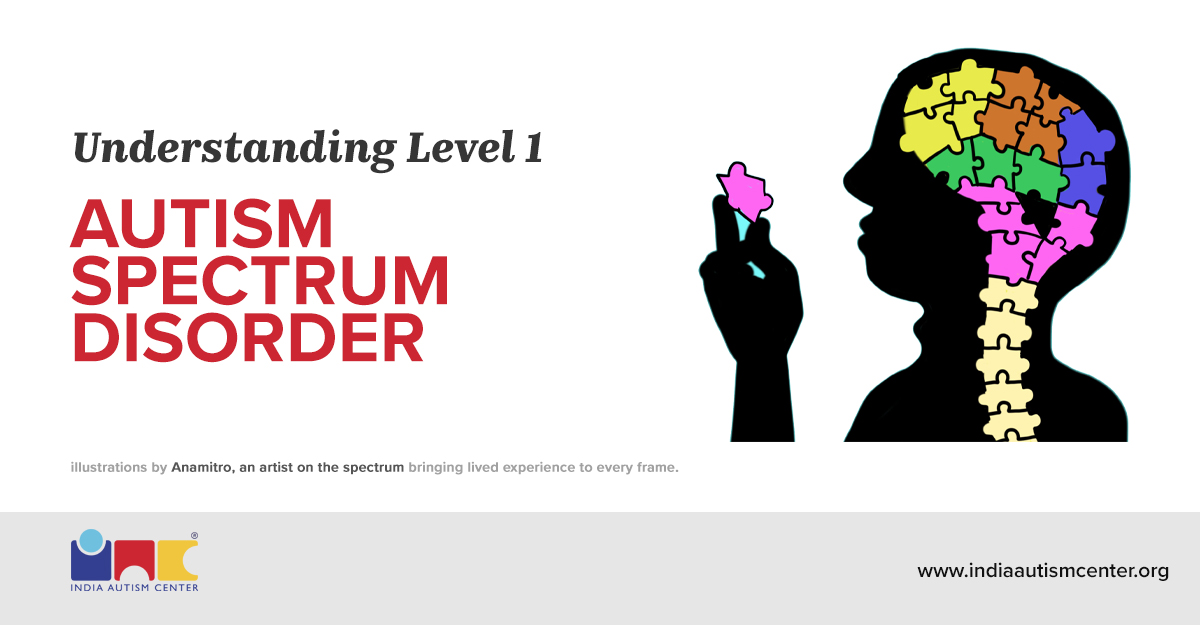
Wondering if your child has autism, as a few symptoms are visible? Is it a phase or mild autism? Well, it is not as simple to understand if your child has level 1 autism spectrum disorder, since 1 in 31 children are diagnosed with autism, as per the Centres for Disease Control and Prevention data.
Many children and adults speak well, learn quickly, and appear capable, and yet they struggle quietly with social interaction, sensory overload, and emotional regulation. Since the signs are subtle, it is easy to misunderstand autism level 1. At times, this leads to autism not being identified at all.
Formally classified as autism spectrum disorder level 1, this diagnosis means a person needs support, even if their difficulties are not immediately visible. Hence, parents have many questions, such as what level 1 autism is, what level 1 autism looks like, and whether level 1 autism is high-functioning.
Today, we will answer these queries so that you can find the right support your child needs.
What Exactly Is Level 1 Autism?
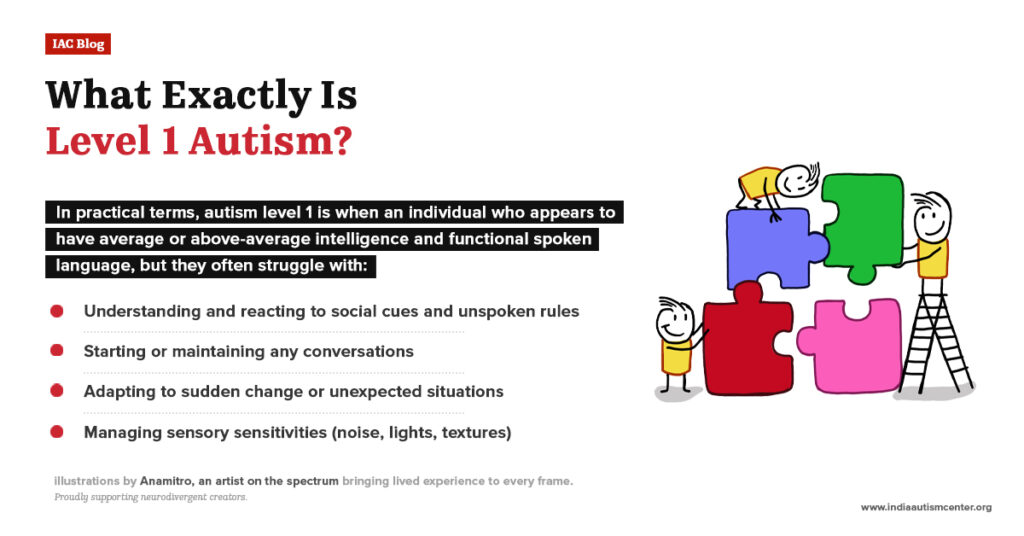
Autism spectrum disorder level 1 is essentially a neurodevelopmental condition defined in the DSM-5. Level 1 autism shows that an individual requires support, especially in social communication and flexibility.
In practical terms, autism level 1 is when an individual who appears to have average or above-average intelligence and functional spoken language, but they often struggle with:
- Understanding and reacting to social cues and unspoken rules
- Starting or maintaining any conversations
- Adapting to sudden change or unexpected situations
- Managing sensory sensitivities (noise, lights, textures)
These signs are very subtle in intensity and are therefore misinterpreted as shyness, anxiety, or personality differences.
Although it is important to note that someone with level 1 autism may cope well in certain settings, yet still experience significant daily stress, social exhaustion, or emotional overload.
In short, level 1 autism doesn’t mean “a little autism.” It means autism that may be less visible, but still real, impactful, and deserving of understanding and support.
What Does Level 1 Autism Look Like in Everyday Life?
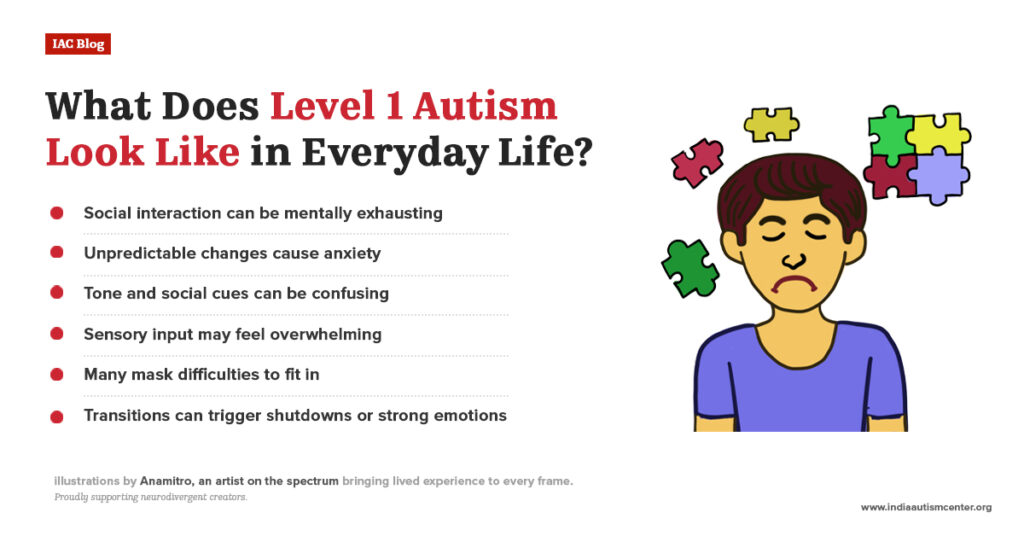
In everyday life, knowing that a child has level 1 autism spectrum disorder is difficult. Many individuals with autism level 1 appear independent, verbal, and capable, which can mask the challenges they face beneath the surface.
For an individual with autism spectrum disorder level 1, everyday life activities tend to include:
- Conversations, group settings, and reading social cues may require continuous and conscious effort and can feel mentally exhausting.
- Predictability provides comfort; unexpected changes can lead to anxiety or frustration.
- Understanding tone, sarcasm, or social expectations may be confusing.
- Noise, bright lights, crowded spaces, or clothing textures may feel overwhelming.
- Many children and adults hide their struggles to fit in, especially at school or work.
- Transitions and pressure can lead to shutdowns or heightened emotional responses.
So your child may look fine, but might struggle with autism level 1 symptoms. With understanding, structure, and support, individuals with level 1 autism can manage these everyday demands more comfortably and build on their natural strengths.
Signs of Level 1 Autism in Early Childhood
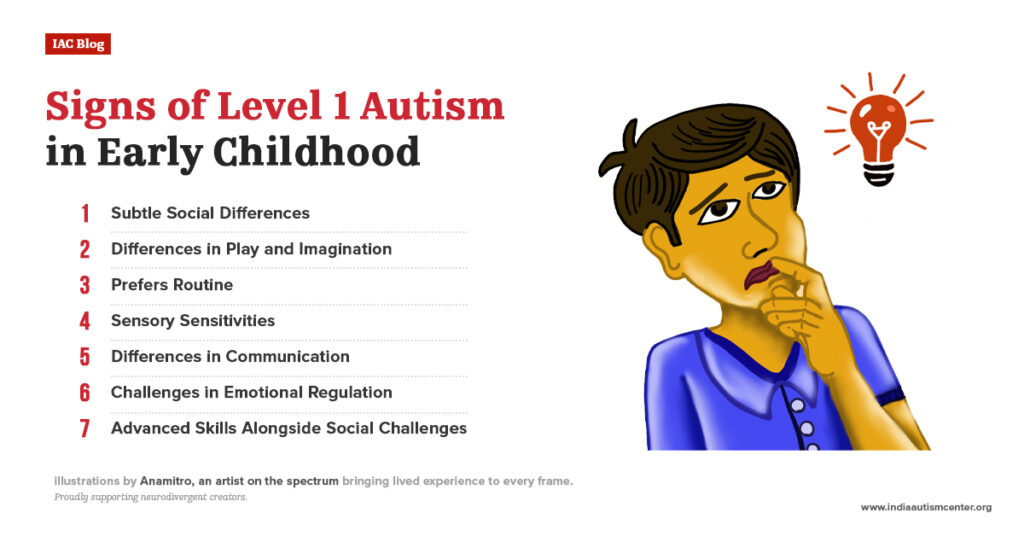
The signs of level 1 autism are not easy to identify, as the child may appear to be developing in the typical way. Speech may emerge on time, intelligence may be average or above, and there may be no obvious developmental delays.
However, when you look closely at how a child plays, communicates, and responds to the environment, you can find subtle cues that may help you determine whether your child has level 1 autism.
Here are the signs that your child may have autism spectrum disorder, level 1:
1. Subtle Social Differences
Not that a child with level 1 autism cannot communicate. They want to communicate but struggle to engage. Some signs that you may notice include:
- Limited or inconsistent eye contact, especially during conversations
- Difficulty responding to their name, even though hearing is normal
- Less interest in sharing excitement (e.g., not pointing to show you something interesting)
- Preferring to play near other children rather than with them
In everyday life, it can look like your child is happy playing along or seems to avoid group activities at school.
2. Differences in Play and Imagination
How your child plays can be one of the earliest indicators of level 1 autism in toddlers. Here are the signs that you must look for:
- Limited pretend or imaginative play (e.g., lining up toy cars instead of acting out scenarios)
- Repetitive play behaviours, such as spinning wheels or stacking objects
- Difficulty taking turns or following play rules with peers
3. Prefers Routine
Repetitive routines and predictability offer emotional safety to an individual with level 1 autism spectrum disorder. Some signs include:
- Distress when there is a change in everyday routine.
- Difficulty transitioning between activities.
- Attachment to sequences or specific rituals.
You may notice that even a minor change can trigger a meltdown in your child.
4. Sensory Sensitivities
Another common sign or symptom that is visible in children with level 1 autism is sensory processing differences. As a parent, you may observe that your child:
- Covers ears to protect against loud noise, such as a vacuum or a hairdryer.
- Strongly reacts to clothing textures, tags, or seams.
- Avoids messy play with sand or paint.
- Have sensitivity towards light.
- Does not like crowded places.
These reactions are not “behavioural problems” but genuine sensory overwhelm.
5. Differences in Communication
Confused if your child has level 1 autism, as they have developed speech on time? Look for the sign mentioned below to know if your child has communication differences:
- Speaking in a very formal or adult-like manner
- Difficulty starting or maintaining conversations
- Literal interpretation of language. They struggle with understanding jokes or sarcasm.
- Limited use of gestures such as waving or nodding
6. Challenges in Emotional Regulation
When it comes to children with level 1 autism spectrum disorder, emotional responses are often intense and unpredictable. Parents may notice the following signs:
- Meltdowns triggered by frustration or sensory overload
- Difficulty calming themselves without adult support
- Strong emotional reactions that seem “out of proportion” to the situation
It might seem like a tantrum, but it happens mostly because they get overwhelmed.
7. Advanced Skills Alongside Social Challenges
One confusing aspect for parents is that level 1 autism often includes uneven development. A child may:
- Read early or show advanced memory skills
- Have intense interests in letters, numbers, animals, or specific topics
- Excel academically but struggle socially
So with level 1 autism, abilities and challenges coexist.
Is Level 1 Autism a Disability?
A condition is a disability when it substantially affects a person’s ability to go on with daily activities. With autism level 1, the challenges may be subtle, but they are real and ongoing. So, from a clinical, legal, and educational standpoint, autism level 1 is a disability.
Even when a person appears independent or academically capable, some challenges can significantly affect their quality of life, such as:
- Persistent difficulty with social communication and interaction
- Challenges understanding unspoken social rules
- Sensory sensitivities that interfere with learning or work
- Emotional regulation difficulties, especially under stress
- Anxiety and mental fatigue from constant social effort or masking
Individuals with level 1 autism can still have successful, independent, and fulfilling lives. Recognising it as a disability is not about limitation.
Level 1 vs Level 2 Autism
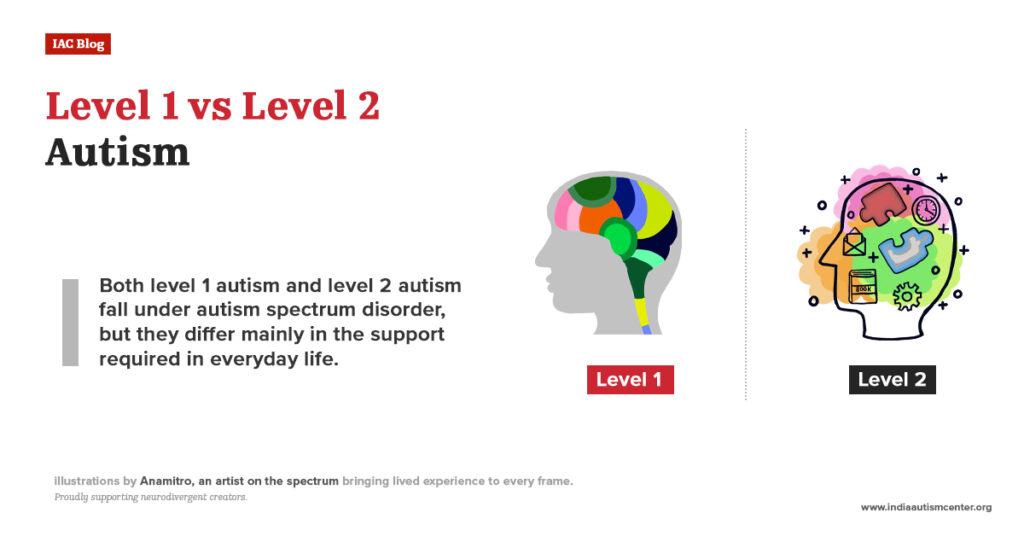
Both level 1 autism and level 2 autism fall under autism spectrum disorder, but they differ mainly in the support required in everyday life. Knowing whether your child has autism spectrum disorder level 1 or level is necessary to get the correct support.
Here is the table explaining the level 1 vs level 2 autism differences:
| Area of Comparison | Level 1 Autism | Level 2 Autism |
| Support Required | Requires support | Requires substantial support |
| Communication Skills | Speaks fluently but struggles with social use of language | Limited, delayed, or less effective verbal communication |
| Social Interaction | Difficulty initiating or maintaining interactions | Marked difficulty engaging socially, even with support |
| Behavioural Flexibility | Inflexible behaviours are noticeable in certain situations | Inflexibility is present across most environments |
| Response to Change | Distress with unexpected changes | Significant distress; changes may cause meltdowns |
| Sensory Sensitivities | Present but often manageable | More intense and disruptive |
| Independence | Often able to function independently with accommodations | Requires regular support for daily activities |
| Academic/Work Functioning | Can succeed with adjustments | Needs structured learning or work environments |
| Therapy Needs | Targeted, skills-based interventions | Ongoing, multi-disciplinary therapy |
Can Level 1 Autism Live Independently?
One primary question that a parent of a child with level 1 autism may have on their mind is: Can a child with level 1 autism live independently? The answer is yes, several individuals with level 1 autism spectrum disorder can live independently, especially with early intervention, social skills training, workplace accommodations, and emotional regulation support.
With targeted support, adults with level 1 autism can not only live independently, but can also have stable careers compared to those without intervention.
Therapy for Level 1 Autism: What Works?
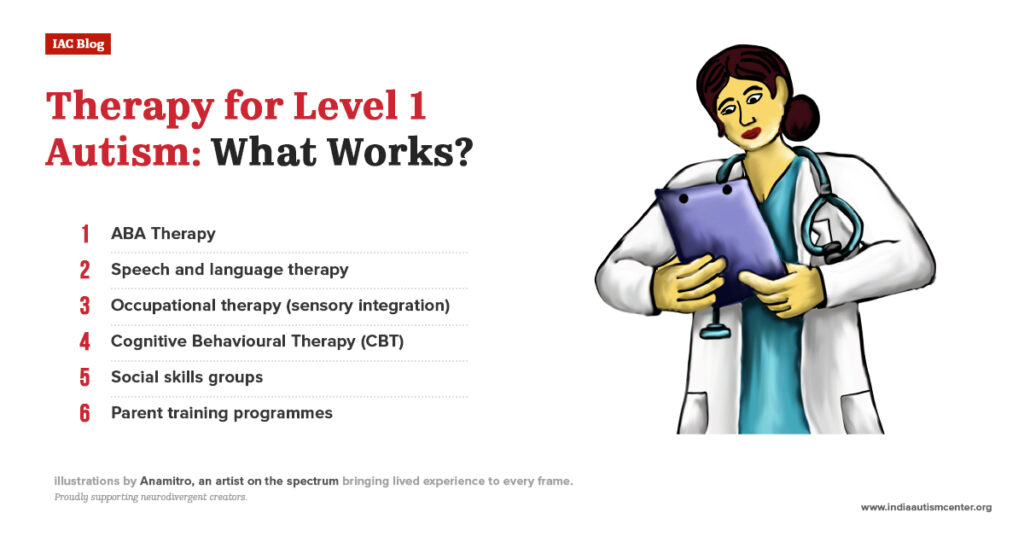
With respect to therapy for level 1 autism, several approaches can prove beneficial. Because autism spectrum disorder level 1 has subtle but persistent challenges, the most effective therapies are individualised, skills-focused, and developmentally appropriate.
Applied Behavioural Therapy (ABA) for Level 1 Autism
ABA therapy for level 1 autism is quite effective as it focuses on:
- Improving social communication
- Reducing anxiety-driven behaviours
- Building adaptive life skills
Modern ABA is highly individualised and play-based, especially for children, and differs significantly from outdated, rigid models.
Besides ABA therapy for level 1 autism, other therapies that can work wonders include:
- Speech and language therapy
- Occupational therapy (sensory integration)
- Cognitive Behavioural Therapy (CBT)
- Social skills groups
- Parent training programmes
Is Level 1 Autism High-Functioning?
The term “high-functioning” is quite outdated and often misleading. While the question: is level 1 autism high-functioning is quite common, it oversimplifies lived experiences. A child with level 1 autism may excel academically but struggle socially. They may appear capable but feel overwhelmed internally.
The focus should be on support needs, not perceived functioning.
Autism Life Expectancy Level 1: What Parents Should Know
Another question that a parent fears finding answers to is about the life expectancy in level 1 autism. However, parents must never forget that:
- Autism itself does not reduce life expectancy
- Increased health risks are also linked to co-occurring conditions (e.g., anxiety, epilepsy)
- Early mental health support significantly improves outcomes
An individual with level 1 autism spectrum disorder can achieve a normal life expectancy, as it all comes down to proper healthcare and support.
Conclusion
The diagnosis of level 1 autism is not about defining limits; it is a framework for understanding how to work things out. While the challenges of autism spectrum disorder level 1 may be subtle, they are real, and when recognised early, they can be supported effectively.
With the right therapy and proper guidance, people with level 1 autism can build strong social skills, manage sensory and emotional demands, and move towards greater independence.
With clarity, compassion, and support, individuals with level 1 autism can thrive, grow confidently, and lead fulfilling lives on their own terms.
Frequently Asked Questions
Is autism level 1 the same as mild autism?
Yes, autism level 1 is commonly referred to as mild autism, but the term can be misleading. While challenges may appear subtle, they are persistent and can significantly affect daily life without support.
What does level 1 autism look like in children?
In children, level 1 autism often looks like good language and academic skills paired with social awkwardness, difficulty making friends, sensitivity to noise or change, and emotional distress during transitions.
What are the autism level 1 symptoms in adults?
Autism level 1 symptoms in adults often include social exhaustion, difficulty maintaining relationships, sensory overload, anxiety, and masking behaviours to appear socially typical.
What therapies work best for level 1 autism?
Effective therapy for level 1 autism includes speech therapy, occupational therapy, CBT, social skills training, and ABA therapy for level 1 autism when personalised and ethically delivered.
Can children with level 1 autism attend mainstream schools?
Yes, many children with level 1 autism successfully attend mainstream schools, especially when teachers understand their needs and accommodations are provided.
For expert insights, support services, and inclusive learning initiatives, visit the India Autism Center.