 Donate now
 Get a Call Back
 MENU
MENU 10 MIN READ
 SHARE
SHARE


When you hear terms like neurodivergent and autism, it can feel overwhelming, especially when every website seems to explain it differently. Well, you are not alone. Parents need to know that about 15-20% of the global population is neurodivergent. It implies that their brains process information differently. This percentage includes conditions like autism spectrum disorder (ASD), Attention-deficit/hyperactivity disorder (ADHD), dyslexia, and dyspraxia.
Yet, one of the biggest questions parents ask is: Is neurodivergence the same as autism? Are autistic people neurodivergent? And what does it mean for my child’s future?
In this article, we will answer questions related to neurodivergent vs autism. We will review the conditions, clarify the distinction between neurodivergence and autism, and discuss how you can support your child’s growth and wellbeing.
What Does Neurodivergent Mean?
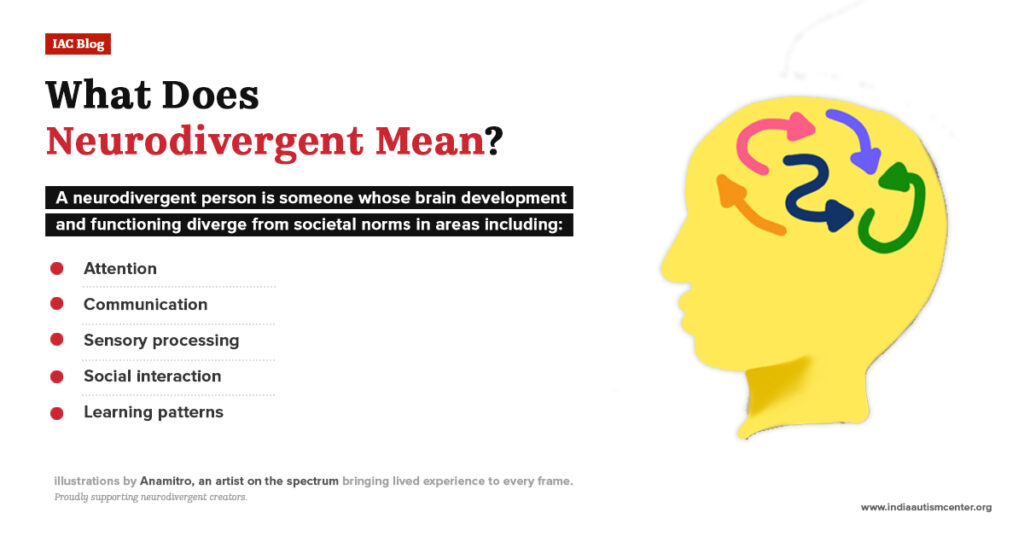
Neurodivergent is a term that describes people whose brains function, learn, process, or behave in ways that differ from what is considered neurotypical or “average.” So, in essence, a neurodivergent person is someone whose brain development and functioning diverge from societal norms in areas including:
- Attention
- Communication
- Sensory processing
- Social interaction
- Learning patterns
In fact, the term “neurodiversity” was coined by sociologist Judy Singer in 1998. It was to explain that just as we have biodiversity in an ecosystem, we have neurodiversity in human society.
When people ask, ” Is neurodivergent the same as autism, the answer is no. Neurodivergent is the broad category, while autism is one specific type of brain wiring within that category. Let us further understand the concept of Neurotypical vs. Neurodivergent:
- Neurotypical: This condition describes individuals whose neurological development and functioning align with established social norms.
- Neurodivergent: However, this is an inclusive term for anyone whose brain functions outside those “typical” margins.
Is Autism Neurodivergent?
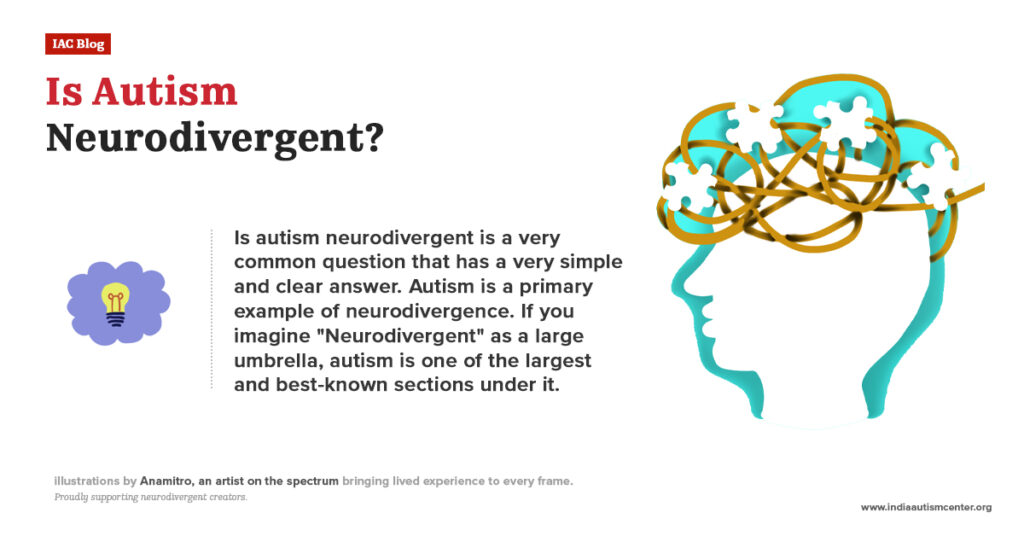
Is autism neurodivergent is a very common question that has a very simple and clear answer. Autism is a primary example of neurodivergence. If you imagine “Neurodivergent” as a large umbrella, autism is one of the largest and best-known sections under it.
Autism or ASD is a condition that affects how a person perceives the world and interacts with others. As the autistic brain processes sensory information and social cues differently than a neurotypical brain, it fits perfectly under the neurodivergent label.
Neurodivergent Examples: What Else Falls Under the Umbrella?
To best understand the distinction between neurodivergence and autism, parents or caregivers should consider other conditions that fall under the neurodivergent umbrella. It implies that all autistic people are neurodivergent, but not all neurodivergent people are autistic.
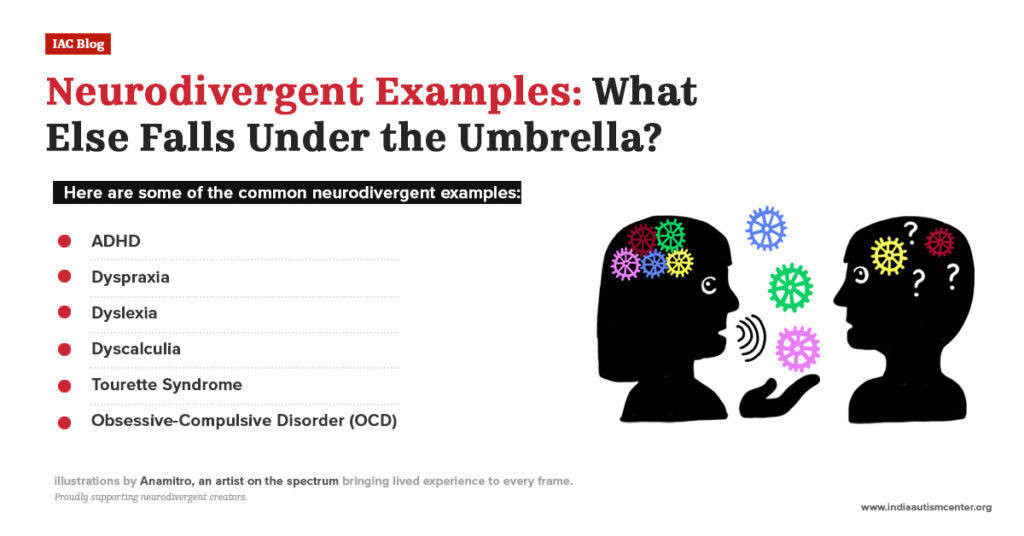
Here are some of the common neurodivergent examples:
- ADHD (Attention Deficit Hyperactivity Disorder): Differences in executive function, dopamine processing, and attention.
- Dyspraxia: In this condition, a person struggles with physical coordination and motor skills.
- Dyslexia: Differences in how the brain processes written language and reading.
- Dyscalculia: Specific challenges related to understanding numbers and math.
- Tourette Syndrome: Neurological differences can be found in individuals with this condition, which results in involuntary tics.
- Obsessive-Compulsive Disorder (OCD): While often labelled a mental health condition, many advocates include it under the neurodivergent umbrella due to the distinct way the brain processes intrusive thoughts and rituals.
So, neurodiversity is not a single condition; it is meant to encompass many different ways of being.
Neurodivergent vs Autism: Key Differences
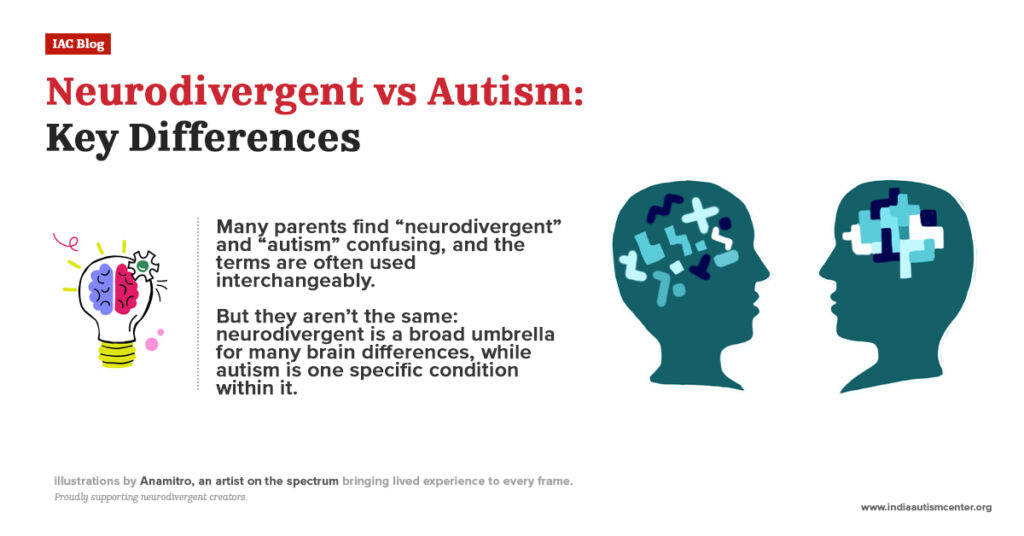
For parents, the concept of neurodivergent vs autism is not easy to understand. Many people use these terms in the same sentence, and sometimes even as if they mean the same thing.
In reality, these two terms are closely related but not identical. Neurodivergent is a broad term that includes many types of brain differences, while autism is one specific medical condition that comes under this broad category.
Here is a comparison table that can help parents understand the neurodivergent vs autism concept:
| Aspect | Neurodivergent | Autism |
| Meaning | A general term for people whose brains work differently from what is considered typical | A specific neurological and developmental condition (Autism Spectrum Disorder) |
| Nature of the Term | Social and descriptive term, not a medical diagnosis | Medical and clinical diagnoses made by professionals |
| Scope | Very broad and includes many conditions | Narrow and focused on one condition |
| Includes | Autism, ADHD, dyslexia, dyspraxia, Tourette’s syndrome, and more | Only Autism Spectrum Disorder |
| Is It a Diagnosis? | No, it is an identity or umbrella term | Yes, it is diagnosed by doctors and psychologists |
| Who Uses It? | Used by individuals, educators, advocates, and support groups | Used mainly by doctors, therapists, and healthcare professionals |
| Main Purpose | To promote acceptance and understanding of brain differences | To identify support needs and plan therapies |
| Social Interaction | May or may not have social challenges, depending on the condition | Often includes challenges in social communication and interaction |
| Learning Style | It can vary widely based on the individual condition | Often includes unique learning patterns and thinking styles |
| Sensory Sensitivity | May be present in some conditions | Very common in autistic individuals |
| Examples | A child with ADHD, dyslexia, or autism is neurodivergent | A child diagnosed with Autism Spectrum Disorder |
| Are All People in This Group Autistic? | No, many neurodivergent people are not autistic | Yes, autistic people fall under neurodivergent |
| Support Needed | Depends on the specific condition | Usually includes speech therapy, behavioural support, and social skills training |
| Focus on Strengths | Strongly emphasises abilities and talents | Focuses on both strengths and developmental needs |
| Public Awareness | Still growing and not always well understood | More widely recognised and researched |
Why People Often Confuse the Terms?
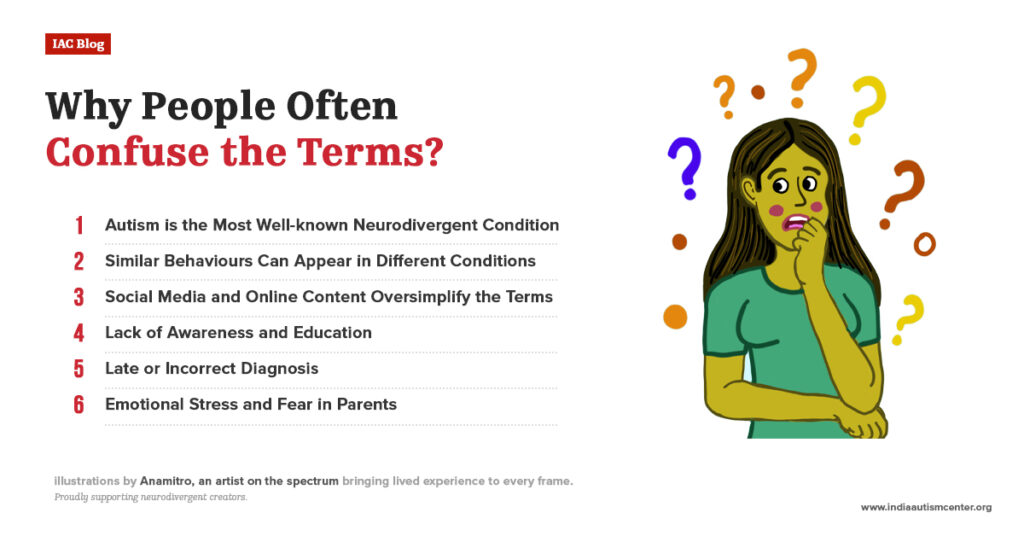
It is natural for parents and caregivers to be confused between the two terms, and it is completely understandable. These terms are often used together in articles, social media posts, and everyday conversations, which makes it hard to know where one ends and the other begins.
Here are a few reasons why both terms can be confusing:
1. Autism Is the Most Well-known Neurodivergent Condition
Autism is one of the most commonly known neurodivergent conditions. Over the years, awareness has increased through schools, the media, campaigns, and medical research.
Due to this level of awareness, several people start to assume that “neurodivergent means autistic.” In reality, autism is only one part of the neurodivergent community, but its visibility makes it seem like the main or only example.
2. Similar Behaviours Can Appear in Different Conditions
Some traits that are visible in both neurodivergent conditions and autism include:
- Difficulty with social interaction
- Sensitivity to noise, light, or touch
- Strong focus on certain interests
- Challenges with attention or communication
Let us understand this with an example:
- A child with ADHD and a child with autism may both struggle in noisy classrooms.
- A child with dyslexia and a child with autism may both find traditional learning methods difficult.
The behaviours can seem similar on the surface, so it is natural for people to assume they are almost the same condition. This is one of the leading causes of confusion between neurodivergent and autism.
3. Social Media and Online Content Oversimplify the Terms
Many content creators on social media or online websites use “neurodivergent” and “autistic” interchangeably to make content easier to understand, thereby oversimplifying the terms. Although it creates awareness, it also creates confusion. Viewers may start thinking the two words mean the same thing, when they do not.
4. Lack of Awareness and Education
Not everyone has access to correct information about brain development and learning differences. Without clear information, people naturally group everything under one label, usually “autism,” because it is more familiar.
5. Late or Incorrect Diagnosis
Due to the lack of specialists, a child with ADHD or learning difficulties may be wrongly assumed to be autistic, or simply labelled as “different.” Since there is no clarity, families tend to mislabel the condition as they do not know the key distinction.
6. Emotional Stress and Fear in Parents
Once a parent finds uncommon patterns in their child’s behaviour, the first thing they do is search online. In this emotional state, they may read many articles quickly and encounter mixed information. Fear and worry can make it harder to distinguish between facts and assumptions, leading to confusion.
Why the Distinction Matters for Parents?
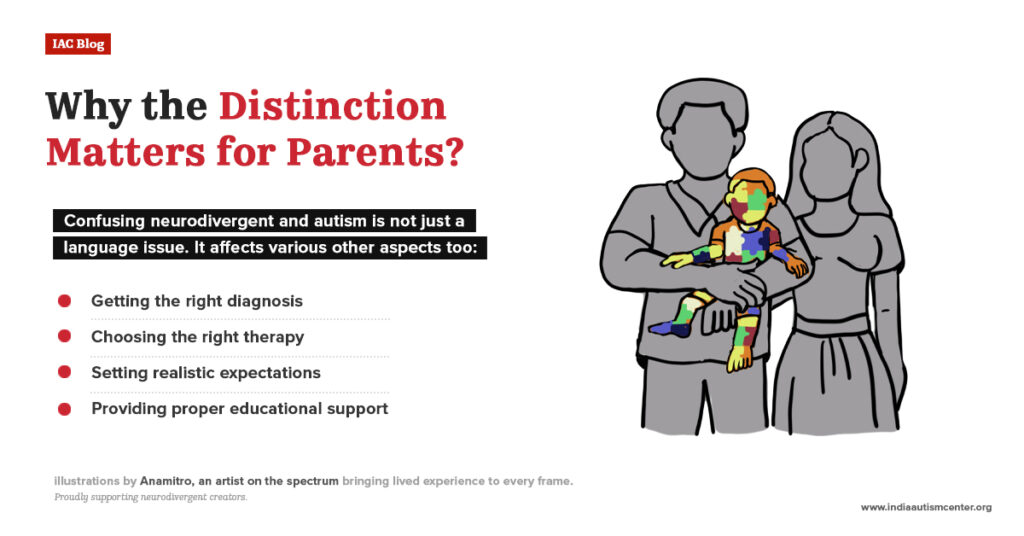
Confusing neurodivergent and autism is not just a language issue. It affects various other aspects too:
- Getting the right diagnosis
- Choosing the right therapy
- Setting realistic expectations
- Providing proper educational support
Making an appropriate decision is possible only when parents understand the distinction between the two topics.
How to Support a Neurodivergent Child?
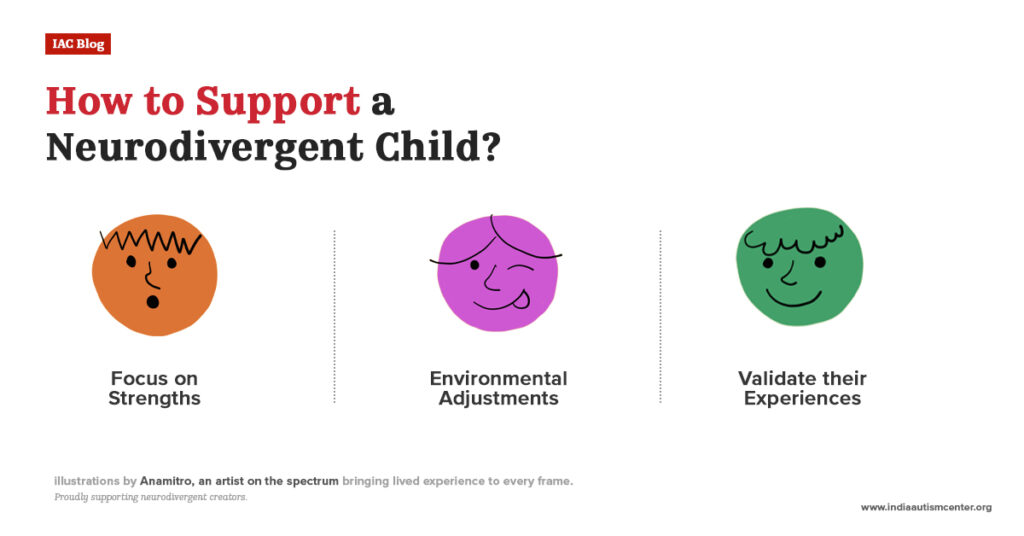
No matter if your child has autism or has any other form of neurodivergence, it is essential to find the right support for your child so that you can help them thrive in a world built for neurotypicals.
Here is how you can offer support:
1. Focus on Strengths
It is common for a neurodivergent individual to struggle in some areas but excel remarkably in others, such as pattern recognition, creative thinking, or deep focus.
2. Environmental Adjustments
Small changes to lighting, noise levels, and daily schedules can make a massive difference for a neurodivergent person.
3. Validate their Experiences
If your child says a sound is too loud or a shirt is too itchy, you must believe them. Their brain is processing that sensory input more intensely than yours might.
Every family wants the best for their child. Knowing the difference between neurodivergence and autism helps you access appropriate care, therapies, and support systems.
Support Strategies That Work:
- Early intervention programs
- Individual education plans (IEPs)
- Sensory integration tools
- Social skills support groups
- Parent education and coaching
Common Misconceptions About Neurodivergent vs Autism Busted
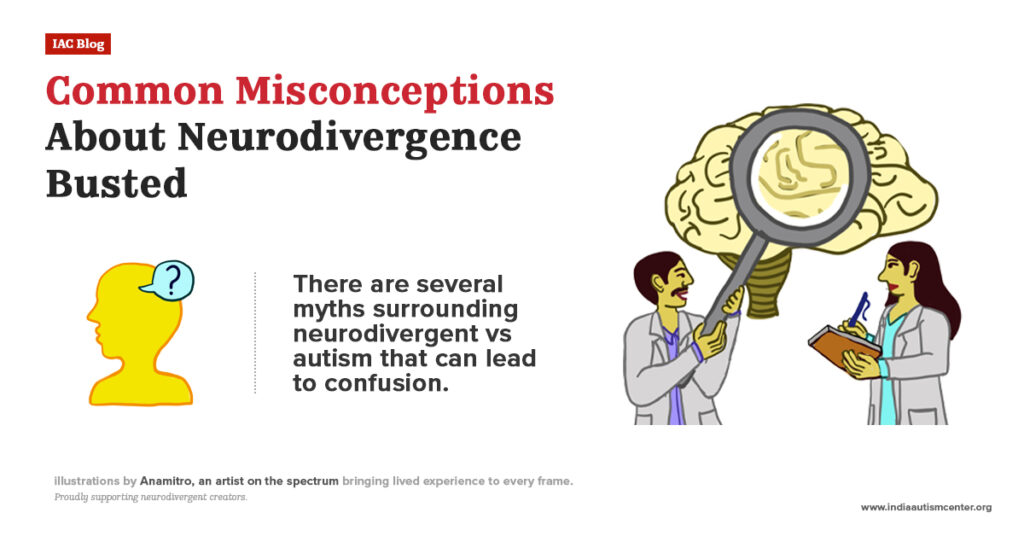
There are several myths surrounding neurodivergent vs autism that can lead to confusion.
Myth: A person can “grow out” of being neurodivergent.
Fact: Neurodivergence does not have a cure. It is a lifelong condition. However, with coping strategies and therapies, the fundamental brain wiring remains the same.
Myth: Neurodivergent people cannot lead independent lives.
Fact: Several neurodivergent individuals, even those with autism spectrum disorder, can lead independent and full lives with the right support and fitting environment.
Conclusion
In the debate over neurodivergence vs. autism, the most important takeaway is that both terms celebrate the variety of the human mind. Where autism is specific and has a vital identity, neurodivergent is the broad category that has several similar conditions under the same umbrella.
By knowing the answers to “are autistic people neurodivergent?” and “is neurodivergent the same as autism?”, families and communities can be better prepared to support a person’s specific needs. Whether you use the specific label of autism or the broader term neurodivergent, the goal is the same: acceptance, understanding, and support.
Always remember that every person and every brain is unique. By moving away from the idea of “normal” and embracing neurodiversity, we can successfully create a world where every child can reach their full potential.
Frequently Asked Questions
Is autism considered neurodivergent?
Yes. Autism is a primary example of neurodivergence. Since the autistic brain processes social information, sensory input, and communication differently than a “neurotypical” brain, it falls directly under the neurodivergent umbrella.
Are all autistic people neurodivergent?
Yes. Because autism is a neurological difference that diverges from the typical path, every person with an autism diagnosis is part of the neurodivergent community.
How do I know if my child is neurodivergent vs autistic?
You will know if your child is autistic through a clinical diagnosis from a professional. You can call your child “neurodivergent” if they show any signs of brain-based differences (like struggle with focus or reading), but “autistic” refers to a specific set of social and sensory traits.
Why do people use the word neurodivergent instead of autism?
Many people use neurodivergent because it feels more inclusive and less “medical.” It focuses on the strengths of having a different brain rather than just the challenges. However, for specific school support in India, the term “Autism” is often still necessary.
Where can I find support for a neurodivergent child in India?
Organisations like the India Autism Centre provide resources, community support, and guidance for parents navigating both conditions and the support they need.
For expert insights, support services, and inclusive learning initiatives, visit the India Autism Center.