 Donate now
 Get a Call Back
 MENU
MENU 12 MIN READ
 SHARE
SHARE


Autism support often focuses on speech therapy, occupational therapy, or behavioural interventions. However, one crucial professional is sometimes overlooked — the rehabilitation psychologist in autism.
In my experience as a rehabilitation psychologist, I often meet families who ask: “My child is receiving therapy, but why is emotional regulation still difficult?” Or “Why does behaviour suddenly change even after therapy?”
The answer is simple. Autism is not only about behaviour or communication. It is also about emotions, coping skills, mental health, and psychological well-being.
This is where the role of a rehabilitation psychologist becomes essential.
What Does a Rehabilitation Psychologist in Autism Do?
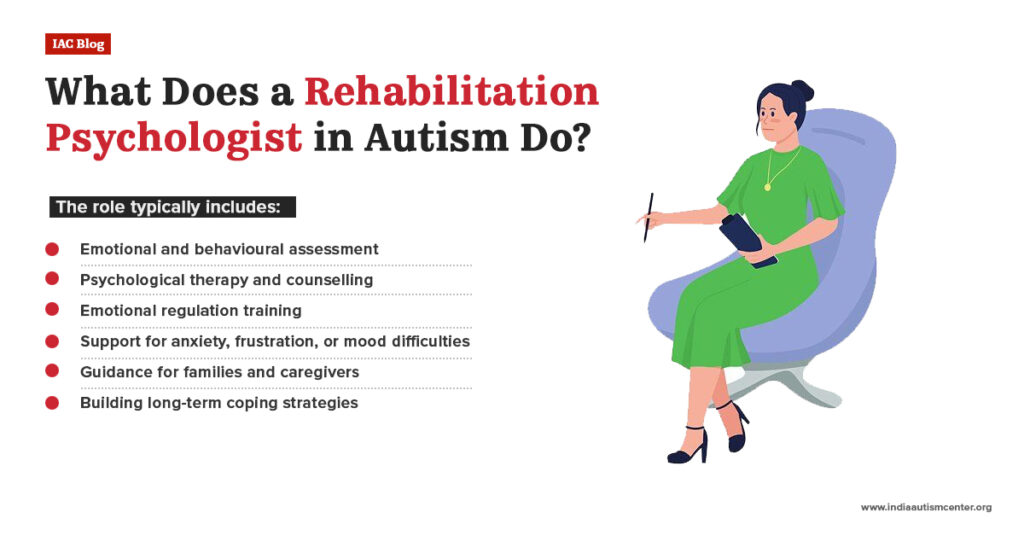
A rehabilitation psychologist in autism focuses on the emotional, behavioural, and psychological well-being of autistic individuals. While therapists work on skill development, the psychologist works on how the individual experiences and manages the world emotionally.
In simple terms, I help individuals with autism understand their emotions, manage stress, and build coping strategies for everyday life.
The role typically includes:
- Emotional and behavioural assessment
- Psychological therapy and counselling
- Emotional regulation training
- Support for anxiety, frustration, or mood difficulties
- Guidance for families and caregivers
- Building long-term coping strategies
Therefore, autism rehabilitation is not only about teaching skills. It is also about supporting the mind behind those skills.
Understanding Autism Behaviour vs Emotions
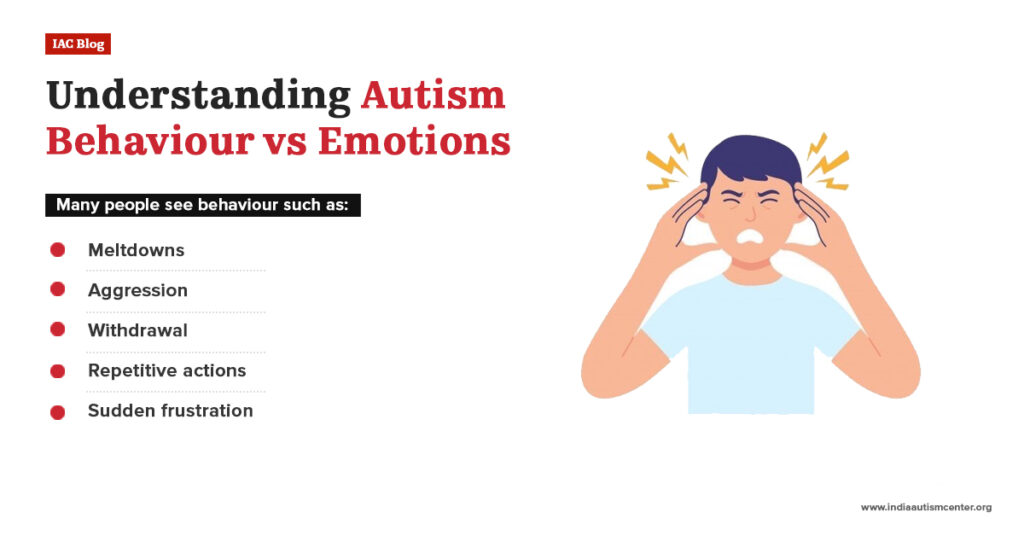
One of the biggest misunderstandings in autism care is confusing behaviour with emotions.
Many people see behaviour such as:
- Meltdowns: An autism meltdown is an intense emotional reaction that happens when an autistic individual becomes completely overwhelmed. This overwhelm may be caused by sensory overload, frustration, anxiety, or sudden changes in routine. During a meltdown, the person may cry, shout, scream, or lose control of their emotions.
- Aggression: Aggression refers to behaviours that may appear physically or verbally forceful, such as hitting, pushing, shouting, or throwing objects. In autism, aggression often occurs when the individual is experiencing strong emotions like frustration, fear, or sensory overload, but cannot communicate their needs effectively
- Withdrawal: Withdrawal occurs when an individual pulls away from social interaction, communication, or activities. An autistic person may avoid eye contact, prefer being alone, or stop participating in conversations or tasks. This behaviour may happen when the person feels overwhelmed, anxious, tired, or socially exhausted.
- Repetitive actions: Repetitive actions, often called repetitive behaviours or stimming, are repeated movements or activities such as hand flapping, rocking, repeating words, or arranging objects in patterns. These actions can help autistic individuals regulate emotions, manage sensory input, or reduce anxiety.
- Sudden frustration: Sudden frustration refers to a quick emotional reaction that occurs when something becomes difficult, confusing, or overwhelming. In autism, frustration can appear suddenly because of communication challenges, sensory discomfort, unexpected changes, or difficulty completing a task.
In many cases, autistic individuals experience:
- Sensory Overload: A condition where the brain receives too much sensory information (such as sounds, lights, or touch), making it difficult for the person to process and respond calmly.
- Anxiety: A feeling of excessive worry, nervousness, or fear that can affect thoughts, emotions, and daily functioning.
- Communication Frustration: The stress or anger that occurs when an individual struggles to express their needs, thoughts, or feelings effectively.
- Difficulty Identifying Emotions: A challenge in recognising or understanding one’s own feelings, such as not knowing whether they are sad, angry, or anxious.
- Difficulty Expressing Feelings: A struggle to communicate emotions to others through words, facial expressions, or behaviour.
For example:
| Behaviour | Possible Emotional Cause |
| Meltdown | Overwhelm or sensory overload |
| Aggression | Frustration or inability to communicate |
| Withdrawal | Anxiety or social exhaustion |
| Repetitive behaviour | Self-soothing or stress regulation |
When we only try to control behaviour without understanding the emotion behind it, improvement becomes temporary. That is why a rehabilitation psychologist in autism focuses on the emotional meaning behind behaviour.
Want to know more? Get in touch with us.
Why is Autism Emotional Regulation Difficult
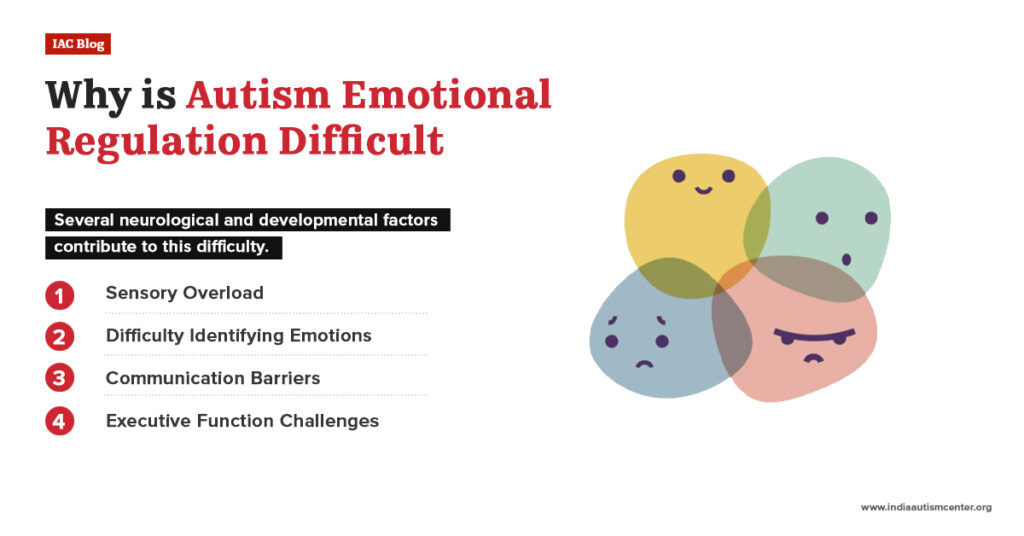
Many autistic individuals struggle with autism emotional regulation. In simple terms, this means they may experience emotions very strongly but may find it difficult to manage or calm those emotions quickly.
We often explain this to families in a simple way: Imagine feeling extremely upset, anxious, or frustrated but not having the tools to calm yourself down or explain what you are feeling. This can make everyday situations much more challenging.
Several neurological and developmental factors contribute to this difficulty.
1. Sensory Overload
Many autistic individuals have heightened sensory sensitivity. Everyday stimuli such as loud sounds, bright lights, strong smells, or crowded environments can feel overwhelming. When the brain receives too much sensory information at once, it becomes difficult to stay calm. As a result, the person may experience stress, anxiety, or emotional outbursts.
Here is All You Need to Know About Sensory Challenges in Autistic Individuals.
2. Difficulty Identifying Emotions
Some autistic individuals find it difficult to recognise or label their emotions. For example, they may feel uncomfortable or distressed but may not understand whether the feeling is anxiety, frustration, sadness, or sensory discomfort. When a person cannot clearly identify what they are feeling, it becomes harder to regulate that emotion.
3. Communication Barriers
Communication challenges can also make emotional regulation harder. If someone cannot easily express their thoughts, needs, or feelings, frustration may build up internally. Over time, this bottled-up emotion may appear as behaviours such as meltdowns, withdrawal, or sudden frustration.
4. Executive Function Challenges
Executive functions are brain processes that help us plan, control impulses, switch between tasks, and regulate our responses. Many autistic individuals experience differences in these abilities. As a result, when a stressful situation occurs, it may be harder for them to pause, think, and choose a calm response.
Because of these factors, emotional regulation training becomes an important part of autism rehabilitation therapy. With proper guidance, individuals can gradually learn strategies to recognise emotions, cope with stress, and respond more calmly to challenging situations.
The Role of a Rehabilitation Psychologist in Autism Care
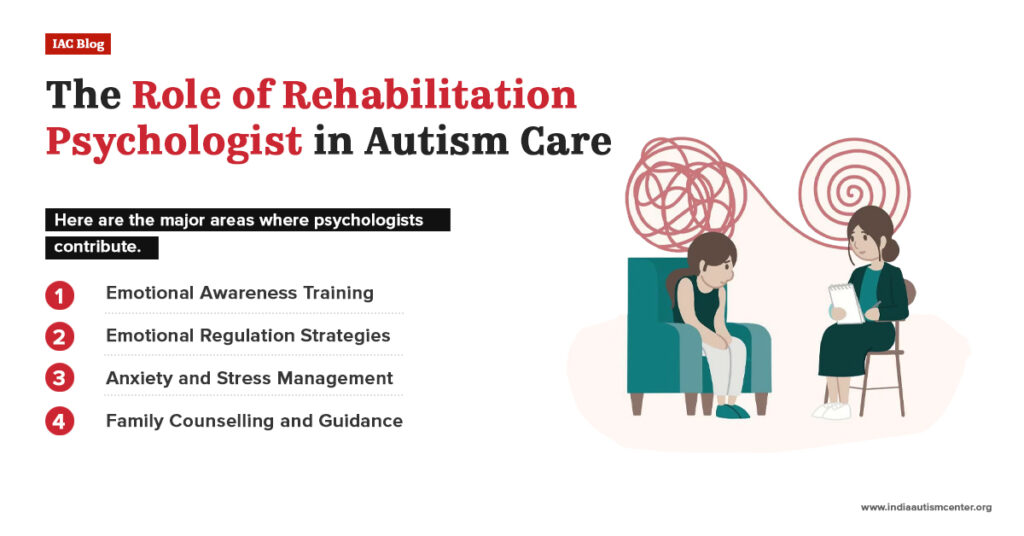
The role of a rehabilitation psychologist goes beyond counselling. It involves structured psychological support that helps autistic individuals function better in daily life. Here are the major areas where psychologists contribute.
Emotional Awareness Training
Emotional awareness training helps autistic individuals understand and recognise their emotions more clearly. This is an important first step before learning how to manage those emotions.
This training may include:
- Identifying feelings: Helping individuals recognise different emotions such as happiness, anger, frustration, or sadness.
- Recognising body signals: Teaching individuals to notice physical signs of emotions, such as a fast heartbeat, muscle tension, or feeling restless.
- Connecting situations with emotions: Helping individuals understand how certain situations or events can trigger specific emotional responses.
- Using visual or structured tools: Emotion charts, pictures, or simple scales can help individuals describe how they feel.
When individuals become better at recognising their emotions, it becomes easier for them to regulate and manage those emotions effectively.
Emotional Regulation Strategies
Next, we teach strategies that help autistic individuals manage their emotions in a healthy and controlled way. Some common approaches include:
- Breathing exercises: Slow and deep breathing helps calm the nervous system and reduce feelings of stress, anger, or anxiety during overwhelming situations.
- Sensory regulation techniques: Tools such as sensory toys, weighted items, or quiet spaces help individuals cope with sensory overload and feel more comfortable.
- Structured calming strategies: Simple routines like taking a short break, counting slowly, or moving to a calm environment help the person regain emotional control.
- Emotional expression methods: Encouraging individuals to express feelings through words, pictures, writing, or art helps them release emotions in a safe and healthy way.
With regular practice, these strategies help individuals pause, understand their emotions, and respond thoughtfully instead of reacting impulsively
Anxiety and Stress Management
Many autistic individuals experience higher levels of anxiety due to sensory sensitivities, communication challenges, or unexpected changes in routine. Psychological support helps them manage these feelings in a structured and supportive way.
Psychological therapy helps by:
- Identifying triggers: Understanding situations, environments, or events that cause anxiety or stress, such as loud noises, crowded spaces, or sudden changes in routine.
- Teaching coping mechanisms: Learning practical techniques like deep breathing, relaxation exercises, or structured problem-solving to manage stress when it arises.
- Building emotional resilience: Helping individuals gradually develop confidence and the ability to handle challenging situations without becoming overwhelmed.
Together, these approaches form an important part of autism mental health support, helping individuals feel safer, calmer, and more in control of their emotions.
Family Counselling and Guidance
Parents and caregivers often feel confused or overwhelmed while supporting an autistic individual. Family counselling and guidance help families better understand autism and learn practical ways to provide emotional and behavioural support at home.
A rehabilitation psychologist guides families by:
- Teaching emotional support strategies: Helping parents understand the child’s emotions and respond with patience, empathy, and supportive approaches.
- Improving communication approaches: Guiding families on using clear language, visual supports, and structured communication methods that work better for autistic individuals.
- Managing meltdowns effectively: Helping parents recognise early signs of distress and use calming techniques to handle emotional outbursts in a supportive way.
- Reducing stress at home: Suggesting structured routines, predictable environments, and coping strategies that create a calmer and more stable home environment.
Want to know more? Get in touch with us.
Psychological Therapy for Autism
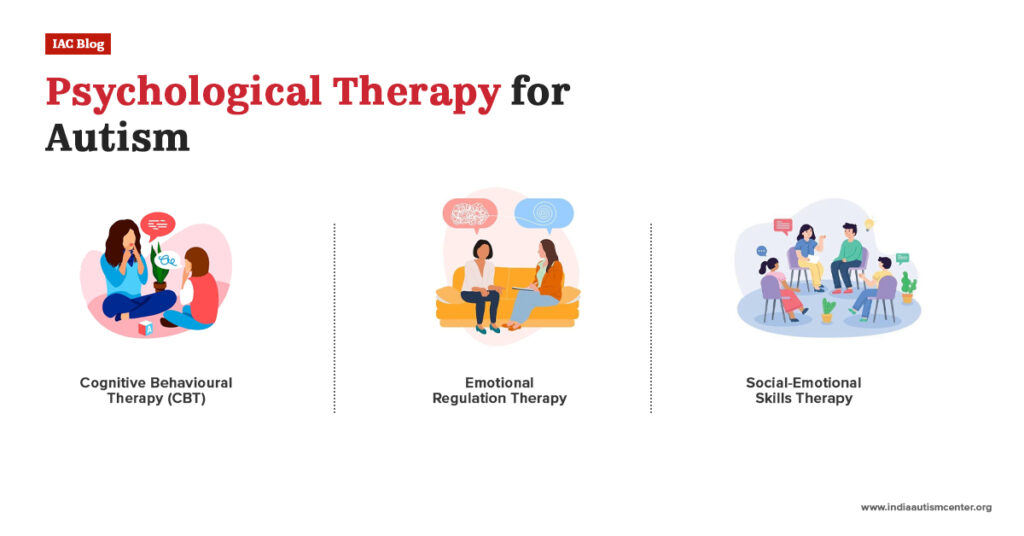
Many people assume therapy for autism is only behavioural or speech-related. However, psychological therapy for autism plays an equally important role.
Different therapeutic approaches may be used depending on the individual’s needs.
Cognitive Behavioural Therapy (CBT)
Cognitive Behavioural Therapy is a form of psychological therapy that helps autistic individuals understand how their thoughts, emotions, and behaviours are connected. It is especially useful for managing anxiety, stress, and negative thinking patterns.
CBT helps by:
- Understanding thought patterns: Helping individuals recognise negative or unhelpful thoughts that may increase anxiety or distress.
- Linking thoughts, emotions, and behaviour: Teaching how thoughts influence feelings and how those feelings can affect behaviour.
- Developing healthier thinking habits: Encouraging more balanced and realistic ways of thinking about situations.
- Learning coping strategies: Providing practical tools such as relaxation techniques, problem-solving skills, and emotional regulation methods.
- Managing anxiety and stress: Helping individuals identify triggers and respond to stressful situations in a calmer and more controlled way.
Emotional Regulation Therapy
Emotional regulation therapy focuses on helping autistic individuals recognise, understand, and manage strong emotions in a healthy way. It teaches practical skills that help individuals stay calm and respond better to stressful situations.
This therapy may include:
- Emotion recognition exercises: Activities that help individuals identify and label different emotions, such as happiness, anger, sadness, or anxiety.
- Coping skill training: Teaching practical techniques like deep breathing, taking breaks, or using calming activities to handle overwhelming emotions.
- Stress regulation strategies: Helping individuals learn ways to reduce stress, such as relaxation techniques, sensory calming methods, or structured routines.
Social-Emotional Skills Therapy
Social-emotional skills therapy helps autistic individuals understand social situations and interact more comfortably with others. It focuses on improving awareness of emotions and social communication.
This therapy helps by:
- Understanding social cues: Teaching individuals to recognise cues such as tone of voice, facial expressions, and body language during interactions.
- Recognising emotional expressions: Helping individuals identify emotions in themselves and others, such as happiness, anger, sadness, or confusion.
- Improving interpersonal interactions: Practising skills like taking turns in conversations, responding appropriately, and maintaining respectful communication.
- Building social confidence: Helping individuals feel more comfortable in social settings such as school, therapy sessions, or community environments.
Autism Mental Health Support: A Critical but Often Ignored Need
Mental health is an essential part of autism care, yet it is frequently overlooked.
Research and clinical experience show that autistic individuals are more likely to experience:
- anxiety disorders
- depression
- chronic stress
- emotional burnout
- social isolation
Therefore, autism mental health support must be integrated into long-term rehabilitation.
When emotional well-being improves, individuals often show improvements in:
- learning ability
- communication
- social participation
- overall quality of life
This is why psychological care should work alongside other therapies.
Want to know more? Get in touch with us.
Conclusion
Autism rehabilitation should never focus only on behaviour or skills. It must also address the emotional world of the individual.
A rehabilitation psychologist in autism plays a vital role in helping autistic individuals:
- understand their emotions
- manage stress and anxiety
- develop coping strategies
- improve mental health and resilience
When emotional regulation improves, everything else — learning, communication, relationships — becomes easier.
Frequently Asked Questions
What does a rehabilitation psychologist in autism do?
A rehabilitation psychologist in autism focuses on emotional regulation, mental health support, behavioural understanding, and coping strategies to help autistic individuals function better in daily life.
Why is emotional regulation difficult in autism?
Autism emotional regulation can be difficult due to sensory sensitivity, communication challenges, difficulty identifying emotions, and executive functioning differences
How does psychological therapy help autistic individuals?
Psychological therapy for autism helps individuals understand emotions, manage anxiety, develop coping strategies, and improve emotional well-being.
Is mental health support important for autism rehabilitation?
Yes. Autism mental health support is essential because many autistic individuals experience anxiety, stress, or emotional challenges that affect learning and daily functioning.
When should someone consult a rehabilitation psychologist for autism?
Consult a psychologist if there are frequent emotional outbursts, anxiety, withdrawal, difficulty coping with change, or emotional challenges affecting therapy or daily life.
For expert insights, support services, and inclusive learning initiatives, visit the India Autism Center.