 Donate now
 Get a Call Back
 MENU
MENU 13 MIN READ
 SHARE
SHARE


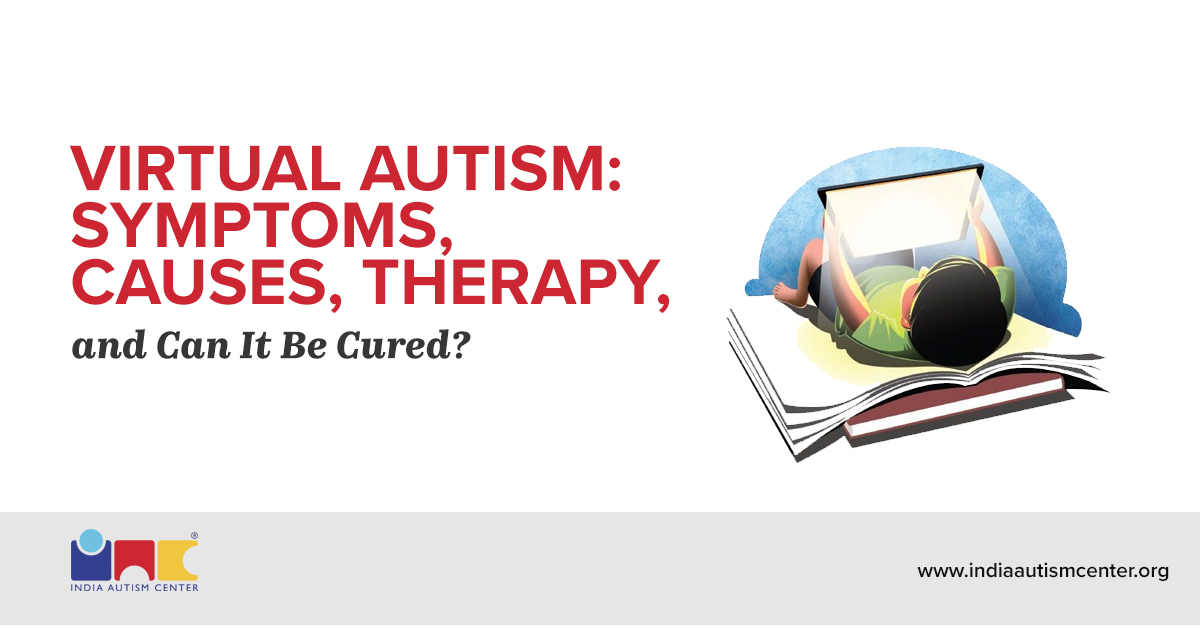
In recent years, many parents have started asking a new question: “Is my child developing autism because of too much screen time?” This concern has led to discussions around a term called virtual autism.
While the concept is still debated in the medical community, experts agree that excessive exposure to digital screens during early childhood can significantly affect a child’s social, communication, and cognitive development.
In this guide, I will walk you through everything you need to know about virtual autism—its symptoms, causes, therapy options, and whether it can be reversed.
What Is Virtual Autism?
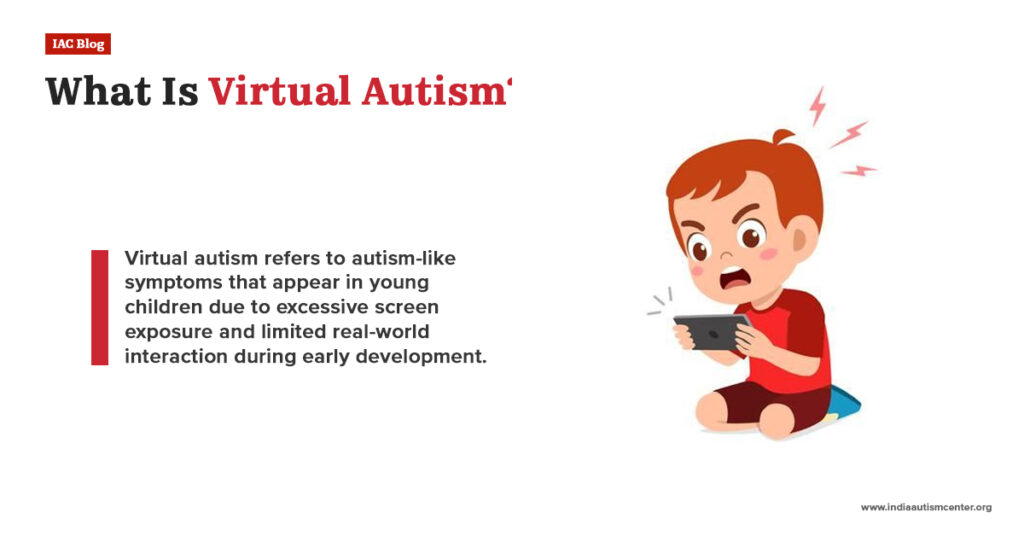
Virtual autism refers to autism-like symptoms that appear in young children due to excessive screen exposure and limited real-world interaction during early development.
Unlike traditional autism, this condition is believed to develop when children spend long hours interacting with screens instead of engaging with people and their environment.
For example, many children today spend several hours daily with:
- Smartphones
- Tablets
- Television
- Digital learning apps
- Video streaming platforms
When this replaces face-to-face interaction, play, and exploration, a child may begin showing behaviours similar to autism.
However, it is important to understand that virtual autism is not officially recognised as a clinical diagnosis. Instead, it describes developmental delays caused by environmental factors, especially screen overexposure.
Virtual Autism vs Autism Spectrum Disorder (ASD)
Understanding the difference between autism spectrum disorder and virtual autism is important for parents, caregivers, and educators. Although some behaviours may appear similar, the causes, development patterns, and outcomes can be quite different.
ASD is a neurodevelopmental condition that affects how a person communicates, interacts socially, and processes information. It is typically present from early brain development.
On the other hand, virtual autism describes autism-like developmental delays associated with excessive screen exposure and reduced human interaction during early childhood.
The table below explains the differences in a more detailed way.
| Aspect | Autism Spectrum Disorder | Virtual Autism |
| Definition | A lifelong neurodevelopmental condition that affects social communication, behaviour, and sensory processing. | A term used to describe autism-like symptoms that may appear due to excessive screen exposure and limited real-world interaction in early childhood. |
| Primary Cause | Caused by differences in brain development influenced by genetic and biological factors. | Mostly linked to environmental factors such as prolonged screen time, lack of social interaction, and reduced real-world stimulation. |
| Age of Onset | Signs usually appear before the age of 2–3 years as the child develops. | Symptoms may appear after prolonged exposure to screens during early developmental stages. |
| Communication Development | Children often show persistent challenges with speech, language understanding, and social communication. | Children may experience delayed speech mainly because screens replace conversation and interaction with caregivers. |
| Social Interaction | Children may have difficulty understanding social cues, emotions, and relationships. | Children may show reduced social engagement because they spend more time interacting with devices instead of people. |
| Eye Contact | Limited or inconsistent eye contact is commonly observed as part of the condition. | Poor eye contact may occur due to reduced practice in real-life social interaction. |
| Behavioural Patterns | Repetitive behaviours, restricted interests, and sensory sensitivities are common and often persistent. | Repetitive behaviours may appear but often decrease once screen time is reduced and interactive activities increase. |
| Brain Development | Linked to structural and functional differences in brain development. | Generally related to environmental stimulation patterns rather than underlying neurological differences. |
| Response to Intervention | Requires long-term therapies such as behavioural therapy, speech therapy, and occupational therapy. | Many children show improvement when screen exposure is reduced and developmental stimulation increases. |
| Possibility of Improvement | Individuals can develop skills and independence with support, but autism itself is not “cured.” | Symptoms may significantly improve or disappear when the child receives appropriate interaction and therapy. |
| Therapy Approach | Early intervention therapies focus on communication, behaviour, sensory regulation, and life skills. | Interventions usually focus on reducing screens, increasing social interaction, and supporting language development. |
Want to know more? Get in touch with us.
What Causes Autism Virtual Development?
To understand autism virtual development, we first need to understand how a young child’s brain grows.
During the first three years of life, the brain develops at an extraordinary speed. Children learn language, emotions, social behaviour, and problem-solving mainly through human interaction, play, and exploration. They watch facial expressions, respond to voices, imitate gestures, and slowly build communication skills.
However, when screens replace these real-world experiences, the developmental process can change. Children may receive visual and auditory stimulation from devices, but they miss out on two-way communication and social learning.
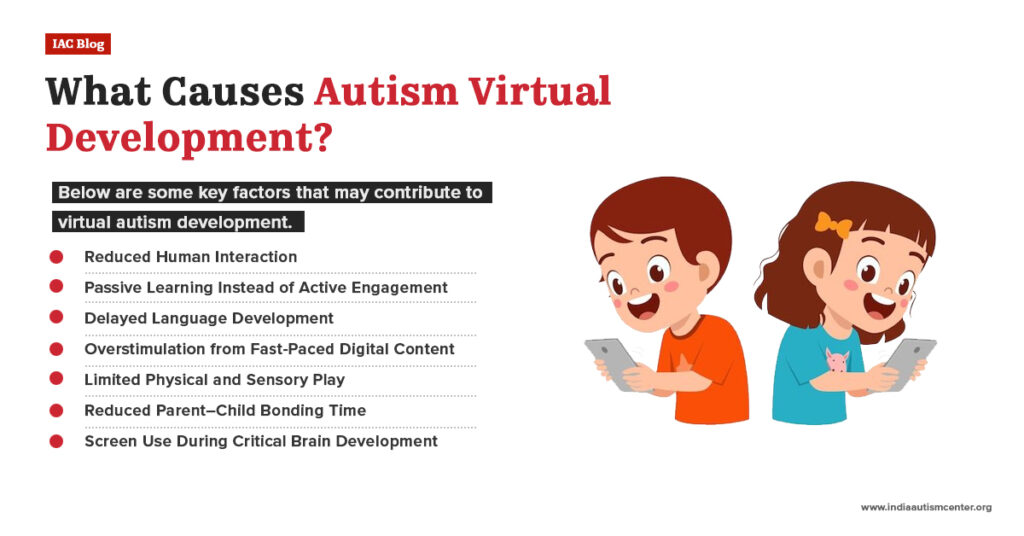
Below are some key factors that may contribute to virtual autism development.
1. Reduced Human Interaction
One of the biggest causes of virtual autism development is reduced face-to-face interaction.
Young children learn communication through constant interaction with caregivers. When you talk to a child, they observe your mouth movements, facial expressions, tone of voice, and gestures. They respond, imitate, and gradually develop language skills.
However, screens do not provide this kind of interaction. A video may talk to the child, but it cannot respond to the child’s emotions, gestures, or attempts to communicate.
When a child spends long hours watching screens instead of interacting with parents or peers, they may experience:
- delayed speech development
- reduced eye contact
- limited social engagement
2. Passive Learning Instead of Active Engagement
Another important factor is passive learning.
In healthy development, children learn by doing things actively. They touch objects, explore their surroundings, ask questions, and interact with people. These experiences strengthen brain connections related to thinking, language, and social understanding.
In contrast, digital media often encourages passive consumption. A child may sit quietly watching videos for long periods without needing to think, respond, or interact.
As a result, children may:
- become less curious about real-world activities
- struggle to initiate communication
- show reduced attention in non-screen environments
3. Delayed Language Development
Language development depends heavily on real conversations.
When adults speak to children, they pause, wait for responses, repeat words, and adjust their tone. This natural exchange helps children learn vocabulary, sentence structure, and social communication.
However, when screens dominate a child’s routine, conversations may decrease significantly.
For example, a child who spends several hours watching videos may hear many words but rarely practice speaking or responding. Without this practice, language skills may develop more slowly.
This is why delayed speech is one of the most common virtual autism symptoms reported by parents.
4. Overstimulation from Fast-Paced Digital Content
Many digital programmes for children are designed to capture attention through:
- bright colours
- rapid scene changes
- loud sounds
- fast-paced animation
While this may keep children engaged, it can also lead to sensory overstimulation.
Young brains may become accustomed to this high level of stimulation. As a result, normal real-world activities such as reading, playing with toys, or listening to conversations may feel less exciting or difficult to focus on.
This overstimulation can contribute to:
- shorter attention spans
- restlessness
- difficulty focusing on slower activities
5. Limited Physical and Sensory Play
Children need a wide range of physical and sensory experiences to support brain development.
Activities such as running, building blocks, drawing, climbing, and playing with other children help develop:
- motor skills
- problem-solving abilities
- creativity
- emotional regulation
When a child spends long periods with digital devices, these activities often decrease.
Instead of moving, exploring, and interacting with their environment, the child may remain sedentary and mentally disengaged from real-world experiences.
This lack of sensory and physical stimulation can contribute to delays in cognitive and social development.
6. Reduced Parent–Child Bonding Time
Another overlooked factor is reduced bonding between parents and children.
Healthy development depends greatly on shared experiences, such as:
- talking during meals
- reading stories together
- playing interactive games
- exploring the outdoors
When screens are frequently used as entertainment or distraction, these bonding opportunities may decrease.
Children may begin to prefer digital devices over human interaction, which can further affect their communication and social development.
7. Screen Use During Critical Brain Development
The timing of screen exposure also matters.
The first 1,000 days of life are particularly important for brain growth. During this period, neural connections responsible for language, social skills, and emotional understanding develop rapidly.
If children spend a significant amount of this time interacting with screens rather than people, the brain may receive less social and linguistic stimulation than it needs.
This imbalance can increase the likelihood of autism-like developmental delays, which some researchers describe as virtual autism.
Virtual Autism Symptoms Parents Should Watch For
Recognising virtual autism symptoms early can help you take timely action. Many of these signs appear when screen time replaces real interaction, play, and conversation during early childhood.
At first, the changes may seem small. You might notice your child becoming more attached to screens or less interested in interacting with people. However, over time, these behaviours can affect language development, social skills, and attention.
It is important to remember that seeing one symptom does not necessarily mean your child has virtual autism. But if several signs appear together and persist, it may be helpful to consult a developmental professional.
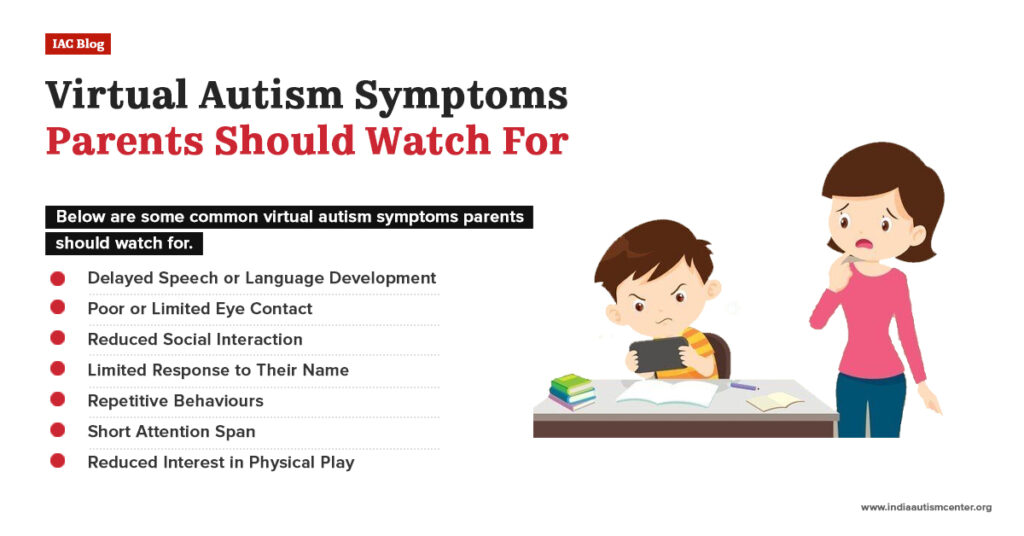
Below are some common virtual autism symptoms parents should watch for.
Delayed Speech or Language Development
One of the most frequently reported virtual autism symptoms is delayed speech.
Young children normally begin saying simple words between 12 and 18 months and gradually start forming short sentences by the age of two to three years. However, children who spend excessive time with screens may have fewer opportunities to practice real conversations.
You may notice that your child:
- speaks very few words for their age
- struggles to combine words into short sentences
- prefers pointing or gestures instead of speaking
This happens because language develops through back-and-forth interaction, which screens cannot provide.
Poor or Limited Eye Contact
Eye contact plays a crucial role in early communication and emotional connection.
When parents talk to their children, they naturally make eye contact. This helps children learn how to read facial expressions, understand emotions, and respond socially.
Children showing virtual autism symptoms may:
- avoid looking directly at people while communicating
- focus more on screens than on faces
- appear distracted during conversations
Limited eye contact can happen because the child is more used to interacting with digital devices than with people.
Want to know more? Get in touch with us.
Reduced Social Interaction
Children naturally enjoy interacting with caregivers, siblings, and peers. Through play and shared activities, they learn important skills such as turn-taking, cooperation, and emotional understanding.
However, excessive screen use can reduce these opportunities.
You may notice that your child:
- prefers watching videos rather than playing with others
- shows little interest in group play
- becomes upset when screens are removed
This reduced interest in social interaction may resemble behaviours often associated with autism virtual patterns.
Limited Response to Their Name
Most children begin responding to their name during the first year of life. It becomes a natural part of communication and attention.
However, some children with heavy screen exposure may:
- ignore their name when called
- remain focused on the device instead of responding
- react only when the screen is turned off
This behaviour can occur because screens capture a child’s attention very strongly, making it harder for them to shift focus to people around them.
Repetitive Behaviours
Some children may display repetitive actions when they spend excessive time with digital content.
Examples may include:
- repeating the same sounds or phrases from videos
- watching the same video repeatedly
- performing repetitive body movements such as hand flapping
These behaviours may develop because children often imitate patterns they repeatedly see on screens. In many cases, such behaviours decrease when screen exposure is reduced and the child engages in more interactive activities.
Short Attention Span
Another common virtual autism symptom is difficulty focusing on activities that do not involve screens.
Fast-moving animations and colourful digital content can condition the brain to expect constant stimulation. As a result, slower activities may feel less engaging.
You might observe that your child:
- quickly loses interest in toys or books
- struggles to focus during conversations
- frequently asks for screens when bored
Over time, this pattern can affect learning, play, and communication skills.
Reduced Interest in Physical Play
Healthy child development requires movement, exploration, and sensory play.
Activities like running, building blocks, drawing, and outdoor play help children develop motor skills, creativity, and problem-solving abilities.
However, when screen time dominates daily routines, children may show:
- less interest in outdoor play
- reduced curiosity about their environment
- preference for sitting with devices for long periods
This reduced engagement with the physical world may contribute to developmental delays linked to virtual autism.
Can Virtual Autism Be Cured?
Many parents ask a crucial question: Can virtual autism be cured?
The encouraging answer is that many children improve significantly when screen exposure is reduced and developmental support is provided early.
Unlike ASD, symptoms linked to virtual autism often decrease when the child receives proper stimulation and interaction.
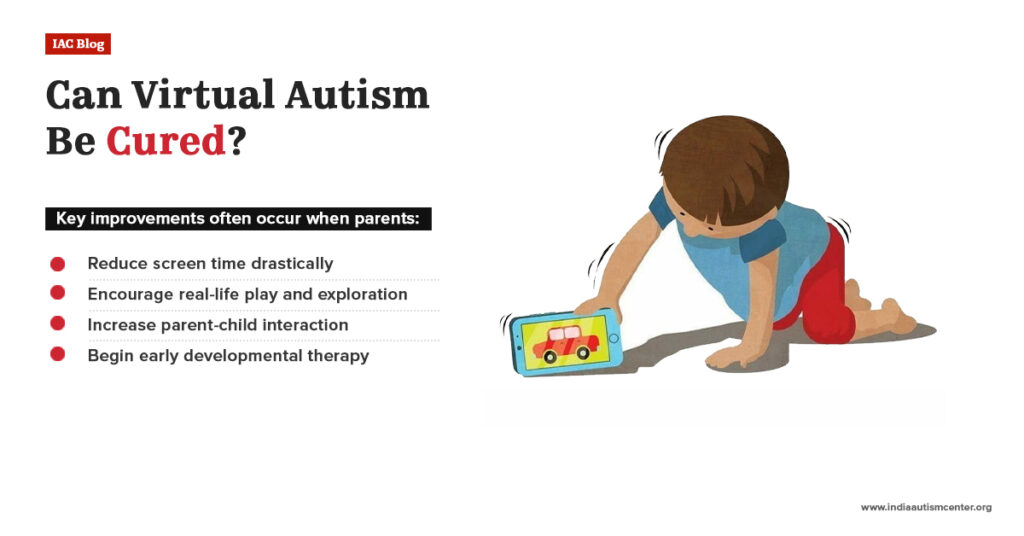
Key improvements often occur when parents:
- Reduce screen time drastically
- Encourage real-life play and exploration
- Increase parent-child interaction
- Begin early developmental therapy
However, every child is different. So, professional assessment remains essential.
Virtual Autism Therapy: Effective Interventions
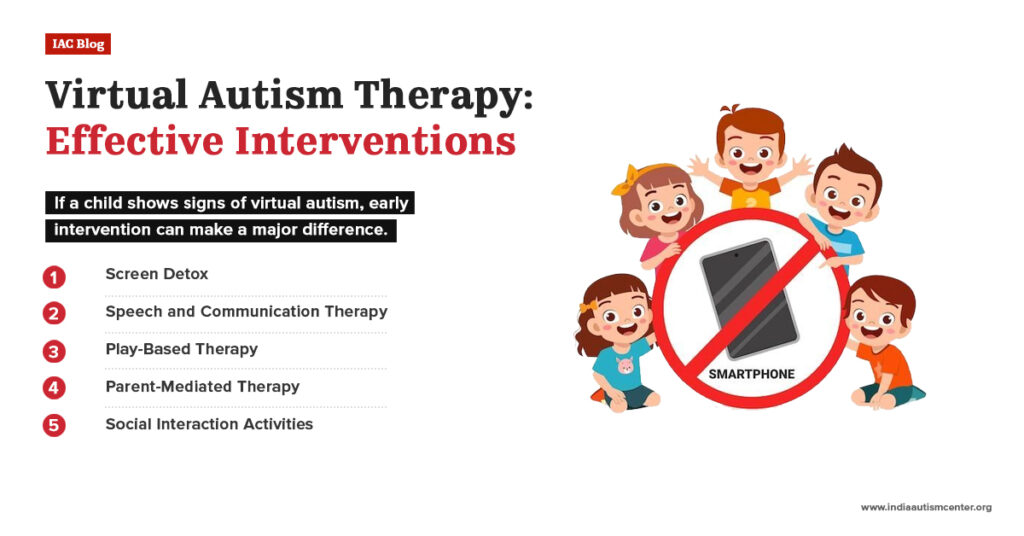
If a child shows signs of virtual autism, early intervention can make a major difference.
Let me walk you through some effective virtual autism therapy approaches.
1. Screen Detox
The first step usually involves reducing or eliminating screen exposure.
Many experts recommend:
- No screens for children under 2 years
- Limited, supervised use for older children
Replacing screen time with interactive activities helps stimulate development.
2. Speech and Communication Therapy
Speech therapy can help children:
- Develop vocabulary
- Improve communication skills
- Learn conversational responses
Therapists also guide parents on interactive communication strategies.
3. Play-Based Therapy
Children learn best through play.
Therapists often use structured play sessions to improve:
- Social engagement
- Attention
- Problem-solving skills
4. Parent-Mediated Therapy
Parents play a central role in supporting development.
Professionals may train parents to:
- Use interactive language
- Encourage eye contact
- Create communication opportunities
5. Social Interaction Activities
Group activities help children practice:
- Turn-taking
- Emotional recognition
- Peer communication
Want to know more? Get in touch with us.
When Should You Seek Professional Help?
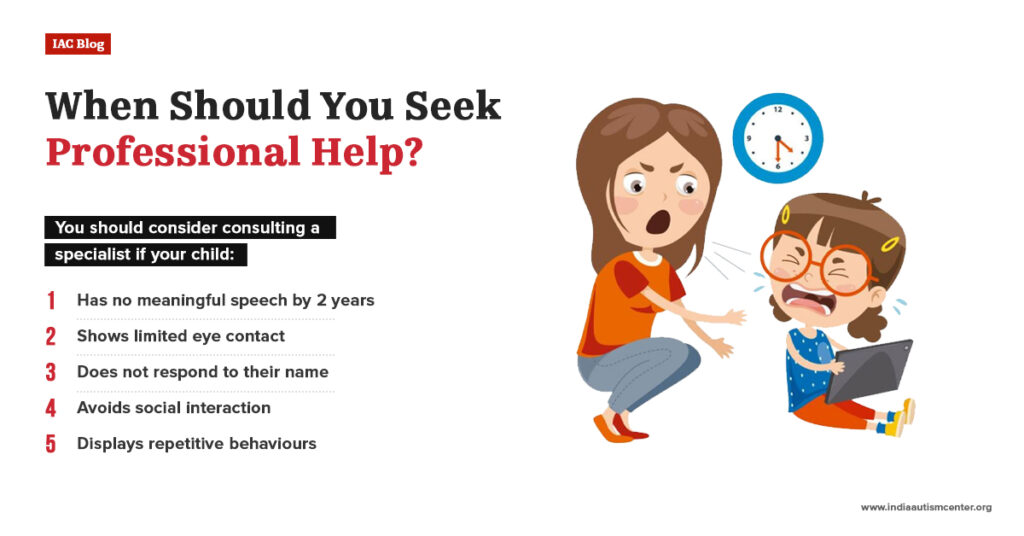
You should consider consulting a specialist if your child:
- Has no meaningful speech by 2 years
- Shows limited eye contact
- Does not respond to their name
- Avoids social interaction
- Displays repetitive behaviours
Early evaluation helps determine whether the symptoms relate to virtual autism, developmental delay, or ASD.
Conclusion
The rise of digital technology has changed childhood dramatically. While screens can be useful tools, excessive exposure during early development can affect social and communication skills.
Understanding virtual autism helps parents recognise the importance of balanced childhood experiences.
The good news is that early intervention, reduced screen time, and supportive therapy can significantly improve outcomes for many children.
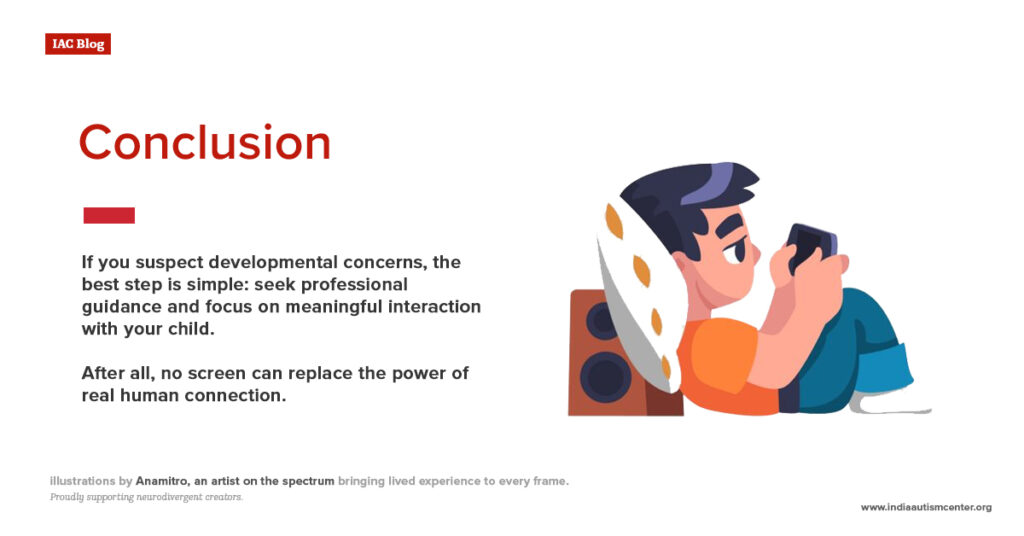
If you suspect developmental concerns, the best step is simple: seek professional guidance and focus on meaningful interaction with your child.
After all, no screen can replace the power of a real human connection.
Frequently Asked Questions
What is virtual autism?
Virtual autism refers to autism-like symptoms in young children that may appear due to excessive screen exposure and limited real-world interaction during early development.
What are the main virtual autism symptoms?
Common virtual autism symptoms include delayed speech, poor eye contact, limited social interaction, reduced response to name, and repetitive behaviours.
Can virtual autism be cured?
In many cases, symptoms improve when screen time is reduced and early intervention therapies are introduced. However, professional assessment is important.
What is the difference between classical and virtual autism?
Classical autism is a neurodevelopmental condition present from early brain development, whereas virtual autism symptoms are believed to arise due to environmental factors such as excessive screen exposure.
For expert insights, support services, and inclusive learning initiatives, visit the India Autism Center.