Tag: early intervention for autism

  • Top 11 Autism Spectrum Disorder Schools in Dubai (2026)

    Top 11 Autism Spectrum Disorder Schools in Dubai (2026)

    Dubai is known as one of the fastest-growing cities in the world, and finding an autism spectrum disorder school in Dubai can feel overwhelming. One of the key questions on a worried parent’s mind is: Will my child be understood? Will the learning include different autism therapies available in Dubai? 

    The good news is that parents can find Autism Spectrum Schools in Dubai that are the perfect choice for them. Dubai has steadily emerged as a regional hub for quality special education and therapy. So finding a school for kids with Autism Spectrum Disorder, also known as ASD, is not difficult.

    In this article, we will explore the top autism schools in Dubai, the reasons why Dubai is a great choice for educating your kids, and how you can find the best one.

    Understanding Autism Spectrum Disorder

    ASD is a neurodevelopmental condition. This condition is known to affect a person’s communication, social interactions, and sensory information processing. 

    The word spectrum is used because every autistic child is different. Some may need substantial support in daily activities, while others may require targeted help with communication, sensory regulation, or social skills.

    Key characteristics of a child with ASD include:

    • There are differences in verbal as well as non-verbal communication.
    • Social interactions and peer relationships are challenging.
    • They often prefer routine and predictability.
    • They have sensory sensitivities mainly to light, sound, or even movement.
    • Nonetheless, they may show unique strengths in memory, focus, or visual learning.

    Children with ASD experience the world a little differently, and hence the goal of education and autism therapy in Dubai is to help each child reach their fullest potential, be it academically, socially, or emotionally.

    Why Choose Dubai for Accessing Education for ASD?

    Dubai’s education ecosystem has evolved rapidly over the last decade. People are now more aware, and hence, the city has a lot to offer to children with ASD. Finding the right education from the onset is a key part of early intervention

    Some of the reasons why Dubai is emerging as a hub for education for autistic kids:

    • Schools in Dubai follow international best practices, mainly for special education.
    • You can access multidisciplinary autism therapy services in Dubai.
    • Government recognition and regulation of special needs schools
    • You will find greater inclusion in mainstream educational frameworks.

    Many autism spectrum disorder schools in Dubai follow evidence-based approaches similar to leading global centres.

    What Defines a High-Quality Autism Spectrum Disorder School?

    For a parent with a child on the spectrum, it can be a challenging task to find the correct school. Nonetheless, it is one of the key decisions. A high-quality autism school is not just a place where children “go to learn”; it is a space where they are understood, supported, and empowered to grow at their own pace. 

    The difference between an average school and a truly effective setup is key, as it determines whether progress is slow or meaningful and life-changing.

    The top autism spectrum disorder schools emphasise the fact that autism is indeed a spectrum and not a singular experience. Instead of a rigid methodology, efficient schools aim to build flexible, evidence-based, and deeply child-centred environments. 

    Here is what truly makes an autism spectrum disorder school the best one;

    1. Education Plans that Reflect the Child

    A well-designed Individualised Education Plan (IEP) is one of the best features of a high-quality autism school in Dubai. It is a roadmap that is curated especially for each child.

    Here is what a strong IEP does:

    • It is based on detailed assessments of communication, cognition, sensory needs, and daily living skills
    • Sets realistic, measurable, and meaningful goals
    • It is reviewed and updated regularly as the child grows

    A high-quality autism therapy school in Dubai understands that each autistic child will learn uniquely. This understanding is not a good-to-have feature; it is a foundational requirement. 

    2. Integrating Therapy into Daily Learning

    The extent to which different autism therapies available in Dubai are woven into everyday schooling essentially shows the excellence of the autism spectrum disorder school. When an autism spectrum disorder school is high-quality, therapy does not feel disruptive or separate; it feels natural and becomes part of how children learn, communicate, and engage.

    Let us look at how the best autism spectrum disorder schools integrate therapy into the daily curriculum:

    • Applied Behaviour Analysis (ABA) to build communication as well as learning skills
    • Speech and language therapy to support expressive and receptive language
    • Occupational therapy, which supports sensory regulation, motor skills, and independence
    • Social skills training included in real classroom interactions

    3. Low Student-Teacher Ratio

    Individual attention is necessary as children with autism require predictability, structure, and consistent guidance. The top autism schools in Abu Dhabi and Dubai will maintain a low student-to-teacher ratio, which will ensure that each child receives appropriate attention. 

    A low student-teacher ratio is beneficial in the following ways:

    • A teacher can find and respond to emotional or sensory overload quickly 
    • Teachers can have a much more meaningful, trusting, and secure relationship with the students.
    • Teachers can adapt to different teaching strategies in real time. 

    In a well-run autism school in Abu Dhabi and Dubai, quality is measured not by class size alone, but by the depth of engagement with each child.

    4. Trained, Certified, and Experienced Faculty

    A strong faculty reflects that the autism spectrum disorder school is worthy of its name. High-quality autism schools invest heavily in specialised training and continuous professional development.

    Here is what you can expect from an excellent autism school faculty:

    • Special educators who are trained in autism-specific methodologies
    • Board-certified behaviour analysts (BCBAs) or equivalent professionals
    • Speech and occupational therapists experienced in neurodevelopmental care
    • Support staff trained in sensory regulation and positive behaviour support

    Each professional works as part of a collaborative team, ensuring consistency in therapy and education. 

    5. A Safe and Friendly Environment

    Children on the spectrum have a hard time dealing with the physical environment. You know an autism school is spectacular when it designs the space to support sensory needs and reduce sensory overload. 

    How autism schools in Abu Dhabi or Dubai make an autistic child feel safe:

    • A calm colour palette is selected, along with controlled lighting 
    • Background noise is kept to a minimum 
    • The learning zones are clearly defined 
    • Quiet spaces are created to regulate emotions. 

    All these things help an autistic child feel emotionally secure and regulated, and they also help them stay focused, which makes learning much more effective. 

    6. Parent Involvement and Transparent Communication

    Parents are considered partners in a high-quality school for students with autism spectrum disorder. Open communication and collaboration are essential for long-term progress. 

    Here is what an excellent school will offer:

    • Regular progress updates and review meetings
    • Parent training sessions to support learning at home
    • Honest discussions about challenges and milestones

    Children get optimum support when parents and educators work together. 

    7. Focus on Emotional Wellbeing and Dignity

    In an efficient autism school, the dignity, individuality, and emotional well-being of every child are top priorities. Children are not disciplined but understood, and the behaviour is not seen as defiance but communication. 

    Thus, the children feel safe, accepted, and valued for who they are. This is the distinction between a normal school and a top autism spectrum disorder school in Dubai. 

    8. Data-Driven Progress Monitoring

    When it comes to the best autism school in Dubai, they primarily rely on data and take action accordingly. There is no guesswork or assumptions. They track progress carefully to understand what is working and what needs adjustment.

    Some of the best autism schools include:

    • Behavioural data tracking
    • Skill acquisition charts
    • Regular reassessments

    Top Autism Spectrum Disorder Schools in Dubai

    Selecting the most suitable school for a child on the spectrum is quite an emotional decision. Parents are not only looking for classrooms and curricula; they are looking for understanding, safety, progress, and trust. 

    Parents can find several options in Dubai as the availability of specialised autism education has expanded significantly, giving families more informed choices than ever before.

    Here are the top autism spectrum disorder schools that parents trust, as they offer a unique approach to education and therapy:

    1. Dubai Autism Centre

    In the UAE, the Dubai Autism Centre is one of the most prominent schools for students with autism spectrum disorder. Its philosophy of early intervention is what sets it apart. The centre strongly believes that identifying autism early and initiating structured intervention in the formative years can significantly improve communication, learning ability, and daily functioning.

    Why Parents Should Choose Dubai Autism Centre:

    • The school follows evidence-based teaching and therapy models. 
    • It offers individualised education programs (IEPs) tailored to a child’s strengths and weaknesses.
    • The student-to-teacher ratio is low for better focus and attention on students.
    • Active parent involvement in terms of counselling, training, and feedback.
    • Safe, structured, and sensory-friendly environment designed for autistic learners

    2. Rashid Centre for People of Determination

    rashid centre for people of determination

    This centre is one of the oldest yet most respected educational institutions in Dubai. Established with a strong social mission, the centre supports children with Autism Spectrum Disorder (ASD) as well as other developmental and learning differences, making it a trusted name among parents seeking reliable autism spectrum disorder schools.

    Why Parents Should Choose Rashid Centre for People of Determination:

    • The school has decades of experience in special education and autism support
    • Individualised learning and therapy programs tailored to each child
    • Trained and compassionate multidisciplinary team
    • Integrated therapies, including speech, occupational, and behavioural support
    • Strong emphasis on life skills and independence

    3. Emirates Autism Centre

    emirates autism centre

    For parent who are seeking a structured, evidence-based intervention for their child, Emirates Autism Centre is a top choice. The centre has earned the trust of parents through its clear focus on improving communication, behaviour, learning readiness, and functional independence in children with Autism Spectrum Disorder (ASD).

    Why Parents Choose Emirates Autism Centre:

    • Strong emphasis on early intervention, primarily for young autistic children
    • Different therapies are integrated into daily schedules, not isolated therapy sessions
    • Regular progress monitoring and transparent parent communication
    • Parent guidance and training, thereby enabling consistency and practice at home
    • Evidence-based therapies, such as ABA, speech, and occupational therapy

    4. Al Noor Training Centre

    Al noor training centre

    Al Noor Training Centre is one of the most respected special education institutions which parents can opt for in Dubai. It has a long-standing commitment to support children on the spectrum. For families who are looking for reliable autism schools in Dubai, Al Noor is a place where experience, compassion, and structured intervention come together for meaningful growth.

    Why Parents Should Choose Al Noor Training Centre:

    • Holistic development focus, not limited to academics
    • Calm, structured, and sensory-sensitive learning environment
    • Supportive and inclusive culture that respects every child’s dignity
    • Active collaboration with parents, including guidance and regular updates
    • Individualised education and therapy plans for every child

    5. Jewel Children with Autism Rehabilitation Centre

    jewel children with autism and rehabilitation center

    Jewel Children with Autism Rehabilitation Centre is another option for parents seeking intensive, therapy-led intervention for their child on the spectrum. The centre is appreciated for the focused and hands-on approach that prioritises communication, behaviour regulation, and functional development from an early age.

    Why Parents Choose Jewel Children with Autism Rehabilitation Centre:

    • Strong focus on rehabilitation as well as therapy-led intervention
    • Early intervention programs which are curated specifically for young autistic children
    • Regular progress assessments and data-driven goal tracking
    • Evidence-based therapies, including ABA, speech, and occupational therapy
    • Experienced multidisciplinary team trained in autism intervention

    6. The Doris Duan

    the doris duan

    Also referred to as DDY, it has a strong reputation as an autism school in Dubai. The centre combines evidence-based intervention, multidisciplinary services, and family-centred care to support children with Autism Spectrum Disorder (ASD) and their families.

    Why Parents Should Choose The Doris Duan: Young Autism Centre, Dubai, UAE

    • Combines ABA, speech therapy, occupational therapy, physical therapy, and educational support
    • Highly individualised treatment and learning plans
    • Focus on communication and functional skills
    • Emphasis on real-world skill generalisation

    7. Dubai Centre for Special Needs

    dubai center for special needs

    It is one of the most recognised institutions that supports children on the spectrum. As a dedicated special needs school, the centre is committed to instilling independence, confidence, and social participation among children with diverse learning profiles.

    Why Parents Should Choose the Dubai Centre for Special Needs:

    • Support for social, emotional, and life skills
    • Structured routines, which are known to benefit children with autism
    • Long-standing reputation in Dubai’s special needs education landscape
    • An inclusive environment that encourages community participation

    8. Small Steps Learning Difficulties Centre

    Small Steps Learning Difficulties Centre is widely recognised as an autism school in Dubai that provides individualised, evidence-based intervention programs to help students flourish academically, socially, and emotionally, especially within inclusive school settings.

    Why Parents Should Choose the Small Steps Learning Difficulties Centre:

    • Offers individualised intervention plans especially created to suit each child’s needs.
    • Uses evidence-based ABA strategies to support communication and behaviour.
    • Certified team with expertise in autism and developmental support.
    • Recognised for promoting confidence, independence, and social growth.

    9. Safe Centre for Autism

    Initially, this autism school in Dubai was established as a non-profit special education institution, and it aims to provide structured education and therapeutic support in a nurturing environment. What sets Safe Centre apart is its holistic, student-focused approach. The centre operates a well-designed day program for children on the spectrum aged 4–16 years, where they offer small classroom settings with skilled teachers and assistants.

    Why Parents Should Choose the Safe Centre for Autism:

    • Small class sizes with focused attention
    • Use of recognised assessment tools for progress tracking
    • Strong parent collaboration and regular feedback
    • Sensory-friendly and predictable learning environment

    10. Seed Special Education Centre

    seed special education center

    What sets Seed Special Education Centre apart is that it offers specialised education therapy and interventions that are curated to suit the needs of children with ASD and other neurodevelopmental differences. At SEED, children receive personalised support designed to unlock their strengths and support areas of challenge.

    Why Parents Should Choose the Seed Special Education Centre:

    • Experienced team including educators, therapists, and psychologists
    • Works in partnership with families and schools for consistent support.
    • Provides speech, behavioural, and educational therapy services under one roof.
    • Offers comprehensive psycho-educational assessments to guide intervention plans.

    11. Pulse Therapy and Learning Centre

    pulse therapy and learning center

    Founded in 2007, this autism school in Dubai helps children on the spectrum to improve communication, behaviour, social skills, and school readiness. What makes Pulse Therapy and Learning Centre stand out from other therapy providers is its blended support model.

    Why Parents Choose the Pulse Therapy and Learning Centre:

    • Comprehensive ABA therapy for behaviour and skill development
    • Speech and language therapy integrated with educational goals
    • Occupational therapy, which aims to support sensory, motor, and daily living skills
    • Personalised treatment plans based on detailed assessments

    Conclusion

    Dubai is known for several schools that serve children on the spectrum. Dubai’s growing network of specialised schools and centres shows a much deeper-rooted commitment to early intervention, evidence-based education, integrated therapy, and family partnership. Parents now have access to environments that prioritise understanding over labels and progress over pressure. Hence, parents must consider various options before finalising one. Remember to choose a school that aligns with your requirements and ensures your child feels safe, secure, and valued. 

    Frequently Asked Questions

    What are autism spectrum disorder schools?

    Autism spectrum disorder schools are specialised educational institutions designed to support children with autism through personalised teaching, structured routines, and integrated therapies that address communication, behaviour, and life skills.

    How do autism schools in Dubai differ from regular schools?

    Autism schools focus on individualised education plans, smaller class sizes, trained specialists, and integrated therapies, unlike regular schools that follow a standard curriculum for all students.

    Can autistic children attend inclusive mainstream schools in Dubai?

    Yes. There are several children on the spectrum who benefit from inclusive education, attending mainstream schools with SEND support, depending on their abilities and support needs.

    What is an Individualised Education Plan?

    An IEP is a personalised roadmap outlining a child’s learning goals, therapy targets, teaching strategies, and progress tracking, reviewed regularly with parents.

  • Speech Delay vs Autism: Key Differences Explained

    Speech Delay vs Autism: Key Differences Explained

    Every parent is eager to hear their child’s first words, regardless of whether it is as simple as “no”. But what happens when those words take longer to come? You might start to wonder: Is my child just a late talker, or could it be something more, like autism?

    It is a natural question that comes to mind. Especially when speech delay is a common occurrence in children aged 3 to 5 years. On the other hand, globally, about 0.77% of children are diagnosed with ASD (Autism Spectrum Disorder). 

    Because both conditions can present as “delayed speech”, it’s easy for parents to feel confused or even alarmed when milestones don’t align.

    The good news is that speech delay and autism are not the same. Understanding the subtle yet important differences between the two can help you take the right steps early, whether that means seeking speech therapy, undergoing development, or simply requiring more time and support.

    Today, we will explore the speech delay vs autism and discuss what parents and caregivers can do to support individuals with these conditions.

    Understanding Speech Delay

    Illustration of a parent teaching speech to a young child using gestures, highlighting common speech delay symptoms.

    In simple terms, speech delay is when a child is unable to produce words or sentences in comparison to other children their age. However, the pattern of learning typically follows a similar path.

    Children with speech delay typically understand what’s being said to them (their receptive language) but struggle to express themselves verbally (expressive language).

    For example, they may follow instructions such as “Bring your shoes,” but they may not be able to say “shoes here” or even “I want shoes.”

    Some of the most common speech delay symptoms include:

    • Limited babbling by 12 months
    • No single meaningful words by 16–18 months
    • Not combining words by age 2 (e.g., “want juice”)
    • Speech that’s difficult for even the family to understand
    • Frequent use of gestures to communicate instead of words

    There are different reasons that can lead to speech delay, such as hearing impairment, oral-motor difficulties, cognitive delay, multilingual environments, or simply a “late bloomer” tendency.

    In conclusion, speech delay does not imply autism.

    Understanding Autism Spectrum Disorder (ASD)

    Illustration of a child surrounded by colorful puzzle pieces, listing common symptoms of autism spectrum disorder

    Autism, otherwise known as Autism Spectrum Disorder (ASD), is a neurodevelopmental condition which has an effect on communication, social interaction, and behaviour. It is to be noted that speech delay is one of the symptoms of autism, but many more developmental differences define if a child has autism.

    Often, children who have autism develop speech delay. Sometimes, a child with autism might not even have a speech delay. However, even when words appear, they may use them in unusual ways (e.g., repeating phrases or scripting lines from TV shows).

    Some of the most common autism symptoms include:

    • Reduced eye contact or social engagement
    • Limited use of gestures such as pointing towards an object or waving
    • Lack of response to name
    • Repetitive behaviours (flapping, lining up toys, spinning objects)
    • Strong preference for routines or sameness
    • Sensitivity to sound, touch, or light
    • Speech that’s monotone, robotic, or echolalic (repetition of words or phrases)

    Contrary to popular beliefs, autism does not happen due to poor parenting, vaccination, or poor diet. It is essentially a neurological and developmental issue. If diagnosed early, with proper treatment, communication, and social skills can improve considerably. 

    Speech Delay vs Autism: Key Differences

    Comparison chart highlighting key differences between speech delay and autism with a brain and puzzle piece illustration

    It is a natural phenomenon to feel confused between speech delay as well as autism. However, they are different from one another. When a child struggles with forming or using words, it is a speech delay, while autism involves broader challenges in communication, social interaction, and behaviour.

    It is essential to understand the distinction between speech delay and autism, allowing for timely intervention. Here is a side-by-side comparison of speech delay vs autism:

    FeatureSpeech DelayAutism
    Primary issueSlower speech development; articulation or word-use lagsCore issues in social communication & interaction + repetitive behaviours; speech may be delayed or atypical
    Social engagementThe child typically uses gestures, points, makes eye contact, and tries to communicate non-verbally despite delayed speech.The child may have reduced eye contact, limited pointing or gesturing, less joint attention and may prefer solitary play.
    Non-speech behavioursUsually no major behavioural or play issues beyond the speech domain.Presence of repetitive behaviours, restricted interests, difficulty with change of routine, etc. 
    Outcome & interventionWith speech therapy and support, many children catch up.Lifelong profile; early intervention helps significantly, but the condition tends to remain on the spectrum.
    Speech patternTypical pattern but slower; errors in production, short phrases.Speech may be absent/very delayed or present but atypical (echolalia, literal language, unusual prosody).

    For example, when a two-year-old doesn’t speak but points to objects, imitates gestures, and also plays pretend, speech delay may develop. On the other hand, a child who does not point to any object, tends to avoid eye contact, and often fixates on spinning objects has higher chances of being diagnosed with autism.

    Is Speech Delay Autism?

    Illustration of a yellow silhouette with a question mark, depicting the question of whether speech delay is autism

    Since it is easy to get confused due to similar symptoms of both speech delay and autism, the reality is that speech delay itself is not autism. However, one of the many symptoms of autism is speech delay when it appears along with social as well as behavioural differences. 

    Many children with speech delays do not have autism and catch up with therapy, but if other developmental red flags appear, further assessment is needed.

    So, is speech delay autism? No, a child with speech delay is not autistic, but every child with autism tends to have speech delay. 

    Signs that Hint at Autism in the Presence of Speech Delay

    Illustration of a child covering face surrounded by sensory icons, explaining signs that indicate autism in the presence of speech delay

    Speech delay is an early sign of autism. However, it is not necessarily always the case. Hence, it is essential to recognise the additional signs to look for. Here are some “red flag” behaviours:

    • If you find that there is limited babbling by 12 months. Or if there is a loss of babbling. 
    • No single words by 16 months, or loss of previously acquired words. 
    • Not pointing at objects, not waving or using gestures to display their interest. 
    • Doesn’t respond to their name by 9-12 months or seems indifferent. 
    • Limited eye contact or social smiling. 
    • Often displays repetitive behaviour, mainly including hand-flapping, spinning objects, or even lining up their toys. 
    • Strong preference for sameness and difficulty with change. 
    • Unusual speech: echolalia, literal language, or monotone or robotic prosody.

    If many of the listed signs begin to appear, it is time to have a complete evaluation done.

    Why Does Making the Distinction Matter?

    Illustration of a parent playing and communicating with a child using blocks, emphasizing why distinguishing autism from speech delay matters

    Understanding whether a child has a speech delay or autism is not about labelling them; it is about finding the right approach to obtain help at the right time. Early and accurate identification allows parents, therapists, and educators to tailor interventions that match the child’s specific needs.

    When parents and caregivers understand the difference between speech delay and autism, they can take action and offer support that can have a lifelong impact. 

    Graphic showing key reasons to understand autism and speech delay concepts, including intervention timing and therapy focus

    Here is why it is necessary to understand the speech delay vs. autism concepts:

    Intervention Timing

    Children with speech delays can receive speech-language therapy that can lead to significant catch-up. For autism, early multi-modal intervention (speech, occupational therapy, and behavioural therapy) is linked to better outcomes.

    Focused Therapy

    For speech delay, focused therapy can be provided to address articulation, sentence formulation, and vocabulary. On the other hand, for autism, more focus is on improving social skills, play skills, sensory regulation, and routine management.

    Expectations and Support Services

    Families of a child who is diagnosed with autism may have the chance to access specialised services, support networks and long-term planning. Appropriate planning can only be done when a parent understands the distinction between speech delay and autism.

    Monitoring and Collaboration

    If you treat it as a speech delay but miss warning signs of autism, you might miss an earlier chance to intervene more comprehensively.

    What Can Parents and Caregivers Do?

    Illustration of a mother helping her child read a book, highlighting steps parents and caregivers can take to support children with speech or communication challenges

    Parents and caregivers have to be aware of communication delays, as they can be both confusing and emotionally distressing. The key is not to panic but to take proactive, informed steps.

    There are different steps that parents as well as caregivers have to take, such as seeking a professional evaluation, engaging in early intervention programmes, or using supportive communication techniques at home. It can make a significant difference.

    The measures that a parent or a caregiver can take include:

    1. Tracking Development Milestones

    You can utilise speech or language milestones such as babbling by ~9–12 months, single words by ~16 months, and two-word phrases by ~24 months. If your child is not meeting expected milestones, it is essential to consult a paediatrician, a developmental paediatrician, or a speech-language pathologist.

    Reaching out to a professional can help you determine if the issue is just related to speech delay or if other broader developmental or behavioural signs imply autism.

    2. Engage in Early Intervention Services

    Once you have a diagnosis or developmental report, don’t delay intervention. In India, early intervention programs, such as speech therapy, occupational therapy, and behavioural therapy (like ABA).

    These therapies help to improve communication, cognitive development, and social interaction skills. The earlier the therapy begins, the more effective it tends to be.

    3. Practise Speech and Communication at Home

    Parents have to include interactive activities in their child’s speech development to enhance their child’s speech skills. Here are some actions that can help:

    • Reading storybooks aloud every single day
    • Naming different objects while playing
    • Encouraging to repeat simple words
    • Singing rhymes or using picture cards

    It will strengthen both expressive and receptive language and also create a positive communication environment. 

    4. Observe and Encourage Social Interaction

    Social reciprocity is a common challenge that children with autism face. Some symptoms include difficulty making eye contact, difficulty sharing joy, and not responding to their name when called. 

    It is essential to foster small but meaningful interactions through play-based learning, where communication occurs naturally and organically. You can encourage children to get engaged in playing turn-based games or engage in pretend play, which helps build joint attention and empathy.

    5. Stay Patient and Consistent

    Parents/caregivers need to understand that progress will not happen overnight. Whether your child is receiving speech therapy or autism support, consistency and emotional reassurance matter most.

    It is important to celebrate even minor milestones. Moreover, a calm environment is to be maintained. It also helps to keep routines predictable, as it provides a sense of safety for children with communication difficulties.

    6. Join Support Networks and Communities

    Parents who have children with such concerns can feel quite calm yet empowered when they connect to other parents with similar experiences. You’ll gain practical tips, emotional support, and access to professionals who specialise in both speech delay as well as autism management.

    How Does Therapy Differ for Speech Delay vs. Autism?

    comparison chart showing differences in therapy for speech delay and autism with illustrated healthcare professionals wearing masks.

    Even though certain symptoms are similar for speech delay and autism, the treatment approaches for speech delay versus autism are quite different. Understanding these distinctions helps parents choose the right kind of intervention tailored to their child’s unique developmental needs.

    Here is a side-by-side comparison of how therapy differs for speech delay versus autism:

    Therapy FocusSpeech DelayReading aloud, naming objects, and interactive play
    Main GoalImprove articulation, vocabulary, and sentence useEnhance communication, social understanding, and behavioural regulation
    ApproachSpeech-language therapy, parent modelingMultidisciplinary: speech, occupational, behavioural (ABA)
    Home SupportVisual schedules, sensory integration, and structured social activitiesVisual schedules, sensory integration, structured social activities
    Expected OutcomeCatching up to peers within 6–12 months of therapyGradual progress; lifelong communication growth with continuous support

    When to Seek Professional Help?

    Do not wait for the condition to get worse. Once you find the signs below, it is time to seek professional help:

    • Isn’t babbling by 12 months
    • Doesn’t say single words by 16–18 months
    • Doesn’t combine words by 24 months
    • Doesn’t respond to their name or show interest in people
    • Avoids eye contact or play interaction

    You can consult a speech-language pathologist or a developmental paediatrician. If you get early screening for your child, it can help in better identification. 

    Conclusion

    Illustration of a happy child listening to music surrounded by colorful puzzle pieces, symbolizing progress and individuality in autism and speech delay therapy

    Whether it is speech delay or autism, it can tend to confuse parents and make them concerned, as the symptoms overlap. A speech delay mainly has an effect on a child’s ability to use or understand language, while autism involves broader challenges in communication, behaviour, and social connection. Identifying the distinction will help the child receive the right help. 

    With actions including early detection, consistent therapy, and compassionate guidance, children with communication challenges can make remarkable progress. Ultimately, it is essential to recognise that each child is unique and develops at their own pace. 

    Frequently Asked Questions

    Is speech delay the same as autism?

    No, they are not the same. Speech delay affects a child’s ability to produce or use words, while autism (ASD) involves challenges in social communication, sensory processing, and behaviour. Some children with autism may have speech delays, but not all children with speech delays have autism.

    What are the common symptoms of speech delay?

    Typical speech delay symptoms include limited vocabulary for age, unclear speech, difficulty forming sentences, and frustration when trying to communicate. However, these children typically show an interest in interacting with and understanding others.

    What causes speech delay?

    Speech delay can result from hearing loss, oral motor issues, bilingual exposure, lack of stimulation, or neurological conditions. It doesn’t necessarily indicate autism, but it may need professional assessment to identify the cause.

    How is autism diagnosed?

    To diagnose autism, developmental assessments, observing the child’s behaviour, and standardised tools like the ADOS (Autism Diagnostic Observation Schedule) are used.

    For expert insights, support services, and inclusive learning initiatives, visit the India Autism Center.

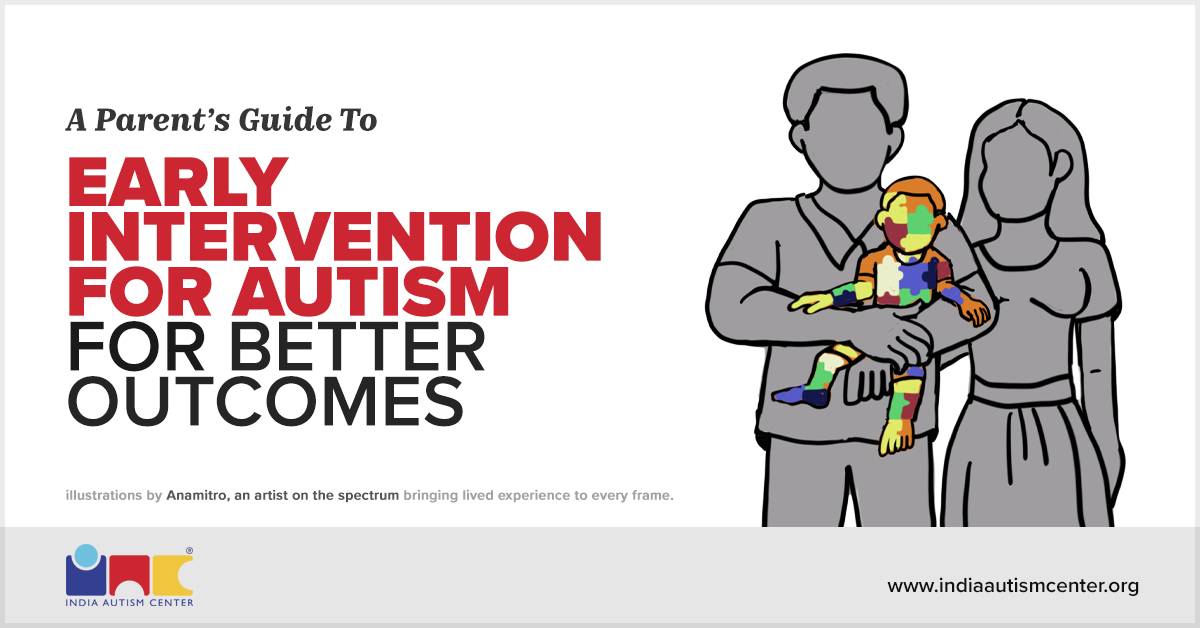
  • Early Intervention for Autism: A Parent’s Guide to Better Outcomes

    Early Intervention for Autism: A Parent’s Guide to Better Outcomes

    Imagine giving your child the right support before challenges begin to build. That’s the power of early intervention for autism spectrum disorder (ASD).

    In this guide, you’ll learn why early intervention for autism isn’t just beneficial, but essential.

    We’ll also walk you through how to recognize early signs, what early autism intervention actually involves, and the steps you can take to improve long-term outcomes.

    So, let’s begin.

    What Is Early Intervention For Autism?
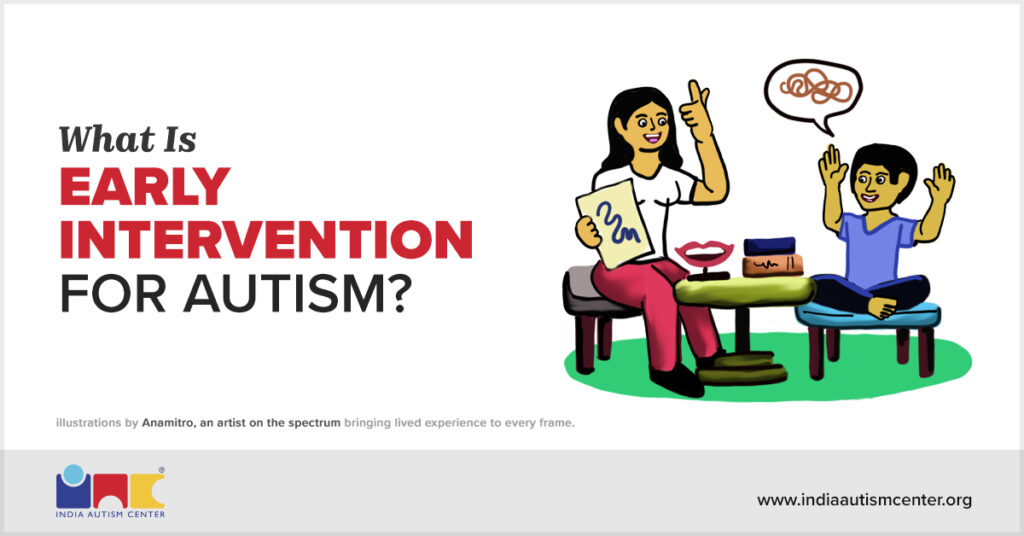
    Early intervention for autism spectrum disorder means providing targeted therapies and support to young children, ideally before they turn 3 years old. In many cases, it starts as early as 18 months.

    At this age, the brain develops rapidly. It remains highly plastic and especially receptive to learning, change, and growth. 

    Early autism intervention during this window reduces developmental delays, strengthens key life skills, and improves long-term outcomes.

    It typically addresses areas such as:

    • Communication and speech
    • Social interaction and play
    • Emotional regulation
    • Sensory integration
    • Gross motor skills (like walking, running, jumping)
    • Fine motor tasks (like feeding, writing, buttoning)
    • Daily self-care routines and more

    So, early intervention is highly effective in shaping a child’s developmental trajectory. As Raksheet Jain, Co-Founder of Aignosis, shared on the IAC podcast,

    This raises the question.

    When Should You Consider Early Intervention?
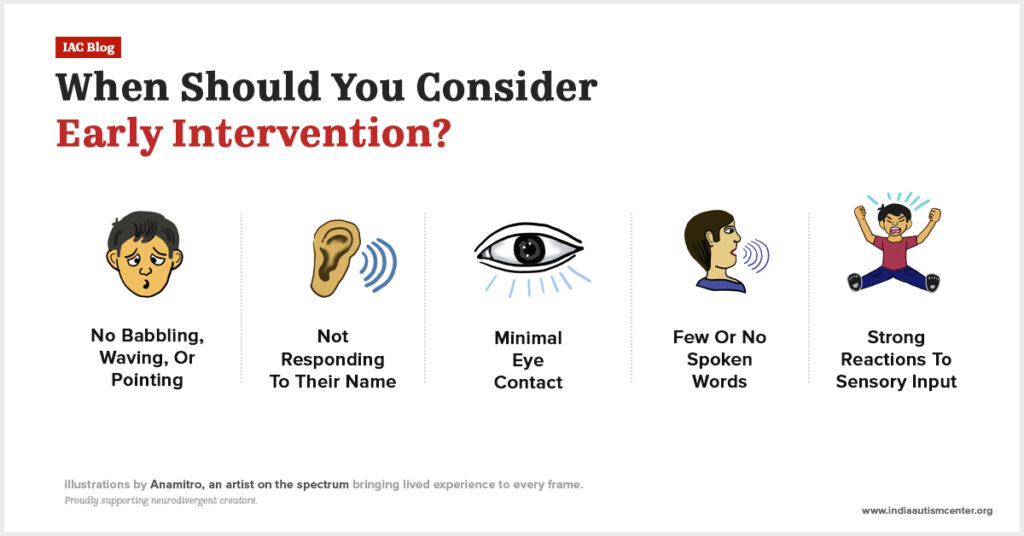
    When should you consider early intervention for autism.

    Recognizing early signs of autism is often the first step toward timely support. 

    These are the signs that often appear in the first three years. And spotting them opens the door to early support.

    The most common signs include:

    • No babbling, waving, or pointing by 12 months
    • Not responding to their name despite normal hearing
    • Minimal eye contact or shared expressions
    • Few or no spoken words by 16–18 months
    • Limited interest in social play or imitation
    • Strong, unusual reactions to sensory input (noise, light, textures)
    • Repetitive movements like hand-flapping or spinning
    • Rigid routines or distress over small changes

    Understanding these early signs is only part of the journey. The next and most impactful step is knowing why early intervention is important for autism.

    Benefits of Early Intervention In Autism
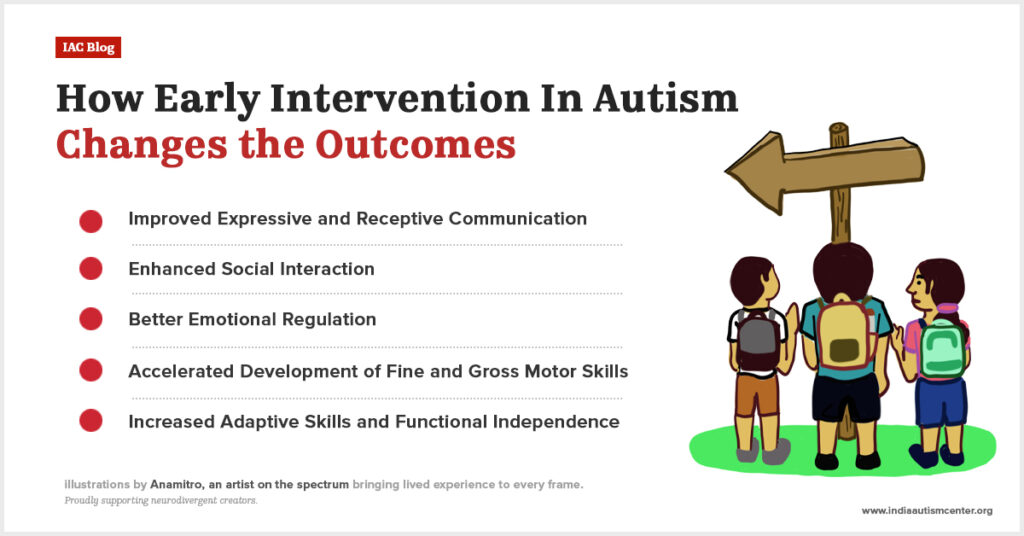
    Benefits of early intervention in autism.

    Without early intervention, progress often slows. 

    But with it? The difference can be dramatic.

    So, how does early intervention help autism? Let’s find out.

    Improved Expressive and Receptive Communication

    Early intervention for autism spectrum disorder is just about helping children talk. It nurtures both expressive and receptive communication. 

    This helps children move from single words or gestures to full thoughts, shared intent, and emotional clarity.

    With consistent therapy and parent-guided strategies, children begin to connect language with interaction.

    Enhanced Social Interaction and Reciprocal Engagement

    Through guided play, modeling, and structured therapy, children learn to:

    • Read facial expressions and social cues
    • Engage in back-and-forth interactions
    • Build confidence in peer relationships

    Over time, they gain the confidence to initiate and sustain peer relationships. This lays the groundwork for meaningful connections.

    Better Emotional Regulation and Behavioral Adaptation

    Meltdowns. Sensory overload. Sudden shutdowns. These can escalate quickly.

    Autism early intervention teaches children how to self-regulate using:

    • Calming routines
    • Sensory tools
    • Structured transitions

    This support reduces emotional outbursts and helps children respond more adaptively to daily challenges.

    Accelerated Development of Fine and Gross Motor Skills

    From climbing stairs to holding utensils, early intervention in autism improves both:

    • Gross motor skills (balance, coordination, strength)
    • Fine motor skills (grasping, writing, buttoning)

    Targeted therapies during this window help children gain physical confidence and independence.

    Increased Adaptive Skills and Functional Independence

    Feeding. Dressing. Toileting. Brushing teeth. Tasks that once felt impossible become manageable.

    That’s the real power of early autism intervention. It nurtures adaptive functioning, empowering children toward self-reliance and reducing dependence on others in daily life.

    Now that we’ve seen how outcomes improve with early support, let’s explore the proven strategies that make it happen.

    Early Intervention Strategies for Autism
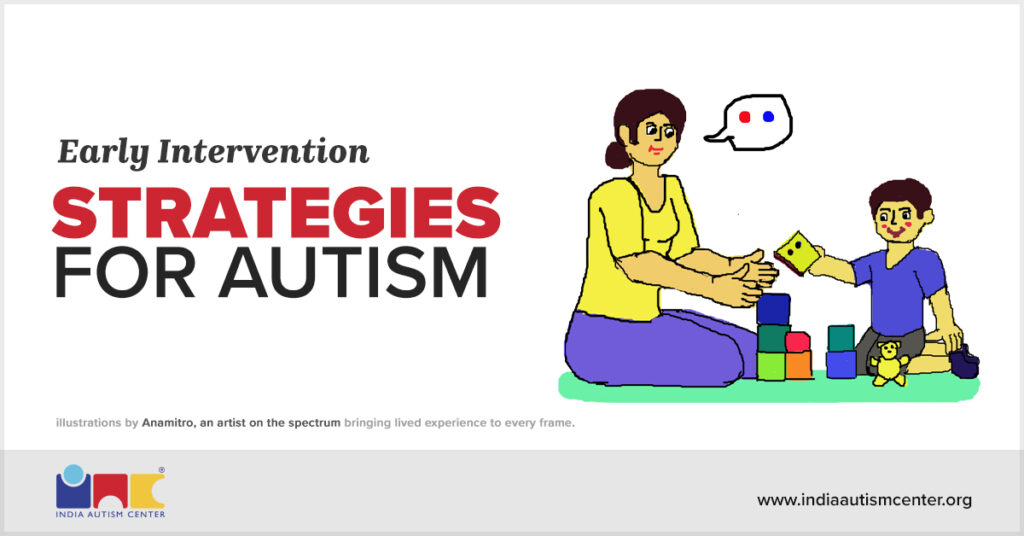
    Early intervention strategies for autism.

    So, where do you begin?

    Your first stop should be a developmental pediatrician, clinical psychologist, or rehabilitation psychologist. Ask them to conduct a developmental screening of your child.

    If screening raises concerns, early autism intervention can and should begin right away.

    Here are a few strategies that can make a lasting difference:

    Strategy 1: Build Positive Habits Early with Behavioral Therapy
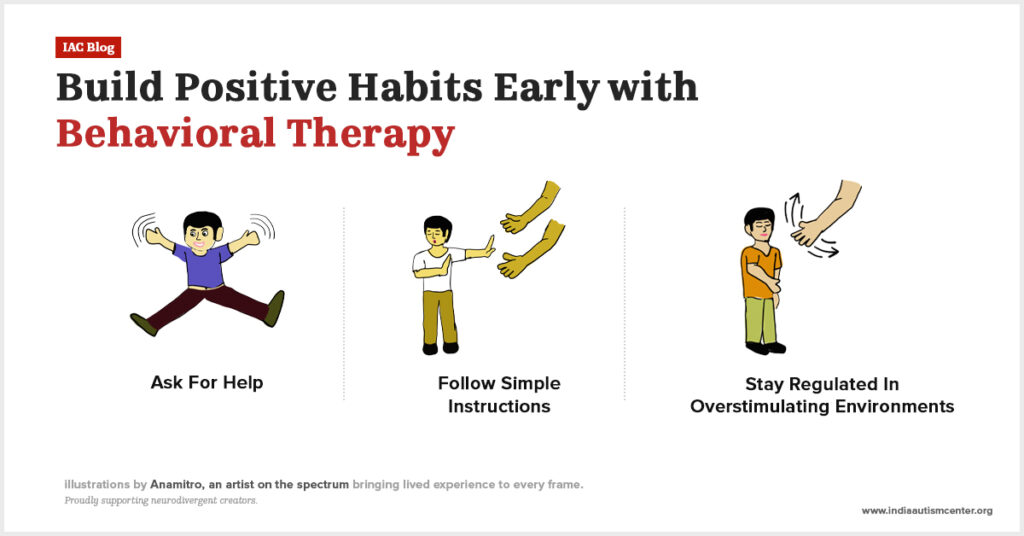
    Early autism intervention with behavioral therapy.

    Applied Behavior Analysis (ABA) is often among the first therapies introduced. It focuses on reinforcing positive behaviors through structured steps like rewards, routines, and repetition.

    With ABA, children learn to:

    • Ask for help
    • Follow simple instructions
    • Stay regulated in overstimulating environments

    Strategy 2: Boost Connection Through Social Skills Therapy
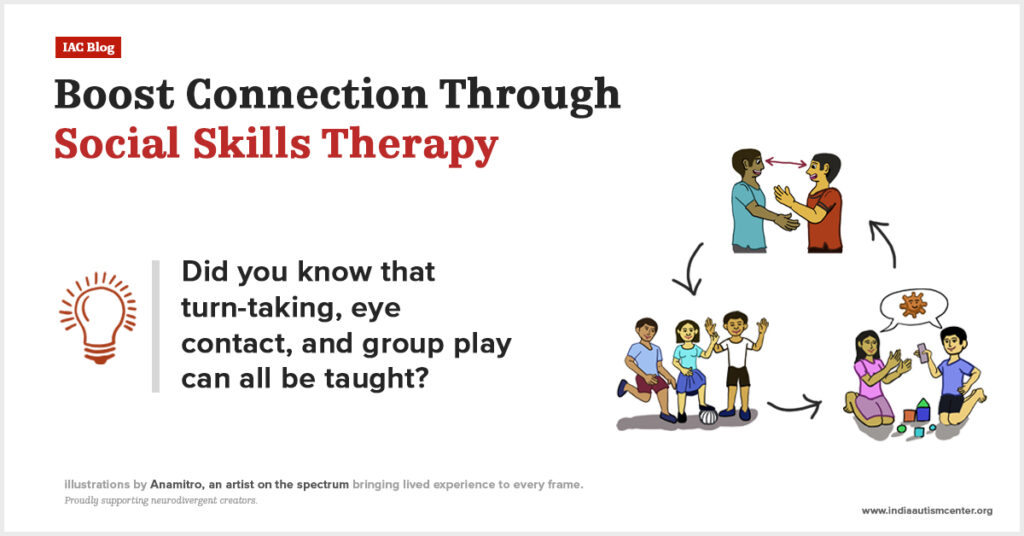
    Social skills therapy in early autism intervention.

    Did you know that turn-taking, eye contact, and group play can all be taught?

    Yes, social skills therapy teaches exactly these core relationship-building tools through guided play sessions and one-on-one modeling.

    As Shaireen Ali, Head of Clinical Services at India Autism Center, puts it,

    Strategy 3: Support Self-Expression with Communication Therapy
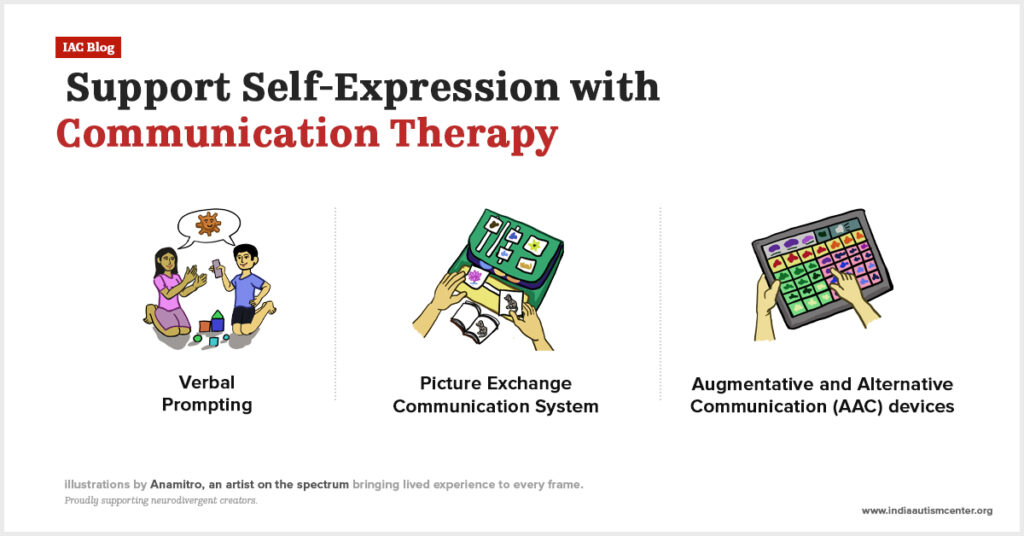
    Communication therapy in early autism intervention.

    Whether your child is verbal, nonverbal, or still finding their voice, speech, and language therapy plays a key role.

    Supports may include:

    • Verbal prompting
    • Picture Exchange Communication System (PECS)
    • Augmentative and Alternative Communication (AAC) devices

    The goal? Help the child express needs, emotions, and ideas on their own terms.

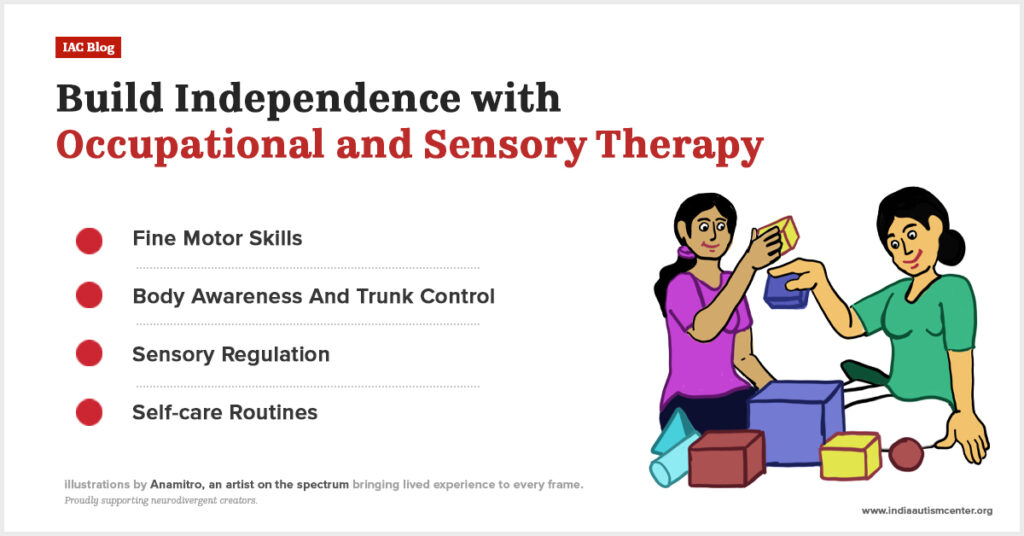
    Strategy 4: Build Independence with Occupational and Sensory Therapy
    Occupational and sensory therapy in early autism intervention.

    Let’s talk about daily life. Eating, dressing, drawing, and holding a spoon.

    In many autistic children, these skills need to be gently built, often from the ground up. That’s where occupational therapy (OT) comes in.

    It helps build:

    • Fine motor skills
    • Body awareness and trunk control
    • Sensory regulation
    • Self-care routines

    As Dr. R. S. Bagga, a renowned Occupational Therapist, shared on the IAC podcast,

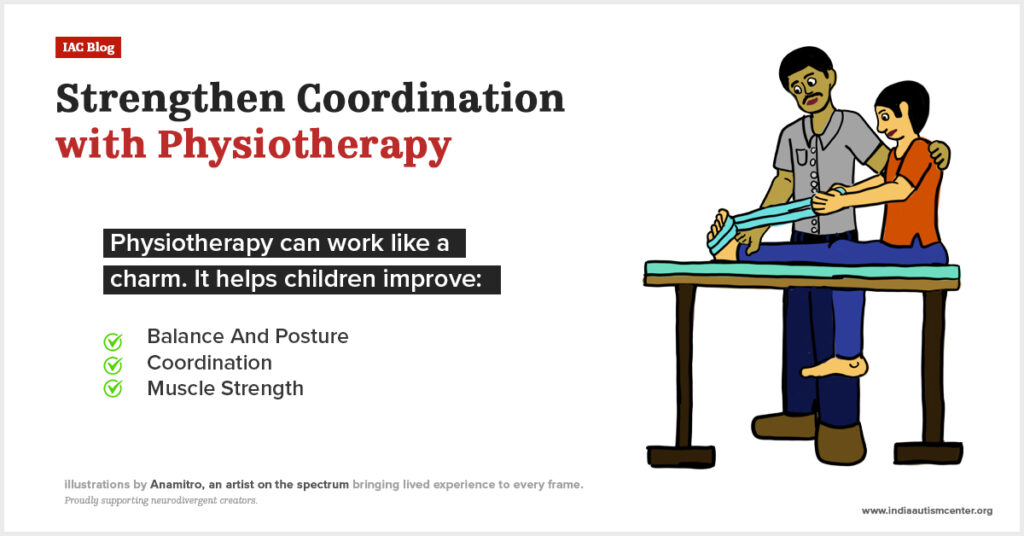
    Strategy 5: Strengthen Coordination with Physiotherapy
    Physiotherapy in early autism intervention.

    Struggling with balance, walking, or climbing stairs?

    Physiotherapy can work like a charm. It helps children improve: 

    • Balance and coordination
    • Muscle strength and tone
    • Gross motor skills

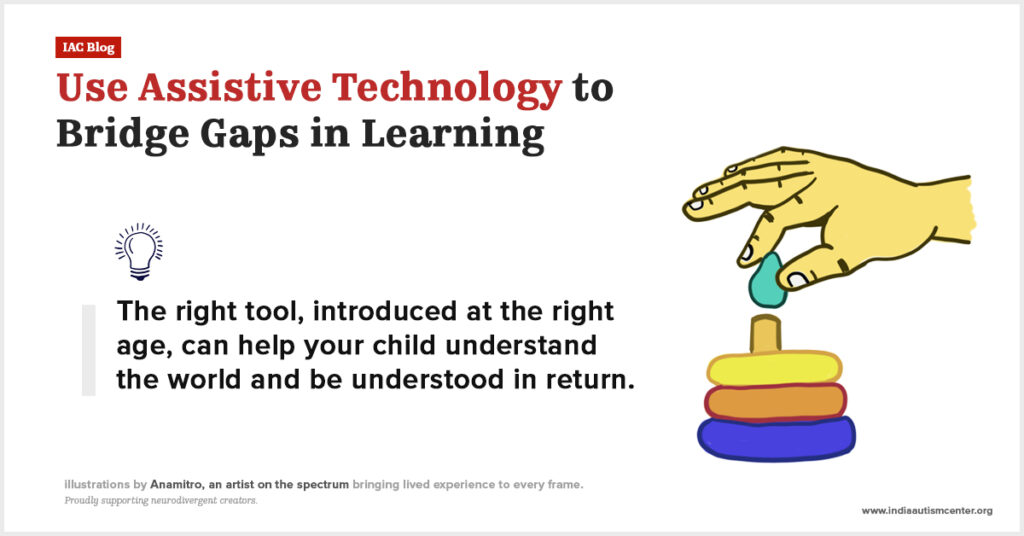
    Strategy 6: Use Assistive Technology to Bridge Gaps in Learning
    Assistive technology in early autism intervention.

    Assistive technology can be life-changing.

    Speech tablets, visual timers, picture schedules. These aren’t shortcuts. They’re bridges.

    The right tool, introduced at the right age, can help your child understand the world and be understood in return.

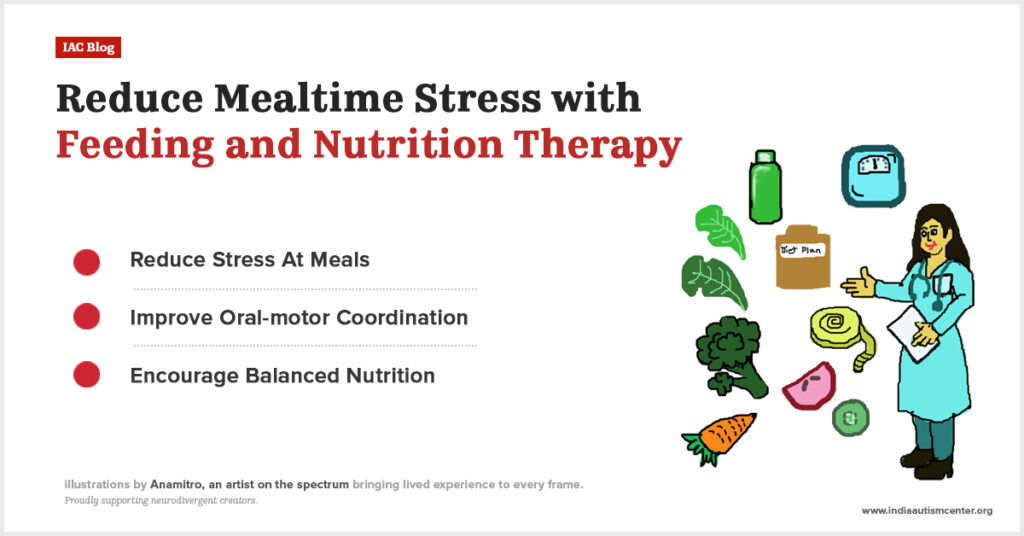
    Strategy 7: Reduce Mealtime Stress with Feeding and Nutrition Therapy
    Feeding and nutrition therapy in early autism intervention.

    Many autistic children struggle with textures, chewing, or swallowing.

    This is where feeding and nutrition therapy help. It can:

    • Reduce stress at meals
    • Improve oral-motor coordination
    • Encourage balanced nutrition for better focus and energy

    Strategy 8: Encourage Learning Naturally with Play-Based Therapy
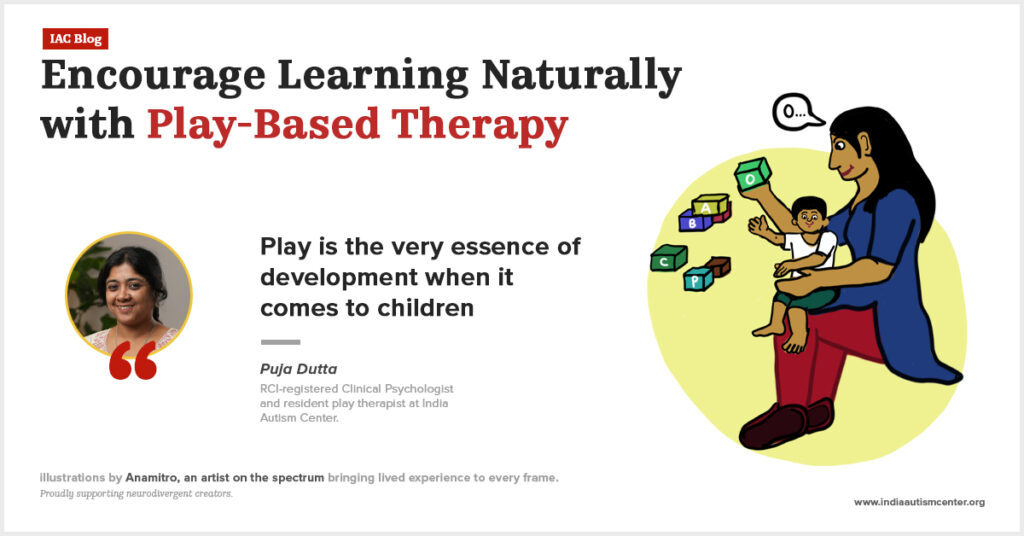
    Play-based therapy in early autism intervention.

    Play is not a break from learning. It is learning, especially for young children.

    Through pouring rice into cups, pretending to run a tea stall, or simply following a child’s lead in a silly game, play becomes the gateway to communication and emotional connection.

    As Puja Dutta, Clinical Psychologist at India Autism Center, says,

    That’s why play-based therapy works. It doesn’t force a child to fit into a plan. It meets them where they are.

    Strategy 9: Prepare for School with Early Special Education Services
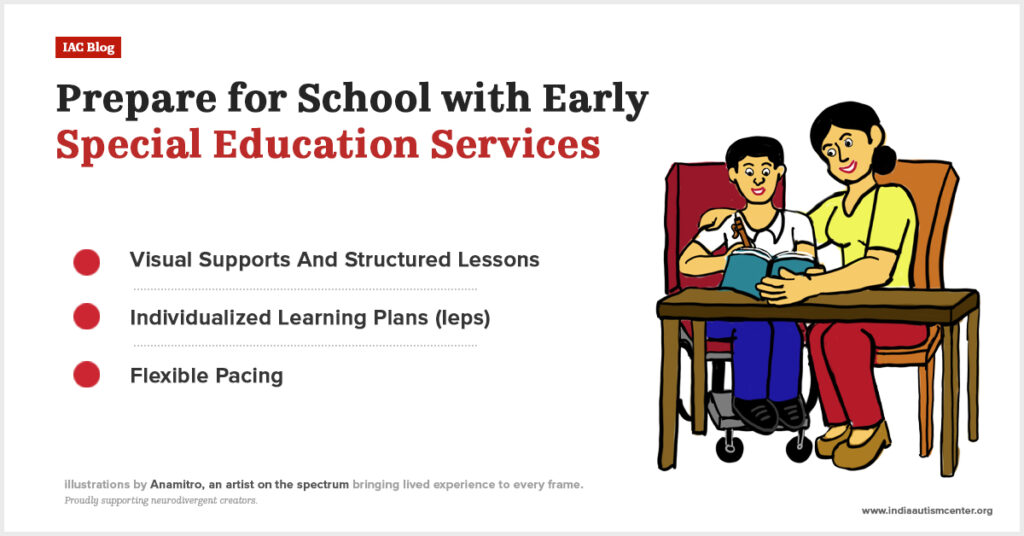
    Early special education services in autism early intervention.

    Preschools with special education services facilitate early intervention for autism. 

    Some preschools offer:

    • Visual supports and structured lessons
    • Individualized learning plans (IEPs)
    • Flexible pacing

    As Shaireen notes,

    Strategy 10: Foster Teamwork with Peer-Based Community Programs
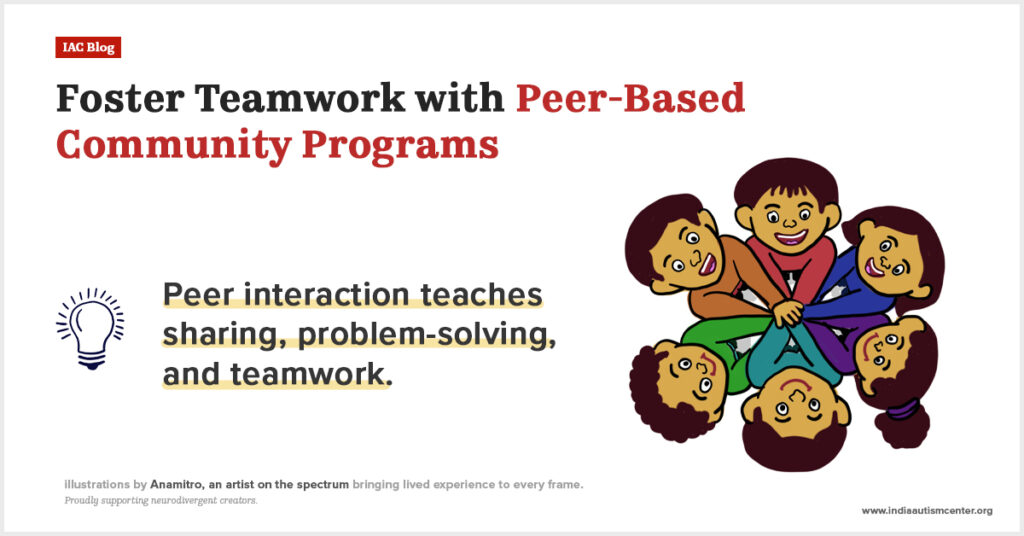
    Peer-based community programs in early autism intervention.

    Children don’t learn in isolation. Peer interaction teaches:

    • Sharing
    • Teamwork
    • Problem-solving

    Whether it’s a playgroup or community event, early exposure builds social confidence that carries into the school years.

    Now that you know how each strategy supports early development, let’s discuss the role parents play in making early intervention for autism truly effective.

    What Does Parental Responsibility Look Like in Early Autism Intervention?
    Parental role in early autism intervention.

    Early intervention for autism is not just about what happens in therapy rooms. It’s about what happens at home. Every single day. 

    Parents should not be passive observers. They are meant to be core members of the intervention team.

    Here’s how you can make your role count.

    Turn Everyday Moments Into Practice Opportunities

    Therapies like ABA, speech, or occupational therapy teach important skills. 

    But real growth happens through repetition at home. Moments such as snack time, playtime, or getting dressed can naturally become practice sessions for communication, social skills, and sensory regulation.

    To make the most of these everyday moments, try to:

    • Encourage your child to request or label items during snack time
    • Use playtime to support turn-taking and social interaction
    • Practice calming techniques during routines like bathing or dressing

    Learn the Techniques and Use Them Confidently

    You don’t need formal training to support your child’s development. You just need curiosity and commitment.

    Observe sessions. Ask questions. Join parent workshops.

    This helps you:

    • Tailor strategies to suit the child’s unique needs
    • Practice consistently across environments
    • Build your confidence by learning why certain approaches work

    Make Your Home a Supportive Learning Space

    A nurturing environment at home can supercharge your child’s comfort and learning.

    Try:

    • Visual schedules to support transitions
    • Sensory-friendly items to ease overwhelm or increase engagement
    • Predictable routines to reduce anxiety and improve cooperation

    More on this later.

    Keep the Conversation Going With Professionals

    Open and regular communication with therapists, educators, and specialists ensures that the child’s needs are met consistently.

    Make it a habit to:

    • Provide updates on what you notice at home and in other settings.
    • Ask questions to clarify goals and strategies.
    • Participate actively in meetings and planning sessions.

    Advocate Strongly for Your Child’s Needs

    You are your child’s loudest and strongest voice. Advocacy means ensuring they get the resources, therapies, and accommodations they need.

    Take initiative by:

    • Learning about available services and autism laws
    • Making detailed requests to schools or healthcare providers
    • Staying updated on local policy or funding changes

    Celebrate Every Step Forward

    Autism early intervention outcomes often come in small, meaningful milestones. Recognizing these moments keeps your child motivated.

    Celebrate by:

    • Noticing new skills, improved behaviors, or moments of independence
    • Praising your child’s effort and persistence
    • Using positive reinforcement to motivate continued growth

    Own Your Role in Your Child’s Progress

    Parental involvement is one of the strongest predictors of success in early autism intervention. 

    Your love, patience, and consistency create the foundation on which everything else is built.

    Own your role by:

    • Being patient with the process and yourself
    • Staying consistent with routines and practice
    • Being the primary champion of your child’s growth

    Therapy doesn’t stop when you leave the clinic. In fact, much of the progress happens through autism early intervention at home.

    Home Activities for Early Intervention in Autism

    Home activities for early autism intervention.

    Therapy hours are valuable. No doubt about that.

    But what happens at home can multiply their impact. 

    Here’s how to get the most out of early intervention, right from your living room:

    Play with Purpose

    Play isn’t just fun. It’s how the children learn. 

    Activities like stacking blocks, pretending to feed a toy animal, or building with LEGO go beyond creativity. They foster:

    • Joint attention
    • Turn-taking
    • Flexible thinking

    Make Reading Interactive

    Don’t just read. Interact.

    Pause to point out pictures. Name characters. Ask simple questions. Let your child turn the pages. 

    Books build vocabulary, listening skills, and future communication, even before your child speaks.

    Bring in Music and Rhythm

    Sing songs with actions. Tap to a beat.

    Use music to teach daily routines, like brushing teeth or cleaning up. Songs create structure and support language, memory, and motor development.

    Strengthen Little Muscles

    Puzzles, finger painting, and stacking rings help build hand-eye coordination.

    Additionally, these activities also prepare children for:

    • Writing
    • Eating independently
    • Dressing skills like buttoning or zipping

    Encourage Movement

    Active play supports sensory regulation and gross motor development.

    Try:

    • Indoor obstacle courses
    • Cushion jumping
    • Outdoor walks or park play

    Make Routines Count

    Bath time. Dressing. Meal prep. These are chores that can double up as learning moments. 

    Narrate what you’re doing. Offer choices. Give space for independence.

    Over time, these routines teach sequencing, communication, and daily living skills.

    Support Communication All Day Long

    Use short, clear sentences. Label actions and emotions. Use gestures and visuals where possible. 

    Communication isn’t only built-in therapy, it’s reinforced in every shared moment.

    Get Social, Gently

    Start small. Invite cousins over for a short visit. Join a parent-child class. Or start with parallel play at a park. 

    Social practice, at a pace your child can handle, builds confidence and connection.

    Create Space for Sensory Needs

    Sensory play helps children self-regulate. 

    Water tubs, sand trays, calm-down bottles, or just a quiet corner with a soft blanket can make all the difference on a hard day.

    Parting Thoughts: Key Considerations In Early Intervention for Autism
    Key considerations in early autism intervention.

    A strong early intervention program for autism begins with a multidisciplinary assessment. Developmental pediatricians, psychologists, speech therapists, occupational therapists, and special educators come together to understand your child’s unique profile.

    But that’s only part of the picture. Real success comes when support extends to the whole family.

    As Puja emphasizes,

    Also, ensure the professionals delivering early intervention are trained, certified, and experienced.

    For further assistance, feel free to contact us now.

    Frequently Asked Questions

    Does autism get better with early intervention?

    Early intervention doesn’t cure autism. But it can make a lasting impact on a child’s development. Starting support early helps children build critical skills in communication, learning, social interaction, and daily living.

     What should I do if my 2-year-old shows signs of autism?

    Start with a developmental evaluation by a pediatrician or psychologist. If autism is suspected, connect with early intervention services in your area.

    At home, focus on:

    • Play-based interaction
    • Communication-rich environments
    • Establishing consistent daily routines

    What age is considered early intervention for autism?

    Early intervention typically refers to support services provided from birth up to 3 years old.

    What is the best age to start autism treatment?

    There’s no single best age, but the earlier the better. The brain is most adaptable (or plastic) in the first five years of life. Starting therapy as soon as autism is suspected can positively influence learning, social skills, and overall development.

    What is the success rate of early intervention for autism?

    Success varies based on the child’s individual needs, type of intervention, and family involvement.

    Research shows that timely and targeted early autism intervention leads to significant progress in:

    • Language and communication
    • Social interaction
    • Adaptive skills and independence

    Can early intervention cure autism?

    No, early intervention doesn’t cure autism, and it’s not meant to. Autism is a neurodevelopmental condition, not a disease. What early intervention does is help build communication, confidence, and everyday skills.

  • What Is Autism Spectrum Disorder? Signs, Causes, & Diagnosis

    What Is Autism Spectrum Disorder? Signs, Causes, & Diagnosis

    Pinpointing ‘what is autism spectrum disorder’ isn’t as simple as it sounds.

    It can be loud. Quiet. Visible. Hidden. Joyful. Exhausting. Sometimes, it looks like brilliance in motion. Other times, it’s a complete emotional shutdown.

    Curious to learn more?

    Well, if you’re reading this, you’re already one step closer to understanding autism better. In this guide, we’ll explore what autism spectrum disorder (ASD) is, its causes, the signs and symptoms to watch out for, and how early intervention for autism can make a meaningful difference.

    So, let’s start with the most important question of all.

    What Is Autism Spectrum Disorder?

    Autism spectrum disorder is a neurodevelopmental condition that affects how a person communicates, interacts socially, and processes sensory information.

    Interestingly, autism is a spectrum disorder. It doesn’t show up in just one way.

    One child might talk nonstop; another might not use words at all. Some find deep comfort in routine, while others need room to explore and improvise.

    Dr. Temple Grandin, one of the world’s most well-known advocates, offered a glimpse into this in her TED Talk. When asked to picture a church steeple, her mind flashed vivid images. Her classmate, however, pictured nothing.

    – Dr. Gradin

    This is what makes autism so nuanced. It’s not always about what’s visible. It’s about how someone interprets the world internally.

    So, let’s be clear. Autism is not a disease. And it certainly is not rare. 

    Studies estimate that it affects about 1 in 100 Indian children under the age of 10. In the USA, it is about 1 in 31 children aged 8 years.

    That’s why understanding autism begins with recognizing the causes. 

    Let’s explore them first.

    What Is Autism Caused By?

    Understanding what causes autism is one of the first questions many parents ask after a diagnosis. The urge to find answers is natural. Families often retrace medical histories, revisit early signs, or reflect on emotional outbursts and delays.

    But ASD doesn’t have one clear cause. Instead, it emerges from a combination of genetics, brain development, and environmental factors.

    So, let’s first take a closer look at what science has to say about the causes.

    Role of Genetics in Autism

    Recent research estimates that genetic factors contribute to around 80% of autism risk.

    Some are inherited. Others appear early in development as de novo mutations. In simpler words, these are genetic changes that occur spontaneously and aren’t passed down from parents.

    These genetic variations influence how the brain forms and connects. Specifically, they impact the regions involved in communication, sensory processing, and social behavior.

    Here’s where it gets interesting.

    Brain Development and Autism Spectrum Disorder

    As the brain develops during fetal and early postnatal life, the connections between neurons (also known as synapses) form critical pathways. This governs behavior, perception, and interaction.

    In our podcast with Dr. Sumantra Chattarji, Director of CHINTA at TCG CREST, he shared,

    But this also doesn’t reveal the whole picture. 

    Environmental and Pregnancy-Related Risk Factors Leading to Autism

    Environmental and pregnancy-related risk factors linked to autism, including age, birth, and medication.

    While genetics and brain development are central, researchers have also identified non-genetic risk factors that may increase the likelihood of ASD. 

    These include:

    • Older parental age: Especially fathers over 40. This is linked to a higher likelihood of autism due to age-related genetic changes.
    • Closely spaced pregnancies: Short intervals between pregnancies can affect maternal health and fetal brain development, raising the risk.
    • Gestational diabetes: This condition can interfere with fetal brain development and is associated with an increased likelihood of autism in the child.
    • Certain medications during pregnancy: Drugs like valproate (used to treat epilepsy) are known to disrupt fetal brain development and significantly elevate autism risk.
    • Oxygen deprivation during birth: Birth complications that lead to low oxygen levels can cause brain injury, contributing to a higher risk.
    • Premature birth: Babies born prematurely are more vulnerable to neurodevelopmental differences, including autism, due to early-stage brain development.

    It’s important to remember that these factors do not cause ASD on their own. Instead, they may elevate risk when combined with underlying genetic susceptibility.

    With that said, let’s now delve into the most-awaited aspect.

    What Are Autism Symptoms and Signs?

    Recognizing autism symptoms and signs is key. This helps in understanding how it’s diagnosed and how you can support someone on the spectrum.

    Let’s explore what to look for.

    Early Autism Symptoms and Signs In Infants (0–12 Months)

    Early autism signs and symptoms in infants.

    Ever wondered at what age autism is detected? For many families, subtle differences begin to appear in infancy.

    Early signs of autism in infants include:

    • Limited eye contact while conversing
    • Rarely smiling at others or showing social interest
    • Not responding to their name by 9-12 months
    • Little to no babbling 
    • Gestures like pointing or waving

    These early autism symptoms may be easy to miss. But they are crucial clues for early intervention.

    More on this later.

    Early Autism Signs and Symptoms In Toddlers (1–2 Years)

    By this age, children usually begin to speak, imitate adults, and play socially. In autistic toddlers, however, development might diverge.

    Watch for:

    • Delayed speech or no speech by age 2
    • Limited gestures like pointing, waving, or nodding
    • Repetitive behaviours (rocking, flapping, spinning)
    • Strong preference for routines or sameness
    • Less interest in playing with others or imitating adults

    This is also the stage when regressive autism can emerge.

    This begs the question.

    What is Regressive Autism?

    Regressive autism in children.

    Regressive autism (also called autism with regression) means the loss of previously acquired skills.

    This is a subtype of ASD that is often seen in children, usually aged between 15 and 30 months.

    A child who once said words, responded to their name, or enjoyed play may suddenly:

    • Stop using language
    • Withdraw from social interaction
    • Avoid eye contact or connection
    • Show reduced emotional expression

    It’s important to remember that this regression is not necessarily caused by trauma or illness. It’s simply one of the ways ASD can unfold.

    Early Autism Symptoms and Signs In Preschoolers (3–4 Years)

    In social settings like preschool, autism signs and symptoms often become more obvious, manifesting in:

    • Lack of pretend play (e.g., pretending to feed a toy)
    • Difficulty engaging with peers or group activities
    • Repeating phrases (echolalia) or using unusual speech patterns
    • Over- or under-reaction to sounds, lights, textures
    • Trouble understanding or expressing emotions

    Autism Signs and Symptoms in Children and Teenagers (5–17 Years)

    Autism signs and symptoms in children and teens.

    In school-aged children and teens, challenges often shift from developmental delays to social struggles, emotional regulation issues, and the effort to blend in.

    Social Communication and Interaction Challenges

    Navigating friendships and social expectations can become more challenging in school settings. 

    At this stage, autistic individuals may experience:

    • Difficulty reading social cues like facial expressions, body language, or tone of voice
    • Struggles with initiating or maintaining back-and-forth conversations
    • Preference for playing alone or spending time with younger children or adults
    • Literal interpretation of language and missing sarcasm, jokes, or implied meaning
    • Limited or avoidant eye contact during conversations

    Restricted Interests and Repetitive Behaviors

    Autistic children and teens often develop focused interests that may dominate their time and conversations.

    Common autism symptoms and signs are:

    • Intense fixation on specific topics, activities, or objects
    • Repetitive behaviors like spinning objects, hand-flapping, or rocking
    • Insistence on routine or predictability and distress when routines are disrupted
    • Difficulty transitioning between classes, tasks, or social environments

    Sensory Sensitivities

    Sensory differences often become more pronounced in high-stimulus environments like schools or social gatherings.

    Look for:

    • Overreaction to sounds, lights, or textures (e.g., buzzing lights, scratchy uniforms)
    • Seeking or avoiding sensory input (e.g., covering ears, refusing certain foods)
    • Overwhelm or shutdowns in crowded or chaotic spaces

    Emotional Regulation and Daily Living

    As expectations increase with age, autistic teens may face unique internal struggles, such as:

    • Heightened anxiety, especially in social settings
    • Mood changes, emotional shutdowns, or meltdowns
    • Difficulty managing transitions or unexpected changes
    • Trouble with daily tasks like organizing schoolwork, hygiene, or managing time

    Subtle Autism Signs and Symptoms in Adulthood

    In adulthood, ASD can look quieter. Traits like sensory sensitivity, social fatigue, or rigid routines often get mistaken for anxiety or just being ‘a bit different.’

    Social Interaction and Communication

    Part of understanding what autism is in adults is recognizing that everyday social dynamics can feel like a completely different operating system.

    You might notice:

    • Difficulty reading facial expressions, tone, or unspoken cues
    • Preference for one-on-one conversations
    • Feeling socially drained after even short interactions
    • Struggling to follow fast-paced group conversations or interruptions

    Routine and Change

    Predictability brings comfort. A strong need for routine helps create a sense of stability in a world that feels unpredictable.

    Look for:

    • Discomfort with sudden changes in routine
    • Deep attachment to daily rituals
    • Difficulty switching between tasks
    • High stress from unexpected events
    • Reliance on structure to feel in control

    Sensory Sensitivities

    Bright lights, loud noises, or certain textures commonly trigger discomfort in adult autistic people. This makes sensory sensitivities an important yet under-recognized aspect of ASD symptoms.

    These autism signs include:

    • Sensitivity to bright lights, loud sounds, or strong smells
    • Overwhelm in crowded or noisy environments
    • Discomfort with certain textures of clothing
    • Difficulty focusing due to sensory overload

    Focus and Interests

    Autistic adults often develop ‘special interests’. These are deep, passionate areas of focus that bring joy, clarity, and calm.

    Common autism signs are:

    • Intense, almost encyclopedic knowledge of certain topics
    • Spending hours immersed in research or activities
    • Difficulty pulling away from focused interests
    • A sense of purpose rooted in specific routines or hobbies

    Emotional and Internal Experience

    To fully grasp autism in adulthood, you need to look beneath the surface.

    Consider:

    • Difficulty identifying or naming emotions (alexithymia)
    • Feeling out of sync in social or emotional situations
    • Chronic anxiety or burnout from masking
    • Struggling to manage sensory-emotional overload
    • Coping through strict routines or withdrawal

    Now that we’ve explored what signs to look for, let’s talk about what to do next, especially if you’re noticing these traits in a young child.

    Early Autism Identification and Intervention (Ages 0–3)

    Early autism intervention in toddlers.

    Early intervention for autism spectrum disorder is most effective when it begins before age 3. 

    Why? Because at this stage, the brain is rapidly developing, and children are most responsive to structured support.

    If you’re wondering whether your toddler’s ‘unusual’ behavior is just a phase, don’t wait it out.

    With that said, let’s now discuss the steps.

    Step 1: Developmental Screening

    Your first stop should be a developmental pediatrician, clinical psychologist, or rehabilitation psychologist. 

    Ask for a developmental screening, especially if your child is between 15 to 30 months.

    Most professionals in India use the Modified Checklist for Autism in Toddlers, Revised (M-CHAT-R). It’s a reliable tool to identify early signs.

    Step 2: Early Intervention

    If screening raises concerns, you don’t need to wait for a formal diagnosis. Early autism intervention can begin right away. 

    It may include:

    • Speech therapy
    • Occupational therapy (OT)
    • Special education support
    • Parent training and home-based strategies

    The goal? Prevent delays from compounding. Build communication. Nurture connection. Improve adaptive behaviors.

    Autism Diagnosis in Children and Teens (Ages 3-18)

    Autism diagnosis in children and teenagers.

    After age 3, teens and children can undergo a formal autism diagnosis. This doesn’t just confirm ASD, it also helps assess co-occurring conditions like ADHD, sensory issues, anxiety, or speech delays.

    How to Get an Autism Spectrum Disorder Diagnosis

    Start with a licensed clinical psychologist, rehabilitation psychologist, or developmental pediatrician. 

    A proper diagnosis includes:

    • Parental interviews and developmental history
    • Direct observation of behavior and interaction
    • Review of previous therapy records or school reports
    • Standardized tools like the Indian Scale for Assessment of Autism (ISAA), Indian Scale for Assessment of Autism (CARS-2), or Autism Diagnostic Observation Schedule (ADOS-2)
    • A multidisciplinary team arrives at a conclusive diagnosis through consensus

    Multidisciplinary Support After Diagnosis

    Diagnosis is just the beginning. Based on the assessment, autistic children and teens may be referred to:

    • A speech-language therapist
    • An occupational therapist
    • A special educator
    • A psychologist
    • A play therapist
    • A health practitioner (for co-occurring conditions) 

    This integrated approach is key to designing personalized autism intervention strategies. It also truly supports the child’s strengths and challenges.

    Autism Diagnosis for Adults (Ages 18+)

    Adult autism diagnosis.

    Not everyone receives a diagnosis in childhood. Some begin to question their lifelong struggles with communication, masking, or sensory sensitivities in adulthood.

    How to Get an Autism Diagnosis as an Adult

    Autism diagnosis for adults follows a similar pathway, but with added focus on lived experience and adaptive functioning.

    Seek out:

    • A licensed clinical or rehabilitation psychologist with experience in adult neurodevelopment
    • A psychiatrist, especially if emotional or behavioral concerns like anxiety or depression are involved

    They will use tools like the ISAA, ADOS-2, DISCO, or clinical interviews alongside DSM-5 autism diagnosis criteria.

    The Power of Clarity

    Receiving a diagnosis in adulthood helps explain long-standing challenges and opens doors to support, workplace accommodations, and therapy.

    It also helps uncover any co-occurring conditions that may have been misunderstood.

    As Puja Dutta, an RCI-licensed Clinical Psychologist at India Autism Center, shared:

    Caution: Avoid Online or Remote Diagnosis

    While preliminary consultations can happen online, a proper diagnosis must be done in person. 

    Tools like ISAA and ADOS-2 rely on live behavioral cues, eye contact, gestures, and shared attention. These are not reliably captured over video.

    Always seek in-person assessments through certified professionals.

    Now, here is something to keep in mind.

    Co-occurring Conditions in Autism Spectrum Disorder

    Co-occurring conditions in autism spectrum disorder.

    Many autistic individuals experience other neurodevelopmental, medical, or psychological conditions alongside their autism diagnosis. These are called co-occurring conditions.

    Recognizing them is vital for delivering the right support. Here are the most common ones:

    Attention-Deficit/Hyperactivity Disorder (ADHD)

    Frequently co-occurring with autism, ADHD includes symptoms like inattention, impulsivity, and hyperactivity. It can increase sensory overwhelm and make routines more difficult to follow.

    Intellectual Disability (ID)

    Some autistic individuals have below-average intellectual functioning, qualifying as having intellectual disabilities. This impacts their learning pace, communication, and adaptive living skills.

    Dyslexia

    This reading-related difference may go unnoticed in verbal autistic individuals. But becomes unavoidable to address because dyslexia causes major frustration in language-heavy learning environments.

    Gastrointestinal (GI) Issues

    A complete understanding of ASD must include the gut-brain connection. In other words, gastrointestinal issues accompany autism.

    Chronic GI concerns, like constipation, stomach pain, or food sensitivities, often impact behavior, mood, and focus.

    Fibromyalgia

    In autistic adults, fibromyalgia may present as chronic pain and fatigue, further intensifying sensory sensitivities and emotional stress.

    Selective Mutism

    Selective mutism is an anxiety-related condition. It makes situations extremely difficult for some autistic children to speak in certain settings, even when they want to.

    Sensory Processing Differences

    Sensory sensitivities are a core trait. It includes extreme responses to light, sound, touch, or smell. Sensory processing differences can interfere even with daily tasks like dressing, eating, or relieving oneself.

    Epilepsy

    Seizures occur more frequently in autistic individuals, especially those with intellectual disabilities. If this is epilepsy, seizures can begin in early childhood or develop later during adolescence.

    Psychosis

    Though rare, some autistic individuals may show signs of psychosis. Psychotic episodes involve experiences of hallucinations or delusions, usually linked to stress, trauma, or genetic vulnerability.

    Developmental Coordination Disorder (DCD)

    Often seen in autistic children, developmental coordination disorder affects fine and gross motor skills. DCD leads to clumsiness or difficulty with handwriting, sports, or dressing.

    Obsessive Compulsive Disorder (OCD)

    Obsessive-compulsive disorder and ASD can look similar. However, OCD is primarily driven by anxiety and intrusive thoughts, requiring different interventions.

    Polycystic Ovary Syndrome (PCOS)

    Autistic women and girls are more prone to having PCOS. This suggests that hormonal pathways may play a role in how autism is expressed and experienced.

    All of these co-occurring conditions may stay hidden well into adulthood. Not because they weren’t there. But because individuals often mask them to get through the day.

    This raises the question.

    What is Masking in Autism?

    Autism masking, also known as camouflaging or compensating, is a social strategy where autistic individuals hide parts of themselves to blend in with a world that doesn’t always make room for difference.

    It might look like this:

    • Forcing eye contact even when it feels unnatural
    • Suppressing stimming, like rocking, hand-flapping, or tapping, because someone once said it looked odd
    • Rehearsing conversations ahead of time to sound ‘normal’

    These strategies often work. Sometimes, they even help autistic individuals get through the day. Help them feel safe. Accepted. And, avoid being teased.

    Another way autism gets misunderstood is through the language we use, especially when it comes to describing ability levels.

    So, let’s talk about them.

    What is the Difference Between High and Low Functioning Autism?

    You’ve probably heard terms like high functioning autism or low functioning autism in casual conversations. Maybe even in some diagnostic reports. 

    So, it’s quite natural to wonder what these terms mean.

    What is High Functioning Autism​?

    High functioning autism refers to autistic individuals who:

    • Use spoken language fluently
    • Perform well in school or work
    • Appear socially typical at first glance

    But here is the catch.

    Many high functioning autistic individuals deal with daily challenges that go unnoticed. Often, because they’re good at masking them.

    However, beneath the surface, there’s:

    • Sensory overload that builds up silently
    • Struggles with social communication and expectations
    • Anxiety, shutdowns, or burnout from constant self-monitoring

    Now let’s discuss the opposite label.

    What is Low Functioning Autism​?

    The individuals with low functioning autism:

    • Have little or no spoken language
    • Need high levels of daily living support
    • May have co-occurring intellectual disability
    • Face significant barriers in traditional communication or schooling

    But what it doesn’t reflect are:

    • Nonverbal intelligence or pattern recognition
    • Deep emotional insight or visual/spatial strengths
    • The ability to connect, express, and learn, just differently

    So, as it turns out, the word ‘functioning’ flattens the picture.

    What’s the Alternative?

    Terms like ‘functioning’ flatten a complex spectrum. Instead, clinicians now describe autism using support levels, as per DSM-5 autism diagnosis criteria:

    • Level 1: Requires support
    • Level 2: Requires substantial support
    • Level 3: Requires extremely substantial support

    This approach respects individuality and focuses on the real question: What support does the person need to thrive?

    Now, just as important as understanding what autism is, we must also understand what it is not.

    What Are Some Common Autism Myths and Misconceptions?

    Common autism myths and misconceptions.

    From news stories to Netflix shows, ASD is often shown in narrow, predictable ways. The quirky genius. The emotionless coder. The one who ‘just doesn’t get people’.

    But ASD doesn’t come in one template. These repeated portrayals can erase the real-life diversity of experiences among autistic individuals.

    We will now set the record straight about autism myths and facts.

    Myth 1: Autism Is A Disease

    Truth: Autism spectrum disorder is not a disease. It’s a lifelong neurodevelopmental condition.

    Myth 2: Autism Is A Mental Illness

    Truth: ASD is not a psychiatric disorder. However, co-occurring conditions like anxiety or depression are common.

    Myth 3: There’s an Autism Epidemic

    Truth: Higher diagnosis rates are due to better awareness and broader criteria.

    Myth 4: Only Boys Can Be Autistic

    Truth: Signs of autism in women are often subtle. In most cases, they are underdiagnosed due to social masking and gender bias in diagnostic tools.

    Myth 5: Autistic People Are Either Nonverbal or Geniuses

    Truth: The autism spectrum is wide. Some are non-verbal; others are hyper-verbal. Sensitivities, support needs, and strengths vary widely. One person’s traits don’t represent the whole spectrum.

    Myth 6: Vaccines Cause Autism

    Truth: There is no scientific evidence linking vaccines and autism spectrum disorder. This myth originated from a retracted and fraudulent study. Multiple global studies have confirmed that vaccines do not cause autism.

    Myth 7: Bad Parenting Causes Autism

    Truth: This outdated autism myth has been debunked. Parenting style does not cause autism.

    Myth 8: Autism Can Be Cured

    Truth: Autism is not something to be cured. Instead, the goal should be to provide individualized support.

    Myth 9: Autistic People Can’t Live Independently

    Truth: Some individuals on the spectrum need high levels of support; others live fully independent lives. That is why success looks different for each person living with autism. 

    Your Role Supporting Autistic People with Understanding

    Supporting autistic people.

    Autism support starts by creating a space where an autistic person feels safe, understood, and truly seen.

    When the world feels overwhelming, a calm and predictable environment can ease sensory overload, reduce anxiety, and foster a sense of belonging.

    Support isn’t just for childhood. It matters across the lifespan of individuals on the spectrum. From early intervention to adult care, consistent understanding and accommodations can make a lifelong difference.

    So, how can you help?

    Here are our practical tips for autism care:

    • Build reliable routines that bring comfort and structure
    • Tune into sensory needs, dim harsh lights, reduce noise, and offer quiet corners
    • Communicate clearly and patiently, respecting individual preferences and communication styles

    For those ready to support professionally, structured learning makes all the difference. For instance, our Primary Support Staff (PSS) training program offers hands-on knowledge and tools to care for individuals on the spectrum with empathy, skill, and confidence.

    So, if you’re ready to start your journey in autism care, contact us now.

    Frequently Asked Questions

    How do I know if my child has autism?

    There’s no single test, but here are some early signs to look for:

    • Limited eye contact or social engagement
    • Delayed speech or minimal gestures
    • Repetitive movements like rocking or hand-flapping
    • Intense reactions to textures, sounds, or routine changes
    • A strong preference for playing alone

    If these patterns persist, speak with a developmental pediatrician or clinical psychologist. Early intervention for autism can significantly improve long-term outcomes.

    Can autism be cured or treated?

    ASD is not something to be cured. It’s a different way of being. However, therapy, communication support, and structured routines can help build skills and reduce challenges.

    Can autism improve with age?

    Traits may evolve or become easier to manage, especially with early support. But autism is lifelong. What can grow is confidence, emotional regulation, and self-advocacy.

    At what age is autism usually diagnosed?

    Autism can often be identified by 18–24 months. But most diagnoses in India happen between the ages of 2 and 4. In some cases, especially when traits are masked, adult autism diagnosis may occur later in life.

    What is the difference between autism and dementia?

    Autism is present from early life and involves different sensory and social processing. Dementia, on the other hand, is a degenerative condition that leads to memory loss and cognitive decline, typically in older adults.

    What is the difference between autism and Asperger’s disorder?

    Asperger’s was once used to describe autistic individuals with strong verbal skills and no cognitive delays. Today, it’s folded into autism spectrum disorder under the DSM-5. The term is outdated in clinical settings.

    What is severe autism?

    Severe autism generally refers to individuals who have limited or no verbal language, co-occurring intellectual disability, and high support needs. It often aligns with Level 3 autism under DSM-5 classification.

    What is the difference between autism and ADHD?

    While both can include inattention and impulsivity, autism affects social communication and sensory regulation. ADHD is more focused on attention span, hyperactivity, and impulse control. The two can co-occur, but they’re distinct conditions.

    What is the difference between autism and Down syndrome?

    Autism affects how the brain processes social and sensory input. Down syndrome is a genetic condition (trisomy 21) with distinct physical and cognitive features. Some individuals have both, but they are entirely separate diagnoses.

    What is the difference between autism and mental retardation?

    Intellectual disability (formerly known as mental retardation) involves significant limitations in cognitive function and adaptive behavior. While some autistic individuals have intellectual disabilities, many do not.

    What is borderline autism?

    Borderline autism is a non-clinical term. It is sometimes used when a person shows autistic traits but doesn’t meet full diagnostic criteria. These individuals may still benefit from support.

    What is atypical autism?

    Atypical autism was used to refer to those with some but not all traits of autism. It’s important to note that this is no longer a formal diagnosis.

    What is considered nonverbal autism?

    Nonverbal autism means a person on the spectrum doesn’t use spoken words to communicate, or uses very few. They might use gestures, sounds, pictures, or devices instead. This is different from being nonverbal due to things like trauma or illness. Here, the brain develops differently, making speech hard to learn or use naturally.

Privacy Overview

This website uses cookies so that we can provide you with the best user experience possible. Cookie information is stored in your browser and performs functions such as recognising you when you return to our website and helping our team to understand which sections of the website you find most interesting and useful.