 Donate now
 Get a Call Back
 MENU
MENU 10 MIN READ
 SHARE
SHARE


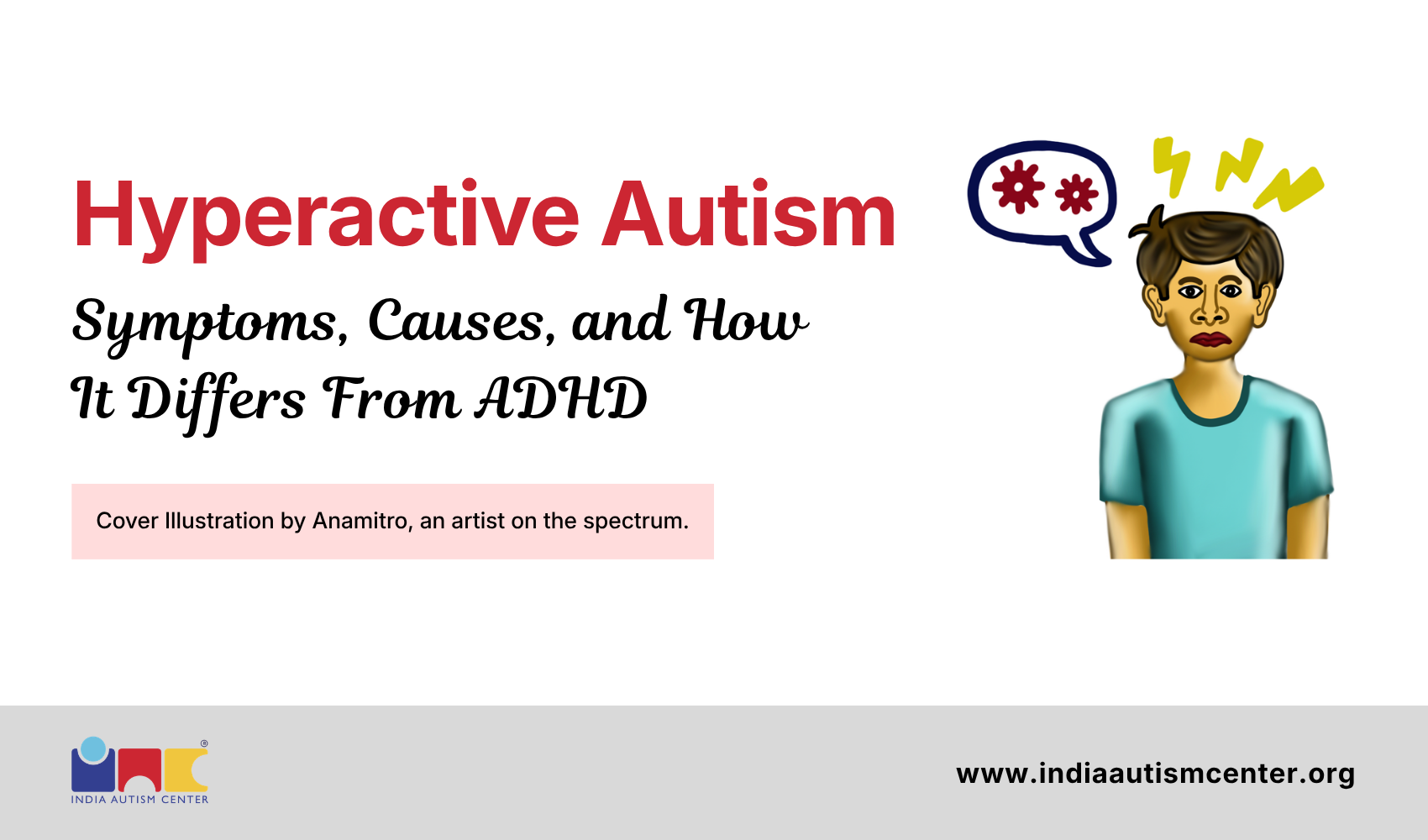
A child who is constantly moving, struggles to sit still, or acts impulsively may be described as having “hyperactive autism”. However, hyperactive autism is not a separate type or diagnosis of autism.
Hyperactivity can occur in autistic people for several reasons, including sensory needs, anxiety, communication difficulties, or co-occurring Attention Deficit Hyperactivity Disorder, ADHD.
In one study of 3,319 children with autism aged 6 to 17, 45.3% had a reported diagnosis of or treatment for ADHD, highlighting how commonly the two conditions can overlap.
Understanding why a person is hyperactive is therefore more useful than simply trying to stop the behaviour.
What Is Hyperactive Autism?
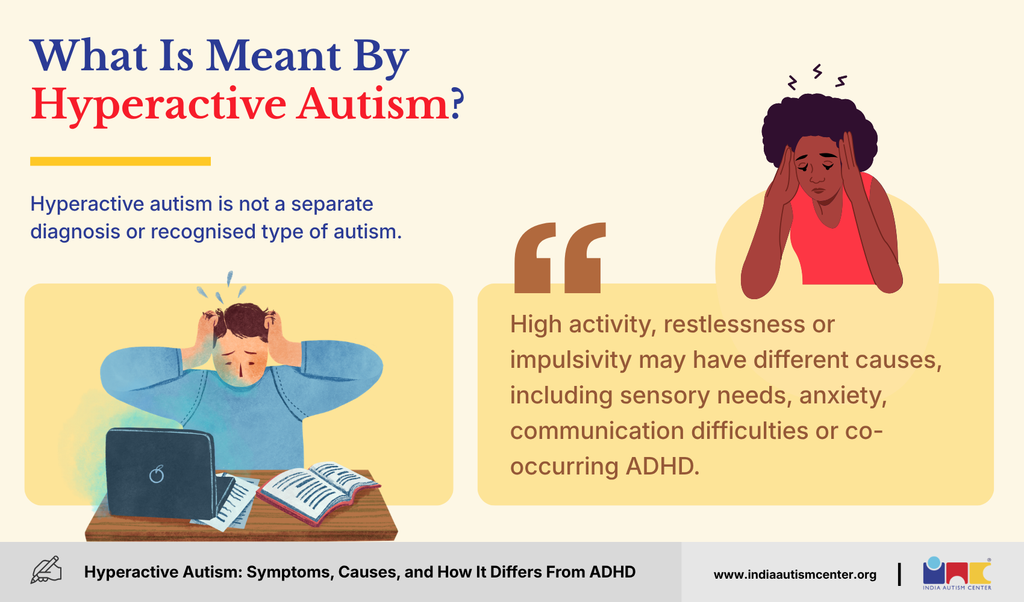
Hyperactive autism is a term commonly used to describe an autistic person who displays high levels of movement, restlessness, impulsivity or difficulty staying focused.
However, it is important to note that hyperactive autism is not a clinical diagnosis.
Autism is characterised by differences when it comes to social communication and interaction, along with restricted or repetitive patterns of behaviour, interests or even activities. Hyperactivity is not a core diagnostic feature of autism.
However, an autistic person may be highly active or restless. The behaviour can have different causes depending on the individual. For example, movement may provide sensory input, while running away from an activity may indicate anxiety, confusion or sensory overload. In other cases, the person may have co-occurring ADHD.
This distinction matters because the same outward behaviour can have very different underlying causes.
Instead of asking only, “How can I stop my child from moving so much?”, it is more useful to ask:
- When does the behaviour occur?
- What happens immediately before it?
- Does it happen at home, school and other settings?
- Is the person trying to communicate a need?
- Could sensory overload, anxiety, pain or poor sleep be involved?
- Could ADHD or another co-occurring condition be contributing?
Symptoms of Hyperactivity in Autism
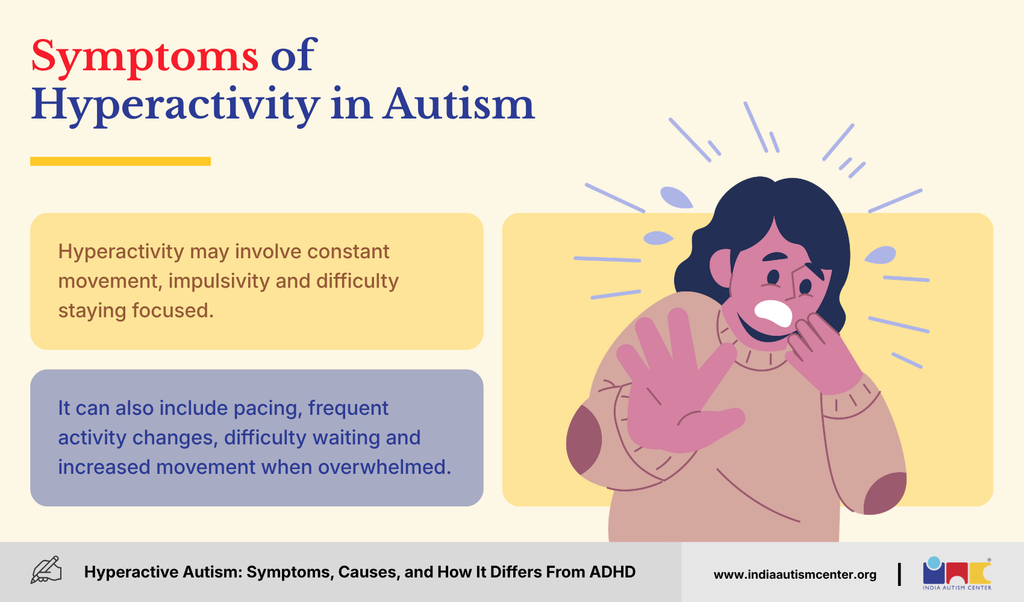
There is no official symptom checklist for hyperactive autism because it is not a recognised diagnostic category. However, families and teachers may notice certain behaviours in an autistic person who experiences significant hyperactivity.
These can include:
- Constant fidgeting or movement
- Frequent running, jumping, climbing or pacing
- Difficulty remaining seated
- Moving quickly from one activity to another
- Acting before thinking
- Interrupting or struggling to wait
- Difficulty slowing down during transitions
- Increased activity when anxious or overwhelmed
- Repeatedly seeking movement or particular sensory experiences
- Difficulty concentrating on activities that are not highly engaging
Not every instance of movement should be treated as a problem.
For some autistic people, repetitive movements or stimming can help regulate sensory input or emotions. If the movement is safe and does not interfere with participation, it may not need to be stopped.
Instead, focus on whether the behaviour causes distress, creates safety concerns or prevents the person from participating in everyday activities.
What Causes Hyperactivity in Autism?
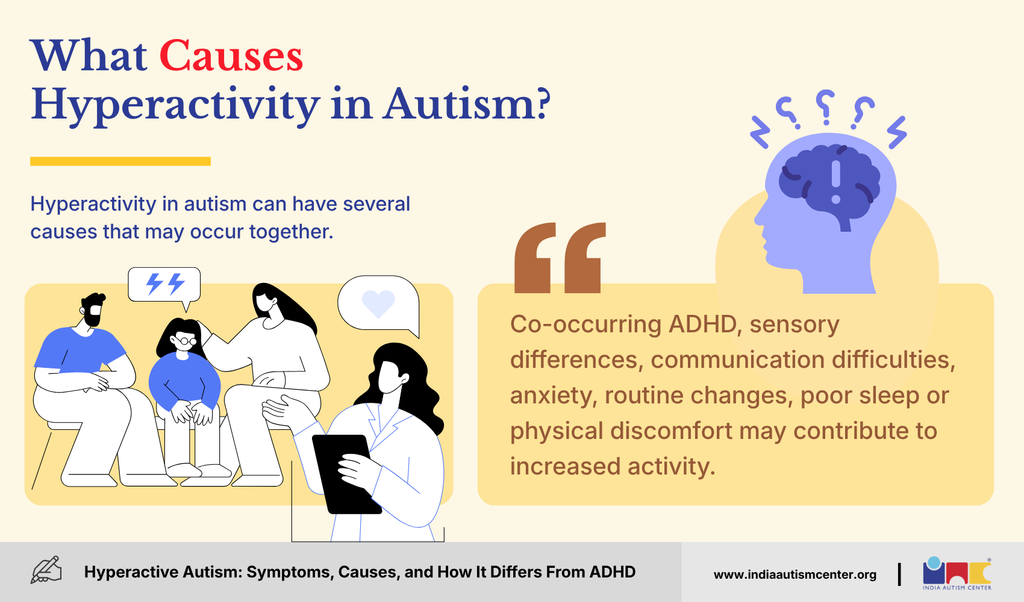
There is no single cause of hyperactivity in autism. Several factors may contribute, and more than one may be present at the same time.
Co-occurring ADHD
ADHD is one of the most important conditions to consider when an autistic person shows persistent hyperactivity, impulsivity or inattention.
Autism and ADHD are separate neurodevelopmental conditions, but they can occur together. NICE recommends considering ADHD as a possible coexisting condition when assessing autistic children and young people.
When both conditions are present, difficulties with attention, impulse control and activity levels may be more pronounced.
Sensory differences
Autistic people can experience sensory input differently. Sounds, lights, textures, crowds or movement may feel overwhelming, while some people actively seek particular sensory experiences.
A child who repeatedly jumps, spins or runs may therefore be seeking movement or trying to regulate their sensory state rather than simply being unable to behave calmly.
Understanding sensory processing can help parents and professionals identify what is driving the behaviour.
Communication difficulties
Hyperactivity can sometimes respond to an unmet communication need.
For example, a child who cannot easily say that a classroom is too noisy may leave the room, pace or become increasingly restless. Similarly, frustration with a difficult task may appear as constant movement rather than verbal refusal.
Improving communication can therefore be an important part of supporting behaviour.
Anxiety and changes in routine
Unfamiliar situations, unexpected changes and socially demanding environments can increase anxiety in some autistic people. This may appear as pacing, constant movement, escape behaviours or difficulty settling.
NICE recommends considering changes to routine, lack of predictability and environmental factors when identifying triggers for challenging behaviour.
Sleep and physical discomfort
Poor sleep can affect daytime attention, regulation and behaviour. Physical discomfort can also result in noticeable behavioural changes.
If hyperactivity suddenly increases, parents should not automatically assume that the autism has become “worse”. Sleep difficulties, pain, gastrointestinal problems, anxiety, medication effects or environmental changes may need to be considered.
Hyperactive Autism vs ADHD: What Is the Difference?
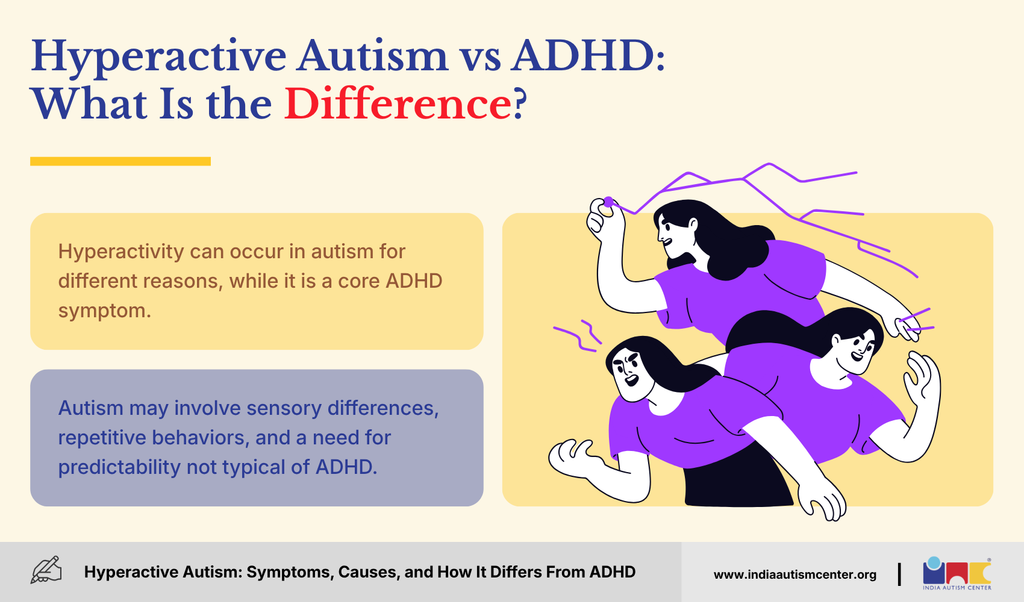
One of the biggest challenges for parents is distinguishing hyperactivity associated with autism from ADHD.
The two can look similar, but their defining features are different.
| Feature | Hyperactivity associated with autism | ADHD |
| Diagnostic status | Not a separate diagnosis | Recognised neurodevelopmental condition |
| Social communication differences | May be present because of autism | Not a core diagnostic feature |
| Repetitive behaviours | May occur as part of autism | Not a defining feature |
| Hyperactivity | Can occur for several reasons | One of the core symptom domains |
| Impulsivity | May occur, particularly with ADHD | Core symptom domain |
| Sensory differences | Often relevant in autism | Not a defining diagnostic feature |
| Need for predictability | Commonly important in autism | Not a core feature |
| Co-occurrence | Can occur with ADHD | Can occur with autism |
ADHD diagnosis involves looking at persistent symptoms of inattention and/or hyperactivity-impulsivity that cause meaningful impairment.
This is why a child who is extremely active at home should not automatically be assumed to have ADHD. Equally, persistent hyperactivity should not automatically be attributed to autism.
Can Autism and ADHD Occur Together?
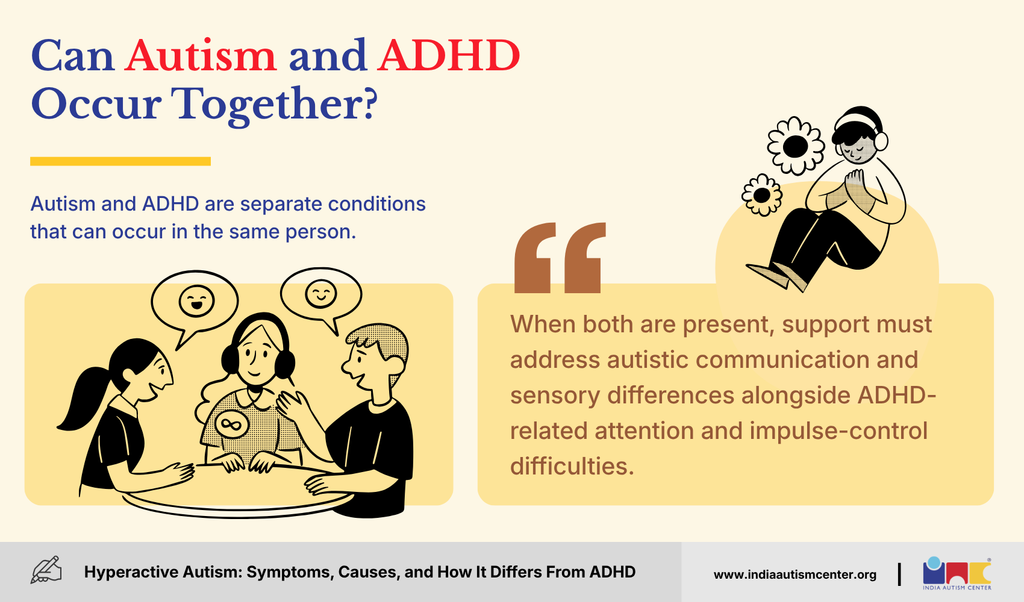
Yes. An individual can meet the core diagnostic criteria for both autism and ADHD.
This is clinically important because treating only one set of difficulties may leave other needs unaddressed. A child may need support for autistic communication and sensory differences while also requiring ADHD-specific strategies for attention and impulse control.
How to Reduce Hyperactivity in Autism?
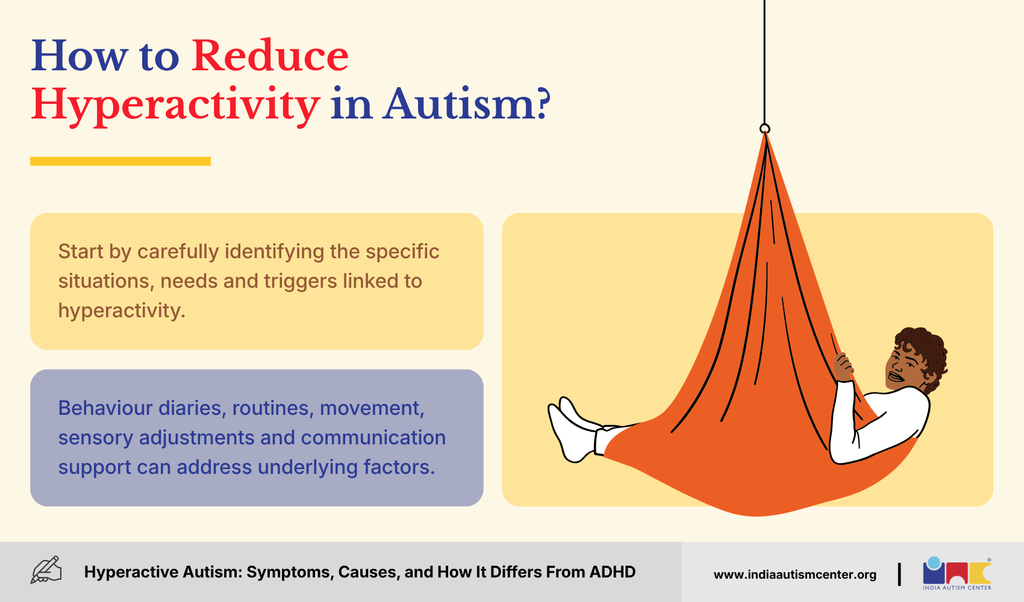
Parents looking to reduce hyperactivity in autism should first identify what triggers or maintains the behaviour.
No universal strategy exists because the right approach depends on the underlying cause.
Identify patterns and triggers
A simple behaviour diary can help identify whether hyperactivity occurs around particular situations.
Record:
- What happened immediately beforehand
- What the person did
- What happened afterwards
- Time of day
- Sleep and energy levels
- Environment and sensory demands
- Communication or task demands
Patterns may reveal that the behaviour occurs mainly during transitions, in noisy environments, during difficult tasks or during periods of fatigue.
Create predictable routines
Visual schedules, clear instructions and warnings can make transitions easier for autistic children.
Rather than abruptly ending a preferred activity, a parent might provide a visual or verbal warning and explain what will happen next.
Provide appropriate movement
If movement helps with regulation, planned opportunities for physical activity may be useful.
Movement breaks, outdoor play and age-appropriate physical activities can provide an appropriate outlet without treating movement itself as misbehaviour.
Reduce sensory overload
If noise, lighting, crowds or other sensory experiences trigger hyperactivity, environmental changes may help.
Depending on the person, this could mean using a quieter area, reducing unnecessary background noise or allowing breaks from overwhelming environments.
An occupational therapist can help assess functional and sensory needs where appropriate.
Support communication
If hyperactivity is linked to frustration, communication support may reduce the need for behaviour to communicate a message.
Speech and language professionals can support communication according to the person’s abilities and needs.
Autism Hyperactivity Support
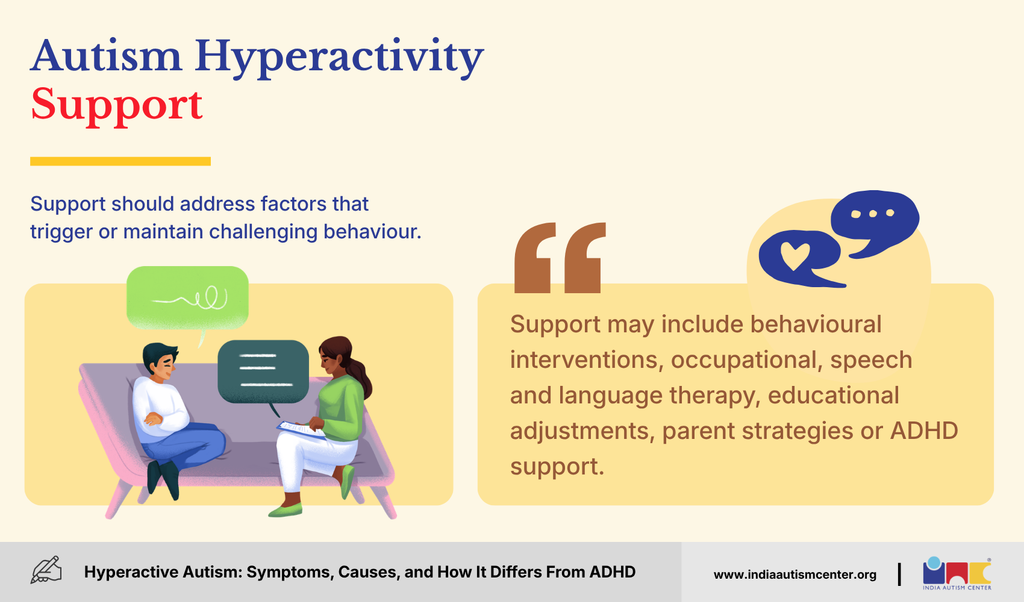
There is no single autism hyperactivity support suitable for everyone.
It is best to identify and address factors that may trigger or maintain challenging behaviour before moving to other interventions. If no underlying physical, mental health, behavioural, or environmental factor is identified, a psychosocial intervention informed by a functional assessment may be considered.
Depending on the individual’s needs, support may involve:
- Behavioural or psychosocial intervention
- Occupational therapy
- Speech and language therapy
- Educational adjustments
- Parent-mediated strategies
- Support for anxiety or sleep difficulties
- Assessment and treatment for ADHD where appropriate
Medication is not used to make an autistic person quieter or easier to manage. If medication is considered, it should be based on an identified clinical need and monitored by an appropriately qualified professional.
Controlling Hyperactivity in Autism at Home and School
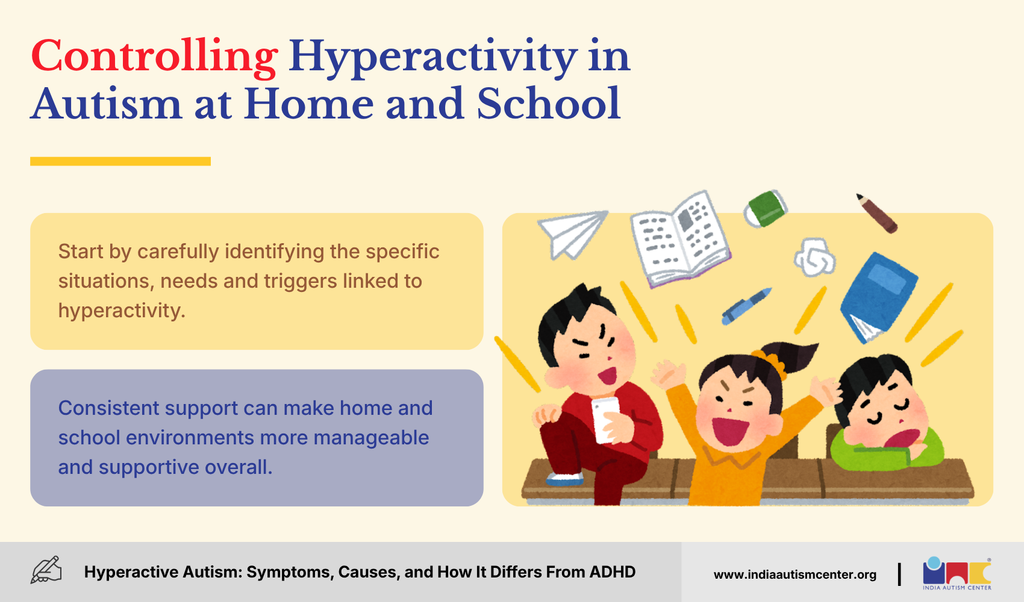
Controlling hyperactivity in autism works best when parents, teachers and professionals understand the behaviour and respond consistently.
A child may behave differently at home and school because the two environments place different sensory, communication and social demands on them. Useful strategies can include clear instructions, visual supports, predictable routines, manageable task lengths and appropriate movement breaks.
The objective should not be to eliminate every movement. If a child safely fidgets, rocks or moves while remaining engaged, there may be no reason to stop them.
On the other hand, if a child repeatedly leaves a classroom because of sensory overload, simply telling them to remain seated is unlikely to address the underlying difficulty.
The goal is meaningful participation, safety and quality of life.
When Should Parents Seek Professional Help?
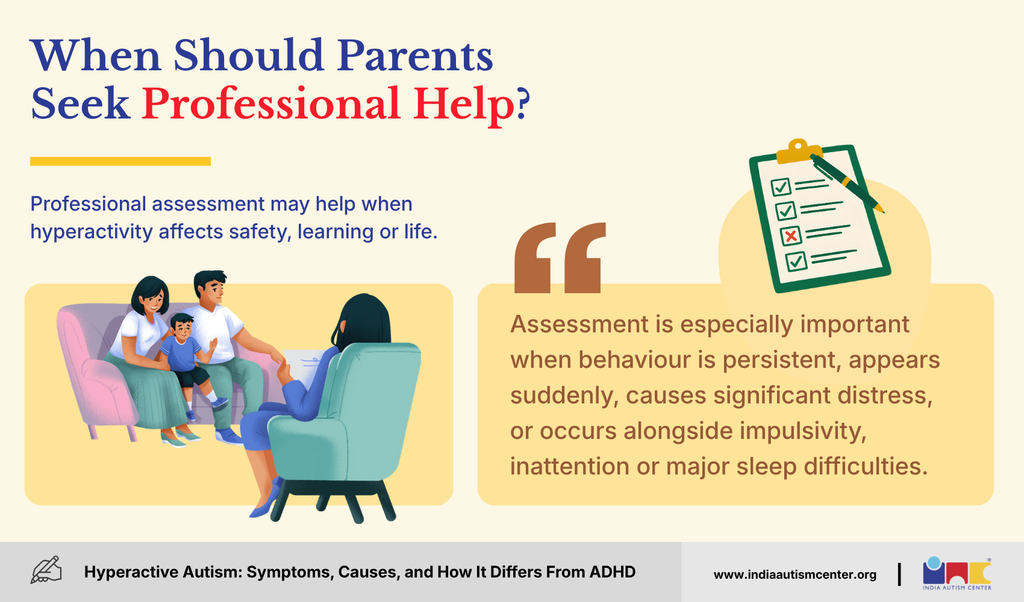
Professional assessment may be appropriate when hyperactivity:
- Interferes significantly with learning or daily life
- Creates safety concerns
- Occurs consistently across different settings
- Is accompanied by significant impulsivity or inattention
- Appears suddenly or becomes substantially worse
- Occurs alongside major sleep difficulties
- Causes significant distress
- Makes communication or participation difficult
A professional assessment can also help to determine whether the behaviour relates primarily to autism, ADHD, sensory needs, anxiety, communication difficulties, sleep or another physical or developmental issue.
How India Autism Centre Can Help
India Autism Centre takes an individualised approach to understanding autism and associated behavioural concerns. Rather than viewing hyperactivity as a behaviour that needs to be stopped, the focus can be on understanding what the behaviour may be communicating and what factors may be contributing to it.
Families can benefit from support that considers the individual’s autism assessment, communication profile, sensory processing, developmental needs and possible co-occurring conditions such as ADHD.
Where appropriate, areas such as early intervention, occupational therapy, speech and language therapy and parent support can form part of a broader support plan. The emphasis is on helping autistic individuals develop practical skills while supporting their wellbeing, participation and independence.
Conclusion
Hyperactive autism is not a separate autism diagnosis. Hyperactivity in an autistic person can arise from sensory differences, communication difficulties, anxiety, environmental demands, sleep problems or co-occurring ADHD.
Understanding the reason behind the behaviour is therefore more important than simply trying to suppress it. A comprehensive assessment can help identify underlying factors and determine whether additional conditions, such as ADHD, are present.
With individualised support, environmental adaptations and appropriate professional intervention, families can develop practical ways to support attention, regulation, communication and everyday participation.
Frequently Asked Questions
- Is hyperactive autism a type of autism?
No. Hyperactive autism is not a recognised clinical subtype of autism. It is an informal term used to describe autistic people who display significant hyperactivity or restlessness.
- Can an autistic child also have ADHD?
Yes. Autism and ADHD can occur together. A professional assessment can determine whether the child meets criteria for both conditions.
- How can I tell if hyperactivity is caused by autism or ADHD?
You can’t reliably determine the cause from hyperactivity alone. Professionals consider the child’s developmental history, attention, impulsivity, social communication, repetitive behaviours, sensory needs and symptoms across different settings.
- How can I reduce hyperactivity in autism?
Start by identifying triggers. Predictable routines, movement opportunities, communication support and adjustments to overwhelming sensory environments may help, depending on the individual’s needs.
- Does sensory overload cause hyperactivity in autism?
Sensory overload can contribute to increased movement or escape behaviour in some autistic people. Understanding the individual’s sensory needs can help identify appropriate environmental adjustments.
- Does hyperactivity mean autism is severe?
No. Hyperactivity does not determine autism severity. Autistic people have different strengths, support needs and developmental profiles.