 Donate now
 Get a Call Back
 MENU
MENU 19 MIN READ
 SHARE
SHARE


For many families raising children with developmental disabilities, there is a question about legal guardianship that quietly sits in the background for years:
“What will happen to my child when I am no longer here?”
This is where legal guardianship becomes critically important.
Legal guardianship is a structured legal mechanism that ensures individuals who require support in decision-making continue to receive care, protection, and advocacy throughout their lives. In India, this framework is supported by the National Trust Act, 1999, which was established to protect and empower persons with Autism, Cerebral Palsy, Intellectual Disability, and Multiple Disabilities.
India Autism Center (IAC) is redefining what long-term, inclusive support truly means for individuals with autism and their families. Instead of focusing only on short-term therapies or immediate interventions, IAC is building something far more meaningful—a comprehensive, evolving ecosystem of care that grows with the individual over time.
Such initiatives signal a shift in how society approaches developmental disabilities—from a fragmented, reactive model to a more holistic and future-focused one.
Understanding Legal Guardianship
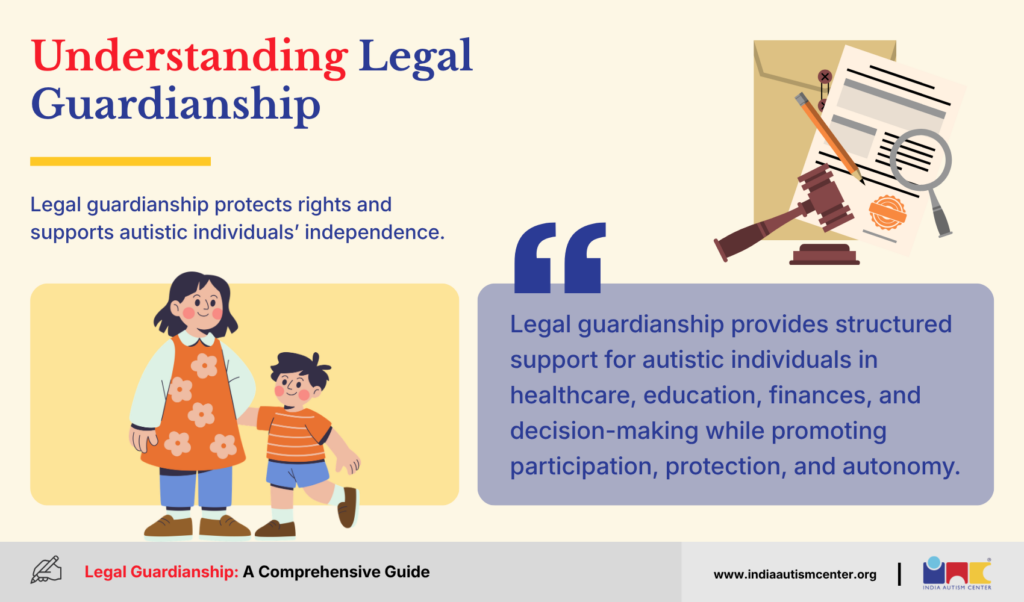
Legal guardianship—especially in the context of autism—is often misunderstood. Many assume it takes away an individual’s independence, but in reality, it is designed to do the opposite. In India, legal guardianship is not about control; it is about creating a structured support system for individuals who may need assistance in navigating certain aspects of life.
For individuals with autism, these needs can vary widely—from managing finances and healthcare decisions to accessing education, employment opportunities, or independent living. Legal guardianship ensures that these responsibilities are handled with care, while protecting the individual’s rights, dignity, and overall well-being.
India’s legal framework, guided by the National Trust Act, 1999 and the Rights of Persons with Disabilities (RPwD) Act, 2016, reflects a progressive and rights-based approach. At its core is the idea of supported decision-making—encouraging individuals with autism to actively participate in decisions about their own lives wherever possible.
Guardians, whether family members or appointed representatives, are there to assist—not override. Their role is clearly defined, with an emphasis on acting in the best interests of the individual while maintaining accountability and transparency. Most importantly, the law strives to preserve the individual’s voice, ensuring their agency is respected to the greatest extent possible.
Ultimately, legal guardianship is about finding the right balance between protection and independence. It acknowledges that while some individuals may need ongoing support, they also deserve inclusion, respect, and the freedom to express themselves. In this evolving perspective, legal guardianship becomes a tool that enables individuals with autism to lead lives that are not only secure, but also meaningful and dignified.
A legal guardian may assist in matters such as:
- Medical and healthcare decisions
- Educational and vocational planning
- Financial and property management
- Accessing government welfare schemes
- Legal representation in official matters
The fundamental objective of legal guardianship is to safeguard the well-being and rights of individuals who may not always be able to make fully independent decisions.
📥 Free download: Printable daily routine chart for autistic children
Duties of Legal Guardian
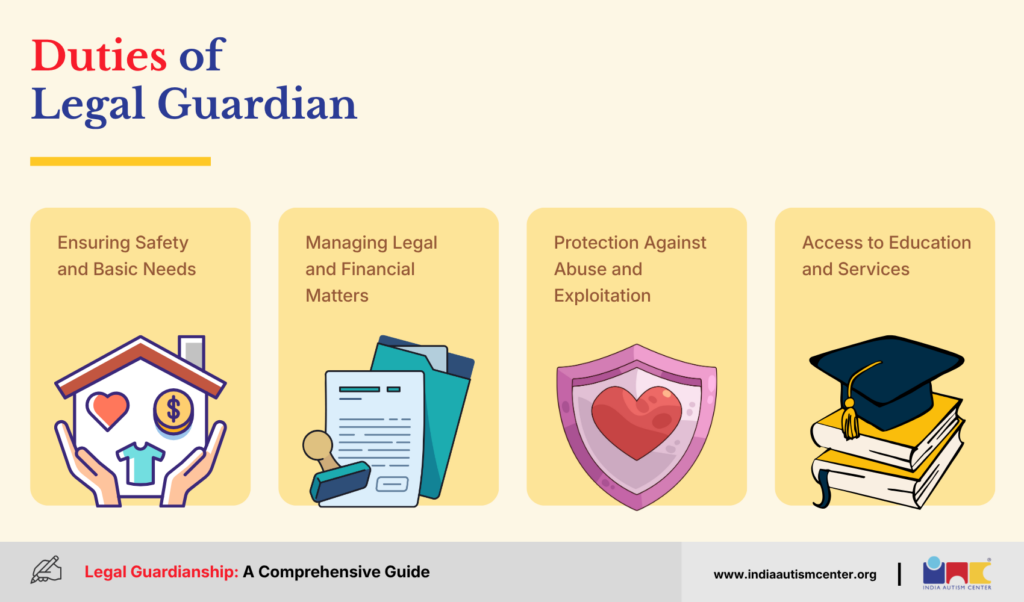
While many individuals with disabilities can lead independent and fulfilling lives, some may require assistance in specific areas. Legal guardianship ensures that such individuals receive the support they need while protecting them from potential risks.
Below are some of the key reasons legal guardianship is important.
1. Ensuring Safety and Basic Needs
A legal guardian ensures the individual has access to essential needs such as:
- Safe and secure housing
- Nutritious and appropriate food
- Healthcare services, including regular check-ups and therapies
- Emotional support and a nurturing environment
Guardians help create a stable environment where individuals can thrive, and together, these responsibilities ensure not only the individual’s basic well-being but also their overall development, dignity, and quality of life.
2. Managing Legal and Financial Matters
Many legal or financial decisions require formal representation. A legal guardian may help manage:
- Operating and managing bank accounts
- Overseeing property ownership, leasing, or related transactions
- Handling and maintaining important legal documentation
- Facilitating access to government benefits, pensions, and welfare schemes
- Managing insurance policies and financial investments, where applicable
- Representing the individual in legal or administrative proceedings
- Ensuring compliance with regulatory and documentation requirements
Through these responsibilities, the guardian helps ensure that financial and legal affairs are handled responsibly, securely, and in a manner that safeguards the individual’s rights and long-term interests.
3. Protection Against Abuse and Exploitation
Unfortunately, individuals with disabilities may be vulnerable to neglect or financial exploitation. Legal guardianship acts as a protective framework that safeguards them from harm.
4. Access to Education and Services
Guardians help individuals access critical services such as:
- Educational programs tailored to their needs
- Skill development and vocational training
- Healthcare services, including routine and specialised care
- Rehabilitation programs and therapeutic interventions
They also play an important role in enabling broader support systems, including:
- Enrolment in inclusive schooling or specialised learning environments
- Access to assistive technologies and learning aids
- Participation in social, recreational, and community-based activities
- Coordination with multidisciplinary professionals such as educators, therapists, and counsellors
- Access to employment support services and workplace readiness programs
- Guidance for transitioning across life stages, such as from school to work or independent living
- Linking individuals to government schemes, support groups, and community resources
Institutions such as India Autism Center are designed to provide integrated support systems that help individuals develop skills and live fulfilling lives. Through these efforts, guardians ensure that individuals are not only able to access essential services but also have opportunities to grow, learn, and actively participate in society.
Want to know more? Get in touch with us.
Who Can Become a Legal Guardian?
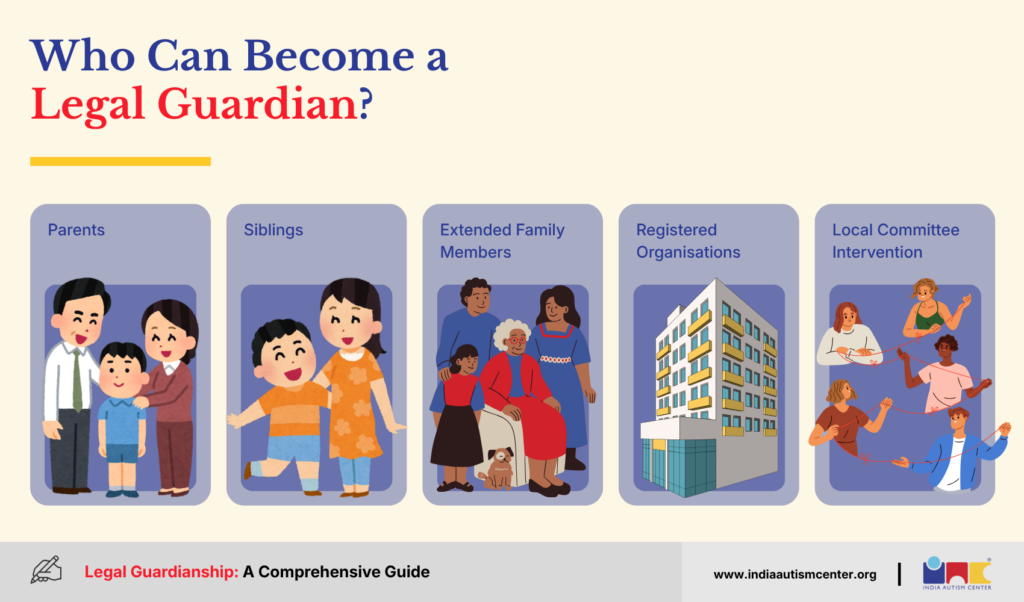
The National Trust framework recognises that the responsibility of guardianship may fall on different individuals or organisations depending on the circumstances.
1. Parents
Parents are typically the natural guardians and are usually the first to take responsibility for their child’s well-being.
Both parents can apply jointly, or one parent may apply individually if the other is unavailable due to circumstances such as death or separation.
2. Siblings
In cases where parents are unable to continue guardianship, brothers or sisters may apply to become legal guardians.
Siblings often understand the personal needs of the individual and may continue the caregiving role.
3. Extended Family Members
If parents and siblings are not available, close relatives such as uncles, aunts, or cousins may step in to provide guardianship support.
4. Registered Organisations
Sometimes families do not have relatives who can take on long-term responsibility. In such cases, registered organizations recognized by the government may serve as legal guardians.
Institutions that specialise in disability care often provide structured environments with trained professionals and supportive communities.
5. Local Level Committee Intervention
If no guardian is available, the Local Level Committee (LLC) established under the National Trust Act may appoint a registered organization to take responsibility for the individual.
This ensures that no person with disability is left without support.
Eligibility Criteria for Legal Guardianship
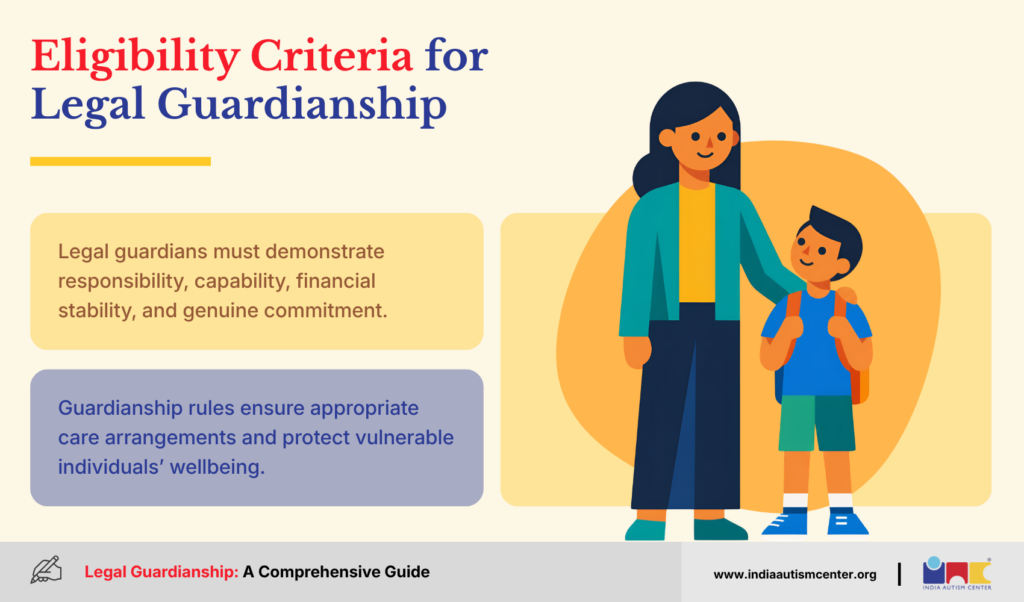
Not everyone can become a legal guardian. The law outlines specific requirements to ensure the guardian is capable of responsibly managing the role.
A guardian must generally:
- Be a citizen of India
- Have no criminal background or not be convicted by any court of law
- Be mentally capable of making responsible decisions
- Be financially independent and capable of taking care of such a special child
- Demonstrate a genuine commitment to the well-being of the individual
These safeguards ensure that guardianship responsibilities are entrusted only to reliable and responsible individuals.
- Further, anyone applying for legal guardianship should abide by the following:
- The applicant may indicate siblings, or any member of the family or any other person or a registered institution for consideration as a guardian and, in the case of institutions, the conditions of eligibility of institutions.
- In the case of considering the institution as a guardian, the institution must be registered under a law and be capable of providing care of the person.
- In the event of an institution ceasing to be registered under a law or stopping functioning, or being found otherwise unsuitable, the Local Level Committee shall make alternative arrangements for the foster care of any such inmate or the ward who is under the care of any such institution.
- The alternative care shall not be permanent in nature and shall be placed under permanent guardianship within a period of one year.
- The applicant must be living in the vicinity or close proximity to the place where the ward has been habitually living at the time of appointment of the guardian.
- No single male shall be considered as a guardian for a female ward and in the case of female wards, the male person shall be given co-guardianship with his spouse, who shall be the master co- guardian.
When Institutions Act as Legal Guardians
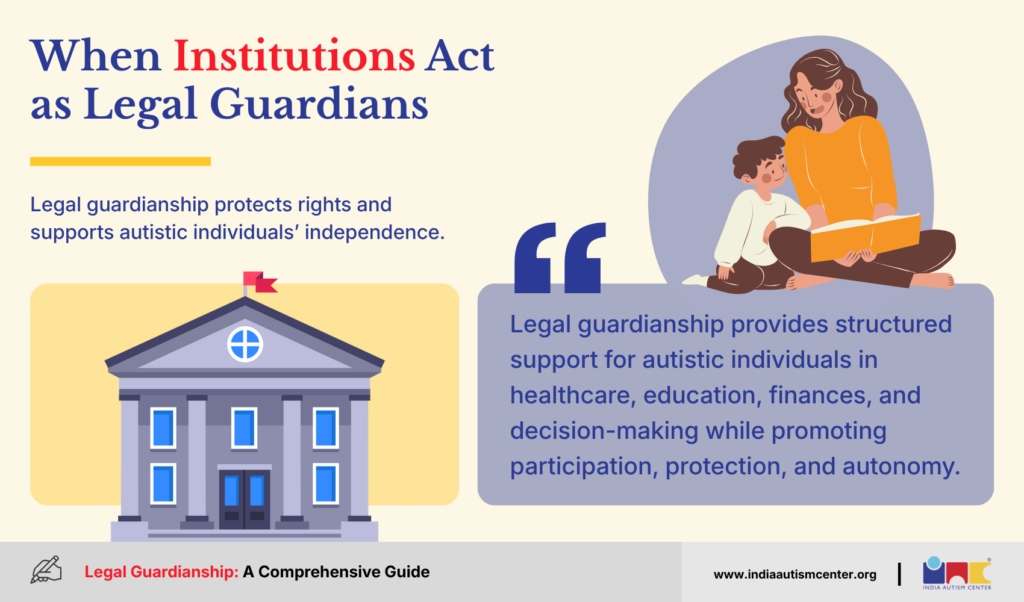
In certain cases, a registered institution may become the legal guardian of an individual with disability.
For an organisation to qualify for legal guardianship:
- It must be officially registered and legally recognised
- It should have experience in disability care and rehabilitation
- It must provide adequate facilities for safety, care, and support
India Autism Center aims to create a holistic ecosystem that includes education, therapy, residential care, and community engagement.
Such institutions can provide long-term support systems that extend beyond the lifespan of parents or immediate caregivers.
Want to know more? Get in touch with us.
How the Legal Guardianship Appointment Process Works
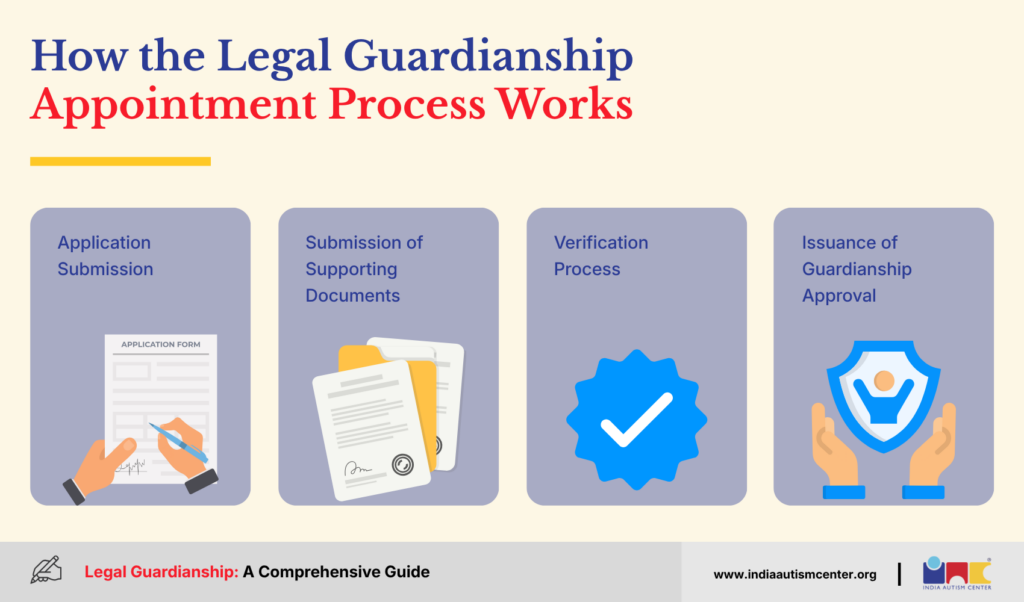
The appointment of a legal guardian follows a structured legal process designed to ensure transparency and accountability.
Step 1: Application Submission
The process begins with submitting a guardianship application to the Local Level Committee (LLC) using the prescribed form.
This application includes details about:
- The person with disability
- The proposed guardian
- The nature of support required
Step 2: Submission of Supporting Documents
- Applicants must submit FORM A in the prescribed Format and, along with such form, provide documents such as:
- Birth certificate of the person with disability (issued by Municipal Authorities, Registrar of Births, School Authorities, or Educational Board)
- Proof of residence (such as Ration Card, Electoral ID, Passport, or certificate from the relevant authority)
- Updated proof of address must be submitted if there has been a change in residence.
- Disability certificate issued by a competent authority (Medical Board, Government Hospital, or authorised specialist)
- Consent of parents (required if a voluntary organisation or institution is to be appointed as guardian; to be provided on the application form)
- Submission of self-attested photocopies is sufficient; original documents may be requested later for verification.
- If applying as a single applicant, reasons must be clearly stated in the application form or on the attached sheets.
- Details of the proposed care plan, including personal care and maintenance, must be provided
- Information on movable and immovable property to be managed by the guardian, along with supporting proof, should be included.
- If a male applicant applies to be a guardian for a female ward, his spouse must be appointed as co-guardian. In such cases, details of the spouse must be provided. If the applicant does not have a spouse, the application will not be considered valid.
- Disability certificate issued by a recognized authority
These documents help the committee assess the situation and determine the appropriate guardian.
Step 3: Verification Process
Applications for appointment of a guardian are submitted to the Local Level Committee (LLC) in Form A, as prescribed under the rules
- Upon receiving the application, the LLC reviews and scrutinises it and may request additional documents or information if required
- In cases where parents apply for appointment of a guardian other than themselves, the LLC may conduct counselling or further assessment to verify the necessity and genuineness of such a request
- If no parents or relatives are available (for instance, in cases of abandonment, destitution, or vagrancy), the Committee may invite a registered organisation to initiate the guardianship process
- The person with disability is assessed by the LLC to determine the genuine need for guardianship
- The Committee may seek support from technical experts or professionals during this assessment
- The LLC also evaluates the suitability, capability, and reliability of the proposed guardian before making a decision
Guardianship for personal care and maintenance typically includes responsibilities related to:
- Food, clothing, and shelter
- Healthcare and medical/surgical needs
- Education, training, and employment
- Religious and cultural needs
- Leisure, recreation, and nutrition
- Protection from abuse, exploitation, and neglect
- Safeguarding constitutional and human rights
- Once approved, the appointment of the guardian is formalised in Form B, as per the rules.
They evaluate whether the proposed guardian meets the eligibility criteria and has the ability to fulfill their responsibilities.
Step 4: Issuance of Guardianship Approval
If the committee is satisfied, it issues official confirmation granting legal guardianship.
This formal appointment legally authorizes the guardian to act on behalf of the individual in specified areas.
Responsibilities of a Legal Guardian
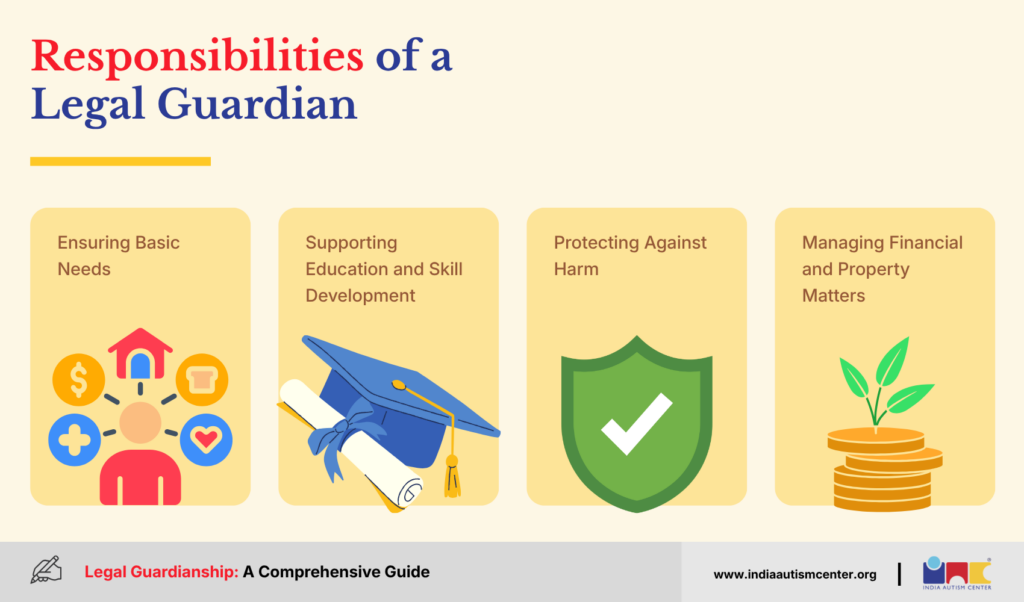
Being appointed as a legal guardian is a serious responsibility that requires commitment, transparency, and ethical decision-making. Key responsibilities include:
Ensuring Basic Needs
Guardians must ensure that the individual receives:
- Food and nutrition
- Safe housing
- Appropriate clothing
- Healthcare and therapy
Supporting Education and Skill Development
Guardians should encourage the individual to participate in:
- Educational programs
- Vocational training
- Recreational activities
These activities help improve the quality of life and foster independence.
Protecting Against Harm
Guardians must protect the individual from:
- Physical abuse
- Emotional neglect
- Financial exploitation
Managing Financial and Property Matters
If the individual owns property or financial assets, the guardian must manage them responsibly and transparently.
Accountability and Monitoring of Guardians
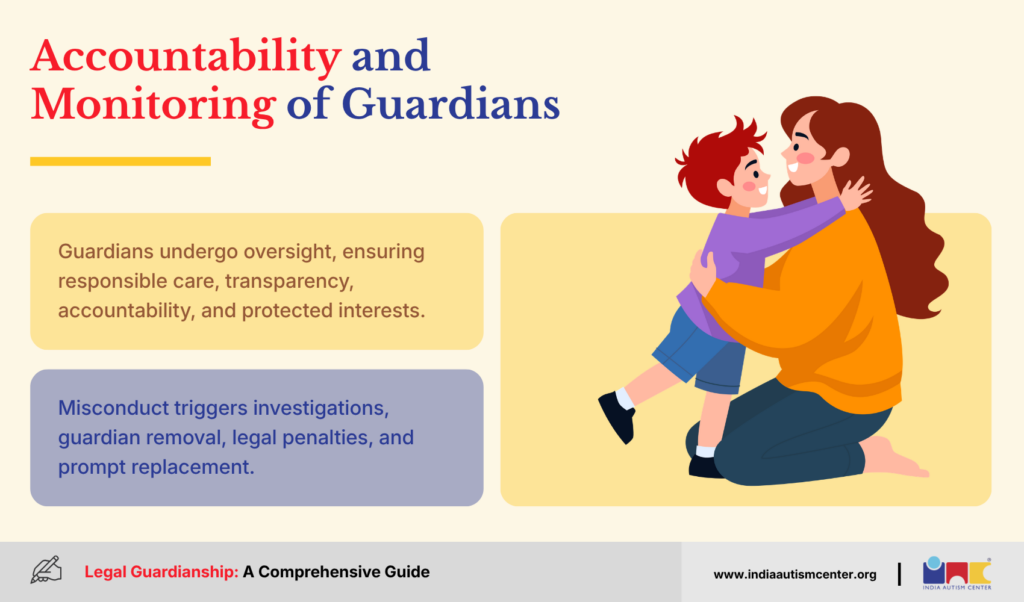
Legal guardianship is closely monitored to prevent misuse of authority.
Annual Reporting
Guardians are required to submit annual reports detailing financial transactions and property management.
This ensures transparency and protects the interests of the individual.
Regular Oversight
The Local Level Committee monitors guardianship arrangements to ensure that the individual is receiving proper care and support.
Legal Action in Case of Misconduct
If misuse of authority or negligence is discovered, the guardian may face:
- Removal from guardianship
- Legal penalties
- Appointment of a replacement guardian
When Can a Legal Guardian Be Removed?
A guardian may be removed if they:
- Abuse or neglect of the individual
- Misuse of financial assets
- Fail to fulfil their responsibilities
- Act against the interests of the individual
Complaints can be filed with the Local Level Committee, which will investigate the matter and take appropriate action.
Want to know more? Get in touch with us.
Why IAC will have to take any Legal Guardianship
One of the biggest fears among parents of children with autism is the uncertainty of the future.
Who will care for their child after they are gone?
Institutions dedicated to autism support are increasingly developing long-term solutions that address this concern.
India Autism Center, for instance, is working toward building a sustainable community ecosystem where individuals with autism can live, learn, work, and thrive even when their parents are no longer able to support them.
Through structured programs, residential facilities, and long-term planning, such institutions aim to create a future where individuals with autism can live with dignity and independence.
How IAC will take the Legal Guardianship under this Act
- IAC will first have to get registered under this Act
- Apply to the LLC to take the legal guardianship of the resident availing the facility of IAC
- IAC may appoint a designated person/position/person to act on IAC’s behalf as a legal guardian for all subsequent applications. Note – this is subject to LLC approval
Responsibility of IAC as a Legal Guardian
- Ensure the individual’s basic needs—including adequate food, clothing, safe shelter, and access to appropriate healthcare—are consistently met, in line with duties envisaged under the National Trust Act, 1999.
- Facilitate and oversee access to education, skill development, and meaningful recreational and social activities, supporting the individual’s overall development and inclusion.
- Safeguard the individual from abuse, neglect, exploitation, or discrimination, while upholding their dignity, autonomy, and legal rights as recognised under the Rights of Persons with Disabilities (RPwD) Act, 2016.
- Responsibly manage financial affairs, assets, and property in the best interests of the individual, ensuring transparency, accountability, and long-term security.
- Act in accordance with the provisions, guidelines, and safeguards prescribed under the National Trust Act, 1999, including adherence to oversight by the Local Level Committee and maintaining the individual’s best interests at all times
Conclusion
These guidelines/framework are designed to establish clear, transparent guidelines for the appointment and ongoing monitoring of legal guardians, ensuring that individuals with Autism, Cerebral Palsy, Intellectual Disabilities, and Multiple Disabilities are supported with dignity, respect, and fairness. Grounded in the principles of the National Trust Act, 1999, and the Rights of Persons with Disabilities (RPwD) Act, 2016, it emphasises accountability, safeguards individual rights, and promotes holistic well-being across all stages of life.
At the India Autism Center (IAC), this framework is strengthened by a commitment to creating a secure, inclusive, and future-ready ecosystem of care. By integrating professional oversight, structured support systems, and community-based living, IAC ensures that guardianship is not merely a legal formality but a meaningful safeguard that enhances quality of life. Families can take reassurance in IAC’s person-centric approach, where the focus remains on empowering individuals, respecting their autonomy, and providing continuity of care even in the long term.
Choosing IAC means choosing a model that goes beyond compliance—it is about trust, sustainability, and a shared commitment to enabling individuals to live with dignity, purpose, and a sense of belonging.
Frequently Asked Questions (FAQs)
Is it mandatory and absolutely necessary that a legal guardian be appointed for each person with disability?
Though it is not mandatory to apply for legal guardianship of a person with disability, since the National Trust Act, 1999 has made provision for such appointment, it is always advantageous to apply for legal guardianship under the provisions of the said Act. Such occasion may arise when a person with disability has to deal with issues related to himself, his interests and his properties, and since he/she may not always be able to take appropriate decisions in those respects, it would be in the best interests if represented by a legal guardian in such matters.
Elaboration of Section 14(3) of the NT Act read with Form B under the National Trust Rules.
Does the Local Level Committee have any inherent powers as the Courts have?
A friend of a person with disability cannot apply for guardianship, but he can be appointed as a guardian if a parent or a sibling or a relative recommends/applies for the appointment of such a person as legal guardian.
Can a minor act as a guardian?
A “minor” is a person who has not completed 18 years of age. Such a minor cannot act as guardian of a person with disability under the National Trust’s Regulations.
Can an application for guardianship be made for a ward who lives abroad?
No. It would not be possible for a Local Level Committee to appoint a guardian who is living abroad since the National Trust Act applies to the whole of India under Section 1(2) of the Act. As per Section 17(1)(iii)(a) of the National Trust Rules, the person whose name has been suggested for appointment as guardian should be a citizen of India. Further, under the Trust’s Regulation 12(6), both the guardian and the ward must be living within the jurisdiction of the Local Level Committee.
What is the position of a ‘testamentary guardian’ appointed under a ‘Will’?
It is open to a parent to appoint a guardian for his minor child (who may also be a person with disability) under a ‘Will’ or other testamentary instrument. Where such testamentary guardian has been appointed, there is intended to be the legal guardian under the National Trust Act. The LLC may take into consideration the facts and circumstances of the testamentary guardianship.
What will happen if the guardian is convicted by a court of law and sent to prison or develops serious incapacity to discharge his duties or develops interests adverse to that of the ward or leaves the district permanently or becomes bankrupt?
In all of these circumstances, the guardian will be liable to be removed, and the Local Level Committee will have to appoint another guardian. It may also place the ward in the charge of an eligible person or institution till a guardian is appointed on a regular basis.
Can separate guardians be appointed for the care of the person and for the care of the property of a person with disability?
Yes, it is possible that guardians are appointed separately for the care of the person and for the care of the property of the person with disability. However, the Local Level Committee will look into all the facts and circumstances of the case before taking such a decision.
Can a foreigner apply for guardianship?
No, a person who is not a citizen of India cannot apply for guardianship of a person with disability in India under the Trust’s Rules Section 17(1)(iii)(a).
Can a Local Level Committee vary the powers of a guardian after appointing one?
The Local Level Committee can vary the powers of a guardian after having appointed him but this will depend upon the developments and the circumstances of a given case and should be properly illustrated.
Since the Local Level Committee has no powers of a court, will it have any power over third parties? Can it summon other persons or take evidence as courts can do?
In order to consider applications for guardianship impartially and fairly, a Local Level Committee may call for other persons and take their evidence or hear them depending upon the facts and circumstances of the case. In the event a third person called by the Committee does not appear, it will have to do without the appearance of such person as it has no powers to enforce such presence. The Committee can also take affidavits by way of evidence from witnesses and applicants and allow cross-examination by objectors to guardianship applications.
For expert insights, support services, and inclusive learning initiatives, visit the India Autism Center.