 Donate now
 Get a Call Back
 MENU
MENU 14 MIN READ
 SHARE
SHARE


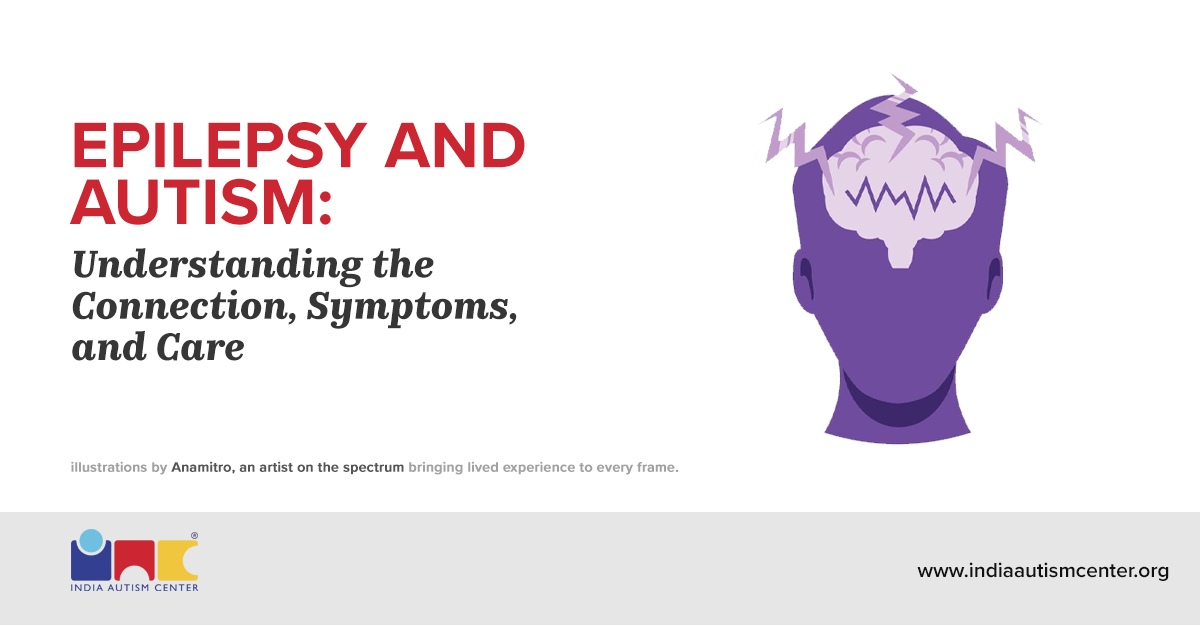
When I speak with parents and caregivers, one question comes up very often: “Is there a link between autism and epilepsy?”
The short answer is yes. Research shows that epilepsy and autism frequently occur together, and understanding this relationship can help families identify symptoms earlier and seek the right care.
In this guide, I will explain what epilepsy is, how autism and epilepsy are related, the symptoms to watch for, and how seizures are managed in autistic individuals. My goal is simple: to give you clear, reliable, and practical information that helps you support your child or loved one.
What Is Epilepsy?
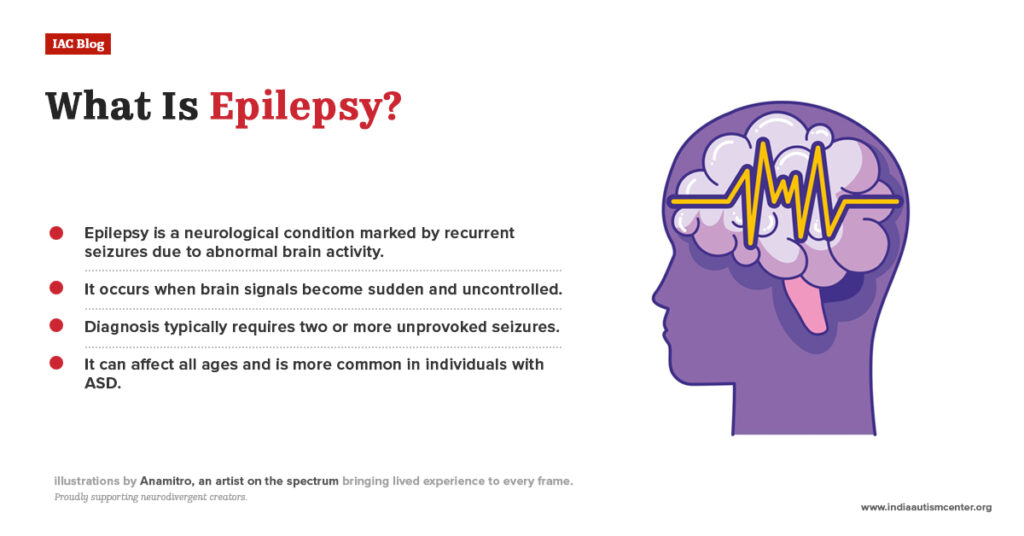
Before we explore the connection, let us first understand what epilepsy is.
Epilepsy is a neurological condition in which a person experiences recurrent seizures caused by abnormal electrical activity in the brain.
Our brain communicates through electrical signals. However, in epilepsy, these signals sometimes become sudden, excessive, and uncontrolled, which leads to seizures.
A person is usually diagnosed with epilepsy if they have two or more unprovoked seizures.
Epilepsy can affect people of any age, including infants, children, and adults. In children with developmental conditions such as Autism Spectrum Disorder (ASD), the likelihood of developing epilepsy is higher.
Epilepsy Symptoms
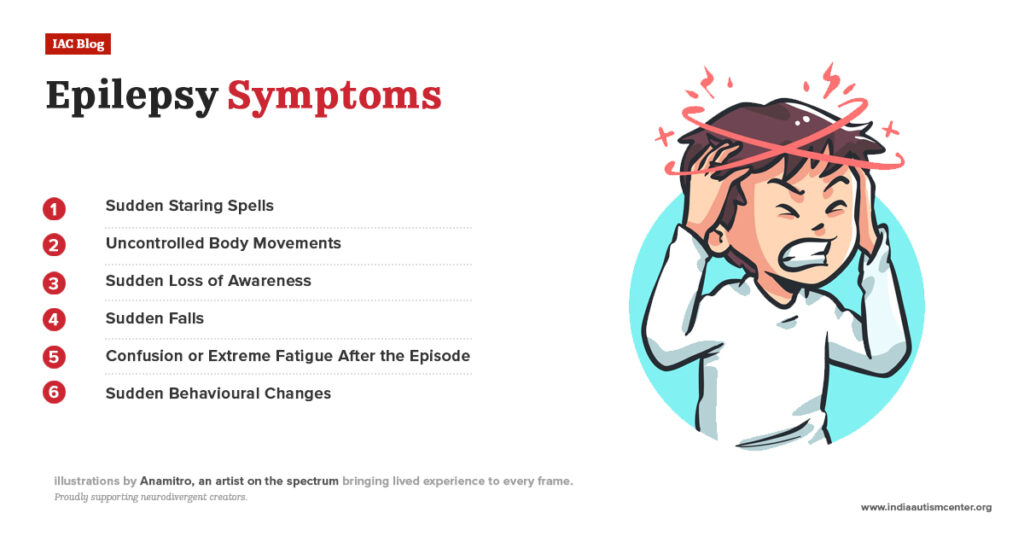
The symptoms of epilepsy can vary widely. Some seizures are dramatic and easy to recognise. However, others are subtle and may look like ordinary behaviour, especially in children with ASD.
Because of this, many parents initially miss the early warning signs. Let me explain the most common epilepsy symptoms in a bit more detail so you know exactly what to watch for.
1. Sudden Staring Spells
One of the most commonly overlooked symptoms is a sudden staring episode.
Your child may suddenly stop what they are doing and stare blankly into space for several seconds. During this time:
- They may not respond when you call their name.
- Their eyes may appear fixed or unfocused.
- They may pause mid-activity, such as while speaking or playing.
These episodes often last 5–15 seconds and then the child resumes normal activity as if nothing happened.
Parents often mistake this for daydreaming or inattention, but frequent staring spells may actually indicate absence seizures, a type of epilepsy.
2. Uncontrolled Body Movements
Another clear sign of epilepsy is sudden involuntary movements of the body.
These movements happen because the brain sends abnormal electrical signals to the muscles. As a result, you may notice:
- rhythmic jerking of the arms or legs
- twitching of the face or eyelids
- sudden stiffening of the body
- repeated shaking movements
In some seizures, the whole body may shake strongly for a short period. In others, only one part of the body moves repeatedly.
3. Sudden Loss of Awareness
Sometimes seizures affect consciousness rather than movement.
During these episodes, the person may appear awake but is not aware of what is happening around them. For example:
- They may not respond when spoken to.
- They may continue a repetitive movement such as lip smacking or hand rubbing.
- They may seem confused or disconnected.
After the episode ends, the person often does not remember what happened.
This type of seizure can easily be mistaken for behavioural changes, especially in autistic individuals.
4. Sudden Falls
Some seizures cause a sudden loss of muscle control. When this happens, the person may collapse or fall without warning.
This type of seizure is sometimes called a drop attack.
You might notice that the child:
- suddenly drops to the ground
- loses strength in the legs
- briefly becomes limp
Because these seizures occur suddenly, they can lead to frequent injuries, such as bruises or cuts. Therefore, they require careful medical evaluation.
5. Confusion or Extreme Fatigue After the Episode
After a seizure ends, many individuals enter what doctors call a post-seizure or recovery phase.
During this time, the person may:
- feel extremely tired
- appear confused or disoriented
- have difficulty speaking clearly
- complain of a headache
- want to sleep immediately
This recovery period can last a few minutes to several hours, depending on the seizure type.
If you repeatedly notice this pattern — an unusual episode followed by sudden exhaustion or confusion — it may indicate seizure activity.
6. Sudden Behavioural Changes
In some cases, seizures can appear as brief behavioural changes rather than physical symptoms.
For example, a person may suddenly:
- stop interacting with others
- become unusually agitated or fearful
- repeat the same movement over and over
- show sudden emotional changes
Because these symptoms can resemble behavioural patterns seen in autism, they are sometimes misinterpreted as sensory overload or emotional dysregulation.
Want to know more? Get in touch with us.
Autism and Epilepsy: Understanding the Link
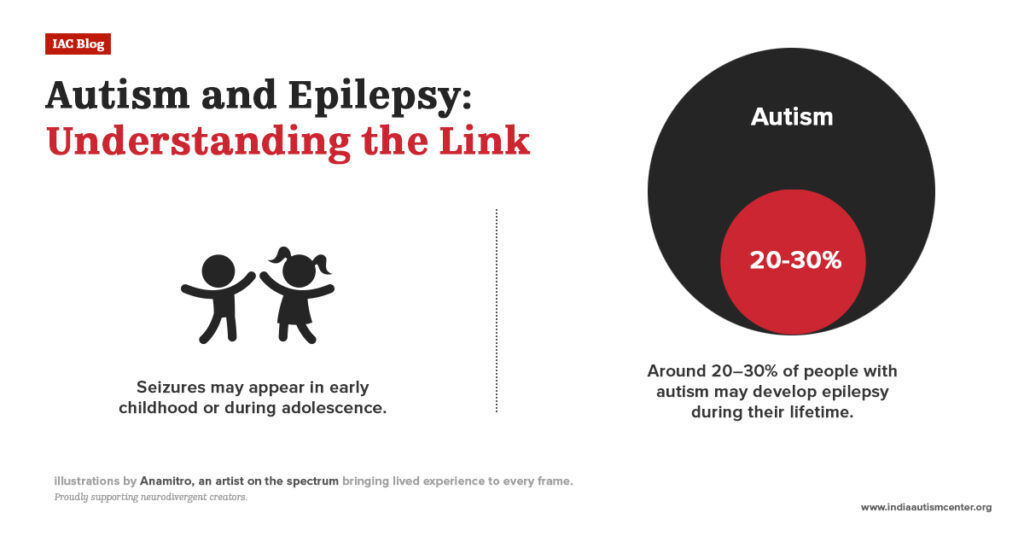
Now, let us talk about the important question: how are autism and epilepsy related?
Research shows that individuals with autism have a higher risk of developing epilepsy compared to the general population.
Studies suggest:
- Around 20–30% of people with autism may develop epilepsy during their lifetime.
- Seizures may appear in early childhood or during adolescence.
In clinical practice, I often tell parents that both conditions affect brain development and brain signalling, which partly explains why they occur together. However, not every autistic individual will develop epilepsy.
Read this blog to know more about What Causes Autism? A Detailed Breakdown (2026).
Autism and Epilepsy Comorbidity: Why Do They Occur Together?
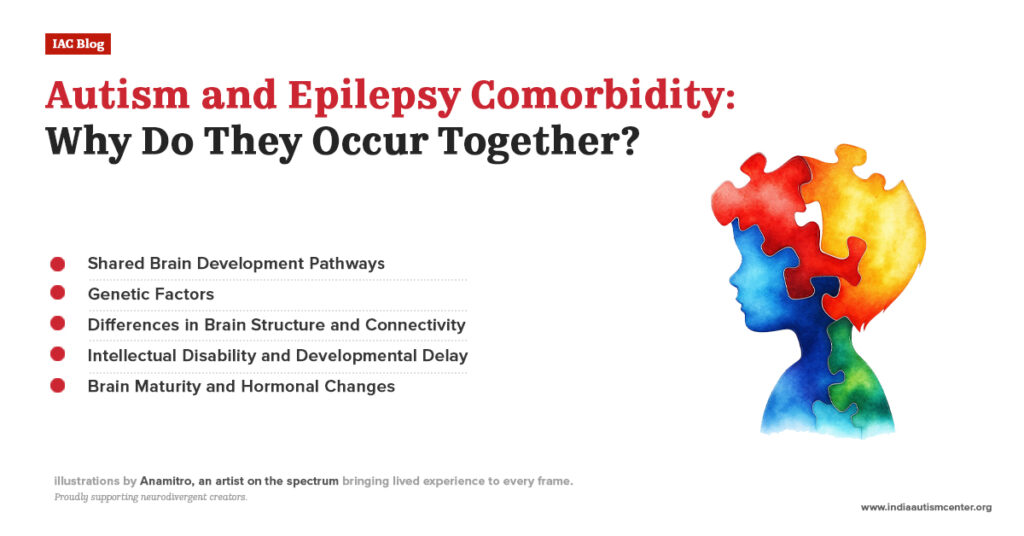
The term autism and epilepsy comorbidity simply means that both conditions occur in the same individual. In medical practice, this overlap is not rare. In fact, studies suggest that around one in four individuals with autism may develop seizures at some point in life.
But many parents ask me: “Why do autism and epilepsy appear together so often?”
The answer lies in how the brain develops and functions.
Both Autism Spectrum Disorder and Epilepsy involve differences in brain connectivity, electrical signalling, and neurological development. Because these biological pathways overlap, some individuals may develop both conditions simultaneously.
Let us look at the main reasons in a little more detail.
1. Shared Brain Development Pathways
The brain develops rapidly during early childhood. During this period, billions of neurons form connections that help control:
- communication
- social interaction
- learning
- movement
- sensory processing
In autism, these neural connections may develop differently, affecting how the brain processes information.
At the same time, epilepsy occurs when electrical signals in the brain become overly active or disorganised, triggering seizures.
2. Genetic Factors
Genetics also plays a significant role in the overlap between autism and epilepsy.
Certain genetic conditions affect brain development and neural signalling, which can increase the risk of both disorders. For example:
- Tuberous Sclerosis Complex
- Fragile X Syndrome
- Rett Syndrome
These conditions influence how brain cells grow, communicate, and organise themselves. As a result, individuals with these genetic syndromes often show features of autism along with seizures.
However, it is important to remember that most people with autism do not have these genetic disorders. They simply increase the likelihood of the two conditions appearing together.
3. Differences in Brain Structure and Connectivity
Brain imaging studies have shown that some individuals with autism may have differences in brain structure and connectivity.
For example, certain areas of the brain may show:
- altered neural connectivity
- differences in cortical thickness
- variations in how brain regions communicate with each other
These structural differences can sometimes make the brain more sensitive to abnormal electrical activity, which may lead to seizures.
However, this does not happen in every autistic individual. Many people with autism never develop epilepsy.
4. Intellectual Disability and Developmental Delay
Research shows that the risk of epilepsy is higher in individuals who have autism along with intellectual disability.
This is because more significant developmental differences in the brain may increase the likelihood of unstable electrical signalling, which can trigger seizures.
That said, epilepsy can also occur in autistic individuals without intellectual disability, although the probability is generally lower.
5. Brain Maturity and Hormonal Changes
Another interesting observation is that seizures often appear during two key developmental stages:
- early childhood
- adolescence
During these periods, the brain undergoes major structural and hormonal changes. These changes can sometimes affect electrical stability in the brain, increasing the chances of seizure onset.
This is why doctors continue to monitor autistic individuals for seizure activity even during their teenage years.
Autism and Seizures: How Do Seizures Appear in Autistic Individuals?
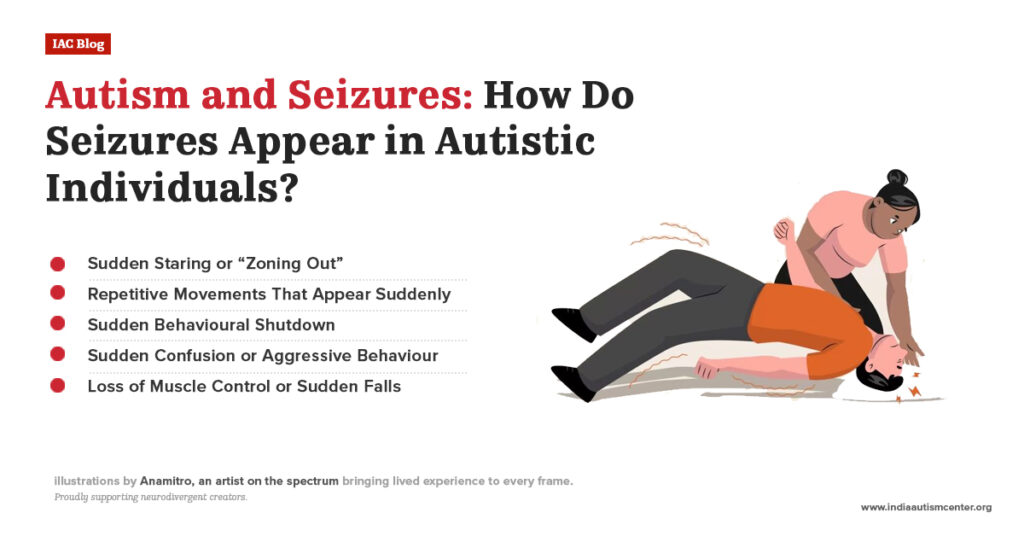
Seizures in individuals with autism can sometimes be difficult to recognise. This is because some seizure symptoms may look similar to behaviours commonly seen in Autism Spectrum Disorder.
1. Sudden Staring or “Zoning Out”
One of the most common seizure signs is brief staring episodes.
Your child may suddenly:
- stop speaking mid-sentence
- pause during an activity
- stare blankly into space
- fail to respond when you call their name
These episodes usually last a few seconds, and then the child continues normal activity as if nothing happened.
2. Repetitive Movements That Appear Suddenly
Many autistic individuals show repetitive movements, also called stimming behaviours. However, seizures may also cause involuntary repetitive movements.
For example, during a seizure, you may notice:
- repeated lip smacking
- chewing motions
- blinking rapidly
- sudden hand movements
- rhythmic twitching of one arm or leg
The key difference is that seizure-related movements usually begin suddenly and stop abruptly, whereas typical stimming behaviours often occur in response to emotions or sensory needs.
3. Sudden Behavioural Shutdown
Sometimes seizures cause a brief loss of awareness or responsiveness.
During these episodes, the person may:
- stop interacting with people
- appear confused or disoriented
- fail to respond to instructions
- seem mentally “absent”
These episodes may last a few seconds to a few minutes.
Because communication challenges are common in autism, these seizures may easily be mistaken for withdrawal, sensory overload, or fatigue.
Want to know more? Get in touch with us.
4. Sudden Confusion or Aggressive Behaviour
After certain seizures, individuals may experience temporary confusion, known as the post-seizure phase.
During this period, a person may:
- appear confused
- become unusually irritable
- show sudden agitation
- struggle to communicate clearly
In autistic individuals, this may be misinterpreted as behavioural dysregulation rather than a neurological event.
5. Loss of Muscle Control or Sudden Falls
Some seizures cause a sudden loss of muscle strength. As a result, the individual may:
- suddenly drop objects
- lose balance
- collapse unexpectedly
- briefly become limp
These events can happen very quickly and without warning. Because autistic individuals may already have coordination or motor planning differences, these episodes may not immediately raise concern unless they happen repeatedly.
Why Seizures Are Often Missed in Autism
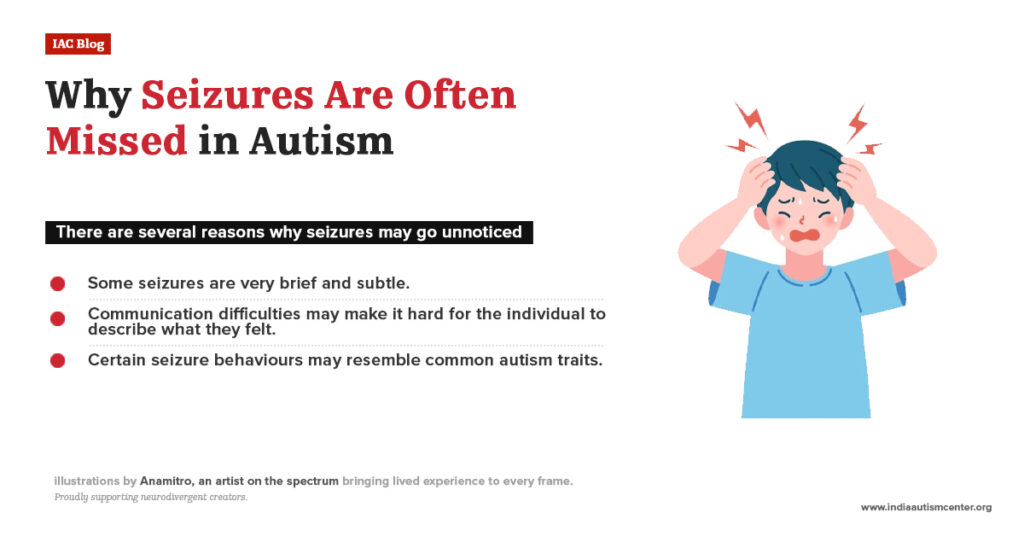
There are several reasons why seizures may go unnoticed in autistic individuals:
- Some seizures are very brief and subtle.
- Communication difficulties may make it hard for the individual to describe what they feel.
- Certain seizure behaviours may resemble common autism traits.
Because of this overlap, doctors sometimes recommend a neurological evaluation if parents notice new, sudden, or unexplained behavioural changes.
When Should You Suspect Seizures?
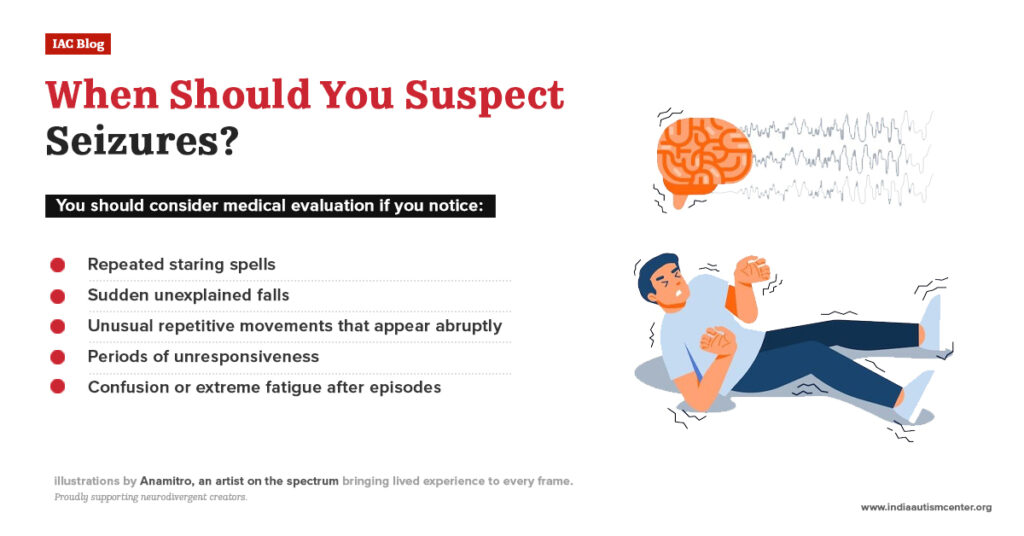
You should consider a medical evaluation if you notice:
- repeated staring spells
- sudden unexplained falls
- unusual repetitive movements that appear abruptly
- periods of unresponsiveness
- confusion or extreme fatigue after episodes
Tracking these episodes in a symptom diary can be very helpful for doctors.
When Do Seizures Usually Start in Autism?
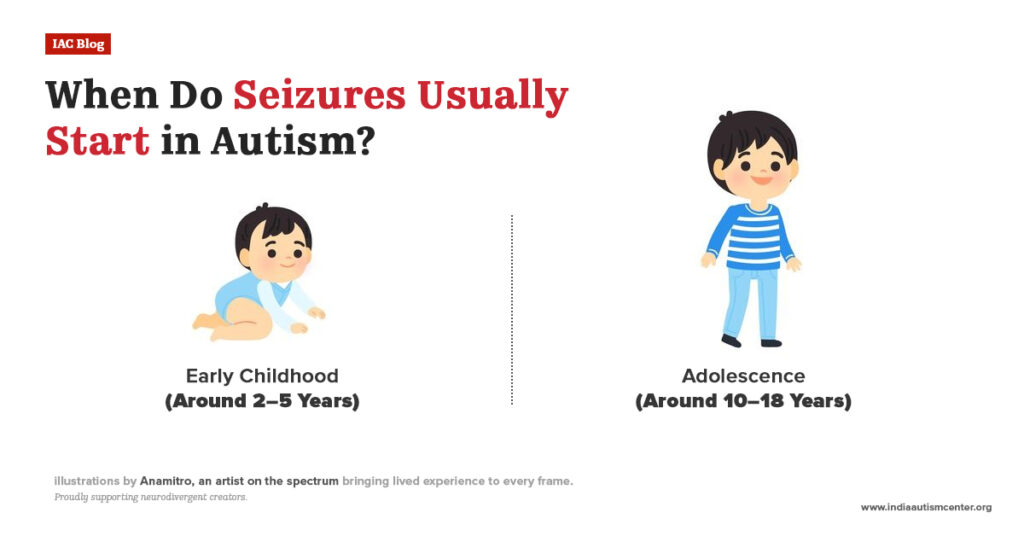
Seizures can occur at any stage of life, but research shows that individuals with Autism Spectrum Disorder who develop Epilepsy often experience their first seizures during two key developmental periods.
These periods are important because the brain undergoes major growth and neurological changes, which can sometimes increase vulnerability to seizure activity.
Let me explain these stages more clearly.
1. Early Childhood (Around 2–5 Years)
The first common period when seizures may appear is early childhood, usually between the ages of 2 and 5 years.
During this time, the brain is developing very rapidly. Neural connections that support:
- language development
- social interaction
- motor skills
- learning and memory
are forming at a fast pace.
Because the brain’s electrical systems are still maturing and organising, some children may develop abnormal electrical activity that leads to seizures.
Parents may notice signs such as:
- frequent staring spells
- sudden pauses during play or speech
- unusual repetitive movements
- brief loss of awareness
Sometimes these symptoms are initially mistaken for autism-related behaviours, which is why seizures during this stage may go undiagnosed for some time.
2. Adolescence (Around 10–18 Years)
The second peak period for seizure onset is adolescence.
During puberty, the brain undergoes another major phase of development. Several biological changes occur, including:
- hormonal fluctuations
- restructuring of brain circuits
- changes in sleep patterns
- increased emotional and cognitive demands
These changes can sometimes affect the brain’s electrical stability, making seizures more likely to appear during the teenage years.
In adolescents with autism, seizures may show up as:
- sudden confusion or disorientation
- unexplained falls
- jerking movements
- brief loss of consciousness
Because behavioural changes are also common during teenage years, seizure symptoms may sometimes be misinterpreted as mood or behavioural issues.
How Doctors Diagnose Epilepsy in Children with Autism
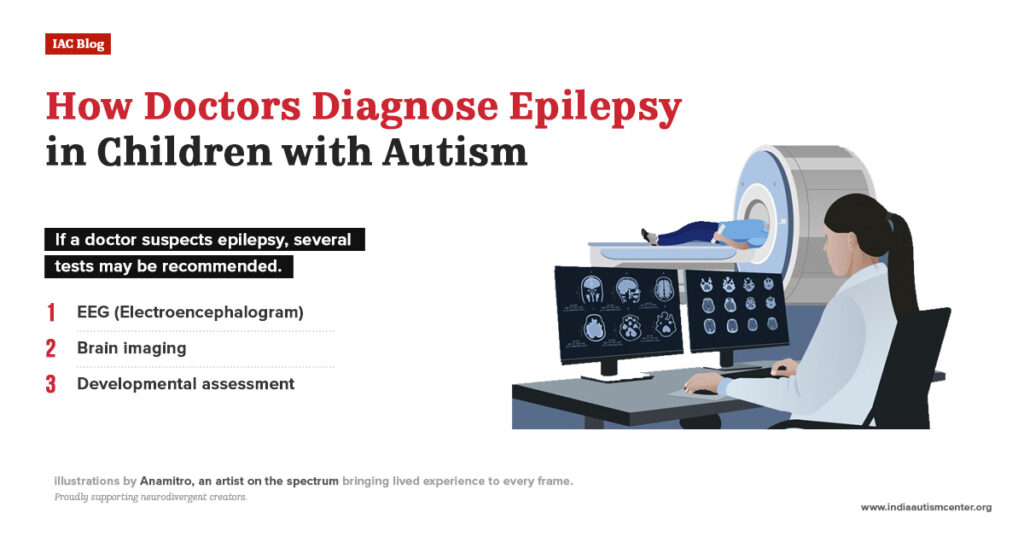
If a doctor suspects epilepsy, several tests may be recommended.
Electroencephalogram (EEG)
This test records electrical activity in the brain and helps identify seizure patterns.
Brain imaging
Doctors may recommend scans such as:
- MRI scan
- CT scan
These help detect structural differences in the brain.
Developmental assessment
Because autism and epilepsy can interact, doctors often assess:
- behaviour
- communication
- cognitive development
Want to know more? Get in touch with us.
Managing Epilepsy and Autism Together
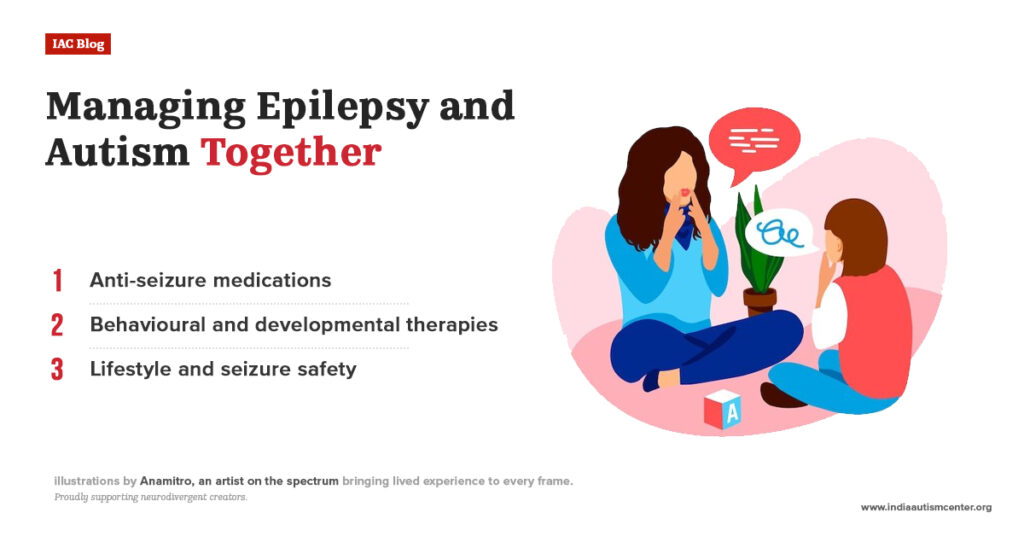
Managing epilepsy and autism requires a multidisciplinary approach. In my clinical experience, the best outcomes happen when neurologists, therapists, and families work together.
Here are some of the approaches you can opt for.
1. Anti-seizure medications
Most people with epilepsy manage seizures through medication. Your doctor will choose medication based on:
- seizure type
- age
- overall health
These medicines help stabilise electrical activity in the brain.
2. Behavioural and developmental therapies
While medication controls seizures, therapy supports developmental progress.
This may include:
- speech therapy
- occupational therapy
- behavioural therapy
Together, they help improve communication, daily functioning, and independence.
3. Lifestyle and seizure safety
Parents should also follow some practical safety measures.
For example:
- Ensure adequate sleep, as sleep deprivation can trigger seizures.
- Maintain consistent medication schedules.
- Keep a seizure diary to track patterns.
What Should Parents Do During a Seizure?
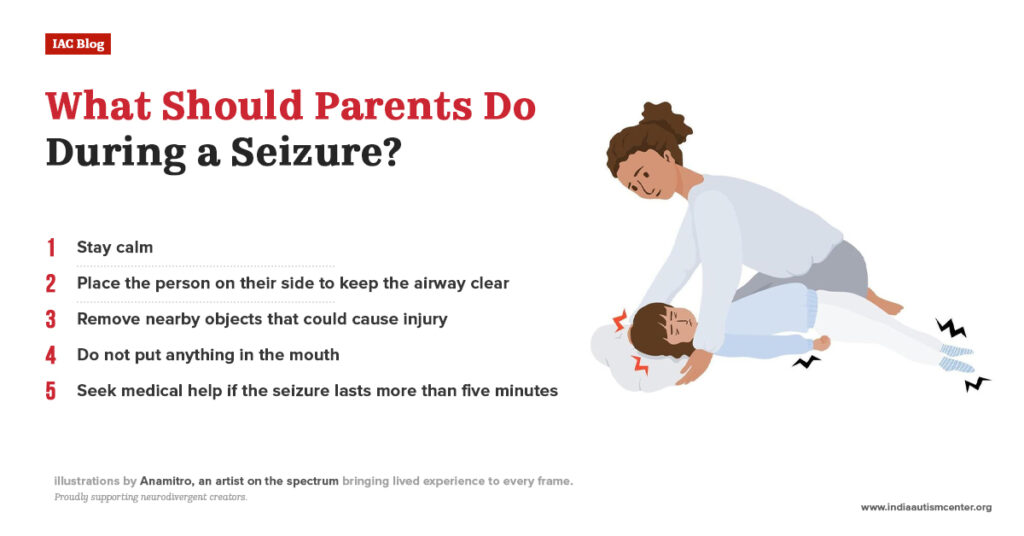
Witnessing a seizure can be frightening. However, knowing what to do can protect your child.
Here are the basic steps:
- Stay calm.
- Place the person on their side to keep the airway clear.
- Remove nearby objects that could cause injury.
- Do not put anything in the mouth.
- Seek medical help if the seizure lasts more than five minutes.
Most seizures stop on their own within a few minutes.
Conclusion
The relationship between epilepsy and autism is complex, but understanding it helps families take the right steps.
Let me summarise the most important points:
- Epilepsy is a neurological condition that causes recurrent seizures.
- People with autism have a higher risk of developing epilepsy
- Seizures may sometimes look like autism behaviours.
- Early diagnosis and treatment significantly improve outcomes.
If you suspect seizures in a child with autism, never ignore the signs. Speak to a neurologist. Early intervention can protect brain health and improve quality of life.
Frequently Asked Questions
How common is epilepsy in autism?
Around 20–30% of individuals with autism develop epilepsy at some point in life. The risk is higher in those with intellectual disability or genetic conditions
Can autism cause epilepsy?
Autism itself does not directly cause epilepsy. However, both conditions share brain development pathways and genetic factors, which explains why they often occur together.
What are the early epilepsy symptoms in children?
Common symptoms include:
- confusion after episodes
- staring spells
- sudden body jerks
- loss of awareness
- unexplained falls
Can epilepsy be cured?
Epilepsy usually cannot be permanently cured, but it can often be well controlled with medication and medical care.
For expert insights, support services, and inclusive learning initiatives, visit the India Autism Center.