 Donate now
 Get a Call Back
 MENU
MENU 11 MIN READ
 SHARE
SHARE


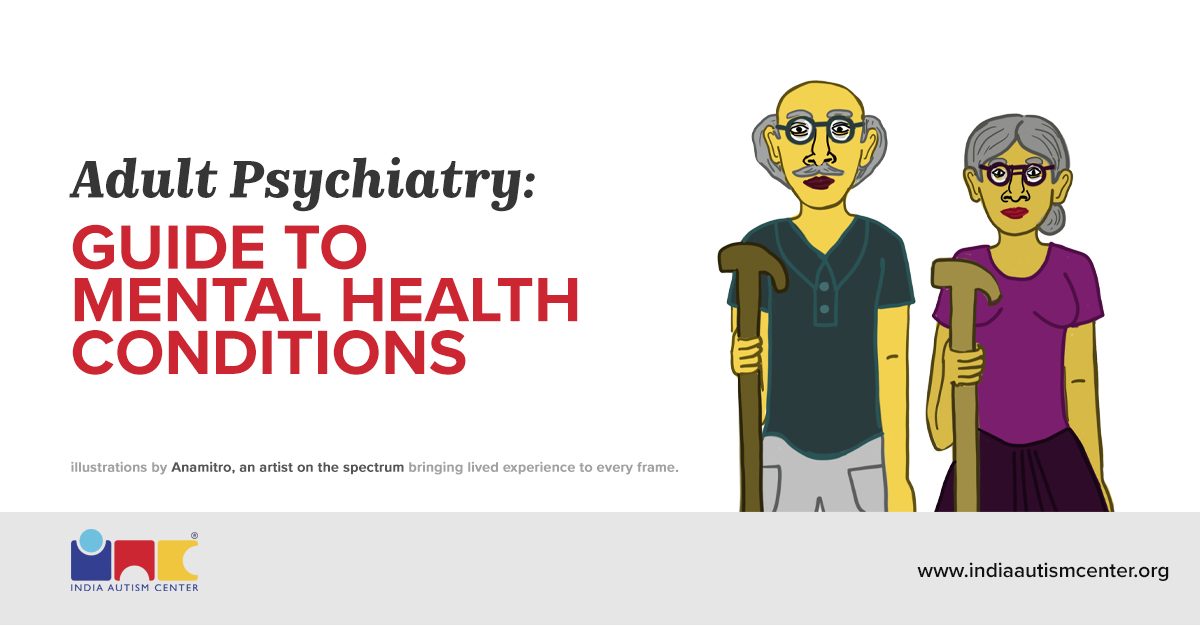
When I speak about adult psychiatry, we often tell people this: mental health does not stop at childhood. In fact, many challenges become clearer—or more complex—in adulthood. You may be managing work, relationships, and responsibilities while silently dealing with emotional or cognitive struggles.
So, let’s break this down together. I’ll guide you through adult mental health, common conditions, their link with neurodevelopmental disorders, and how you can seek the right anxiety support and care.
What Is Adult Psychiatry?
Adult psychiatry focuses on diagnosing, treating, and preventing mental illness in individuals aged 18 and above.
In simple terms, it’s all about:
- Understanding emotional and behavioural changes
- Managing conditions like psychiatric depression, anxiety disorder, or obsessive-compulsive disorder
- Improving overall mental wellness
Unlike general medicine, adult psychiatry looks at how your mind, brain, and life experiences interact.
How Is Adult Psychiatry Different?
As an adult, your challenges are more layered. You are balancing:
- Career pressures
- Relationships and family roles
- Financial responsibilities
- Social expectations
Because of this, your adult mental health needs a different approach than that of children or adolescents.
For example, adult psychiatrists don’t just look at symptoms like anxiety or low mood. They also ask:
- How is this affecting your work performance?
- Are your relationships suffering?
- Are you coping in healthy or harmful ways?
So, adult psychiatry always looks at the bigger life context.
What Conditions Does Adult Psychiatry Cover?
Usually it covers:
- Psychiatric depression (persistent low mood, lack of motivation)
- Anxiety disorder (constant worry, fear, or stress)
- Obsessive-compulsive disorder (repetitive thoughts and behaviours)
- Panic attacks (sudden episodes of intense fear)
- Other behavioural health concerns, like sleep issues or substance use
Want to know more? Get in touch with us.
Why Adult Mental Health Matters More Than Ever
Today, adult mental health is facing increasing pressure—and we see this every day in clinical practice. Life has become faster, more demanding, and often overwhelming. As a result, your mind is constantly trying to keep up.
For instance, you may be dealing with:
- Work deadlines and job insecurity
- Social expectations and family responsibilities
- Constant digital exposure and comparison on social media
Over time, this creates a state of chronic stress, which directly impacts your mental wellness.
Early Signs You Should Not Ignore
These pressures don’t always show up dramatically. Instead, they appear as subtle but persistent changes.
You might notice:
- Ongoing stress or burnout that doesn’t go away
- Difficulty focusing, making decisions, or staying productive
- Emotional numbness, irritability, or feeling “disconnected”
- Increased worry or early signs of an anxiety disorder
Sometimes, these can even progress into panic attacks or psychiatric depression if left unaddressed.
Common Mental Illnesses in Adult Psychiatry
In adult psychiatry, certain conditions appear more frequently than others. Let me walk you through them in a slightly deeper, but still simple way.
1. Psychiatry Depression
When we talk about psychiatric depression, we are not referring to temporary sadness. Instead, it is a persistent condition that affects your mood, energy, and motivation.
You may notice:
- A constant feeling of emptiness or heaviness
- Loss of interest in things you once enjoyed
- Difficulty getting through daily tasks
Over time, this can impact your adult mental health, relationships, and even physical health.
2. Anxiety Disorder and Panic Attacks
An anxiety disorder goes beyond normal worry. It is excessive, ongoing, and often difficult to control.
You might experience:
- Constant overthinking or fear
- Restlessness or inability to relax
- Physical symptoms like sweating or a racing heart
At times, this can lead to panic attacks, which feel sudden and intense.
During a panic attack, you may feel:
- A surge of fear without a clear reason
- Chest discomfort or breathlessness
- A sense of losing control
3. Obsessive Compulsive Disorder (OCD)
Obsessive-compulsive disorder is often misunderstood as just being “too clean” or “particular.” In reality, it is much more complex.
It involves:
- Obsessions: unwanted, intrusive thoughts (e.g., fear of contamination)
- Compulsions: repetitive actions to reduce that anxiety (e.g., excessive washing or checking)
These behaviours are not choices—they feel necessary to relieve distress.
4. Behavioural Health Concerns
Behavioral health looks at how your daily habits influence your mental state.
This includes:
- Sleep patterns
- Substance use
- Eating habits
- Activity levels
For example:
- Poor sleep can worsen anxiety
- Unhealthy coping habits can increase emotional distress
The good news is—small, consistent changes here can greatly improve your mental wellness.
Want to know more? Get in touch with us.
Neurodevelopmental Disorders in Adult Psychiatry
Now, let’s discuss something many people overlook.
Neurodevelopmental disorders are not just childhood conditions.
What Are Neurodevelopmental Disorders?
These are brain-based conditions that begin early in life but often persist into adulthood.
Examples include:
- Autism Spectrum Disorder (ASD)
- Attention-Deficit Hyperactivity Disorder (ADHD)
- Learning disabilities
How Neurodevelopmental Disorders Affect Adult Mental Health
When neurodevelopmental disorders continue into adulthood, their impact is often subtle—but deeply felt. You may not always recognize the root cause, yet you experience the effects in your daily life.
Let me explain this more clearly.
Everyday Challenges You Might Experience
As an adult, these difficulties often show up in practical, real-life situations:
- Social difficulties: You may find it hard to read social cues, maintain conversations, or feel comfortable in group settings. As a result, you might avoid social interactions or feel isolated.
- Sensory sensitivities: Everyday environments—like crowded places, loud noises, or bright lights—can feel overwhelming. This can lead to irritability, stress, or even withdrawal from situations others find normal.
- Executive functioning challenges: This refers to difficulties in planning, organising, focusing, or completing tasks. You might struggle with deadlines, forget important things, or feel constantly “behind.”
Recognising When You Need Anxiety Support
You might sometimes pause and wonder, “Is what I’m feeling normal, or do I actually need help?” This is a very common and important question in adult psychiatry.
Let me help you understand this more clearly.
Feeling stressed or anxious once in a while is normal. However, the concern begins when these feelings become frequent, intense, or difficult to control.
Ask yourself honestly:
- Do I feel overwhelmed most days, even without a clear reason?
- Am I struggling to function at work, in relationships, or at home?
- Do I experience repeated panic attacks or sudden waves of fear?
If you notice these patterns consistently, it may indicate an underlying anxiety disorder or another form of mental illness.
Subtle Signs You Might Miss
Sometimes, the need for anxiety support is not obvious. It can show up in indirect ways, such as:
- Avoiding certain situations or responsibilities
- Constant overthinking or worst-case thinking
- Physical symptoms like fatigue, headaches, or poor sleep
- Feeling “on edge” even during normal situations
Over time, these signs can affect your overall mental wellness and quality of life.
Diagnosis in Adult Psychiatry
In adult psychiatry, diagnosis goes far beyond simply listing symptoms. I don’t just ask “What are you feeling?”—I try to understand “Why are you feeling this way, and how is it affecting your life?”
This is what makes psychiatric diagnosis both detailed and highly personalised.
Looking Beyond Symptoms
Two people may come in with similar symptoms—say, anxiety or low mood—but their underlying causes can be completely different.
For example:
- One person’s anxiety disorder may stem from chronic work stress
- Another’s may be linked to an underlying neurodevelopmental condition like ADHD
So, focusing only on symptoms can lead to an incomplete or inaccurate diagnosis.
What Psychiatrists Consider During Diagnosis
To get a full picture of your mental health, I look at multiple areas of your life:
1. Personal History: They explore your life journey:
- Childhood experiences
- Past emotional challenges
- Major life events or trauma
This helps identify long-term patterns and triggers.
2. Family Background: Mental health conditions often have a biological component.
They may ask:
- Is there a history of mental illness in your family?
- Have close relatives experienced depression, anxiety, or OCD?
This gives insight into possible genetic influences.
3. Work and Relationships: Your daily functioning matters a lot in adult psychiatry.
They assess:
- Your performance and stress levels at work
- The quality of your relationships
- Any interpersonal conflicts or social difficulties
These areas often reflect how your condition is impacting real life.
4. Behavioural Patterns: They pay close attention to your habits and coping mechanisms:
- Sleep routines
- Substance use
- Repetitive behaviours (as seen in OCD)
- Avoidance patterns in anxiety
These behaviours provide important diagnostic clues.
Screening for Neurodevelopmental Disorders
In many cases, they also evaluate for underlying neurodevelopmental disorders such as:
- Autism Spectrum Disorder
- ADHD
This is especially important if:
- Your symptoms have been present since early life
- You’ve always felt “different” or struggled in specific ways
Want to know more? Get in touch with us.
Approaches for Adult Mental Health
Adult psychiatry is not just about reducing symptoms—it’s about helping you regain control, improve functioning, and build long-term mental wellness.
Let me walk you through each approach in a more detailed yet practical way
1. Psychotherapy (Talk Therapy)
Psychotherapy is often the foundation of treatment in adult mental health. It gives you a safe space to understand your thoughts, emotions, and behaviours.
In therapy, they work with you to:
- Identify negative thought patterns
- Understand emotional triggers
- Develop healthier coping strategies
One of the most effective approaches is Cognitive Behavioural Therapy (CBT). It helps you:
- Challenge irrational thoughts
- Replace them with balanced thinking
- Reduce symptoms of anxiety disorder, psychiatric depression, and obsessive-compulsive disorder
For example:
If you tend to think, “I will fail at everything,” therapy helps you reframe that into a more realistic perspective.
Over time, this improves both your emotional control and behavioural health.
2. Lifestyle and Behavioural Health Interventions
This is often underestimated, but it is extremely powerful.
Your daily habits directly affect your mental health.
They usually guide patients to work on:
- Sleep hygiene – consistent sleep improves mood and reduces anxiety
- Physical activity – even moderate exercise can reduce symptoms of depression
- Nutrition – balanced diets support brain function
- Mindfulness and relaxation – helps manage stress and prevent panic attacks
Small, consistent lifestyle changes can significantly improve your mental wellness over time.
3. Support Systems and Anxiety Support
No treatment works in isolation. Human connection is essential.
Strong anxiety support systems include:
- Family members who understand your condition
- Friends who provide emotional support
- Peer or support groups where you feel heard
These systems help you:
- Feel less isolated
- Share your experiences openly
- Stay motivated during recovery
In many cases, support systems act as a buffer against worsening mental illness
4. Personalised and Integrated Care
Here’s the most important part.
In adult psychiatry, treatment is rarely just one approach. Instead, they combine:
- Therapy
- Medication (if needed)
- Lifestyle changes
- Support systems
This integrated approach ensures:
- Better symptom control
- Long-term stability
- Improved quality of life
Breaking the Stigma Around Adult Psychiatry
Let’s address something that silently prevents many people from seeking help—stigma.
Even today, adult psychiatry is often misunderstood. People hesitate, delay, or completely avoid getting help for their mental health because of fear, judgment, or misinformation.
Why Does Stigma Still Exist?
Stigma around mental illness comes from long-standing myths and cultural beliefs. You might have heard statements like:
- “Just be strong, it’s all in your mind.”
- “Seeing a psychiatrist means something is seriously wrong.”
- “People will judge me if I seek help.”
Because of this, many individuals continue to struggle with anxiety disorders, psychiatric depression, or even panic attacks in silence.
Changing the Narrative Around Adult Psychiatry
We need to shift how we think about adult psychiatry.
Let me put it simply:
Seeking psychiatric help is not a sign of weakness—it is a sign of awareness and responsibility.
Just like you consult a doctor for physical health issues, consulting a psychiatrist for mental wellness is equally important.
Conclusion
If there’s one thing I want you to take away, it’s this:
Your mental health matters—at every stage of life.
Adult psychiatry is not just about treating illness. It’s about helping you live a meaningful, balanced life.
Frequently Asked Questions
What does an adult psychiatrist actually do?
An adult psychiatrist diagnoses and treats mental health conditions like depression, anxiety disorders, and obsessive-compulsive disorder. They use a combination of therapy, medication, and lifestyle guidance to improve your overall mental wellness.
How do I know if I need adult psychiatry support?
You should consider seeking help if your thoughts, emotions, or behaviors:
- Persist for weeks or months
- Interfere with daily life or relationships
- Include symptoms like constant worry, low mood, or panic attacks
Early anxiety support can prevent symptoms from worsening.
Can mental illness be treated without medication?
Yes, in many cases. Mild to moderate conditions can often be managed with psychotherapy, lifestyle changes, and strong behavioral health practices. However, medication may be recommended for more severe symptoms or when therapy alone is not enough.
Is it possible to diagnose neurodevelopmental disorders in adults?
Absolutely. Conditions like autism or ADHD are often identified later in life. In adult psychiatry, proper diagnosis can help explain long-standing challenges and guide more effective treatment for both neurodevelopmental conditions and co-occurring mental illness.
For expert insights, support services, and inclusive learning initiatives, visit the India Autism Center.