 Donate now
 Get a Call Back
 MENU
MENU 11 MIN READ
 SHARE
SHARE


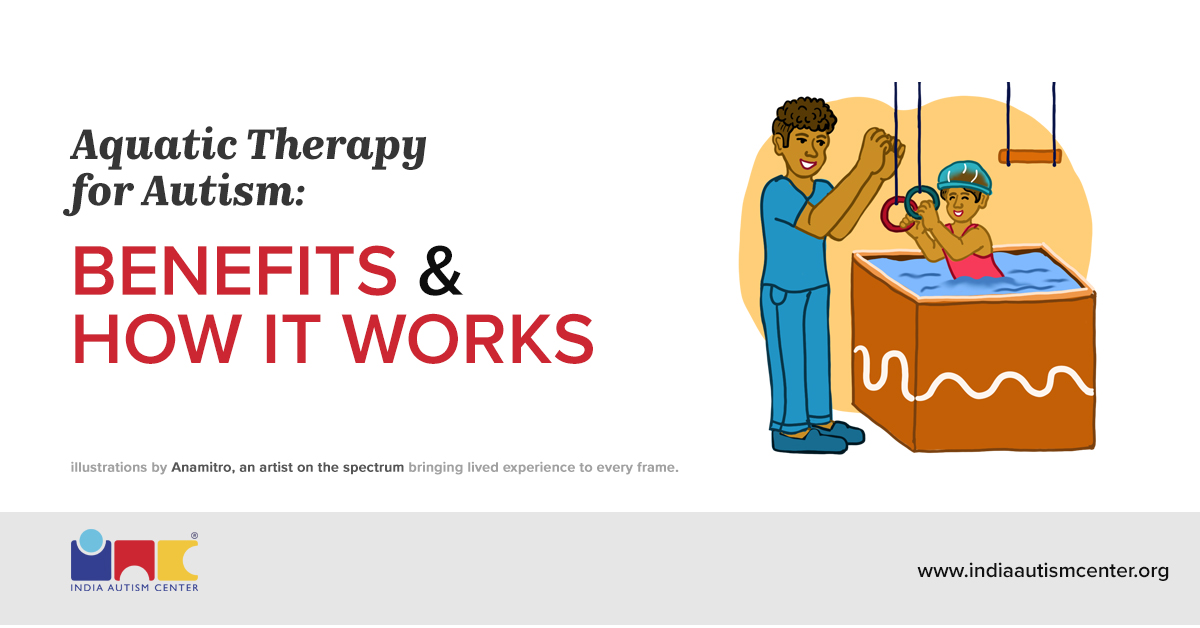
It is a known fact that for children with Autism Spectrum Disorder, the world can feel overwhelming, whether it is loud noises or flashy lights. Parents often search for therapies that don’t feel like “therapy” but still support development in meaningful ways.
One such therapy is Aquatic therapy. Aquatic therapy uses water as it has a calming effect. It slows movements, softens sensory input, and creates a safe space where children can explore their bodies, emotions, and interactions at their own pace.
Hence, more and more parents are now opting for aquatic therapy for autism. In this article, we look into the details of aquatic therapy for autism, how it works for autistic kids, and its benefits.
What Is Aquatic Therapy for Autism?
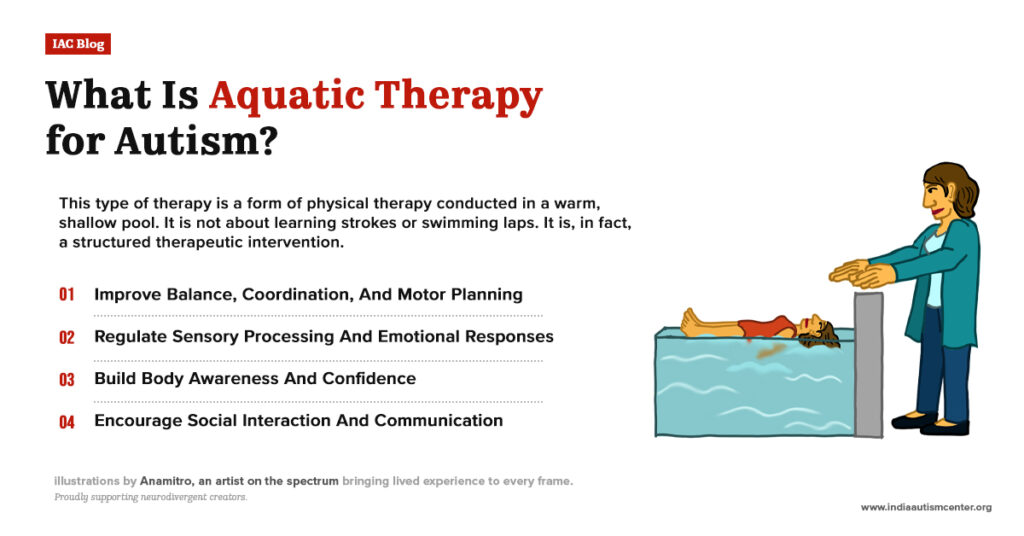
Aquatic therapy for autism is also known as hydrotherapy. This type of therapy is a form of physical therapy conducted in a warm, shallow pool. It is not about learning strokes or swimming laps. It is, in fact, a structured therapeutic intervention.
Trained professionals, such as an occupational therapist, physiotherapist, or adapted aquatics specialist, guide autistic kids throughout the sessions. Aquatic therapy is often confused with autism swimming therapy; however, the two concepts differ.
It is known to use the unique properties of water, including buoyancy, resistance, and sensory input, which help children with autism to:
- Improve balance, coordination, and motor planning
- Regulate sensory processing and emotional responses
- Build body awareness and confidence
- Encourage social interaction and communication in a low-pressure setting
Aquatic therapy for autism feels less demanding and more enjoyable because the water reduces gravity’s impact, slows movement, and provides consistent sensory feedback.
In essence, aquatic therapy for autism combines the principles of sensory integration, physical rehabilitation, and play-based learning, making it a powerful complementary approach within a holistic autism intervention plan.
How Is Aquatic Therapy for Autism Performed?
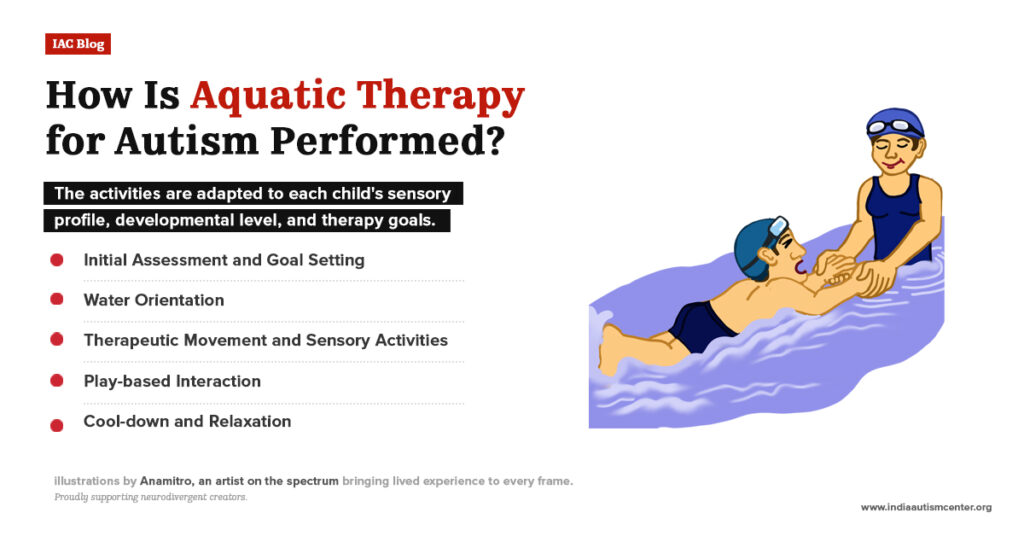
Aquatic therapy for autism has a structured approach in a controlled pool environment. The activities are adapted to each child’s sensory profile, developmental level, and therapy goals.
It is a gradual process and performed in the following way:
1. Initial Assessment and Goal Setting
The first step involves evaluating the child’s sensory processing needs, motor skills, balance, emotional regulation, comfort with water, communication and social interaction skills.
Based on this assessment, individualised goals are set. It is similar to occupational therapy planning, which aims to ensure the child’s needs remain central.
2. Water Orientation
The next step involves slow and reassuring exposure to water. It can include simply sitting at the edge of the pool, splashing hands and feet, or a supported entry into the shallow side of the pool. This greatly helps children who are in for the first time.
It helps build trust, especially for children with autism who are sensory-sensitive.
3. Therapeutic Movement and Sensory Activities
As the child gets comfortable, goal-based sensory activities are introduced. It includes activities such as:
- Floating or supported walking for balance
- Pushing or pulling water to build strength
- Reaching, kicking, or coordinated movements for motor planning
4. Play-based Interaction
Therapists use balls, toys and simple games to support guided play for an autistic child. It helps improve joint attention, turn-taking, eye contact, and the ability to follow instructions.
Children with autism can engage more when the environment feels relaxed and less demanding.
5. Cool-down and Relaxation
To ensure the child does not feel overwhelmed, the sessions are not abruptly ended. The therapist plans to end the session with relaxing activities. Activities include:
- Gentle floating
- Slow movement
- Deep-pressure input from water
Through such relaxing activities, the child feels calm and regulated when they leave the pool.
Why Do Autistic Kids Like Water So Much?
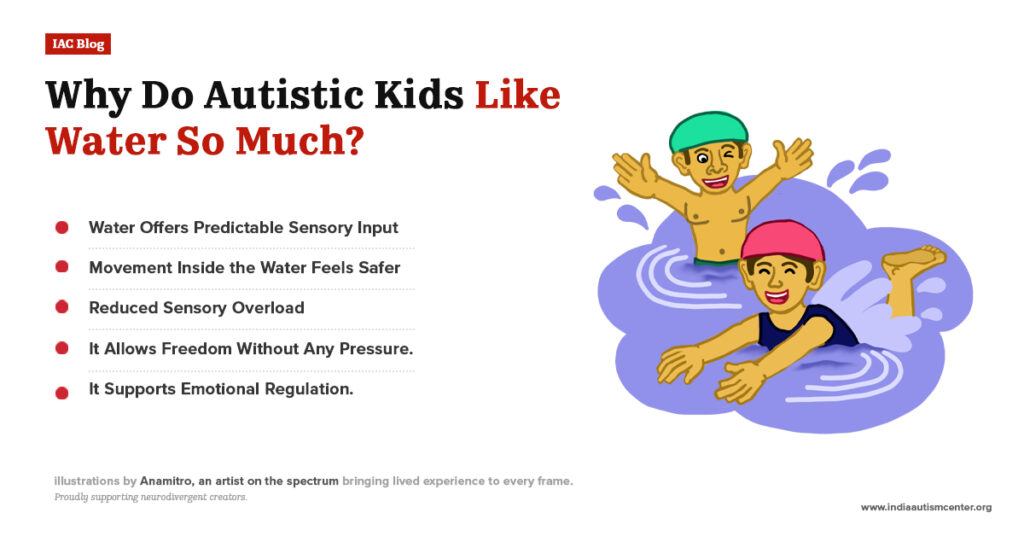
Studies have shown that kids with autism respond positively to aquatic therapy. This makes many parents wonder: Do autistic kids like water? The answer is yes, children with ASD love water.
But here is a deeper question that parents must understand: Why do autistic kids like water? Here is the explanation for the same:
Water Offers Predictable Sensory Input
For many autistic children, the nervous system is easily overwhelmed. Water provides a very consistent, gentle pressure throughout the body. It helps in delivering calming proprioceptive input.
Deep pressure helps the brain understand the body’s position in space, leading to a sense of security and calm. It is one of the primary answers to the question: Why do autistic kids like water?
Movement Inside the Water Feels Safer
As water reduces the effects of gravity, the body feels lighter, and movements are slower and more controlled. The kids are safe, and there is less fear of falling or losing balance.
For children who struggle with coordination or motor planning, water allows them to move with greater confidence, which answers the common question: Do autistic kids like water because it feels less demanding? The maximum answers from parents is yes.
Reduced Sensory Overload
In a normal scenario, an autistic child has to manage visual input, noise, touch, and movement simultaneously on land. However, when they are in water, the:
- External sensory input is softened
- The environment feels more predictable
- Distractions are reduced
The sensory quiet that the child feels explains why autistic kids like water. Children thus engage more willingly in aquatic activities than in busy or noisy settings.
Water Allows Freedom Without Any Pressure
When in water, there are no strict rules; the child is not expected to behave in a certain way. This freedom encourages spontaneous play, exploration, and interaction, without pressure.
Water Supports Emotional Regulation
By nature, the water has a calming effect on our nervous system. Research shows that rhythmic movement in warm water can significantly reduce stress as well as anxiety, which can help an autistic child regulate emotions. It can also help to improve focus and attention.
How Aquatic Therapy Benefits Autistic Children?
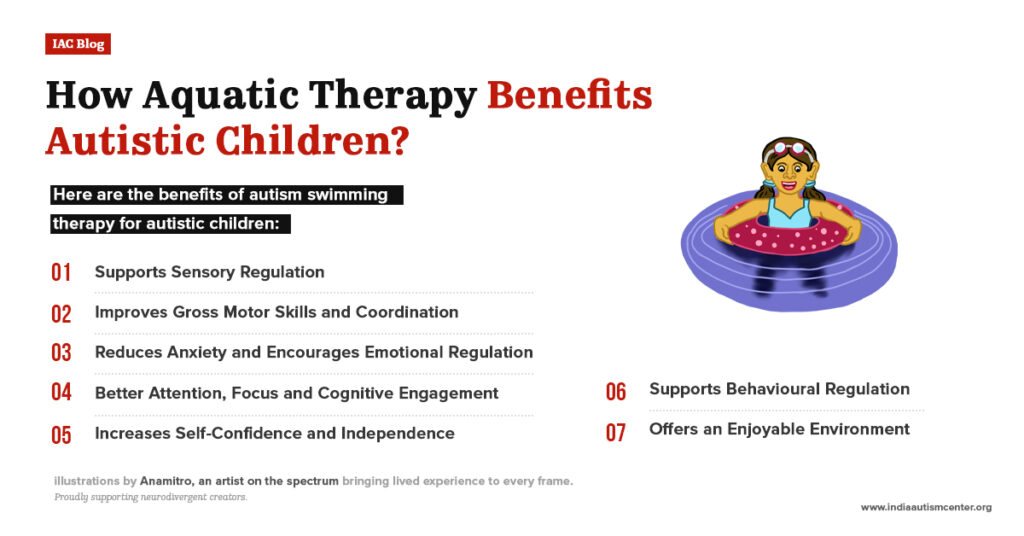
Aquatic therapy has gained significant attention in the past few years due to its immense benefits. This therapy works simultaneously with the child’s body and nervous system.
The aquatic environment creates a supportive, calming, and engaging space where children can move, learn, and interact with less pressure than they often experience on land.
Here are the benefits of autism swimming therapy for autistic children:
1. Supports Sensory Regulation
Children with autism tend to have difficulty processing sensory information, such as touch, movement, and body awareness. Water helps to organise these sensory signals. This sensory regulation is one of the strongest reasons aquatic therapy for autism is effective, especially for children who are easily overwhelmed in busy environments.
2. Improves Gross Motor Skills and Coordination
The impact of water on gravity not only makes movement easier but also allows children to practise motor skills without fear of falling. Aquatic therapy for autism helps improve balance and postural control, muscle strength and endurance, and bilateral coordination, motor planning, and body awareness.
3. Reduces Anxiety and Encourages Emotional Regulation
The calming effect that water has on the human body helps an autistic child in more ways than one. Here is how it helps:
- Reduced anxiety and hyperactivity
- Fewer emotional outbursts or meltdowns
- Improved ability to self-soothe
- Better tolerance for transitions and change
4. Better Attention, Focus and Cognitive Engagement
Aquatic therapy sessions are structured yet playful, which helps children stay engaged without feeling pressured. It helps improve the child’s overall attention span, enhances the child’s ability to follow instructions through, increases task persistence, and motivates the child to participate more.
5. Increases Self-Confidence and Independence
When the autistic child feels they can float independently, move freely, and complete tasks on their own, they feel more confident. Over time, it can help the child improve their self-esteem.
They are more willing to try new activities and give them greater independence in movement and play. This sense of achievement can positively influence participation in other therapies and daily activities.
6. Supports Behavioural Regulation
The regulation achieved in water often carries over into everyday routines. Children are known to have the following benefits:
- Better sleep patterns
- Improved ability to handle sensory challenges
- Reduced aggression or withdrawal
- Increased adaptability in new environments
This makes aquatic therapy for autism a valuable part of a holistic intervention plan.
7. Offers an Autistic Child an Enjoyable Environment
Aquatic therapy does not necessarily feel like normal therapy. It feels less clinical, which makes it more enjoyable. The risk of injury is lower, there is natural resistance without strain, and there is also a positive association with therapy.
This increases consistency and long-term participation, which is essential for meaningful progress.
Is Aquatic Therapy Safe for Autistic Children?
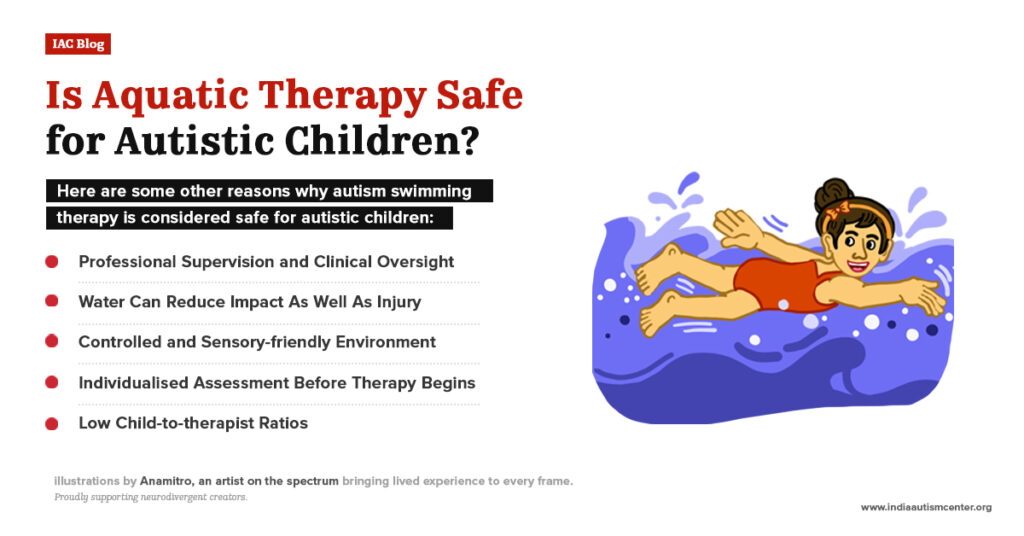
It is natural for parents to wonder if aquatic therapy is safe for their autistic child. However, when delivered correctly, aquatic therapy for autism is considered safe as well as well-tolerated.
It is safe when offered by a trained professional in a controlled environment with proper safety protocols in place. In fact, water-based therapy is often safer than many land-based physical activities because water naturally supports the human body and reduces the risk of injury.
Here are some other reasons why autism swimming therapy is considered safe for autistic children:
1. Professional Supervision and Clinical Oversight
Aquatic therapy is provided by certified aquatic therapists or physiotherapists trained in water-based interventions. The therapist continuously monitors the child’s physical movement, fatigue level, and emotional and sensory responses, and adjusts them to keep the child comfortable and safe at all times.
2. Water Can Reduce Impact As Well As Injury
Water provides buoyancy, significantly reducing body weight and joint pressure. It puts minimum strain on muscles and joints. For children with low muscle tone, poor coordination, or delayed motor skills, this makes autism and swimming therapy a safer option compared to many land-based exercises.
3. Controlled and Sensory-friendly Environment
Aquatic therapy sessions are conducted in carefully controlled pool settings, not public swimming areas. The pools are mostly shallow to avoid risks. Moreover, minimum noise and visual distraction are avoided.
4. Individualised Assessment Before Therapy Begins
Aquatic therapy starts with a detailed assessment of medical history, sensory sensitivities and triggers, and comfort level. This assessment helps identify any risks and ensures therapy is customised to the child’s specific needs.
In case a child has medical conditions like epilepsy, respiratory issues, or significant water-related anxiety, medical clearance is sought. Also, modified activities and one-on-one supervision are provided in such cases.
5. Low Child-to-therapist Ratios
To ensure close supervision, aquatic therapy programs usually maintain one-to-one or small-group sessions with multiple trained staff present. This allows therapists to respond quickly if a child becomes overwhelmed, tired, or distressed.
6. Emergency Preparedness
Reputable aquatic therapy programs follow strict safety standards, such as:
- Emergency response training
- Lifesaving and first-aid certification
- Clear pool safety rules
- Secure pool access and boundaries
These measures ensure quick and effective responses in the unlikely event of an emergency.
7. Parental Involvement and Communication
For safety and to ease parents’ nerves, parents are asked to observe sessions, share feedback on the child’s responses, and reinforce any safety rules or routines as needed.
These measures ensure quick and effective responses in the unlikely event of an emergency.
Conclusion
Autism Spectrum Disorder cannot be cured, but it can be managed with early intervention and timely therapy. Several therapies can be very helpful. However, considering how overwhelmed an autistic child can feel, aquatic therapy for autism is one of the best therapies to try. It is quite safe, as it is conducted by a trained therapist in a controlled environment.
By using the natural properties of water, autism and swimming therapy create an environment where children feel supported rather than overwhelmed, allowing meaningful progress through movement and play. It is a powerful tool that can help autistic children build confidence, regulation, and everyday functional skills.
Frequently Asked Questions
How is aquatic therapy different from regular swimming lessons?
Unlike swimming lessons, autism and swimming therapy focus on therapeutic goals such as balance, coordination, sensory integration, and emotional regulation rather than teaching swimming strokes or endurance.
At what age can autistic children start aquatic therapy?
Most children can begin autism and swimming therapy around 3 to 4 years of age, depending on developmental readiness, medical clearance, and comfort with water.
Can aquatic therapy help with sensory issues in autism?
Yes. Aquatic therapy for autism provides consistent tactile, vestibular, and proprioceptive input, supporting sensory integration and helping reduce sensory defensiveness and overstimulation.
Does aquatic therapy improve motor skills in autism?
Yes, water-based therapy supports improvements in balance, coordination, muscle strength, endurance, and motor planning while reducing the physical strain often experienced on land.
Do autistic kids like water?
Many autistic children enjoy water because it provides predictable sensory input, reduces sensory overload, and helps them feel calm and secure.
For expert insights, support services, and inclusive learning initiatives, visit the India Autism Center.