 Donate now
 Get a Call Back
 MENU
MENU 21 MIN READ
 SHARE
SHARE


Eye contact is genuinely uncomfortable or even painful for many autistic people – not because they’re disinterested or rude, but because of measurable differences in how their brains process direct gaze. This guide covers the science, the lived experience, practical strategies for families and educators, and why culture shapes everything we think we know about “normal” eye contact.
Whether you’re a parent trying to understand your child, an educator supporting a student, or an autistic adult looking for language to explain your experience, this guide is for you.
What is Eye Contact and Why Does It Matter?
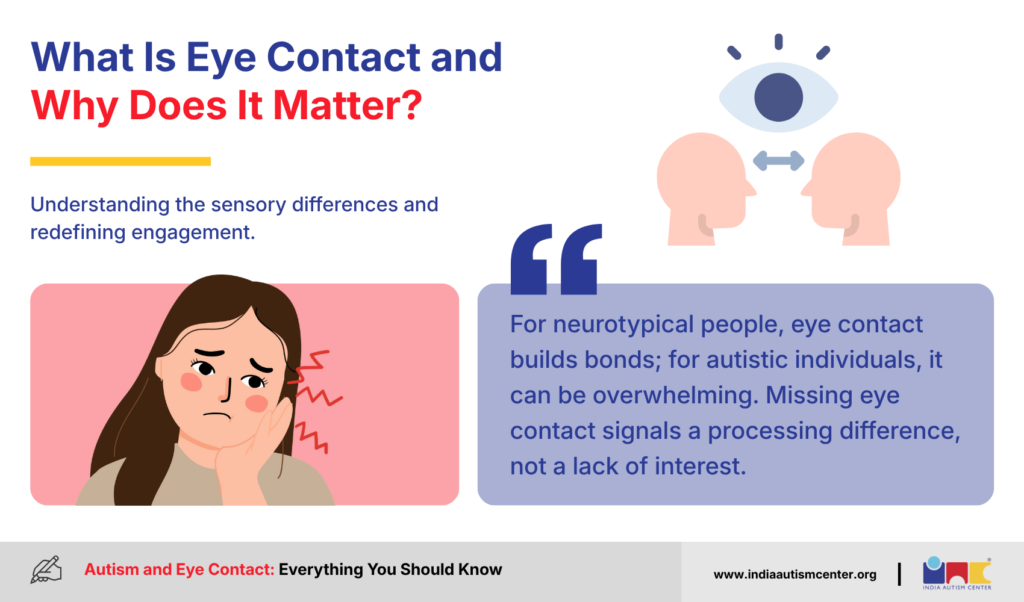
Eye contact is one of the most powerful forms of non-verbal communication. A glance can signal interest, affection, dominance, or threat – often in under a second. In neurotypical interactions, steady eye contact is widely read as a sign of engagement, honesty, and confidence.
But eye contact in autism doesn’t follow this pattern – and that matters enormously for how autistic people are perceived and understood.
Many autistic individuals find direct eye contact uncomfortable, overwhelming, or even distressing. This isn’t a choice, and it certainly isn’t rudeness. It often reflects genuine differences in sensory and social processing within the brain.
Here’s the key thing to hold onto: lack of eye contact is never evidence of lack of interest or empathy. It’s evidence of a different way of experiencing the world.
It’s also worth noting – briefly here, and in much more depth later – that eye contact norms vary dramatically across cultures. What counts as “normal” or “respectful” gaze differs from Tokyo to Kolkata to Toronto. We’ll explore that fully in the cultural section below.
Autism and Eye Contact: The Science Behind It
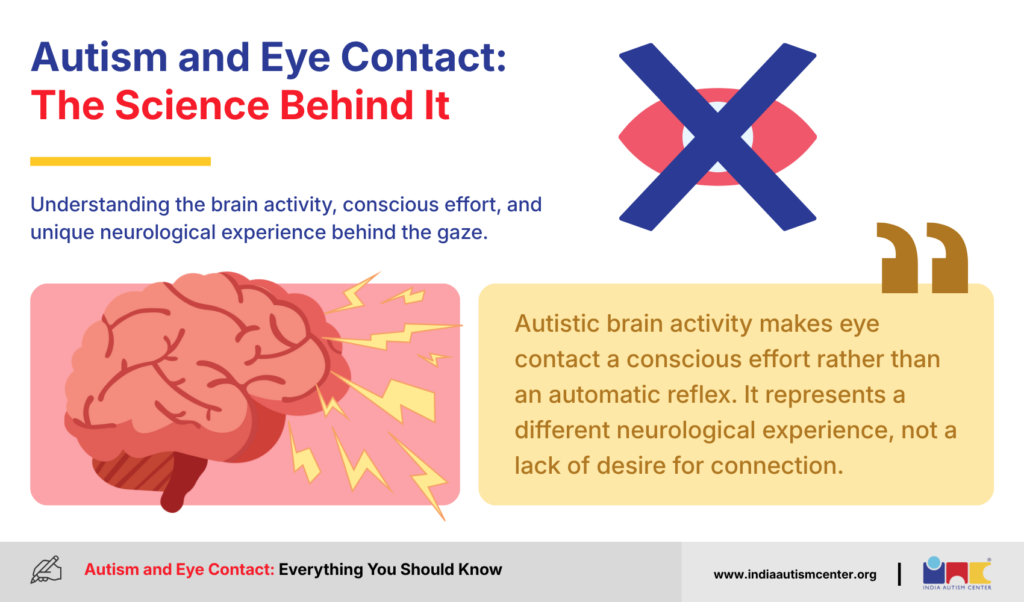
When researchers look at what’s actually happening in the brain during eye contact, the picture is striking.
The amygdala fires differently. Hadjikhani et al. (2017) used fMRI to show that when autistic individuals are constrained to look at the eye region of a face, they show abnormally high subcortical activation – including in the amygdala, the brain’s threat-detection centre. In other words, direct eye contact doesn’t just feel uncomfortable; it triggers a genuine stress response at the neurological level. The brain is treating a social cue as a potential threat.
The reward system responds differently. Moriuchi et al. (2017) found that autistic individuals show reduced activation in reward-related brain circuits when viewing eye regions of faces, compared to neurotypical peers. For most people, eye contact carries an implicit social reward. For many autistic people, that reward signal is diminished, which helps explain why eye contact doesn’t feel naturally motivating (Moriuchi et al., 2017).
Social gaze activates different neural pathways. Earlier work by Kliemann et al. (2010) demonstrated atypical reflexive gaze patterns in autism, with reduced engagement of the dorsal parietal cortex – a region involved in directing attention toward socially relevant stimuli. This helps explain why maintaining gaze can feel effortful rather than automatic (Kliemann et al., 2010).
Autistic people describe it as deliberate, not instinctive. A 2025 phenomenological study by Boer et al. interviewed 15 autistic adults and 15 non-autistic adults about their eye contact experiences. A consistent theme among autistic participants was that eye contact is a conscious, deliberate act – something they have to decide to do, rather than something that happens naturally. Many described it as requiring significant ongoing effort (Boer et al., 2025).
Taken together, this research tells a consistent story: eye contact differences in autism are neurological, not behavioural. They’re not habits to be corrected. They’re features of how the autistic brain is wired.
Want to know more? Get in touch with us.
Eye Contact Challenges in Autism: What’s Really Going On?
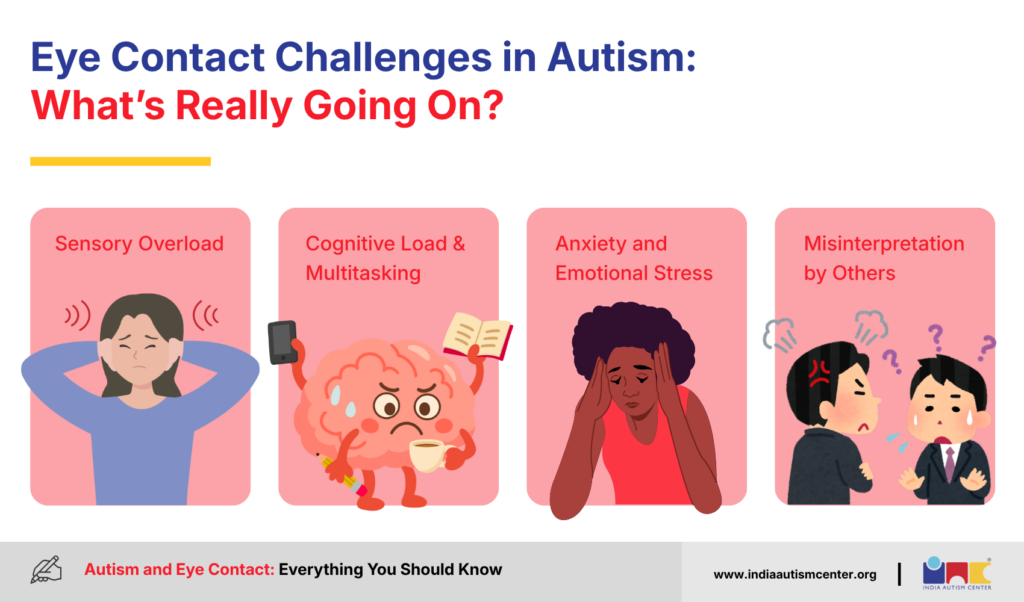
Understanding why eye contact is hard helps enormously – both for autistic people trying to explain themselves and for the people around them trying to understand.
1. Sensory Overload
For many autistic people, direct gaze can overwhelm the brain. Looking into someone’s eyes means processing a flood of sensory data simultaneously: the movement of pupils, micro-expressions, the brightness of the sclera, all layered on top of the sounds, words, and body language of the conversation. This intense sensory load can feel genuinely exhausting or even physically unpleasant – not metaphorically, but as a real sensory experience. Some autistic individuals describe it as similar to staring into a bright light.
2. Cognitive Load and Multitasking
Eye contact isn’t just visual. It requires sustained attention while simultaneously listening, processing language, formulating a response, and managing social expectations. For an autistic person, running all of these processes at once can push the brain to its limits. Many describe a clear trade-off: they can either look at you, or they can listen to you – but doing both at the same time degrades the quality of both. Choosing to look away is often a strategy for better engagement, not worse.
3. Anxiety and Emotional Stress
Trying to meet neurotypical expectations for eye contact can trigger significant anxiety. Some autistic people describe the experience as performing a role rather than having a genuine interaction – constantly monitoring whether they’re making “enough” eye contact, whether it looks natural, whether they’re holding it for the right duration. That internal monitoring is exhausting and pulls attention away from the actual conversation. The anxiety itself then makes eye contact harder, creating a self-reinforcing cycle.
4. Misinterpretation by Others
In many Western cultural contexts, avoiding eye contact is misread as disinterest, evasion, or dishonesty. None of these interpretations are accurate for most autistic people. But the social pressure created by these misreadings is real and harmful – it pushes autistic individuals to perform eye contact they find distressing, or to feel judged and misunderstood when they don’t.
5. Masking and the Hidden Cost
Many autistic people – particularly women, girls, and gender-diverse individuals – learn to force eye contact in order to appear neurotypical. This is called masking or camouflaging, and it comes at a serious cost.
Hull et al. (2017) studied social camouflaging in autistic adults and found it was strongly associated with poorer mental health outcomes, including higher rates of anxiety, depression, and autistic burnout. Masking eye contact is one of the most common camouflaging strategies – and one of the most draining. An autistic person who “looks fine” in a social interaction may be running at enormous mental cost to maintain that appearance. The fact that it’s invisible makes it all the more important to name.
Why People With Autism Have Trouble Making Eye Contact
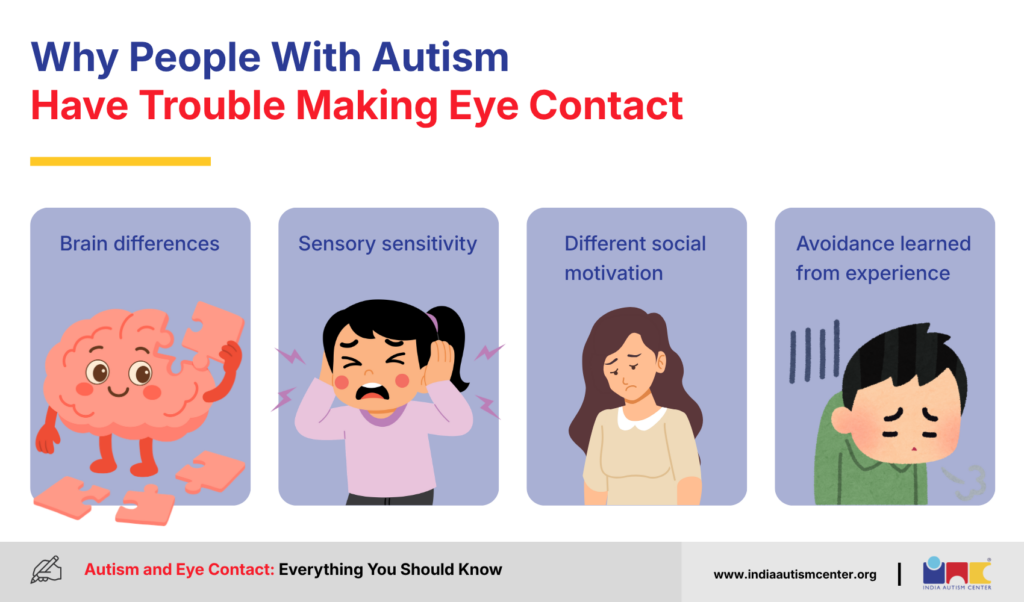
So, you may be wondering: Why do autistic people have trouble making eye contact? Let’s break it down.
- Brain differences in social processing: Social gaze activates different neural pathways in autistic people. This often makes eye contact less intuitive or more stressful.
- Sensory sensitivity: Some individuals find looking into eyes intensely stimulating or overwhelming.
- Different social motivation: For several autistic individuals, the social reward of eye contact doesn’t operate the same way it does for neurotypical people.
- Avoidance learned from experience: If someone is repeatedly criticised for not making eye contact, they might avoid it even more — not because they don’t care, but because it becomes linked to stress.
Want to know more? Get in touch with us.
7 Tips to Help Children with Autism Improve Eye Contact
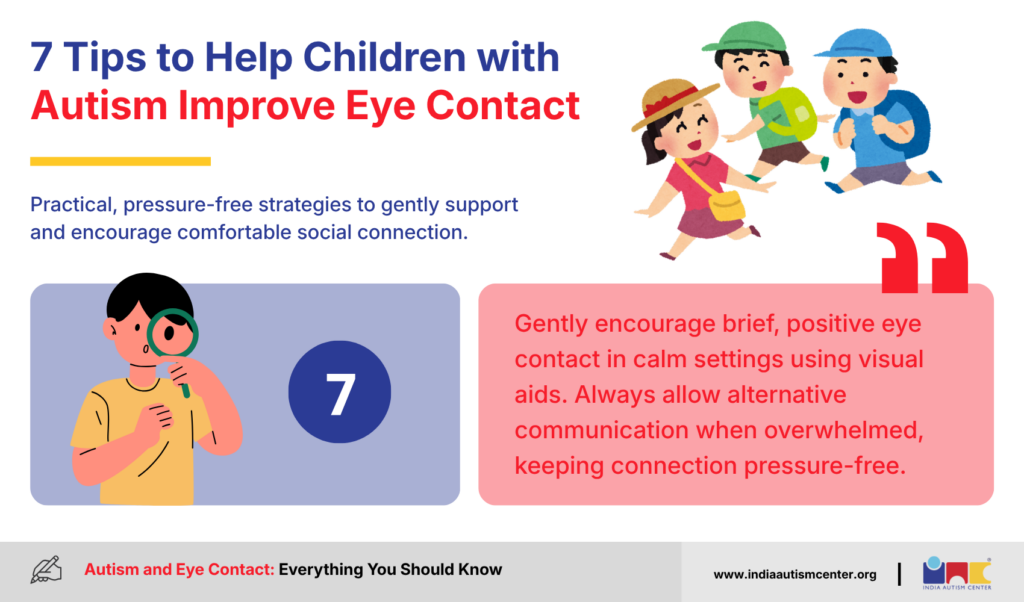
These strategies are designed to support – never to coerce. The aim is to reduce the distress around eye contact and build skills at the child’s own pace, in ways that feel safe.
1. Start with Comfortable Interactions
Choose settings that are calm, quiet, and free from distractions. A child who is already managing sensory input from a busy classroom or a noisy room has far fewer resources available for social interaction. Low-stimulation environments give the best chance for relaxed, natural connection. Even a few minutes of one-to-one time in a quiet corner can make a significant difference.
2. Use Visual Supports
Visual cues – picture cards, social stories, visual schedules – help children understand when eye contact might be useful and why people use it, without turning it into a demand. A simple social story that explains “when people look at each other, it tells them both that they’re listening” can be far more effective than repeated correction. Visual supports give children a framework to make sense of social conventions on their own terms.
3. Practice Short Moments First
Rather than expecting sustained eye contact, celebrate brief, natural glances. A child who makes eye contact for one second during a moment of genuine connection has achieved something real. Build from there, slowly and without pressure. The goal is comfort, not performance.
4. Pair Eye Contact with Positive Experiences
Make it genuinely enjoyable. Play a game that naturally involves looking at each other’s faces – like pulling funny expressions or playing “guess what I’m thinking.” When eye contact is associated with laughter and safety rather than correction and anxiety, children are far more likely to engage with it naturally. Celebrate small moments without making them into a test.
5. Encourage Alternative Signals
Eye contact is one way to show engagement – but it’s not the only way. Teach children to show they’re listening through gestures, words (“mm-hmm,” “yes”), nodding, or simply facing the speaker. These are all legitimate communication signals. Broadening the toolkit reduces the pressure on eye contact specifically and helps children build genuine communication skills.
6. Model Behaviour
Use modelling – showing examples through videos, role play, or everyday interactions – so children can see where and when eye contact might be helpful, without being put on the spot. Watching a character in a short video navigate a social situation can be less threatening than being asked to perform in real time. Social skills groups that use video modelling have shown good results for this reason.
7. Work with Therapists
Behavioural and social skills therapists – particularly those trained in neurodiversity-affirming approaches – can tailor strategies to a specific child’s sensory profile, communication style, and comfort level. There’s no one-size-fits-all approach. A therapist who knows the child can make the difference between strategies that build confidence and strategies that build anxiety.
8. Respect Their Pace – and Never Force It
This is the most important tip on this list.
Never demand, force, or coerce eye contact. Saying “look at me when I’m talking to you” to an autistic child isn’t a teaching moment – it’s a source of genuine distress. Research consistently shows that forced eye contact increases anxiety, can damage the trust between child and caregiver, and does nothing to improve genuine social connection. An autistic child who is forced to make eye contact is spending their cognitive resources on managing discomfort, not on listening or connecting.
Respect their pace. Let eye contact emerge naturally, in moments of genuine warmth and safety. That’s when it means something.
Since you read it this far, here is a bonus article for you: 10 Fun Sensory Activities for an Autistic Child
Autism and Eye Contact Activities
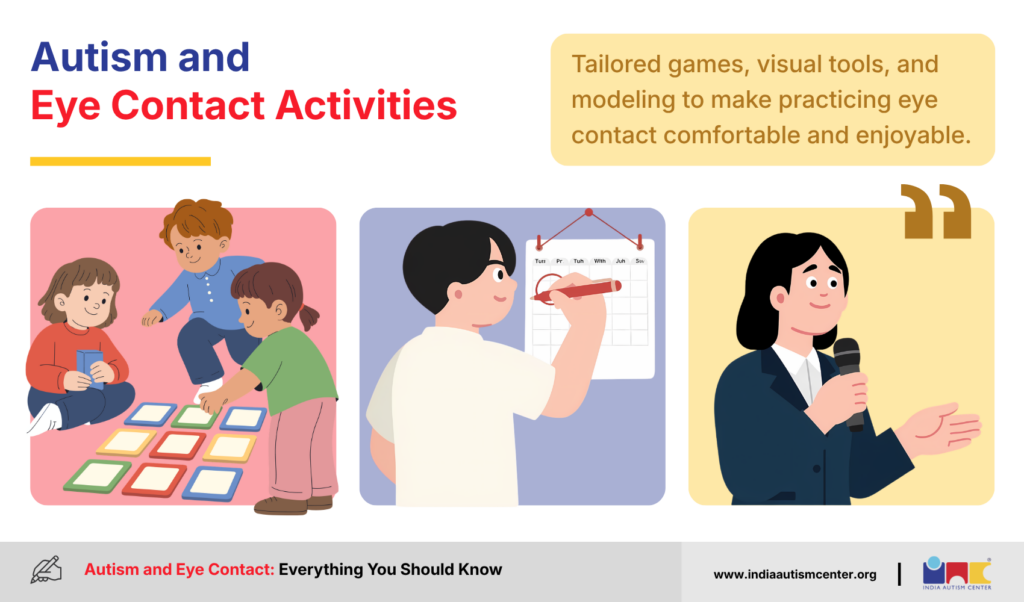
Recognising the unique needs of each individual, we tailor these activities to foster a sense of comfort and build confidence in social interactions.
Interactive Games
Incorporating interactive games that involve eye-tracking exercises can be beneficial. These games, designed with input from therapists and educators, aim to make the process enjoyable while subtly encouraging eye contact.
Visual Supports
Introducing visual supports, such as social stories and visual schedules, can provide a structured framework that helps autistic individuals navigate social situations. These tools serve as aids in understanding the importance of eye contact and when it is most appropriate.
Our guide on Visual Therapy for Benefits covers in depth what vision therapy for autism is, how it works, and how it can help.
Modelling Techniques
Utilising modelling techniques involves demonstrating appropriate eye contact behaviour through videos or live interactions. This technique can be particularly effective for individuals with high-functioning autism who may benefit from observing and imitating social cues.
How Autistic People Experience Eye Contact: First-Hand Perspectives
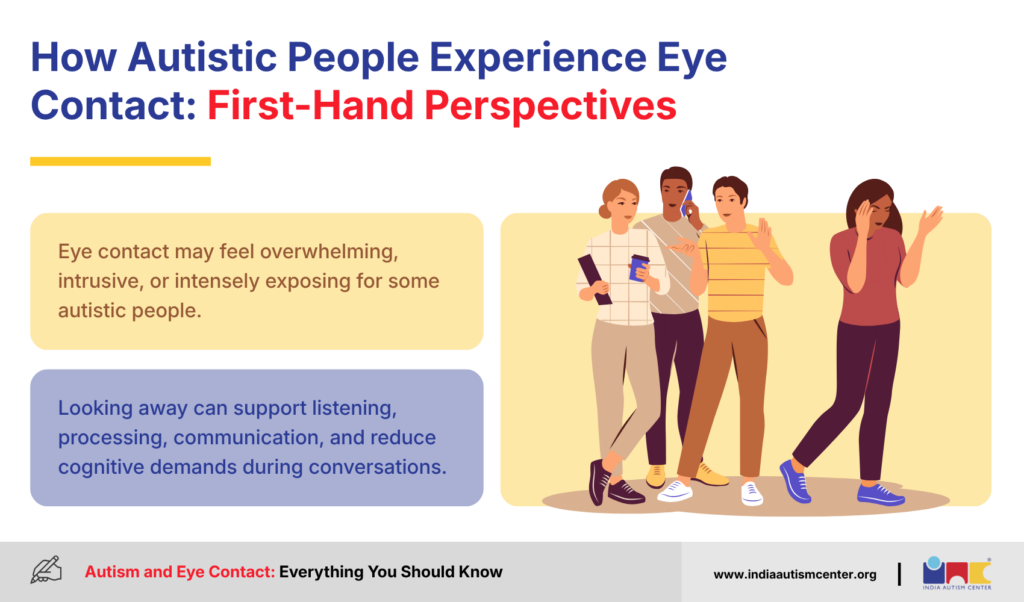
The science tells us what is happening in the brain. But what does it actually feel like?
Many autistic people describe the experience of being looked at directly in the eyes as intensely exposing – a feeling of being “seen through” in a way that’s difficult to control or prepare for. It’s not just uncomfortable; for some, it feels like a kind of intrusion.
Others describe a specific sensory quality to the eyes themselves. The movement, the intensity, the unpredictability of another person’s gaze can feel overwhelming in a way that looking at a mouth or forehead simply doesn’t. It’s not about the person – it’s about the eyes as a sensory stimulus.
A third experience that comes up repeatedly is the impossible split of attention. Many autistic people describe having to choose, in real time, between looking and listening. Maintaining eye contact while also processing speech, formulating a response, and managing the social situation is simply too much to do simultaneously. Looking away isn’t disengagement – it’s a cognitive strategy that actually improves the quality of listening.
What’s striking about the 2025 Boer et al. research is how consistently autistic participants described eye contact as deliberate and self-conscious – something they have to actively decide to do and actively manage throughout a conversation, rather than something that flows naturally.
The goal here is not to “fix” eye contact. It’s to understand it. When we understand what eye contact actually costs an autistic person, we stop demanding it as proof of attention or respect – and we start building interactions that work for everyone.
The Complex Relationship: Autism with Good and Poor Eye Contact
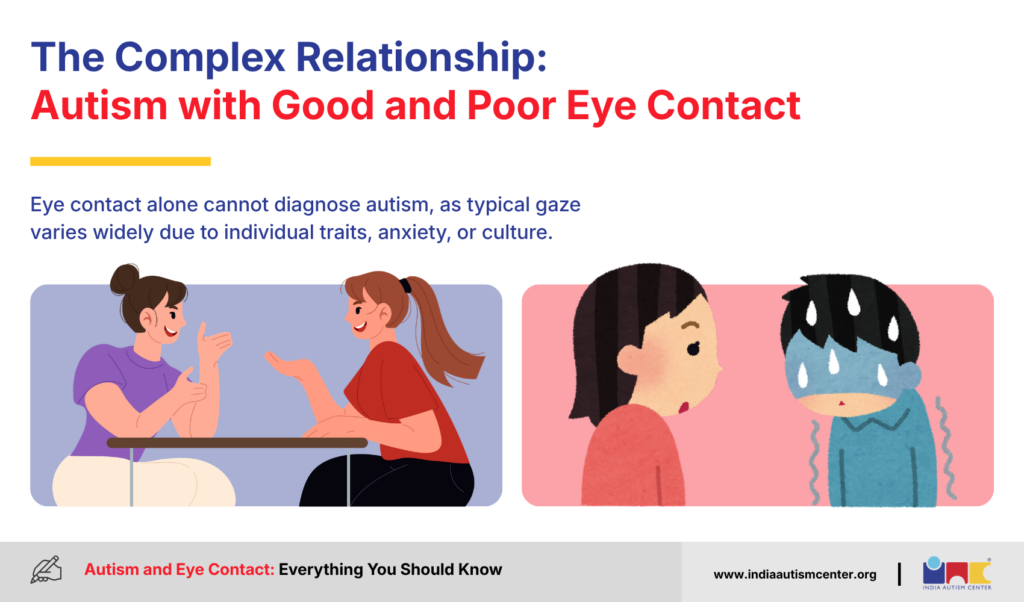
Contrary to common misconceptions, the lack of eye contact does not universally signify autism, nor does good eye contact necessarily exclude an individual from being on the spectrum.
Autism with Good Eye Contact
While some autistic individuals maintain good eye contact, it’s crucial to recognise that this does not negate their autism diagnosis. High-functioning autism, characterised by relatively mild symptoms and strong cognitive abilities, may include individuals who exhibit typical eye contact behaviour.
Poor Eye Contact Not Always Indicative of Autism
Conversely, the absence of eye contact does not automatically point to an autism diagnosis. Various factors, such as cultural differences, social anxiety, or sensory sensitivities, can contribute to poor eye contact in autistic individuals.
When it comes to eye contact, a study conducted by the National Institute of Mental Health and Neurosciences (NIMHANS) in Bangalore found that a significant number of autistic individuals in India exhibit challenges in establishing and maintaining eye contact. This underscores the importance of tailored interventions and support systems for this population.
Want to know more? Get in touch with us.
Common Myths About Eye Contact and Autism
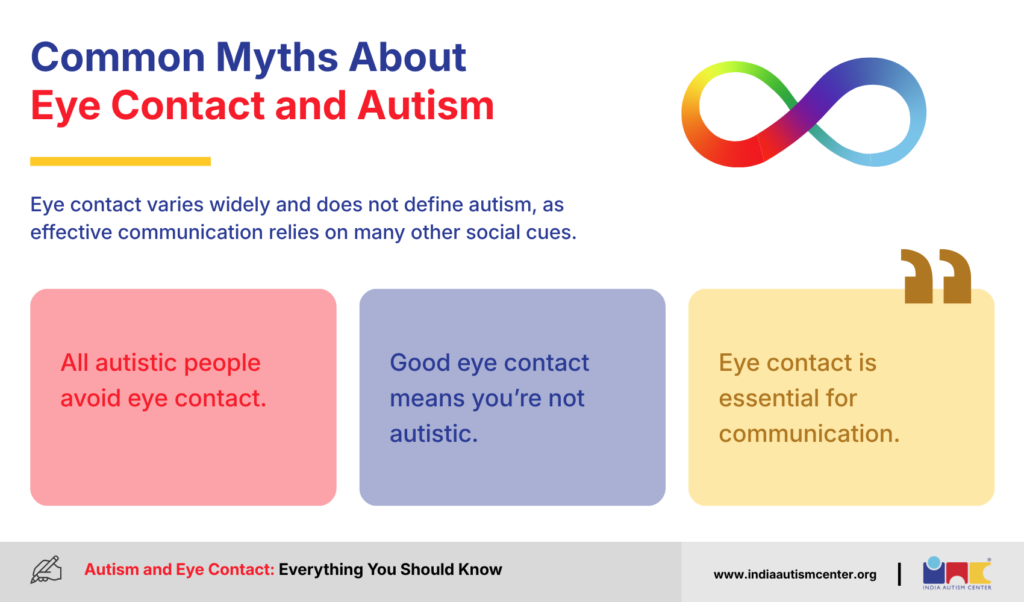
Let’s clear up a few:
Myth 1: “All autistic people avoid eye contact.”
Not true. Some autistic individuals maintain eye contact comfortably, especially with people they trust.
Myth 2: “Good eye contact means you’re not autistic.”
Also false. High-functioning autism may include people who can or do make good eye contact. It has no diagnostic power on its own.
Myth 3: “Eye contact is essential for communication.”
While eye contact can be helpful, it isn’t the only way to show engagement. Many autistic people communicate just fine using other cues like facing the listener, nodding, verbal responses, or body language — all of which signal attentiveness and interest.
Autistic Coping Mechanisms: What Actually Works for Them
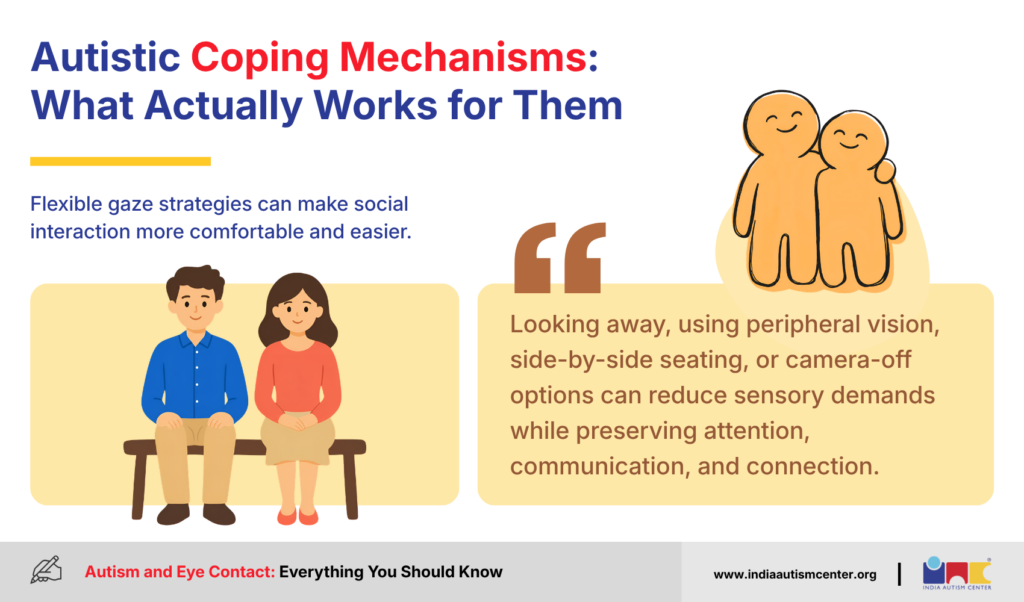
Autistic people have developed a range of practical strategies for managing eye contact in everyday life. These aren’t workarounds to be corrected – they’re valid adaptations that allow autistic people to engage more fully and comfortably in social situations.
1. Looking at the nose or forehead is one of the most common. From a few feet away, it’s virtually indistinguishable from eye contact with the other person, but it removes the intense sensory quality of direct gaze. Many autistic adults describe this as a genuine game-changer in professional settings.
2. Brief glances rather than sustained gaze – looking away and then returning – is another widely used strategy. It allows the autistic person to signal engagement without the sustained sensory load of continuous eye contact. This is, interestingly, also what many neurotypical people do naturally; the difference is that for autistic people, it’s a deliberate choice rather than an automatic behaviour.
3. Camera off in video calls has become a significant quality-of-life improvement for many autistic people since remote working became more common. The absence of the need to manage eye contact on screen allows much greater cognitive bandwidth for the actual content of the meeting.
4. Peripheral vision – attending to the other person’s face without directly looking at it – is another strategy that many autistic people find reduces the sensory intensity of social interaction.
5. Side-by-side seating – sitting next to someone rather than across from them – removes the face-to-face gaze dynamic entirely, making conversation significantly more comfortable. Many autistic people find they connect much more easily during walks, car journeys, or shared activities than in face-to-face settings.
These strategies deserve recognition and respect. When an autistic person uses them, they’re not being evasive – they’re doing the work of social connection in the way that works for their brain.
Eye Contact Across Cultures: What the World Can Teach Us
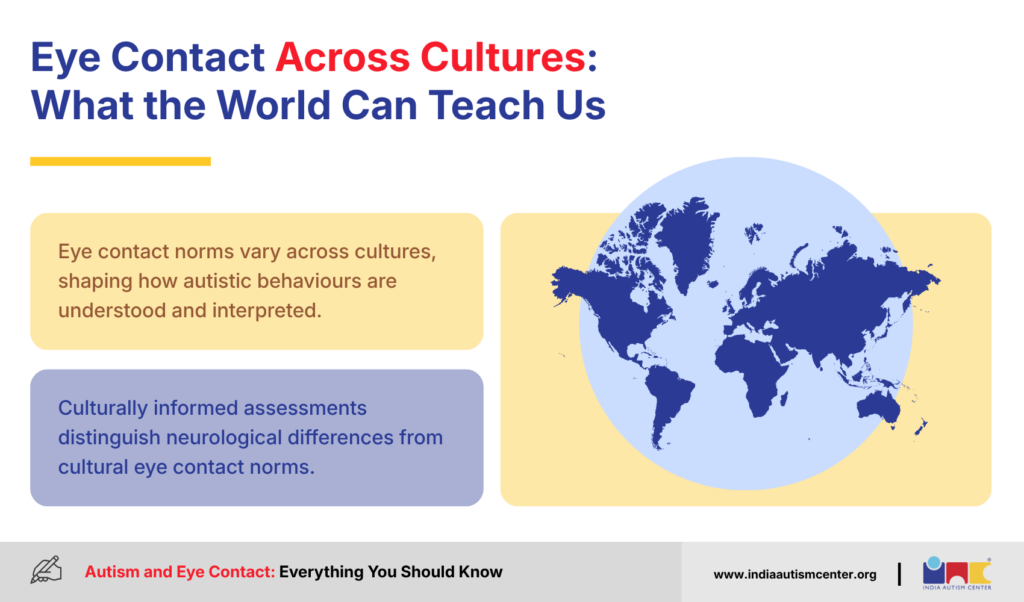
Here’s something that often gets missed in discussions of autism and eye contact: the rules about eye contact are not universal. They’re cultural. And what neurotypical Western culture calls “normal” is, in global terms, just one option among many.
Western Cultures (US, UK, Australia)
In the United States, United Kingdom, and Australia, direct eye contact is strongly associated with confidence, honesty, and engagement. Job interview guides tell candidates to maintain eye contact. Teachers are trained to look for it as a sign of attention. In these cultural contexts, avoiding eye contact can be read as evasive, untrustworthy, or disrespectful – which is why autistic eye contact differences are so often pathologised in these settings.
East Asian Cultures (Japan, Korea, China)
In Japan, Korea, and China, prolonged direct eye contact – particularly with someone of higher social status – can be considered aggressive, disrespectful, or confrontational. Averting the gaze is a sign of respect and deference, not disengagement. An autistic person from a Japanese family who avoids eye contact may be behaving in a way that is entirely consistent with their cultural background, entirely consistent with their neurology, and entirely misread by a Western clinician.
South Asian Cultures (India)
Eye contact norms in India vary significantly by region, gender, and social context. In many Indian settings, avoiding eye contact with elders, teachers, or authority figures is a sign of respect – not a red flag. A child who looks down when addressed by a grandparent or a teacher may be doing exactly what their family has taught them to do. This creates a particular challenge for Indian families navigating an autism diagnosis: their child’s autistic eye contact differences may be layered on top of – or confused with – Indian cultural norms that already treat eye contact differently. This can delay diagnosis, cause confusion during assessments, and lead to well-meaning but culturally inappropriate advice from clinicians trained in Western frameworks.
Middle Eastern Cultures
In many Middle Eastern cultures, eye contact norms are strongly shaped by gender. Direct eye contact between unrelated men and women may be considered inappropriate or disrespectful, while eye contact between same-gender individuals in conversation is expected and valued. A one-size-fits-all approach to eye contact assessment fails to account for this complexity.
Indigenous Australian Cultures
In some Indigenous Australian communities, direct eye contact – particularly with elders or in certain ceremonial contexts – can be considered rude or inappropriate. Clinicians and educators working with Indigenous Australian children need to be aware that what looks like “eye contact avoidance” may be a culturally appropriate behaviour that has nothing to do with autism.
The Bigger Picture
The key insight here is this: the “normal” eye contact that Western clinical frameworks use as a benchmark is itself a cultural construct. Autistic eye contact differences are frequently pathologised through a narrow cultural lens that treats one cultural norm as a universal standard.
This doesn’t mean eye contact differences in autism aren’t real or don’t matter. They are real, and they can create genuine challenges in social communication. But it does mean that assessment and support need to be culturally informed – and that families from non-Western backgrounds deserve clinicians who understand the difference between cultural variation and neurological difference.
Conclusion
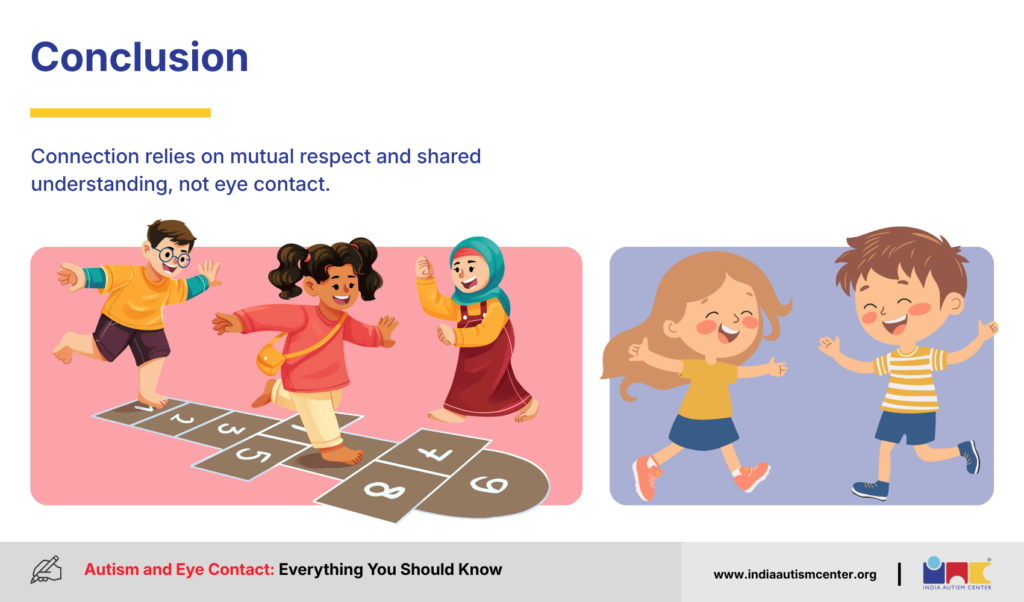
Understanding autism and eye contact helps us appreciate the diversity of human communication. Eye contact is a skill — not a marker of worth, interest, or empathy. For autistic individuals, especially those with sensory sensitivities or social processing differences, direct gaze can be overwhelming or mentally demanding.
You don’t need perfect eye contact to build trust, friendship, or connection. Instead, focus on shared understanding, mutual respect, and comfortable communication. When we do that, we open doors to real connection — one meaningful moment at a time.
Frequently Asked Questions (FAQs)
Why is eye contact difficult for people with autism?
Eye contact can feel uncomfortable or overwhelming for many autistic individuals. This happens due to differences in sensory processing and brain activity. For some, looking into someone’s eyes creates sensory overload or makes it harder to focus on what is being said. This is a common eye contact challenge in autism and does not indicate disinterest or lack of attention.
Is avoiding eye contact always a sign of autism?
No. Avoiding eye contact alone is not a diagnosis of autism. While eye contact in autism may differ from neurotypical patterns, many autistic individuals can make eye contact in certain situations. Similarly, non-autistic people may also avoid eye contact due to shyness, anxiety, or cultural norms.
How does eye contact differ in adults with autism?
Eye contact in adults with autism varies widely. Some adults avoid it because it feels stressful, while others consciously make eye contact as a learned social skill. In some cases, maintaining eye contact requires significant mental effort and can be tiring, even if it appears natural on the surface.
Do people with high-functioning autism make eye contact?
Yes, many individuals with high-functioning autism can make eye contact, especially in familiar or comfortable settings. However, eye contact may still feel unnatural or distracting. The ability to make eye contact does not reflect how well someone understands emotions or communicates.
Can children with autism be taught to improve eye contact?
Yes, children can be gently supported using structured and respectful methods. The focus should be on comfort, not forcing eye contact. Using play-based interactions, visual supports, and positive reinforcement are effective tips to help children with ASD improve eye contact, while also respecting their individual needs.
References
- Hadjikhani, N., Åsberg Johnels, J., Zürcher, N. R., Lassalle, A., Guillon, Q., Hippolyte, L., … & Gillberg, C. (2017). Look me in the eyes: constraining gaze in the eye-region provokes abnormally high subcortical activation in autism. Scientific Reports, 7, 3163.
- Moriuchi, J. M., Klin, A., & Jones, W. (2017). Mechanisms of diminished attention to eyes in autism. American Journal of Psychiatry, 174(1), 26–35
- Kliemann, D., Dziobek, I., Hatri, A., Steimke, R., & Heekeren, H. R. (2010). Atypical reflexive gaze patterns on emotional faces in autism spectrum disorders. Journal of Neuroscience, 30(37), 12281–12287
- Boer, J., Boonstra, N., Kronenberg, L., Kuipers, S., Vuijk, R., & Sizoo, B. (2025). Autistic eye contact? A hermeneutic phenomenological multicenter study of the similarities and differences in eye-contact experiences between adults with and without autism. Journal of Neurodevelopmental Disorders
- Hull, L., Petrides, K. V., Allison, C., Smith, P., Baron-Cohen, S., Lai, M.-C., & Mandy, W. (2017). “Putting on my best normal”: Social camouflaging in adults with autism spectrum conditions. Journal of Autism and Developmental Disorders, 47(8), 2519–2534
Disclaimer: This article is intended for educational and informational purposes only. It is not a substitute for professional medical advice, diagnosis, or treatment. If you are pregnant or have concerns about medication use during pregnancy, please consult a qualified healthcare provider. If your child has received an autism diagnosis and you have questions about causes or support, please reach out to a trained specialist or an autism-focused organisation for guidance.
For expert insights, support services, and inclusive learning initiatives, visit the India Autism Center.