 Donate now
 Get a Call Back
 MENU
MENU 11 MIN READ
 SHARE
SHARE


Researchers at UCLA Health did not cure autism in humans. What they found is that a single dose of an existing drug, rapamycin, temporarily reversed autism-like symptoms in adult mice within about two hours. The mice showed less hyperactivity, fewer seizures, and calmer responses to sensory input. The effect wore off, and rapamycin is not a treatment. Here’s what actually happened, and what it means going forward.
What Did the UCLA Study Actually Find?
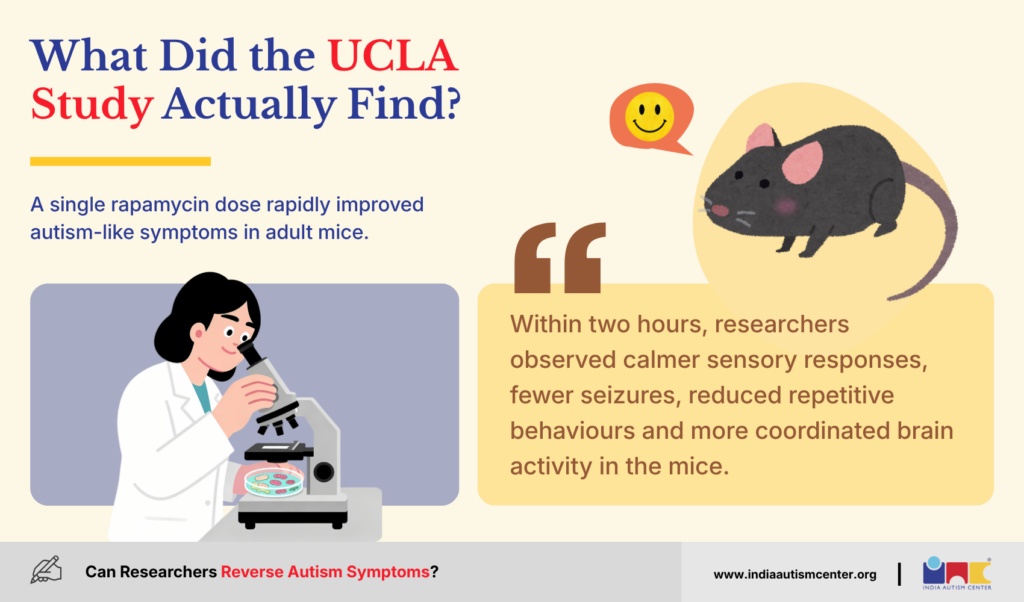
The study was published in Nature Communications in July 2026. It was led by Dr. Harley Kornblum’s team at UCLA’s Semel Institute for Neuroscience and Human Behaviour.
The researchers exposed pregnant mice to a mild inflammatory stimulus. The dose was low enough that the mother mice stayed healthy. Their offspring, however, grew up with lasting changes in brain activity and behaviour.
These offspring showed several autism-like traits as adults:
- Mild brain overgrowth
- Excessive signalling through the mTOR pathway
- Poorly organised communication between brain networks
- Hyperactivity and repetitive behaviors
- Heightened sensitivity to sound and touch
- Increased seizure susceptibility
The team then gave these adult mice a single dose of rapamycin, a drug normally used to suppress the immune system in organ transplant patients. Within roughly two hours, nearly every measurement improved. Neurons that had been firing abnormally began to normalize. Seizure risk dropped. Brain regions that weren’t communicating well started syncing up. Repetitive behaviors and sensory over-responsivity declined too.
📥 Free download: Printable daily routine chart for autistic children
Why Does a Two-Hour Improvement Matter?
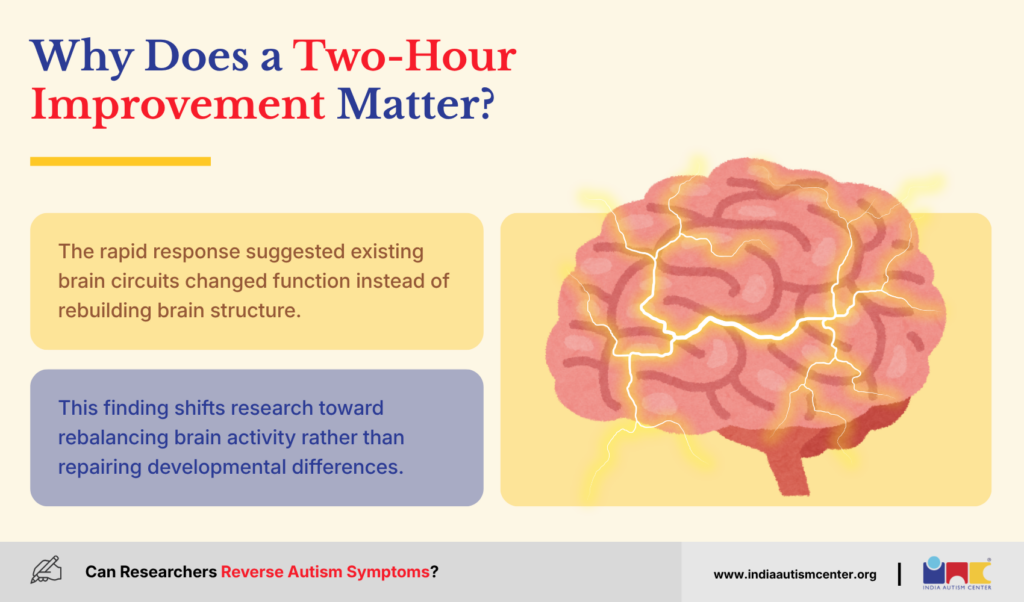
A two-hour response is too fast for the brain to physically rebuild itself. Structural changes in neurons, like new synapse growth, take much longer than that. This detail is actually the most important finding in the whole study.
It tells researchers that rapamycin wasn’t repairing damaged brain structure. Instead, it was changing how existing brain circuits were functioning in real time. Dr. Kornblum put it this way in a statement on the findings: the adult brain may be more adaptable than scientists assumed, even when the underlying structural differences from early development are still there.
This shifts the therapeutic target. Instead of trying to rebuild brain structure, which is a much harder problem, researchers can now explore whether brain circuits can be functionally rebalanced instead. That’s a meaningfully different, and possibly more achievable, goal.
What Is Rapamycin, and Why Isn’t It a Treatment Yet?
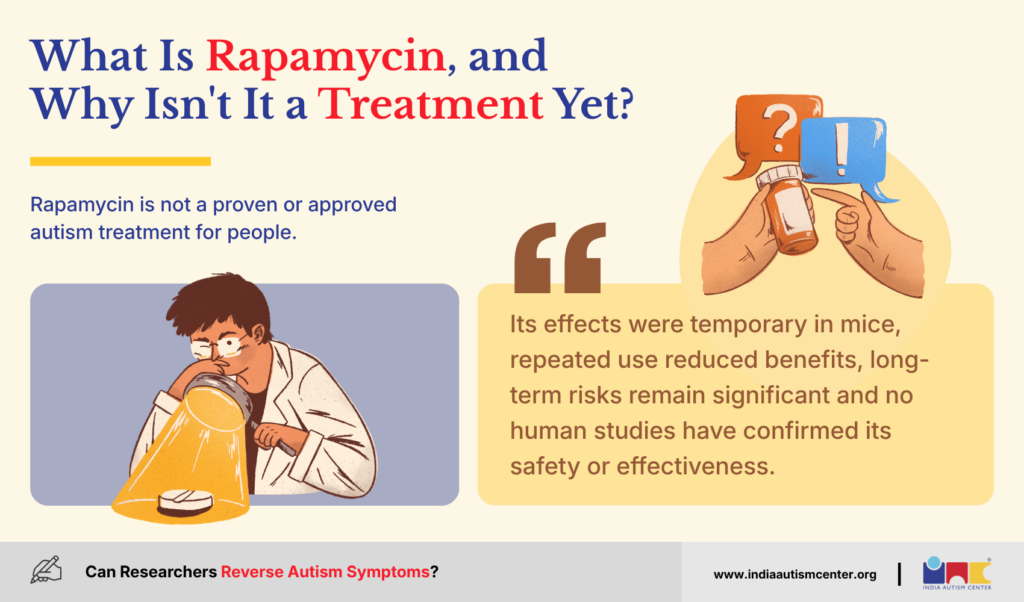
Rapamycin is an immunosuppressive drug. Doctors currently prescribe it to prevent organ rejection after transplants. It works by reducing activity in the mTOR pathway, a cell-signaling system that controls growth and proliferation. Excessive mTOR activity has been linked to some autism-related conditions in earlier research, so the drug wasn’t picked at random.
Despite the dramatic short-term results, rapamycin is not ready, and may never be ready, for autism treatment in humans. Here’s why:
| Limitation | What It Means |
| Temporary effect | Benefits faded after a few hours in mice |
| Drug tolerance | Mice became less responsive after weeks of repeated dosing |
| Toxicity risk | Long-term use can cause serious side effects |
| Animal-only data | The study has not been tested in humans |
| Narrow symptom set | Findings apply to one specific mouse model, not all autism presentations |
Even the study’s co-senior author, Dr. Neil Harris, was direct about this. He said the findings point toward new therapeutic targets, like sensory circuit neuromodulation or rebalancing neuronal excitation and inhibition, rather than toward rapamycin itself as a usable treatment.
Want to know more? Get in touch with us.
What Caused the Autism-Like Traits in This Mouse Model?
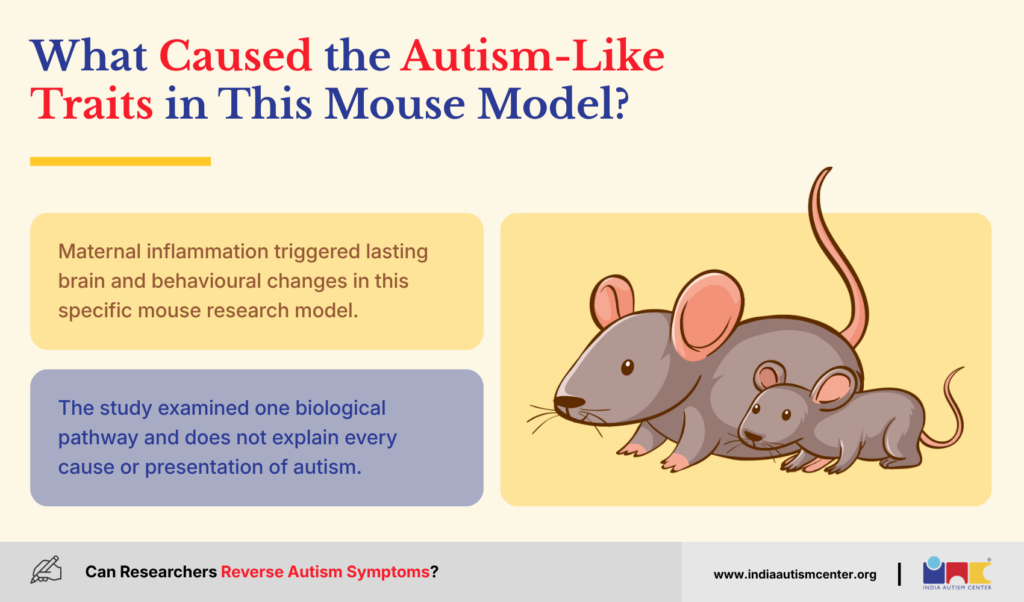
The mice in this study developed autism-like traits because of maternal inflammation during pregnancy. Researchers exposed pregnant mice to a mild immune trigger early in pregnancy. That inflammation carried over into the offspring’s brain and body, and it stayed there into adulthood.
This lines up with earlier research suggesting that immune activation during pregnancy in humans may be associated with a higher likelihood of autism-related traits in children. It’s worth being precise about what that research does and doesn’t say.
Maternal inflammation appears to be one contributing factor among many. Autism is widely understood to involve a mix of genetic and environmental influences. No single cause explains every case, and this study doesn’t claim otherwise. It focused on one biological pathway in one mouse model, not on autism as a whole.
Does This Mean Autism Symptoms Can Be Reversed in Humans?
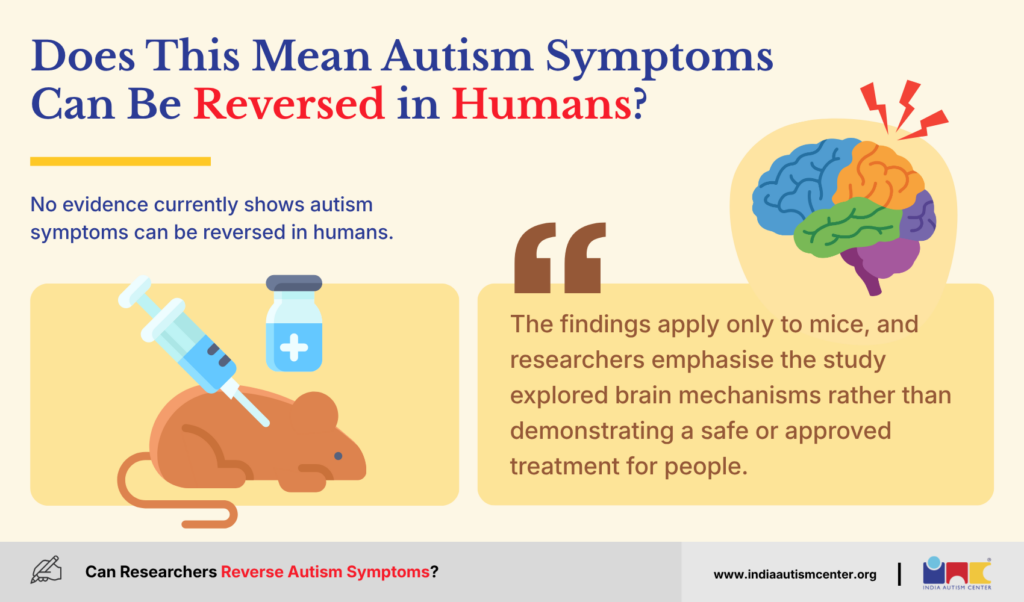
No, not yet, and not with this drug. This was a mouse study, the effects were short-lived, and rapamycin carries real risks with repeated use. Nobody involved in the research is recommending it for people.
I think it’s worth pausing here, because “reverse autism symptoms” is the kind of headline that spreads fast and gets misread. What the study actually demonstrated is narrower and, in some ways, more interesting: that certain autism-like symptoms in mice can be modified in adulthood, without needing to first correct the brain’s underlying structure.
It’s also worth acknowledging that “reversing” or “curing” autism is a sensitive framing within the autism community itself. Some parents and researchers are genuinely looking for treatments that ease specific symptoms, like seizures or sensory overload, that can significantly affect quality of life. Many autistic self-advocates, on the other hand, see autism as part of identity rather than something that needs fixing. Both perspectives show up regularly in how this kind of research gets discussed, and I think it’s fair to hold space for both.
Want to know more? Get in touch with us.
How Does This Compare to Other Autism-Epilepsy Drug Research?
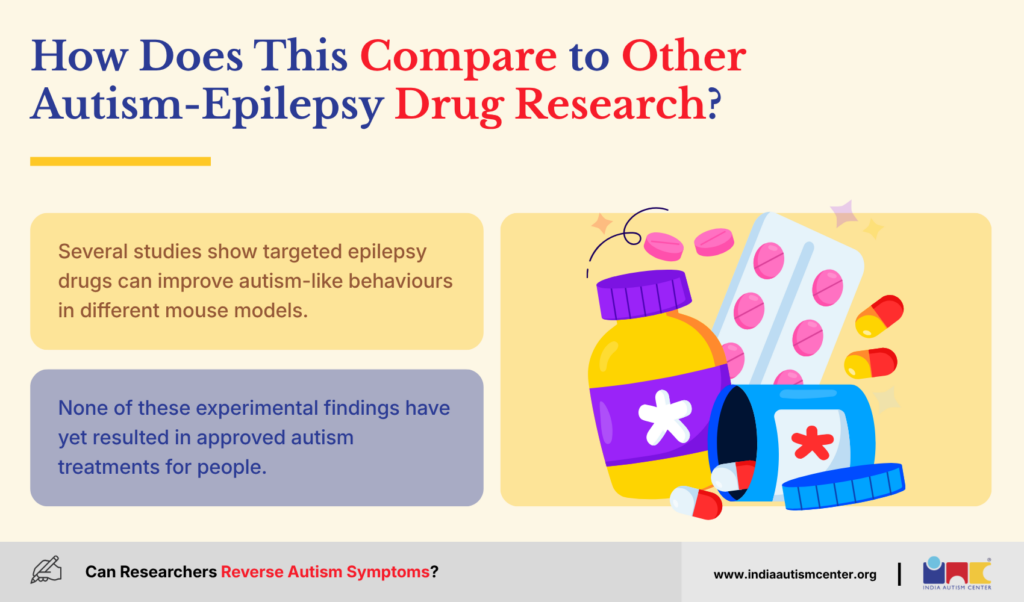
This isn’t the first time researchers have looked at epilepsy drugs and autism together. Autism and epilepsy share overlapping brain mechanisms in several studies, which is part of why drugs developed for seizures keep showing up in autism research.
A few examples:
- Lamotrigine, an epilepsy medication, reduced hyperactivity in mice with a specific genetic mutation (MYT1L) linked to autism traits.
- Z944, an experimental seizure drug, reversed autism-like behaviors in a Stanford study by calming an overactive brain region called the reticular thalamic nucleus.
- Earlier MIT research showed that targeting specific proteins in brain neurons could reduce autism-like traits in mice with Fragile X syndrome, the most common inherited cause of autism and intellectual disability.
The pattern across these studies is consistent. Researchers keep finding that specific, targeted interventions can shift autism-like behaviors in mouse models. None of them, including the UCLA rapamycin study, have moved into approved human treatments yet.
What Could This Research Lead To in the Future?
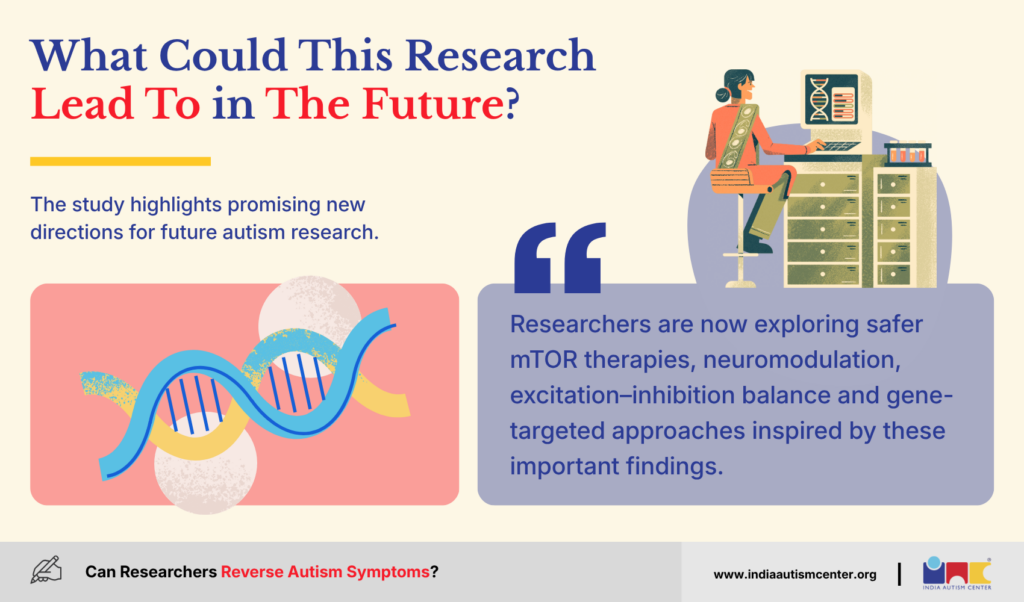
This study opens up a few concrete directions for future autism research. Researchers now have new leads to test:
- mTOR-pathway therapies that are safer for long-term or repeated use than rapamycin
- Neuromodulation techniques targeting sensory processing circuits directly
- Excitation-inhibition balance treatments, aimed at calming overactive neurons without suppressing brain function broadly
- Gene expression research, since rapamycin reversed abnormal gene activity tied to autism, epilepsy, and ion channel function in this study
None of this happens quickly. Drug development typically moves from animal models to safety trials to human trials over many years, and most candidates never make it all the way through. I’d treat this study as an early signal worth watching, not a treatment timeline.
What Should Parents and Caregivers in India Take Away From This?
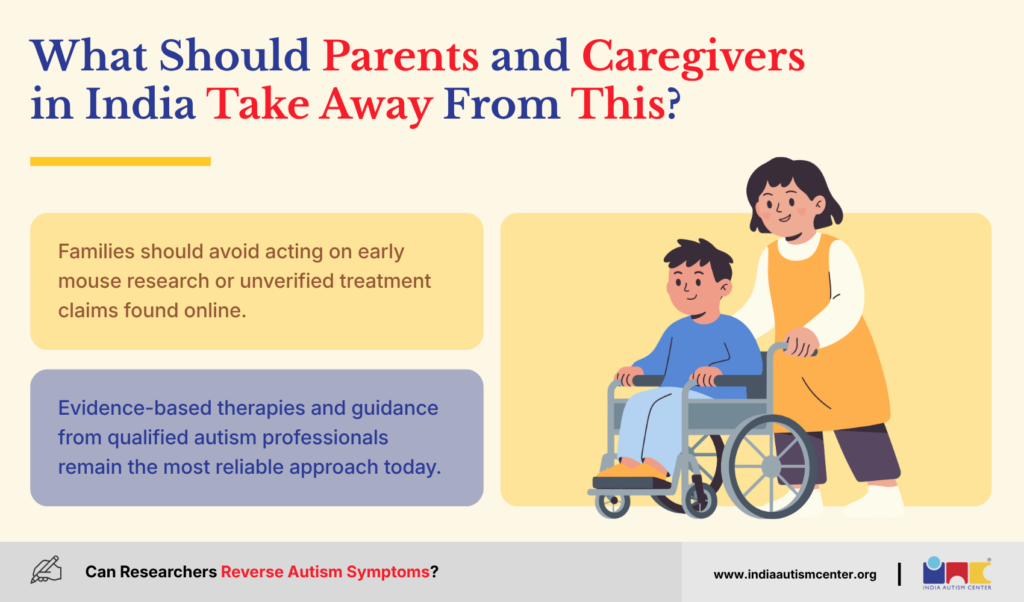
If you’re a parent or caregiver reading this, my honest suggestion is to not act on early-stage mouse research. Rapamycin is not something to seek out, and no clinic offering it as an autism treatment is following the actual science here.
Autism news like this tends to travel fast online, and unverified products or “breakthrough cures” often follow close behind. I’d treat any claim of a fast fix with real skepticism, especially if it’s being sold rather than studied.
What does help right now, based on current evidence, is consistent, evidence-based support:
- Early behavioral intervention
- Structured skill-building and therapy programs
- Sensory support strategies tailored to the individual
- Ongoing guidance from qualified autism professionals
If you’re exploring intervention options in India, it’s worth looking into structured, evidence-based programs rather than waiting on research that’s still years away from clinical use.
How Did Rapamycin Change Brain Circuits So Quickly?
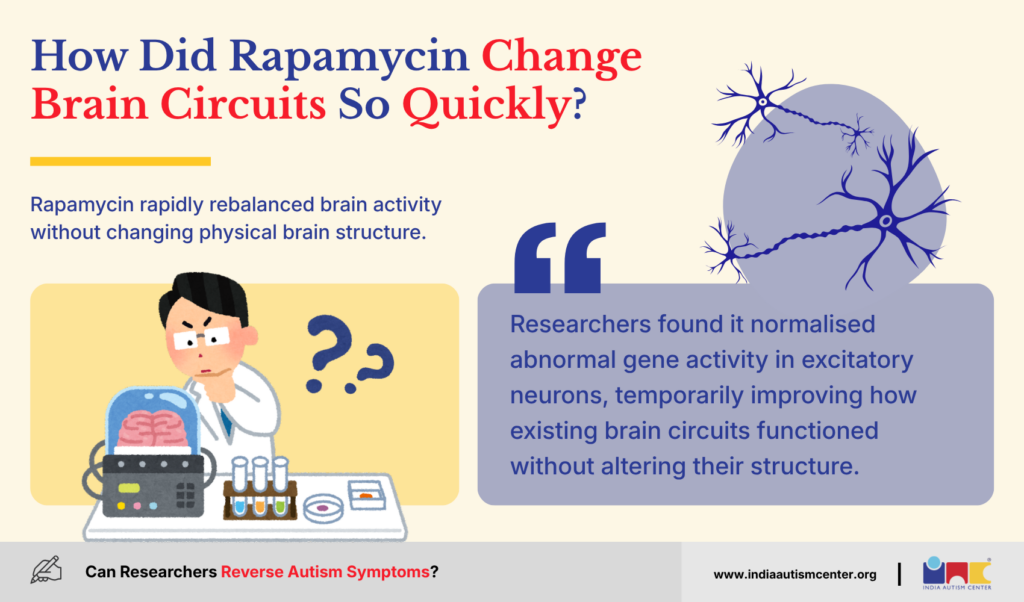
To understand the speed of the response, the UCLA team looked at gene activity in brain cells before and after the rapamycin dose. They found the drug reversed abnormal patterns of gene expression tied to autism, epilepsy, and ion channel function.
The strongest effects showed up in excitatory neurons, the cells that drive activity across brain networks. This tells researchers that rapamycin was rebalancing how excitable these neurons were, rather than altering the brain’s physical wiring.
Think of it less like renovating a house and more like adjusting the thermostat. The house’s structure stays the same, but how it functions in the moment changes. That distinction is why the researchers are now focused on brain circuits as a treatment target, separate from brain structure.
This also helps explain why the effect faded. A thermostat setting doesn’t hold permanently without ongoing input. Once rapamycin cleared the system, the neurons drifted back toward their earlier, less balanced state.
Why Are Sensory Sensitivity and Repetitive Behaviors Hard to Treat?
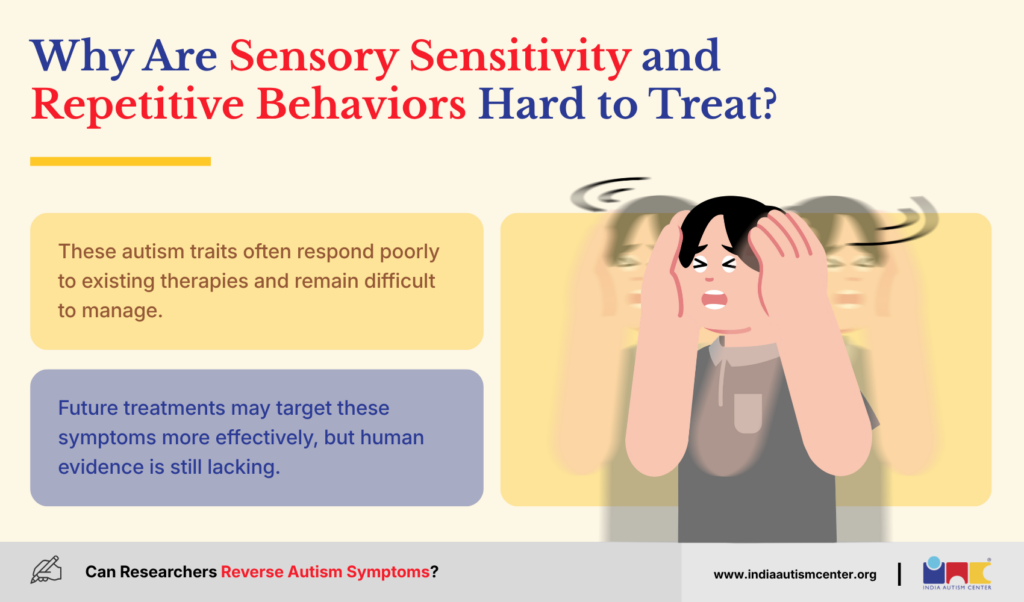
Sensory sensitivity and repetitive behaviors are two of the most common and most persistent autism traits. They’re also two of the hardest for existing therapies to fully address. Sensory over-responsivity, in particular, doesn’t respond well to most current treatment approaches.
That’s part of what makes this study notable. The rapamycin dose specifically reduced sensory over-responsivity and repetitive behaviors in the mice, alongside the other improvements. If future, safer drugs can replicate that effect without rapamycin’s downsides, it could open a new treatment avenue for symptoms that families often say are the most disruptive day to day.
I’d still stress caution here. A mouse showing less sensitivity to touch or sound is measurable in a lab, but it’s a long way from a validated human therapy. The gap between “promising mechanism” and “usable treatment” is where most drug candidates quietly stall out.
Is This Considered an Autism Treatment Breakthrough?
Researchers are describing this as a mechanistic breakthrough, not a treatment breakthrough. The distinction matters. A mechanistic breakthrough means scientists learned something new and important about how the brain works. A treatment breakthrough means there’s a new therapy people can actually use.
This study is the first kind. It gives researchers a clearer picture of which brain systems to target next, and it challenges the assumption that autism-related brain differences are fixed once they form in early development. That’s genuinely significant for the direction of future research, even without an immediate treatment attached to it.
Want to know more? Get in touch with us.
Conclusion
Researchers reversed specific autism-like symptoms in mice using a single dose of rapamycin, and the improvement happened within two hours. This tells us adult brain circuits may be more adaptable than previously believed, even when early developmental differences remain. It does not mean autism has been reversed or cured in humans, and rapamycin is not a safe or approved treatment for anyone right now.
I’ll be keeping an eye on where this research goes next, particularly around safer mTOR-targeted therapies and sensory circuit approaches. For now, evidence-based intervention remains the most reliable path forward for autistic individuals and their families.
Frequently Asked Questions
Has autism been reversed in humans?
No. The UCLA study reversed autism-like symptoms in adult mice, not in humans. There is currently no drug proven to reverse autism symptoms in people.
What is rapamycin used for?
Rapamycin is an immunosuppressive drug typically prescribed to prevent organ rejection after transplants. Researchers are studying it separately for its effects on the mTOR pathway in autism-related brain activity.
Is inflammation during pregnancy linked to autism?
Some research suggests maternal inflammation during pregnancy may be associated with autism-related traits in offspring. It’s considered one possible contributing factor, not a single cause of autism.
Should parents try rapamycin or similar drugs for autism symptoms?
No. Rapamycin’s effects were temporary in mice, it can be toxic with repeated use, and it hasn’t been tested in humans for this purpose. Any such use would be unsupported by current evidence.
Why do epilepsy drugs keep showing up in autism research?
Autism and epilepsy appear to share overlapping brain mechanisms in several studies. This overlap is why researchers keep testing seizure medications in autism-related brain research.
What’s the difference between mouse studies and human treatments?
Mouse studies test biological mechanisms early, in a controlled way. Findings then need years of safety and efficacy testing in humans before they can become approved treatments. Most don’t make it that far.
Disclaimer: This article is intended for educational and informational purposes only. It is not a substitute for professional medical advice, diagnosis, or treatment. If you are pregnant or have concerns about medication use during pregnancy, please consult a qualified healthcare provider. If your child has received an autism diagnosis and you have questions about causes or support, please reach out to a trained specialist or an autism-focused organisation for guidance.
For expert insights, support services, and inclusive learning initiatives, visit the India Autism Center.