 Donate now
 Get a Call Back
 MENU
MENU 8 MIN READ
 SHARE
SHARE


Early detection of autism in India is important as Autism Spectrum Disorder (ASD) affects many children across the country. Identifying autism early, especially in infants and toddlers, helps children get the right support at the right time.
Unfortunately, a lack of awareness and delayed access to experts often slow down the diagnosis of Autism Spectrum Disorder in India.
In this blog, we will share early signs of autism, common challenges in early detection, and how early diagnosis can make a positive difference for children and their families.
Statistics on Autism in India
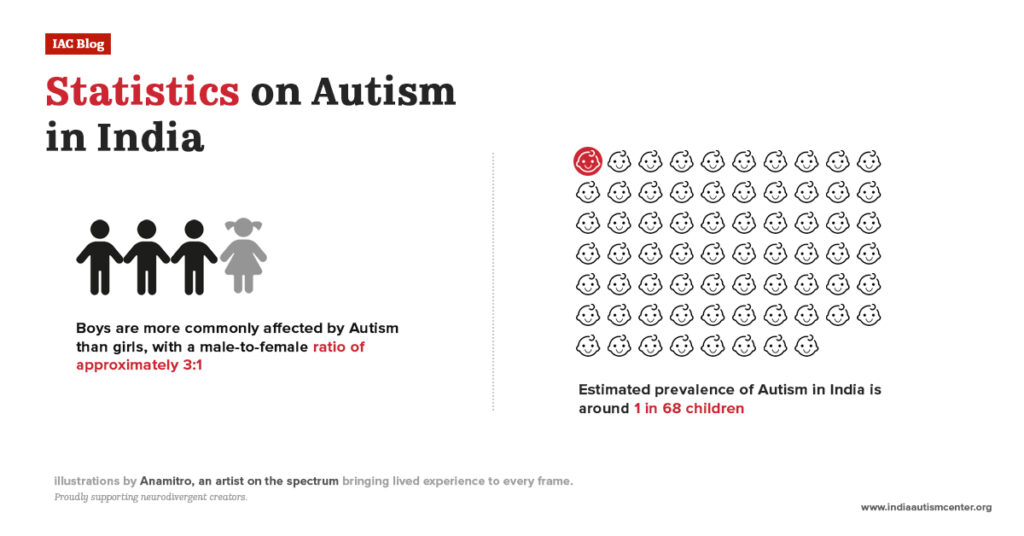
The prevalence of autism in India has been steadily increasing. According to a 2021 study published in the Indian Journal of Paediatrics:
- The estimated prevalence of Autism in India is around 1 in 68 children.
- Boys are more commonly affected by Autism than girls, with a male-to-female ratio of approximately 3:1.
Early diagnosis and intervention are still inadequate, with many children not receiving the necessary support at the right time. At times, parents lack the necessary knowledge and information on Autism, its potential impacts and available intervention and support measures. Early detection is the key to enabling children with ASD to lead a productive life.
The Importance of Early Detection
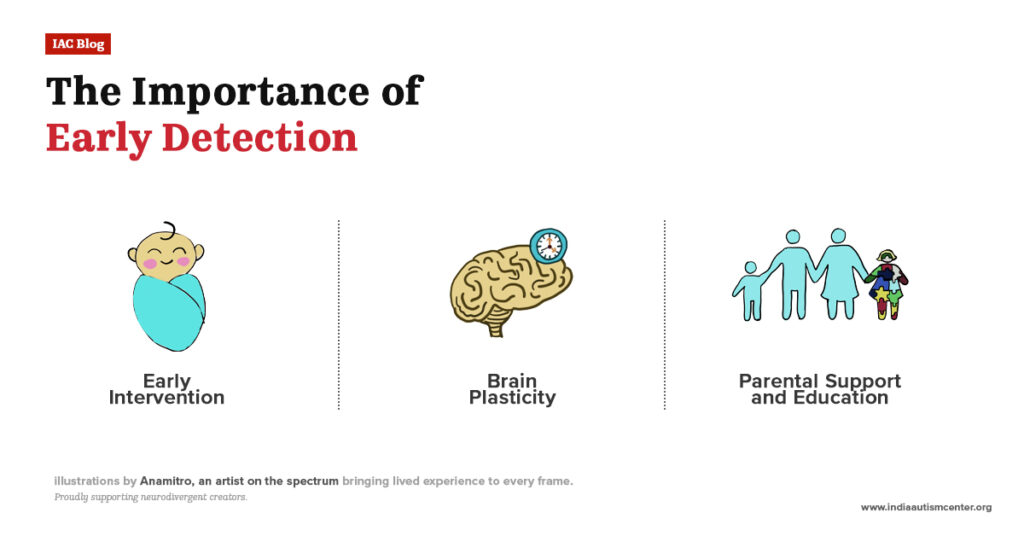
Early autism diagnosis is a game-changer for several reasons:
- Early Intervention: Early diagnosis allows for the implementation of early intervention strategies tailored to the child’s specific needs. This can significantly improve their developmental progress in crucial areas like communication, social skills, and behaviour.
- Brain Plasticity: In the early years of life, the brain exhibits high plasticity, meaning it can form new connections and adapt more effectively. This period offers a prime opportunity to influence a child’s brain development positively. With early detection of ASD, the brain plasticity aspect can be better leveraged to boost the cognitive performance of the child.
- Parental Support and Education: Early diagnosis provides parents and caregivers with an understanding of their child’s needs and equips them with the knowledge and resources to support their child effectively.
For early detection of ASD, it is crucial to watch out for the telltale signs and symptoms in children.
Early Signs of Autism in Infants
Autism symptoms in infants may not be as apparent as in older children. However, there are some early signs that parents and caregivers can observe:
- Limited Eye Contact: Infants who later develop Autism may avoid eye contact and not engage in “social smiling” interactions as expected.
- Lack of Response to Name: Typically, by the age of 6-9 months, infants respond to their names being called. However, an autistic child may not react or acknowledge their name being called. Lack of response is one of the most common signs of Autism in newborns.
- Delayed Speech Development: A child not cooing or babbling by 12 months of age or not speaking single words by 16 months could be a potential sign of Autism.
- Limited Gestures: Autistic infants may show a lack of pointing, waving, or other gestures used for communication.
- Repetitive Behaviours: Repetitive movements, like hand-flapping, in infants can be an early indicator of Autism.
Detection of Autism in Toddlers
As children grow into the toddler stage, certain red flags may become more evident:
- Social Challenges: Autistic toddlers may struggle to engage in interactive play with peers, preferring solitary activities.
- Communication Difficulties: Limited or delayed speech development, difficulty expressing needs, and trouble understanding language may become more noticeable.
- Rigidity and Resistance to Change: Autistic children often show resistance to changes in routines or transitions.
- Lack of Imaginative Play: Pretend play, which is typical in toddlers, may be absent or limited in autistic children.
- Sensory Sensitivities: Autistic toddlers might display strong reactions to sensory stimuli, such as certain sounds, textures, or bright lights.
Challenges in Early Autism Diagnosis
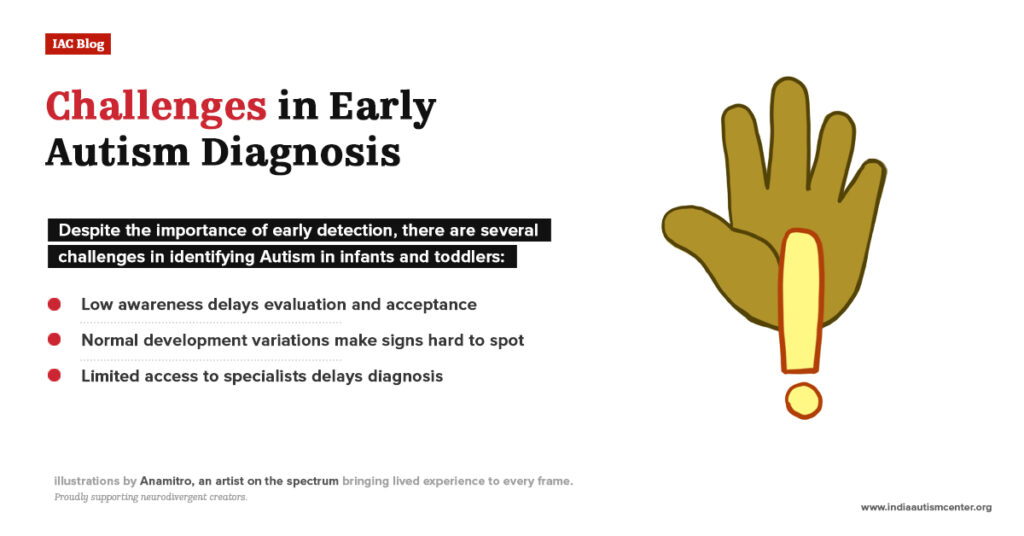
Despite the importance of early detection, there are several challenges in identifying Autism in infants and toddlers:
- Lack of Awareness: Many parents and caregivers may not be aware of the early signs of Autism, leading to delays in seeking a professional evaluation. In some cases, parents might adopt the deferred approach, wherein they refuse to accept that their child might have ASD. This further complicates the situation and might aggravate the ASD symptoms in the child.
- Normal Variability: In early childhood, there is a wide range of development in social, communication, and behaviour skills. Distinguishing typical variations from potential autism symptoms can be tricky.
- Limited Access to Resources: In some regions of India, access to specialised healthcare professionals and diagnostic services is limited, hindering early diagnosis efforts for ASD.
Want to know more? Get in touch with us.
Managing Other Medical and Mental Health Conditions in Autism
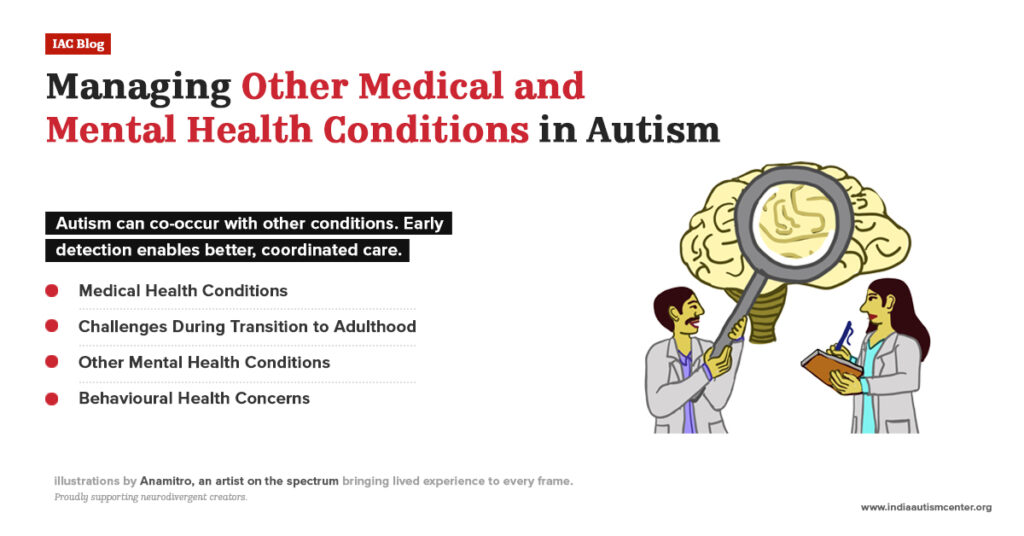
Along with ASD, many children, teenagers, and adults may experience additional medical and mental health conditions. This is why early detection of autism is important—it helps families and doctors identify related challenges early and manage them in a better, more coordinated way. With timely diagnosis of Autism Spectrum Disorder, individuals can receive the right care for both autism and co-occurring conditions.
Medical Health Conditions
Children with ASD may also have health issues such as epilepsy, sleep problems, digestive concerns, or very limited food choices. Early medical guidance helps families understand how to manage these conditions together and improve overall well-being. This is especially relevant to early detection of autism in India, where early medical support can prevent long-term complications.
Challenges During Transition to Adulthood
Teenagers and young adults with autism may find physical changes and growing social expectations difficult to understand. Social situations become more complex during adolescence, and differences may not always be accepted. Early support can help build life skills, emotional understanding, and confidence during this phase.
Other Mental Health Conditions
Many teens and adults with ASD may also experience anxiety, depression, ADHD, or substance misuse. Early identification allows mental health professionals to create personalised support plans. This highlights again why early detection of autism is important, as it helps reduce emotional stress later in life.
Behavioural Health Concerns
Some individuals with autism may show behaviours such as irritability, aggression, hyperactivity, sudden outbursts, or self-harm. These behaviours are often signs of pain, frustration, or difficulty communicating needs. Working closely with healthcare and mental health professionals helps identify the cause and manage these behaviours in a safe and supportive way.
How Can India Autism Center Help?
The team at India Autism Center is committed to extending holistic support to autistic individuals and other spectrum disorders by
- Building a digital platform, a one-stop solution for the entire neurodiverse community.
- Offering a personalised and responsive residential center that facilitates life-long support to autistic individuals and their families.
- Building a sensitive and sustainable ecosystem that promotes quality of life.
- Extending evidence-based support mechanisms for Autistic individuals.
- Contributing towards the global knowledge base on Autism and related neurodiverse disorders.
- Creating a global pool of top-notch professionals equipped with the requisite training to help autistic individuals realise their ultimate potential.
Conclusion
Early detection and diagnosis of Autism in infants and toddlers are crucial for providing timely interventions and support. As awareness about the early symptoms of Autism grows, more children can receive the assistance they need for improved developmental outcomes. Addressing the challenges in early detection, such as increasing awareness, improving access to diagnostic services, and supporting parents and caregivers, can significantly impact the lives of autistic children and their families across India. Let us work together to build a more inclusive and supportive environment for autistic individuals in the country.
Also read our blog on Coping with an Autism Diagnosis, a comprehensive guide.
FAQs
1. What is Early Detection of Autism in India, and why does it matter?
Early Detection of Autism in India refers to identifying signs of autism in infants and toddlers as early as possible. Early recognition is crucial because it allows for timely intervention and support, which can significantly improve communication, social development, and long-term outcomes for children with Autism Spectrum Disorder.
2. Why is early detection of autism important for children’s development?
Why is early detection of autism important? Early detection helps families and healthcare providers start therapies during a child’s most responsive developmental stage. Early diagnosis and intervention can support brain plasticity and encourage better progress in language, behaviour, and social skills.
3. How is the diagnosis of Autism Spectrum Disorder done in India?
The diagnosis of Autism Spectrum Disorder in India typically involves careful observation of developmental milestones, screening for behavioural and communication differences, and assessment by trained specialists. Early professional evaluation helps confirm the condition and plan appropriate support.
4. What are the common early signs that may lead to early detection of autism in India?
Some early signs that support early detection of autism in India include limited eye contact, delayed speech, not responding to their name, lack of gestures like pointing or waving, and repetitive behaviours in infants. These signs can help parents seek evaluation sooner.
5. What challenges affect the diagnosis of Autism Spectrum Disorder in India?
Challenges to the diagnosis of Autism Spectrum Disorder in India include limited awareness of early signs among parents, misconceptions about developmental delays, and restricted access to trained professionals and diagnostic services in many regions.
6. How can early detection improve long-term outcomes after an autism diagnosis?
After an early diagnosis, interventions can be started right away, helping children build communication, social, and adaptive skills sooner. This leads to better learning, stronger relationships, and improved quality of life as they grow.
For expert insights, support services, and inclusive learning initiatives, contact India Autism Center for more information.