 Donate now
 Get a Call Back

 MENU
 11 MIN READ
 SHARE


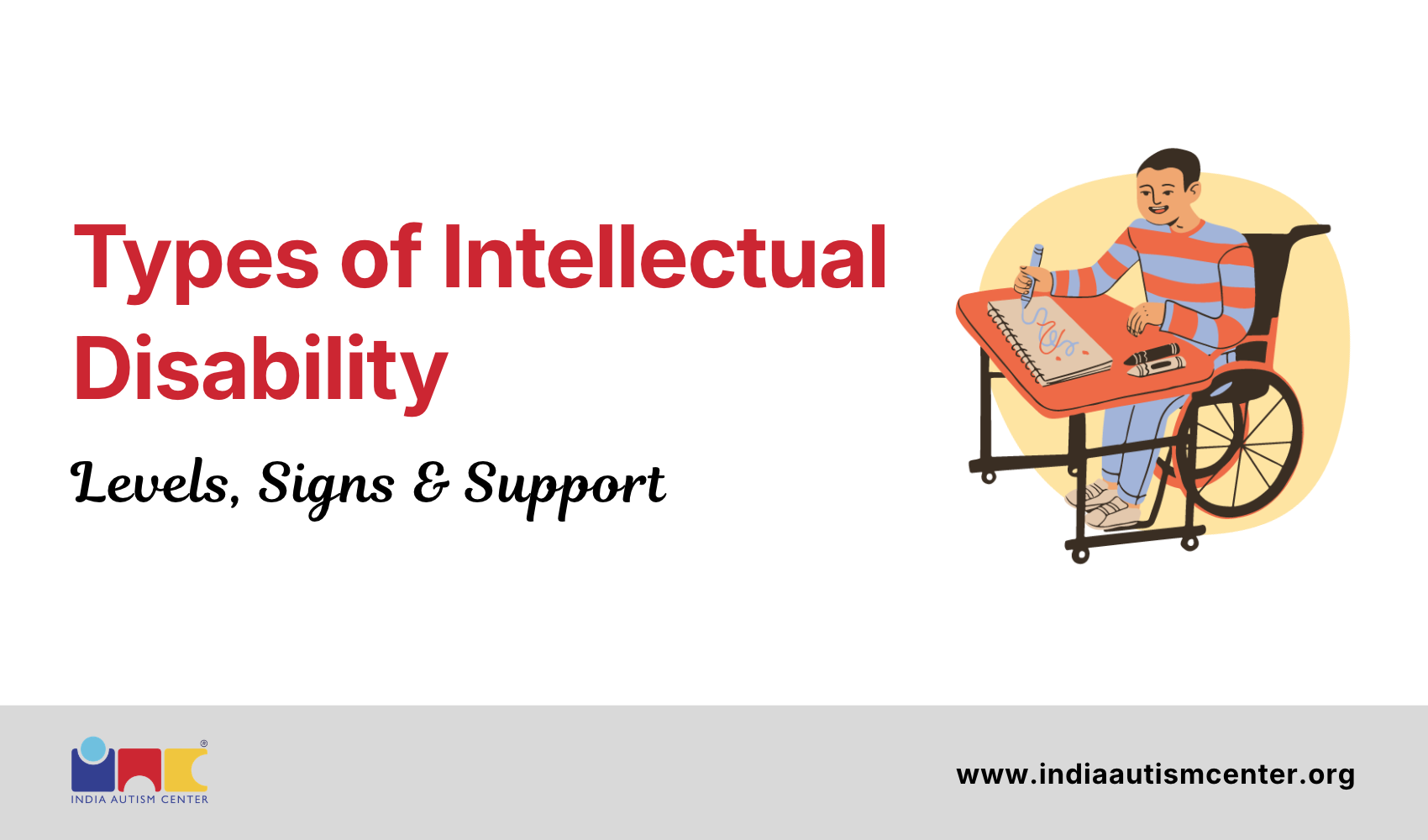
A child may learn to speak later than their peers, struggle to understand new concepts, or need extra help with everyday activities. While these differences do not automatically indicate intellectual disability, persistent difficulties across learning and daily functioning may warrant a professional assessment.
The American Psychiatric Association estimates that intellectual disability affects approximately 1% of the population, with around 85% of affected individuals having mild intellectual disability.
Understanding the types of intellectual disability, their signs and available support helps families recognise concerns early and make informed decisions about education, therapy and long-term independence.
What Is Intellectual Disability?
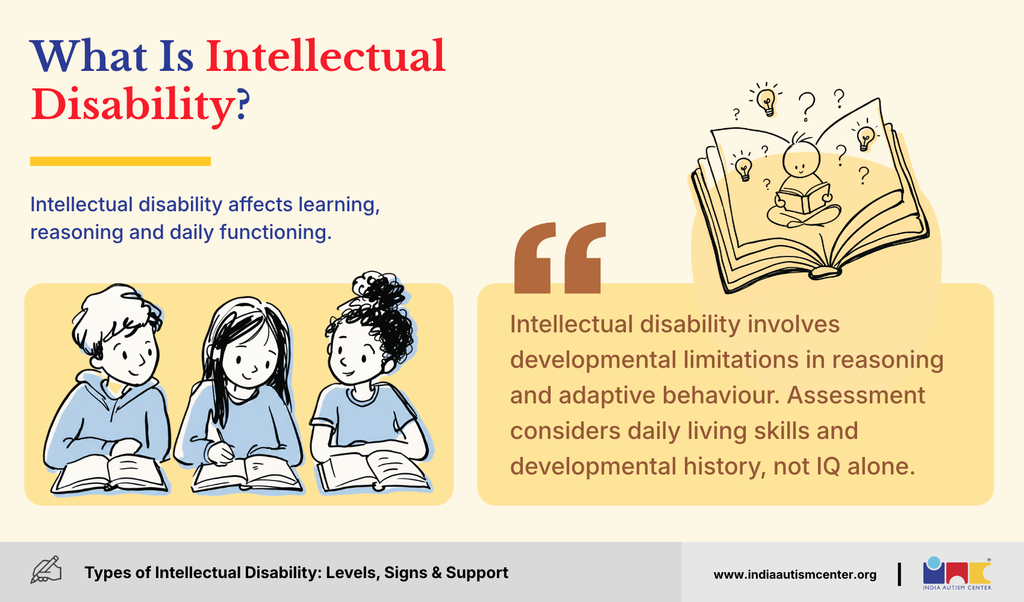
Intellectual disability is a neurodevelopmental condition characterised by significant limitations in intellectual functioning and adaptive behaviour that begin during development. It can affect how a person learns, communicates, solves problems and manages everyday responsibilities.
Intellectual functioning includes reasoning, memory, learning and decision-making. Adaptive behaviour refers to the conceptual, social and practical skills needed to navigate daily life.
As per the American Association on Intellectual and Developmental Disabilities (AAIDD), a diagnosis involves three key considerations:
- Significant limitations in intellectual functioning, like reasoning and problem-solving.
- Significant limitations when it comes to adaptive behaviour, including communication, social understanding, and practical daily living skills.
- Onset during the developmental period.
An IQ score around 70 to 75 may indicate a significant limitation in intellectual functioning, but an IQ score alone cannot confirm intellectual disability. Assessment must also consider adaptive behaviour, developmental history and individual circumstances.
The term cognitive disability is broader than intellectual disability and can describe difficulties affecting thinking, learning, memory or other cognitive functions. The two terms are related but are not interchangeable in every context.
What Are the Four Types of Intellectual Disability?
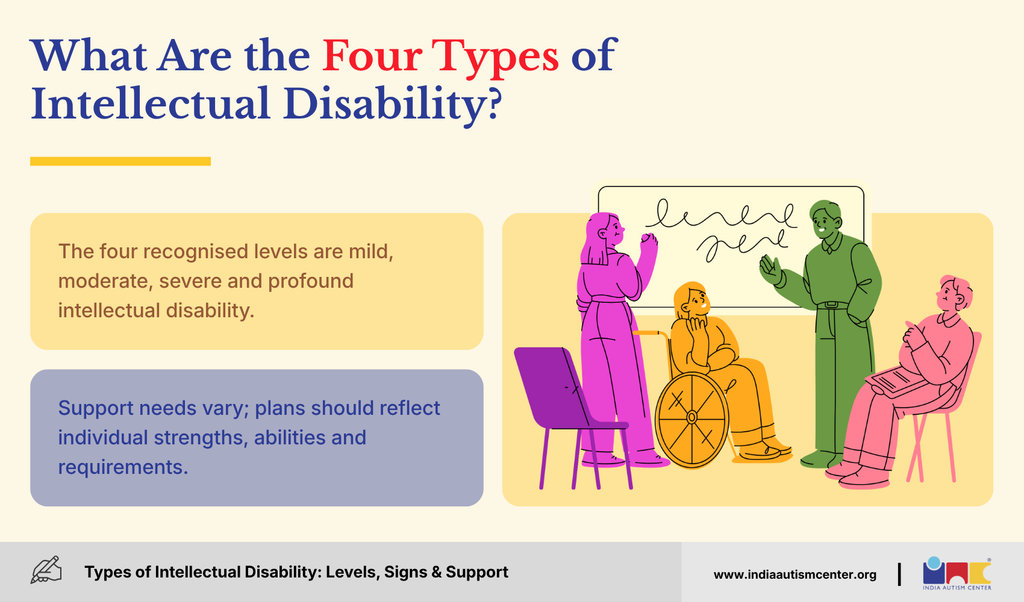
The four commonly recognised levels are mild, moderate, severe and profound intellectual disability. These categories describe the general extent of limitations in intellectual and adaptive functioning.
However, they are not rigid descriptions of a person’s abilities. Someone may need considerable help with communication but manage certain daily activities independently. Support should therefore be based on individual needs rather than a label alone.
1. Mild Intellectual Disability
People with mild intellectual disability may take longer to learn academic concepts, understand abstract ideas, or solve unfamiliar problems. These difficulties can become more noticeable as schoolwork and everyday responsibilities grow more complex.
Common characteristics include:
- Difficulty understanding complicated instructions and abstract concepts.
- Slower development of reading, writing, and mathematical skills.
- Challenges with budgeting, planning and managing time.
- Needing guidance when making unfamiliar decisions.
For example, a student may understand basic addition but struggle with multi-step word problems. Breaking the task into smaller parts, using visual examples, and providing repeated practice can improve understanding.
With appropriate education and opportunities to develop practical skills, many people with mild intellectual disability can work, maintain relationships, and live independently or with limited support.
2. Moderate Intellectual Disability
Moderate intellectual disability generally involves more noticeable difficulties with learning, communication, and everyday functioning. Individuals may develop functional academic and self-care skills but often need structured teaching and regular assistance.
Possible characteristics include:
- Difficulty understanding complex language and unfamiliar instructions.
- Needing repeated demonstrations to learn new tasks.
- Requiring support with money management, travel or personal care.
- Finding it difficult to recognise risks or navigate unfamiliar social situations.
For instance, a teenager may learn to prepare a simple meal by following picture-based instructions but still need reminders about kitchen safety. Individualised education, speech and language therapy, occupational therapy, and supported practice can help build communication, self-care, and social skills.
3. Severe Intellectual Disability
Severe intellectual disability involves substantial limitations in intellectual functioning and adaptive behaviour. Individuals may communicate through a small number of spoken words, gestures, pictures or assistive communication systems, although communication abilities vary considerably.
Common characteristics may include:
- Significant difficulty understanding spoken instructions.
- Needing extensive assistance with dressing, bathing or eating.
- Limited ability to complete unfamiliar activities independently.
- Requiring close supervision to maintain safety.
Support may include personalised education, communication interventions, personal care and coordinated healthcare. Consistent routines and visual cues can help individuals understand what is happening and participate in familiar activities.
4. Profound Intellectual Disability
Profound intellectual disability is associated with extensive support needs across most areas of daily life. Some individuals also have physical, sensory or medical conditions that affect movement, feeding or communication.
Possible characteristics include:
- Very limited conventional speech, with communication through facial expressions, gestures, sounds or assistive systems.
- Extensive assistance with personal care and everyday activities.
- Significant challenges with mobility or understanding the surrounding environment.
- The need for ongoing supervision and coordinated support.
The focus is on health, comfort, communication, meaningful engagement and quality of life. Even when a person needs extensive assistance, their preferences and responses should be recognised and respected.
What Are Some of the Signs and Symptoms of Intellectual Disability?
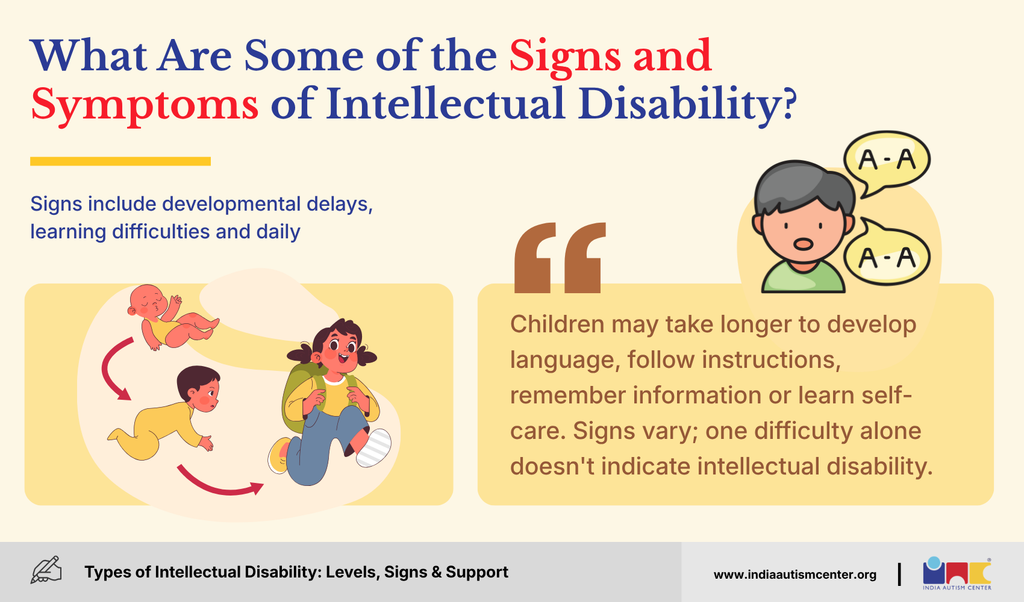
Intellectual disability symptoms differ by age, developmental profile, and support needs. Some signs appear in infancy or early childhood, while others emerge as learning and daily responsibilities become more demanding.
Developmental Signs in Children
Parents may notice that a child takes longer to acquire certain skills. However, developmental milestones vary, and a delay in one area does not automatically indicate intellectual disability.
Potential signs include:
- Delays in developing speech, understanding language or following simple instructions.
- Taking longer to learn concepts such as numbers, shapes or colours.
- Difficulty remembering information or applying previously learned skills.
- Needing more help than expected with dressing, feeding and other self-care activities.
- Challenges with age-appropriate problem-solving and social understanding.
The pattern, persistence and extent of these difficulties matter more than any single behaviour.
Learning, Communication and Social Difficulties
A child may struggle to understand new information, remember instructions or apply a familiar skill in a different setting. They may need more repetition and hands-on demonstrations to learn effectively.
Communication difficulties can affect the ability to express needs, understand conversations, or follow instructions. Some individuals develop spoken language, while others benefit from gestures, picture symbols or augmentative and alternative communication (AAC).
Social and practical challenges may include difficulty recognising risks, understanding social boundaries, managing changes in routine or making everyday decisions.
The older phrase mental retardation symptoms is outdated and can be stigmatising. Intellectual disability is the appropriate contemporary term.
Importantly, these signs can also occur in children with hearing difficulties, language disorders, autism or other developmental conditions. A qualified professional can help to understand the underlying cause.
What Causes Intellectual Disability?
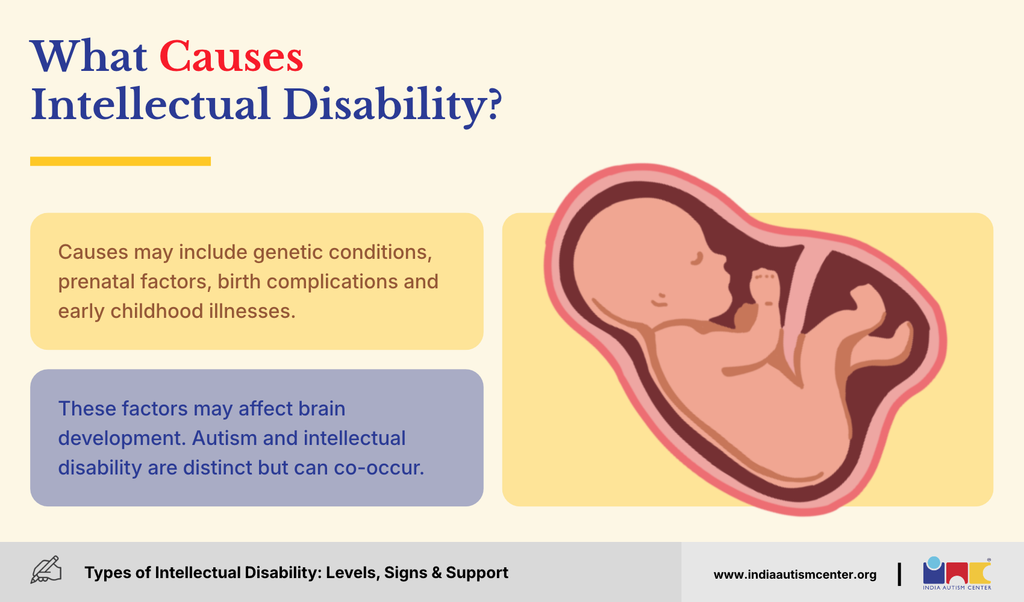
Intellectual disability can result from genetic, biological and environmental factors that affect brain development. Sometimes the cause is identifiable; in other cases, it remains unknown.
Common causes and associated factors include:
- Genetic conditions: Down syndrome, fragile X syndrome or certain other genetic or chromosomal conditions.
- Prenatal factors: Certain infections during pregnancy, prenatal alcohol exposure and other factors affecting foetal development.
- Birth-related complications: Significant brain injury or oxygen deprivation around birth.
- Early childhood conditions: Serious infections affecting the brain, traumatic brain injury and certain other medical conditions.
These factors do not inevitably cause intellectual disability. Risk depends on the specific condition and circumstances.
Autism Spectrum Disorder (ASD) can co-occur with intellectual disability, but the two are distinct. An autistic person does not automatically have intellectual disability, and a person with intellectual disability is not necessarily autistic.
How Is Intellectual Disability Diagnosed?
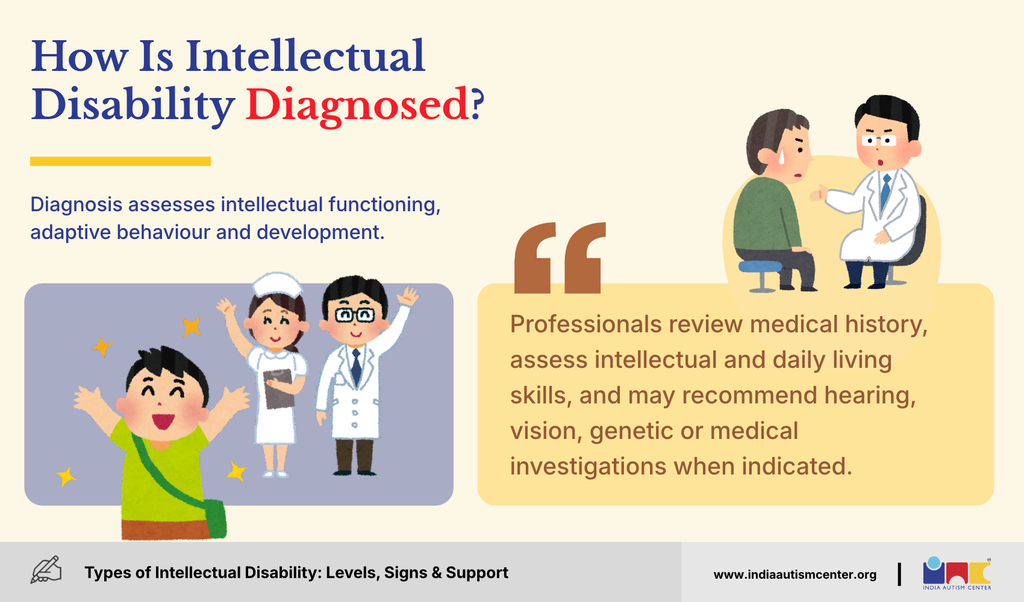
Diagnosis requires a comprehensive assessment of intellectual functioning, adaptive behaviour and developmental history. It cannot be established through a checklist of symptoms or an IQ score alone.
The process may involve:
- Developmental and medical history: Reviewing milestones, health conditions, family history and concerns raised by parents or teachers.
- Intellectual assessment: Using appropriate standardised tests to examine reasoning, memory, learning and problem-solving.
- Adaptive behaviour assessment: Evaluating conceptual, social and practical skills in everyday settings.
- Additional investigations: Considering hearing and vision assessments, genetic testing or other medical investigations when indicated.
A developmental pediatrician, clinical psychologist or another appropriately qualified professional may coordinate the assessment.
An important part of diagnosis is identifying strengths and support needs. For example, a child who struggles with spoken instructions may understand tasks more effectively through demonstrations or visual aids.
Parents should seek advice if developmental concerns persist or if a child loses skills they previously had. Support for identified difficulties can begin while further assessments are being arranged.
Intellectual Disability Examples in Everyday Life
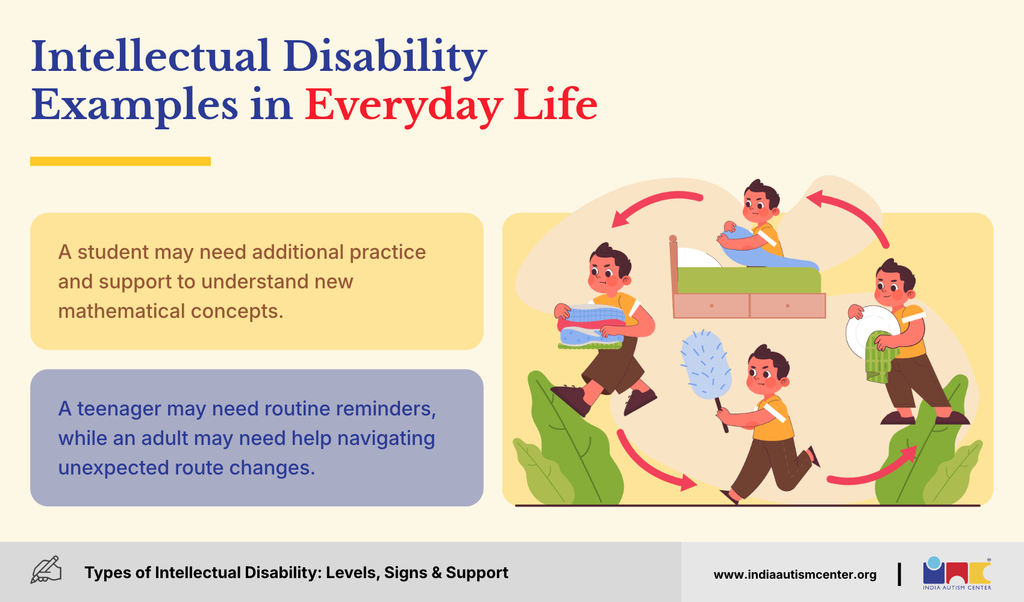
Practical examples of intellectual disability help explain how the condition can affect daily activities without suggesting that every individual has the same experience.
- At school: A child may need additional time, visual instructions and repeated practice to learn a mathematics concept.
- At home: A teenager may learn to dress independently but need reminders to follow a morning routine.
- In the community: An adult may confidently follow a familiar travel route but need assistance when the route changes unexpectedly.
These examples illustrate why abilities must be assessed individually. A person may manage one activity independently while needing support with another.
What Support Is Available for Intellectual Disability?
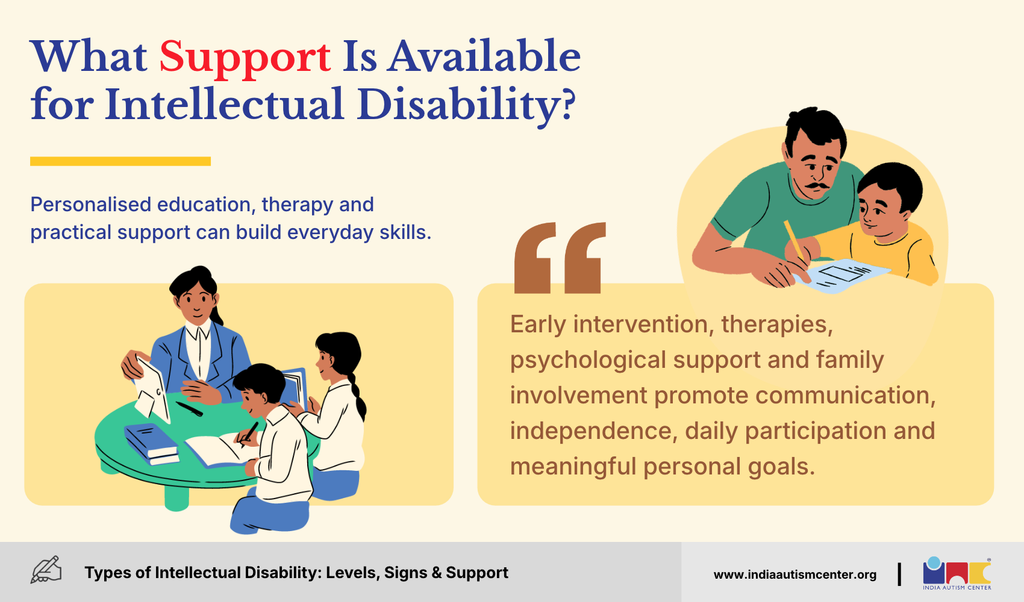
There is no single treatment that removes intellectual disability. However, personalised interventions, accessible education and practical support can help individuals develop skills, communicate more effectively and participate in everyday life.
Early Intervention and Special Education
Early intervention can support the development of communication, motor, social and daily living skills. Educational strategies may include breaking tasks into smaller steps, using visual materials and allowing additional practice.
Progress should be measured against individual goals rather than relying only on comparisons with other children.
Speech and Language Therapy
Speech and language therapy supports understanding, expression and functional communication. Depending on individual needs, it may involve spoken language, gestures, picture-based communication or AAC.
The end goal is to help individuals express their needs, communicate preferences and participate in decisions.
Occupational Therapy
Occupational therapy can help develop practical skills such as dressing, eating, handwriting, personal hygiene and completing daily routines. Therapists may recommend adaptations that make these activities more accessible.
Psychological and Behavioural Support
Individualised psychological and behavioural approaches can help develop useful skills, establish predictable routines and understand the reasons behind distress or behaviours that create difficulties.
Interventions should respect the individual’s dignity, preferences and safety. They should focus on meaningful goals rather than simply making a person appear more typical.
Family and Community Support
Parents and caregivers help individuals practise skills outside formal sessions. Consistent routines, clear instructions and opportunities to make choices can encourage confidence and participation.
Schools and community services can also support inclusion through appropriate accommodations, accessible activities and opportunities to build relationships.
How India Autism Center Supports Development and Inclusion
India Autism Center (IAC) recognises the importance of understanding each individual’s developmental profile, strengths and support requirements. For families navigating developmental concerns, reliable information and appropriate professional guidance can clarify the next steps.
Depending on an individual’s assessment and care plan, support may focus on communication, daily living skills, structured learning and family involvement. Families can also explore IAC’s resources on early intervention for autism and autism therapies to learn more about developmental intervention approaches.
Intellectual disability and autism are not interchangeable diagnoses. Select support based on the individual’s assessed needs rather than assuming the same intervention suits everyone.
Conclusion
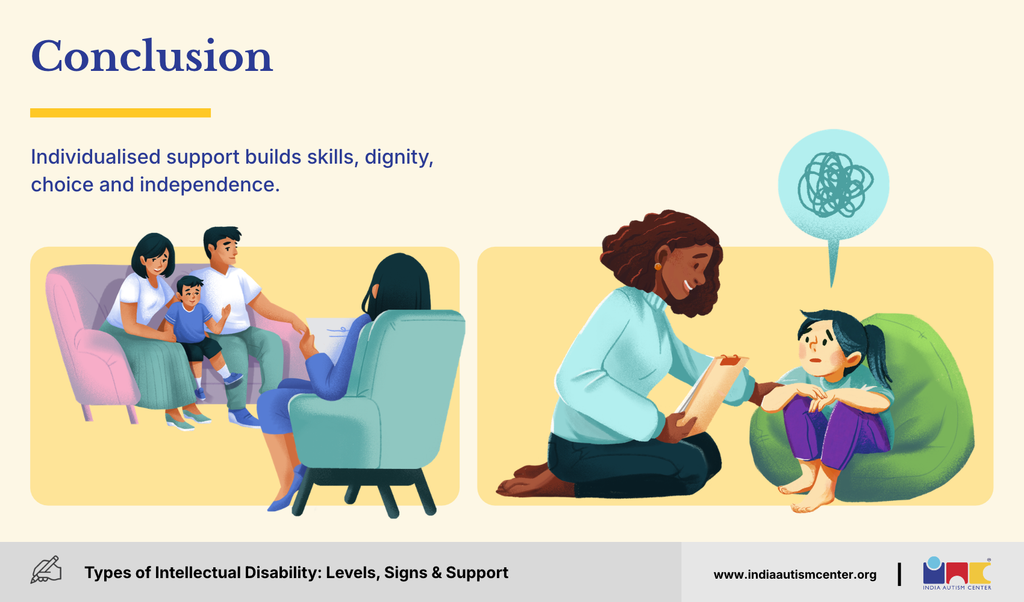
Understanding the types of intellectual disability helps families recognise support needs without placing unnecessary limits on an individual’s potential. Mild, moderate, severe and profound intellectual disability describe different levels of difficulty, but every person has a distinct combination of abilities and challenges.
Early assessment, individualised education, communication support and practical skill development can make everyday life more accessible. With appropriate support, individuals can build skills, participate in their communities and experience greater dignity, choice and independence.
Frequently Asked Questions
1. What are the four types of intellectual disability?
The four commonly recognised levels are mild, moderate, severe and profound intellectual disability. They describe differences in intellectual and adaptive functioning, although individual support needs vary.
2. What are the early symptoms of intellectual disability in children?
Possible intellectual disability symptoms include delayed speech, slower development of age-appropriate skills, difficulty learning new concepts and challenges with everyday activities. Professional assessment is required to determine the cause.
3. Can intellectual disability be cured?
There is no single cure for intellectual disability. However, personalised interventions, education and ongoing support can help individuals develop skills and also improve their quality of life.
4. Is intellectual disability the same as autism?
No. Intellectual disability affects intellectual functioning and adaptive behaviour. Autism is a separate neurodevelopmental condition involving differences in social communication as well as restricted or repetitive behaviours. Both can occur in the same person.
5. Can a person with intellectual disability live independently?
Some individuals live independently, while others benefit from occasional assistance, supported living or extensive daily care. Independence depends on individual abilities, accessible environments and available support.