 Donate now
 Get a Call Back
 MENU
MENU 8 MIN READ
 SHARE
SHARE


If you ever thought, “Are autism and Down syndrome the same?”, then you’re not alone. Many people mix these two terms up, partly because they both relate to development in children.
But the difference between Autism and Down Syndrome is significant, and knowing it helps families, educators, and the community support individuals more effectively.
In this guide, I’ll break down everything clearly and comprehensively.
Why Understanding the Difference Matters
When I first learned about developmental differences, I often heard people ask: “Down Syndrome vs Autism — is there a difference?” It’s a fair question. Both are lifelong conditions that affect development. Yet, their causes, features, and support needs are quite different. Still, they share some similarities, which we’ll explore too.
By the end of this article, you’ll clearly understand:
- What Autism Spectrum Disorder (ASD) is
- What Down Syndrome is
- How professionals diagnose each
- Where they overlap
- And most importantly, how we can support individuals with love and respect
Want to know more? Get in touch with us.
What is Autism Spectrum Disorder (ASD) ?
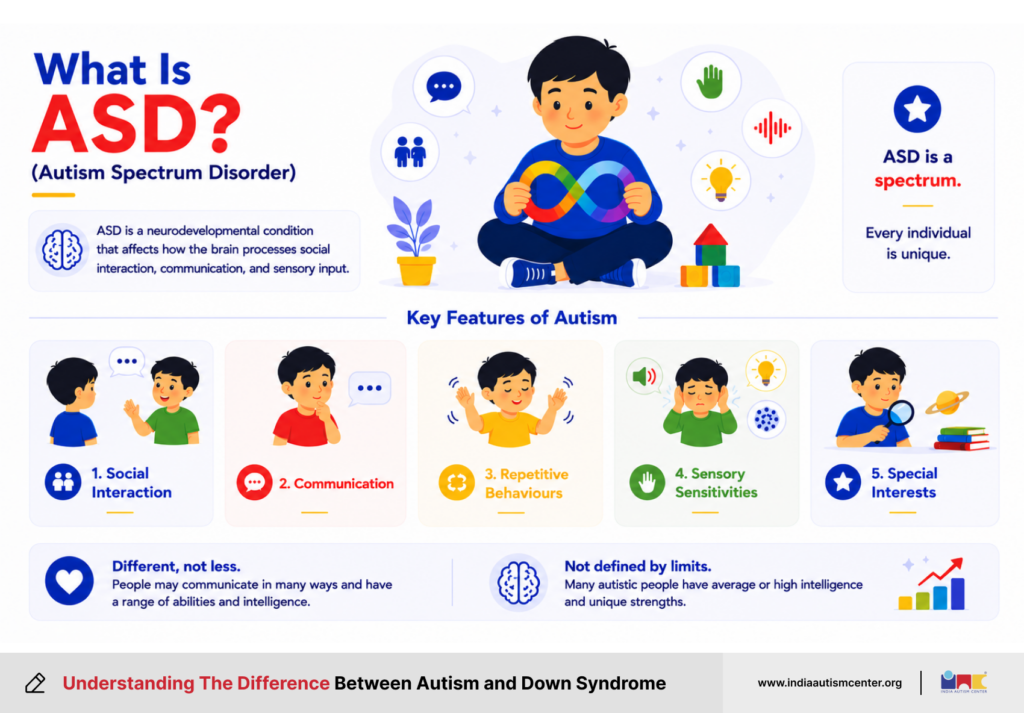
Autism — also called Autism Spectrum Disorder (ASD) — is a neurodevelopmental condition. It affects how the brain processes social interaction, communication, behaviour, and sensory input. You’ll often see ASD described as a “spectrum” because symptoms and their severity vary widely between individuals.
Key features of Autism
- Social Interaction: One of the hallmarks of Autism is difficulty in social interactions. Individuals with Autism may struggle to understand social cues, such as facial expressions or body language. They may have difficulty forming and maintaining relationships, often preferring solitary activities.
- Communication: Communication difficulties are another key aspect. While some individuals with Autism may have limited or delayed speech, others may have advanced language skills but still find it challenging to engage in conversations or understand nuances in communication.
- Repetitive Behaviours: Repetitive behaviours, such as hand-flapping, rocking, or repeating words or phrases (echolalia), are common among those with Autism. These behaviours can serve as a way to self-soothe or manage anxiety.
- Sensory Sensitivities: Many individuals with Autism experience sensory sensitivities, meaning they may be hypersensitive or hyposensitive to sensory stimuli like light, sound, touch, or taste. This can make certain environments overwhelming or uncomfortable.
- Special Interests: Another characteristic of Autism is the presence of intense, focused interests. Individuals may become experts in specific subjects or hobbies, often displaying remarkable talents.
Some autistic people speak fluently; others might use alternative communication methods like gestures or devices. Autism isn’t defined by intellectual ability alone — many autistic people have average or high intelligence. Want to know what causes autism?
What Is Down Syndrome?
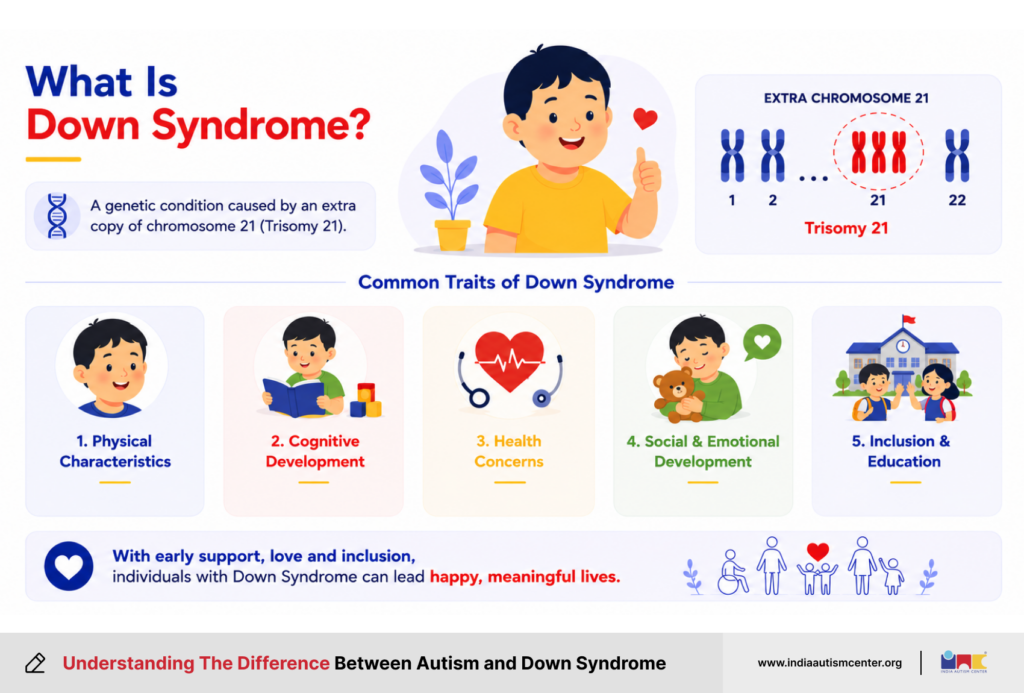
Down Syndrome is a genetic condition caused when a child is born with an extra copy of chromosome 21, also called Trisomy 21. It affects physical growth, cognitive development, and can influence health in other ways.
Common Traits of Down Syndrome
- Physical Characteristics: Individuals with Down Syndrome often have distinctive physical features, such as almond-shaped eyes, a single crease across the palm of their hand, and a flattened facial profile. These features can vary in intensity among individuals.
- Cognitive Development: Down Syndrome is associated with intellectual disabilities of varying degrees. While individuals with Down Syndrome can learn and develop, they often have cognitive challenges that may impact their learning abilities.
- Health Concerns: Individuals with Down Syndrome may have an increased risk of certain health conditions, including heart defects, gastrointestinal problems, and respiratory issues. Regular medical check-ups and early intervention are essential for their well-being.
- Social and Emotional Development: Individuals with Down Syndrome often display warmth and affection in their social interactions. They may experience delays in speech and language development, but can build meaningful relationships with support and encouragement.
- Inclusion and Education: Many individuals with Down Syndrome can thrive in inclusive educational settings with appropriate support. Tailored educational programs can help them reach their full potential.
While people with Down Syndrome may take longer to reach developmental goals, many thrive with early support and inclusive education.
Diagnostic Criteria for Autism and Down Syndrome
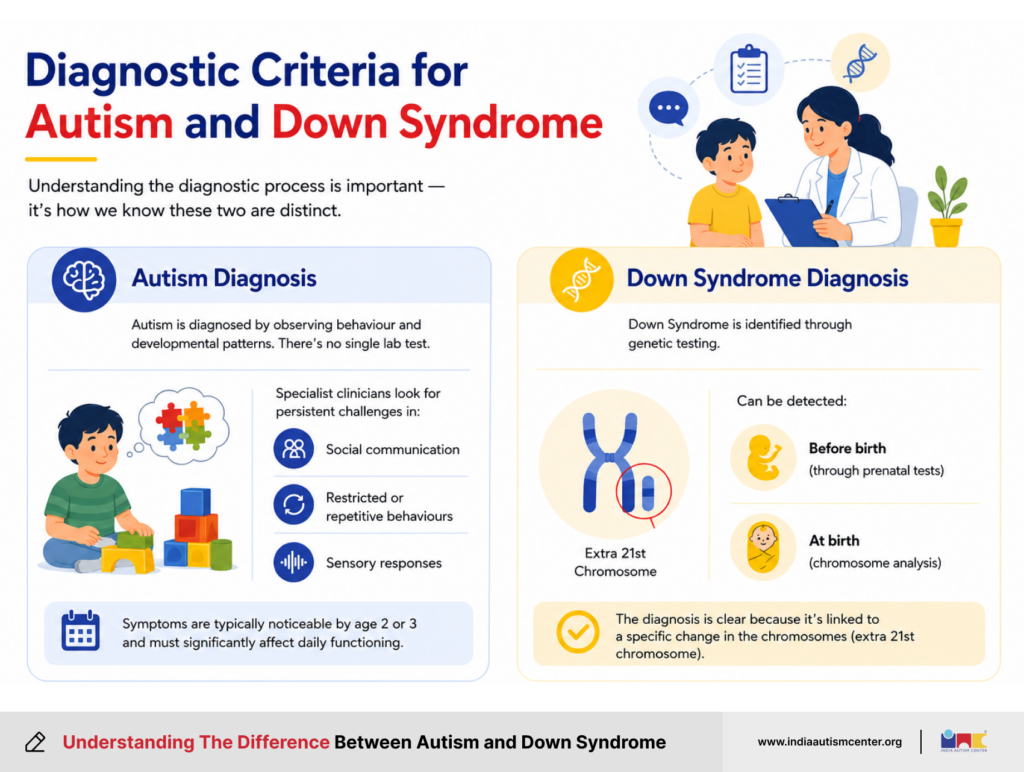
Understanding the diagnostic process is important — it’s how we know these two are distinct
Autism Diagnosis
Autism is diagnosed by observing behaviour and developmental patterns. There’s no single lab test. Specialist clinicians look for persistent challenges in:
- Social communication
- Restricted or repetitive behaviours
- Sensory responses
Symptoms are typically noticeable by age 2 or 3 and must significantly affect daily functioning. If you want deeper insights, you can read our article on autism diagnosis.
Down Syndrome Diagnosis
Down Syndrome is identified through genetic testing. It can be detected:
- Before birth (through prenatal tests)
- At birth (chromosome analysis)
The diagnosis is clear because it’s linked to a specific change in the chromosomes (extra 21st chromosome).
📥 Free download: Printable daily routine chart for autistic children
Down Syndrome vs Autism: Side-by-Side Comparison
Let’s compare these conditions directly to see how they differ and where they can sometimes overlap.
| Aspect | Autism Spectrum Disorder | Down Syndrome |
|---|---|---|
| Cause | Neurodevelopmental differences (complex genetics + environment) | Genetic condition (extra chromosome 21) |
| Diagnosis | Behavioral evaluation | Genetic testing |
| Physical Traits | No specific physical profile | Recognizable physical features |
| Social Interaction | Can be challenging, especially interpreting cues | Often social, warm interactions |
| Communication | Delays or differences common | Typical delay pattern |
| Medical Needs | Sensory, behavioral, and developmental support | Physical health screenings + developmental support |
| Overlap | Some may also have Down Syndrome + ASD | Some individuals with Down syndrome may also meet criteria for ASD |
Want to know more? Get in touch with us.
What Are the Similarities Between Autism and Down Syndrome?
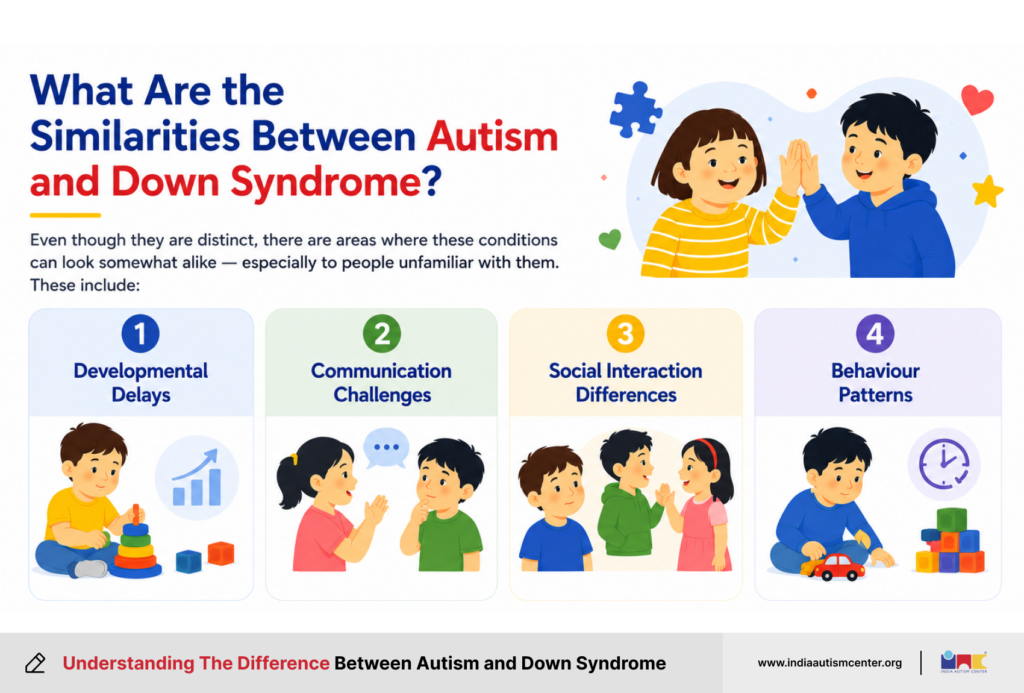
Even though they are distinct, there are areas where these conditions can look somewhat alike — especially to people unfamiliar with them. These include:
1. Developmental Delays
Both groups can show delays in speech, motor skills, or learning milestones. Though the cause differs, the observable developmental patterns may overlap.
2. Communication Challenges
Children with either condition may struggle to express themselves or understand others. Early speech and language therapy benefits many.
3. Social Interaction Differences
Autistic people may find social cues hard to interpret. Some children with Down Syndrome might also struggle in more complex social settings, even if they’re generally friendly.
4. Behaviour Patterns
Both groups can show repetitive behaviours or prefer routine. In autism, this is core to the diagnosis. In Down Syndrome, repetition may arise from comfort and predictability needs.
Can Someone Have Both Autism and Down Syndrome?
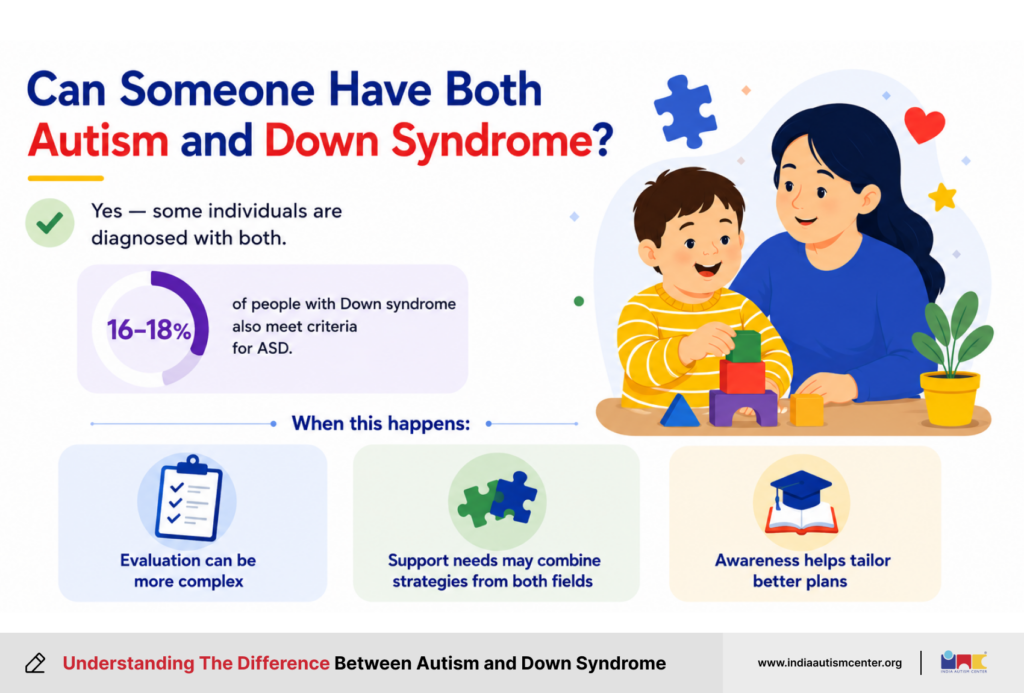
Yes — and this is an important point. Some individuals are diagnosed with both autism and Down syndrome. Studies suggest that around 16–18% of people with Down syndrome also show autistic traits significant enough to meet ASD diagnosis criteria.
When this happens:
- Evaluation can be more complex
- Support needs may combine strategies from both fields
- Awareness helps tailor better educational and therapy plans
Supporting Individuals: What You Can Do
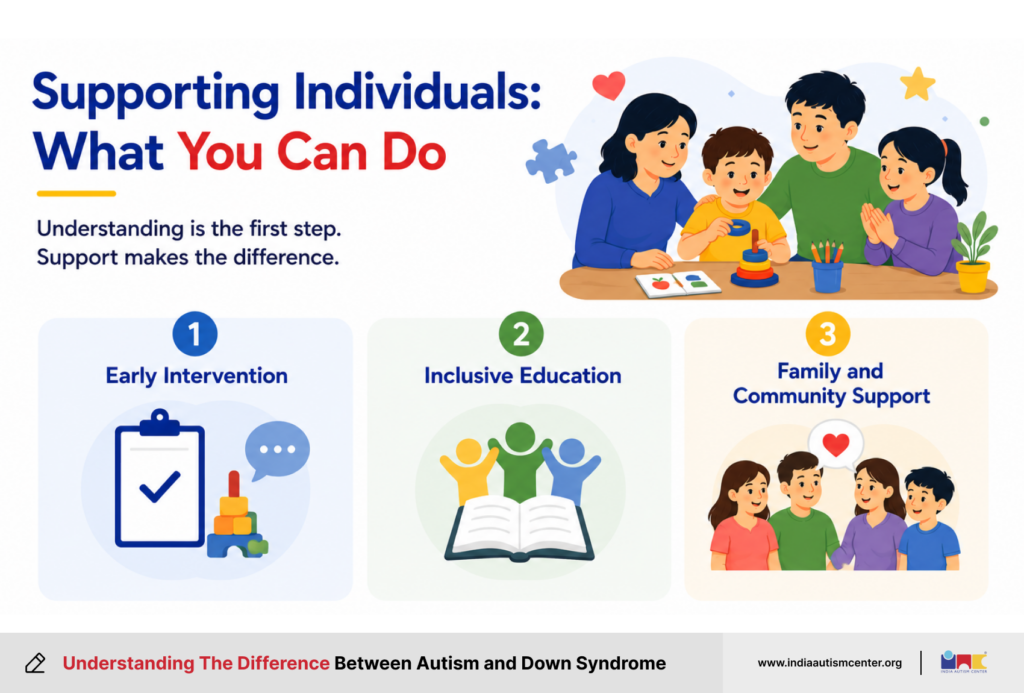
Understanding the difference between autism and Down syndrome is only the first step. What matters most is how we support people with these conditions.
1. Early Intervention
Whether your child has autism, Down syndrome, or both, early support helps immensely. Speech therapy, occupational therapy, and behavioural support can improve outcomes.
2. Inclusive Education
Learning in environments that appreciate diversity fosters confidence and skills.
3. Family and Community Support
Parents, caregivers, and peers benefit from resources, support groups, and patience. Acceptance makes a huge difference in quality of life.
Conclusion
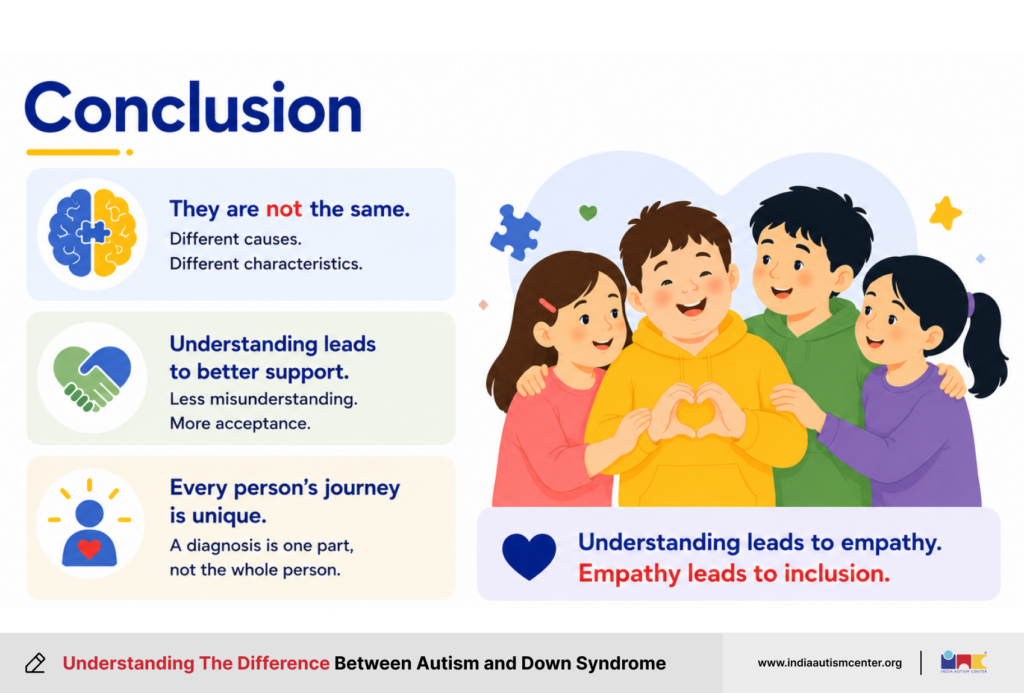
So, are autism and Down syndrome the same? No. They are distinct conditions with different causes and characteristics. Yet, they share some common ground that can sometimes create confusion.
By understanding the difference between Autism and Down Syndrome, you can better support individuals, reduce misunderstanding, and help foster acceptance.
Every person’s journey is unique. A diagnosis like Autism Spectrum Disorder or Down Syndrome doesn’t define someone — it’s just one part of who they are. With the right support, encouragement, and connection, anyone can thrive.
Thank you for reading — and thank you for caring.
Frequently Asked Questions (FAQs)
Are autism and Down syndrome the same?
No, autism and Down syndrome are not the same. Autism is a neurodevelopmental condition affecting communication and behaviour, while Down syndrome is a genetic condition caused by an extra chromosome 21.
What is the main difference between autism and Down syndrome?
The main difference lies in their cause. Autism is diagnosed based on behavioral and developmental patterns, whereas Down syndrome is diagnosed through genetic testing and involves physical and intellectual differences.
Can a child have both autism and Down syndrome?
Yes, a child can have both autism and Down syndrome. Some individuals with Down syndrome may also meet the criteria for Autism Spectrum Disorder, which requires a specialised evaluation.
What are the similarities between autism and Down syndrome?
Both conditions can involve developmental delays, communication challenges, and learning differences. Early intervention and supportive therapies are beneficial for individuals with both conditions.
How can parents support children with autism or Down syndrome?
Parents can support their child through early intervention, therapy, inclusive education, and by creating a nurturing and structured environment tailored to the child’s individual needs.
For expert insights, support services, and inclusive learning initiatives, contact India Autism Center for more information.