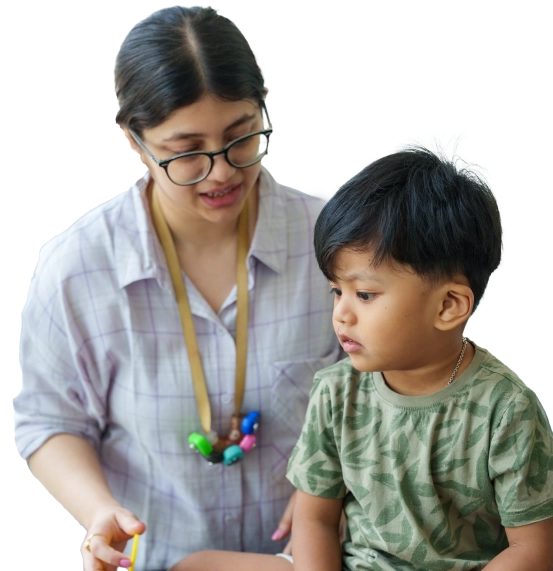
 Donate now
 Get a Call Back
 MENU
MENU 15 MIN READ
 SHARE
SHARE


It starts quietly. Your 14-month-old doesn’t look up when you call his name. He’s content – happy, even – but something feels off. You mention it to your mother-in-law, and she says, “Boys are slow. He’ll talk when he’s ready.” Your neighbour’s son was the same way, and he’s fine now. So you wait.
That wait – well-meaning, culturally familiar, completely understandable – is the single biggest reason early detection of autism in India lags so far behind what’s possible.
This article is for every parent sitting with that quiet, nagging feeling. We’ll walk you through the signs by age, the screening tools your paediatrician should be using, the diagnosis process step by step, and the very real challenges that make all of this harder in India than it should be.
What Is Autism Spectrum Disorder?
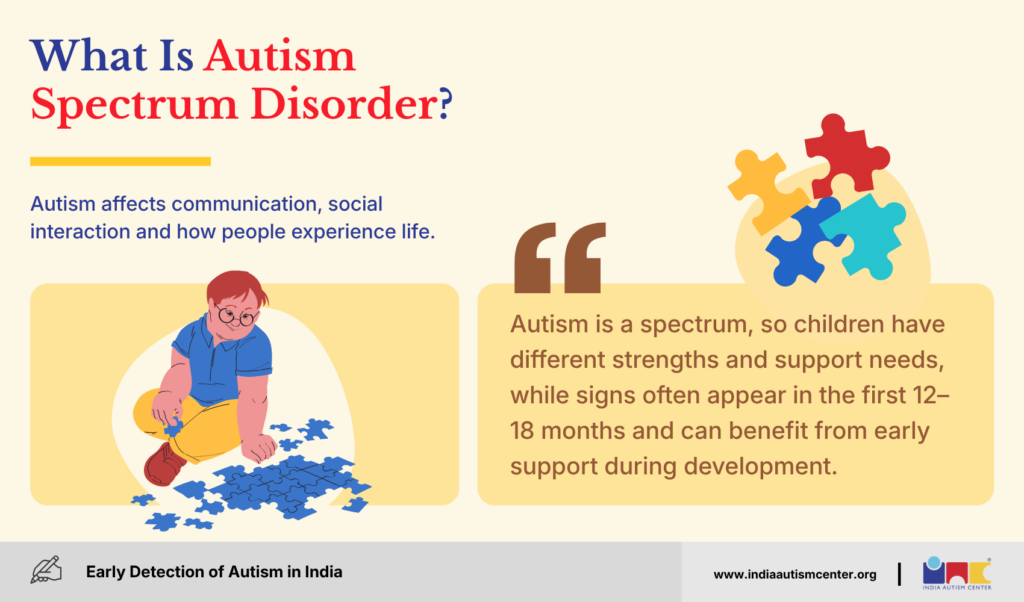
Autism Spectrum Disorder (ASD) is a neurological and developmental condition that affects how a person communicates, relates to others, and experiences the world around them. The word spectrum matters: no two autistic children are alike. Some are highly verbal; others may not speak at all. Some have exceptional memory or focus; others need support with basic daily tasks.
ASD is not caused by bad parenting, vaccines, or diet. Research points to a combination of genetic and environmental factors, though the exact cause remains under study.
What we do know with certainty: autism is present from birth, its signs often appear in the first 12–18 months of life, and the brain is most responsive to intervention in the earliest years. This is not a condition a child “grows out of” – but with the right support started early, the trajectory changes dramatically.
Understanding what autism is sets the stage for understanding why catching it early is so urgent.
Statistics on Autism in India
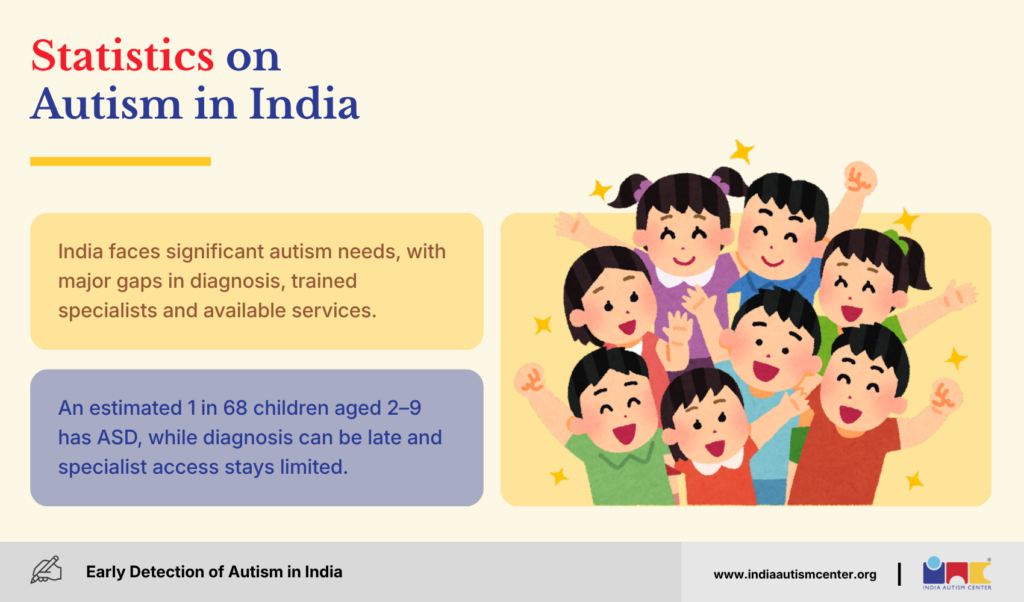
The numbers are significant – and they demand attention.
- 1 in 68 children in India aged 2–9 years is estimated to have ASD, according to data cited in Indian Pediatrics.
- Boys are three times more likely to be diagnosed than girls, with a male-to-female ratio of approximately 3:1.
- Despite these numbers, the average age of diagnosis in India remains well above 3–4 years – and in rural areas, it is often much later.
- India has an estimated 10 million+ individuals on the autism spectrum, yet the number of trained specialists, therapy centres, and diagnostic services remains critically inadequate.
- Most standardised assessment tools used in India are available only in English, creating an immediate barrier for the majority of the country’s population.
These aren’t just statistics. Each number represents a child who may have spent years without the support their developing brain needed most.
Knowing the scale of the problem makes the case for early action impossible to ignore.
📥 Free download: Printable daily routine chart for autistic children
The Importance of Early Detection in Autism
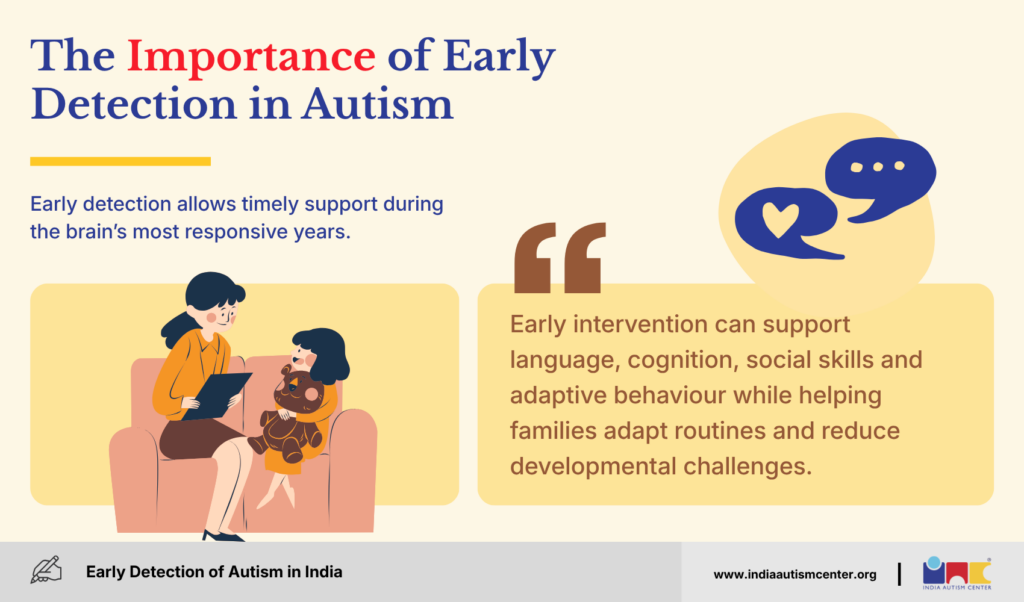
Here’s the most important thing this article can tell you: the earlier intervention begins, the better the outcomes – full stop.
The reason is biology. In the first three years of life, the human brain undergoes its most rapid period of growth and reorganisation. Neuroscientists call this experience-dependent plasticity – the brain’s extraordinary ability to form new connections in response to stimulation and learning. Interventions begun during this window, particularly between 18 and 36 months, are consistently associated with greater gains in language, cognition, social skills, and adaptive behaviour than those started later.
A 2024 review published in PMC found that programs begun before age 3 are linked to better outcomes in IQ, language development, and social communication compared to interventions that start after age 5. The gains aren’t uniform – autism is a spectrum – but the direction of the evidence is clear.
What early detection makes possible:
- Tailored early intervention – speech therapy, occupational therapy, ABA, and developmental programmes can begin during the brain’s most responsive period.
- Parental education – families who understand their child’s needs early can adapt their home environment, communication style, and daily routines in ways that support development every single day.
- Prevention of secondary challenges – anxiety, frustration, and behavioural difficulties often escalate when a child’s needs go unrecognised. Early diagnosis reduces this burden significantly.
- School readiness – children who receive early support are far better prepared for structured learning environments.
In India, many children are not diagnosed until they enter school at age 5 or 6. By then, years of the brain’s most plastic period have passed. Early detection of autism in India isn’t just a medical goal – it’s a developmental emergency.
Concerned about your child’s development? Speak with our specialists at IAC.
Early Signs of Autism in Infants (0–12 Months)
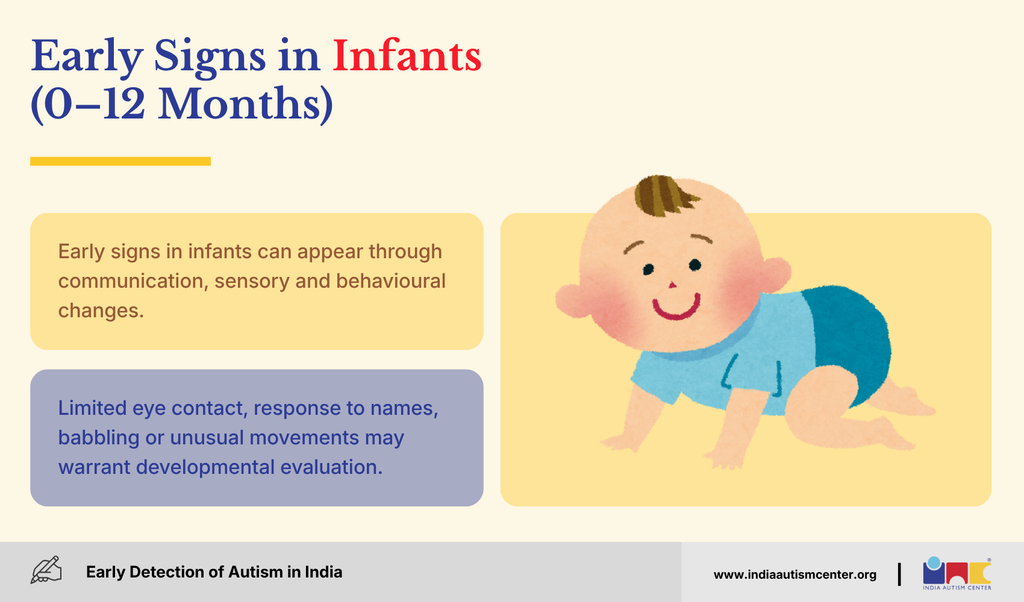
Many parents assume autism can’t be spotted in a baby. It can. These are the signs that specialists look for in the first year of life:
- No social smile by 6 weeks – most babies begin smiling in response to a face or voice; an absence of this is worth noting.
- Limited or no eye contact – an infant who consistently avoids your gaze, rather than seeking it, is showing an early red flag.
- No response to their name by 6–9 months – typically developing babies begin turning toward their name well before their first birthday.
- No babbling by 12 months – cooing, gurgling, and consonant sounds are communication milestones; silence at 12 months is a signal.
- No reaching, pointing, or waving – these gestures are how babies begin to share their world with you; their absence matters.
- Does not reach out to be picked up – most infants anticipate being lifted and reach toward the caregiver; autistic infants may not.
- Unusual body movements – repetitive rocking, hand-flapping, or stiffening of the body.
- Doesn’t seek comfort when hurt, tired, or distressed – or is unusually difficult to soothe.
- Intense dislike of routine changes – even small disruptions to feeding or sleep patterns cause disproportionate distress.
One sign alone is rarely enough. But if you’re seeing several of these consistently, trust that instinct and speak to a developmental paediatrician.
Early Signs of Autism in Toddlers (12–36 Months)
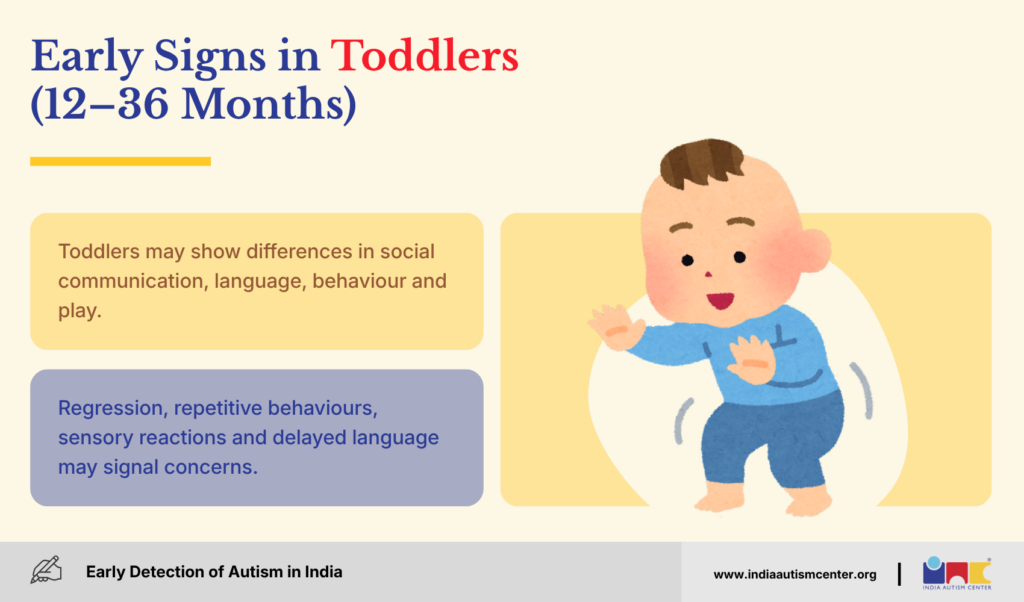
This is the age range where signs become more visible – and where the M-CHAT-R/F screening tool is specifically designed to help. Watch for:
Social communication:
- Does not respond to name being called, even when not distracted
- Avoids eye contact or looks through people rather than at them
- Does not point to show you something interesting (called proto-declarative pointing)
- Does not wave goodbye or imitate simple gestures
- Prefers to be alone; does not seek out parents for play or comfort
- Fails to greet familiar people or take turns in simple games
Language:
- No single words by 16 months
- No two-word phrases by 24 months (e.g., “more milk,” “go car”)
- Echolalia – repeating words or phrases heard on TV or from others, without using them meaningfully
- Unusual tone of voice – sing-song, robotic, or squeaky
- Loss of previously acquired words (regression is a major red flag)
Behaviour and play:
- Lines up toys or objects obsessively rather than playing with them
- Spins wheels, fans, or other objects repeatedly
- Intense distress over minor changes – a different route home, a different cup
- Unusual attachment to specific objects (not typical soft toys, but unusual items)
- Difficulty with toilet training beyond the typical age range
- Extreme sensory reactions – covering ears at normal sounds, refusing certain textures of food or clothing
Want to know more? Get in touch with us.
Signs in Children Aged 3 and Above
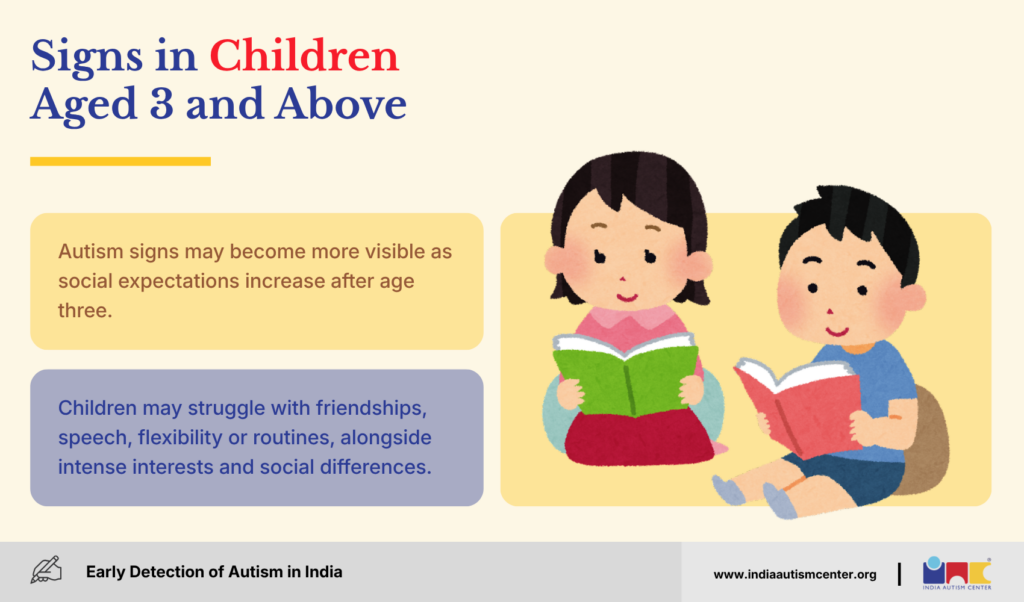
By age 3, the social demands on a child increase sharply – and so does the visibility of autism. Signs at this stage include:
Social interaction:
- Treats other children or adults as objects rather than people
- Does not understand turn-taking, sharing, or basic social conventions
- No interest in making friends; may not notice when other children approach
- Lacks empathy or has unusual emotional responses – laughing at pain, no reaction to distress
Communication:
- Little expressive language, or speech that is not used meaningfully
- Improper use of pronouns (says “you want water” instead of “I want water”)
- Frequently makes irrelevant or repetitive remarks
- Great difficulty with abstract language, jokes, or metaphor
Restricted interests and routines:
- Preoccupied with one or two narrow topics to an extreme degree
- Rigid adherence to routines – any deviation causes significant distress
- Fascinated with spinning objects, fans, or lights
- Exceptional rote memory (can recite long lists, dialogues, or facts) alongside difficulty with flexible thinking
If your child is 3 or older and you’re recognising several of these signs, it is not too late. Early intervention at any age helps – but the urgency to act remains real.
What Age Should You Get Your Child Tested for Autism?
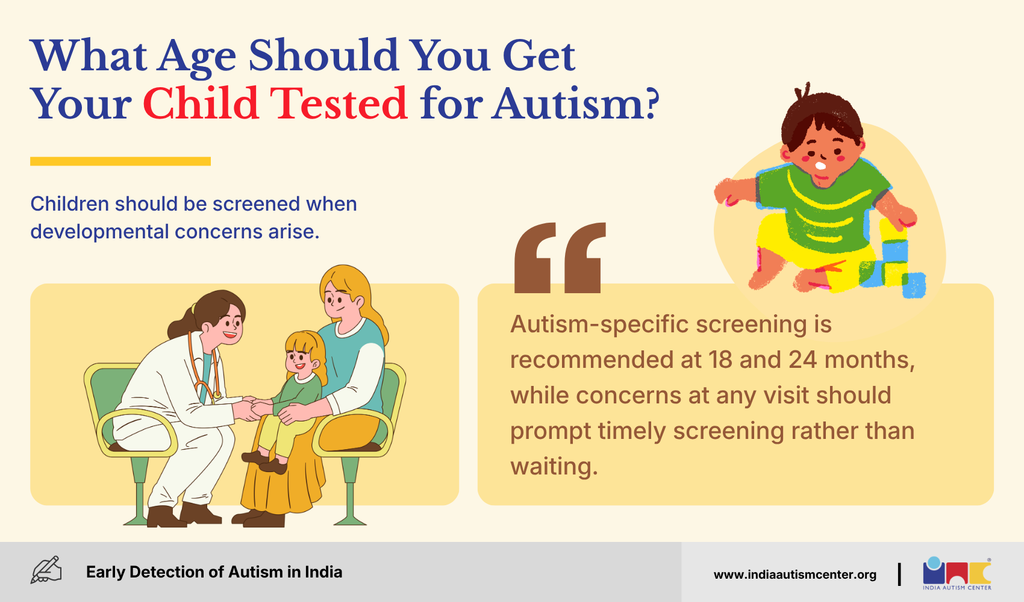
The short answer: as soon as you have concerns. There is no age too young to raise a worry with your paediatrician.
The formal guidance is clear:
- 18 months: Autism-specific screening (M-CHAT-R/F) is recommended at the 18-month well-child visit. This is the earliest point at which the tool is validated and reliable.
- 24 months: A second round of autism-specific screening is recommended at the 24-month visit, even if the 18-month screen was negative. Many children who are missed at 18 months are identified at 24.
- Any time: If a parent or caregiver raises a concern at any visit, screening should happen immediately – not at the next scheduled check-up.
What happens if you wait?
The brain’s plasticity – its ability to form new pathways in response to intervention – is highest in the first three years and declines gradually after that. This doesn’t mean intervention after age 3 doesn’t help; it absolutely does. But the intensity of gains is consistently greater when therapy begins earlier.
Children diagnosed after age 5 often enter school without the communication and social tools they need, leading to academic struggles, social isolation, and in many cases, anxiety and depression that compound the original challenges.
If your child is 2 years old and you’re worried, today is the right time to call your paediatrician.
Challenges in Early Autism Diagnosis
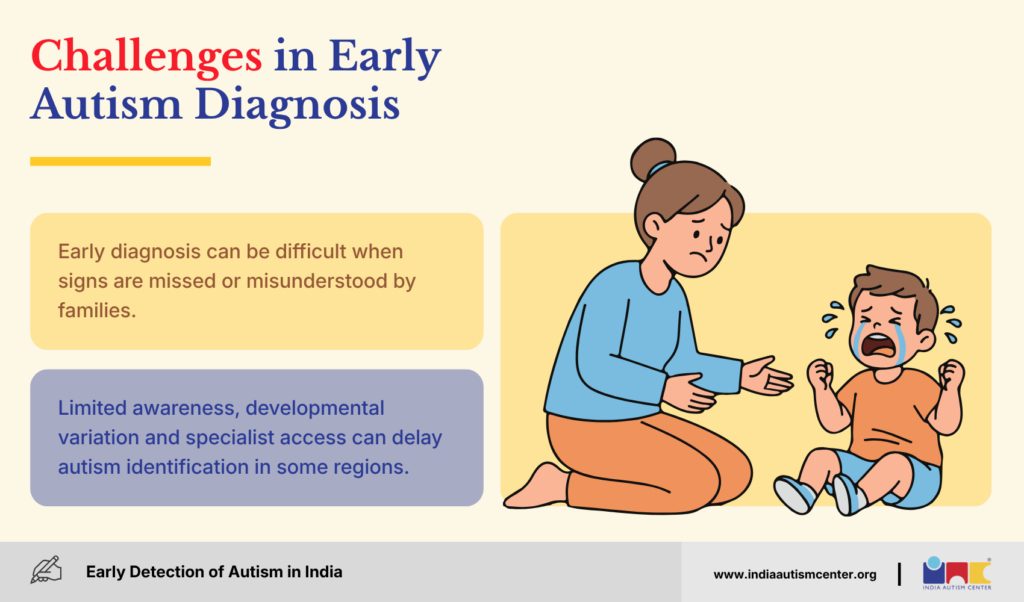
Despite the importance of early detection, there are several challenges in identifying Autism in infants and toddlers:
- Lack of Awareness: Many parents and caregivers may not be aware of the early signs of Autism, leading to delays in seeking a professional evaluation. In some cases, parents might adopt the deferred approach, wherein they refuse to accept that their child might have ASD. This further complicates the situation and might aggravate the ASD symptoms in the child.
- Normal Variability: In early childhood, there is a wide range of development in social, communication, and behaviour skills. Distinguishing typical variations from potential autism symptoms can be tricky.
- Limited Access to Resources: In some regions of India, access to specialised healthcare professionals and diagnostic services is limited, hindering early diagnosis efforts for ASD.
Want to know more? Get in touch with us.
Red Flags Indian Parents Often Dismiss
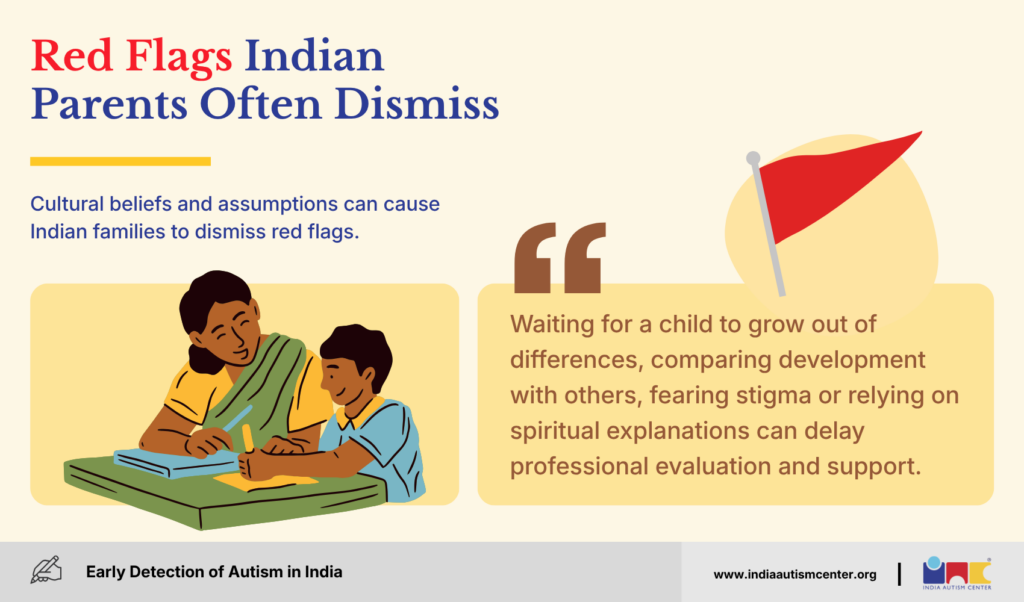
This section is perhaps the most important one in this entire article. Because in India, the barriers to early detection aren’t just medical – they’re cultural, social, and deeply human.
“He’ll grow out of it.” This is the most common phrase that delays diagnosis by months or years. Developmental differences don’t resolve on their own. Waiting costs the child time they cannot get back.
“His cousin was also a late talker.” Comparing your child to cousins, neighbours, or siblings is natural – but it’s not a diagnostic tool. Every child develops differently, and a family history of late talking doesn’t rule out autism; in some cases, it increases the likelihood.
“He’s just shy/stubborn/naughty.” Autistic children who struggle with social interaction are often labelled as shy or antisocial. Children who have meltdowns over routine changes are called stubborn or spoiled. These labels delay the real conversation.
“What will people say?” The stigma around developmental disorders in India is real and heavy. Many families fear that a diagnosis will affect marriage prospects, school admissions, or their social standing. Some parents avoid evaluation entirely to avoid a label. But a diagnosis is not a life sentence – it’s a map. It tells you where your child is and how to help them get where they need to go.
“He’s a boy – boys develop slower.” There is a kernel of truth here: boys are diagnosed with autism more often than girls. But “boys are slow” is not a developmental principle. It’s a cultural assumption that has caused countless Indian boys to lose critical intervention years.
Religious or spiritual explanations. In some communities, developmental differences are attributed to karma, a divine test, or the evil eye. Seeking spiritual remedies instead of – or before – medical evaluation is a pattern that delays diagnosis significantly.
Recognising these patterns in yourself or your family is not a cause for shame. It’s the first step toward getting your child the support they deserve.
Managing Other Medical and Mental Health Conditions in Autism
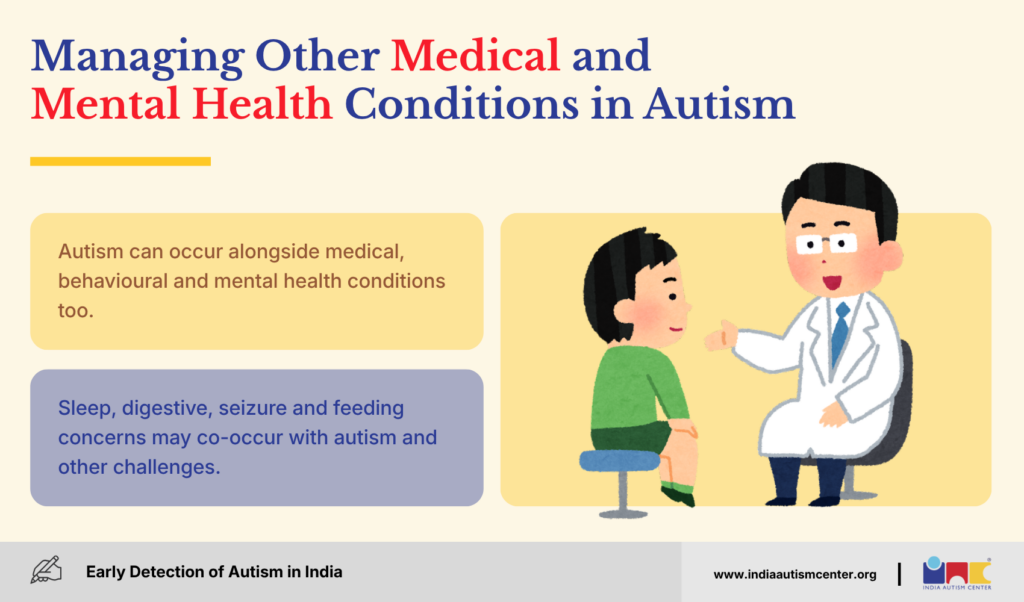
Along with ASD, many children, teenagers, and adults may experience additional medical and mental health conditions. This is why early detection of autism is important—it helps families and doctors identify related challenges early and manage them in a better, more coordinated way. With timely diagnosis of Autism Spectrum Disorder, individuals can receive the right care for both autism and co-occurring conditions.
Medical Health Conditions
Children with ASD may also have health issues such as epilepsy, sleep problems, digestive concerns, or very limited food choices. Early medical guidance helps families understand how to manage these conditions together and improve overall well-being. This is especially relevant to early detection of autism in India, where early medical support can prevent long-term complications.
Challenges During Transition to Adulthood
Teenagers and young adults with autism may find physical changes and growing social expectations difficult to understand. Social situations become more complex during adolescence, and differences may not always be accepted. Early support can help build life skills, emotional understanding, and confidence during this phase.
Other Mental Health Conditions
Many teens and adults with ASD may also experience anxiety, depression, ADHD, or substance misuse. Early identification allows mental health professionals to create personalised support plans. This highlights again why early detection of autism is important, as it helps reduce emotional stress later in life.
Behavioural Health Concerns
Some individuals with autism may show behaviours such as irritability, aggression, hyperactivity, sudden outbursts, or self-harm. These behaviours are often signs of pain, frustration, or difficulty communicating needs. Working closely with healthcare and mental health professionals helps identify the cause and manage these behaviours in a safe and supportive way.
How Can India Autism Center Help?
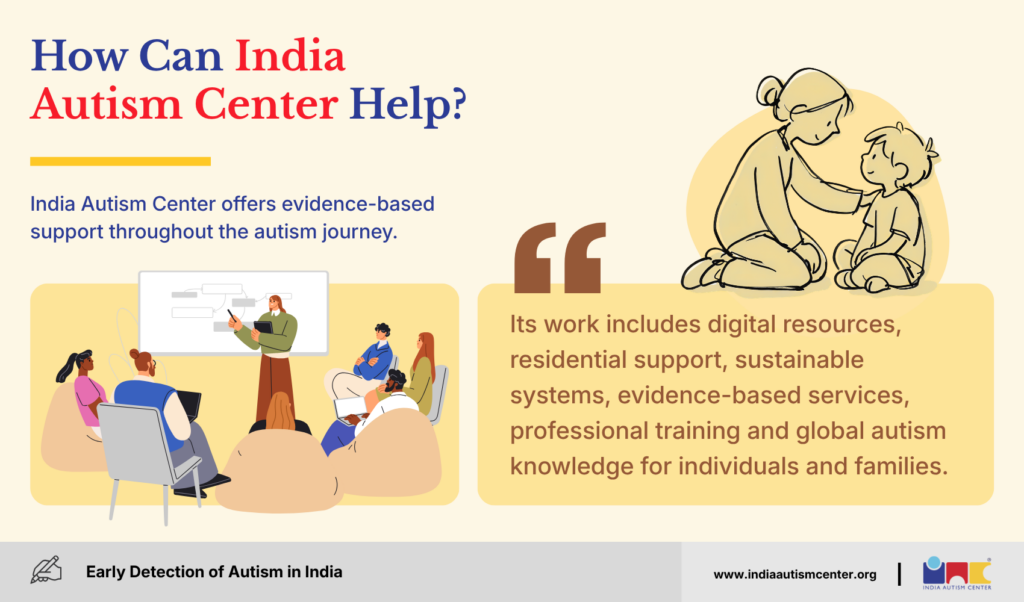
The team at India Autism Center is committed to extending holistic support to autistic individuals and other spectrum disorders by
- Building a digital platform, a one-stop solution for the entire neurodiverse community.
- Offering a personalised and responsive residential center that facilitates lifelong support to autistic individuals and their families.
- Building a sensitive and sustainable ecosystem that promotes quality of life.
- Extending evidence-based support mechanisms for Autistic individuals.
- Contributing towards the global knowledge base on Autism and related neurodiverse disorders.
- Creating a global pool of top-notch professionals equipped with the requisite training to help autistic individuals realise their ultimate potential.
📥 Free download: Printable daily routine chart for autistic children
Conclusion
Early detection and diagnosis of Autism in infants and toddlers are crucial for providing timely interventions and support. As awareness about the early symptoms of Autism grows, more children can receive the assistance they need for improved developmental outcomes. Addressing the challenges in early detection, such as increasing awareness, improving access to diagnostic services, and supporting parents and caregivers, can significantly impact the lives of autistic children and their families across India. Let us work together to build a more inclusive and supportive environment for autistic individuals in the country.
Also read our blog on Coping with an Autism Diagnosis, a comprehensive guide.
Watch: Our clinical team explains what to look for in your child’s first 18 months.
Frequently Asked Questions
1. What is Early Detection of Autism in India, and why does it matter?
Early Detection of Autism in India refers to identifying signs of autism in infants and toddlers as early as possible. Early recognition is crucial because it allows for timely intervention and support, which can significantly improve communication, social development, and long-term outcomes for children with Autism Spectrum Disorder.
2. Why is early detection of autism important for children’s development?
Early detection helps families and healthcare providers start therapies during a child’s most responsive developmental stage. Early diagnosis and intervention can support brain plasticity and encourage better progress in language, behaviour, and social skills.
3. How is the diagnosis of Autism Spectrum Disorder done in India?
The diagnosis of Autism Spectrum Disorder in India typically involves careful observation of developmental milestones, screening for behavioural and communication differences, and assessment by trained specialists. Early professional evaluation helps confirm the condition and plan appropriate support.
4. What are the common early signs that may lead to early detection of autism in India?
Some early signs that support early detection of autism in India include limited eye contact, delayed speech, not responding to their name, lack of gestures like pointing or waving, and repetitive behaviours in infants. These signs can help parents seek evaluation sooner.
5. What challenges affect the diagnosis of Autism Spectrum Disorder in India?
Challenges to the diagnosis of Autism Spectrum Disorder in India include limited awareness of early signs among parents, misconceptions about developmental delays, and restricted access to trained professionals and diagnostic services in many regions.
6. How can early detection improve long-term outcomes after an autism diagnosis?
After an early diagnosis, interventions can be started right away, helping children build communication, social, and adaptive skills sooner. This leads to better learning, stronger relationships, and improved quality of life as they grow.
For expert insights, support services, and inclusive learning initiatives, contact India Autism Center for more information.