 Donate now
 Get a Call Back
 MENU
MENU 21 MIN READ
 SHARE
SHARE


Imagine giving your child the right support before challenges begin to build. That’s the power of early intervention for autism spectrum disorder (ASD).
In this guide, you’ll learn why early intervention for autism isn’t just beneficial, but essential.
We’ll also walk you through how to recognize early signs, what early autism intervention actually involves, and the steps you can take to improve long-term outcomes.
So, let’s begin.
What Is Early Intervention For Autism?
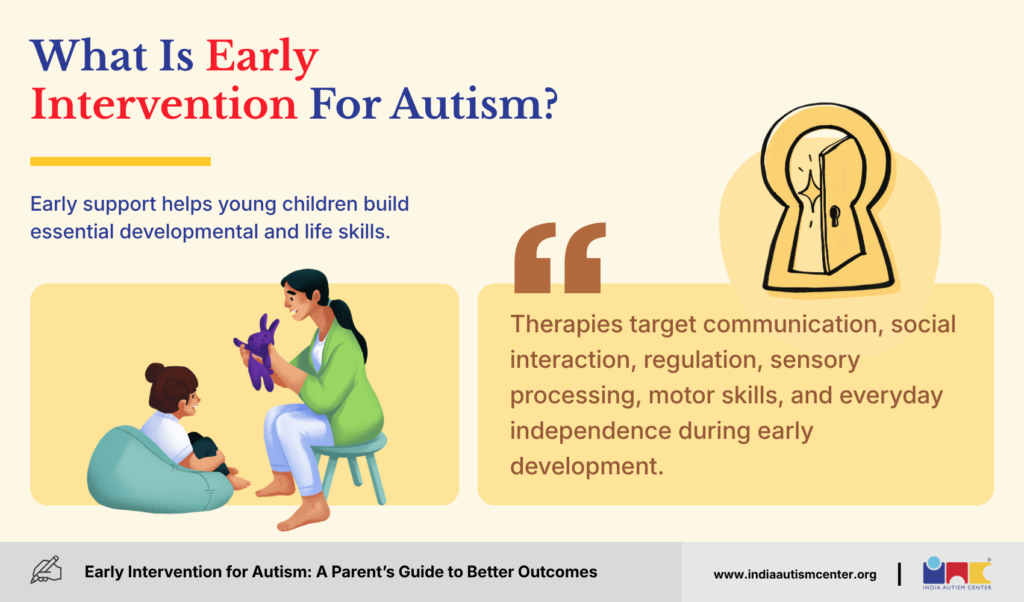
Early intervention for autism spectrum disorder means providing targeted therapies and support to young children, ideally before they turn 3 years old. In many cases, it starts as early as 18 months.
At this age, the brain develops rapidly. It remains highly plastic and especially receptive to learning, change, and growth.
Early autism intervention during this window reduces developmental delays, strengthens key life skills, and improves long-term outcomes.
It typically addresses areas such as:
- Communication and speech
- Social interaction and play
- Emotional regulation
- Sensory integration
- Gross motor skills (like walking, running, jumping)
- Fine motor tasks (like feeding, writing, buttoning)
- Daily self-care routines and more
So, early intervention is highly effective in shaping a child’s developmental trajectory. As Raksheet Jain, Co-Founder of Aignosis, shared on the IAC podcast,

There is a 17-point IQ increase that just happens because of early intervention. 37% of these kids will no longer meet the criteria for autism at age three, when they start school. 75% will attend mainstream schools.
This raises the question.
When Should You Consider Early Intervention?
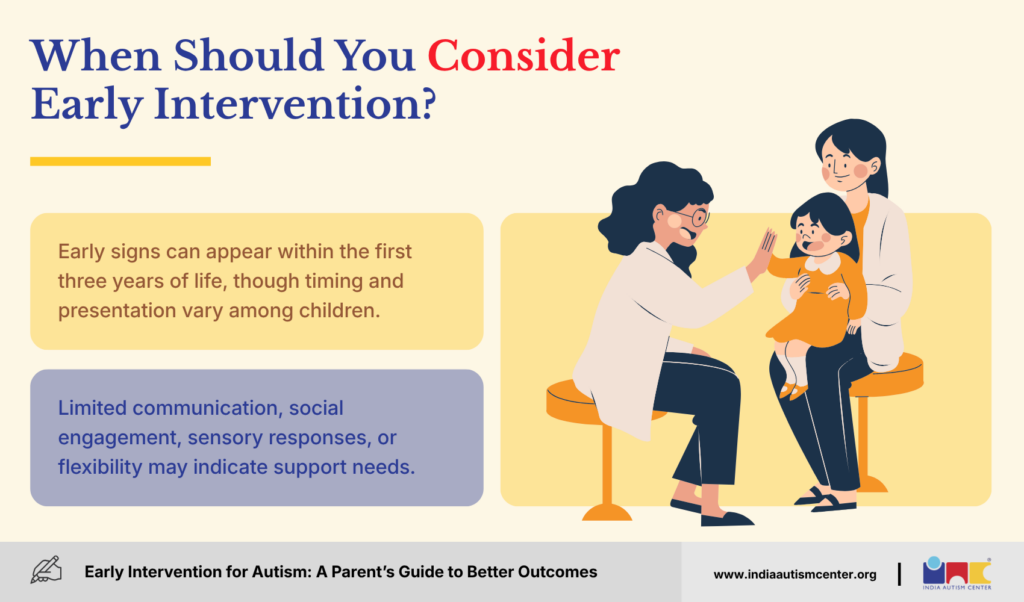
Recognizing early signs of autism is often the first step toward timely support.
These are the signs that often appear in the first three years. And spotting them opens the door to early support.
The most common signs include:
- No babbling, waving, or pointing by 12 months
- Not responding to their name despite normal hearing
- Minimal eye contact or shared expressions
- Few or no spoken words by 16–18 months
- Limited interest in social play or imitation
- Strong, unusual reactions to sensory input (noise, light, textures)
- Repetitive movements like hand-flapping or spinning
- Rigid routines or distress over small changes
Understanding these early signs is only part of the journey. The next and most impactful step is knowing why early intervention is important for autism.
Benefits of Early Intervention In Autism
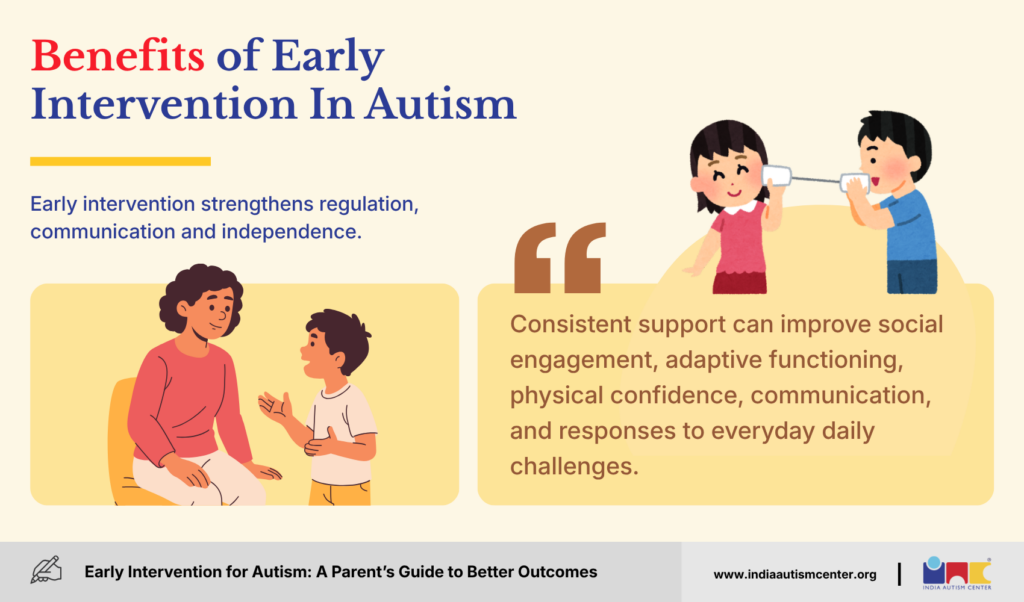
Without early intervention, progress often slows.
But with it? The difference can be dramatic.
So, how does early intervention help autism? Let’s find out.
Improved Expressive and Receptive Communication
Early intervention for autism spectrum disorder is just about helping children talk. It nurtures both expressive and receptive communication.
This helps children move from single words or gestures to full thoughts, shared intent, and emotional clarity.
With consistent therapy and parent-guided strategies, children begin to connect language with interaction.
Enhanced Social Interaction and Reciprocal Engagement
Through guided play, modeling, and structured therapy, children learn to:
- Read facial expressions and social cues
- Engage in back-and-forth interactions
- Build confidence in peer relationships
Over time, they gain the confidence to initiate and sustain peer relationships. This lays the groundwork for meaningful connections.
Better Emotional Regulation and Behavioral Adaptation
Meltdowns. Sensory overload. Sudden shutdowns. These can escalate quickly.
Autism early intervention teaches children how to self-regulate using:
- Calming routines
- Sensory tools
- Structured transitions
This support reduces emotional outbursts and helps children respond more adaptively to daily challenges.
Accelerated Development of Fine and Gross Motor Skills
From climbing stairs to holding utensils, early intervention in autism improves both:
- Gross motor skills (balance, coordination, strength)
- Fine motor skills (grasping, writing, buttoning)
Targeted therapies during this window help children gain physical confidence and independence.
Increased Adaptive Skills and Functional Independence
Feeding. Dressing. Toileting. Brushing teeth. Tasks that once felt impossible become manageable.
That’s the real power of early autism intervention. It nurtures adaptive functioning, empowering children toward self-reliance and reducing dependence on others in daily life.
Now that we’ve seen how outcomes improve with early support, let’s explore the proven strategies that make it happen.
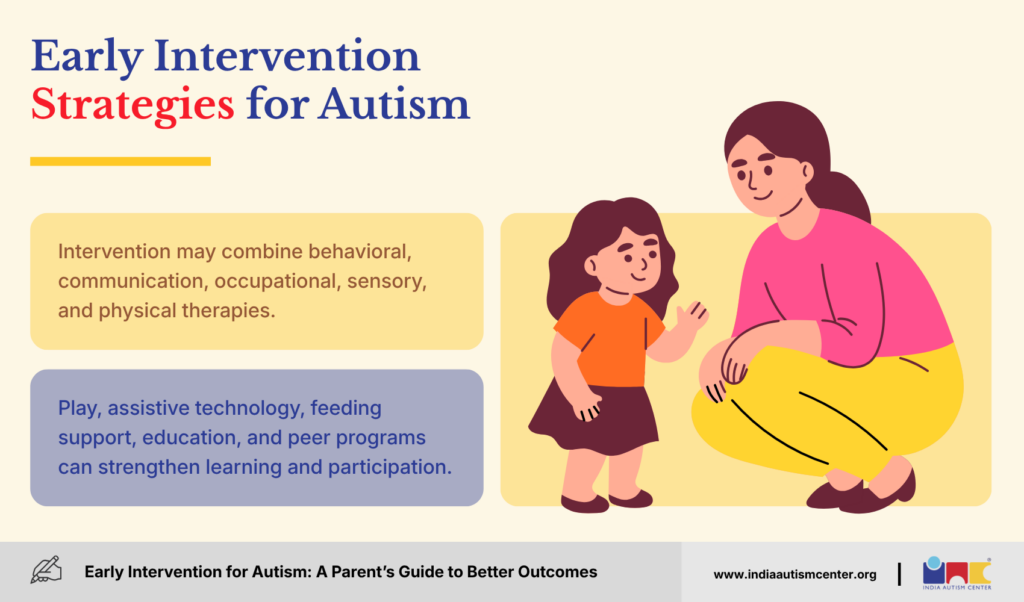
Early Intervention Strategies for Autism
So, where do you begin?
Your first stop should be a developmental pediatrician, clinical psychologist, or rehabilitation psychologist. Ask them to conduct a developmental screening of your child.
If screening raises concerns, early autism intervention can and should begin right away.
Here are a few strategies that can make a lasting difference:
Strategy 1: Build Positive Habits Early with Behavioral Therapy
Applied Behavior Analysis (ABA) is often among the first therapies introduced. It focuses on reinforcing positive behaviors through structured steps like rewards, routines, and repetition.
With ABA, children learn to:
- Ask for help
- Follow simple instructions
- Stay regulated in overstimulating environments
Strategy 2: Boost Connection Through Social Skills Therapy
Did you know that turn-taking, eye contact, and group play can all be taught?
Yes, social skills therapy teaches exactly these core relationship-building tools through guided play sessions and one-on-one modeling.
As Shaireen Ali, Head of Clinical Services at India Autism Center, puts it,
The child doesn’t exist in isolation. Our interventions must reflect the social world they are growing into.
Strategy 3: Support Self-Expression with Communication Therapy
Whether your child is verbal, nonverbal, or still finding their voice, speech, and language therapy plays a key role.
Supports may include:
- Verbal prompting
- Picture Exchange Communication System (PECS)
- Augmentative and Alternative Communication (AAC) devices
The goal? Help the child express needs, emotions, and ideas on their own terms.
Strategy 4: Build Independence with Occupational and Sensory Therapy
Let’s talk about daily life. Eating, dressing, drawing, and holding a spoon.
In many autistic children, these skills need to be gently built, often from the ground up. That’s where occupational therapy (OT) comes in.
It helps build:
- Fine motor skills
- Body awareness and trunk control
- Sensory regulation
- Self-care routines
As Dr. R. S. Bagga, a renowned Occupational Therapist, shared on the IAC podcast,
If a sensory impulse reaches the brain, the brain must be able to process it. That’s where early OT makes a difference.
Strategy 5: Strengthen Coordination with Physiotherapy
Struggling with balance, walking, or climbing stairs?
Physiotherapy can work like a charm. It helps children improve:
- Balance and coordination
- Muscle strength and tone
- Gross motor skills
Strategy 6: Use Assistive Technology to Bridge Gaps in Learning
Assistive technology can be life-changing.
Speech tablets, visual timers, picture schedules. These aren’t shortcuts. They’re bridges.
The right tool, introduced at the right age, can help your child understand the world and be understood in return.
Strategy 7: Reduce Mealtime Stress with Feeding and Nutrition Therapy
Many autistic children struggle with textures, chewing, or swallowing.
This is where feeding and nutrition therapy help. It can:
- Reduce stress at meals
- Improve oral-motor coordination
- Encourage balanced nutrition for better focus and energy
Strategy 8: Encourage Learning Naturally with Play-Based Therapy
Play is not a break from learning. It is learning, especially for young children.
Through pouring rice into cups, pretending to run a tea stall, or simply following a child’s lead in a silly game, play becomes the gateway to communication and emotional connection.
As Puja Dutta, Clinical Psychologist at India Autism Center, says,
Play is the very essence of development… It’s instinctive. It opens us up. And it’s no different for children on the spectrum.
That’s why play-based therapy works. It doesn’t force a child to fit into a plan. It meets them where they are.
Strategy 9: Prepare for School with Early Special Education Services
Preschools with special education services facilitate early intervention for autism.
Some preschools offer:
- Visual supports and structured lessons
- Individualized learning plans (IEPs)
- Flexible pacing
As Shaireen notes,
Most mainstream schools in India are still not equipped for neurodivergent learners. The need of the hour is adaptive learning spaces. And when that isn’t possible, well-supported homeschooling models.
Strategy 10: Foster Teamwork with Peer-Based Community Programs
Children don’t learn in isolation. Peer interaction teaches:
- Sharing
- Teamwork
- Problem-solving
Whether it’s a playgroup or community event, early exposure builds social confidence that carries into the school years.
Now that you know how each strategy supports early development, let’s discuss the role parents play in making early intervention for autism truly effective.
What the Research Says: Evidence Behind Early Intervention
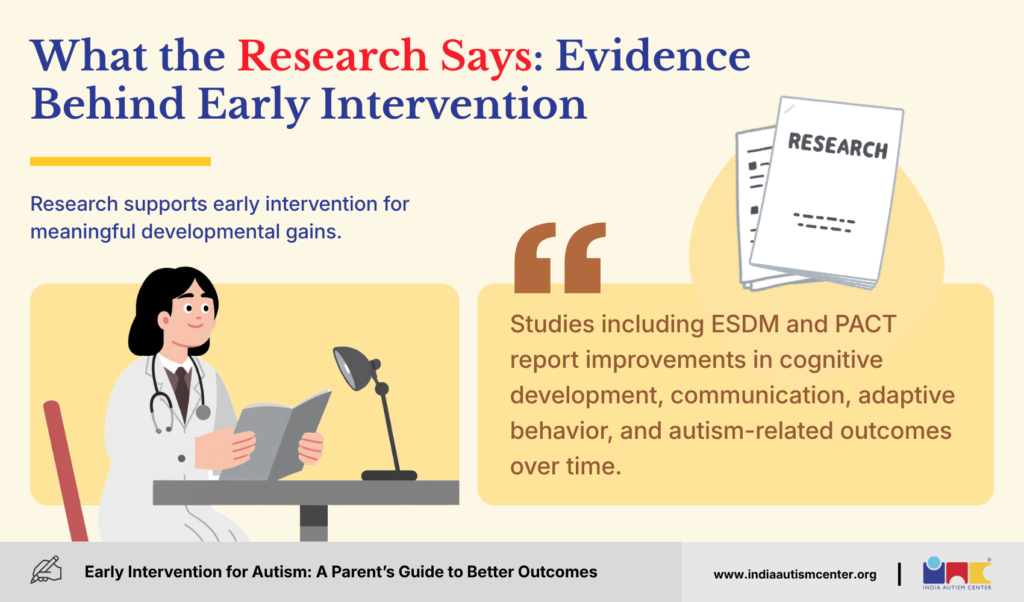
The benefits of early intervention for autism aren’t just anecdotal. They are backed by decades of rigorous, peer-reviewed research. Here’s what the most important studies actually found – in plain language.
The Early Start Denver Model (ESDM)
The landmark study by Dawson et al. (2010), published in Pediatrics, is the most cited randomized controlled trial on early autism intervention. Toddlers aged 18–30 months received ESDM therapy for 20 hours per week over two years. The model combines play-based learning with structured ABA principles and, critically, trains parents to deliver the approach at home.
The results were striking. Children in the ESDM group improved by an average of 17.6 IQ points on cognitive ability measures – compared to just 7.0 points in the control group receiving standard community treatment. That’s more than double the cognitive gain, from the same two-year window.
Beyond IQ, the ESDM group showed significantly better adaptive behavior, language development, and reduced autism symptom severity. Notably, this was the first randomized controlled trial to demonstrate measurable developmental benefits for toddlers with ASD. The play-based, parent-training model is now considered a gold-standard approach worldwide.
The Preschool Autism Communication Trial (PACT)
The PACT study (Green et al., 2010; Pickles et al., 2016) tested a parent-mediated social communication therapy with preschool-aged autistic children. The intervention trained parents to respond more synchronously to their child’s communication cues – essentially, to follow the child’s lead and build on it.
The immediate results showed clear improvements in parent-child social communication and increased child communication initiations. More compelling was the six-year follow-up: children in the PACT group showed significantly less severe autism symptoms and better social communication compared to the treatment-as-usual group. The gains held. That’s the kind of long-term evidence that matters for families making decisions today.
Global Prevalence: Why This Urgency Is Justified
The CDC’s 2025 ADDM Network report found that 1 in 31 children in the United States is diagnosed with ASD – the highest prevalence ever recorded. While India does not yet have an equivalent national surveillance system, this figure serves as a global reference point. It underscores how common autism is, and why building early identification and intervention capacity is a public health priority everywhere, including here.
What Long-Term Research Tells Us
Taken together, the evidence on early intervention points consistently in one direction:
- Higher rates of mainstream school attendance – studies show children who receive intensive early intervention are significantly more likely to attend regular schools without additional support
- Reduced support needs in adulthood – early gains in adaptive skills translate to greater independence later in life
- Improved employment prospects – longitudinal research links early communication and social skill development to better vocational outcomes in adulthood
The window before age 3 is not a deadline to panic about. It’s an opportunity – one that research tells us is genuinely worth acting on as early as possible.
What Does Parental Responsibility Look Like in Early Autism Intervention?
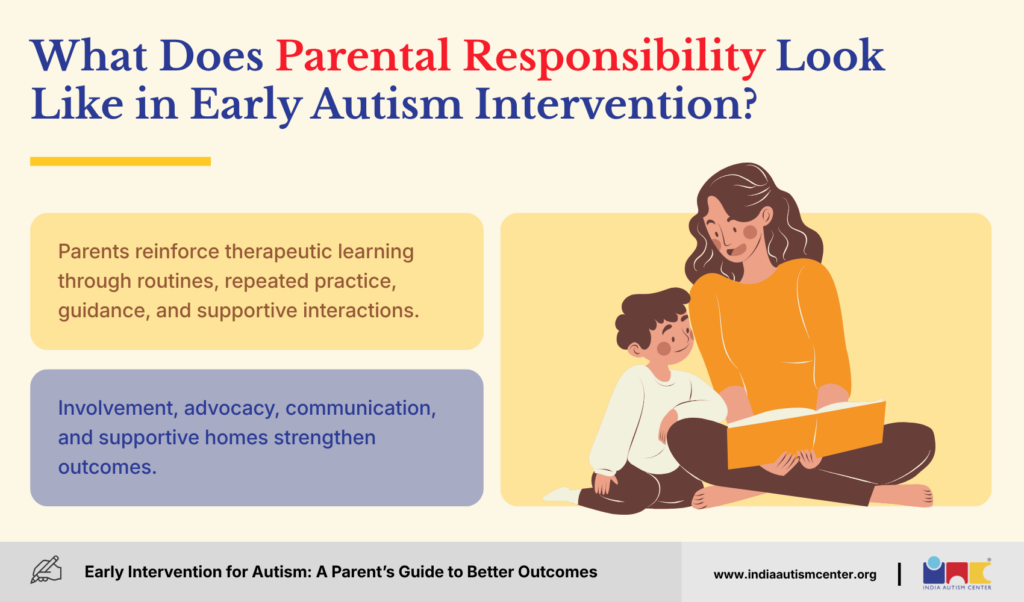
Early intervention for autism is not just about what happens in therapy rooms. It’s about what happens at home. Every single day.
Parents should not be passive observers. They are meant to be core members of the intervention team.
Here’s how you can make your role count.
Turn Everyday Moments Into Practice Opportunities
Therapies like ABA, speech, or occupational therapy teach important skills.
But real growth happens through repetition at home. Moments such as snack time, playtime, or getting dressed can naturally become practice sessions for communication, social skills, and sensory regulation.
To make the most of these everyday moments, try to:
- Encourage your child to request or label items during snack time
- Use playtime to support turn-taking and social interaction
- Practice calming techniques during routines like bathing or dressing
Learn the Techniques and Use Them Confidently
You don’t need formal training to support your child’s development. You just need curiosity and commitment.
Observe sessions. Ask questions. Join parent workshops.
This helps you:
- Tailor strategies to suit the child’s unique needs
- Practice consistently across environments
- Build your confidence by learning why certain approaches work
Make Your Home a Supportive Learning Space
A nurturing environment at home can supercharge your child’s comfort and learning.
Try:
- Visual schedules to support transitions
- Sensory-friendly items to ease overwhelm or increase engagement
- Predictable routines to reduce anxiety and improve cooperation
Keep the Conversation Going With Professionals
Open and regular communication with therapists, educators, and specialists ensures that the child’s needs are met consistently.
Make it a habit to:
- Provide updates on what you notice at home and in other settings.
- Ask questions to clarify goals and strategies.
- Participate actively in meetings and planning sessions.
Advocate Strongly for Your Child’s Needs
You are your child’s loudest and strongest voice. Advocacy means ensuring they get the resources, therapies, and accommodations they need.
Take initiative by:
- Learning about available services and autism laws
- Making detailed requests to schools or healthcare providers
- Staying updated on local policy or funding changes
Celebrate Every Step Forward
Autism early intervention outcomes often come in small, meaningful milestones. Recognizing these moments keeps your child motivated.
Celebrate by:
- Noticing new skills, improved behaviors, or moments of independence
- Praising your child’s effort and persistence
- Using positive reinforcement to motivate continued growth
Own Your Role in Your Child’s Progress
Parental involvement is one of the strongest predictors of success in early autism intervention.
Your love, patience, and consistency create the foundation on which everything else is built.
Own your role by:
- Being patient with the process and yourself
- Staying consistent with routines and practice
- Being the primary champion of your child’s growth
Therapy doesn’t stop when you leave the clinic. In fact, much of the progress happens through autism early intervention at home.
Home Activities for Early Intervention in Autism
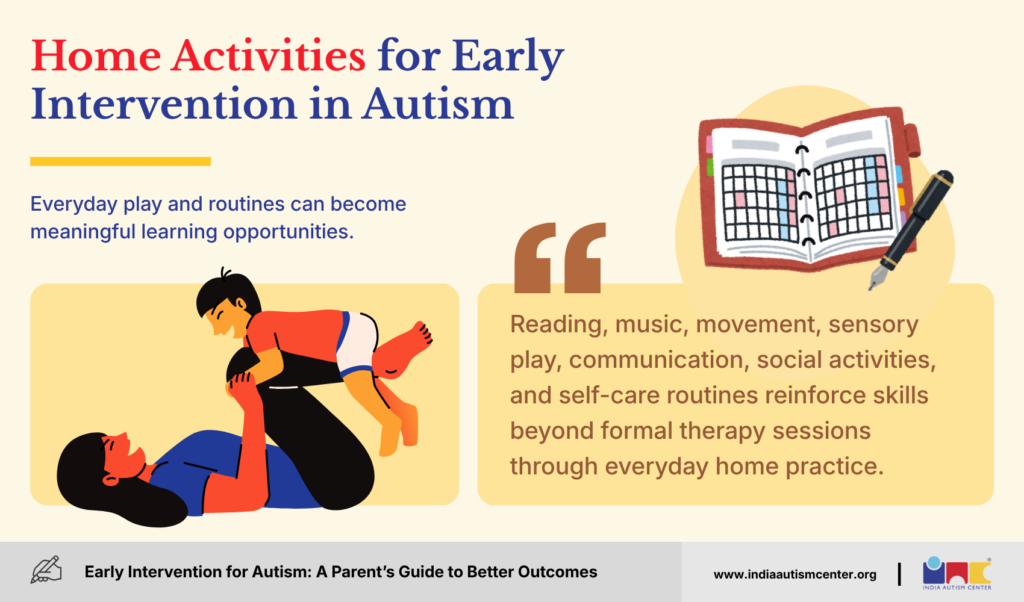
Home activities for early autism intervention.
Therapy hours are valuable. No doubt about that.
But what happens at home can multiply their impact.
Here’s how to get the most out of early intervention, right from your living room:
Play with Purpose
Play isn’t just fun. It’s how the children learn.
Activities like stacking blocks, pretending to feed a toy animal, or building with LEGO go beyond creativity. They foster:
- Joint attention
- Turn-taking
- Flexible thinking
Make Reading Interactive
Don’t just read. Interact.
Pause to point out pictures. Name characters. Ask simple questions. Let your child turn the pages.
Books build vocabulary, listening skills, and future communication, even before your child speaks.
Bring in Music and Rhythm
Sing songs with actions. Tap to a beat.
Use music to teach daily routines, like brushing teeth or cleaning up. Songs create structure and support language, memory, and motor development.
Strengthen Little Muscles
Puzzles, finger painting, and stacking rings help build hand-eye coordination.
Additionally, these activities also prepare children for:
- Writing
- Eating independently
- Dressing skills like buttoning or zipping
Encourage Movement
Active play supports sensory regulation and gross motor development.
Try:
- Indoor obstacle courses
- Cushion jumping
- Outdoor walks or park play
Make Routines Count
Bath time. Dressing. Meal prep. These are chores that can double up as learning moments.
Narrate what you’re doing. Offer choices. Give space for independence.
Over time, these routines teach sequencing, communication, and daily living skills.
Support Communication All Day Long
Use short, clear sentences. Label actions and emotions. Use gestures and visuals where possible.
Communication isn’t only built-in therapy, it’s reinforced in every shared moment.
Get Social, Gently
Start small. Invite cousins over for a short visit. Join a parent-child class. Or start with parallel play at a park.
Social practice, at a pace your child can handle, builds confidence and connection.
Create Space for Sensory Needs
Sensory play helps children self-regulate.
Water tubs, sand trays, calm-down bottles, or just a quiet corner with a soft blanket can make all the difference on a hard day.
Early Intervention for Autism in India: What Parents Need to Know
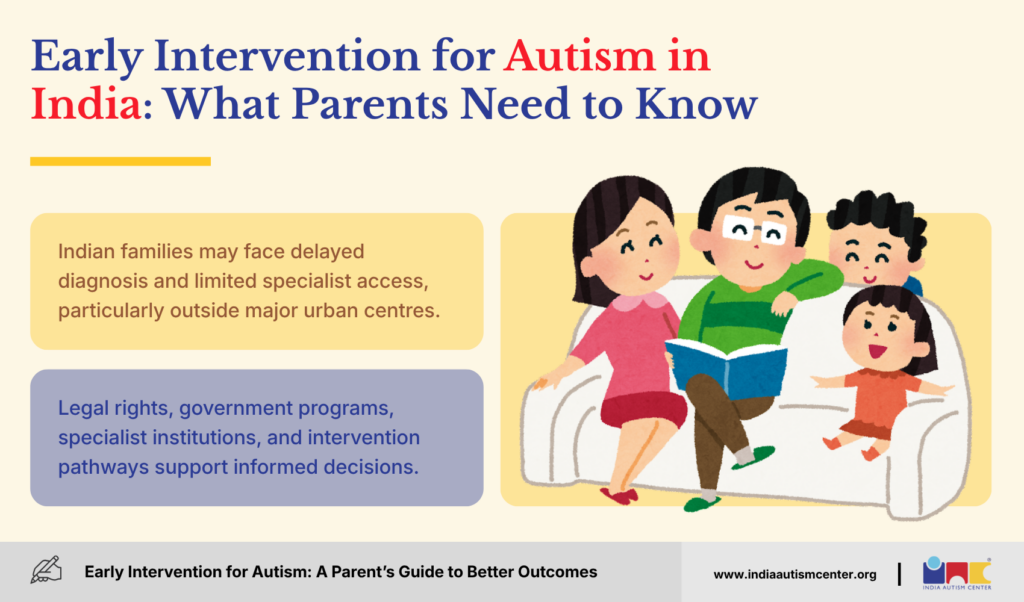
If you’re a parent in India, the information in this guide is directly relevant to you – but the path to accessing early intervention looks different here than it does in the UK or the US. Understanding the landscape honestly is the first step.
The Diagnosis Gap in India
In India, children with autism are diagnosed significantly later than the global best-practice benchmark of age 2. Research published in the Indian Journal of Public Health (2022) found a mean diagnosis age of 4.62 years – and in rural settings, even later. A mixed-methods study from urban North India found that while parents typically noticed developmental concerns around age 2, the actual diagnosis came around age 4. That’s a two-year gap during which the most critical intervention window is passing.
The reasons are systemic. Awareness of early autism signs remains low among many families and frontline health workers. Developmental pediatricians, child psychiatrists, and multidisciplinary assessment teams are concentrated in metro cities. In Tier 2 and Tier 3 cities – and certainly in rural areas – families often travel hundreds of kilometres for a single diagnostic appointment, then wait months for the next one.
This is not a failure of parents. It’s a gap in the system. And knowing it exists is the first step to navigating around it.
Your Child’s Legal Rights: The RPWD Act 2016
Here’s something every Indian parent of an autistic child needs to know: autism is a recognized disability under the Rights of Persons with Disabilities (RPwD) Act, 2016. The Act, which came into force in April 2017, expanded India’s disability framework to 21 categories – and autism spectrum disorder is explicitly included.
What this means practically:
- Free education: Schools cannot deny admission on the basis of disability. Inclusive education is mandated.
- Reservations: At least 5% of seats in government higher education institutions are reserved for persons with benchmark disabilities, including autism.
- Government employment: 4% of vacancies in central government establishments are reserved for persons with benchmark disabilities.
- Non-discrimination: The Act mandates equal treatment and accessibility in public life.
To access these rights, your child will need a disability certificate issued through a government-notified process. Ask your developmental pediatrician or district hospital about obtaining a UDID (Unique Disability ID) card – this is the gateway to most government benefits.
The National Trust Act: Welfare and Guardianship
Alongside the RPwD Act, the National Trust Act (1999) specifically covers autism, cerebral palsy, intellectual disability, and multiple disabilities. It provides legal guardianship frameworks for autistic individuals who need support in adulthood, and it funds welfare schemes through registered organizations. If you’re thinking about long-term planning for your child, the National Trust is a resource worth knowing.
Key Institutions for Diagnosis and Intervention
If you’re seeking a formal diagnosis or specialist early intervention, these are the primary referral institutions in India:
- NIMHANS (National Institute of Mental Health and Neuro Sciences), Bangalore – a leading centre for autism diagnosis and research
- AIIMS (All India Institute of Medical Sciences), New Delhi – offers multidisciplinary developmental assessment
- Ali Yavar Jung National Institute of Speech and Hearing Disabilities, Mumbai – specializes in communication disorders and early intervention for children with developmental disabilities
These institutions have long waiting lists. Start the referral process early, and pursue private assessment in parallel if you can.
Government Programs: ICDS and Sarva Shiksha Abhiyan
Some states offer early intervention support through the Integrated Child Development Services (ICDS) scheme, which reaches children from birth to 6 years through Anganwadi centres. The quality of autism-specific support varies widely by state and by the training of local workers.
For school-age children, Sarva Shiksha Abhiyan (SSA) – now subsumed under the Samagra Shiksha framework – mandates inclusive education for children with disabilities. In practice, the availability of trained resource teachers and support staff in mainstream schools remains inconsistent, particularly outside urban areas.
The Private-Government Access Gap
Let’s be direct about something: the majority of quality, evidence-based early intervention in India is currently concentrated in metro cities and delivered through private centres. Families in smaller towns and rural areas face a significant access barrier – both in terms of geography and cost.
This gap is real. It’s also why specialized centres that combine residential programs, trained therapists, and structured parent training are so important for families who cannot access daily outpatient therapy locally.
How India Autism Center Can Help
India Autism Center operates as a specialized residential and training centre designed precisely for this gap. For families who cannot access consistent early intervention locally – whether due to geography, specialist availability, or the need for intensive, structured programming – IAC offers evidence-based programs delivered by trained professionals.
If your child has recently been diagnosed, or if you’re seeing early signs and don’t know where to start, reach out to India Autism Center for guidance. The team can help you understand what early intervention looks like for your child’s specific profile, and what steps to take next – whether that’s with IAC or with services closer to home.
Early intervention for autism works. The research is clear. The question for Indian families is not whether to act, but how to find the right path forward. You don’t have to figure that out alone.
Parting Thoughts: Key Considerations In Early Intervention for Autism
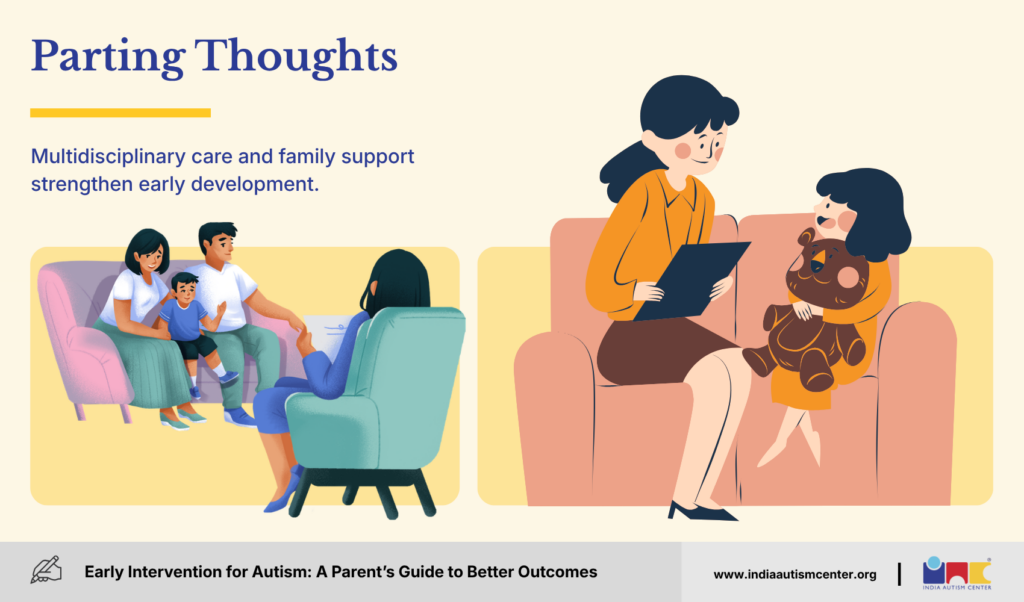
A strong early intervention program for autism begins with a multidisciplinary assessment. Developmental pediatricians, psychologists, speech therapists, occupational therapists, and special educators come together to understand your child’s unique profile.
But that’s only part of the picture. Real success comes when support extends to the whole family.
As Puja emphasizes,
We can’t work in isolation. The child belongs to a family. When parents feel supported, united, and consistent, it creates a more stable environment for the child to grow.
Also, ensure the professionals delivering early intervention are trained, certified, and experienced.
For further assistance, feel free to contact us now.
Frequently Asked Questions
Does autism get better with early intervention?
Early intervention doesn’t cure autism. But it can make a lasting impact on a child’s development. Starting support early helps children build critical skills in communication, learning, social interaction, and daily living.
What should I do if my 2-year-old shows signs of autism?
Start with a developmental evaluation by a pediatrician or psychologist. If autism is suspected, connect with early intervention services in your area.
At home, focus on:
- Play-based interaction
- Communication-rich environments
- Establishing consistent daily routines
What age is considered early intervention for autism?
Early intervention typically refers to support services provided from birth up to 3 years old.
What is the best age to start autism treatment?
There’s no single best age, but the earlier the better. The brain is most adaptable (or plastic) in the first five years of life. Starting therapy as soon as autism is suspected can positively influence learning, social skills, and overall development.
What is the success rate of early intervention for autism?
Success varies based on the child’s individual needs, type of intervention, and family involvement.
Research shows that timely and targeted early autism intervention leads to significant progress in:
- Language and communication
- Social interaction
- Adaptive skills and independence
Can early intervention cure autism?
No, early intervention doesn’t cure autism, and it’s not meant to. Autism is a neurodevelopmental condition, not a disease. What early intervention does is help build communication, confidence, and everyday skills.
Disclaimer: This article is intended for educational and informational purposes only. It is not a substitute for professional medical advice, diagnosis, or treatment. If you are pregnant or have concerns about medication use during pregnancy, please consult a qualified healthcare provider. If your child has received an autism diagnosis and you have questions about causes or support, please reach out to a trained specialist or an autism-focused organisation for guidance.
For expert insights, support services, and inclusive learning initiatives, visit the India Autism Center.
Useful Sources
- Dawson G. et al. (2010). Randomized, Controlled Trial of an Intervention for Toddlers With Autism: The Early Start Denver Model
- Pickles A. et al. (2016). Parent-mediated social communication therapy for young children with autism (PACT): long-term follow-up of a randomised controlled trial
- CDC ADDM Network (2025). Autism Prevalence: 1 in 31 children
- Indian Journal of Public Health (2022). Age at Diagnosis for Autism Spectrum Disorders
- Connect n Care ABA. Early Intervention Autism Success Rate Statistics