 Donate now
 Get a Call Back
 MENU
MENU 25 MIN READ
 SHARE
SHARE


Autism is a spectrum, and every individual experiences it differently. One of the most misunderstood aspects of autism is nonverbal autism. It is a condition where individuals have limited or no spoken language but still communicate in other meaningful ways.
In fact, out of the total number of individuals on the autism spectrum, about 30% of the children are minimally verbal. However, there can still be considerable improvement in speech and language if intervention is provided early.
While the absence of speech can feel overwhelming, understanding the nuances of autism and nonverbal communication is the first step toward unlocking your child’s potential.
Today, we are looking deeply into the meaning, symptoms, causes, and supportive methods that can help a nonverbal individual lead a fulfilling life.
What is Nonverbal Autism?
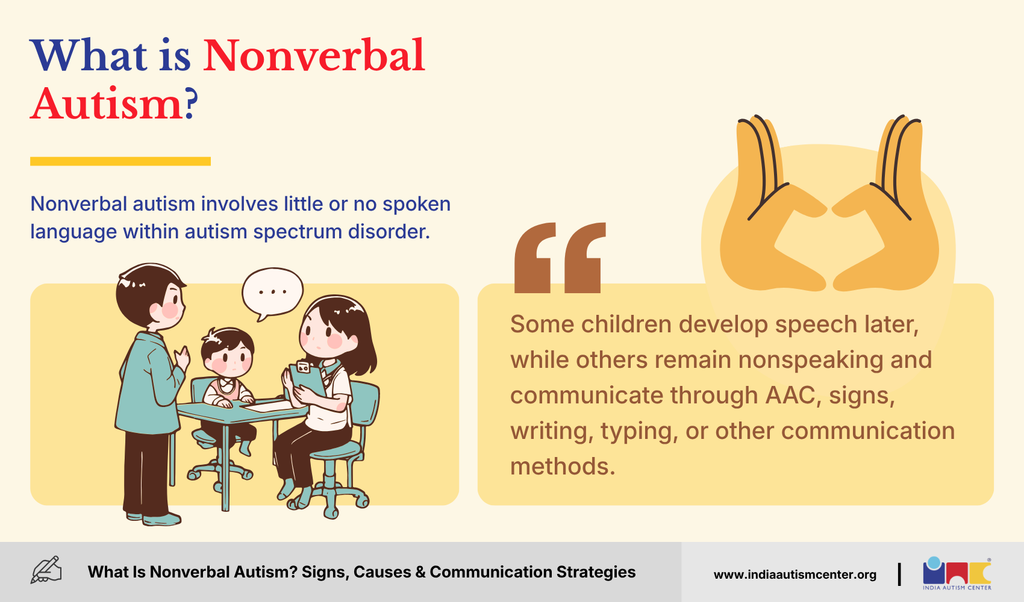
Nonverbal autism is not a separate diagnosis. It is a specific presentation within Autism Spectrum Disorder (ASD) where an individual uses little or no spoken language to communicate. Some children produce no speech at all. Others have a handful of words they use without meaningful context – they might say “biscuit” every day but never use it to actually ask for one.
The clinical term you’ll see in research is “minimally verbal” – defined as fewer than 20 functional words used consistently. According to a landmark study published in PNAS (Tager-Flusberg & Kasari, 2013), approximately 25–40% of individuals on the autism spectrum are minimally verbal or nonspeaking. That is a significant portion of the ASD community, and yet it remains dramatically underrepresented in research and public conversation.
Three outcome pathways – what the research actually shows:
1. Full or near-typical speech development. Some children who are minimally verbal at age three develop functional spoken language by age five or six, particularly with early, intensive intervention. A 2023 study in the Journal of Autism and Developmental Disorders found that roughly 20% of minimally verbal children made substantial gains in speech with targeted therapy before age five.
2. Partial speech alongside AAC. Many individuals develop some functional spoken words – enough to express basic needs – but rely on Augmentative and Alternative Communication (AAC) for more complex communication. This is the most common outcome pathway.
3. Permanently nonspeaking. Some individuals remain nonspeaking throughout life. This does not mean they cannot communicate. It means they communicate differently – through AAC devices, sign language, picture boards, writing, or typing. Many nonspeaking autistic adults have written books, given talks, and led full, meaningful lives.
Actionable takeaway: Do not let anyone tell you there is a “window” that closes. Research consistently shows that communication development can occur at any age with the right support.
“Nonverbal” vs. “Nonspeaking” vs. “Preverbal” – Why the Words We Use Matter
Language shapes how we think about people. This is not a small debate.
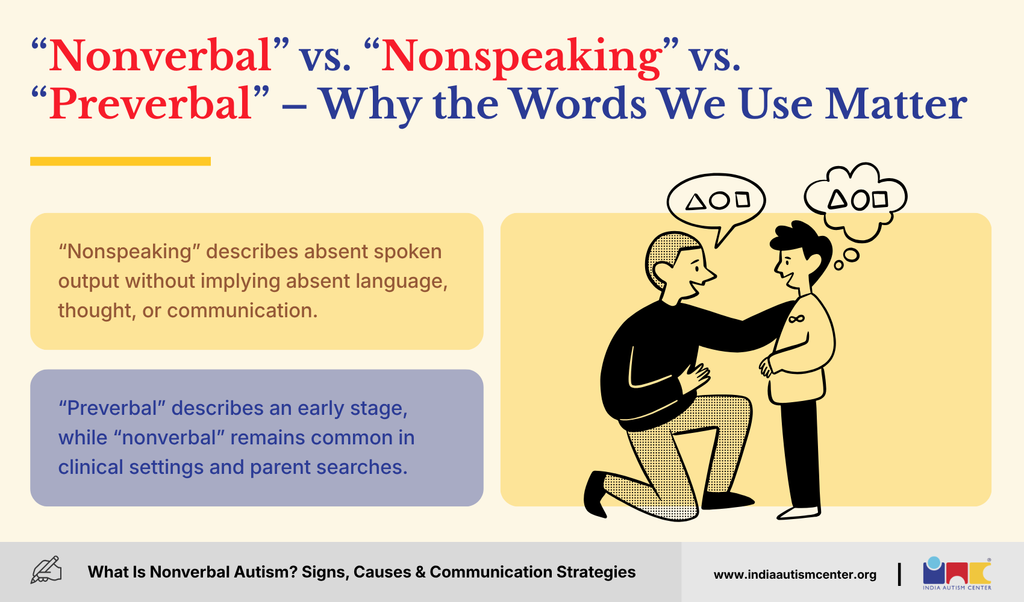
“Nonverbal” is the most commonly used clinical term, and it’s what most parents search for. But many autistic self-advocates and researchers argue it is misleading – because it implies the person has no language at all, when in fact they may have rich inner language, strong reading comprehension, and the ability to communicate through text or AAC.
“Nonspeaking” is the term increasingly preferred by the autistic community and by progressive clinicians. It is precise: it describes the absence of spoken output, not the absence of language or thought. Nonspeaking autism acknowledges that the person has a voice – it just doesn’t come through the mouth.
“Preverbal” is sometimes used for very young children (typically under age three) who haven’t yet developed speech, but for whom speech is still a realistic possibility. It is a developmental stage descriptor, not a permanent label.
At India Autism Center, we use both “nonverbal” and “nonspeaking” alongside each other – because parents searching for help use “nonverbal autism,” and we want to meet them where they are. But in our clinical practice and in how we speak about the individuals we support, we increasingly prefer “nonspeaking” because it centres the person’s humanity and potential, not their deficit.
Actionable takeaway: When talking to your child’s school, therapists, or extended family, try shifting to “nonspeaking” – it opens a different conversation about capability rather than limitation.
How Common Is Nonverbal Autism?
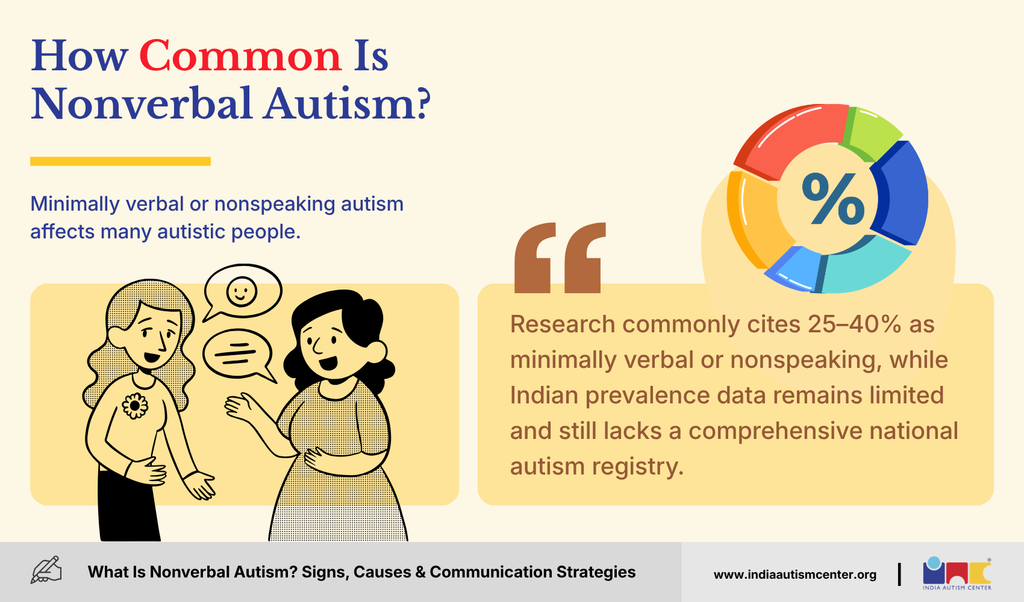
More common than most people realise.
The most widely cited figure is 25–40% of people with ASD are minimally verbal or nonspeaking (Tager-Flusberg & Kasari, 2013, PNAS). The CDC’s Autism and Developmental Disabilities Monitoring (ADDM) Network 2022 data adds important nuance: among autistic individuals, 39.6% had co-occurring intellectual disability, 24% had borderline intellectual functioning, and – critically – 36% scored average or above on nonverbal IQ tests. That last number matters enormously. More on that in the causes section.
The Autism Science Foundation’s analysis of CDC data found that 26.7% of autistic children fall into the “profound autism” category, which includes most nonspeaking individuals.
India context: India does not yet have a national autism prevalence registry equivalent to the CDC ADDM. Estimates from studies published in Indian Journal of Pediatrics suggest ASD prevalence in India is approximately 1 in 68–100 children, broadly consistent with global figures. Given that 25–40% of those may be minimally verbal, we are potentially talking about hundreds of thousands of nonspeaking autistic individuals in India – the vast majority without access to specialist AAC support or trained SLPs.
Actionable takeaway: If your child has been diagnosed with ASD and is not yet speaking, know that you are part of a large community – and that community has produced powerful advocates, communicators, and change-makers.
Autism vs Nonverbal Learning Disorder: How Do They Differ?
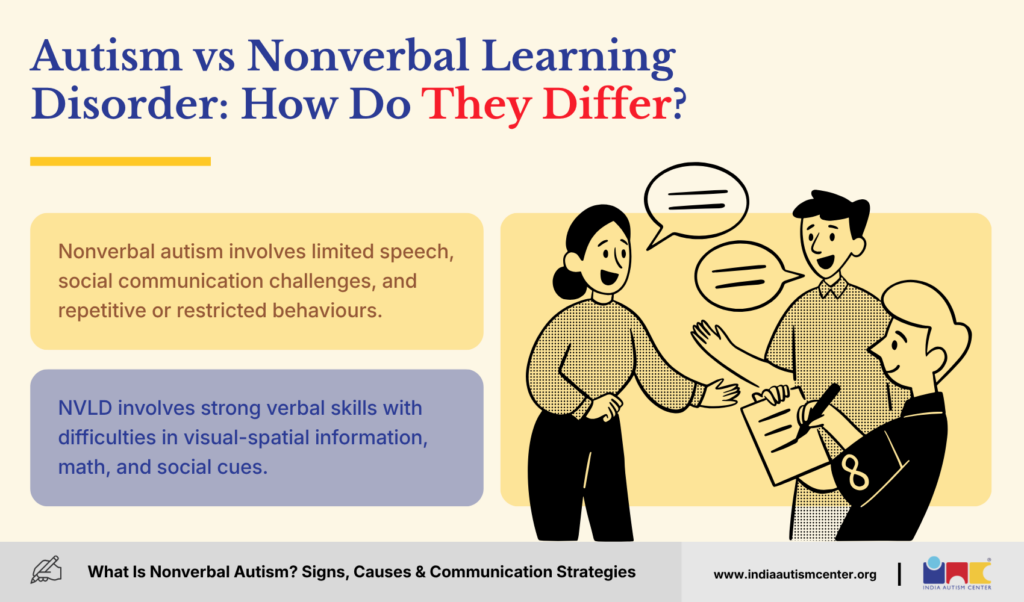
The two concepts of autism and nonverbal learning disorder can be quite confusing. While the names are strikingly similar, the profiles of these two conditions are nearly opposites.
Nonverbal Learning Disorder (NVLD) is characterised by:
- Strong verbal skills and early speech development.
- Excellent rote memory.
- Significant struggles with non-linguistic information, such as visual-spatial patterns, mathematics, and reading social cues (facial expressions and body language).
In contrast, nonverbal autism involves:
- Significant delays or a total absence of spoken language.
- Social communication challenges.
- Repetitive behaviours and restricted interests.
While both require specialised educational support, the methods for teaching a student with nonverbal autism focus heavily on building a communication system from the ground up. In contrast, NVLD support focuses on helping a verbal student navigate physical space and social nuances.
What Are the Most Common Signs and Symptoms of Nonverbal Autism?
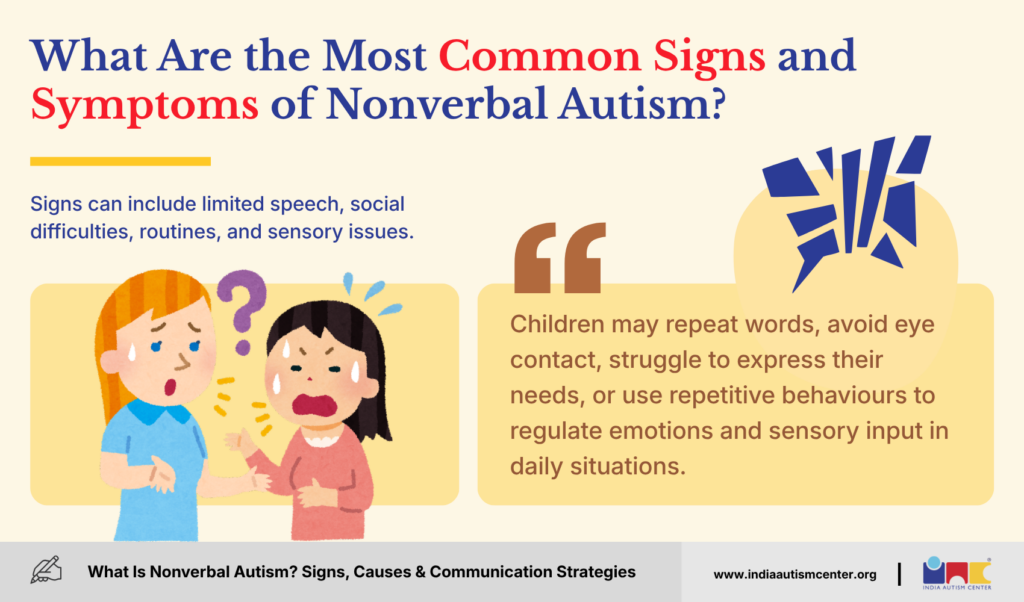
Early intervention is the “gold standard” for improving outcomes. Knowing the signs of nonverbal autism allows parents to seek support during the critical years of brain plasticity.
Here are some of the common nonverbal autism symptoms:
- No speech or very limited vocabulary: A child may not speak at all or may repeat a few words without meaningful use. For example, they might echo phrases but not use them to communicate needs.
- Difficulty understanding spoken language: Difficulty understanding spoken language.
- Limited use of gestures: They may not point at objects, wave goodbye, or answer yes or no with a nod. This reduces their ability to communicate basic needs.
- Avoidance of eye contact: Eye contact may feel uncomfortable or overwhelming, making social interaction harder.
- Repetitive behaviours: Actions such as hand-flapping, rocking, or spinning objects may help them regulate their emotions or sensory input.
- Difficulty expressing needs verbally: Instead of directly asking for water, a child might cry, pull a caregiver, or become agitated.
- Strong preference for routines: When there is a change in routine, there is distress because predictability provides comfort.
- Sensory sensitivities: Sounds, lights, textures, or smells may feel overwhelming or painful.
Early Signs of Nonverbal Autism in Toddlers
The signs of nonverbal autism in toddlers can appear before age two. About 40–70% of children with ASD show delayed speech and language development. The earlier you notice and act, the better.
Watch for:
- No babbling by 12 months – babies typically start making consonant-vowel sounds (“ba,” “da,” “ma”) well before their first birthday
- Not responding to their name by 12 months, even when called consistently and from close range
- No pointing or showing objects by 14 months – joint attention (sharing interest in something with another person) is a key pre-language milestone
- No single words by 16 months
- No two-word phrases by 24 months (e.g., “more milk,” “Daddy go”)
- Regression – losing words or skills they previously had, which can occur between 18 and 24 months
- Difficulty imitating sounds or actions
If you notice three or more of these signs, speak to your paediatrician immediately and ask for a referral to a developmental paediatrician or speech-language pathologist. Don’t wait for the “wait and see” approach – early intervention is the single most evidence-backed strategy we have.
What Causes Nonverbal Autism?
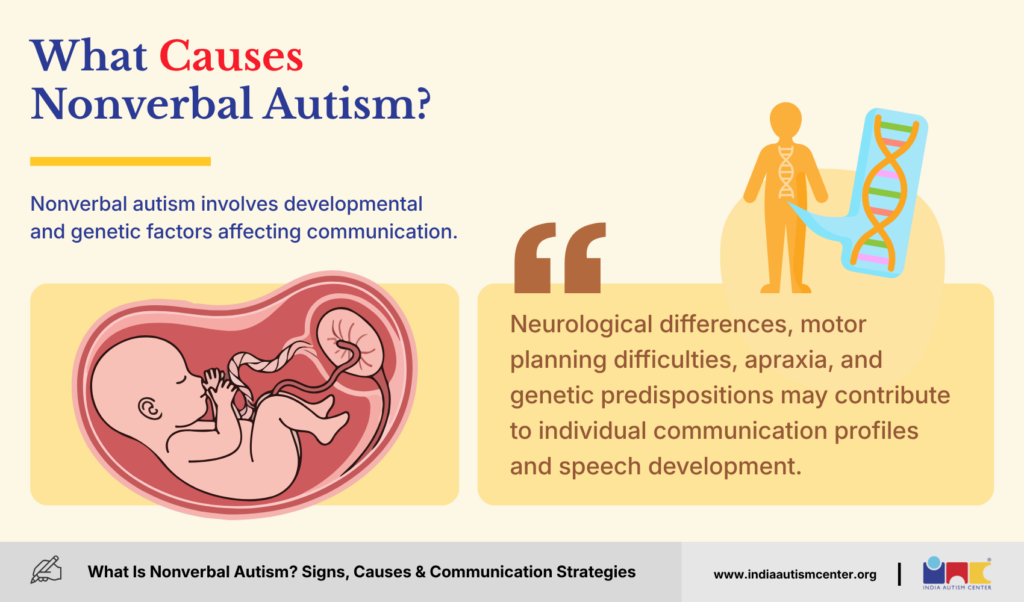
The question of what causes nonverbal autism is one that researchers are working tirelessly to answer. In 2026, the consensus is that there is no single “autism gene.” Instead, it is a combination of environmental and genetic factors that can influence brain development during pregnancy as well as early infancy.
1. Neurological Factors
Studies using functional MRI (fMRI) are known to show that in nonverbal autistic individuals, Broca’s area, the part of the brain that is primarily responsible for speech production, may function differently.
There may be “under-connectivity” between the brain areas that perceive sound and those that control the muscles of the mouth.
2. Motor Planning and Apraxia
Sometimes, the cause isn’t a lack of language understanding but a “motor planning” issue. Conditions like Childhood Apraxia of Speech often overlap with autism.
In these cases, the child’s brain knows the word “Mama,” but the message gets scrambled on the way to the lips and tongue. This is why nonverbal speech therapy programs for autism often include physical exercises for the mouth.
3. Genetic Predispositions
Although not every child with autism necessarily has a family history, genetics can play a massive role. Certain rare genetic mutations are more common in nonverbal individuals. Understanding the biological roots helps remove the stigma and the guilt that parents often feel. This helps to reinforce that autism is a natural neurological variation.
The Three Communication Pathways – What to Expect
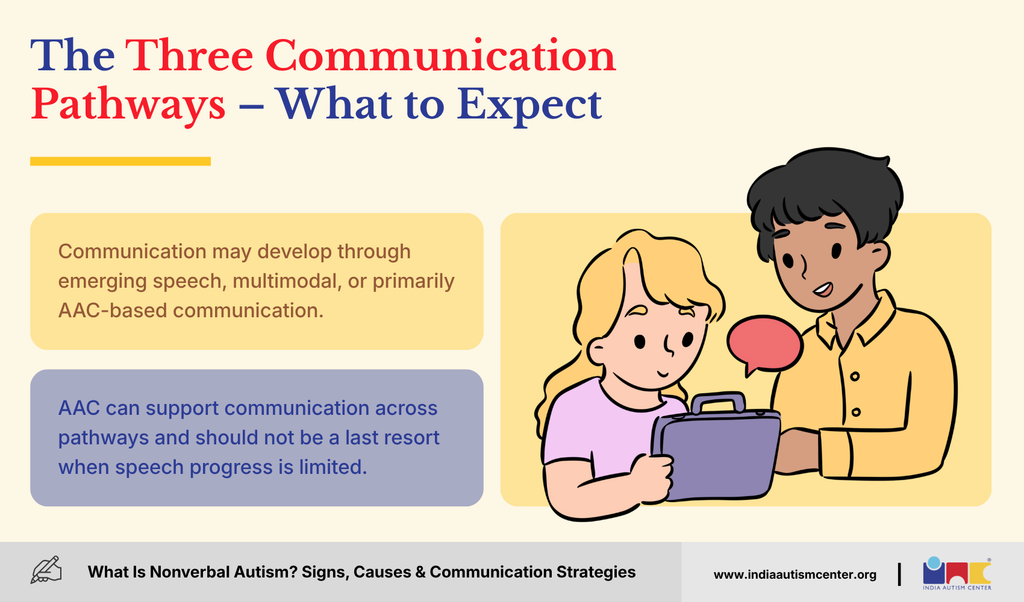
Let’s be direct about what the research shows – and frame it with hope.
Pathway 1: Speech emerges. With early, intensive, evidence-based intervention, some minimally verbal children develop functional spoken language. A 2023 meta-analysis in Autism Research found that children who began intensive speech and AAC intervention before age four had significantly better language outcomes than those who started later. This is not a guarantee – but it is a real possibility worth pursuing urgently.
Pathway 2: Multimodal communication. This is the most common outcome. The individual develops some spoken words alongside AAC tools – a tablet, a picture board, sign language. They communicate across multiple channels depending on context, energy, and environment. Many adults in this pathway lead deeply connected, productive lives.
Pathway 3: Primarily AAC-based communication. Some individuals remain primarily nonspeaking throughout life. This is not a failure. It is a different way of being in the world. Nonspeaking autistic author Naoki Higashida wrote The Reason I Jump using a letter board. Carly Fleischmann hosts a talk show using AAC. Amy Sequenzia writes poetry and advocacy essays. The absence of speech is not the absence of a story.
Actionable takeaway: Whichever pathway your child is on, AAC should begin now – not after speech fails, not as a last resort. AAC does not prevent speech development. Research consistently shows it supports it.
Nonverbal Autism Life: What to Expect in Adulthood?
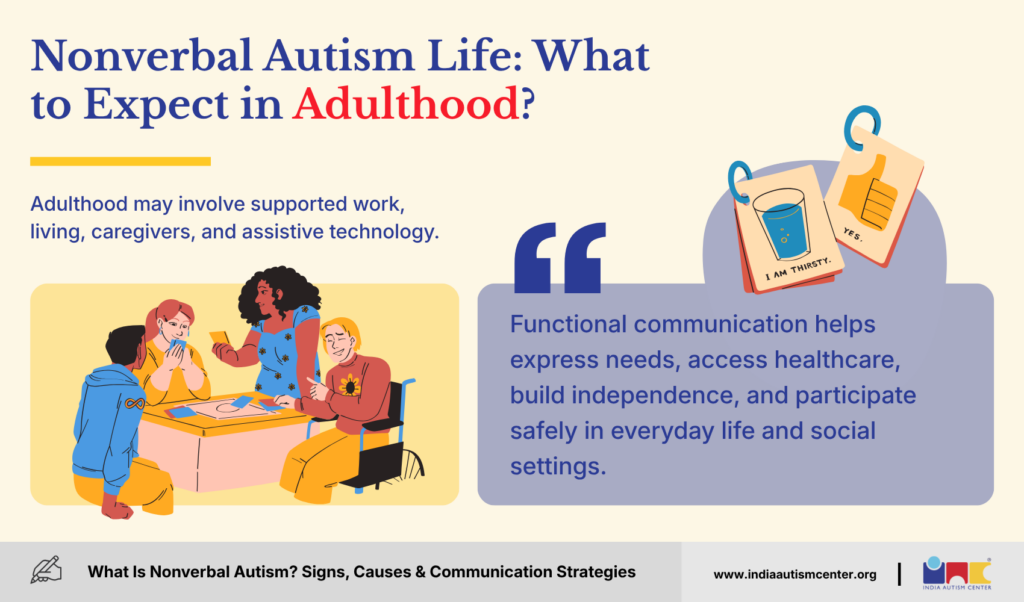
One of the deepest anxieties for parents is the nonverbal autism life as an adult. Parents often wonder, “What happens when I am no longer here to advocate for them?”
It is important to emphasise that being nonverbal does not inherently reduce a person’s life expectancy. However, the life of a nonverbal person with autism can be affected by secondary factors.
For example, if an individual cannot communicate that they are in pain, a medical condition such as a tooth infection or appendicitis might go untreated longer than it would in a verbal person. This is why teaching functional communication is literally a matter of safety.
Nonverbal Autism in Adults
As we look at nonverbal autism in adults, the definition of success shifts. For an adult, success might mean:
- Using a tablet to order food at a restaurant.
- Working in a supported employment environment.
- Living in a group home or a community-integrated apartment with the help of a caregiver.
AAC for Nonverbal Autism – A Complete Guide for Indian Families
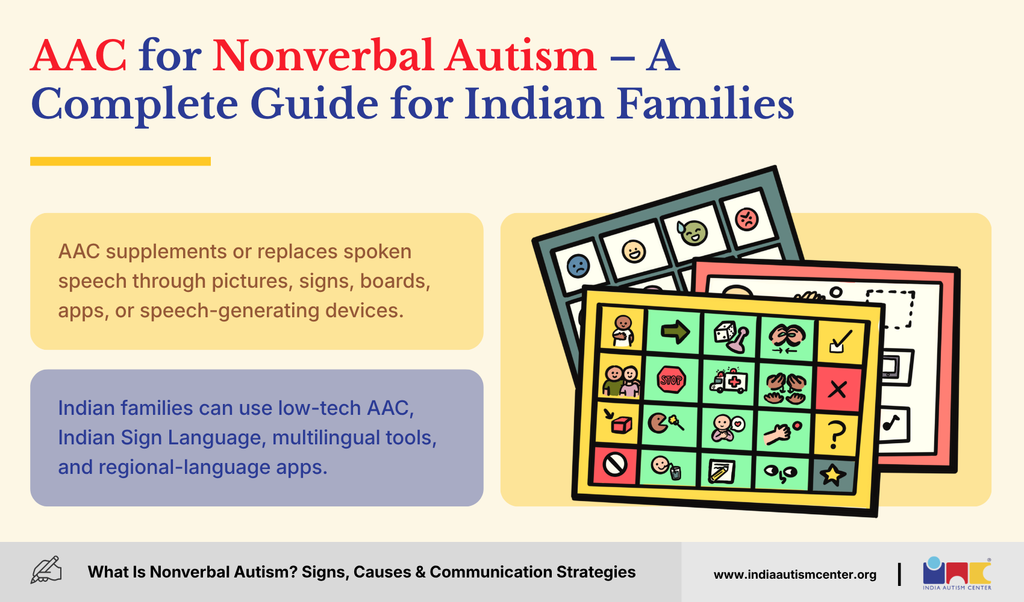
AAC for autism – Augmentative and Alternative Communication – is the umbrella term for any method of communication that supplements or replaces spoken speech. It is not a consolation prize. It is a communication right.
And for Indian families, there are specific considerations that most Western guides simply don’t address.
No-Tech and Low-Tech AAC
You don’t need a device to start. Low-tech AAC is powerful, portable, and free.
- PECS (Picture Exchange Communication System): The child hands a picture card to a communication partner to request something. Phase 1 is simply: “I want this.” Over six phases, PECS builds to full sentence construction. It is one of the most researched AAC systems for autism, with strong evidence from randomised controlled trials.
- Picture boards/communication books: A laminated book or folder of photographs and symbols organised by category (food, feelings, activities, people). Incredibly effective when consistently used across all environments.
- Core vocabulary boards: Rather than pictures of specific items, core boards use high-frequency words (“want,” “more,” “stop,” “go,” “help,” “like”) that appear in almost every conversation. These are more generalisable than item-specific pictures.
- Sign language: Covered in detail below. Even 5–10 functional signs can transform daily life.
A note on Indian Sign Language (ISL): ISL is a complete, independent language – not a signed version of Hindi or English. It has its own grammar and regional variations. For families in India, ISL is the most accessible sign system. The Ali Yavar Jung National Institute of Speech and Hearing Disabilities (AYJNISHD) in Mumbai offers ISL resources and training. The Indian Sign Language Research and Training Centre (ISLRTC) in New Delhi has developed a national ISL dictionary available online.
High-Tech AAC
Speech-generating devices (SGDs) and AAC apps produce spoken output – either synthesised or recorded voice – when the user selects symbols, words, or phrases.
- Proloquo2Go: The gold standard AAC app, available on iPad. Highly customisable, research-backed, used globally. Expensive (around ₹8,000–10,000 per year), but widely used in IAC therapy sessions.
- Avaz AAC: Developed in India by Invention Labs, Chennai. Specifically designed for autism, with support for multiple Indian languages including Hindi, Tamil, Telugu, Kannada, and Bengali. This is our top recommendation for Indian families – it understands the cultural and linguistic context.
- Snap Core First: Another robust AAC app with strong symbol libraries and customisation options.
- Dedicated SGDs: Devices like the Tobii Dynavox are used for individuals with significant motor difficulties alongside communication needs. These are available in India through specialised suppliers, though cost remains a barrier.
AAC in Multilingual Indian Homes – Hindi, Regional Languages, and Code-Switching
This is where most AAC guides fail Indian families entirely. Let’s fix that.
The average middle-class Indian household operates in at least two languages – often a regional language at home and Hindi or English at school. Many families use all three fluidly, switching mid-sentence. This is called code-switching, and it is completely normal, cognitively healthy, and linguistically rich.
Does bilingualism delay communication in nonspeaking autistic children? No. The research is clear on this. A 2016 study in Journal of Child Language (Hambly & Fombonne) found no evidence that bilingual exposure delays language development in autistic children. A 2019 study in Autism & Developmental Language Impairments confirmed that bilingual autistic children do not show worse language outcomes than monolingual peers. Bilingualism does not cause or worsen nonverbal autism.
Practical strategies for multilingual AAC:
- Programme your AAC device in both languages. Avaz AAC allows multilingual symbol sets. If your child hears “paani” at home and “water” at school, both words should be available on the device.
- Use the home language first. Research on bilingual AAC (Kohnert, 2010) suggests that building communication in the child’s strongest language first creates a foundation that transfers to the second language.
- Don’t force English-only AAC. Many families feel pressure to use only English AAC because “that’s what the therapist uses.” Push back on this. Your child’s right to communicate in their mother tongue is fundamental.
- Consistent vocabulary across languages. Core words like “more,” “stop,” “help,” and “want” should be programmed in all languages the child hears regularly.
- Talk to your SLP about code-switching. A good SLP will programme the AAC device to reflect how your family actually communicates – not an idealised monolingual version of it.
Apps with Indian language support:
- Avaz AAC – Hindi, Tamil, Telugu, Kannada, Bengali, Marathi, Malayalam
- Cboard – open-source, community-translated into several Indian languages
- LetMeTalk – supports custom symbol sets; families can add regional language labels
Actionable takeaway: Contact Avaz AAC’s India support team directly – they offer free trials and have worked with Indian SLPs to develop culturally relevant symbol sets. Don’t let language be a barrier to starting AAC.
Can Nonverbal Autism Be Cured?
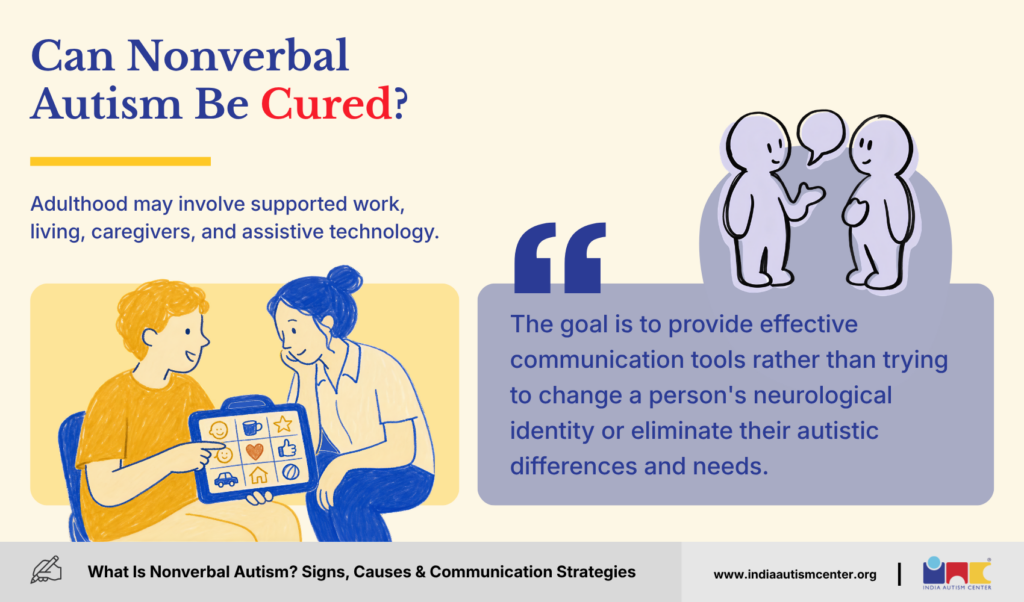
It has been found in a study that 26.7% of autistic children fall under the profound autism category, which includes nonverbal autism as well. Hence, the question “Can nonverbal autism be cured?” is controversial. In the medical sense, there is no cure because autism is not a disease or an infection; it is a different way the brain is wired. You cannot “un-wire” a brain.
However, if by “cure,” a parent means “Can my child learn to communicate and live a happy life?”, the answer is a resounding yes. Through intensive speech therapy, autism nonverbal and behavioural interventions, many children who were nonverbal at age four gain significant speech by age eight.
For those who remain nonverbal, the goal is not to “fix” them but to provide them with the tools to interact with a primarily verbal world.
Speech Therapy for Nonverbal Autism: More Than Just Talking
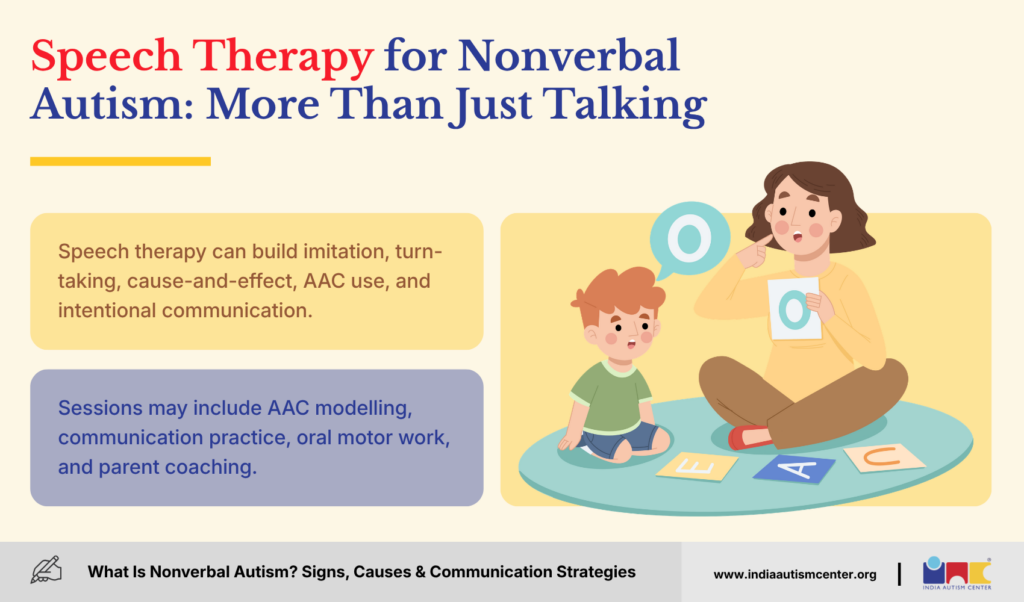
When people hear “speech therapy,” they picture a child repeating words in front of a mirror. Speech therapy for nonverbal autism is far more sophisticated than that.
A skilled Speech-Language Pathologist (SLP) working with a nonspeaking child focuses first on the foundations of communication – the pre-linguistic skills that must be in place before speech or AAC can be used meaningfully.
The foundational triad:
- Imitation: Can the child copy a movement? A sound? A facial expression? Imitation is the engine of learning. Without it, no communication system can take hold.
- Turn-taking: Communication is a back-and-forth exchange. Rolling a ball, taking turns with a toy, pausing and waiting – these are the social-cognitive roots of conversation.
- Cause and effect: “If I press this button, music plays.” “If I hand this picture to Amma, I get a biscuit.” Understanding that my action produces a result is the foundation of intentional communication.
What an IAC speech therapy session looks like:
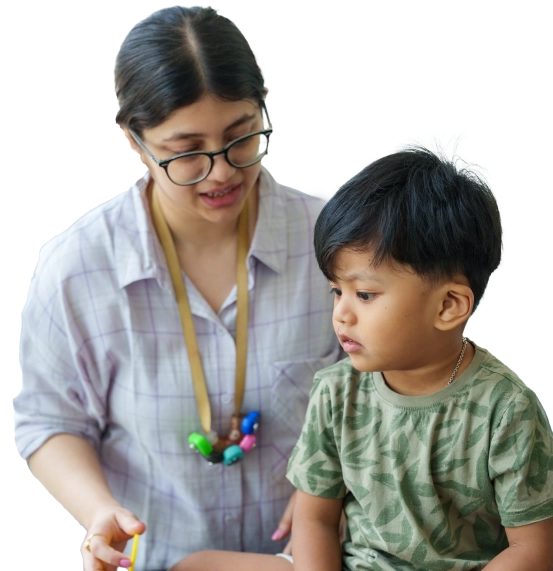
At India Autism Center, our SLPs don’t work in isolation. A session for a nonspeaking child might include:
- Sensory warm-up – regulating the child’s nervous system before communication work begins (often in coordination with our occupational therapy team)
- Joint attention activities – following the child’s lead, building shared focus on an object or activity
- AAC modelling – the therapist uses the AAC device alongside the child, modelling how to communicate without demanding the child use it (“aided language stimulation”)
- PECS or core board practice – structured, motivating exchanges
- Oral motor exercises – for children with suspected CAS, specific exercises to improve motor planning for speech
- Parent coaching – every session includes time to teach the family what was done and how to replicate it at home
The last point is non-negotiable. Therapy happens for one or two hours a week. Communication happens all day. Parents are the most important communication partners a child has.
To learn more about our speech and language therapy approach, visit our comprehensive guide.
Actionable takeaway: Ask your SLP to teach you “aided language stimulation” – it is the single most powerful thing a parent can do at home to support AAC use.
What Are the Effective Methods For Teaching A Child With Nonverbal Autism?
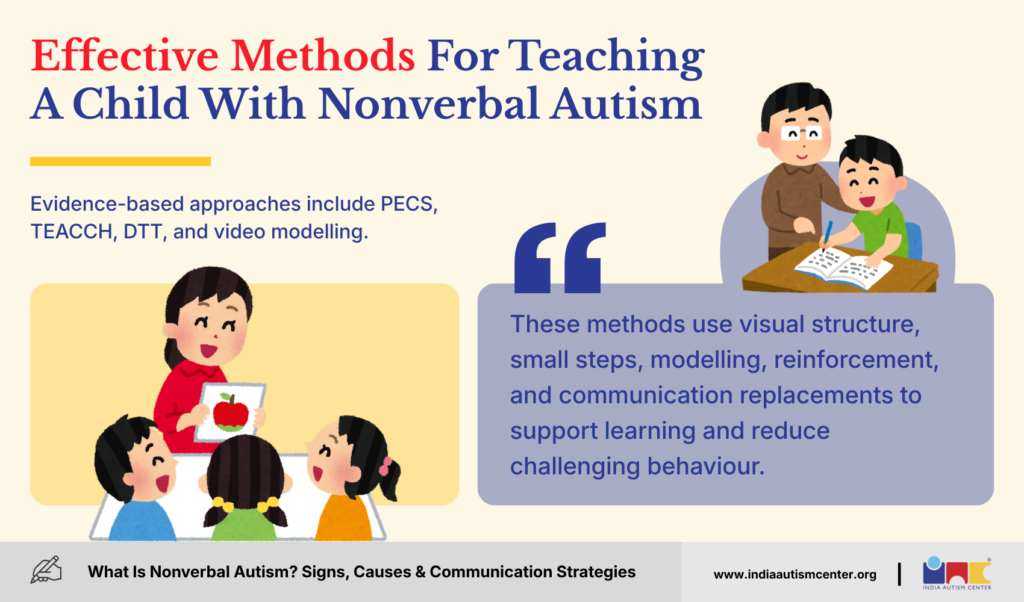
Teaching a nonspeaking child requires a structured, visual, and consistent approach. Here are the methods with the strongest evidence base:
1. Picture Exchange Communication System (PECS) The child hands a picture to a communication partner to receive a desired item. It teaches the fundamental power of initiation – I can make things happen by communicating. PECS has six phases, from simple requesting to commenting and answering questions.
2. TEACCH (Treatment and Education of Autistic and Communication-related Handicapped Children) Developed at the University of North Carolina, TEACCH emphasises structured physical environments with clear visual boundaries. For a nonspeaking child, knowing exactly where the “work zone” ends and the “play zone” begins dramatically reduces anxiety and increases engagement.
3. Discrete Trial Training (DTT) Breaking complex skills into tiny, manageable steps and using systematic positive reinforcement to build each step. DTT is particularly effective for teaching new vocabulary and AAC use. Learn more about ABA therapy, which incorporates DTT.
4. Video Modelling Showing the child a video of a peer or adult performing a task (washing hands, requesting a snack, greeting someone) can be more effective than verbal instruction for visual learners. The child’s brain processes the visual demonstration more readily than spoken directions.
5. Functional Communication Training (FCT) FCT replaces challenging behaviours (hitting, biting, screaming) with functional communication. The premise: if a child is hitting to escape a task, teach them to hand over a “break” card instead. FCT is one of the most powerful tools for reducing behavioural challenges in nonspeaking children, because it addresses the communicative function of the behaviour.
Actionable takeaway: Ask your child’s school whether they are using FCT. If a child has a behaviour support plan that doesn’t include a communication replacement behaviour, it is incomplete.
How Does Sign Language For Nonverbal Autism Help?
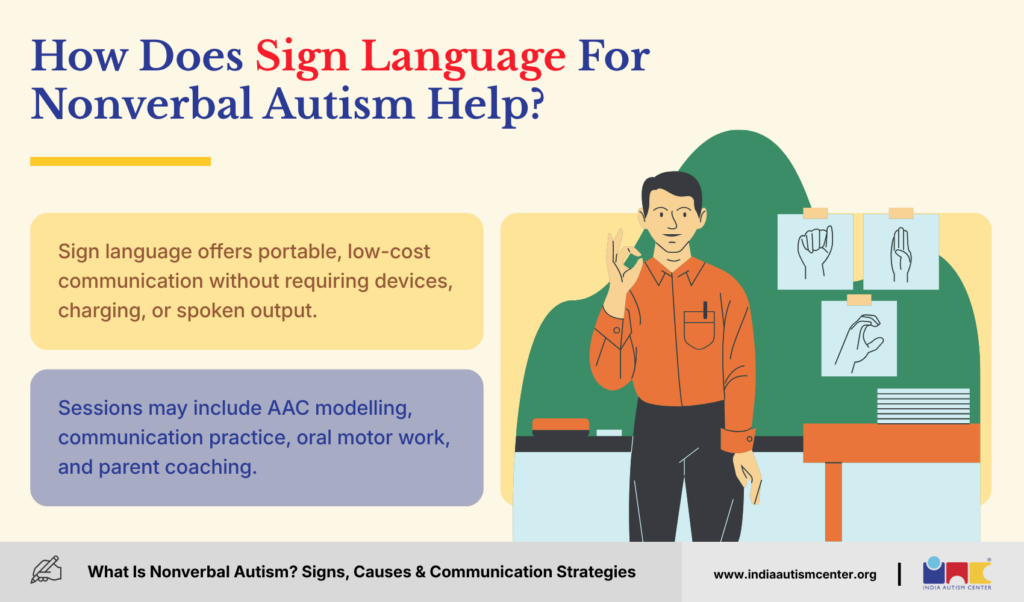
Sign language for nonverbal autism is one of the most accessible, low-cost, and immediately effective communication tools available.
Why it works:
- Portability: Your hands are always with you. No device to charge, no app to open.
- Kinesthetic learning: The physical movement of signing reinforces meaning in the brain – the body remembers what the mouth cannot yet say.
- Immediate feedback: A parent can gently guide a child’s hands to form the sign, providing physical prompts impossible with vocal speech.
- Reduces meltdowns: Even five basic signs – Eat, Drink, More, Help, All Done – can dramatically reduce the frustration-driven behaviours that come from an inability to express basic needs.
Indian Sign Language (ISL) context:
ISL is not a regional dialect of British or American Sign Language. It is an independent language, recognised by the Government of India under the Rights of Persons with Disabilities (RPWD) Act 2016. ISL has its own grammar, syntax, and regional variations (signs may differ between Mumbai, Delhi, and Chennai communities).
For families in India, learning even basic ISL signs is more culturally integrated and community-relevant than learning ASL. Resources:
- ISLRTC (Indian Sign Language Research and Training Centre) – New Delhi – offers online courses and a national dictionary
- AYJNISHD – Mumbai – training programmes for families and educators
- YouTube ISL channels – several ISL educators post free tutorials in Hindi and English
Actionable takeaway: Start with five signs this week. Eat, drink, more, help, all done. Use them consistently every time you say the word. Repetition across contexts is what builds the connection.
What Are the Best Free Apps for Nonverbal Autism?
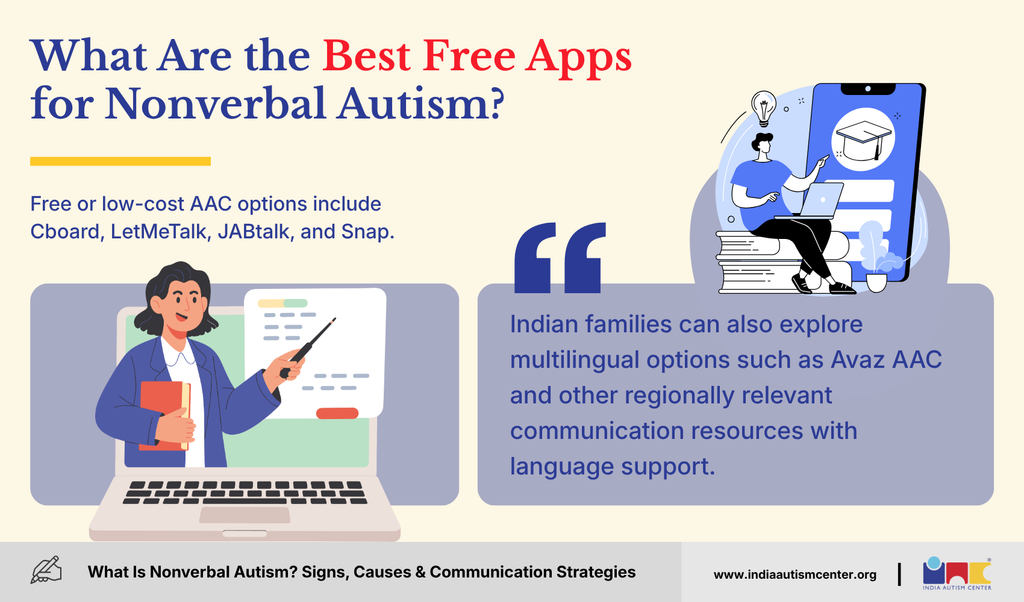
Free and low-cost options:
- Cboard (free, web-based and app) – open-source AAC with community-translated symbol sets; works offline; supports multiple languages including Hindi
- LetMeTalk (free, Android) – picture-based communication, works offline, fully customisable; families can add photos of real objects from their home
- JABtalk (free, Android) – highly customisable, supports recorded voice output (record Amma’s or Baba’s voice for the buttons)
- Snap Express (free version available) – quick-access core vocabulary board
India-specific and Indian language-supported apps:
- Avaz AAC (paid, iOS and Android) – our top recommendation for Indian families; developed in Chennai; supports Hindi, Tamil, Telugu, Kannada, Bengali, Marathi, Malayalam; used in IAC therapy sessions; free trial available
- Kidsense Communication – developed with Indian SLPs; culturally relevant symbol sets including Indian foods, festivals, and family terms
- Vidya Sagar’s AAC resources – Chennai-based disability organisation with free downloadable picture boards in Tamil and English
For older children and adults:
- Proloquo2Go (paid, iOS) – the most research-backed AAC app globally; highly customisable; used widely in IAC’s adult programmes
- TouchChat HD (paid, iOS/Android) – robust vocabulary with good customisation for Indian language labels
Actionable takeaway: Download LetMeTalk or Cboard today – right now, before you finish reading this article. Start with 10 pictures of things your child loves. That is your first AAC board
By introducing these free apps alongside early speech and language therapy for nonverbal autism, parents can give their child a sense of agency and control over their environment.
What Therapies Help Individuals With Nonverbal Autism?
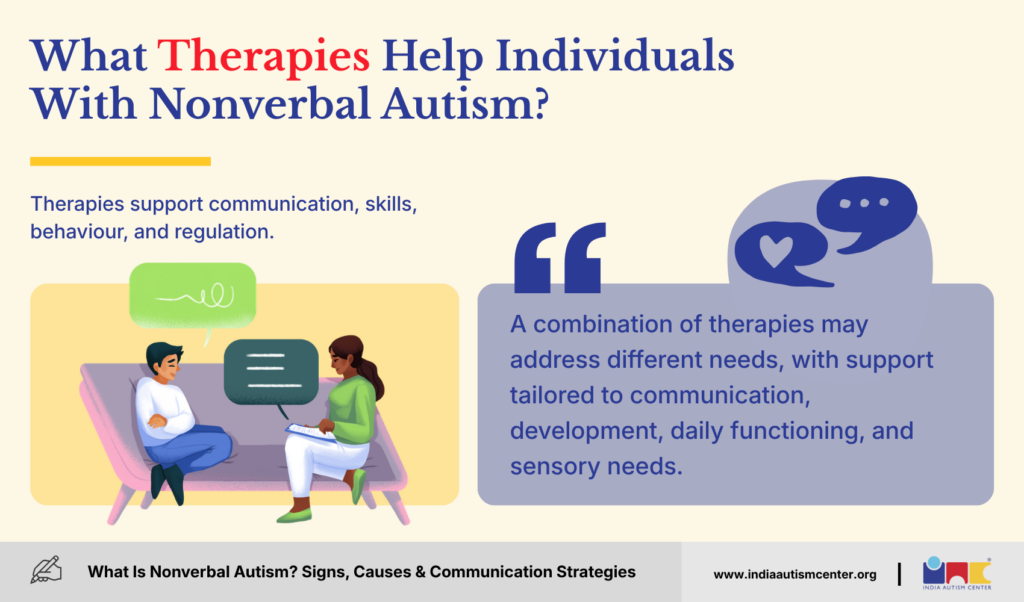
Different therapies support communication, behaviour, and daily living skills. A combination of therapies is often the most effective approach. Here are the autism therapies that can be of great help:
1. Speech Therapy: It primarily focuses on communication methods
2. Occupational Therapy: This helps to improve daily skills as well as sensory processing
3. Behavioural Therapy (ABA): This is very important as it helps to encourage positive behaviours
4. Sensory Integration Therapy: It helps manage sensory sensitivities
How Can Parents Successfully Create a Supportive Environment at Home?
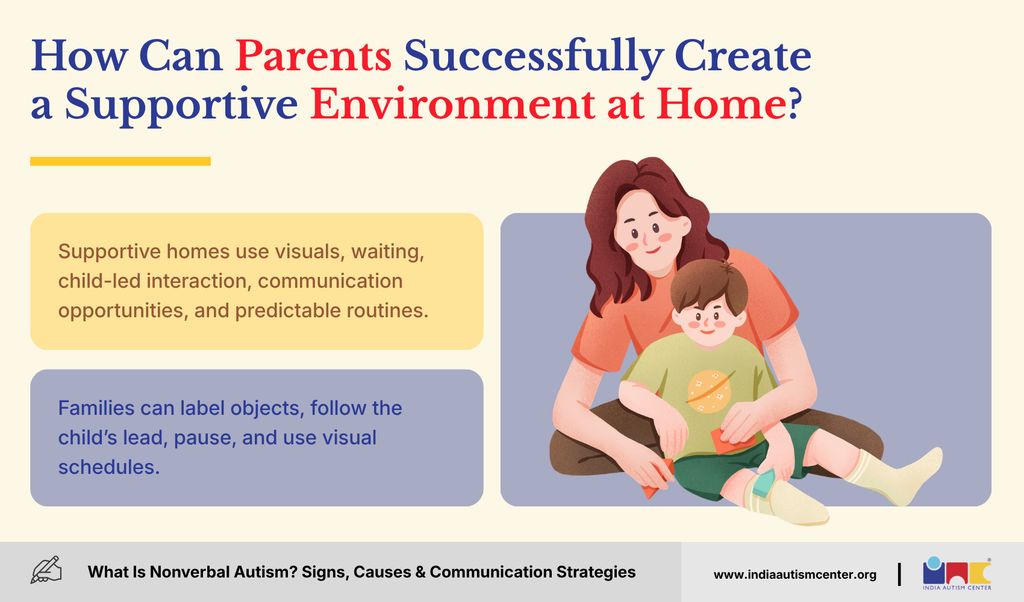
The home is where communication either flourishes or stagnates. Here are six concrete strategies:
1. Label everything with pictures and words. Put a picture card on the toy bin, the pantry, the bathroom door, the bedroom. Use real photographs of your child’s actual objects – not clip art. This builds receptive vocabulary and makes the environment “readable.”
2. Narrate your day – constantly. Even when your child doesn’t respond, describe what you are doing. “I am cutting the sabzi. The knife is sharp.” “We are going to the market. First market, then home.” This builds receptive language and gives your child the words they will eventually use – or programme into their AAC device.
3. Wait. Then wait longer. After asking a question or making a request, count to ten silently. Nonspeaking brains often need significantly more processing time than neurotypical brains. The reflex to fill the silence is strong – resist it. The response may come.
4. Follow their lead. If your child is fixated on spinning a bottle cap, sit with them and spin one too. Join their world before trying to bring them into yours. This is the foundation of relationship-based therapy approaches like Floortime/DIR.
5. Create communication opportunities – don’t just meet needs. If your child wants biscuits, don’t just give them. Pause. Look expectant. Hold the packet and wait. Create the communicative need. Then respond enthusiastically to whatever communication attempt they make – a gesture, a look, a reach, a sound.
6. Use visual schedules. A visual schedule – photographs or symbols showing the sequence of the day – reduces anxiety and creates predictable communication opportunities. “First bath, then breakfast, then school.” Predictability is not rigidity; it is safety.
Actionable takeaway: Start with one strategy this week. The visual schedule is the highest-impact, lowest-effort place to begin.
Conclusion
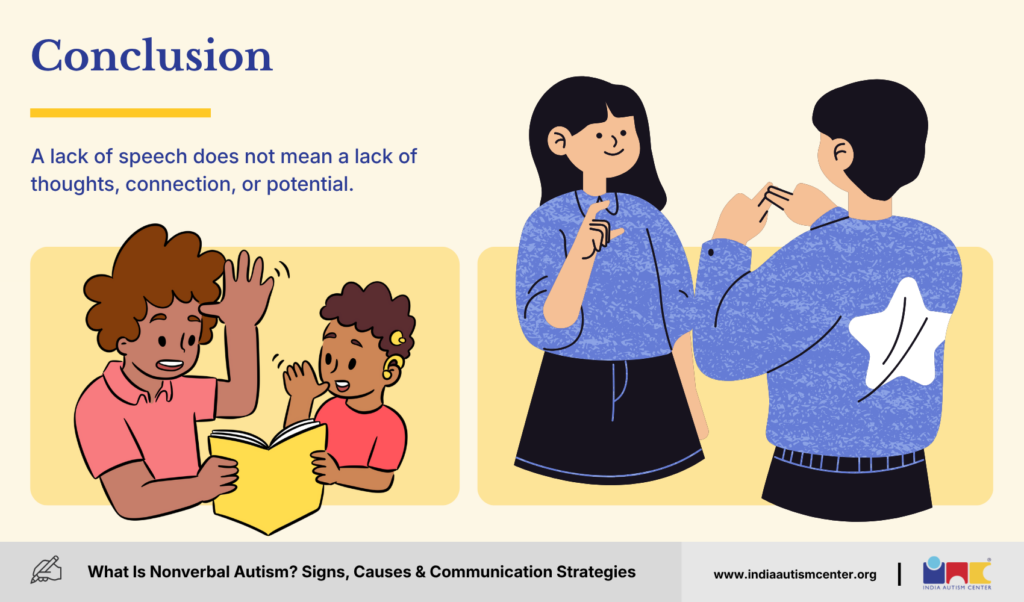
If you are beginning to explore what nonverbal autism is, remember that a lack of speech is not a lack of soul. Your child has thoughts, preferences, and a unique personality.
They may communicate through the way they lean into your hug, the way they light up when they see their favourite toy, or the way they use a tablet to tell you they love you. The nonverbal autism lifespan is a journey of constant discovery.
With the right combination of awareness, intervention, therapy, assistive technology, and unconditional love, the “wall” of silence can become a window and can help to create a beautiful, different way of experiencing the world.
Stay patient, stay curious, and never stop listening to what your child is telling you, even when they aren’t using words.
Frequently Asked Questions
What is nonverbal autism in simple terms?
Nonverbal autism essentially refers to individuals on the autism spectrum who do not generally use spoken language or have very limited speech. However, they still communicate using gestures, facial expressions, sounds, or tools like communication apps and picture boards to express their needs and emotions.
What causes nonverbal autism?
A combination of genetic, neurological, and developmental factors is the main cause of nonverbal autism. Differences in brain development, especially in language areas, also play a big role. There is no single cause, and it is not linked to vaccines or parenting styles.
What are the early signs of nonverbal autism?
Early signs include a lack of babbling, failing to respond when their name is called, limited eye contact, no pointing or gestures, and reduced or no interest in social interaction. Such signs tend to appear before age three; a child should be evaluated early for better outcomes.
Are there free apps for nonverbal communication in autism?
Yes, there are several free apps, such as Cboard, LetMeTalk, and JABtalk, that can considerably help individuals communicate using pictures and voice output. These apps are useful at home and school and can improve independence and reduce communication-related frustration.
How is autism different from nonverbal learning disorder?
Autism affects different aspects of life, such as communication, behaviour, and social interaction, often including varying levels of speech challenges. Nonverbal learning disorder mainly affects spatial and social skills, but individuals usually have strong verbal abilities. Proper diagnosis is necessary as it helps support strategies that differ between the two conditions.
Disclaimer: This article is intended for educational and informational purposes only. It is not a substitute for professional medical advice, diagnosis, or treatment. If you are pregnant or have concerns about medication use during pregnancy, please consult a qualified healthcare provider. If your child has received an autism diagnosis and you have questions about causes or support, please reach out to a trained specialist or an autism-focused organisation for guidance.
For expert insights, support services, and inclusive learning initiatives, visit the India Autism Center.
Useful Sources
CDC ADDM Network (2022). Prevalence and Characteristics of Autism Spectrum Disorder Among Children.