 Donate now
 Get a Call Back
 MENU
MENU 21 MIN READ
 SHARE
SHARE


If your child covers their ears at a birthday party, refuses to wear anything with a tag, or spins in circles for what feels like hours – you are not imagining things. These are real, neurological responses. And they are far more common than most people realise.
Research published on the National Institutes of Health (NIH) platform and widely cited by Healthline shows that 90–95% of autistic children experience some form of sensory processing difference (PMC, 2020). That means sensory challenges are not a side feature of autism – they are central to how many autistic individuals experience the world.
Sensory integration therapy for autism is one of the most widely used therapeutic approaches to address exactly this. In this guide, I will walk you through what it is, how it works, what the research actually says (including the honest, mixed parts), and – crucially – how families in India can access it.
What Is Sensory Integration Therapy for Autism?
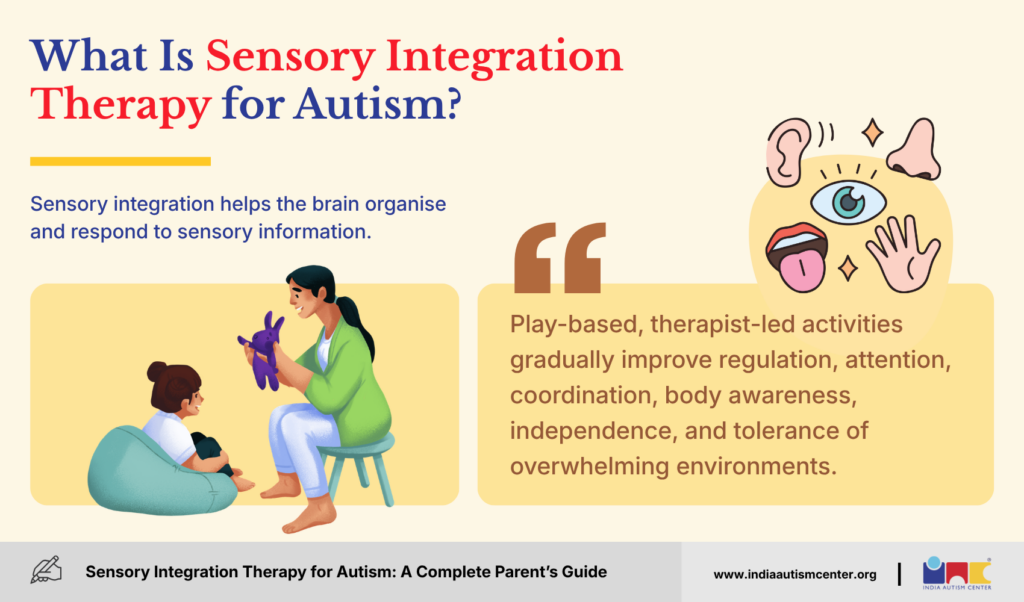
Sensory integration therapy is a clinic-based, play-based sensory-motor approach that helps the brain organise and respond to sensory information more effectively. The National Institutes of Health (NIH) describes it precisely this way – a structured intervention delivered by trained occupational therapists in a specially equipped environment.
Most people know the five classic senses. But the brain actually processes eight sensory systems, and all of them can be affected in autism:
| Sensory System | What It Does |
|---|---|
| Touch (Tactile) | Processes pressure, texture, temperature, pain |
| Sound (Auditory) | Processes volume, pitch, background noise |
| Sight (Visual) | Processes light, colour, movement, visual clutter |
| Taste (Gustatory) | Processes flavour, texture, temperature of food |
| Smell (Olfactory) | Processes scents and odours |
| Proprioception | Senses body position, muscle tension, joint movement |
| Vestibular | Senses balance, movement, and spatial orientation |
| Interoception | Senses internal body states – hunger, thirst, heartbeat, bladder |
When the brain processes these signals correctly, it responds calmly and purposefully. For many autistic individuals, one or more of these systems is either overactive or underactive – and that mismatch is what sensory integration for autism therapy works to correct.
Sensory integration therapy helps individuals:
- Regulate their responses to sensory input
- Improve attention and emotional control
- Build motor coordination and body awareness
- Increase independence in daily activities
- Develop tolerance for previously overwhelming environments
Rather than forcing the individual to endure discomfort, therapy helps the brain adapt to sensory experiences gradually and safely.
Understanding Sensory Processing Differences in Autism
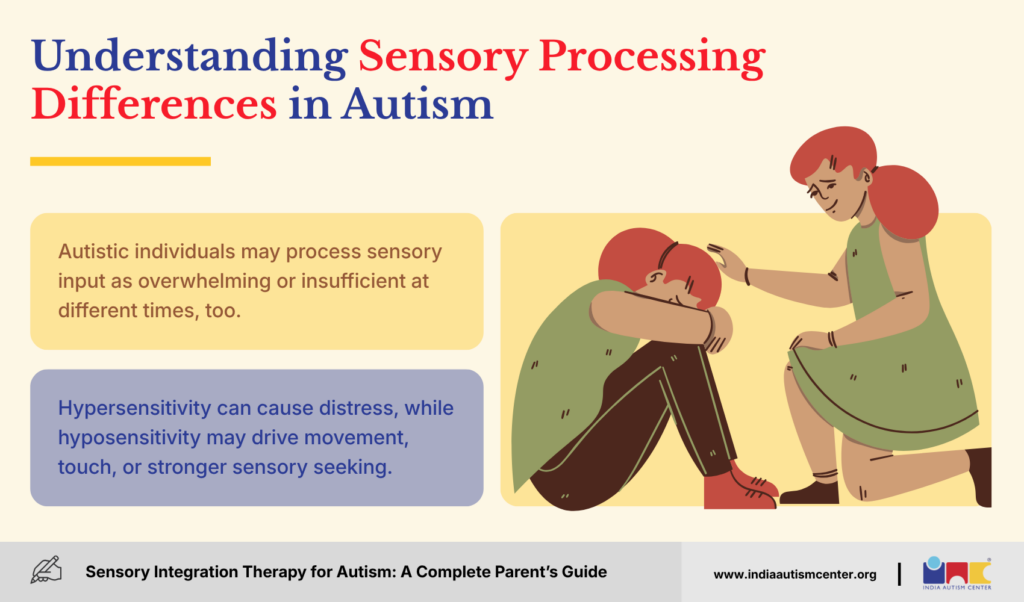
Hypersensitivity means the nervous system reacts too strongly to sensory input. The brain cannot filter out unnecessary information, so even mild sensations can feel extreme.
In an Indian context, you might notice:
- The sound of a pressure cooker whistle, a temple bell, or a school assembly bell causes genuine distress or panic
- Wearing a school uniform with a stiff collar or synthetic fabric leads to daily meltdowns at dressing time
- The smell of spices cooking – mustard seeds in hot oil, for example – triggers a strong aversion response
- Crowded festival environments like Durga Puja pandals or a busy railway station feel unbearable
- Bright tube lights in classrooms cause squinting, headaches, or refusal to enter the room
Over time, this constant sensory overload increases stress, reduces confidence, and can lead to school avoidance or social withdrawal.
Hyposensitivity (Under-Responsiveness)
Hyposensitivity means the brain does not receive enough sensory input. Sensations feel weak or unclear, so the individual actively seeks stronger stimulation to feel regulated.
You may observe:
- Constant movement – jumping on furniture, spinning, rocking – even in quiet settings
- Mouthing objects, chewing on clothing, or touching every surface in a room
- Bumping into walls or people without seeming to notice
- Limited awareness of pain – a child may fall and not cry, or not notice a cut
- Eating very spicy or very textured food to get enough sensory input from meals
Because the body does not register sensations clearly, safety awareness can be reduced. Coordination, attention, and self-care skills all suffer. Learning becomes harder when the brain is constantly searching for the input it needs.
When autism sensory issues are unbalanced in either direction, simple daily activities – sitting in class, eating a meal, travelling by auto-rickshaw, attending a family function – can become genuinely stressful. This is exactly why sensory integration for autism programmes matter so much.
Want to know more? Get in touch with us.
Signs Your Child May Need Sensory Integration Therapy
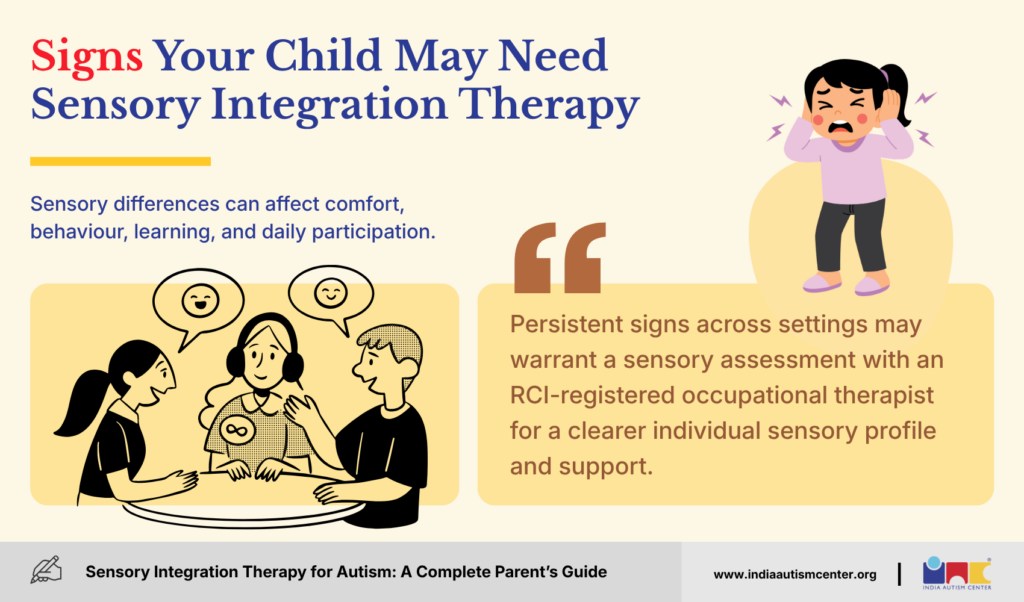
Knowing when to seek help is half the battle. Below is a practical checklist of behavioural signs across sensory domains. These are among the most common signs of sensory processing disorder that autism specialists look for.
Signs of Over-Sensitivity
- Covers ears or becomes distressed by everyday sounds (traffic, fans, crowds)
- Refuses to wear certain clothing due to texture, tags, or tightness
- Avoids being touched, hugged, or having hair combed
- Becomes overwhelmed in brightly lit or visually busy environments
- Gags or refuses food based on texture, smell, or temperature
- Becomes anxious or aggressive in crowded or noisy public places
Signs of Under-Sensitivity
- Seeks constant movement – spinning, jumping, rocking – even at inappropriate times
- Touches everything compulsively, including strangers or unsafe objects
- Does not react to pain, heat, or cold in the expected way
- Mouths non-food objects regularly beyond the typical developmental stage
- Crashes into furniture, walls, or people without seeming to notice
- Needs very strong flavours, spices, or textures to show interest in food
If you notice 4 or more of these signs consistently across different settings, speak with an RCI-registered occupational therapist. A formal sensory assessment will give you a clear picture of your child’s specific sensory profile.
How Sensory Integration Therapy Works
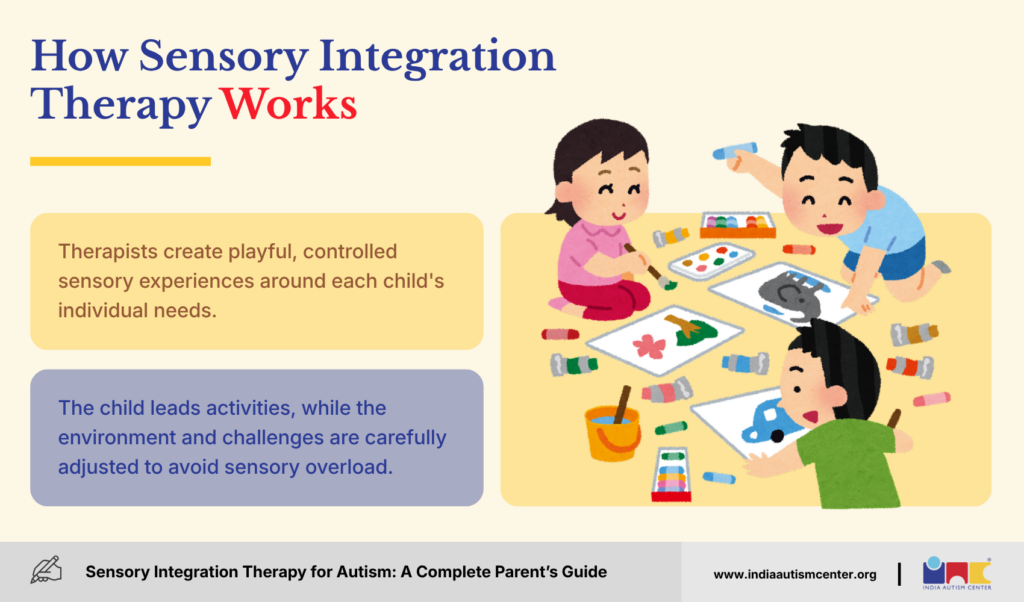
Sensory integration therapy is conducted by trained occupational therapists in a specially equipped clinical environment. Sessions are designed to be playful and engaging – not clinical in the cold, sterile sense. The therapist creates controlled sensory experiences that gradually help the brain reorganise its responses.
The Three Core Principles
1. The child leads the activity. The therapist follows the child’s natural interests and motivation. This is not a passive exercise – the child is an active participant. This builds trust and intrinsic motivation, which are essential for neurological learning.
2. The environment is carefully designed. Therapy rooms are equipped with swings, balance boards, crash mats, textured surfaces, weighted blankets, and controlled lighting. Every piece of equipment serves a specific sensory purpose. Nothing is random.
3. Each task targets a specific sensory need. Movement activities improve balance and body awareness. Tactile play improves touch tolerance. Proprioceptive exercises help calm an overactive nervous system. The therapist adjusts the level of challenge – always pushing slightly beyond the child’s comfort zone without overwhelming them.
Through repetition and gradual exposure, the nervous system becomes more organised, more flexible, and more capable of handling everyday sensory demands.
Key Sensory Integration Therapy Techniques
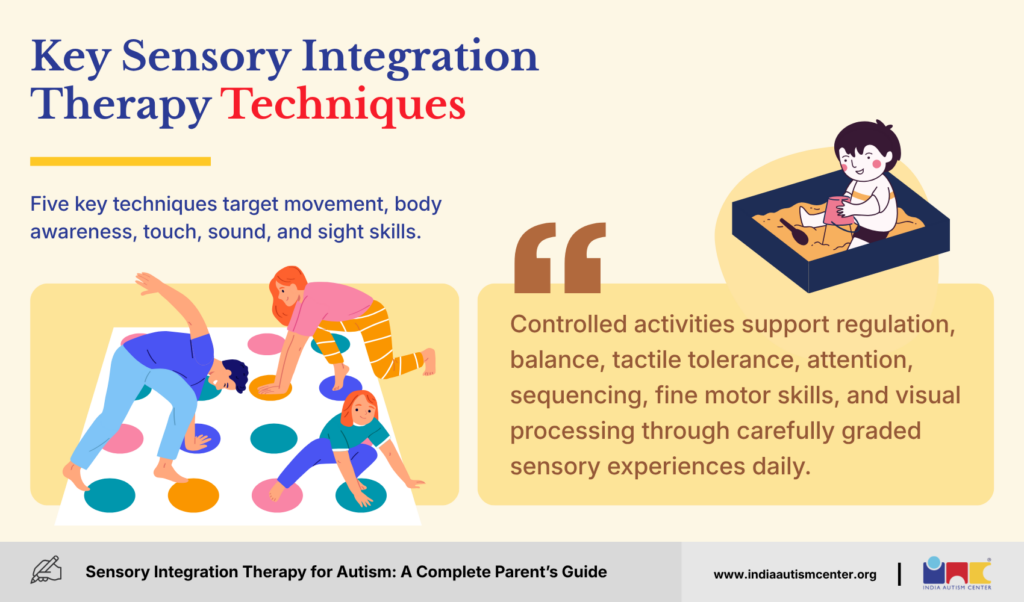
Here are the five core techniques used in sensory integration for autism programmes, with clinical detail on how each one works.
1. Vestibular Activities (Movement-Based Therapy)
These include swinging, spinning, rocking, and balance board exercises.
The vestibular system – located in the inner ear – governs balance, spatial orientation, and movement detection. When it is dysregulated, children may appear clumsy, fearful of movement, or conversely, unable to stop moving. Vestibular activities directly stimulate this system in a controlled way, helping it recalibrate. Research shows that linear vestibular input (back-and-forth swinging) tends to be calming, while rotary input (spinning) can be alerting – and therapists use this distinction deliberately.
2. Proprioceptive Input (Body Awareness Therapy)
This includes jumping, pushing heavy objects, carrying weighted items, and “heavy work” activities.
The proprioceptive system tells the brain where the body is in space. When it is under-responsive, children seek intense physical input – crashing, pushing, squeezing. Proprioceptive activities provide that input in a safe, structured way. They are particularly effective for calming an overactive nervous system and improving self-regulation. Many therapists use proprioceptive “loading” at the start of a session to help the child settle before more complex tasks.
3. Tactile Therapy (Touch-Based Activities)
This may involve playing with sand, clay, or kinetic sand; using textured brushes; exploring different fabrics; or finger painting.
Tactile therapy works by gradually desensitising the tactile system to textures and touch experiences that trigger discomfort. The therapist uses a technique called systematic desensitisation – starting with textures the child tolerates and slowly introducing more challenging ones. This reduces the defensive response over time and improves fine motor skills, which depend on good tactile feedback.
4. Auditory Integration Activities
These focus on controlled sound exposure, rhythm games, listening exercises, and structured music activities.
Auditory hypersensitivity – one of the most common sensory challenges autism families report – can make classrooms, markets, and family gatherings genuinely painful. Auditory integration activities use carefully modulated sound to help the auditory system build tolerance. Rhythm games also support attention, sequencing, and social turn-taking as secondary benefits.
5. Visual Processing Therapy
These include light tracking, colour matching, pattern recognition, and visual scanning tasks.
Visual processing difficulties can make reading, writing, and navigating busy environments difficult. Visual therapy activities help the brain process visual information more efficiently, reducing overstimulation and improving focus. For children who find eye contact difficult due to visual sensitivity, this work can also support social engagement over time.
You can read our blog on 10 Best Exercises for Autistic Kids: Sensory, Motor & Social Benefits
What Does the Research Say?
This is the section most therapy guides skip. We are not going to do that.
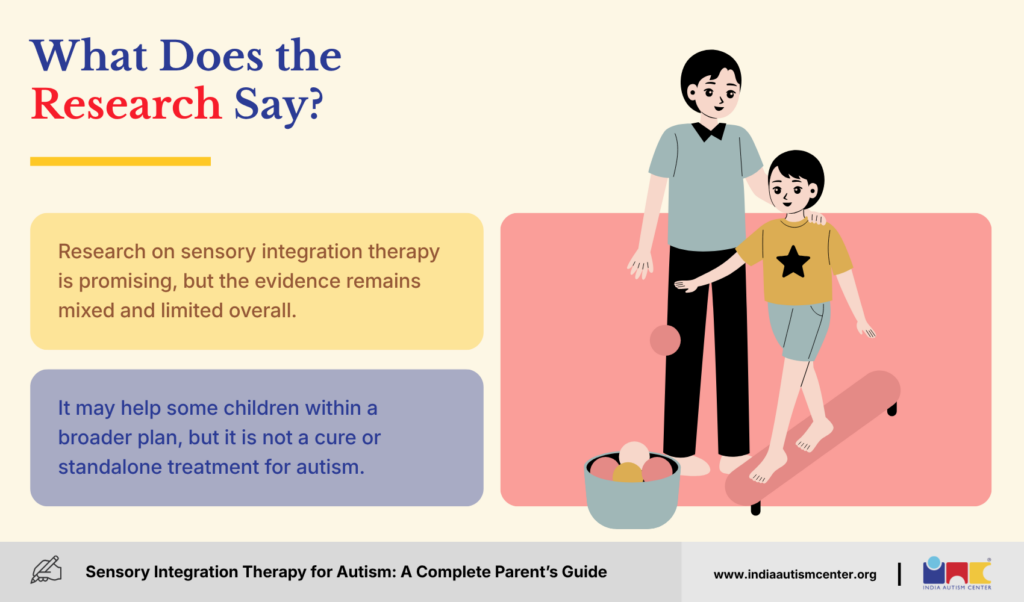
The honest answer is: the research on sensory integration therapy is promising but mixed. Here is what the evidence actually shows.
The AAP Position
The American Academy of Pediatrics (AAP) has reviewed sensory integration therapy for autism and describes the evidence as “limited and inconclusive” (AAP, 2012; updated 2019). The AAP does not recommend it as a standalone treatment. However, it acknowledges that sensory-based occupational therapy may be considered as one component of a comprehensive, goal-directed plan – provided families are informed about the evidence base and clear goals are set.
This is a nuanced position, not a rejection.
A 2023 Peer-Reviewed Study
A 2023 non-randomised controlled trial involving 72 autistic children aged 5–12 found that after a structured sensory integration intervention, participants showed statistically significant improvements in communication, socialisation, and daily living skills as measured by the Vineland Adaptive Behaviour Scale II (published in QJMed, 2023). This is encouraging, but it is one study, and non-randomised designs have limitations.
The Lang et al. Systematic Review (2012)
The most comprehensive systematic review of sensory integration therapy for autism was published in Research in Autism Spectrum Disorders by Lang and colleagues in 2012. They reviewed 25 studies: 3 showed clear benefit, 8 showed mixed results, and 14 showed no benefit. The authors noted that many studies had significant methodological weaknesses – small samples, lack of control groups, inconsistent outcome measures.
This is the most honest summary of the field: some children benefit meaningfully, many show modest or no gains, and the research quality needs to improve.
The NIH/NCBI Framing
The NIH describes sensory integration therapy as a “clinic-based, play-based sensory-motor approach” – a useful framing because it clarifies what the therapy actually is: structured, professional, and grounded in sensory-motor neuroscience, even if the evidence base is still developing.
What This Means for Your Family
Sensory integration therapy works best as part of a multi-disciplinary plan – alongside speech therapy, behavioural support, and educational intervention. It is not a cure for autism, and no responsible therapist will present it as one. But for many children, particularly those with significant autism sensory issues, it can meaningfully reduce distress, improve regulation, and open the door to learning and social participation.
The goal is not to eliminate sensory differences. It is to help your child navigate the world with greater comfort and confidence.
Benefits of Sensory Integration Therapy for Autism
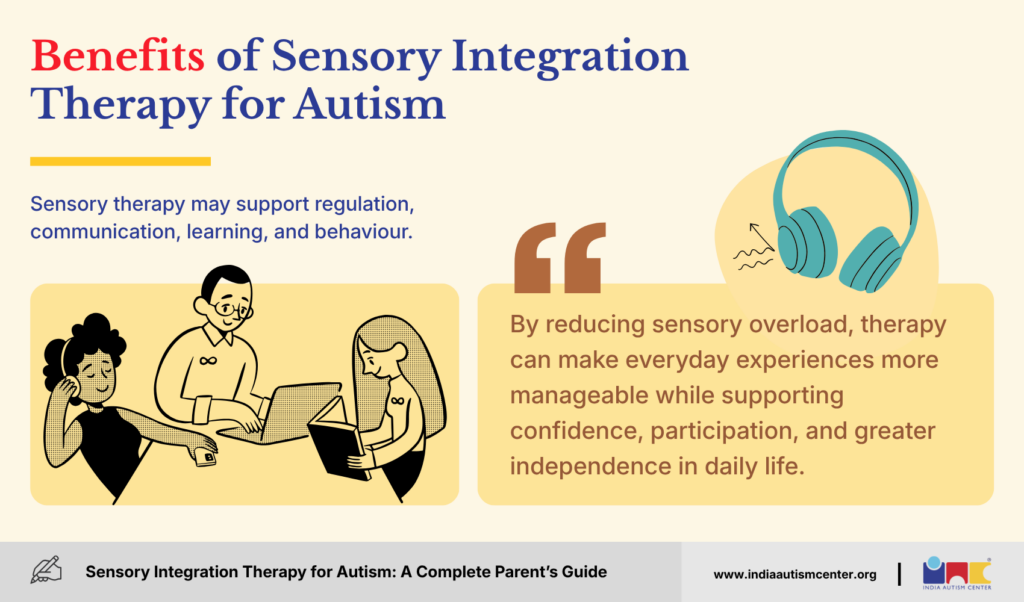
When sensory integration therapy is provided consistently and in a structured way, it brings meaningful and long-term benefits to individuals on the autism spectrum. Instead of simply managing behaviour, this therapy works at a neurological level by helping the brain process sensory information more efficiently. As a result, everyday life becomes less overwhelming and more predictable.
You may gradually observe improvements in several important areas of development:
Emotional Regulation
It helps the nervous system stay calm and organised. When sensory input is no longer confusing or painful, emotional reactions become easier to control. You may notice fewer emotional outbursts and a greater ability to cope with change, frustration, or unfamiliar situations. Over time, the individual learns to self-soothe and remain emotionally balanced for longer periods.
Communication
When the brain is not overloaded by sensory input, it becomes more available for interaction. It supports attention, eye contact, and body awareness, which are all essential for communication. This can lead to better response to verbal instructions, improved use of gestures or speech, and increased willingness to engage with others.
Learning Ability
Learning requires focus and mental readiness. If sensory discomfort is constant, concentration becomes difficult. Through sensory integration therapy, the brain learns to filter out unnecessary stimuli and respond appropriately. This improves attention span, memory, and task completion, making classroom learning and structured activities more successful.
Social Interaction
Social situations involve multiple sensory experiences, such as noise, touch, movement, and visual cues. These can be overwhelming for autistic individuals. This therapy helps reduce this overload, allowing the person to feel safer in social environments. As comfort increases, you may see better participation in group activities, improved tolerance of physical proximity, and more meaningful social engagement.
Sleep Patterns
An unregulated sensory system often leads to poor sleep due to restlessness or anxiety. This therapy helpd promote better body awareness and relaxation, which helps regulate sleep cycles. With improved sensory processing, bedtime routines become easier, and sleep becomes deeper and more consistent.
Behaviour Control
Many challenging behaviours are not intentional but are responses to sensory discomfort. When therapy helps regulate sensory input, behaviours such as resistance, impulsivity, or withdrawal naturally decrease. The individual gains better control over their actions and responses, leading to improved cooperation and daily functioning.
In addition to these positive developments, it also helps reduce several distressing symptoms:
- Anxiety, as the environment feels less threatening and more manageable.
- Meltdowns, because the nervous system is better able to cope with stimulation.
- Avoidance behaviours, since sensory experiences no longer feel unbearable.
- Aggression, which often decreases when frustration and discomfort are reduced.
Want to know more? Get in touch with us.
Understanding the Sensory Diet: A Daily Support Plan
One of the most practical tools in sensory integration therapy is the sensory diet – a term coined by occupational therapist Patricia Wilbarger in the 1980s. Despite the name, it has nothing to do with food.
A sensory diet for autism is a personalised, scheduled plan of sensory activities designed to maintain optimal sensory regulation throughout the day. Just as a nutritional diet provides the body with what it needs at regular intervals, a sensory diet provides the nervous system with the sensory input it needs to stay calm, alert, and ready to learn.
Critically, a sensory diet is designed by an occupational therapist based on your child’s specific sensory profile. It is not a generic list of activities.
What a Sensory Diet Looks Like in Practice
Here is an example of how a sensory diet might be structured across a school day:
Morning (Before School) – Proprioceptive Input
- 10 minutes of “heavy work”: carrying a slightly weighted school bag, doing wall push-ups, or jumping on a small trampoline
- Goal: activate the proprioceptive system to promote alertness and body awareness before the demands of the school day
Midday (Movement Break) – Vestibular and Proprioceptive Input
- A structured 5–10 minute movement break: swinging, jumping, or a brief outdoor run
- Goal: reset the nervous system mid-day, reduce accumulated sensory overload, and improve afternoon attention
Evening (Wind-Down) – Calming Input
- Deep pressure activities: a firm massage, a weighted blanket, or slow rocking
- Goal: transition the nervous system from the high stimulation of the school day to a calm state suitable for sleep
India-Specific Sensory Diet Activities
The beauty of a sensory diet is that it draws on everyday materials and cultural activities. In an Indian context, excellent sensory diet activities include:
- Rangoli making – fine motor and tactile input through handling coloured powder, rice, or flower petals
- Clay or dough play – kneading, rolling, and shaping provide deep proprioceptive and tactile input
- Yoga and pranayama – slow, rhythmic breathing and gentle movement are among the most effective calming strategies for an overactive nervous system
- Weighted school bag – a bag that is 10% of the child’s body weight provides proprioceptive input during the school commute
- Bollywood rhythm and movement – structured dance or clapping games to music provide vestibular, proprioceptive, and auditory input simultaneously
- Outdoor play in sand or mud – traditional Indian outdoor play provides rich tactile and proprioceptive input
What Makes Sensory Integration Therapy for Autism Different?
You may wonder how this therapy differs from ordinary play activities or general therapy sessions. Although it may look playful on the surface, sensory integration therapy autism programmes are carefully designed clinical interventions. Every activity has a scientific purpose and is chosen to support how the brain processes sensory information.
Unlike unstructured play, sensory integration therapy is:
Clinically Structured
Sensory integration therapy follows a planned and organised framework. Before therapy begins, the individual undergoes a detailed sensory assessment to identify specific sensory difficulties, such as sensitivity to sound, touch, movement, or visual input. Based on this assessment, the therapist creates a personalised programme with clear goals.
Each session is designed to:
- Target identified sensory challenges
- Progress gradually from simple to more complex activities
- Build tolerance and regulation step by step
This structured approach ensures that therapy supports real developmental needs rather than offering random activities.
Based on Neurological Science
Sensory integration therapy is grounded in neuroscience and research on how the brain processes sensory information. It is based on the understanding that the brain can change and adapt through repeated, meaningful sensory experiences.
The therapy works by:
- Stimulating specific sensory systems
- Encouraging the brain to organise sensory signals more effectively
- Strengthening neural pathways involved in movement, attention, and emotional control
Because of this scientific foundation, therapy focuses on improving how the nervous system functions, not just how the individual behaves.
Delivered by Trained Professionals
Unlike casual play sessions, sensory integration therapy is provided by trained occupational therapists who specialise in sensory processing and autism. These professionals understand how to adjust sensory input safely and appropriately.
They ensure that:
- Activities match the individual’s sensory needs and tolerance levels
- Sessions remain challenging but not overwhelming
- Emotional and physical safety are maintained at all times
This professional guidance allows therapy to be both effective and supportive, ensuring that progress happens without distress.
Monitored Through Progress Tracking
Another key difference is that sensory integration therapy is continuously monitored and evaluated. Therapists track progress by observing changes in behaviour, attention, coordination, emotional regulation, and daily functioning.
Progress is measured through:
- Regular sensory assessments
- Session observations
- Functional skill improvements
- Feedback from families and educators
This allows therapy plans to be updated as the individual develops. If one approach is not working, it can be adjusted to suit changing needs. Because of these features, sensory integration therapy is not random or experimental. It is a targeted, evidence-informed intervention that focuses on long-term improvement rather than short-term behaviour management.
Here is a bonus article for you on All You Need to Know About Sensory Challenges in Autistic Individuals.
How You Can Support Sensory Integration at Home
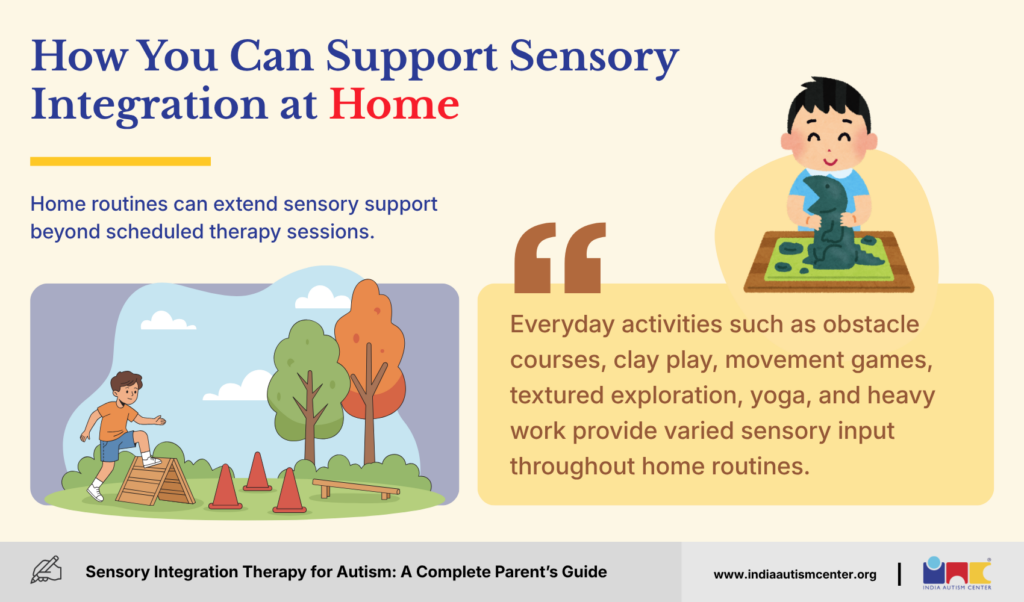
Therapy sessions happen once or twice a week. The rest of the time, your home environment is the most powerful sensory tool you have. Here are 10 structured activities you can incorporate into daily life – no special equipment required.
1. Obstacle course play – arrange cushions, pillows, and furniture to create a simple indoor obstacle course. Crawling, climbing, and balancing provide rich vestibular and proprioceptive input.
2. Rangoli and colour powder play – handling coloured powder, rice, or flower petals develops tactile tolerance and fine motor control. Start with textures your child already tolerates.
3. Clay and dough kneading – rolling, squeezing, and shaping clay or atta (wheat dough) provides deep proprioceptive input and is naturally calming.
4. Bollywood rhythm games – clapping, stomping, or moving to familiar music provides vestibular and auditory input simultaneously. Keep it joyful and follow your child’s lead.
5. Outdoor sand and mud play – traditional outdoor play in sand pits or garden soil provides rich tactile and proprioceptive input. Gradually introduce wetter, messier textures as tolerance builds.
6. Weighted blanket or lap pad – a blanket that is approximately 10% of the child’s body weight provides calming deep pressure. Use during homework time, mealtimes, or bedtime routines.
7. Bubble wrap stomping – simple, satisfying, and provides excellent proprioceptive feedback through the feet. Great for children who seek heavy input.
8. Textured fabric exploration – collect swatches of different fabrics (cotton, silk, jute, velvet) and let your child explore them at their own pace. Never force contact with a texture that causes distress.
9. Yoga and pranayama – simple yoga poses (child’s pose, downward dog, tree pose) and slow breathing exercises are among the most effective calming strategies. Even 5 minutes before school can make a difference.
10. Carrying and “heavy work” – ask your child to carry grocery bags, push a laundry basket, or help move books. These everyday tasks provide proprioceptive input and build body awareness naturally.
Always follow your occupational therapist’s guidance when introducing new activities. What helps one child may overwhelm another.
Role of India Autism Center (IAC) in Sensory Integration Therapy
At IAC, sensory integration therapy is not treated as an isolated intervention. It is part of a holistic developmental programme.
IAC ensures:
1. Individualised Sensory Assessments
Every individual is evaluated for:
- Sensory preferences
- Sensory triggers
- Functional challenges
This allows therapists to design truly personalised therapy plans.
2. Integration with Occupational Therapy
At IAC, sensory integration occupational therapy works alongside:
- Speech therapy
- Behavioural therapy
- Life skills training
This ensures that sensory progress supports real-world functioning.
3. Specially Designed Sensory Rooms
IAC uses purpose-built environments with:
- Swings and balance tools
- Tactile play stations
- Visual calming equipment
These controlled settings help the nervous system adapt safely.
4. Parent and Caregiver Training
Therapy does not stop at the centre. IAC guides families on:
- Home sensory routines
- Environmental adaptations
- Emotional regulation strategies
This continuity makes progress sustainable.
5. Long-Term Development Focus
IAC’s approach ensures that sensory integration therapy is not just about calming behaviour but about:
- Building independence
- Improving learning
- Enhancing quality of life
Want to know more? Get in touch with us.
Conclusion
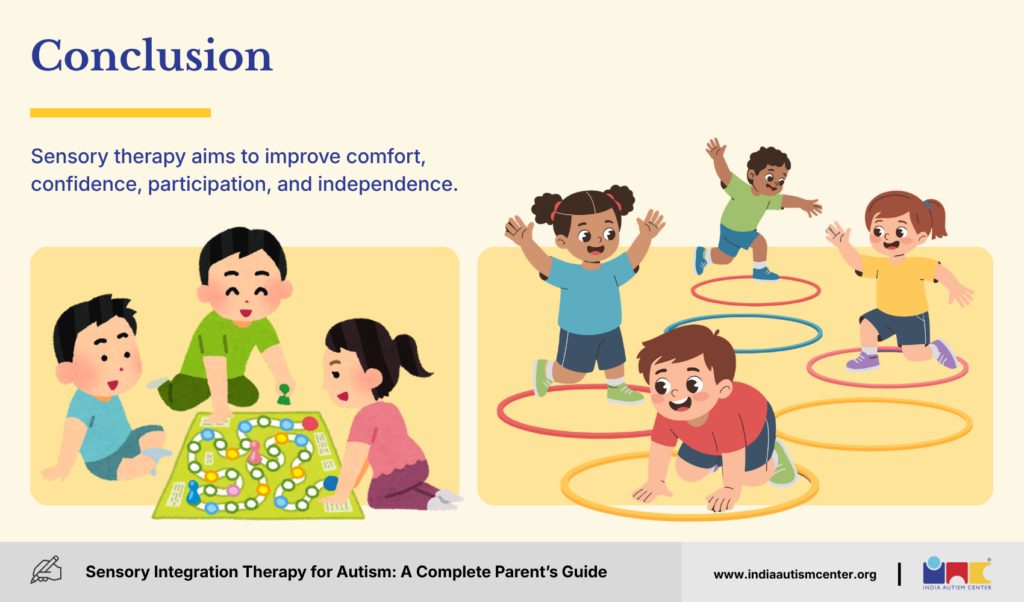
Sensory challenges can deeply affect how a person experiences the world. Without support, these challenges may lead to anxiety, behavioural issues, and learning difficulties.
Sensory integration therapy provides a structured, science-based solution. Through carefully designed sensory experiences, it helps the brain process information more effectively.
Whether you are exploring:
- sensory integration therapy autism programmes
- sensory integration occupational therapy
- sensory integration therapy techniques
- or wondering what sensory integration therapy is for autism
The goal remains the same: improving comfort, confidence, and independence.
Frequently Asked Questions (FAQs)
What is sensory integration therapy for autism?
Sensory integration therapy for autism is a therapeutic approach that helps the brain organise and respond to sensory information more effectively. It supports individuals who are over-sensitive or under-sensitive to sounds, touch, movement, or visual input. Through structured sensory activities, therapy improves emotional regulation, attention, coordination, and daily functioning.
How does sensory integration occupational therapy help autistic individuals?
Sensory integration occupational therapy focuses on improving sensory processing while also supporting everyday life skills. It helps individuals become more comfortable with dressing, eating, learning, and social interaction by linking sensory input to practical activities. This approach makes therapy meaningful and directly useful in real-life situations.
What are the most common sensory integration therapy techniques?
Common sensory integration therapy techniques include movement-based activities such as swinging and balancing, tactile activities using different textures, proprioceptive exercises like pushing or carrying weighted objects, and auditory or visual processing tasks. These techniques are chosen based on individual sensory needs and are adjusted as progress is made.
Who can benefit from sensory integration therapy autism programmes?
Sensory integration therapy autism programmes benefit children, adolescents, and adults who experience sensory processing difficulties. It is helpful for individuals with autism, ADHD, and developmental delays. With the right programme and professional guidance, sensory integration therapy can improve comfort, learning ability, behaviour, and independence.
Disclaimer: This article is intended for educational and informational purposes only. It is not a substitute for professional medical advice, diagnosis, or treatment. If you are pregnant or have concerns about medication use during pregnancy, please consult a qualified healthcare provider. If your child has received an autism diagnosis and you have questions about causes or support, please reach out to a trained specialist or an autism-focused organisation for guidance.
For expert insights, support services, and inclusive learning initiatives, visit the India Autism Center.