 Donate now
 Get a Call Back

 MENU
 11 MIN READ
 SHARE


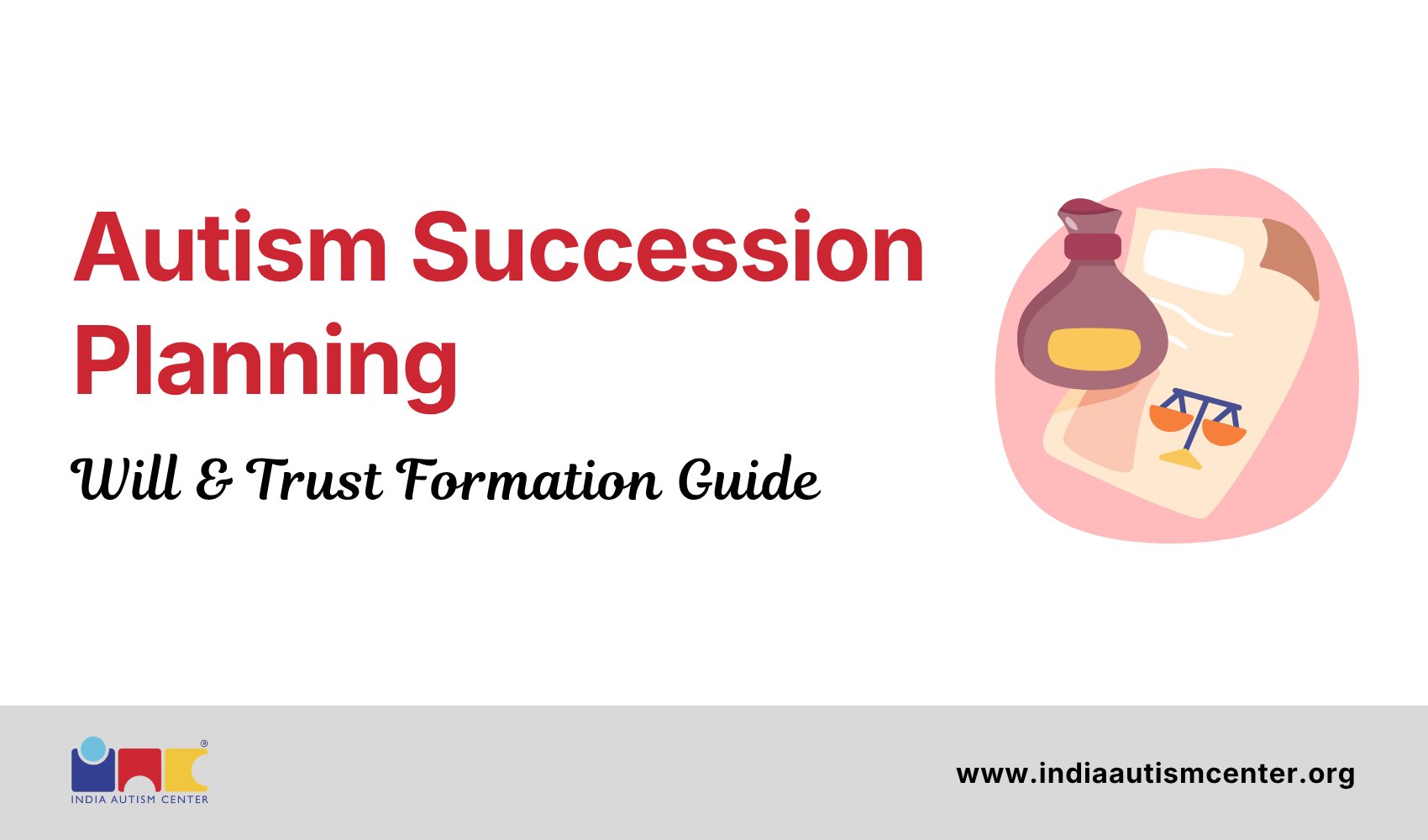
For parents or guardians of children with Autism Spectrum Disorder (ASD), planning for the future involves more than financial security. It means ensuring that their child continues to receive appropriate care, support and opportunities for an independent, fulfilling life, even when their primary caregivers are no longer around.
In India, autism succession planning can help families prepare for changes in caregiving, inheritance and financial management through a carefully drafted will, an appropriate trust, and suitable legal arrangements.
Understanding how these options work is the first step towards creating a sustainable future.
What Is Autism Succession Planning?
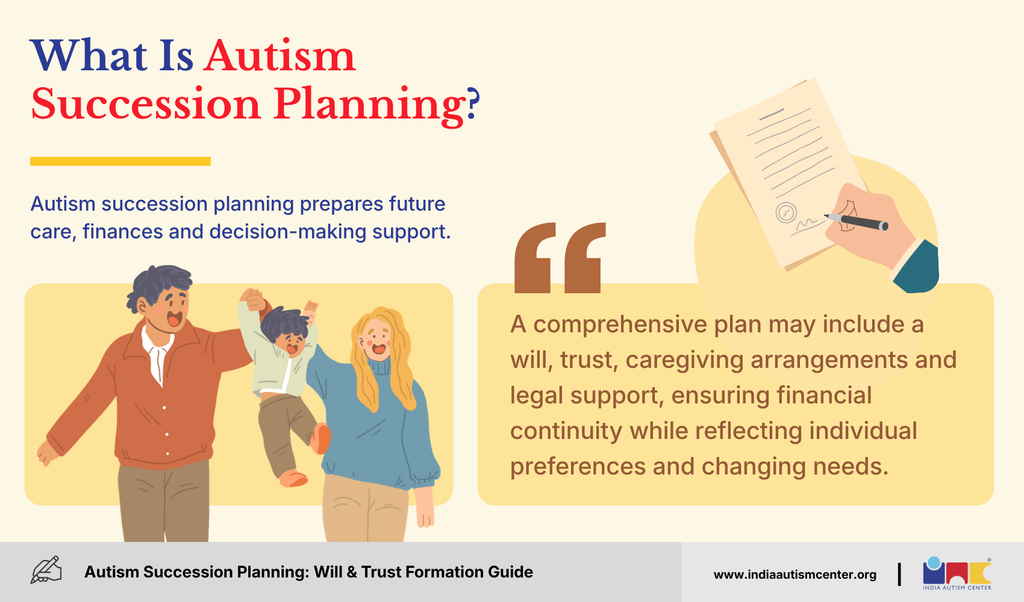
Autism succession planning is the process of arranging future care, financial resources, property management and decision-making support for an autistic person if their parents or primary caregivers become incapacitated or pass away.
It combines financial planning with legal and personal care arrangements. Rather than focusing solely on who inherits a family’s assets, it considers how those assets will be managed and used to support the autistic person’s needs, preferences and quality of life.
A comprehensive plan may include:
- A will: Specifies how the parent’s assets should be distributed after their death.
- A trust: Establishes a structure for managing and using money or property for the beneficiary.
- Caregiving arrangements: Identifies suitable future caregivers and documents the person’s daily routines, communication preferences and support requirements.
- Legal decision-making support: Considers whether formal guardianship or another lawful arrangement is necessary.
- Financial continuity: Provides for ongoing expenses, autism therapies, education, accommodation and other support.
The objective is not to assume that every autistic person requires lifelong supervision. Support needs and decision-making abilities vary considerably. A suitable plan should reflect the individual’s circumstances, abilities, wishes and changing needs.
Why Are Wills and Trusts Important for Autistic Individuals?
Parents often provide financial support, coordinate appointments, arrange services and advocate for their child’s needs. If these responsibilities suddenly fall to someone unfamiliar with the family’s arrangements, important details can be missed.
A will and a trust address different aspects of this problem. A will records the parent’s wishes regarding their estate, while a trust can establish an ongoing framework for managing assets after the parent’s death.
Consider a family whose adult son needs support with financial decisions but can communicate his preferences and make many everyday choices independently. Simply leaving him an inheritance may not address how the money will be managed, how regular care will be funded or who will coordinate support.
A carefully designed plan can address these questions without unnecessarily restricting his autonomy.
Succession planning can help families:
- Provide for recurring expenses, including accommodation, healthcare and personal support.
- Identify trustworthy people to manage finances and oversee care.
- Reduce uncertainty about how property will be distributed and future responsibilities.
- Document the individual’s preferences, routines and support requirements.
- Make arrangements for changing needs as the person ages.
Importantly, autism itself does not automatically mean a person lacks legal capacity. Autism Spectrum Disorder (ASD) encompasses a much wider range of communication, sensory and support needs. Planning should be based on the individual’s actual abilities rather than assumptions about their diagnosis.
How to Create a Will for an Autistic Child or Adult in India?
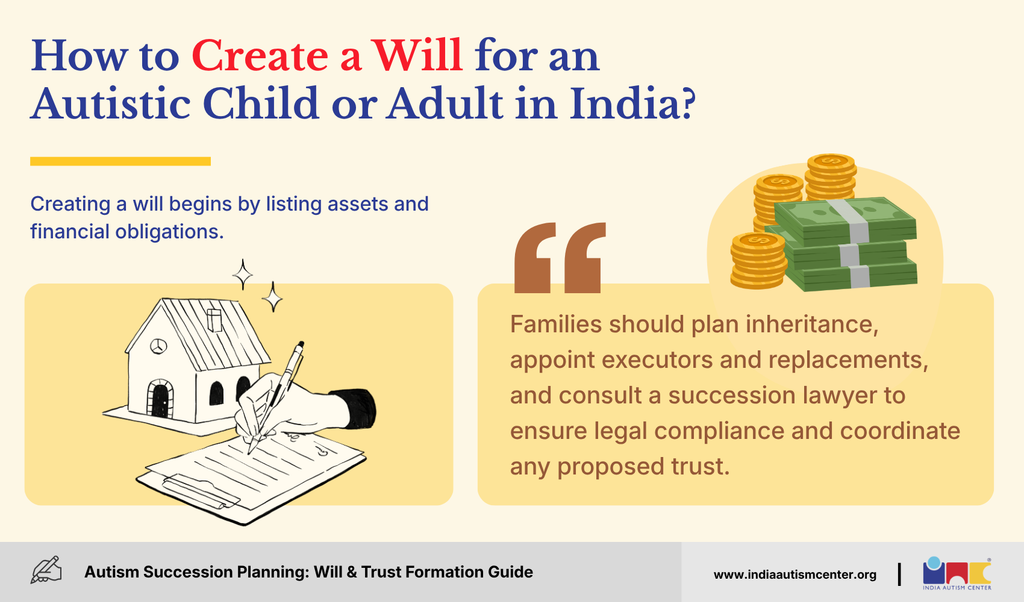
A will is a legal document which establishes how a person’s assets should be distributed after their death. For parents planning for an autistic family member, it can be an essential part of long-term financial planning.
1. List your assets and existing obligations
Begin by documenting property, bank deposits, investments, insurance policies, business interests and other assets: record outstanding loans, recurring expenses and existing financial commitments.
Review ownership carefully. A person can generally dispose of only the interest they legally own, subject to applicable law. Jointly held assets, nominations and contractual arrangements may have consequences that a will alone does not resolve.
2. Decide how the inheritance should be managed
Consider whether an outright inheritance would be appropriate or whether a trust could provide more suitable financial management.
For example, funds may be needed for regular living costs, healthcare, supported accommodation, transport, education or vocational training. A trust can be structured to meet specified needs over time, subject to its terms and applicable law.
Avoid making assumptions about the beneficiary’s ability to manage money. Consider their existing financial skills, preferences and the assistance they may want or need.
3. Appoint appropriate executors and trustees
An executor administers the deceased person’s estate in accordance with the will and applicable law. A trustee manages assets which are placed in a trust under the trust deed.
These roles are distinct, although the same person may sometimes perform both. Choose people with integrity, sound judgement and sufficient time to carry out their responsibilities. Consider naming suitable replacements in case the original appointee cannot continue.
4. Follow the applicable legal requirements
In India, will-making formalities depend on the applicable succession law and the circumstances of the person making the will.
Under Section 63 of the Indian Succession Act, 1925, an ordinary, unprivileged will governed by that provision must be signed by the testator, or signed on their behalf under the prescribed conditions, and attested by at least two witnesses who meet the statutory requirements.
The applicable law must be checked because succession rules vary according to personal law and other circumstances. Registration of a will is generally optional under the Registration Act, 1908, but registration does not cure an otherwise invalid will.
Obtain advice from an Indian succession lawyer to ensure that the document reflects your wishes, meets the relevant legal requirements and works alongside any proposed trust.
What Is a Trust for an Autistic Person, and How Does It Work?
A trust is a legal arrangement under which a trustee holds or manages property for the benefit of one or more beneficiaries, according to the trust’s terms.
In autism succession planning, a properly structured trust can help ensure that financial resources remain available for the beneficiary’s long-term needs. It can also clarify who is responsible for managing the funds and what expenses may be paid.
A typical arrangement involves three roles:
- Settlor: The individual who will create the trust and transfer or settle assets into it.
- Trustee: The person or institution responsible for administering the trust and applying its assets according to its terms.
- Beneficiary: The individual for whose benefit the trust is established.
For example, parents may establish a trust to fund an adult child’s accommodation, personal assistance, medical expenses and leisure activities. The trust deed can specify the permitted uses of funds, how decisions are made and what will happen if a trustee can no longer serve.
What Type of Trust Should Families Consider?
The appropriate structure depends on the family’s assets, intended beneficiaries, tax position and care objectives.
A private family trust may be considered when the primary objective is to provide for a specific family member. Depending on the arrangement, the settlor may create a trust during their lifetime or through provisions in a will. The latter is commonly called a testamentary trust.
A discretionary trust may give trustees flexibility over distributions among beneficiaries, while a fixed-benefit arrangement may prescribe particular entitlements. The distinction has important legal, financial and tax consequences.
There is no single trust structure that suits every autistic person. Families should obtain advice on the Indian Trusts Act, 1882, where applicable, other relevant laws, the proposed trust’s enforceability, tax treatment and the practical costs of administration.
Trust arrangements involving immovable property, multiple beneficiaries or assets in different jurisdictions may require additional consideration.
What Should an Autism Care Trust Include?
A carefully drafted trust deed should address:
- The trust’s purpose and the assets it will hold.
- The trustee’s powers, duties and reporting responsibilities.
- Permitted expenditure and the process for making distributions.
- Appointment, replacement and removal of trustees.
- Investment, record-keeping and accounting procedures.
- Arrangements for incapacity, disputes and the eventual distribution of remaining assets.
Families should also decide how the trust will work with the beneficiary’s existing income, insurance, benefits or other financial entitlements. Assess these interactions rather than assume them.
Will vs Trust: Which Is Better for Autism Succession Planning?
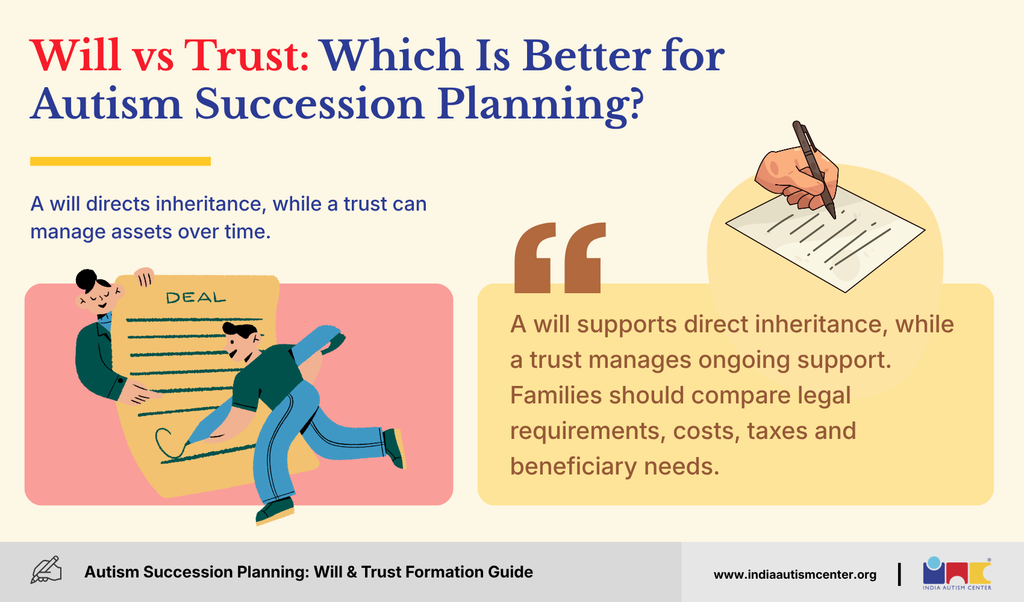
A will and a trust have different purposes, so many families may benefit from considering both.
| Feature | Will | Trust |
| Primary purpose | Directs the distribution of an estate after death | Manages assets for beneficiaries under defined terms |
| When it operates | Generally after death, subject to legal administration | During the trust’s existence, depending on its structure |
| Financial management | Does not, by itself, provide ongoing management of inherited assets | Can provide ongoing management through trustees |
| Administration | Estate administration and any required legal procedures | Ongoing trustee duties, records and administration costs |
| Flexibility | Can generally be revised while the maker has the required capacity and follows applicable formalities | Depends on the trust deed and whether the trust is revocable or irrevocable |
A will may be sufficient for direct inheritance arrangements. A trust may be more suitable where money needs to be managed over an extended period or where the beneficiary needs ongoing financial support.
However, a trust is not automatically safer or more economical. It can involve legal drafting, professional fees, tax considerations and continuing administration. Families should compare the likely benefits with the costs.
Understanding Legal Guardianship for Autistic Individuals in India
A will or trust does not automatically appoint someone to make personal, medical or legal decisions for an autistic adult. These arrangements serve different purposes and must be considered separately.
Two important laws are relevant here:
- The National Trust Act, 1999: Section 14 allows applications to the Local Level Committee (LLC) to appoint a guardian for eligible persons with autism and certain other specified disabilities. The National Trust also outlines the guardianship application process and related responsibilities.
- The Rights of Persons with Disabilities Act (RPwD), 2016: Section 14 provides for limited guardianship where the statutory conditions are met. Limited guardianship involves joint decision-making, operates for a specific period and decision, and is intended to respect the person’s will.
Parents should consult a lawyer familiar with disability law to determine which framework applies to their family member and the particular decision involved. A diagnosis of autism alone does not establish that guardianship is necessary.
It is equally important to document the individual’s preferences and provide appropriate decision-making support.
Common Mistakes to Avoid in Autism Succession Planning
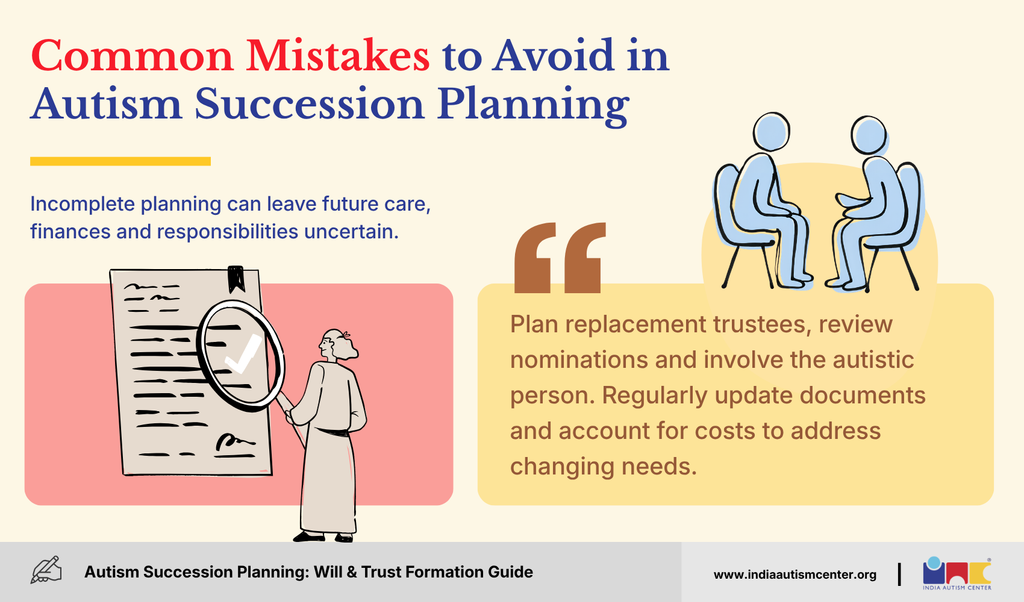
Some planning errors can leave families with documents that appear complete but fail to address practical needs.
- Relying only on a will: A will distributes assets but does not automatically establish ongoing financial management or a caregiving arrangement.
- Choosing trustees without a succession plan: Identify replacement trustees and establish a clear process for appointments.
- Ignoring the beneficiary’s preferences: Involve the autistic person in decisions to the extent possible, using accessible communication and appropriate support.
- Assuming a nominee is the legal owner: A nomination can facilitate the handling of certain assets, but its legal effect depends on the applicable law and asset type. Review nominations alongside the will and ownership documents.
- Failing to review the arrangements: Update documents when assets, family circumstances or the beneficiary’s needs change.
- Overlooking administrative costs: Account for trustee fees, taxes, professional advice, residential care and long-term inflation when estimating how much money may be required.
How India Autism Center Supports Long-Term Planning
India Autism Center (IAC) recognises the importance of planning for an autistic person’s future care, financial security and independence.
Through the Samaavesh residential campus, IAC offers residential programmes, clinical support and vocational opportunities tailored to individual needs. Families can explore its residential care programmes to understand potential long-term living arrangements.
By focusing on personalised care, skill development and meaningful participation, IAC helps families explore future support options.
Conclusion
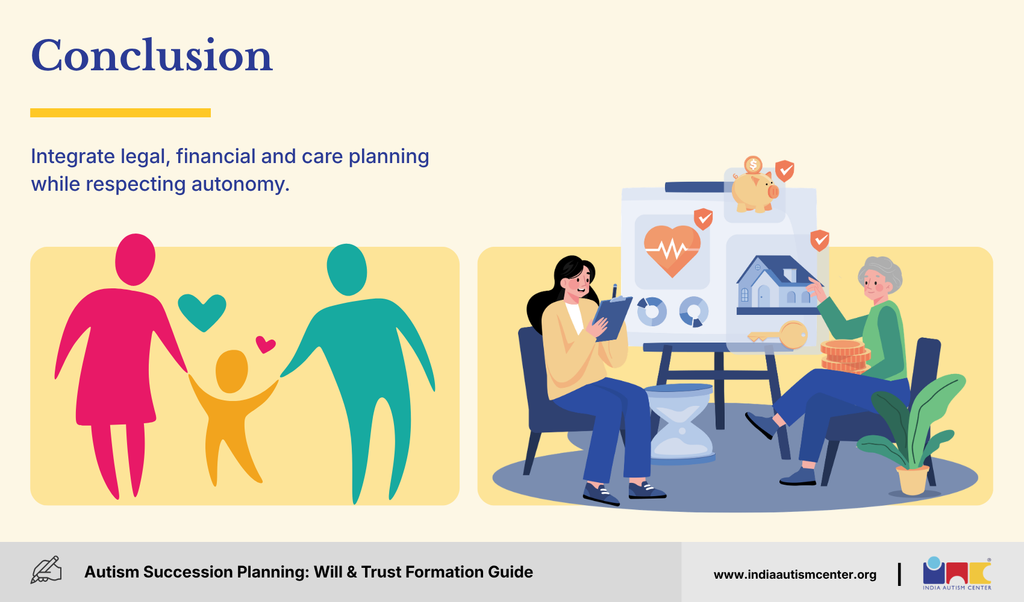
Effective autism succession planning combines legal documents, financial security and future care arrangements. A will can direct inheritance, a trust can support long-term financial management, and appropriate guardianship arrangements can address specific decision-making needs.
Start by assessing future care requirements, documenting family priorities and consulting qualified legal and financial professionals. Above all, involve the autistic person wherever possible to protect their interests, dignity, preferences and independence.
Frequently Asked Questions
1. What is autism succession planning?
Autism succession planning prepares for an autistic person’s future financial security, caregiving, accommodation and decision-making support if their parents or primary caregivers can no longer assist.
2. Should parents create a trust for an autistic child?
A trust may be useful when funds need to be managed over time for accommodation, personal support and other expenses. Its suitability depends on the family’s assets, the beneficiary’s needs and the legal and tax implications.
3. Can an autistic adult inherit property in India?
Yes. Autism does not, by itself, prevent an adult from inheriting property. The applicable succession law, ownership arrangements and any relevant legal restrictions must be considered.
4. Does an autistic adult automatically need a legal guardian?
No. Autism alone does not establish a need for guardianship. The person’s abilities, preferences, decision-making support needs and applicable legal requirements must be assessed individually.
5. Can a will ensure lifelong care for an autistic person?
A will can direct the distribution of assets and may provide for a testamentary trust, where appropriate. However, it cannot independently guarantee lifelong care. Adequate funding, suitable caregivers, effective trust administration and appropriate accommodation arrangements are also essential.