 Donate now
 Get a Call Back
 MENU
MENU 6 MIN READ
 SHARE
SHARE


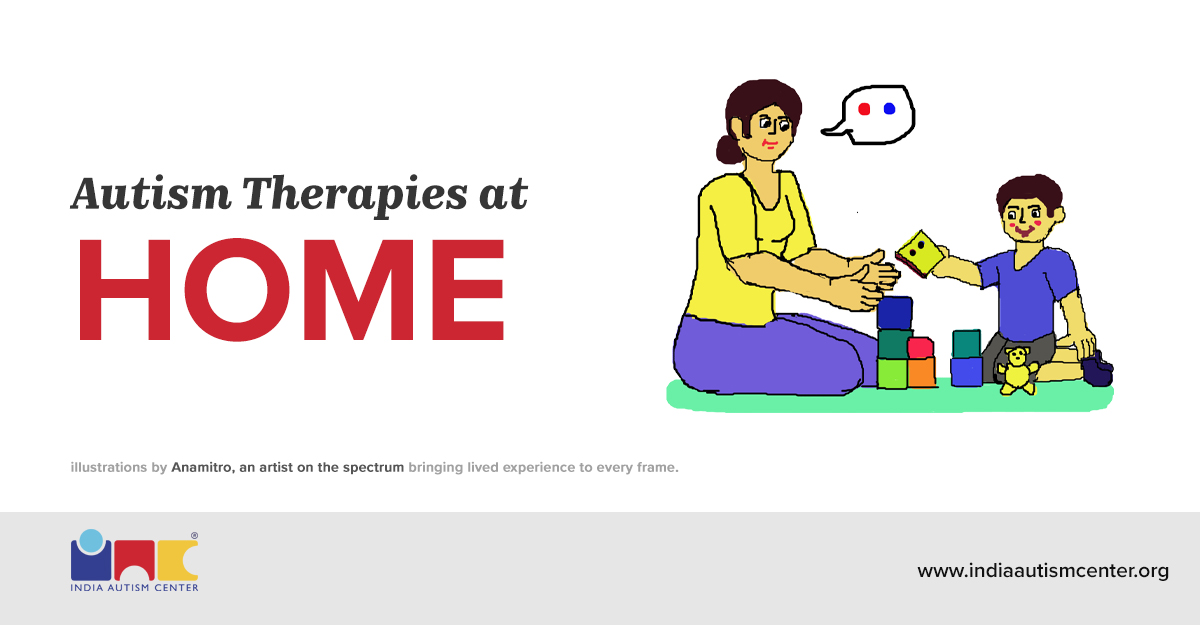
Are autism therapies at home effective? What are the daily activities for autism outside therapy clinics? If you have been wondering about these, you’re in the right place.
Autism therapies at home are interventions and activities you can do with your loved one in your daily routine. These support skill building, communication, behaviour, and emotional regulation — all within familiar spaces. They don’t replace professional support, but they help strengthen progress between sessions.
In this comprehensive guide, we’ll explore various autism therapies that can be implemented at home and their benefits and provide you with a practical how-to guide to ensure the best results.
Why Choose In-Home Autism Therapy?
Choosing In-Home Autism Therapy has many real benefits:
Comfort and Familiarity
Being at home reduces stress and helps your loved one feel safe. This opens the door for learning and communication.
Personalized Attention
At home, you can tailor activities to your child’s likes, dislikes, and pace — something hard to do in busy centers.
Family Involvement
You get to lead, support, and reinforce skills every day. This strengthens connections and improves outcomes.
Flexibility in Daily Life
Instead of strict schedules, home-based therapies for autism can fit around your routine — breakfast time, bath time, playtime, or walks.
Effective Autism Therapies You Can Try at Home
- At-Home ABA Therapy: Applied Behaviour Analysis (ABA) is a well-established therapy for individuals with autism. ABA focuses on understanding behaviour and applying interventions to bring about positive changes. Implementing ABA therapy at home involves creating a structured environment, setting clear goals, and using positive reinforcement techniques. By using behaviour modification strategies, families can help individuals with autism acquire new skills and improve social interactions.
- Speech Therapy for Autism at Home: Communication challenges are a hallmark of autism. Speech therapy aims to enhance communication skills, including language, articulation, and non-verbal communication. Incorporating speech therapy at home involves practising communication exercises, using visual aids, and engaging in interactive activities. Consistency and patience are key when working on speech development.
Here are 5 Effective Speech Therapies you might want to read.
Want to know more? Get in touch with us.
Daily Activities for Autism That Build Skills
Here are hands-on activities you can do every day:
1. Structured Routines: Kids with autism thrive on predictability. Make a visual schedule of meal time, play time, therapy time, and rest. This reduces anxiety and builds stability.
2. Sensory Play and Integration: Activities like playing with textured materials, water pouring, or jumping on cushions help regulate sensory needs.
3. Visual Supports: Use charts, picture schedules, and cue cards. These help expectations feel clear and achievable.
4. Social Interaction Through Play: Play isn’t just fun — it builds communication and social thinking. Simple games, turn-taking, and structured interactions teach essential skills naturally.
Benefits of Home-Based Autism Therapies
Comfort and Familiarity: The home environment offers comfort and familiarity, which can reduce anxiety and stress often experienced by individuals with autism. This setting promotes a more receptive state for learning and development.
Personalised Attention: At-home therapies allow for one-on-one interaction and personalised attention, which is crucial for addressing individual needs and preferences. Caregivers can tailor activities to match the individual’s interests and strengths.
Family Involvement: Involving family members in therapy fosters a strong support system. When everyone is on board, consistent therapy implementation becomes more achievable, leading to better outcomes.
Flexibility: Home-based therapies can be integrated into daily routines, making them flexible and adaptable. This flexibility can be particularly beneficial for individuals who may struggle with transitions.
Home Remedies for Autism: Practical Approaches
Create a Structured Routine: Individuals with autism thrive in structured environments. Establish a consistent daily routine that includes therapy sessions, leisure activities, meals, and rest.
Utilise Visual Supports: Visual aids such as schedules, charts, and pictures can help individuals with autism understand expectations and transitions. These aids provide a concrete representation of abstract concepts.
Implement Positive Reinforcement: Rewarding desired behaviours encourages repetition. Use verbal praise, stickers, tokens, or preferred activities as rewards to reinforce positive behaviours and achievements.
Incorporate Special Interests: Special interests can be powerful motivators. Integrate these interests into therapy activities to keep engagement high and foster a positive learning experience.
Want to know more? Get in touch with us.
Best Practices for Successful At-Home ABA Therapy
Set Clear Goals: Identify specific goals you want to achieve through ABA therapy. These could range from communication milestones to social skills improvement.
Break Tasks into Steps: Complex skills can be broken down into smaller, manageable steps. This incremental approach makes learning less overwhelming and more achievable.
Collect Data: Keep track of progress by recording observations and measurable data. This helps in evaluating the effectiveness of interventions and making necessary adjustments.
Conclusion
Autism therapies at home are powerful because they happen every day, in real life, with people your loved one trusts most — you. By integrating simple activities, routines, and encouragement, you build a supportive space where growth can happen naturally.
Remember: every small step forward matters. With patience, consistency, and warmth, you can make a positive difference in your child’s development and daily life.
P.S.- While autism therapies at home can be very helpful in everyday learning, support and guidance from specialised centres often make the journey more effective and meaningful for long-term development.
To get a deeper understanding, read our blog on Home-Based Treatment vs Autism Center.
Frequently Asked Questions (FAQs)
What are daily activities for autism that can be done at home?
Daily activities for autism include following visual schedules, practicing communication during meals, sensory play, reading together, and simple social games. These activities promote routine, independence, and skill development.
What are daily activities for autism that can be done at home?
Daily activities for autism include following visual schedules, practicing communication during meals, sensory play, reading together, and simple social games. These activities promote routine, independence, and skill development.
How effective is In-Home Autism Therapy?
In-Home Autism Therapy is highly effective when done consistently. It allows personalized support, reduces anxiety, and helps children apply skills in real-life situations, making learning more meaningful.
Can home-based therapies for autism replace professional therapy?
No. Home-based therapies for autism support progress but do not replace professional intervention. They work best when combined with guidance from therapists or specialists.
How much time should I spend on autism therapies at home daily?
You don’t need long sessions. Even 20–30 minutes a day of focused autism therapies at home, spread across routines like playtime or meals, can make a strong impact.
When should I seek professional help along with home therapy?
You should seek professional support if you notice developmental delays, behavioral challenges, or limited progress. Professionals can guide you on improving your In-Home Autism Therapy approach.