 Donate now
 Get a Call Back
 MENU
MENU 23 MIN READ
 SHARE
SHARE


Walk into most mainstream schools in India, and you will find one special educator – if you are lucky – managing 30 or more children, including those with significant support needs. Sensory accommodations are rare. Quiet rooms are almost unheard of. The fluorescent lights, crowded corridors, and unpredictable noise levels that are simply part of school life can be genuinely overwhelming for an autistic child.
The numbers tell the story. A 2023 UNESCO report noted that India has fewer than 1 special educator per 200 children with disabilities in government schools. Private schools are inconsistent at best. Many families in cities like Kolkata, Mumbai, and Bengaluru report waiting 6–18 months for an OT or speech therapy slot that fits around school hours – only to find their child is too exhausted after a difficult school day to engage meaningfully in therapy.
Homeschooling for autistic children is not a last resort. It is a structured, professionally supported educational choice that an increasing number of Indian families are making deliberately – after careful thought, proper assessment, and with a clear plan.
This guide is written for those families. Whether you are just beginning to explore the idea or are ready to register with NIOS tomorrow, you will find actionable, India-specific guidance here.
What Is Homeschooling for Autistic Children?
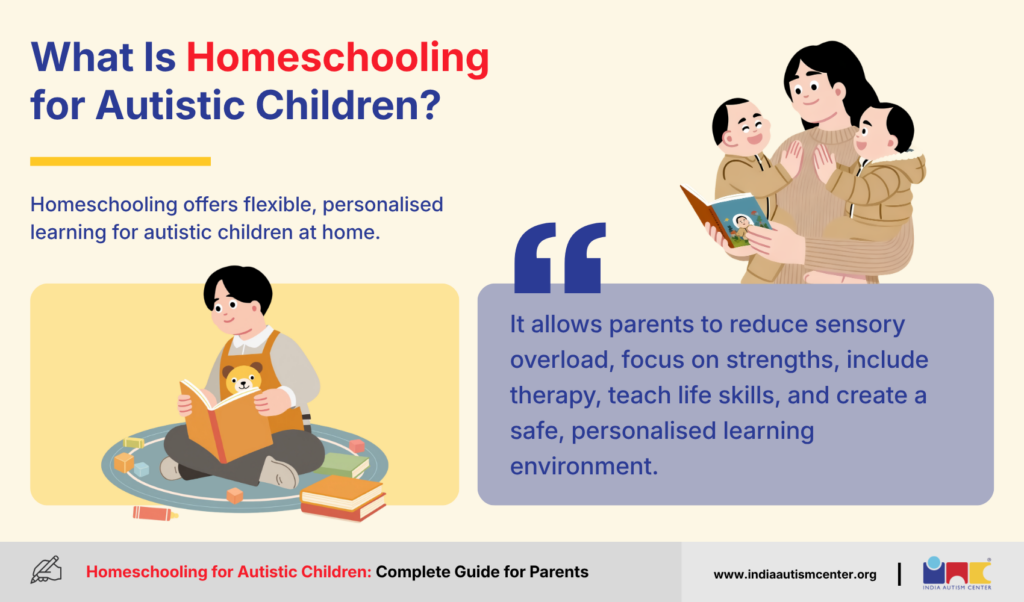
Homeschooling means educating your child at home rather than in a conventional school. You design the schedule, set the pace, and adapt the learning approach to your child’s actual needs.
For children with autism, this matters enormously. No two autistic children are alike. One child may be a strong visual learner who thrives with picture-based instruction. Another may need movement breaks every 20 minutes. A third may be academically advanced but struggle with the social demands of a classroom.
Homeschooling allows you to:
- Focus on your child’s strengths, not just their deficits
- Reduce sensory overload by controlling the learning environment
- Embed therapy within the school day rather than squeezing it in at 6 pm
- Teach life skills alongside academics
- Move at your child’s pace – faster in some areas, slower in others
In short: instead of forcing your child to fit the system, you adapt the system to your child.
Is Homeschooling Legal in India?
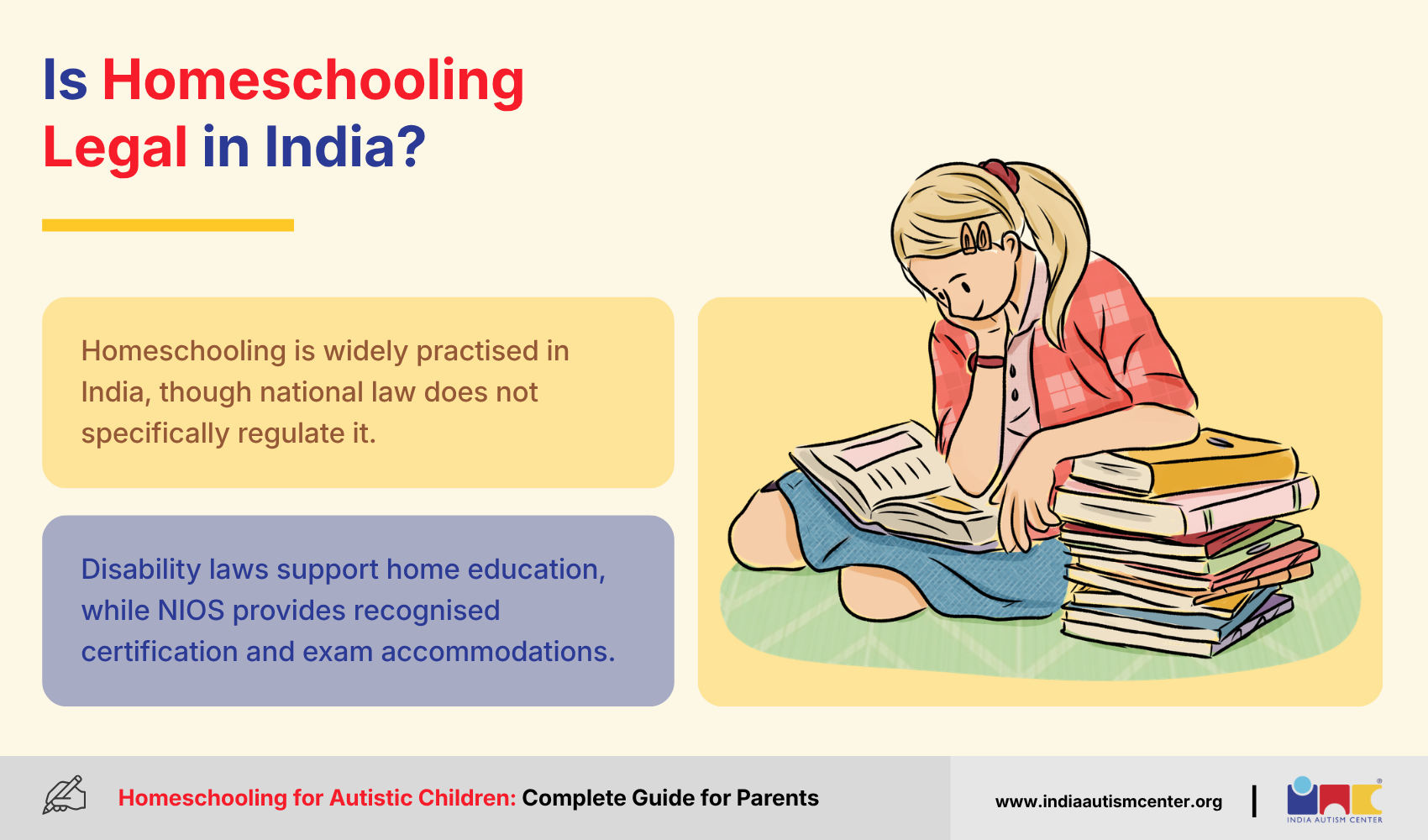
This is the question every Indian parent asks first. The honest answer: homeschooling exists in a legal grey area, but it is widely practised and not prohibited.
The RTE Act, 2009
The Right to Education Act mandates free and compulsory education for children aged 6–14. Crucially, it does not specify that this education must happen inside a recognised school building. It does not contain a provision that criminalises home education. Most legal experts and homeschooling advocates in India interpret this as leaving the door open for home-based education, particularly for children with disabilities.
The RPwD Act, 2016
The Rights of Persons with Disabilities Act, 2016 explicitly recognises Autism Spectrum Disorder as a disability. Section 31 gives every child with a benchmark disability (aged 6–18) the right to free education in a neighbourhood school or a special school of their choice. The Act also mandates reasonable accommodations, accessible learning materials, and – importantly – home-based education for children with severe or multiple disabilities who cannot attend school. This is the strongest legal backing for families choosing to educate autistic children at home.
No Dedicated Homeschooling Law
India has no national homeschooling statute. There is no registration system for homeschoolers at the central level. This means families typically begin home education without prior government permission – which is standard practice across the country.
NIOS: The Certification Pathway
The National Institute of Open Schooling (NIOS) is the primary route for homeschooled children to obtain recognised board certification. NIOS offers:
- Open Basic Education (OBE): Equivalent to Classes 3, 5, and 8 – suitable for younger children or those working at foundational levels
- Secondary (Class 10) and Senior Secondary (Class 12): Fully recognised board certificates, accepted by colleges and universities across India
Children with disabilities, including autism, are eligible for:
- Fee concessions (reduced admission fees for differently-abled candidates)
- Exam accommodations – extra time, a scribe/amanuensis, reader, or interpreter
- Subject exemptions in specific cases
To register, visit nios.ac.in and apply online as a private candidate. Upload a disability certificate from a government-recognised authority. For exam accommodations, submit a separate application to your NIOS Regional Centre along with the disability documentation.
State-Level Flexibility
Some states – Delhi, Karnataka, Maharashtra – have their own open school boards that may offer additional flexibility. A few states have also piloted home-based education programmes for children with severe disabilities under Samagra Shiksha.
Important: Education law in India is a concurrent subject. Rules can vary by state. We strongly recommend consulting a legal or education advisor familiar with your specific state’s regulations before you begin.
Why Parents in India Choose Homeschooling for Autism
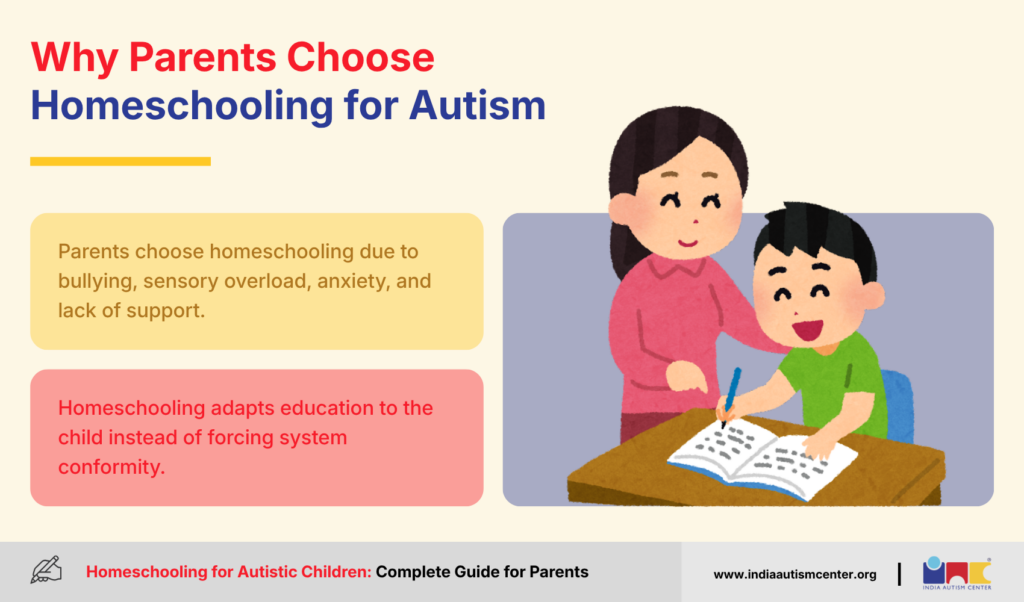
Indian parents do not pull their children out of school lightly. When we speak with families at India Autism Center, the reasons they give are consistent – and they are very specific to the Indian context.
1. Lack of trained inclusion teachers. Most mainstream schools have no staff trained in autism-specific pedagogy. A general class teacher with 40 students cannot implement an Individualised Education Plan (IEP).
2. Poor support ratios. The recommended ratio for children with significant support needs is 1:3 or lower. In most Indian classrooms, one special educator manages 15–30 children with widely varying needs.
3. Sensory-hostile environments. Crowded corridors, assembly bells, fluorescent lighting, noisy canteens – these are standard features of Indian schools that can trigger genuine distress in sensory-sensitive children.
4. Bullying. Children who stim, who communicate differently, or who have meltdowns are frequently targeted. The social dynamics of Indian classrooms can be particularly unforgiving.
5. Long commutes. In metro cities, school commutes of 60–90 minutes each way are common. For an autistic child, arriving at school already dysregulated is a recipe for a difficult day.
6. Therapy slot scarcity. ABA, OT, and speech therapy slots in India are limited. Most clinics operate 9 am–6 pm. If your child is in school until 3:30 pm and commutes until 5 pm, meaningful therapy becomes nearly impossible on weekdays.
7. Rigid academic pressure. The Indian school system is heavily exam-oriented. For a child who needs more time, different modalities, or a focus on functional skills, this structure can be actively harmful.
Homeschooling removes these barriers in one move.
Want to know more? Get in touch with us.
Understanding Your Child’s Learning Style
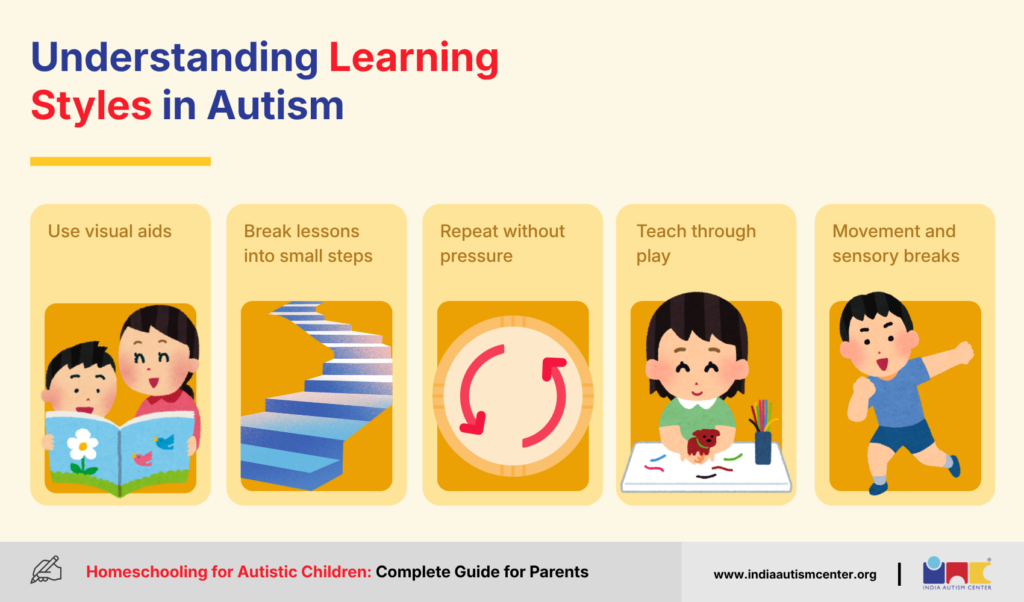
Every autistic child learns differently. This is not a cliché – it is the central fact that should drive every educational decision you make.
Some children are strong visual learners: they absorb information through pictures, diagrams, and visual schedules far better than through spoken instruction. Others are kinesthetic learners who need to touch, move, and do to retain information. Some thrive on repetition and routine; others engage best through their special interests.
Before you design any homeschool programme, understand your child’s profile:
- How does my child communicate? (Verbal, AAC, PECS, sign language?)
- What are their sensory sensitivities? (Sound, light, texture, movement?)
- What motivates them? (Specific topics, games, movement, music?)
- What is their current academic level across different domains?
A formal psychoeducational assessment by an RCI-registered psychologist or special educator will answer these questions systematically. Do not skip this step – it is the foundation of everything else.
How to Start Homeschooling Your Autistic Child in India
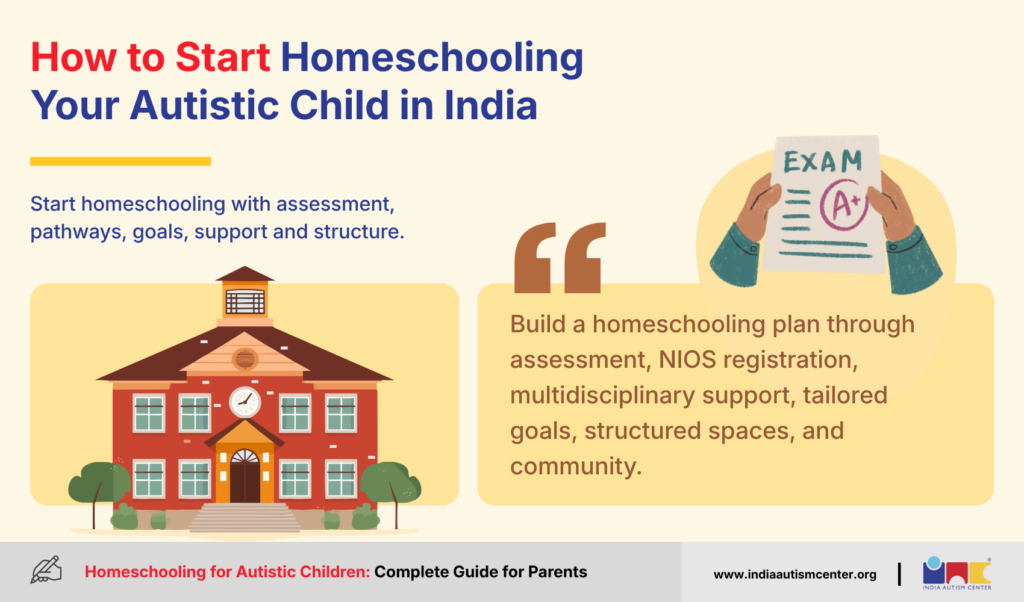
Starting feels overwhelming. It does not have to be. Here is a clear, step-by-step process.
Step 1: Get a formal assessment. Book a comprehensive assessment with an RCI-registered clinical psychologist or special educator. This should include cognitive assessment, adaptive behaviour evaluation, communication profile, and sensory processing assessment. The report will form the basis of your child’s IEP.
Step 2: Register with NIOS or a state open school. If your child is school-age and you want recognised certification, register as a private candidate with NIOS. For younger children, the OBE programme is appropriate. For older children (14+), register for Secondary or Senior Secondary. Apply online at nios.ac.in with your disability certificate.
Step 3: Build your support team. A good homeschool team for a child with autism typically includes:
- An occupational therapist (for sensory processing, fine motor, and daily living skills)
- A speech-language therapist (for communication)
- A behaviour therapist or ABA therapist (for skill-building and behaviour support)
- A shadow teacher or special educator (to support structured learning sessions)
Find RCI-registered professionals through the Central Rehabilitation Register – you can search by state, category, and qualification.
Step 4: Design your curriculum around IEP goals. Your IEP should drive your curriculum choices, not the other way around. If your child’s priority goals are functional communication and self-care, those come first – even if it means spending less time on formal academics.
Step 5: Set up your home environment. Create a dedicated learning space. Include:
- A sensory corner (weighted blanket, fidget tools, dim lighting option)
- A visual schedule on the wall (picture-based for non-readers)
- A work station with minimal distractions (TEACCH-style, with clear task boxes)
- A movement area for sensory breaks
Step 6: Connect with a community. Join homeschooling groups – Swashikshan (Indian Association of Homeschoolers), local WhatsApp groups for autism parents, or Facebook groups like “Homeschooling Special Needs India.” You will need peer support as much as your child will.
Curriculum Options for Homeschooling Autistic Children
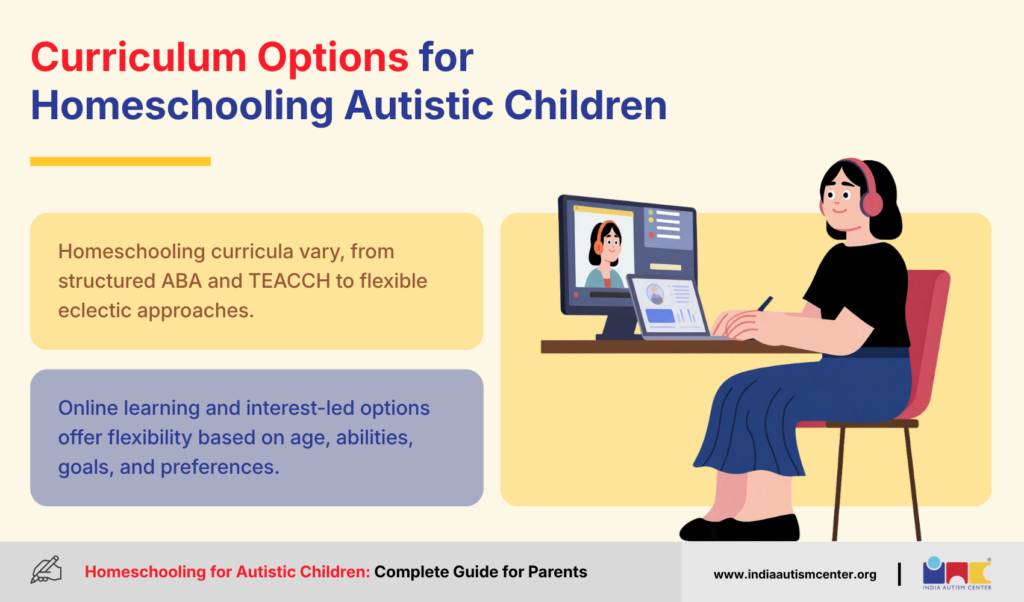
There is no single “autism curriculum.” The right approach depends on your child’s age, support needs, communication level, and learning style. Here are the five most commonly used frameworks in India.
1. Structured/ABA-Based Curriculum
What it is: Applied Behaviour Analysis breaks skills into small, teachable steps. Each skill is taught through clear instruction, prompting, and positive reinforcement. Progress is tracked systematically.
Best for: Young children (2–8 years) with significant support needs, children who are non-verbal or minimally verbal, children who need intensive skill-building in communication, self-care, and early academics.
India note: Several Indian centres (including ACE India) have developed ABA curricula adapted for Indian contexts and languages.
2. TEACCH-Structured Teaching
What it is: The TEACCH approach (Treatment and Education of Autistic and Communication Handicapped Children) uses visual structure, predictable routines, and organised work systems. Tasks are presented in a clear “left to right, top to bottom” format with a defined finish point.
Best for: Children who need high predictability, who are distressed by ambiguity, or who work well independently once a task is clearly set up. Excellent for building independent work habits.
3. Eclectic Approach
What it is: A combination of ABA, TEACCH, speech therapy techniques, and mainstream academic content, blended based on the child’s needs. Most experienced homeschooling families in India end up here.
Best for: Children with moderate support needs who have some functional communication and can engage with varied teaching styles. Offers the most flexibility.
4. Online Platforms and NIOS Study Material
What it is: Digital learning tools used alongside or instead of textbooks. Options include:
- Khan Academy (free, adaptive, excellent for maths and science)
- NIOS study material (free to download, aligned to board exams)
- Vedantu and other Indian edtech platforms (some offer special needs tracks)
Best for: Older children (10+) with moderate to good literacy and numeracy skills who are working toward NIOS board certification.
5. Interest-Led / Unschooling
What it is: Learning is driven entirely by the child’s interests and curiosity. No fixed curriculum. The parent facilitates exploration rather than teaching.
Best for: Autistic children with strong special interests, good self-regulation, and families who prioritise wellbeing and autonomy over academic benchmarks. Less suitable if NIOS certification is a goal.
Sample Daily Schedules for Homeschooling Autistic Children
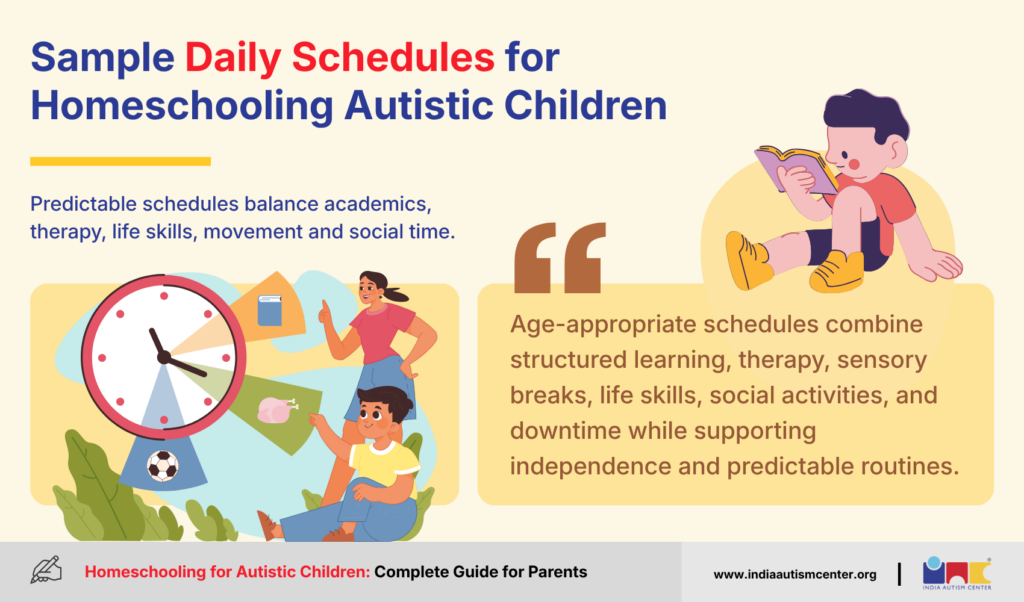
A predictable homeschooling schedule is not optional for most autistic children – it is therapeutic in itself. Here are two detailed, time-blocked schedules based on age and support level.
Schedule A: Therapy-Heavy (Ages 4–8, Significant Support Needs)
| Time | Activity | Notes |
|---|---|---|
| 8:00 – 8:30 | Morning routine | Dressing, hygiene, breakfast – taught as life skills with visual prompts |
| 8:30 – 9:00 | Morning circle | Visual schedule review, calendar, weather, songs/movement |
| 9:00 – 9:45 | ABA/structured teaching session | Communication targets, imitation, early academics (1:1 with therapist or parent) |
| 9:45 – 10:00 | Sensory break | Trampoline, swings, proprioceptive activities |
| 10:00 – 10:45 | Occupational therapy | Fine motor, sensory integration, self-care skills |
| 10:45 – 11:00 | Snack + free play | Child-directed activity |
| 11:00 – 11:45 | Speech therapy | Communication, language, AAC practice |
| 11:45 – 12:00 | Sensory break | Outdoor time, movement |
| 12:00 – 12:30 | Lunch | Eating as a life skill – utensil use, sitting, food variety |
| 12:30 – 1:00 | Rest / quiet time | Calm sensory activity, books, music |
| 1:00 – 1:45 | Life skills / play-based learning | Sorting, matching, cooking activities, art |
| 1:45 – 2:15 | TEACCH independent work | Pre-set task boxes, minimal prompting |
| 2:15 – 2:45 | Outdoor / gross motor | Park, garden, or indoor movement |
| 2:45 – 3:15 | Social skills activity | Sibling play, video modelling, turn-taking games |
| 3:15 – 4:00 | Wind-down routine | Preferred activity, visual schedule close-out |
Total structured time: ~6 hours. Therapy blocks (ABA + OT + Speech) = ~2.5 hours.
Schedule B: Academic-Focused (Ages 9–14, Moderate Support Needs)
| Time | Activity | Notes |
|---|---|---|
| 8:30 – 9:00 | Morning routine + visual schedule review | Independent where possible |
| 9:00 – 9:45 | Mathematics | NIOS material / Khan Academy / workbook |
| 9:45 – 10:00 | Movement break | Walk, stretching, sensory activity |
| 10:00 – 10:45 | English / Language arts | Reading comprehension, writing, grammar |
| 10:45 – 11:00 | Snack break | |
| 11:00 – 11:45 | Science or Social Studies | NIOS-aligned content, project-based where possible |
| 11:45 – 12:00 | Sensory break | |
| 12:00 – 12:30 | Lunch | |
| 12:30 – 1:00 | Independent reading / special interest project | Child-directed |
| 1:00 – 1:45 | Speech therapy or OT | 3–4 days per week; life skills on other days |
| 1:45 – 2:15 | Life skills | Cooking, money management, household tasks |
| 2:15 – 3:00 | Social activity | Peer group, sports, arts class, or community activity |
| 3:00 – 3:30 | Review and wind-down | Homework review, next day’s schedule preview |
Total structured time: ~6 hours. Therapy = 45 minutes, 3–4 days/week.
Role of Therapy in Homeschooling for Autism
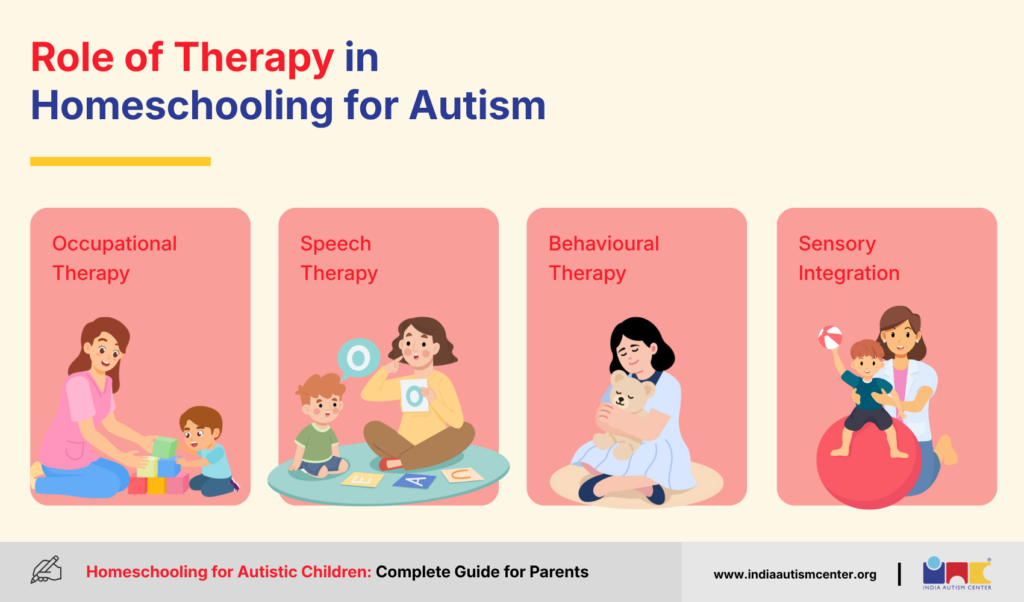
Education and therapy are not separate things for autistic children. They are the same thing, delivered in different formats.
When you homeschool, you have the rare opportunity to embed therapy into learning rather than treating it as an add-on. Here is how each therapy type integrates:
- Occupational Therapy (OT): Fine motor skills become handwriting practice. Sensory integration work becomes part of the morning routine. Daily living skills – dressing, cooking, cleaning – are both OT goals and life skills lessons.
- Speech-Language Therapy: Communication targets are practised throughout the day, not just in a 45-minute clinic session. Every mealtime, every activity, every transition is an opportunity to practise requesting, commenting, and conversing.
- ABA Therapy: Discrete trial teaching, natural environment teaching, and behaviour support plans are woven into structured learning blocks and daily routines.
- Sensory Integration: The sensory corner, movement breaks, and the overall design of your home learning environment are therapeutic in themselves.
Finding RCI-registered therapists: Use the Central Rehabilitation Register at rehabcouncil.nic.in. Search by state, category (speech-language pathology, occupational therapy, special education), and qualification. Only RCI-registered professionals are legally qualified to practise rehabilitation in India.
Can therapy hours count as school hours? Yes – and this is one of the most significant advantages of homeschooling autism India families often overlook. When therapy is delivered in a structured, goal-directed format with documented progress, it constitutes legitimate educational time. Your child’s IEP should formally list therapy goals alongside academic goals.
Want to know more? Get in touch with us.
Pros and Cons of Homeschooling a Child with Autism
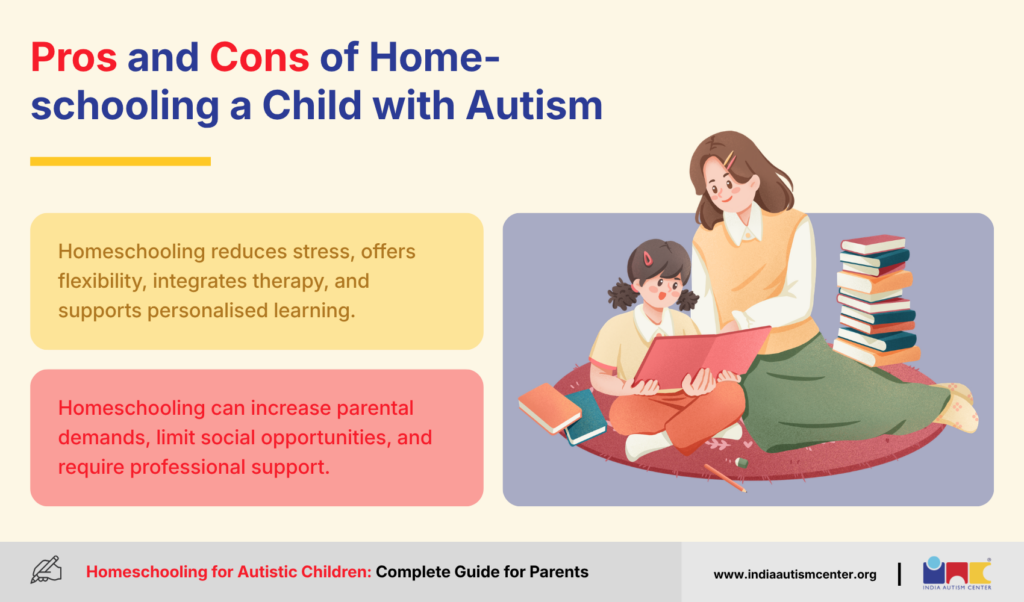
Here is an honest, expanded look at both sides – with India-specific nuance.
| Pros | Cons |
|---|---|
| Reduced sensory stress – No crowded corridors, assembly bells, or fluorescent lighting | Parental burnout – You are teacher, therapist coordinator, and caregiver simultaneously |
| Flexible schedule – Lessons at the time of day your child is most alert and regulated | Limited peer interaction – Requires deliberate planning; does not happen automatically |
| Therapy integration – OT, speech, and ABA embedded in the school day, not squeezed in at 6 pm | Financial cost – Therapists, materials, and a shadow teacher add up; not all families can afford this |
| Individualised curriculum – Aligned to your child’s IEP goals, not a standardised syllabus | Parental expertise required – You need training, guidance, and ongoing professional support |
| No bullying – A safe, controlled learning environment | Social isolation risk – Without active planning, homeschooled children can become isolated |
| Life skills focus – Time to teach cooking, money, transport, and self-care as core subjects | Emotional pressure – Slow progress or difficult days hit harder when you are the teacher and the parent |
| NIOS certification pathway – Your child can still earn a recognised Class 10/12 certificate | Regulatory uncertainty – No clear national legal framework; state rules vary |
| Caregiver wellbeing – Parents often report reduced family stress when the daily school battle ends | Career impact on parent – One parent often reduces or stops working to manage homeschooling |
Teaching Life Skills Through Homeschooling for Autistic Children
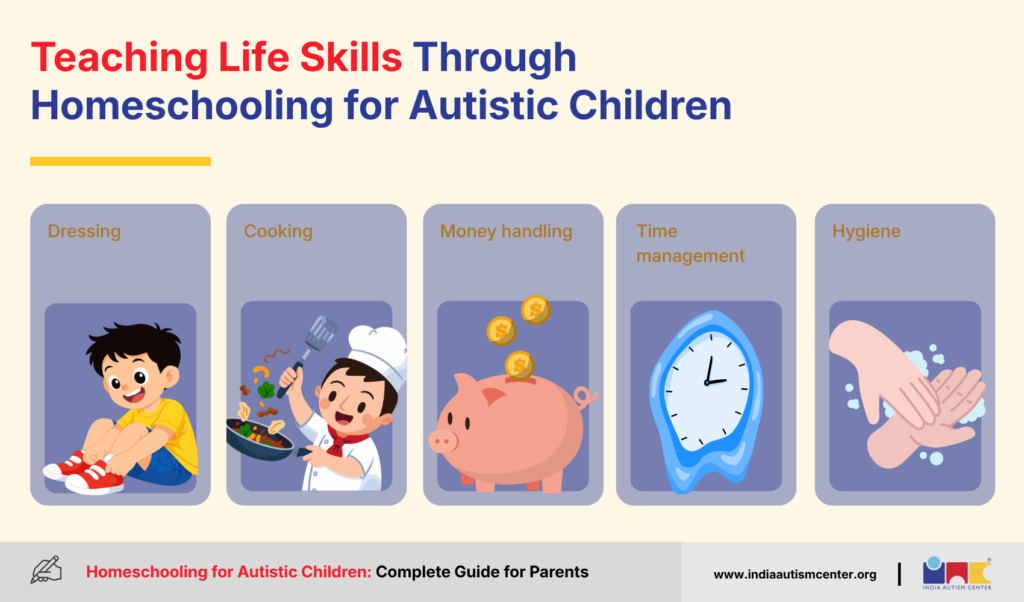
Academic subjects matter. But for many autistic children, the ability to navigate daily life independently matters more.
Homeschooling gives you the time and flexibility to teach life skills systematically – not as an afterthought, but as a core part of the curriculum.
Practical life skills to teach at home:
- Money management: Counting rupees and paise, understanding notes and coins, using a UPI app, making purchases at a local shop
- Cooking: Simple Indian meals – making chai, cooking rice, preparing dal. These teach sequencing, measurement, safety, and patience simultaneously.
- Using public transport: Navigating the metro or bus in your city, buying a ticket, reading a route map
- Navigating government offices: Understanding what documents to carry, how to wait in a queue, how to communicate a need to a stranger
- Time management: Reading a clock, following a visual schedule, understanding “before” and “after”
- Hygiene and self-care: Bathing, dental care, menstrual hygiene (for girls) – taught step-by-step with visual supports
- Safety skills: Road safety, knowing one’s address and phone number, recognising unsafe situations
These are not “extras.” For many autistic adults, these skills determine quality of life far more than knowing the periodic table.
Is Homeschooling for Autistic Children Right for You?
Ask yourself:
- Can I commit time daily?
- Do I have access to professional support?
- Does my child need a calmer environment?
If yes, homeschooling may help.
However, remember the pros and cons of homeschooling a child with autism. It works best with guidance.
Socialization Strategies for Homeschooled Autistic Children in India
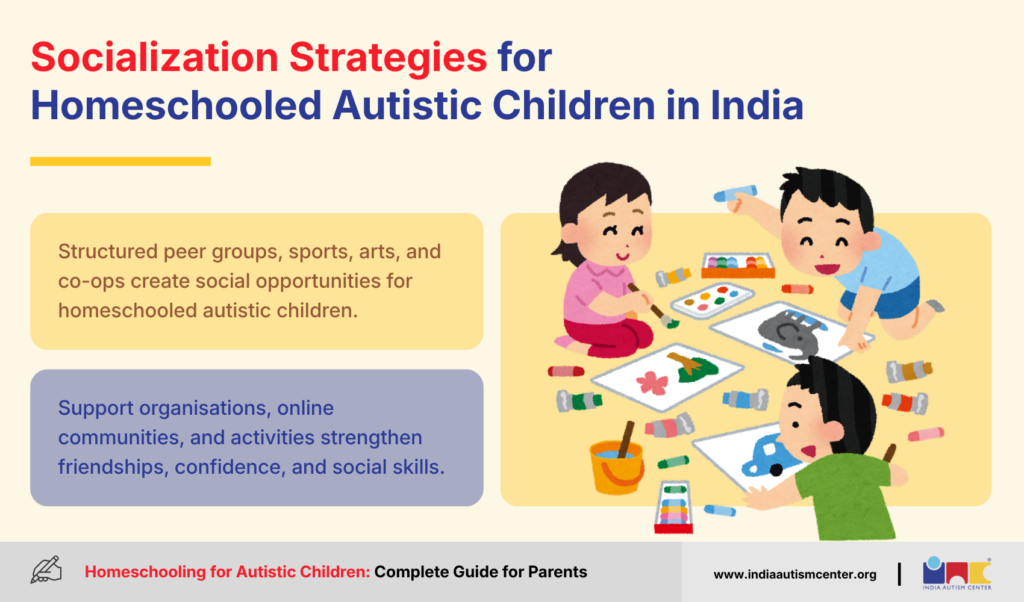
The most common objection to homeschooling is: “But what about socialization?” It is a fair concern. Here is how Indian families address it – practically and effectively.
1. Structured peer programmes. India Autism Center runs peer interaction groups and social skills programmes designed specifically for autistic children. These provide structured, supported social experiences in a safe environment – far more therapeutic than unstructured classroom interaction.
2. Autism support organisations.
- Action for Autism (AFA) in New Delhi runs weekend respite programmes, holiday camps, and parent-child training programmes. Their family support services are among the best in the country.
- Autism Society of India (ASI) maintains a directory of therapy centres and support groups across India.
3. Inclusive sports and arts programmes. Many cities now have inclusive cricket, swimming, dance, and art programmes. These provide genuine peer interaction with neurotypical children in a low-pressure, activity-focused setting.
4. Homeschool co-ops. In metro cities, Bengaluru, Mumbai, Pune, Delhi, and Hyderabad, homeschooling families are increasingly forming co-ops where children meet 2–3 times a week for group activities, science projects, and social time. Swashikshan (Indian Association of Homeschoolers) is a good starting point for finding local groups.
5. Online communities. Facebook groups like “Homeschooling Special Needs India” and “Autism Parents India” connect families across the country. These are valuable for sharing resources, finding local therapists, and simply knowing you are not alone.
6. Cultural and religious community events. Festivals, temple/church/mosque gatherings, and neighbourhood events – with some preparation and sensory planning – can be meaningful social experiences. Prepare your child with social stories and a sensory kit (noise-cancelling headphones, a fidget tool, a quiet corner plan).
The goal is not maximum social exposure. It is quality, supported social interaction that builds genuine skills and positive experiences.
How to Return to Mainstream School
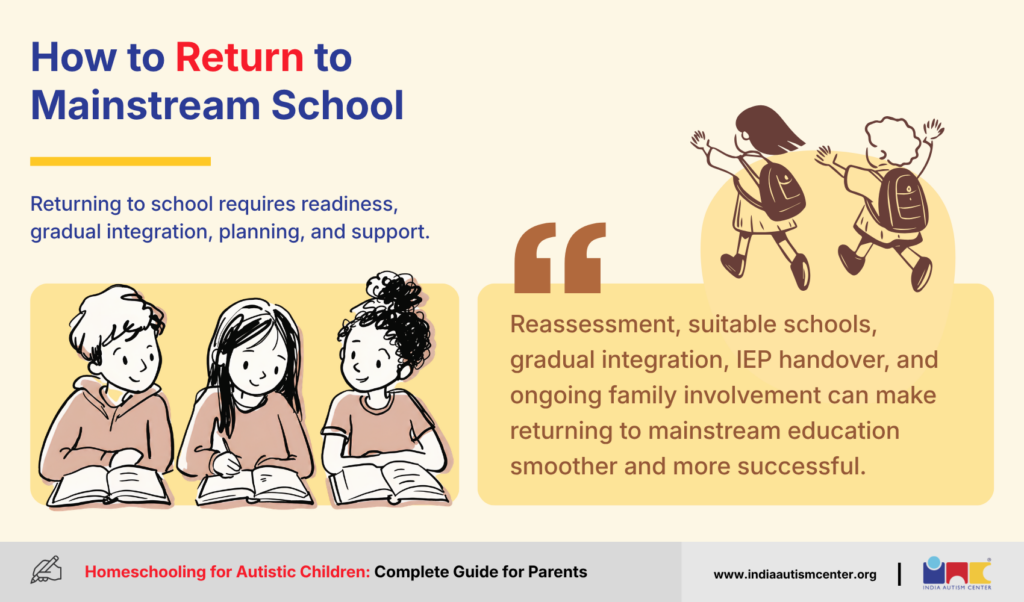
Homeschooling does not have to be permanent. Many families use it as a bridge – a period of intensive skill-building – before transitioning back to a mainstream or inclusive school.
Signs your child may be ready:
- Improved emotional regulation and reduced meltdown frequency
- Functional communication (verbal or AAC)
- Ability to tolerate group settings for 30–60 minutes
- Basic self-care independence
Steps for a successful transition:
1. Reassessment. Get an updated psychoeducational assessment to document current levels and revised IEP goals.
2. Choose the right school. Look for schools with a trained special educator, a low student-to-support-staff ratio, and a genuine inclusion policy – not just a token one. Ask specific questions: How many children with autism do you currently support? What training has your staff received?
3. Plan gradual integration. Start with 1–2 hours per day, 2–3 days per week. Increase slowly over 6–12 weeks.
4. IEP handover. Provide the school’s special educator with your child’s current IEP, therapy reports, and a detailed profile of what works and what does not.
5. Stay involved. Attend every review meeting. Keep communication open with the class teacher and special educator. Be prepared to adjust the plan.
Returning to school is not failure. It is the next step in your child’s journey.
Government Schemes and Financial Support
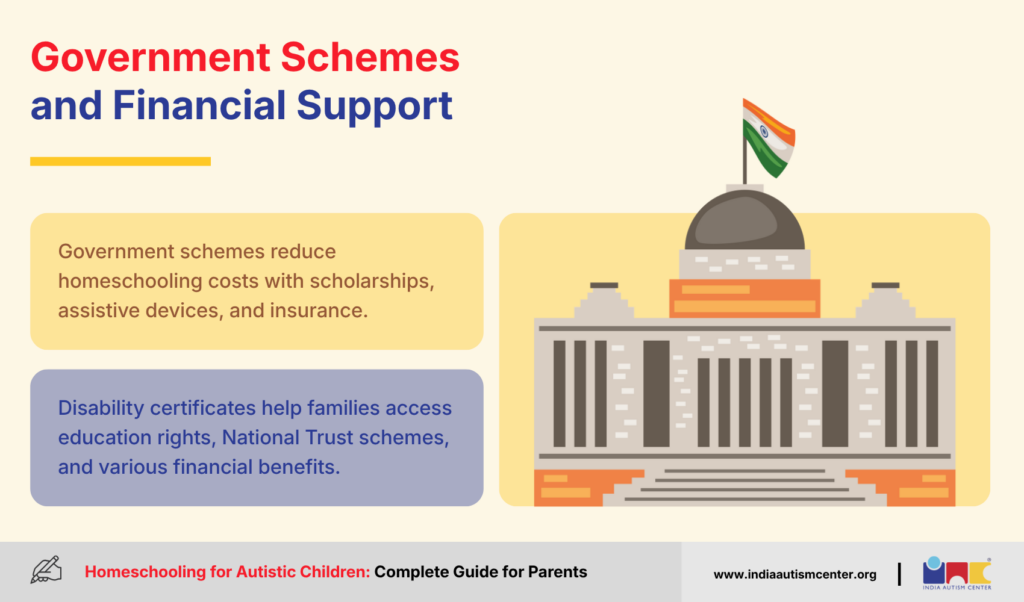
Homeschooling an autistic child in India has real costs. Here is what financial support is available.
1. NIOS fee concessions. Children with disabilities – including autism – are eligible for reduced admission fees at NIOS. You will need a valid disability certificate from a government-recognised authority. Exam accommodations (scribe, extra time) are provided at no additional cost.
2. Assistance to Disabled Persons (ADIP) Scheme. The Ministry of Social Justice and Empowerment’s ADIP scheme provides assistive devices and aids to persons with disabilities below a certain income threshold. This can include communication devices (AAC devices), hearing aids, and mobility aids. Apply through your District Disability Rehabilitation Centre (DDRC).
3. State-level disability scholarships. Most states offer scholarships for children with disabilities at the school and college level. Amounts vary – typically ₹500–₹3,500 per month. Check your state’s Social Welfare Department website or contact your DDRC.
4. Section 31, RPwD Act 2016. This section gives every child with a benchmark disability the right to free education up to age 18. If your child is registered as a Person with Disability (PwD), they are entitled to free education – including, in principle, home-based education where school attendance is not feasible.
5. National Trust Schemes. The National Trust (under the Ministry of Social Justice) runs several schemes for persons with autism, cerebral palsy, intellectual disability, and multiple disabilities. These include the Samarth scheme (day care and respite care) and the Niramaya health insurance scheme (up to ₹1 lakh per year). Visit thenationaltrust.gov.in for details.
Practical tip: Get your child’s disability certificate issued under the RPwD Act 2016 as early as possible. This single document unlocks most of the above benefits.
Here is a comprehensive List of Several Government Schemes for Disabled Persons in India (2026)
Is Homeschooling Right for Your Child?
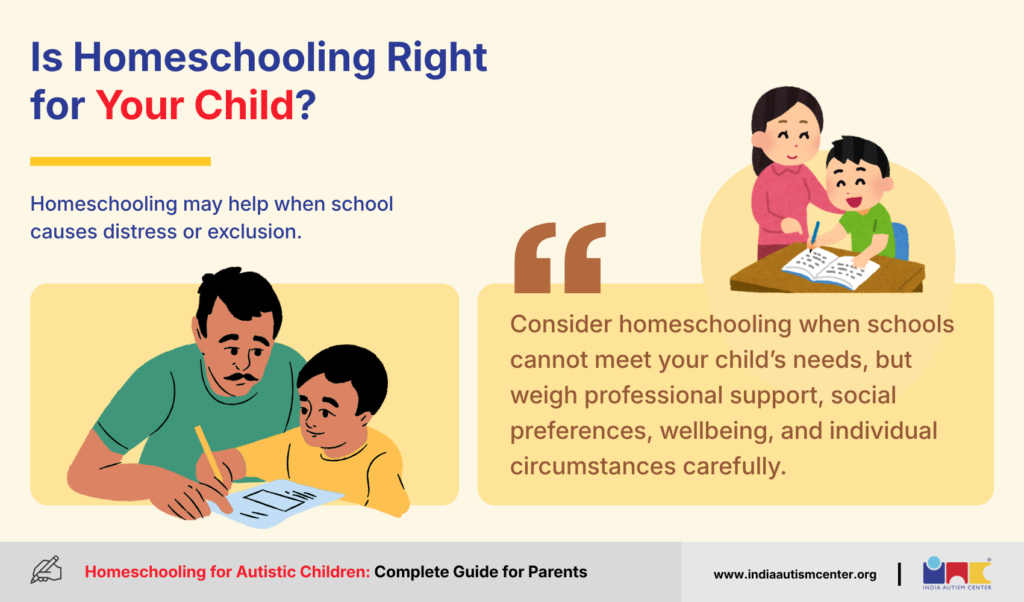
Ask yourself these questions honestly.
Your child may benefit from homeschooling if:
- They are frequently distressed, dysregulated, or refusing school
- They are being bullied or excluded
- Their current school cannot implement their IEP
- Therapy slots are unavailable during after-school hours
- Long commutes are causing daily dysregulation
- They have significant sensory sensitivities that the school environment cannot accommodate
- You have access to professional support (therapists, special educator)
Homeschooling may not be the right fit if:
- Your child is thriving socially and academically in their current school
- You do not have access to any professional support
- You are considering it primarily to avoid difficult conversations with the school
- Your child strongly prefers being around peers and finds home isolating
There is no universal answer. The right choice is the one that serves your specific child’s specific needs – assessed by professionals, not decided in a moment of crisis.
Future Outcomes of Homeschooling for Autism
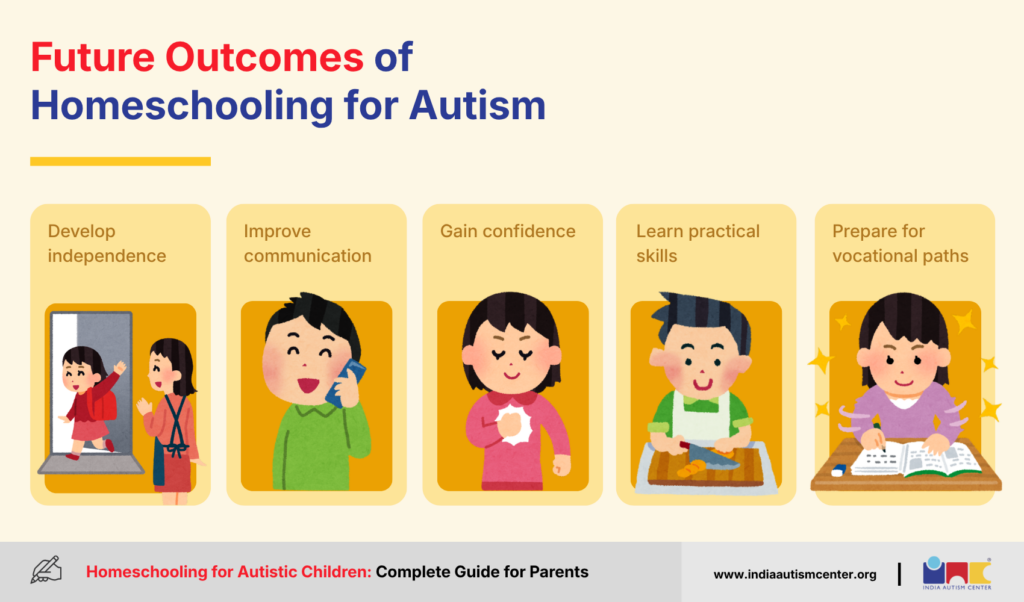
With the right support, children can:
- Develop independence
- Improve communication
- Gain confidence
- Learn practical skills
- Prepare for vocational paths
Education becomes meaningful, not stressful.
Want to know more? Get in touch with us.
Key Aspects to Consider Before Enrolling in an Accredited Homeschooling Program
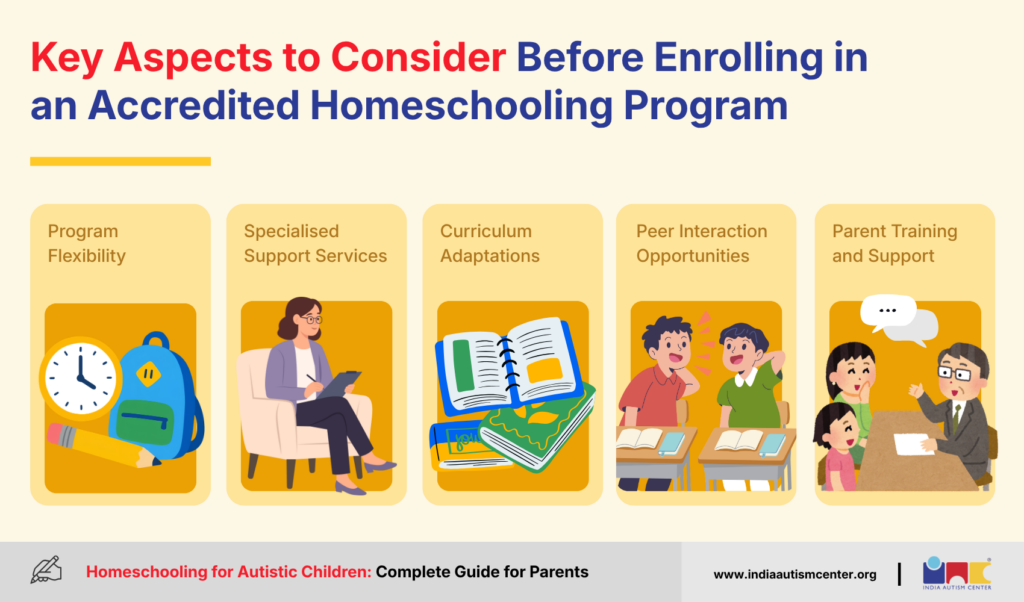
Before enrolling your autistic child in an accredited homeschooling program, it’s crucial to consider several key aspects to ensure a successful and fulfilling educational experience tailored to their unique needs.
Here are some essential factors to keep in mind:
Program Flexibility
Look for accredited homeschool programs that offer flexibility in scheduling, pacing, and curriculum choices. Autistic children may thrive in environments that allow individualised instruction and accommodate their specific learning styles and preferences. Flexibility also enables parents to adjust the learning environment to accommodate sensory sensitivities and communication challenges.
Specialised Support Services
Seek out accredited homeschooling programs that provide specialised support services for autistic learners. These may include access to educational therapists, behaviour specialists, and speech-language pathologists who can offer tailored interventions and strategies to address core deficits associated with autism spectrum disorder (ASD). Additionally, inquire about social skills development, sensory integration, and emotional regulation resources.
📥 Free download: Printable daily routine chart for autistic children
Curriculum Adaptations
Evaluate the curriculum options available within the homeschooling program to ensure they meet your child’s academic goals and developmental needs. To enhance comprehension and engagement, look for materials incorporating visual supports, hands-on activities, and multisensory learning experiences. Consider supplementing the home school programs with resources specifically designed for autistic learners, such as social stories, visual schedules, and structured routines.
Peer Interaction Opportunities
While homeschooling provides a personalised learning environment, it’s essential to provide opportunities for socialisation and peer interaction. Look for homeschooling programs that offer organised activities, clubs, or co-op opportunities where autistic children can interact with peers in a supportive and inclusive setting. Additionally, explore online communities and support groups for homeschooling families with autistic children to connect with others facing similar challenges and share resources and strategies.
Parent Training and Support
Consider the level of support and training offered to parents within the homeschooling program. Parent education workshops, online forums, and individualised consultation can empower parents to support their autistic child’s learning and development effectively. Additionally, access to professional guidance and expertise can help navigate challenges and maximise the benefits of homeschooling for autistic children.
Conclusion
Homeschooling is not an escape from school. It is an alternative learning path.
- It allows your child to grow at their own pace.
- Guides them closely.
- Makes education nurturing.
However, success depends on support.
With structured programs and guidance from India Autism Center (IAC), families can transform homeschooling into a powerful learning journey.
- If you are exploring homeschooling for autistic children, remember this:
- You are not alone.
- You are not unprepared.
- And with the right help, your child can thrive.
Frequently Asked Questions (FAQs)
What is homeschooling for autistic children?
Homeschooling for autistic children is a personalized education approach where parents teach their child at home using flexible schedules and adapted learning methods. It allows children with autism to learn at their own pace while receiving emotional and therapeutic support.
Is homeschooling for autism better than regular schooling?
Homeschooling for autism can be better for children who struggle with sensory overload, anxiety, or social pressure in traditional schools. However, the choice depends on the child’s needs, learning style, and access to professional support.
What are the pros and cons of homeschooling a child with autism?
The pros of homeschooling a child with autism include personalised learning, reduced stress, and flexible routines, while the cons include limited social interaction, parental workload, and the need for expert guidance.
Useful Sources
National Institute of Open Schooling (NIOS) – nios.ac.in
NIOS Provisions for Learners with Disabilities
Rehabilitation Council of India – Central Rehabilitation Register
Action for Autism (AFA) – autism-india.org
Autism Society of India – autismsocietyofindia.org
National Trust – thenationaltrust.gov.in
Swashikshan – Indian Association of Homeschoolers
For expert insights, support services, and inclusive learning initiatives, visit the India Autism Center.
Disclaimer: This article is intended for educational and informational purposes only. It is not a substitute for professional medical advice, diagnosis, or treatment. If you are pregnant or have concerns about medication use during pregnancy, please consult a qualified healthcare provider. If your child has received an autism diagnosis and you have questions about causes or support, please reach out to a trained specialist or an autism-focused organisation for guidance.