 Donate now
 Get a Call Back
 MENU
MENU 11 MIN READ
 SHARE
SHARE


Autism, also known as Autism Spectrum Disorder (ASD), is said to be a neurodevelopmental condition that is known to affect about 1 in 127 people globally, as per a 2021 report. In fact, more than 96% of children diagnosed with autism experience sensory processing challenges, especially vision and sound sensitivity. While behavioural therapies, occupational therapy, and speech therapy remain the gold standard, many parents are now exploring complementary approaches like vision therapy and sound therapy.
Sound therapy helps to improve focus, sensory processing, communication, and emotional regulation using specially designed music or frequencies. But does it really work?
In this article, we will explore what sound therapy for autism is, its different types, benefits, and how it works.
What is Sound Therapy?
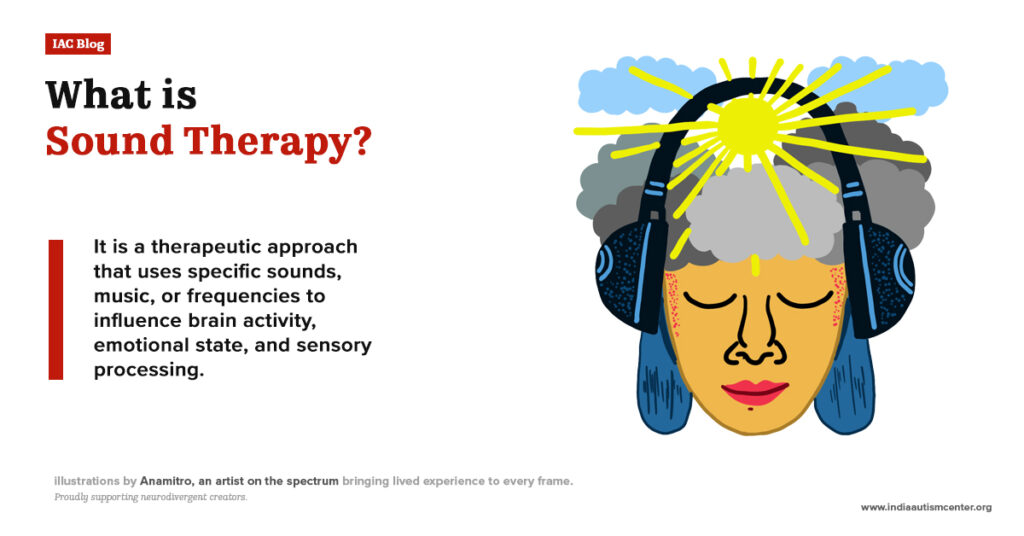
What is sound therapy? Well, it is a therapeutic approach that uses specific sounds, music, or frequencies to influence brain activity, emotional state, and sensory processing.
The concept of sound therapy is based on the brain’s direct response to auditory input. As part of sound therapy, targeted sound exposure can help in:
- Regulating sensory overload
- Improving attention and focus
- Enhancing emotional balance
- Supporting speech and communication
Sound therapy is a non-invasive, drug-free, play-based approach in which structured auditory input may help gradually reshape how sound is perceived and responded to.
However, it is important to note that sound therapy for autism is a complementary therapy and is not a replacement for evidence-based interventions such as ABA, speech therapy, or occupational therapy.
Why Sound Plays a Powerful Role in Autism?
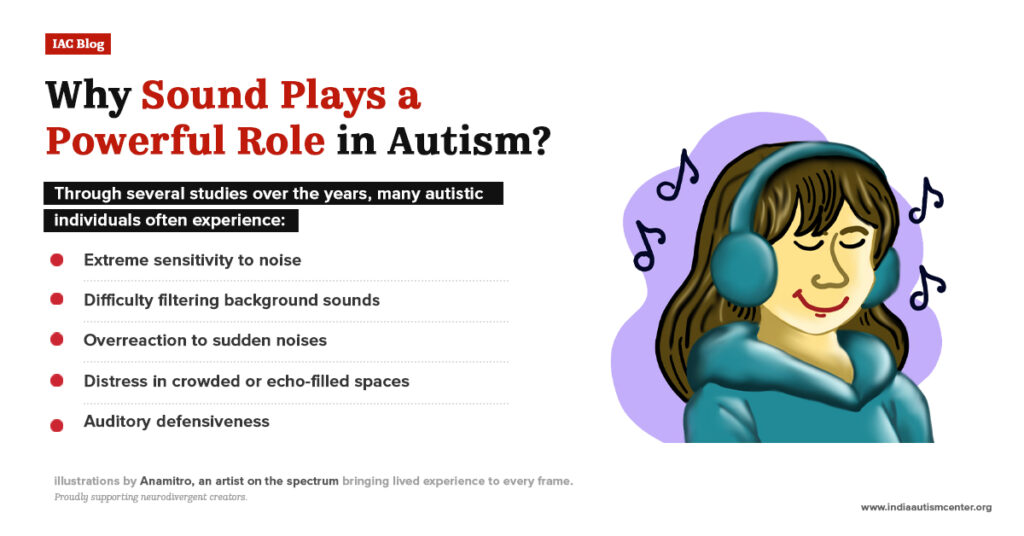
To completely understand the concept of sound therapy for autism, it is necessary to understand how sound affects the autistic brain. Through several studies over the years, many autistic individuals often experience:
- Extreme sensitivity to noise
- Difficulty filtering background sounds
- Overreaction to sudden noises
- Distress in crowded or echo-filled spaces
- Auditory defensiveness
Although there have been cases where some autistic individuals actively seek intense sound stimulation, it involves repeating noises, tapping objects, or humming continuously.
The reason why autistic people have auditory sensitivity is that autism affects:
- The auditory cortex
- The sensory integration system
- The emotional processing centres of the brain
As a result, sound tends to feel painful, confusing, overwhelming, and excessively stimulating. This is exactly why autism sound therapy focuses on gradual, controlled, and therapeutic exposure to sound, helping the brain regulate its auditory responses over time.
How Does Sound Therapy Work on the Brain?
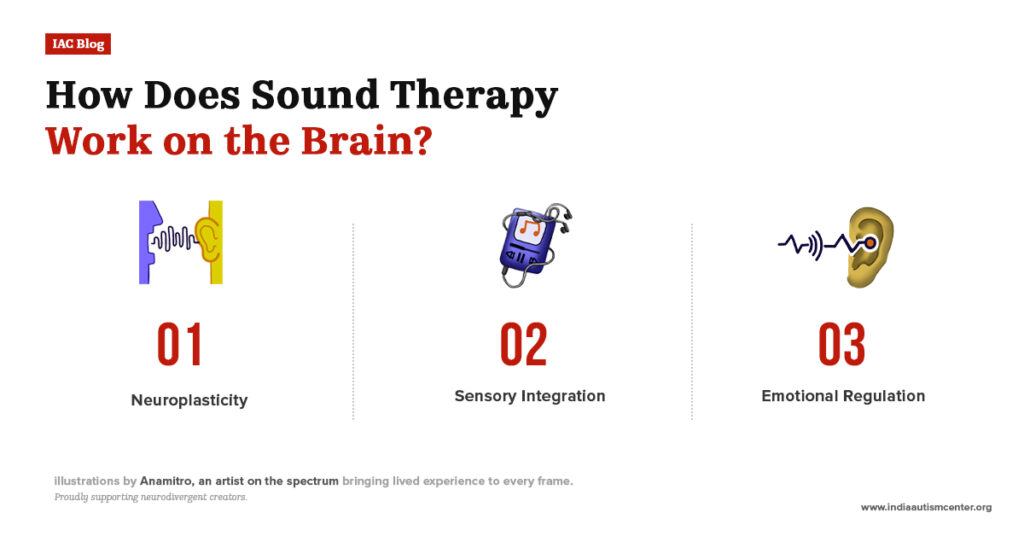
So, how does sound therapy for autism work? At the neurological level, it works through three core mechanisms:
Level 1: Neuroplasticity
Repeated exposure to structured sound helps the brain form new neural pathways. It thus helps in improving how sound is processed in the brain.
Level 2: Sensory Integration
Sound therapy also aims to strengthen communication between the auditory system and other sensory systems (touch, vision, balance).
Level 3: Emotional Regulation
Soothing sounds happen to activate the parasympathetic nervous system. It helps to reduce anxiety and emotional distress.
The three mechanisms together make the autism sound therapy work wonders. It supports:
- Emotional calmness
- Improved attention
- Reduced sensory overload
- Better behavioural regulation
What are the Different Types of Sound Therapy For Autism?
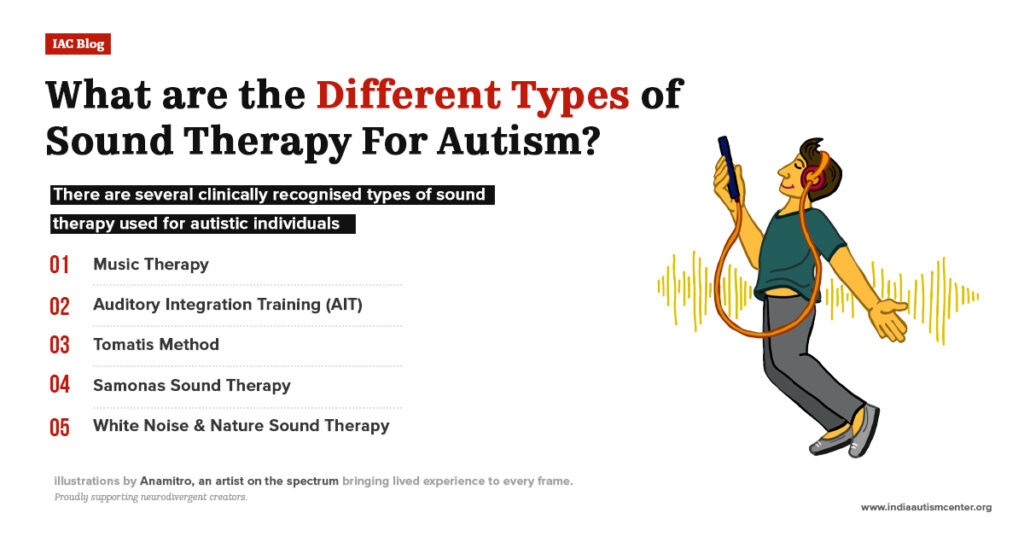
Autism can not be cured with a single treatment; it involves multiple therapeutic approaches that use sound, music, or controlled auditory input to support sensory regulation, emotional balance, communication, attention, and behaviour.
There are several clinically recognised types of sound therapy used for autistic individuals. Each works differently and serves different goals. Here are the top sound therapies for autism that are quite popular:
1. Music Therapy
Music therapy is the most scientifically validated form of sound therapy for autism. It is conducted by a certified music therapist using structured musical interaction, not just passive listening.
Before we move on to understand how it works, let us first understand why music is so powerful for the autistic brain:
- The brain processes music in both the left and right hemispheres, activating areas responsible for speech, emotion, memory, and motor control.
- Autistic individuals respond quite strongly to musical input compared to simple spoken language.
- Music therapy also tends to improve social communication and emotional reciprocity in children with autism.
Here is how music therapy works for autism:
- It activates multiple brain areas simultaneously.
- It uses rhythm to organise the nervous system.
- It supports emotional regulation without pressure.
2. Auditory Integration Training (AIT)
Auditory Integration Training is a structured type of autism sound therapy where children listen to filtered and modulated music through headphones over a number of sessions.
The aim is to improve:
- Sound hypersensitivity
- Noise-related anxiety
- Auditory processing difficulties
- Behavioural reactions to sound
AIT is one type of sound therapy, considered a complementary autism treatment rather than a primary treatment like speech or behavioural therapy. It works through three neurological principles:
- Sound Filtering & Desensitisation: AIT uses modulated sound frequencies to gradually expose the auditory system to low sounds, mid-range speech sounds, and high-frequency notes.
- Neuroplasticity (Brain Rewiring): Repeated exposure to filtered sound tends to activate the brain’s ability to form new neural pathways, reduce exaggerated emotional response to noise, and improve how the sound signals are processed.
- Auditory System Regulation: AIT aims to stabilise communication among the auditory nerve, brainstem, and auditory cortex, as well as the brain’s emotional and behavioural centres.
3. Tomatis Method
The Tomatis Method is a form of sound therapy for autism that uses electronically filtered music and voice frequencies that improve how the brain processes sound.
Let us look at how the Tormatic method helps people with autism:
- The child listens to modified classical music (like Mozart) and also filtered vocal sounds through specialised headphones.
- This repeated stimulation supports neuroplasticity, helping the brain improve auditory processing and sensory integration.
- The sound constantly shifts between high and low frequencies, which stimulates the auditory nerve and brain pathways.
The results are:
- Improved level of listening attention and sound tolerance
- Better speech clarity as well as language readiness
- Regulation of emotions
- Better sensory-motor coordination
4. Samonas Sound Therapy
Samonas, or Spectral Activated Music of Optimal Natural Structure therapy, is a form of autism sound therapy that uses modified classical music and natural sounds to improve how the brain processes sensory information.
So, how does this type of sound therapy work? Let us understand that:
- The child listens to carefully filtered classical music and nature sounds through specialised headphones.
- These sounds are adjusted to stimulate the auditory and vestibular systems (balance) and sensory integration pathways.
- Sound therapy is usually delivered through structured listening programs over several weeks or months, often alongside occupational therapy.
5. White Noise & Nature Sound Therapy
White Noise & Nature Sound Therapy is a type of sound therapy for autism that uses consistent background sounds such as rainfall, forest sounds, or ocean waves. The natural sound helps calm the nervous system and aims to reduce sensory overload.
How does this sound therapy work? Here is how:
- Steady background sounds create a predictable auditory environment.
- The calm and steady background sounds create a predictable auditory environment.
- The consistent sound activates the parasympathetic nervous system, which promotes relaxation and emotional regulation.
The results of white noise and nature sound therapy for autism show remarkable results, such as:
- It improves the sleep quality.
- Supports attention and focus
- Creates a sense of safety and calm
- Reduces sensory overstimulation, anxiety levels, and emotional outbursts.
It works best when combined with speech therapy, occupational therapy, and behavioural intervention.
What are the Benefits of Sound Therapy for Autism?
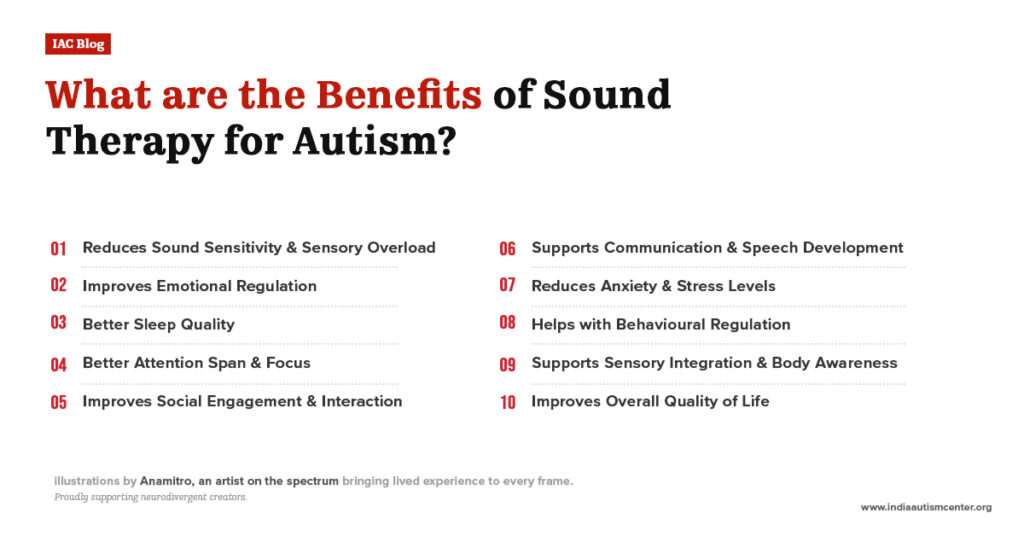
Sound therapy for autism is widely used as a complementary intervention to support sensory regulation, emotional balance, attention, and overall well-being. Although it is not a cure for autism, it does help improve daily functioning and quality of life.
Let us understand the benefits of autism sound therapy:
1. Reduces Sound Sensitivity & Sensory Overload
One of the biggest benefits of sound therapy for autism is improved tolerance to everyday sounds. Many autistic individuals struggle with loud or unpredictable noise. Sound therapy helps to:
- Decreases ear-covering behaviour
- Reduces panic in noisy environments
- Improves tolerance to classroom and public sounds
- Lowers sensory-triggered meltdowns
2. Improves Emotional Regulation
Different types of sound therapy help to calm the nervous system. It also supports better control over emotional reactions: It helps to:
- Reduce anxiety
- Decrease in emotional outbursts
- Improve mood stability
- Self-soothe in a better way
3. Better Sleep Quality
Sleep disturbances are very common in autism. Sound therapy for autism, especially white noise and nature sounds, can greatly improve sleep quality. It helps in achieving:
- Faster sleep onset
- Fewer night wakings
- Deeper, more restful sleep
- Reduced bedtime anxiety
4. Better Attention Span, Focus, and Learning Readiness
Many forms of autism sound therapy improve the brain’s ability to filter background noise. Sound therapy leads to:
- Better focus during tasks
- Improved classroom participation
- Increased learning engagement
- Reduced distractibility
5. Improves Social Engagement & Interaction
Music-based sound therapy for autism is known to encourage shared attention, turn-taking, as well as emotional connection. It offers social benefits, including:
- Better eye contact
- Improved joint attention
- Increased social participation and interactions
- Stronger parent-child bonding
6. Supports Communication & Speech Development
While it cannot entirely replace speech therapy, sound therapy for autism does support the foundations needed for communication. It helps by:
- Improving speech rhythm and flow
- Encouraging vocal imitation
- Supporting expressive communication
- Preparing the brain for speech therapy progress
7. Reduces Anxiety & Stress Levels
Many individuals suffering from autism live in a constant state of sensory stress. Autism sound therapy activates the body’s relaxation response. The results are known to include:
- Lower levels of stress hormone
- Reduced fear responses
- Greater emotional calm
- Improves the adaptability to change
8. Helps with Behavioural Regulation
When sensory stress decreases, behaviour often improves naturally. Sound therapy for autism offers behavioural benefits like:
- Fewer aggressive outbursts
- Reduced irritability
- Improved impulse control
- Better frustration tolerance
9. Supports Sensory Integration & Body Awareness
Several types of sound therapy support how the body processes sensory input and improve the following:
- Balance and coordination
- Body awareness
- Motor planning
- Sensory-motor integration
10. Improves Overall Quality of Life
Considering all the benefits, it is needless to say that sound therapy for autism does lead to an improved quality of life. With sound therapy, individuals with autism can:
- Feel calmer and safer.
- Sleep better
- Engage more socially
- Learn more comfortably
- Experience less emotional distress.
Does Sound Therapy Work for Autism?
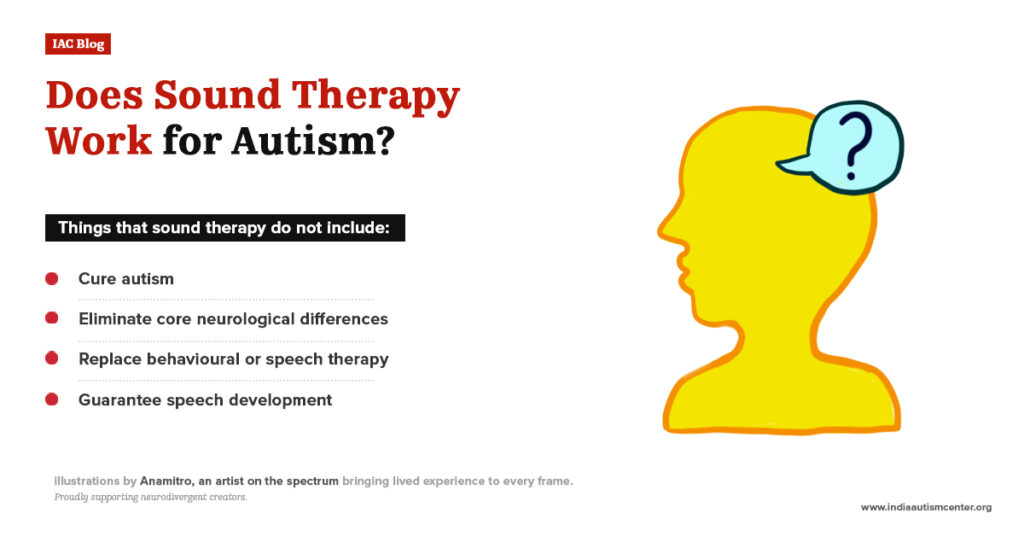
There is no direct answer to the question. Yet, it is one of the most searched questions. Although sound therapy has several benefits, it still has limitations in autism treatment.
Things that sound therapy do not include:
- Cure autism
- Eliminate core neurological differences.
- Replace behavioural or speech therapy.
- Guarantee speech development
Autism sound therapy works best as a supportive, complementary intervention, but never as a standalone treatment.
When is Sound Therapy Not Suitable?
Not every autistic individual responds positively to sound therapy. Sound therapy may not seem to work if the child has:
- Extreme auditory defensiveness
- Sound-triggered seizures
- Anxiety disorders
- Trauma-related sound sensitivity
Finally, sound therapy works best when combined with other targeted therapies. Also, results may vary from individual to individual.
Conclusion
Sound therapy for autism is considered a non-invasive, gentle approach to support sensory regulation, emotional calm, and everyday functioning. While it is not a cure, it does improve the quality of life. The journey of autism care is long, and sound therapy is more than just a stimulus. Sound therapy can prove to be a powerful tool for providing comfort, connection, and steady progress for an individual with autism.
Frequently Asked Questions
What is autism sound therapy used for?
Autism sound therapy is mainly used to reduce sensory overload, improve sleep, calm anxiety, enhance attention, and support emotional regulation. It is often used alongside speech therapy, occupational therapy, and behavioural interventions.
Is music therapy the same as sound therapy for autism?
Music therapy is a clinically proven form of sound therapy for autism, but not all sound therapies are music therapy. Music therapy is therapist-led and focuses on communication and social interaction, while other sound therapies mainly target sensory regulation.
Is sound therapy for autism safe for children?
Yes, sound therapy for autism is considered to be safe, non-invasive, and drug-free when used at appropriate volumes and under professional guidance. Safety depends on the child’s sensory tolerance and proper supervision.
At what age can sound therapy for autism be started?
Sound therapy for autism can be started as early as toddlerhood, especially in early intervention programs. However, therapy choice should always be guided by a developmental specialist.
How long does sound therapy for autism take to show results?
Results from sound therapy for autism vary. Some individuals show changes in a few weeks, while others may need several months of consistent use for noticeable improvements.
For expert insights, support services, and inclusive learning initiatives, visit the India Autism Center.