 Donate now
 Get a Call Back
 MENU
MENU 19 MIN READ
 SHARE
SHARE


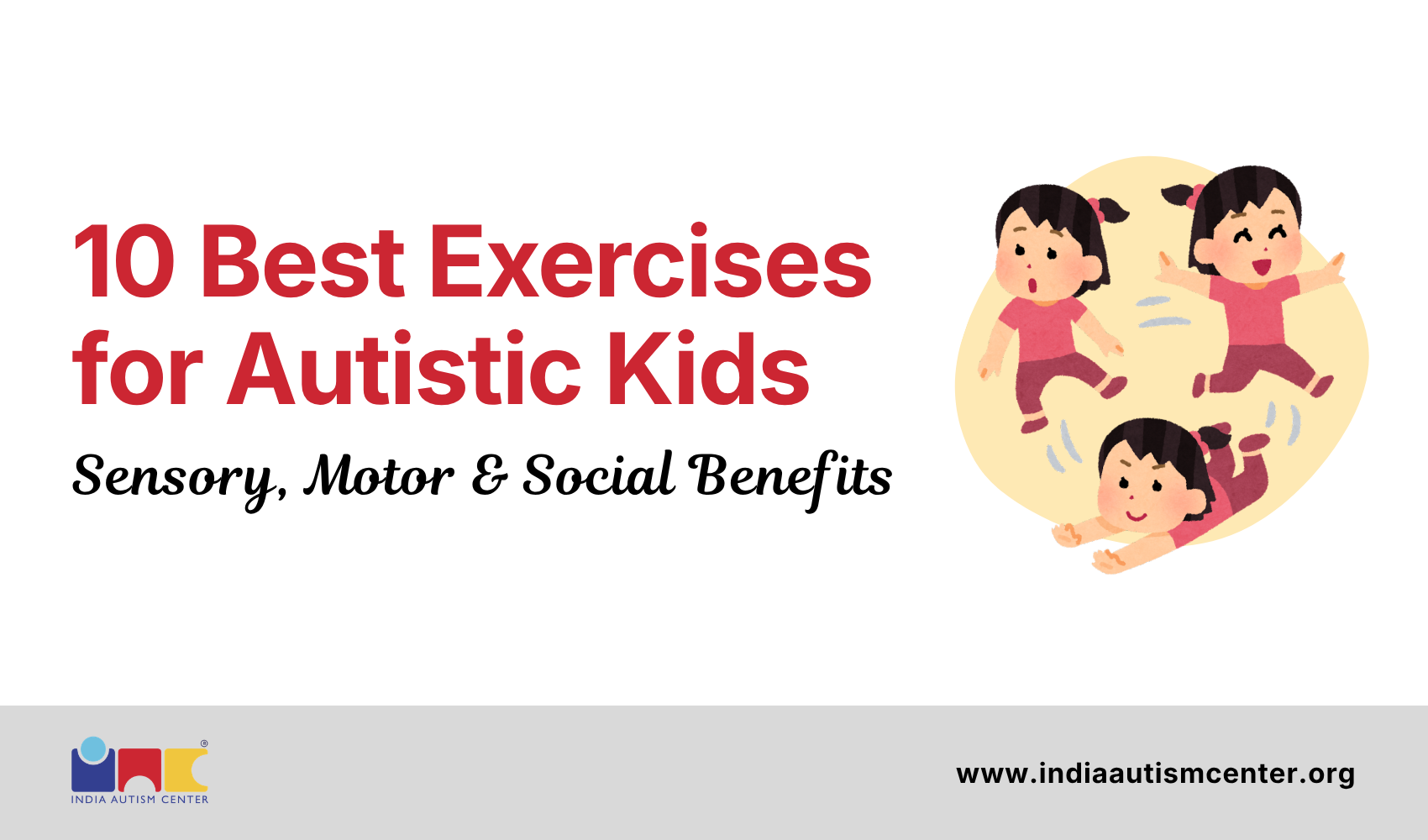
Movement is medicine – and for autistic children, it is one of the most accessible and powerful tools we have. The right exercises for kids with autism do far more than build physical fitness.
They support sensory regulation, strengthen motor planning, ease anxiety, and open doors to social connection. Done consistently, they can shift the entire texture of a child’s day.
This guide brings together 10 of the most effective and evidence-informed exercises for autistic children, drawn from clinical practice, peer-reviewed research, and the lived experience of families and therapists who work with children on the spectrum every day.
Whether you are a parent, a special educator, or a therapist, you will find both the “why” and the “how to start” for each activity – along with honest notes on which sensory profiles each exercise suits best.
Why Exercise Matters for Autistic Children
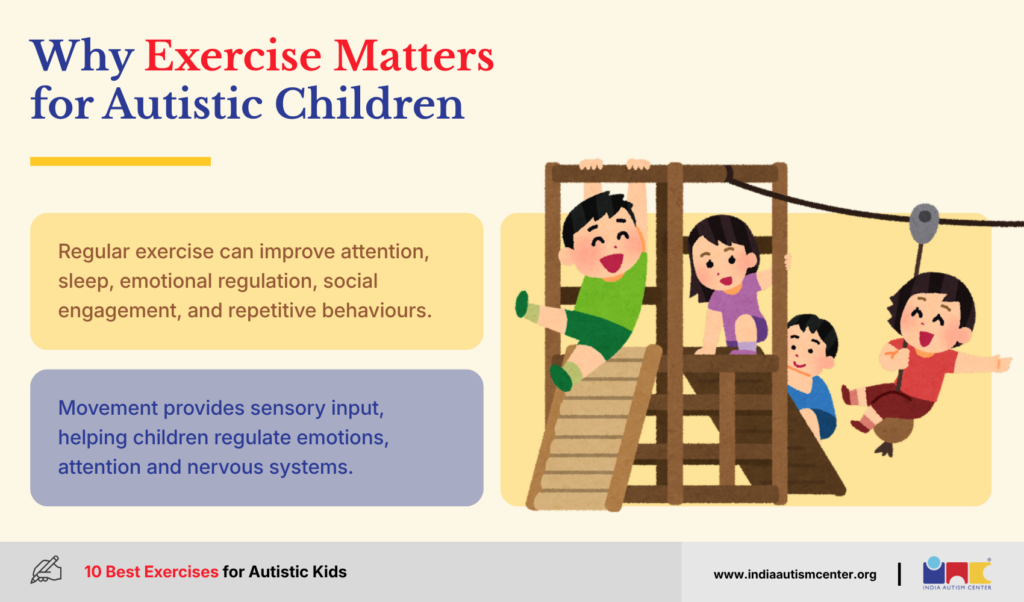
Before we get to the list, it is worth understanding what the research actually says – because the case for physical activity in autism is stronger than many caregivers realise.
The evidence is clear.
A meta-analysis published in Medicine (2019), drawing on data from multiple controlled studies, found that physical exercise produced a significant reduction in stereotypic and repetitive behaviours in children with ASD, with an effect size of Hedges’ g = 1.16 in primary analyses. That is a large effect by any standard. Separately, a 2026 meta-analysis published in Frontiers in Psychiatry found that aerobic exercise showed the strongest anxiolytic effect among all exercise types studied in children with autism – more than yoga or resistance training alone.
Research consistently links regular physical activity in autistic children to:
- Improved attention and on-task behaviour in classroom and therapy settings
- Reduced anxiety and emotional dysregulation
- Better sleep quality
- Gains in social engagement when exercise is done in group or partner formats
- Decreased frequency and intensity of repetitive behaviours
Autistic children move less – and that gap matters
Studies show that autistic children spend significantly more time in sedentary behaviour than their neurotypical peers – on average, roughly one additional hour of sedentary time per day, with much of that driven by screen time. Given that physical activity is already hard to sustain for many children on the spectrum due to sensory sensitivities, motor coordination challenges, and difficulties with transitions, this gap compounds over time.
Exercise as sensory regulation – not just fitness
This is the framing shift that matters most. For many autistic children, movement is not primarily about cardiovascular health or muscle tone. It is a sensory regulation tool. Proprioceptive input (the feedback your joints and muscles send to your brain) is deeply calming for many children who are sensory-seeking. Vestibular input (movement through space) helps organise the nervous system. When we think of exercise this way – as a form of sensory diet rather than a workout – it becomes far easier to build into daily life.
Yoga for Sensory Integration
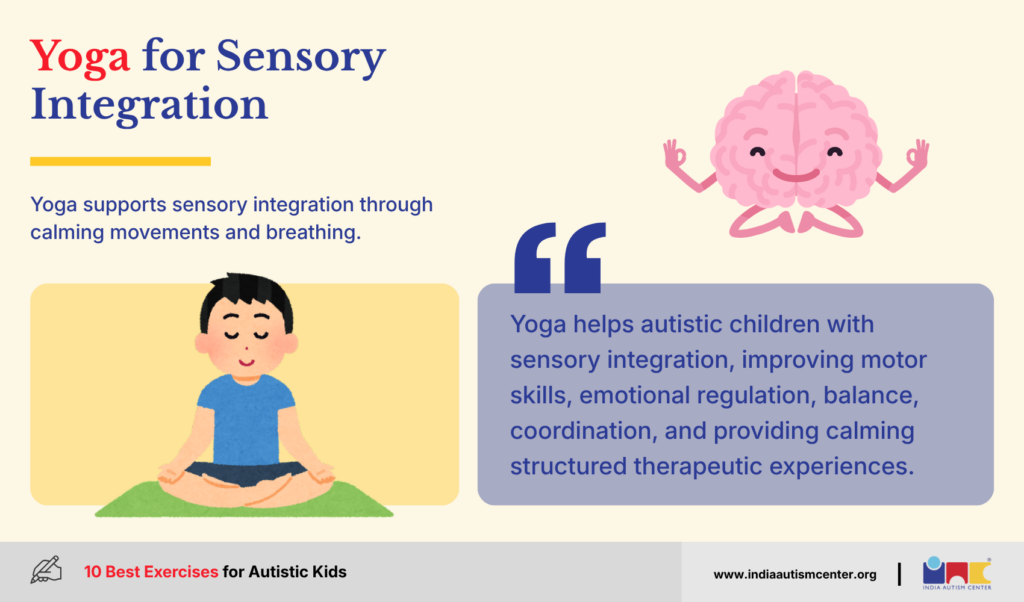
Yoga is one of the most well-researched and practically accessible exercises for autistic children. Its structured, predictable sequence of poses gives children a sense of safety and control – two things that matter enormously on the spectrum.
What the research says: A 12-week yoga programme studied in children with ASD showed significant improvement in overall autism severity scores compared with controls, based on parent ratings (published in Journal of Alternative and Complementary Medicine, 2017). A systematic review of nine studies found positive outcomes in seven, including gains in sensory response, sociability, and attention.
Sensory note: Yoga suits both sensory-seeking and sensory-avoidant children. For sensory seekers, poses like downward dog and warrior provide deep proprioceptive input. For sensory-avoidant children, the quiet, low-stimulation environment of a home yoga session is far less overwhelming than a gym or playground.
How to start:
- Begin with just three or four simple poses – cat-cow, child’s pose, and tree pose are good starting points.
- Use visual cards showing each pose so the child can follow along without relying on verbal instruction.
- Keep sessions to 10–15 minutes and use the same sequence each time. Predictability is the point.
You might also enjoy our guide to 10 Fun Sensory Activities for an Autistic Child for more ideas that pair well with yoga.
If you want to know 10 Fun Sensory Activities for an Autistic Child, you would love to have a look at this article.
📥 Free download: Printable daily routine chart for autistic children
Swimming for Sensory Input
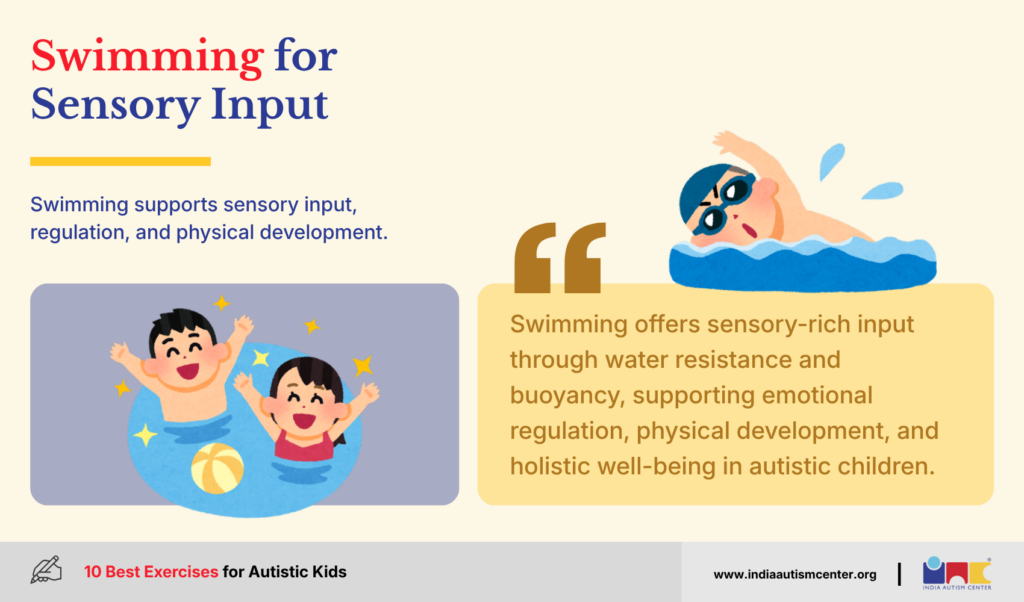
Water is one of the most naturally therapeutic environments for many autistic children. The buoyancy reduces gravitational demand on the body, the resistance provides full-body proprioceptive feedback, and the consistent pressure of water can have a genuinely calming effect on the nervous system.
What the research says: A 2022 study published in PLOS ONE found that aquatic therapy programmes for children with ASD led to significant improvements in social interaction, emotional regulation, and stereotyped behaviour. The consistent sensory input of water appears to support sensory modulation in ways that are difficult to replicate on land.
Sensory note: Swimming is particularly well-suited to sensory-seeking children who crave deep pressure and movement input. For sensory-avoidant children, the initial experience of water on the face or unexpected splashing can be distressing – so a slow, child-led introduction is essential. Start with feet-in-water play before progressing to full immersion.
How to start:
- Look for adaptive swim programmes in your city – many run in smaller pools with quieter environments specifically for children with additional needs.
- Begin with free water play rather than structured strokes. Let the child lead.
- A consistent instructor who understands autism makes an enormous difference to how quickly a child builds trust and confidence in the water.
📥 Free download: Printable daily routine chart for autistic children
Balancing and Coordination Exercises
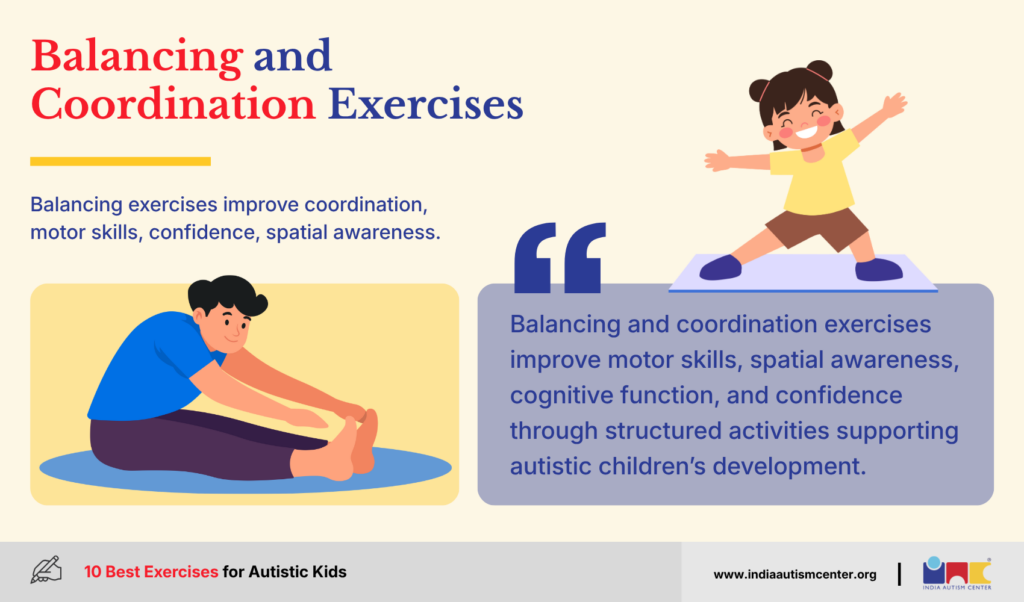
Many autistic children experience differences in proprioception and vestibular processing that make balance and coordination genuinely challenging. This is not a matter of effort or attention – it reflects real neurological differences in how the body maps itself in space. Targeted balance work addresses this directly.
What the research says: A 2022 rehabilitation study published in PMC found that structured balance training – including single-leg standing, beam walking, and jumping between marked circles – produced measurable improvements in postural control and coordination in children with ASD over an eight-week period.
Sensory note: Balance activities provide strong proprioceptive and vestibular input, making them excellent for sensory-seeking children. For sensory-avoidant children, avoid unpredictable movement challenges (like wobble boards without support) early on – build confidence with predictable, supported tasks first.
How to start:
- Tape a straight line on the floor and practise heel-to-toe walking along it. It costs nothing and works immediately.
- Progress to walking along a low balance beam, then to single-leg standing while holding a wall for support.
- Add a fun element – pretend the line is a tightrope over a jungle, or count how many seconds the child can balance on one foot.
Therapeutic Horseback Riding
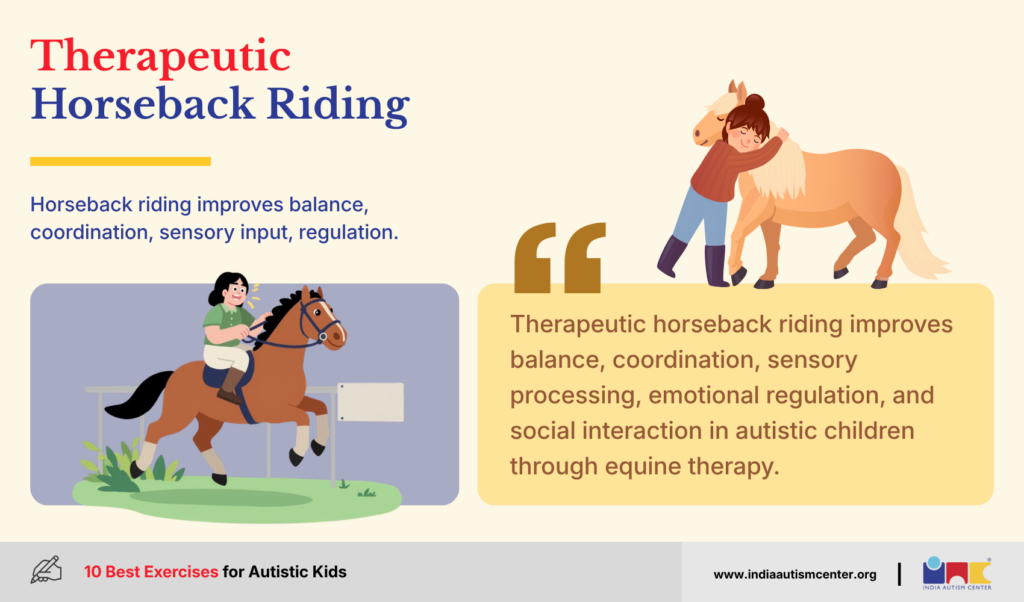
Therapeutic horseback riding – also called hippotherapy when delivered by a licensed therapist – is one of the most distinctive and effective interventions available for autistic children. The rhythmic, three-dimensional motion of the horse closely mimics the movement of human walking, providing rich vestibular and proprioceptive input with every step.
What the research says: A systematic review published in PMC (2018) found that equine-assisted interventions were associated with improvements in adaptive behaviour, social interaction, and communication in children with ASD. A 2020 study in Frontiers in Psychology specifically noted that therapeutic horseback riding combined with cognitive exercises improved attention and reduced hyperactivity in children with ASD and comorbid ADHD.
Sensory note: The gentle, rhythmic motion of a horse is deeply regulating for sensory-seeking children who need vestibular input. For children with tactile sensitivities, the texture of the saddle, the smell of the stable, and the unpredictability of an animal can be challenging – a careful, gradual introduction with a skilled equine therapist is essential.
How to start:
Sessions are typically 30–45 minutes and work best when scheduled consistently – weekly is ideal.
Search for PATH International-certified equine therapy centres, or ask your child’s occupational therapist for a referral.
The first session should be purely about meeting the horse – no riding required. Let the child groom the horse, offer a treat, and simply stand nearby.
Want to know more? Get in touch with us.
Breathing Exercises for Calming
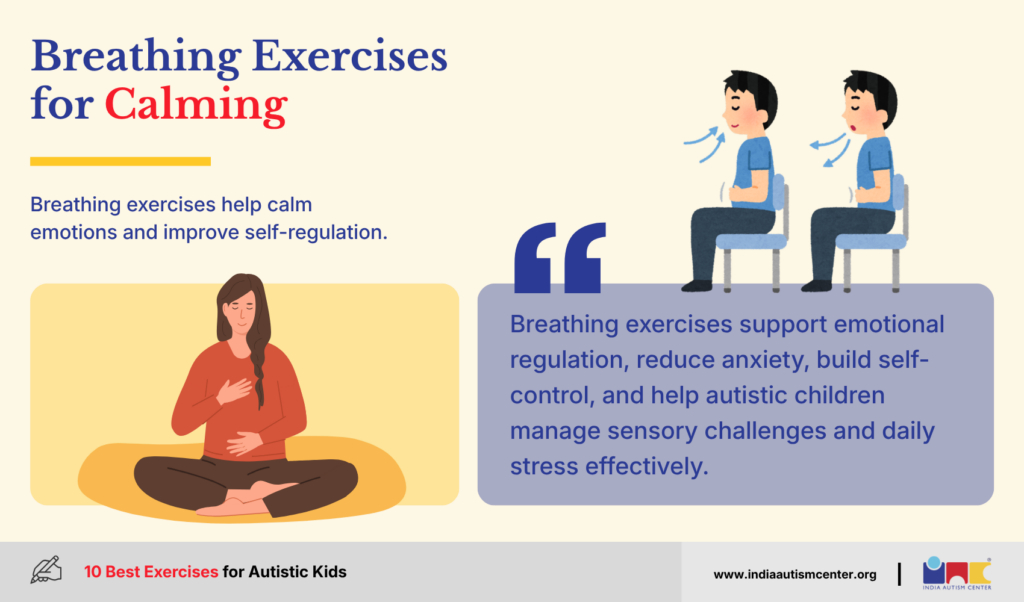
Breathing exercises are not glamorous. They do not require equipment, a gym, or a therapist. But they may be the single most transferable self-regulation skill an autistic child can learn – because they work anywhere, at any time, and in any situation.
What the research says: Diaphragmatic breathing activates the parasympathetic nervous system, directly countering the fight-or-flight response. Research on mindfulness-based interventions in children with ASD – including a 2021 pilot randomised trial – found that breath-focused practices improved self-regulation and executive control, with parent-reported gains in emotional communication.
Sensory note: Breathing exercises are ideal for sensory-avoidant children who find physical movement overwhelming. They are low-stimulation, predictable, and can be done in a quiet corner. For sensory-seeking children, pair breathing with movement – for example, “snake breath” (hissing out slowly while sliding arms down) adds a tactile and auditory dimension.
How to start:
Practise during calm moments, not just during distress. The goal is to build the habit before it is needed.
Teach “belly breathing” first: place a small stuffed animal on the child’s tummy and ask them to make it rise and fall with each breath.
Use a visual aid – a pinwheel, a bubble wand, or a simple drawing of a flower (sniff) and a candle (blow) – to make the technique concrete and memorable.
Obstacle Courses for Motor Planning
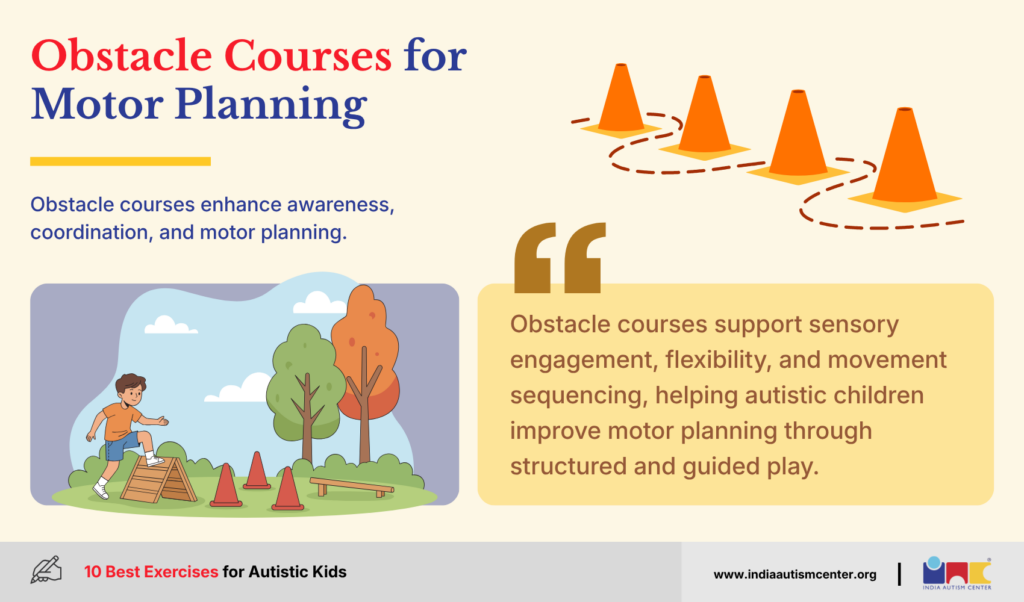
Motor planning – the ability to conceive, organise, and execute a sequence of movements – is an area of genuine challenge for many autistic children. Obstacle courses are one of the most effective and enjoyable ways to build this skill, because they demand sequencing, spatial awareness, and problem-solving all at once.
What the research says: Research on motor planning deficits in autism consistently shows that structured, repetitive movement sequences improve praxis (the ability to plan and perform novel movements). Obstacle courses are specifically recommended in adaptive physical education literature as a tool for developing this capacity in a playful, low-pressure context.
Sensory note: Obstacle courses can be calibrated for any sensory profile. For sensory seekers, add tunnels to crawl through, crash pads to jump onto, and textured surfaces to walk across. For sensory-avoidant children, keep the environment quiet, use familiar household items, and introduce one new element at a time.
How to start:
Use picture cards showing each obstacle in sequence – this gives the child a visual map of the course and reduces transition anxiety between elements.
Build a simple course at home using cushions to jump between, a table to crawl under, a line of tape to walk along, and a hoop to step through.
Walk through the course with the child the first time, narrating each step: “First we jump, then we crawl, then we walk the line.”
Sensory Play with Textures
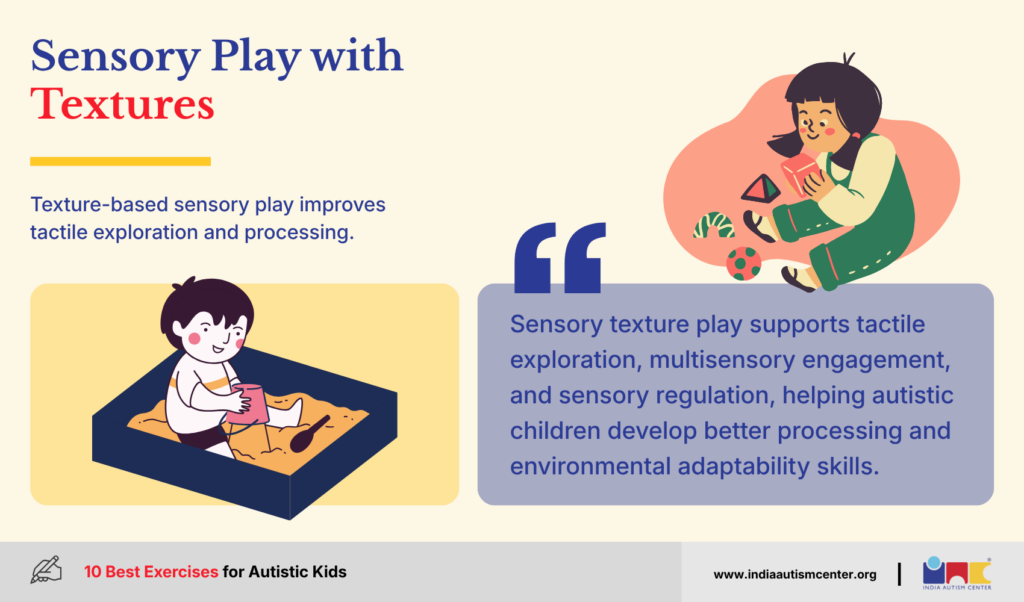
Sensory play with textures sits at the intersection of exercise and therapy. It is not vigorous physical activity in the traditional sense, but it is deeply important for sensory integration – the process by which the brain learns to organise and respond appropriately to sensory input from the environment.
What the research says: Occupational therapy literature consistently supports texture-based sensory play as a component of sensory integration therapy for children with ASD. Tactile exploration helps the brain build more accurate sensory maps, reducing over- or under-responsiveness to touch over time.
Sensory note: This activity is designed specifically for sensory-avoidant children who struggle with tactile input, but it must be introduced gradually and always on the child’s terms. For sensory-seeking children, it provides satisfying tactile stimulation and can be used as a calming activity before transitions.
How to start:
Gradually expand the range: wet sand, water beads, shaving foam, kinetic sand, and textured fabrics all offer different tactile experiences.
Begin with textures the child already tolerates – perhaps dry rice, smooth playdough, or a soft fabric – before introducing anything new.
Never force contact. Offer the material and let the child approach it at their own pace. Even watching another person play with a texture is a valid first step.
Interactive Games for Social Skills
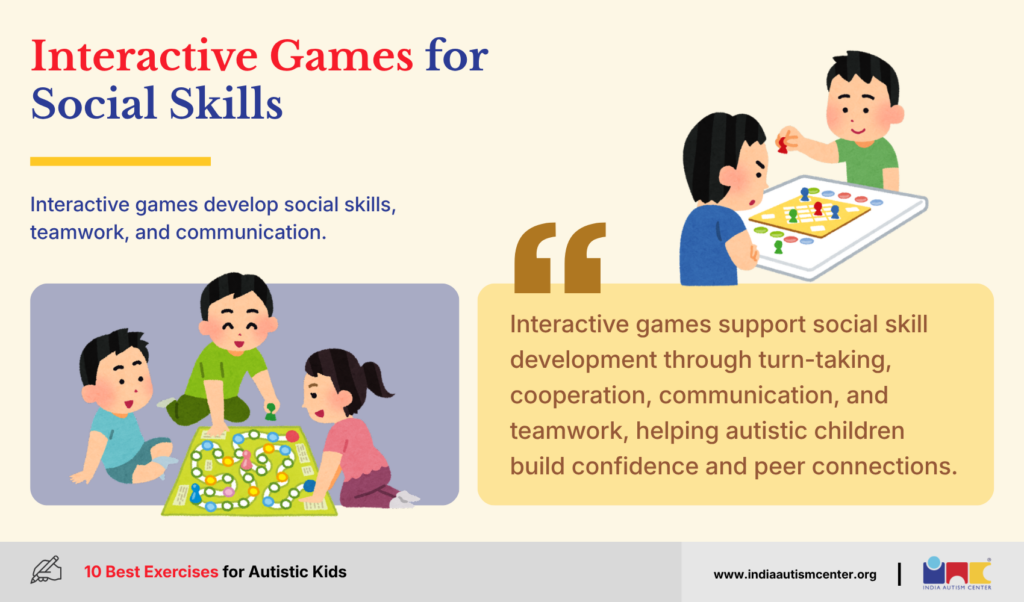
Physical play and social development are deeply intertwined. Interactive games – from simple turn-taking activities to cooperative movement challenges – create structured, low-pressure opportunities for autistic children to practise the social skills that can feel elusive in unstructured settings.
What the research says: A 2022 meta-analysis in Autism Research found that long-term, regular exercise in group formats was especially beneficial for social skills in children and adolescents with autism, with gains in communication, turn-taking, and cooperative behaviour.
Sensory note: Group games suit sensory-seeking children who enjoy proximity and shared energy. For sensory-avoidant children, start with one-on-one games in a quiet space before gradually introducing peers. Keep group sizes small – two or three children is often more productive than a full class.
How to start:
- Start with simple turn-taking games: rolling a ball back and forth, taking turns stacking blocks, or passing a beanbag in a circle.
- Use clear, consistent rules and visual supports (e.g., a “my turn / your turn” card) to reduce ambiguity.
- Gradually introduce cooperative games where children must work together toward a shared goal – building a tower, completing a puzzle relay, or navigating an obstacle course as a team.
Fine Motor Skill Development with Arts and Crafts
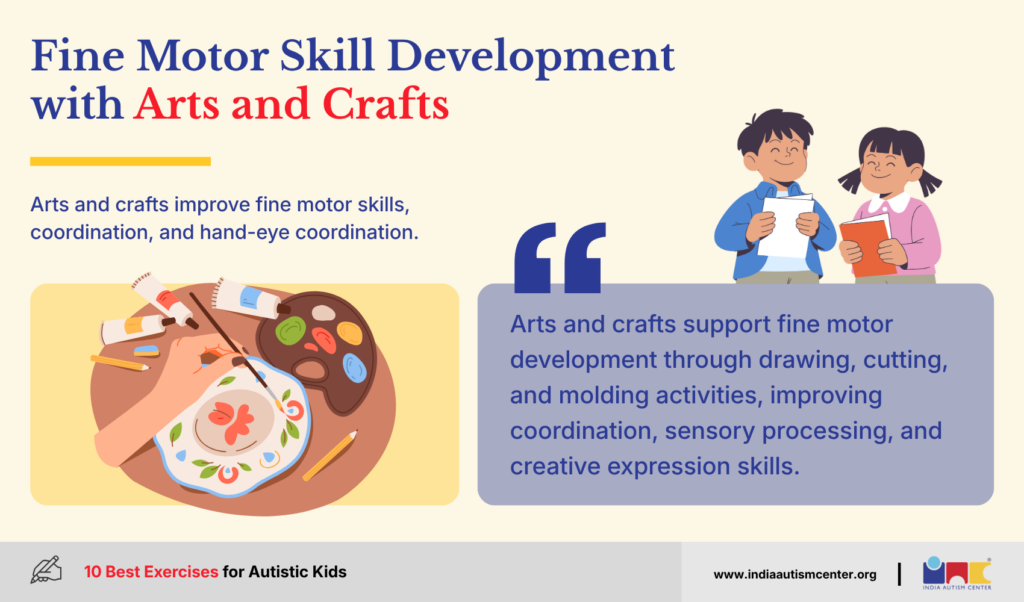
Fine motor development – the precise coordination of small muscle groups in the hands and fingers – underpins writing, self-care, and many daily living skills. Arts and crafts activities build these skills in a context that feels creative and rewarding rather than therapeutic and effortful.
What the research says: Occupational therapy research consistently identifies arts and crafts as an effective medium for fine motor skill development in children with ASD, with benefits in hand-eye coordination, grip strength, and bilateral coordination. The tactile dimension of art materials also supports sensory processing alongside motor development.
Sensory note: Arts and crafts can be adapted for both sensory profiles. For sensory-seeking children, use materials with strong tactile properties – clay, finger paint, textured collage materials. For sensory-avoidant children, offer tools (brushes, stamps, rollers) that allow creative engagement without direct hand contact with messy materials.
How to start:
Gradually introduce activities that require more precision: cutting along a line, threading beads, or drawing within a shape.
Begin with activities that have a clear, achievable end product – a stamped card, a simple collage, a clay pinch pot – so the child experiences a sense of completion and pride.
Offer a range of tools and let the child choose. Autonomy matters enormously for engagement.
Want to know more? Get in touch with us.
Aerobic Activities for Overall Fitness
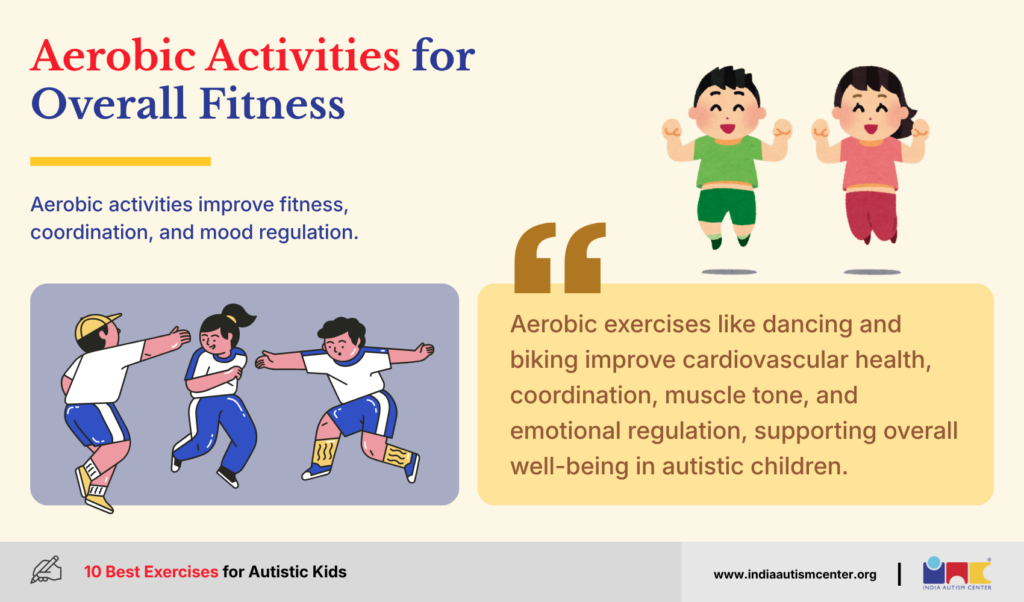
Aerobic exercise – sustained, rhythmic movement that raises the heart rate – has some of the strongest evidence of any physical intervention for autistic children. It improves mood, reduces anxiety, supports attention, and builds the cardiovascular fitness that underpins long-term health.
What the research says: A 2026 meta-analysis published in Frontiers in Psychiatry found that aerobic exercise produced the strongest reduction in anxiety among all exercise types studied in children with ASD. Autism Speaks’ research summary notes that 20–30 minutes of aerobic activity can improve attention and on-task behaviour for several hours afterwards – a finding with direct implications for learning and therapy sessions.
Sensory note: Aerobic activities vary enormously in their sensory demands. Dancing suits sensory-seeking children who enjoy music and movement. Cycling is excellent for children who need predictable, repetitive input. For sensory-avoidant children, avoid crowded or noisy environments – a home dance session or a quiet bike ride is far more accessible than a gym class.
How to start:
Build aerobic activity into the daily routine at a consistent time – before school, after lunch, or as a transition between therapy and homework – so it becomes a predictable anchor in the child’s day.
Choose an activity the child already shows interest in – if they love a particular song, dancing to it counts. If they enjoy being outdoors, a brisk walk or scooter ride works perfectly.
Aim for 20–30 minutes, but start with 10 if that is what is achievable. Consistency matters more than duration.
Common Barriers to Exercise – and How to Overcome Them
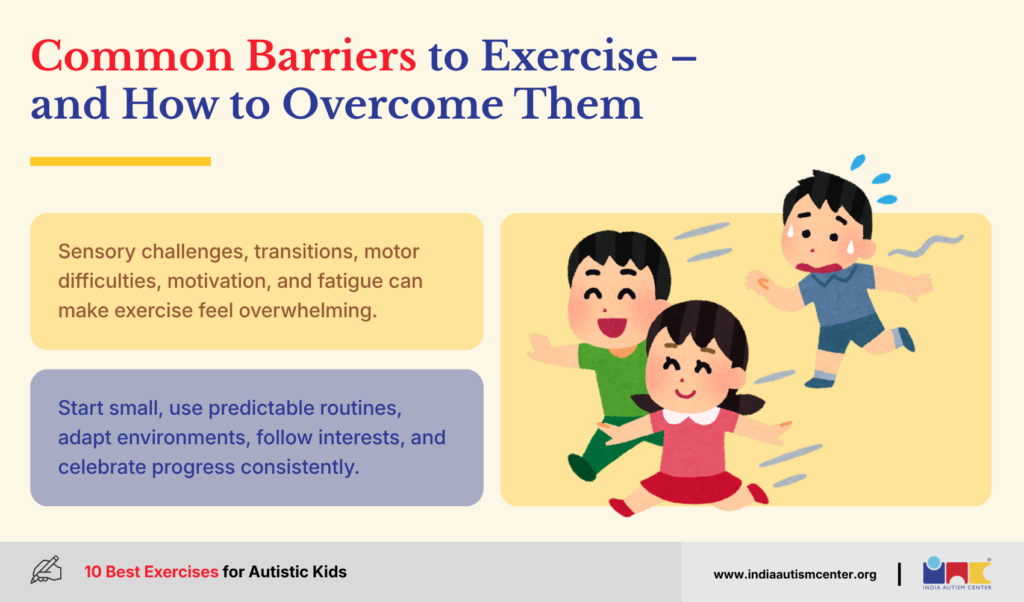
Knowing which exercises work is only half the challenge. The harder question is: how do you actually get started when the child resists, the environment is overwhelming, or the caregiver is exhausted? Here are the most common barriers we encounter, and what actually helps.
Sensory sensitivities to the exercise environment
Gyms are loud. Pools smell of chlorine. Sports equipment has unexpected textures. For many autistic children, the sensory demands of a typical exercise environment are the first obstacle – before the activity itself even begins.
What helps: Start in the lowest-stimulation environment available, usually home. Introduce new environments gradually, with preview visits before the first active session. Noise-cancelling headphones can make a significant difference in pools, sports halls, and outdoor spaces. Let the child bring a preferred comfort item to new environments.
Difficulty with transitions and new routines
Introducing a new activity means changing an existing routine – and that is genuinely hard for many autistic children, regardless of how enjoyable the activity might eventually become.
What helps: Use visual schedules to show the child exactly what will happen and when. Social stories (short, illustrated narratives describing the new activity step by step) are particularly effective for preparing children for unfamiliar experiences. Keep the timing consistent – same day, same time, same sequence – until the activity becomes part of the expected routine.
Motor coordination challenges
Some children avoid physical activity not because they dislike movement, but because movement is genuinely harder for them and past experiences have involved frustration or failure.
What helps: Break every activity into the smallest possible steps and teach each step separately before combining them. Hand-over-hand guidance – where the adult physically guides the child’s movement – is appropriate for introducing new motor patterns, then gradually faded as the child builds confidence. Celebrate every small gain explicitly.
Motivation and engagement
An activity that does not connect to the child’s interests will not last – regardless of how good the evidence for it is.
What helps: Follow the child’s lead. If they love dinosaurs, build a dinosaur-themed obstacle course. If they are fascinated by a particular TV character, find yoga poses named after that character. Preferred themes and characters are not a distraction from the exercise – they are the engine that makes it work.
Caregiver fatigue and access
Many families of autistic children are already stretched thin. The idea of adding a structured exercise programme to an already demanding day can feel impossible.
What helps: Ten to fifteen minutes counts. A short walk, a dance to two songs, or a quick obstacle course in the living room is genuinely beneficial – especially when done consistently. Free and low-cost options are abundant: YouTube channels offer yoga and movement sessions designed specifically for children with additional needs, and home obstacle courses require nothing more than cushions and tape.
Tips for Caregivers: Making Exercise a Daily Habit
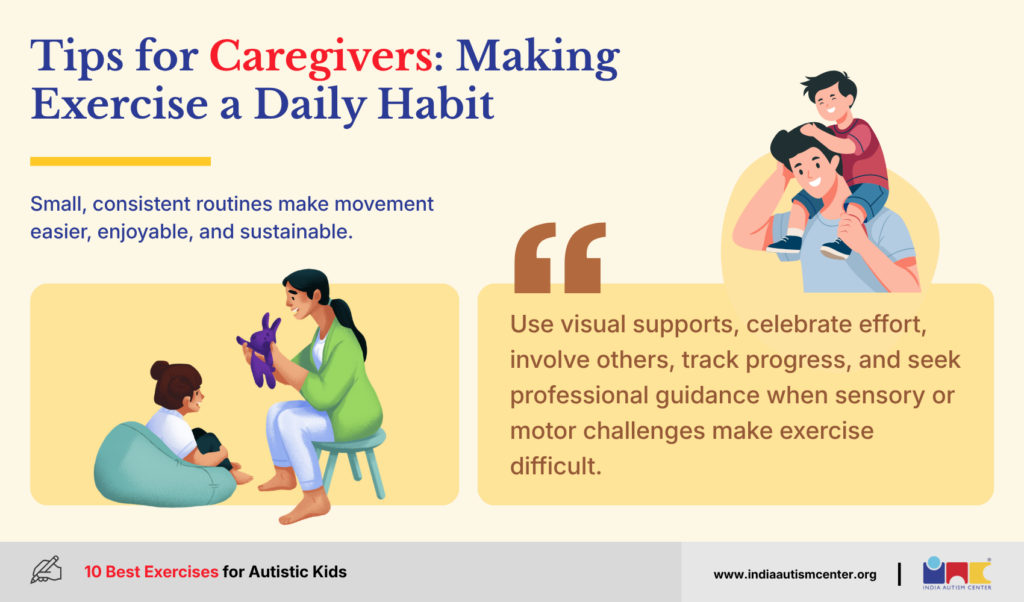
Building a sustainable movement routine takes time. Here is what we have found works in practice.
Start small and stay consistent. Ten to fifteen minutes a day, done five days a week, will produce more benefit than an hour-long session once a week. Consistency is the variable that matters most.
Use visual timers and schedules. A visual timer (a Time Timer, for example, or a simple sand timer) makes the duration of an activity concrete and predictable. Knowing that exercise ends when the sand runs out reduces resistance to starting.
Celebrate effort, not performance. Autistic children – like all children – thrive on acknowledgement. But the reinforcer should be for trying, not for achieving a particular standard. Use the child’s preferred reinforcers: verbal praise, a sticker chart, a preferred activity afterwards, or simply a high-five.
Involve siblings or peers where possible. Exercise done alongside a sibling or a trusted peer adds a social dimension that builds communication and cooperation skills naturally. It also makes the activity more fun – which is, ultimately, the most important factor in whether it continues.
Track progress simply. A basic chart on the fridge – one sticker per day of movement – gives the child a visual record of their own consistency and builds intrinsic motivation over time. Download our free printable daily routine chart to get started.
Know when to involve a professional. If a child’s motor challenges, sensory sensitivities, or behavioural responses to exercise are significant, a referral to an occupational therapist, physiotherapist, or certified adaptive physical education specialist is the right next step. These professionals can design individualised programmes, identify underlying sensory or motor issues, and support both the child and the caregiver with evidence-based strategies.
Conclusion
Tailoring exercises for autistic kids goes beyond physical health – it nurtures sensory processing, emotional regulation, and cognitive development. These 10 important exercises offer a diverse range of activities that can be adapted to meet the unique needs of each child on the autism spectrum. By incorporating these exercises into daily routines, we empower autistic children to thrive physically, emotionally, and socially, unlocking their full potential for a healthier and more fulfilling life.
Useful Sources
Ferreira, J.P. et al. (2019). Effects of physical exercise on stereotyped behaviour in ASD. Medicine. pmc.ncbi.nlm.nih.gov/articles/PMC6843401
Frontiers in Psychiatry (2026). Exercise and anxiety in children with ASD: meta-analysis. frontiersin.org/journals/psychiatry/articles/10.3389/fpsyt.2026.1761833/full
Autism Speaks. Can exercise improve behaviour in autism? autismspeaks.org/expert-opinion/can-exercise-improve-behavior
PMC (2018). Equine-assisted interventions and ASD: systematic review. pmc.ncbi.nlm.nih.gov/articles/PMC6178825
PMC (2022). Aquatic therapy and ASD outcomes. pmc.ncbi.nlm.nih.gov/articles/PMC9138228
PMC (2022). Balance training in children with ASD. pmc.ncbi.nlm.nih.gov/articles/PMC9406473
For expert insights, support services, and inclusive learning initiatives, visit the India Autism Center.
Disclaimer: This article is intended for educational and informational purposes only. It does not constitute medical advice, a clinical diagnosis, or a substitute for professional consultation. If you have concerns about your child’s development, please consult a qualified healthcare professional or developmental specialist. India Autism Center encourages all families to seek personalised guidance from trained clinicians. The research cited reflects findings available at the time of publication and is subject to ongoing scientific review.