 Donate now
 Get a Call Back
 MENU
MENU 10 MIN READ
 SHARE
SHARE


Autism spectrum conditions are now widely discussed, but not many people are aware of a subtype called atypical autism. Parents often come across this term during evaluations when a child shows certain traits of autism but does not actually meet the full diagnostic criteria for classic autism.
Globally, autism spectrum disorder, also known as Autism Spectrum Disorder (ASD), affects about 1 in 31 children, according to the CDC. It does not mean that all individuals fall into the typical autism categories. Some show partial traits or develop symptoms later in childhood. These individuals are later diagnosed with atypical autism.
At times, the symptoms of atypical autism are so mild or unusual that they are often initially overlooked and thus remain undiagnosed until adolescence or adulthood.
In this guide, we are going to explore the meaning of atypical autism, common atypical autism symptoms, causes, diagnosis, and available therapy options.
Understanding Atypical Autism
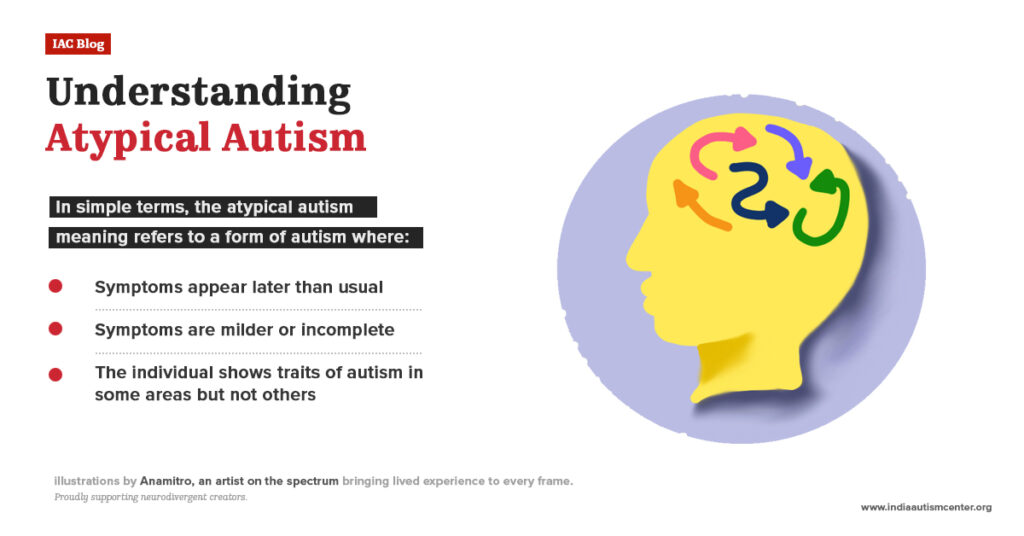
Atypical autism is a developmental condition where a person shows some characteristics of autism but does not fully meet the diagnostic criteria stated for autism spectrum disorder.
In medical classifications such as ICD-10, it was often known as Pervasive Developmental Disorder – Not Otherwise Specified or PDD-NOS.
In simple terms, the atypical autism meaning refers to a form of autism where:
- Symptoms appear later than usual
- Symptoms are milder or incomplete
- The individual shows traits of autism in some areas but not others
Because of this variation, atypical autism is sometimes described as a subthreshold form of autism spectrum disorder.
Example: A child having social communication challenges but displays normal language development.
Today, while the medical community mostly uses the umbrella term Autism Spectrum Disorder, the concept of atypical autism remains vital for understanding those who do not fit the “classic” mould of autism.
Recognising the Signs: Atypical Autism Symptoms
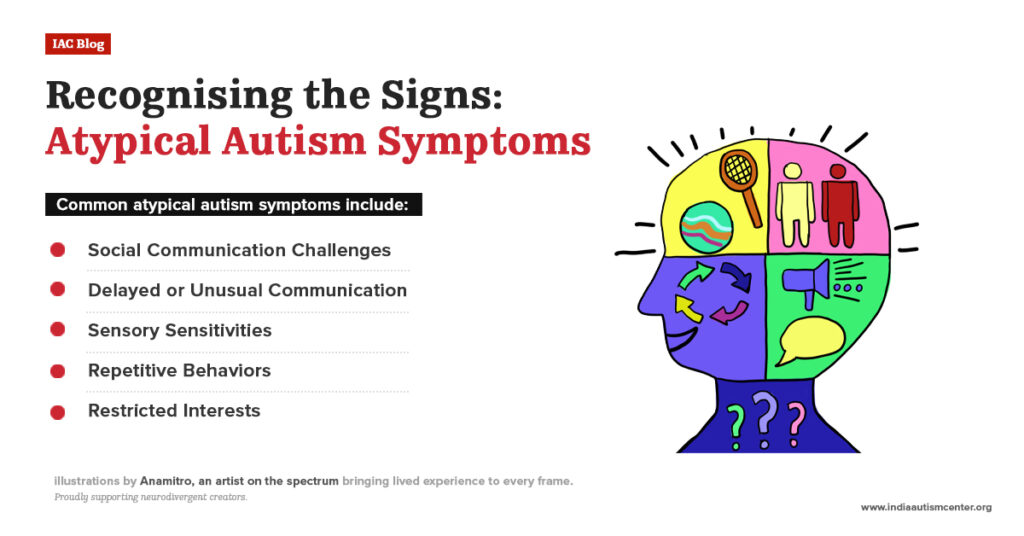
Because this condition is “atypical,” the signs can be subtle or inconsistent. Some children might be very social but struggle with the “unspoken rules” of conversation. Others might have no repetitive behaviours but experience extreme sensory sensitivities.
Common atypical autism symptoms include:
Social Communication Challenges
Many individuals with atypical autism struggle with social interactions. However, these challenges may be less severe than in classic autism. Some of the common signs include:
- Difficulty understanding social cues
- Limited eye contact
- Trouble maintaining conversations
- Difficulty forming friendships
- Misinterpreting facial expressions or tone
Delayed or Unusual Communication
Some children with atypical autism symptoms may develop speech normally but struggle with the social use of language. Here are some signs that are usually found:
- Talking excessively about specific interests
- Difficulty understanding jokes or sarcasm
- Repeating phrases or scripts from TV shows
- Trouble taking turns in conversation
Sensory Sensitivities
Many individuals with atypical autism symptoms experience unusual sensory responses. Children with atypical autism are found to be:
- Sensitive to loud sounds
- Disturbed by bright lights
- Uncomfortable with certain textures
- Overwhelmed in crowded environments
Repetitive Behaviors
Repetitive behaviours are another common feature of atypical autism. However, these behaviours may be less frequent or less intense than those seen in typical autism.
A person with atypical autism is seen:
- Repeating certain movements
- Insisting on routines
- Being strongly attached to specific objects
- Repeating the same questions
Restricted Interests
People with atypical autism often develop intense interests in specific topics such as trains, maps, science, video games, or other technologies. While having strong interests is normal, individuals with atypical autism symptoms may focus on them to an unusual degree.
It is important to remember that every individual is different. Some might show many atypical autism symptoms, while others may only show a few that appear intermittently.
Atypical Autism Symptoms in Adults
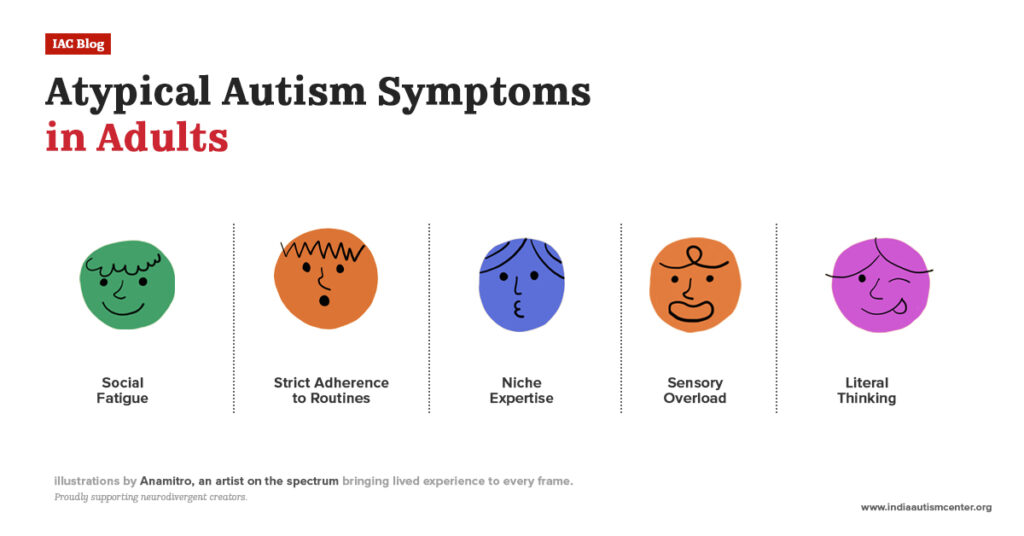
Many people reach adulthood without ever realising they are neurodivergent. Because atypical autism can be subtle, it is often missed during childhood, especially in individuals with high cognitive abilities who “mask” their struggles to fit in.
When looking at atypical autism symptoms in adults, we often see:
- Social Fatigue: Feeling completely exhausted after a normal workday or social gathering due to the effort required to process social cues.
- Strict Adherence to Routines: Feeling significant anxiety if a planned route is blocked or if a meeting is rescheduled at the last minute.
- Niche Expertise: Having an encyclopedic knowledge of a specific subject that goes far beyond a hobby.
- Sensory Overload: Finding open-office plans or loud restaurants physically painful or impossible to concentrate in.
- Literal Thinking: Difficulty with sarcasm, idioms, or “reading between the lines” in professional emails or romantic relationships.
Understanding atypical autism symptoms in adults is crucial because receiving a late diagnosis can often provide a massive sense of relief and clarity for the individual.
How Is Atypical Autism Different From Classic Autism?
Although both fall within the autism spectrum, atypical autism differs from typical autism in terms of symptom pattern, severity, and age of onset. The table below highlights the key differences:
| Feature | Atypical Autism | Classic Autism |
| Age of symptom onset | Often after age 3 | Usually, before age 3 |
| Symptom severity | Often milder | Often more pronounced |
| Diagnostic criteria | Partial criteria | Full diagnostic criteria |
| Social challenges | Present but variable | Typically significant |
| Repetitive behaviors | Maybe fewer or milder | Often more consistent |
How Atypical Autism Is Diagnosed?
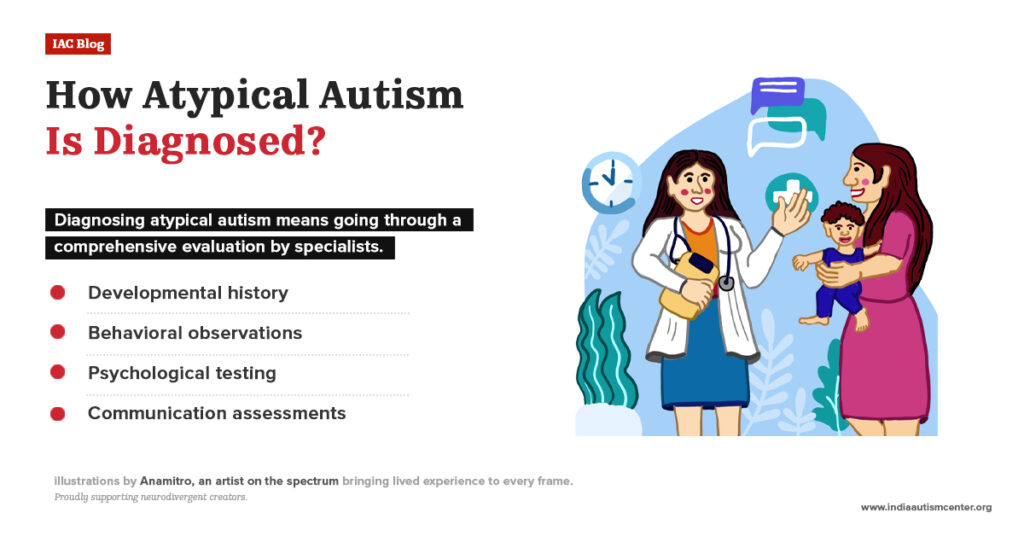
Diagnosing atypical autism means going through a comprehensive evaluation by specialists.
The assessment may involve:
- Developmental history
- Behavioral observations
- Psychological testing
- Communication assessments
Clinicians often use standardised diagnostic tools to identify atypical symptoms of autism. Early diagnosis is important because early intervention with different therapies can significantly improve long-term outcomes.
Causes of Atypical Autism
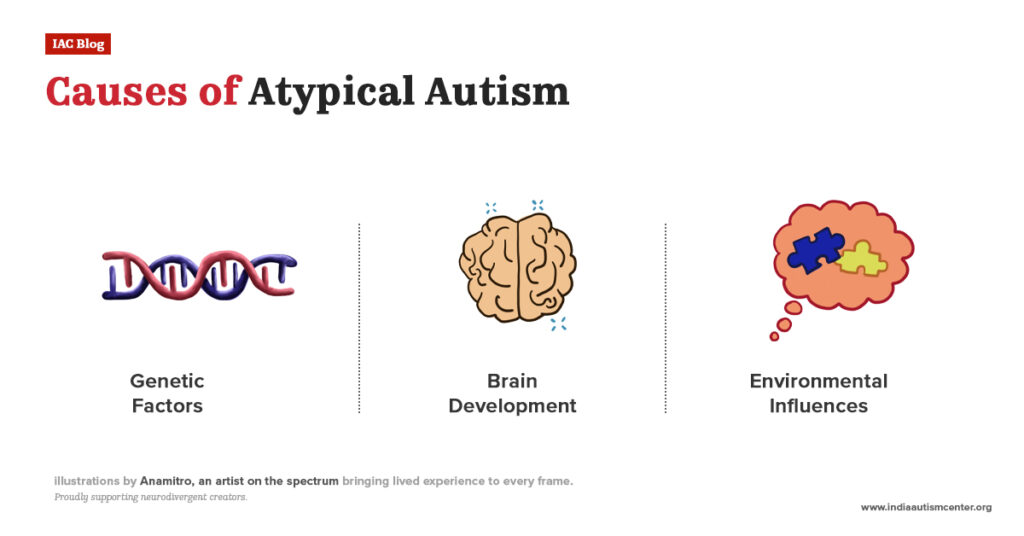
There is no single cause of atypical autism. Researchers believe it develops due to a combination of genetic and environmental factors. Let us understand how these factors contribute:
Genetic Factors
Genetics plays a significant role in autism conditions. Studies are still being done to study the genetic patterns behind atypical autism symptoms. Here is what parents and even caregivers must know:
- Autism is highly heritable
- Certain gene variations affect brain development
- Families may have multiple members with autism traits
Brain Development Differences
When brain imaging is done for individuals with atypical autism, it is found that there are differences in neural connectivity, the structure of the brain, and also the way information is processed.
These neurological differences eventually influence communication and behaviour.
Environmental Influences
Certain environmental factors may increase the likelihood of autism traits. Some influencing factors include:
- Advanced parental age
- Prenatal complications
- Low birth weight
- Exposure to certain prenatal risk factors
Also, contrary to belief, vaccination in no way is responsible for causing atypical autism.
What Thearpy Is Available for Atypical Autism?
If you or your child has received a diagnosis, the next logical question is: what now? Instead, the focus is on providing tools to navigate a world that isn’t always built for neurodivergent minds.
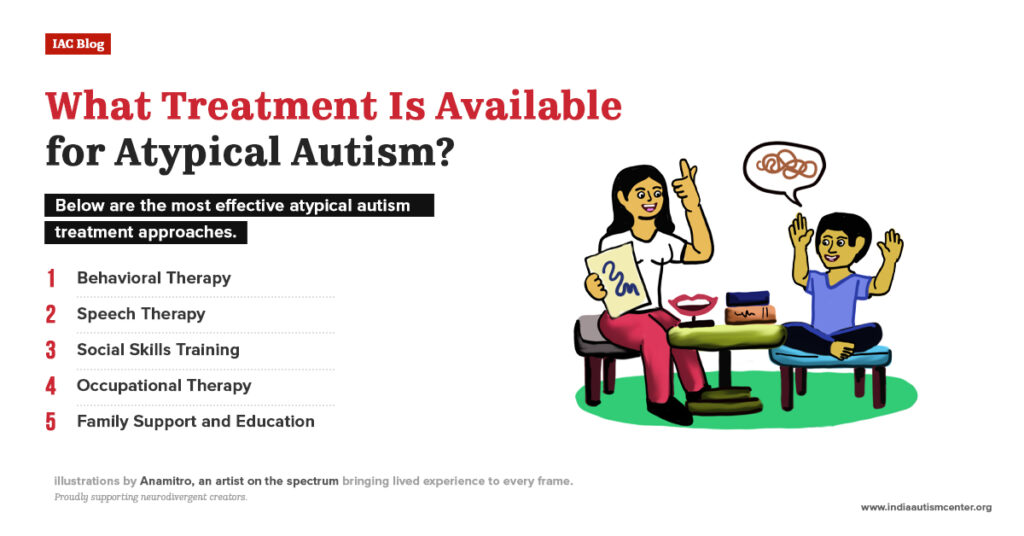
Below are the most effective atypical autism therapy approaches.
Behavioral Therapy
Methods such as Applied Behaviour Analysis (ABA) can help build positive habits and reduce self-harm behaviours. It helps the child with atypical autism to:
- Develop social skills
- Improve communication
- Reduce problematic behaviors
- Build adaptive skills
Speech Therapy
Speech and language therapy helps with more than just talking. It focuses on social communication, such as taking turns during a conversation or understanding nonverbal cues used in daily life.
Speech therapy is particularly helpful for children who struggle with expressive or pragmatic language.
The therapy primarily focuses on:
- Language development
- Conversation skills
- Social communication
- Understanding tone and context
Social Skills Training
Social skills groups provide a safe environment to practice interacting with peers under a therapist’s guidance. These programs are quite beneficial for individuals with atypical autism symptoms in adults.
Social skills programs help children and adults learn how to:
- Interpret social cues
- Maintain conversations
- Understand emotions
- Build relationships
Occupational Therapy
This is excellent for addressing sensory issues and supporting fine motor skills as well as daily living tasks. This therapy is frequently recommended as part of comprehensive atypical autism care.
Occupational therapy can support:
- Sensory processing
- Fine motor skills
- Self-care routines
- Emotional regulation
Family Support and Education
Parents and caregivers play an important role in supporting children with atypical autism. Parent training programs aim to help families to:
- Understand autism traits
- Use effective communication strategies
- Create structured environments
- Encourage independence
How Early Identification Helps?
Statistics show that early intervention can drastically improve long-term outcomes for children with developmental delays.
When atypical autism is identified early, the brain is more “plastic,” meaning it is more adaptable to learning new coping strategies and communication methods.
However, even if a diagnosis comes later, the value of knowing what atypical autism is cannot be overstated. It allows families to move away from frustration and toward specialised support.
Instead of wondering why a child is “acting out,” parents can recognise a sensory meltdown and provide the right environment to help them calm down.
Parents should seek professional evaluation if they notice signs such as delayed social interaction, unusual communication patterns, or repetitive behaviours. It is the very first step towards long-term development progress.
Daily Support Strategies for Atypical Autism
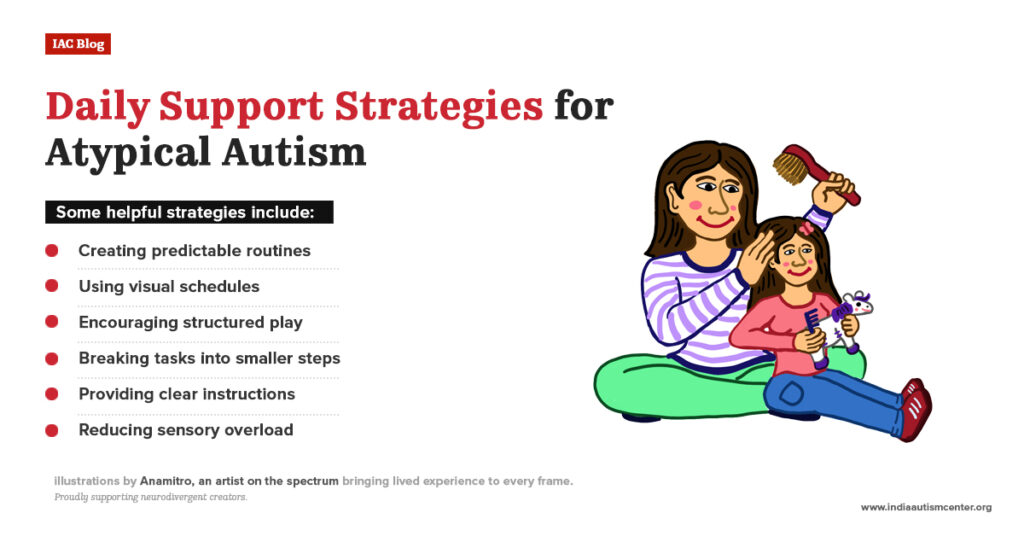
In addition to therapy, simple daily strategies can help individuals manage atypical autism symptoms.
Some helpful strategies include:
- Creating predictable routines
- Using visual schedules
- Encouraging structured play
- Breaking tasks into smaller steps
- Providing clear instructions
- Reducing sensory overload
Consistency and patience are essential when supporting individuals with atypical autism.
How Is Living With Atypical Autism?
People with atypical autism can lead fulfilling and successful lives when given the right support.
Many individuals develop strengths in areas such as:
- Analytical thinking
- Attention to detail
- Creativity
- Memory
- Specialised knowledge
Educational accommodations, therapy, and supportive environments help individuals reach their full potential. Awareness and acceptance are also important in reducing stigma surrounding autism conditions.
Conclusion
Whether you are just starting to ask what atypical autism is or you are looking for new atypical autism therapy options, remember that you are not alone. The spectrum is vast, and atypical autism is a significant and valid part of that diversity.
Understanding what is atypical autism helps families, educators, and healthcare professionals recognise individuals who may fall outside traditional autism definitions but still require support.
The atypical autism meaning highlights the diversity within the autism spectrum. Some individuals show only certain traits, while others develop symptoms later in childhood or adulthood.
When parents can recognise atypical autism symptoms early on, they can opt for the right support at the right time. With proper atypical autism therapy and inclusive education, individuals can develop essential life skills and thrive in their communities.
Frequently Asked Questions
What is atypical autism?
Atypical autism is a developmental condition in which a person shows some traits of autism but does not meet the full diagnostic criteria for autism spectrum disorder. The atypical autism meaning often refers to individuals whose symptoms appear later than age three or who display only partial autism characteristics, such as mild social or communication difficulties.
Can atypical autism be diagnosed in adults?
Yes, many individuals receive a diagnosis later in life. Atypical autism symptoms in adults may include difficulty understanding social cues, a preference for routines, intense interests, and challenges with workplace communication or relationships.
Can children with atypical autism attend regular schools?
Yes, many children with atypical autism attend mainstream schools with appropriate support. Inclusive education programs, individualised learning plans, and therapies, including speech or occupational therapy, can help them succeed academically and socially.
Can atypical autism improve with therapy?
Yes, early and consistent atypical autism therapy can significantly improve social skills, communication abilities, and independence. Early intervention programs are especially beneficial for young children.
Can atypical autism go undiagnosed?
Yes, many people live with atypical autism without receiving a formal diagnosis, especially if their symptoms are mild. Some individuals seek evaluation only during adolescence or adulthood, when social or professional challenges arise.
How can parents identify atypical autism symptoms early?
Parents should watch for developmental signs such as delayed social interaction, difficulty maintaining eye contact, unusual communication patterns, repetitive behaviours, or strong sensory sensitivities. Early consultation with specialists can help identify atypical autism symptoms.
For expert insights, support services, and inclusive learning initiatives, visit the India Autism Center.