

 Donate now
 Get a Call Back
 MENU
MENU
Have you ever spent an entire day smiling, nodding, and saying exactly the right things — only to get home and feel completely hollowed out? For many autistic people, this isn’t an occasional bad day. It’s a way of life. It has a name: autism masking.
Autism masking — also called camouflaging — is the conscious or unconscious process of suppressing autistic traits to appear neurotypical. It is exhausting, it is invisible, and for far too long, we mistake it for “doing well.”
This blog explores what autism masking truly is, why autistic people do it, and its impact on mental health. And — crucially — how psychotherapy offers a compassionate, evidence-backed path toward unmasking and living more authentically.
What is Autism Masking?
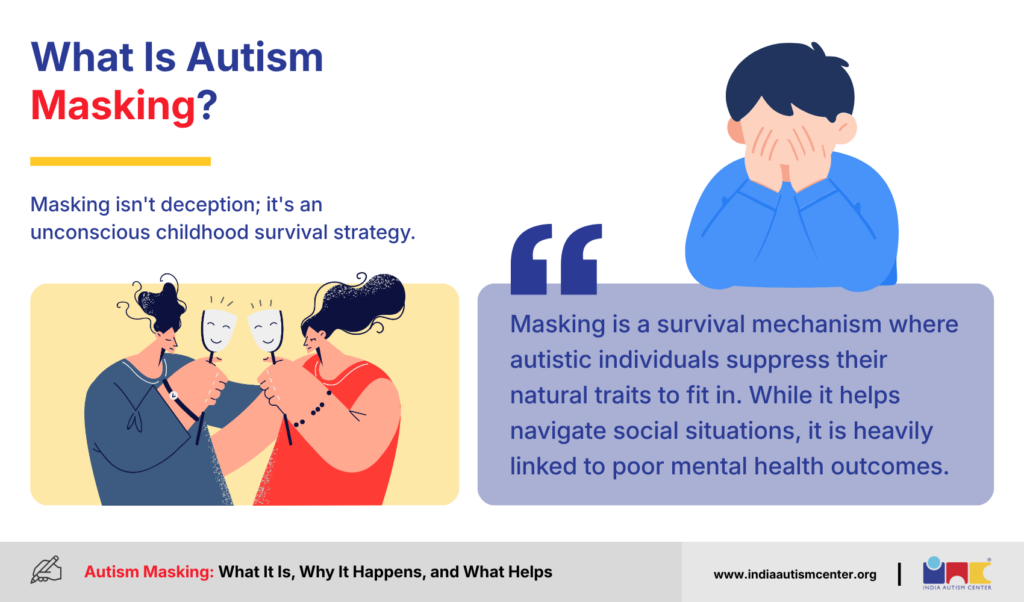
Autism masking refers to a set of strategies autistic individuals use to hide or suppress their natural neurological traits in social situations. These can include making deliberate eye contact even when it feels uncomfortable, scripting conversations in advance, mimicking other people’s gestures and expressions, forcing themselves to sit still instead of stimming, and performing emotions they do not actually feel.
We sometimes use the term “camouflaging” interchangeably, and research published in Autism (Lai et al., 2017) was among the first to formally study it in adults. What the research found was striking: masking was widespread, particularly among autistic women, and it was strongly associated with poor mental health outcomes.
Masking is not a deliberate act of deception. It is a survival mechanism — one that develops early in life, often before a person even has the vocabulary to describe what they are doing.
Why Do Autistic People Mask? The Psychology Behind It
Understanding autism masking means understanding the social environment in which autistic people grow up. From a young age, many autistic children receive implicit and explicit messages that their natural way of being is wrong. We tell them to “look at me when I’m talking to you,” encourage to stop flapping their hands, praised when they manage to blend in, and excluded or bullied when they do not.
Over time, masking becomes automatic. It is an adaptive response to an environment that was not designed with neurodivergent people in mind.
Several psychological forces drive masking:
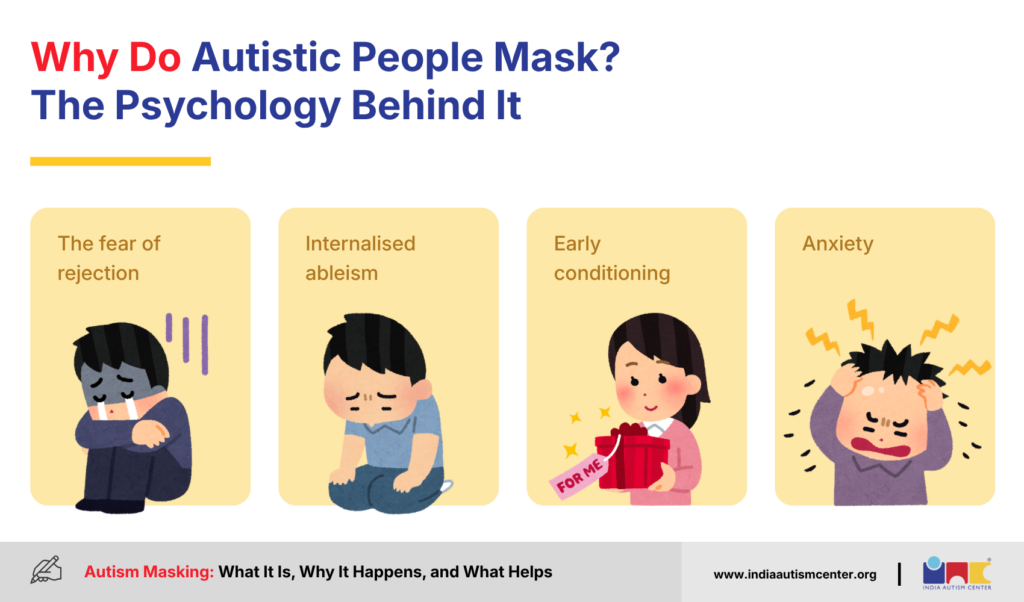
- The fear of rejection and social exclusion. Humans are fundamentally social animals, and autistic people are no different. When the price of being visibly autistic has historically been mockery, isolation, or hostility, hiding those traits feels necessary — even lifesaving.
- Internalised ableism. Many autistic people absorb the message that autism itself is something shameful, something to be hidden or overcome. This internalised ableism can make masking feel not just practical but morally necessary.
- Early conditioning and reward systems. Children who mask are frequently rewarded for it — with praise, inclusion, and adult approval. This creates a powerful feedback loop that embeds masking deep into a person’s behavioural repertoire long before they can reflect on whether it is serving them.
- Anxiety. The relationship between masking and anxiety is bidirectional. Masking is often driven by anxiety about social judgment, and in turn, it perpetuates anxiety by preventing genuine connection and authentic self-expression. This is one reason why psychotherapy for anxiety is such a central component of support for masking autistic adults. The two issues are rarely separable.
- Psychotherapy is a structured, therapeutic process in which a trained professional helps an individual explore thoughts, emotions, and behavioural patterns in order to support psychological well-being.
Want to know more? Get in touch with us.
Signs Someone May Be Masking
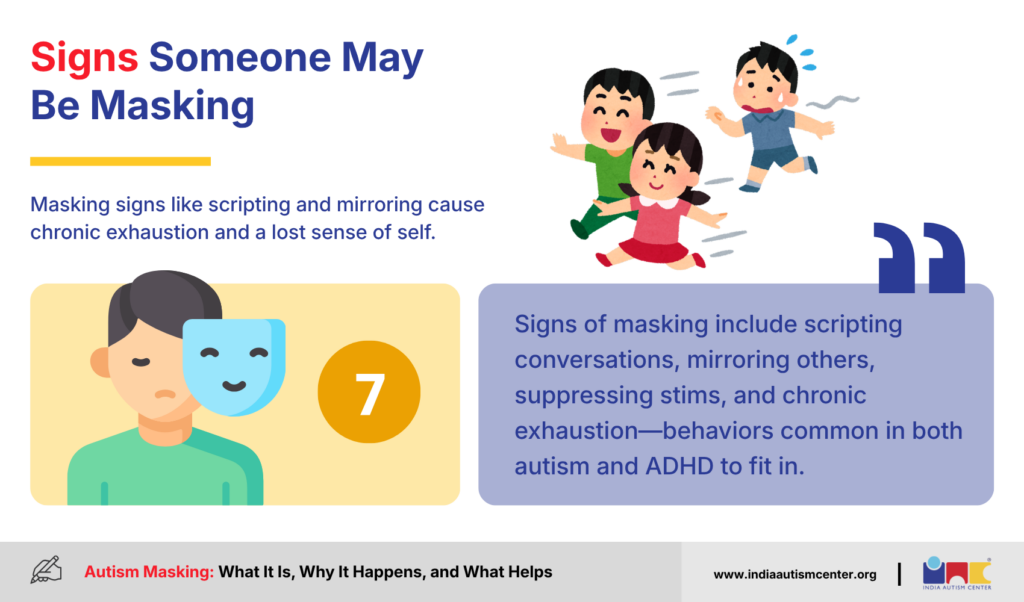
Masking is not always obvious — even to the person doing it. Here are some of the most common signs:
- Scripting conversations — rehearsing what you will say before social situations, sometimes running through multiple possible responses in your head
- Mirroring — unconsciously copying the speech patterns, gestures, body language, and facial expressions of the people around you
- Suppressing stimming in public — holding back rocking, tapping, fidgeting, or other self-regulatory behaviours while in social settings, then stimming intensely once alone
- Performing emotions — smiling when you do not feel happy, feigning enthusiasm, or modulating your emotional expression to match what seems expected
- Chronic social exhaustion — feeling deeply depleted after interactions that others seem to find effortless
- Losing track of your own preferences — finding it difficult to answer questions like “what do you enjoy?” because so much energy has gone into tracking others’ preferences instead
- Being described as “surprisingly normal” — receiving comments like “you don’t seem autistic” that, however well-intentioned, signal how thoroughly the mask has done its job
It is also worth noting that masking is not exclusive to autism. Many people with ADHD engage in similar camouflaging behaviour, suppressing symptoms of inattention, impulsivity, or hyperactivity to fit workplace or social norms. Psychotherapy for ADHD often addresses this parallel experience, and for the significant proportion of people who are both autistic and have ADHD, therapeutic support that holds both identities at once is essential.
The Hidden Cost: The Mental Health Impact of Long-Term Masking
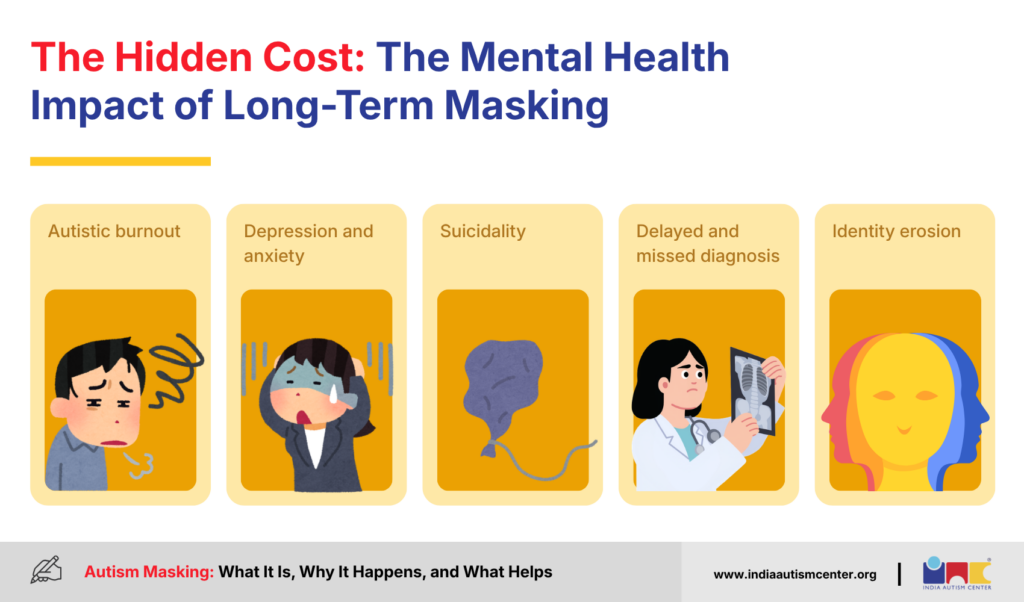
Masking comes at a profound cost.
Autistic burnout
Unlike ordinary fatigue, autistic burnout is a state of chronic exhaustion that results from the sustained effort of masking over time. It involves significant declines in cognitive function, a reduced ability to perform daily tasks, a loss of previously held skills, and an overwhelming need for withdrawal and rest. Autistic burnout can last for months or years, and it is frequently misdiagnosed as depression or chronic fatigue syndrome.
Depression and anxiety
Multiple studies have found significantly elevated rates of depression and anxiety among autistic adults, particularly those who mask heavily. The effort of constant performance, combined with the disconnection from one’s authentic self, creates fertile ground for both conditions.
Suicidality
Masking seldom associates with elevated suicidal ideation in autistic people. A 2018 study in The Lancet Psychiatry found that autistic adults are at significantly higher risk of suicidal behaviour than the general population, and masking is considered a contributing factor — both because of the psychological burden it places on individuals and because it can delay the recognition of distress by others, including clinicians.
Delayed and missed diagnosis
Perhaps one of the most insidious consequences of masking is that it fools diagnosticians. Autistic people — particularly women, non-binary individuals, and people of colour — who have spent years perfecting their mask often receive no diagnosis at all, or are misdiagnosed with borderline personality disorder, anxiety disorders, or depression, while the underlying autism remains invisible.
Identity erosion
When a person has been masking since childhood, they can lose touch entirely with who they actually are. The authentic self — genuine preferences, natural ways of moving and speaking, real emotional responses — becomes buried under layers of performance. Many late-diagnosed autistic adults describe a profound grief when they first receive their diagnosis: not just relief, but sorrow for the years lived as someone else.
This is precisely why psychotherapy for anxiety, depression, and identity-related distress is so critical for this population. The symptoms are real, they are serious, and they deserve serious, neurodivergence-affirming support.
What Is Psychotherapy — And How Is It Different from Counselling?
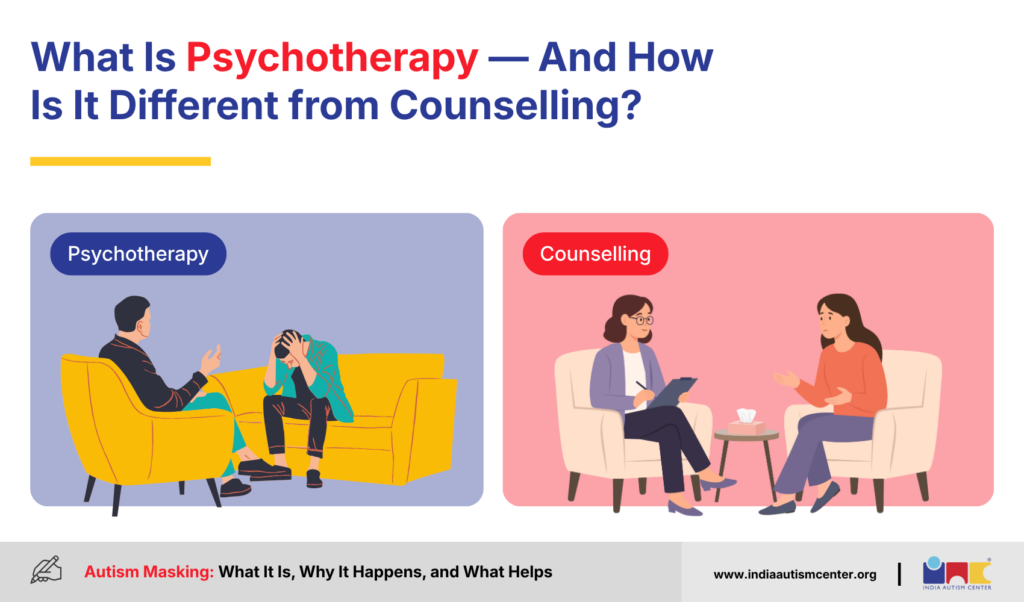
Before exploring how psychotherapy helps with masking, it is worth clarifying what psychotherapy means and addressing a common source of confusion: the difference between counselling and psychotherapy.
Psychotherapy meaning: Psychotherapy is a broad term for therapeutic interventions delivered by a trained mental health professional, to help people understand and change thinking patterns, emotional responses, and behaviours that are causing distress or preventing them from living well. Psychotherapy involves a a specific theoretical model, more in-depth, longer-term therapeutic relationship than counselling.
We often misunderstand the difference between counselling and psychotherapy. Both involve talking with a trained professional in a confidential space, and there is genuine overlap between them. However, there are meaningful distinctions:
| Counselling | Psychotherapy | |
| Focus | Present-life difficulties, specific concerns | Deeper exploration of patterns, identity, past experiences |
| Duration | Often shorter-term (6–12 sessions) | Often longer-term (months to years) |
| Depth | Supportive and solution-focused | Explorative and insight-oriented |
| Training | Varies by country and setting | Typically requires extensive clinical training and supervision |
| Best for | Situational distress, life transitions | Complex or long-standing difficulties |
For autistic adults navigating the aftermath of years of masking — including identity confusion, trauma, burnout, and anxiety — psychotherapy’s greater depth and longer timeframe is often what is needed. Counselling can absolutely be helpful, but the roots of masking tend to go deep, and meaningful unmasking work often requires the kind of sustained, exploratory relationship that psychotherapy provides.
Want to know more? Get in touch with us.
Types of Psychotherapy That Help with Autism Masking
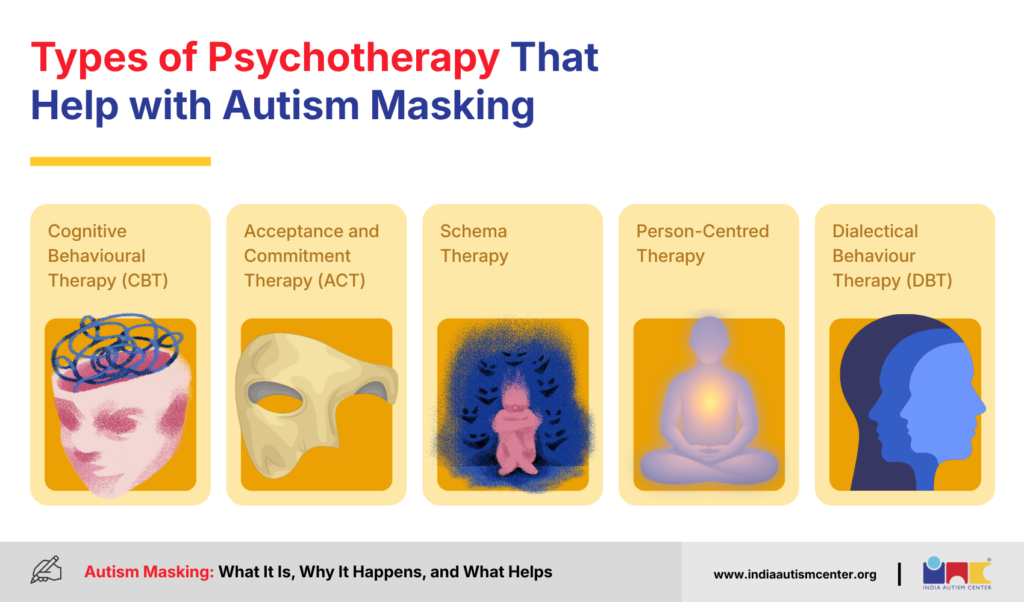
Here are the most well-evidenced and clinically relevant approaches.
Cognitive Behavioural Therapy (CBT)
CBT is one of the most widely researched types of psychotherapy, and with autism-specific adaptations, it can be highly effective. Standard CBT focuses on identifying and challenging unhelpful thought patterns — but for autistic people, it needs to be adapted. Autism-affirming
CBT does not treat autism as the problem to be fixed; instead, it targets the anxiety, self-critical beliefs, and social fears that drive masking. Psychotherapy techniques within CBT — such as cognitive restructuring, behavioural experiments, and graduated exposure — can help clients test the belief that being themselves will lead to catastrophic social rejection.
Acceptance and Commitment Therapy (ACT)
ACT is particularly well-suited to unmasking work. Rather than challenging beliefs directly, ACT focuses on psychological flexibility — the ability to hold difficult thoughts and feelings without being controlled by them, while committing to actions aligned with personal values. For autistic people who have spent years suppressing who they are, values clarification work is transformative. ACT helps clients ask: What actually matters to me? What kind of life do I want to live? — questions that masking can make almost impossible to answer.
Schema Therapy
Schema therapy addresses deeply rooted emotional patterns — called “schemas” — that typically develop in childhood. For autistic people who masked from an early age, schemas around defectiveness, shame, and social isolation are common. Schema therapy’s combination of cognitive, behavioural, and experiential psychotherapy techniques makes it particularly suited to the kind of deep, identity-level work that unmasking often requires.
Person-Centred Therapy
Developed by Carl Rogers, person-centred therapy is built on unconditional positive regard — the therapist’s genuine, non-judgmental acceptance of the client as they are. For someone who has spent their life performing an acceptable version of themselves, this kind of radical acceptance can be profoundly healing. Person-centred work creates the safety needed to begin lowering the mask.
Dialectical Behaviour Therapy (DBT)
DBT was originally developed for borderline personality disorder but has since been adapted for a wide range of presentations. Its focus on emotional regulation, distress tolerance, and interpersonal effectiveness makes it particularly relevant for autistic people experiencing intense emotions and burnout. It is also one of the most commonly used types of psychotherapy in psychotherapy for ADHD, making it useful for the many people navigating both diagnoses simultaneously.
How Psychotherapy Helps Autistic People Unmask Safely
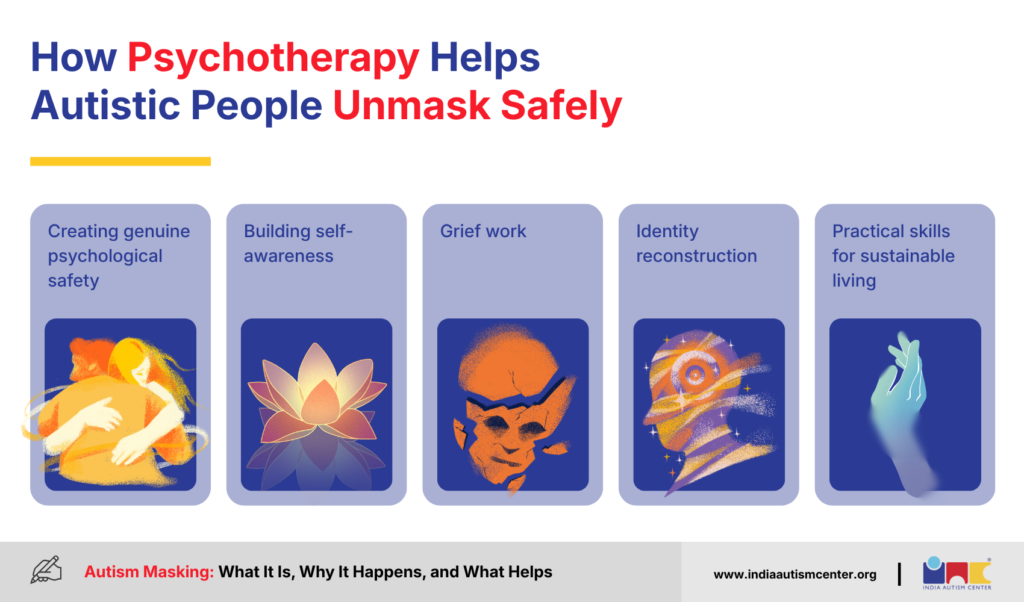
So, how does psychotherapy help with autism masking, practically speaking? The process is rarely linear, but there are several core elements that effective, autism-affirming therapeutic work tends to involve.
Creating genuine psychological safety
Unmasking cannot happen under threat. The first and most essential thing psychotherapy offers is a relationship in which the autistic client genuinely feels safe to be themselves — where stimming is welcome, where silence is not awkward, where directness is appreciated rather than pathologised, and where the therapist’s understanding of autism is affirmative rather than deficit-based.
Building self-awareness
Many autistic adults who have masked for years have little conscious awareness of when they are doing it. A significant part of psychotherapy involves developing the capacity to notice — to identify masking triggers, to recognise the internal signals of inauthenticity, to begin distinguishing between “who I am” and “who I have learned to perform.” Psychotherapy techniques such as mindfulness practices, body-based awareness work, and structured reflection exercises support this developing self-knowledge.
Grief work
Unmasking is not simply a process of becoming freer. It is also a process of loss. Grieving missed years, grieving the relationships built on a performance rather than on genuine self, grieving the diagnoses that came late or not at all — this grief is real, and good psychotherapy holds space for it without rushing toward resolution.
Identity reconstruction
Once the mask begins to loosen, the question becomes: who am I without it? This is both an exciting and a disorienting question. Psychotherapy supports clients in building what might be called a “chosen identity” — one that is genuinely their own, that incorporates their neurodivergence not as a deficit but as a dimension of self, and that draws on their actual values, interests, and ways of engaging with the world.
Practical skills for sustainable living
Part of how psychotherapy helps is also very practical. Clients learn to set boundaries around energy-draining social situations, to communicate their needs more clearly, to build environments that support rather than require constant masking, and to develop strategies for navigating a neurotypical world without abandoning themselves in the process.
📥 Free download: Printable daily routine chart for autistic children
Common Myths About Psychotherapy for Autistic People
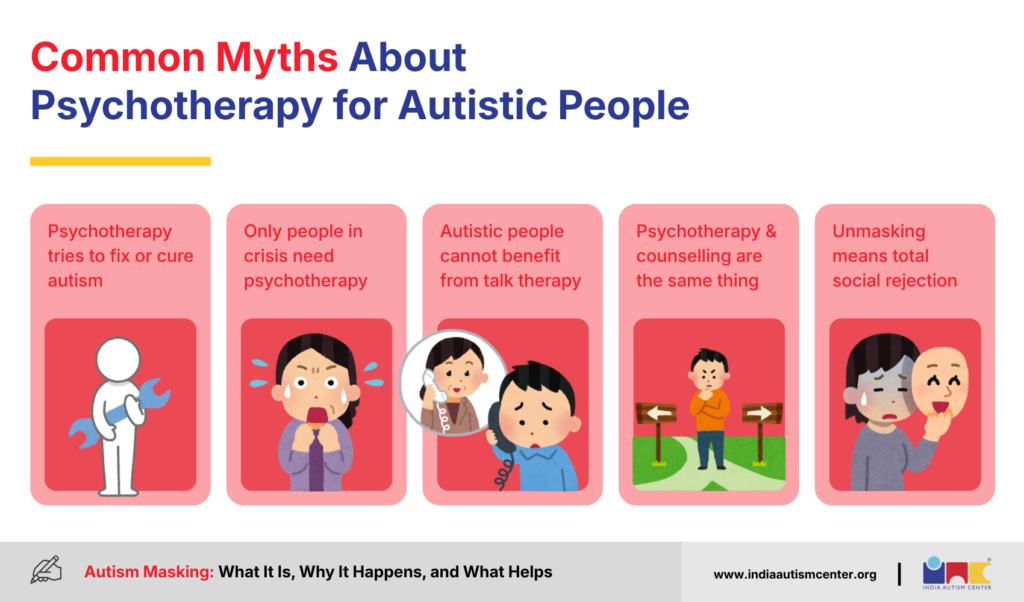
Despite growing awareness, a number of persistent psychotherapy myths prevent autistic people from accessing the support they need. It is worth addressing the most common ones directly.
- Myth: Psychotherapy tries to fix or cure autism.
- Fact: This is perhaps the most damaging myth, and it reflects a real and legitimate fear rooted in the history of autism “interventions” — particularly Applied Behaviour Analysis (ABA) — that have caused genuine harm. Autism-affirming psychotherapy does not attempt to make someone less autistic. It works with the person’s neurology, not against it. The goal is wellbeing, not normalisation.
- Myth: Only people in crisis need psychotherapy.
- Fact: In reality, psychotherapy is just as valuable as a preventive and developmental resource. An autistic adult who is managing day-to-day but quietly exhausted by masking can benefit enormously from therapeutic support before reaching burnout — not only after. Understanding psychotherapy meaning as a space for growth, not just crisis management, opens up far wider access to its benefits.
- Myth: Autistic people cannot benefit from talk therapy.
- Fact: This myth likely stems from the misapplication of therapies designed for neurotypical people to autistic individuals without adaptation. Autistic-affirming therapy — delivered by a clinician who understands and respects neurodivergence — can be deeply effective. Research supports this, and the clinical evidence base for adapted CBT, ACT, and other approaches in autistic populations is growing steadily.
- Myth: Psychotherapy and counselling are the same thing.
- Fact: As discussed above, there are meaningful differences between counselling and psychotherapy in terms of depth, duration, and clinical focus. Neither is inherently superior — but knowing the difference allows people to seek the right kind of support for their specific needs.
- Myth: Unmasking means total social rejection.
- Fact: Many autistic people fear that if they stop masking, they will lose all their relationships, their jobs, and their place in the world. This fear is understandable — and not entirely unfounded, given how much neurotypical social norms dominate most workplaces and communities. But unmasking is not an all-or-nothing event. Good psychotherapy supports clients in making nuanced, context-sensitive choices about when and where to lower the mask, rather than demanding wholesale transformation overnight.
When to Seek Help: A Practical Guide
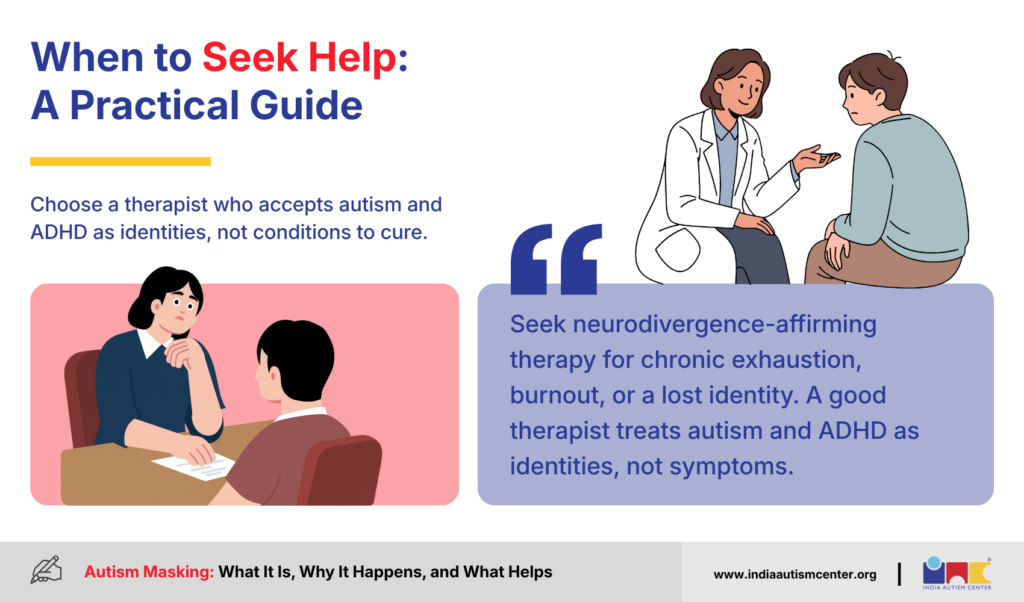
If any of the following resonate, it may be time to explore psychotherapy with an autism-affirming therapist:
- You are frequently exhausted after social situations in ways that others do not seem to be
- You struggle to identify your own preferences, feelings, or opinions independently of what others seem to want
- You have recently received an autism (or ADHD) diagnosis and are trying to make sense of your history
- You are experiencing anxiety, depression, or burnout that has not responded to other forms of support
- You feel like there is a “real you” somewhere underneath the version of yourself you show the world — and you want to find them
When looking for a therapist, seek out someone who explicitly describes their practice as neurodivergence-affirming or autism-friendly. Ask whether they have experience working with autistic adults. Ask how they approach diagnosis — a good therapist will see your autism as a dimension of identity to be understood and respected, not a collection of symptoms to be eliminated.
If you also have ADHD, or suspect you might, look for a therapist with experience in psychotherapy for ADHD alongside autism. The overlap between the two conditions is significant, and therapeutic support that understands both is more effective than support designed for only one.
In a first session, expect to do a lot of talking about your history. A good therapist will take time to understand your experience before moving into any particular therapeutic framework.
Conclusion
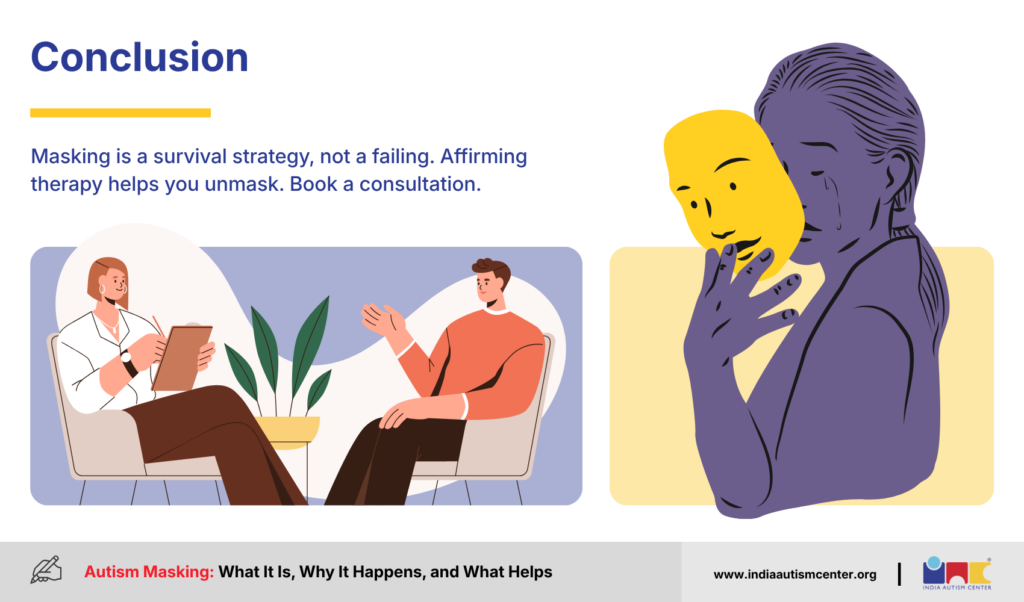
Autism masking is not a personal failing, a deliberate deception, or a sign that someone is “doing well.” It is an exhausting, often invisible survival strategy that has allowed countless autistic people to navigate a world not designed for them — at significant cost to their mental health, identity, and sense of self.
The path toward unmasking is not a quick or simple one. But it is possible, and it is worth it. Psychotherapy — the right kind, delivered by clinicians who understand and affirm neurodivergence — offers autistic people a genuine chance to explore who they are beneath the mask, to grieve what masking has cost them, and to build lives that feel genuinely their own.
If you recognise yourself in these pages, you deserve support. You deserve a space where you do not have to perform. And you deserve to find out who you actually are.
📥 Free download: Printable daily routine chart for autistic children
Frequently Asked Questions
What is autism masking?
Autism masking is the process by which autistic people suppress or hide their natural neurological traits — such as stimming, direct communication, or sensory reactions — in order to appear more neurotypical in social situations. It is a survival strategy that develops in response to social pressure and is associated with significant mental health costs when sustained over time.
What does psychotherapy mean?
Psychotherapy refers to a structured, evidence-based form of therapeutic support delivered by a trained mental health professional, aimed at helping individuals understand and change thought patterns, emotions, and behaviours that are causing distress. Unlike counselling, which tends to be shorter-term and more solution-focused, psychotherapy often involves deeper exploration of underlying patterns and a longer therapeutic relationship.
What does psychotherapy mean?
Psychotherapy refers to a structured, evidence-based form of therapeutic support delivered by a trained mental health professional, aimed at helping individuals understand and change thought patterns, emotions, and behaviours that are causing distress. Unlike counselling, which tends to be shorter-term and more solution-focused, psychotherapy often involves deeper exploration of underlying patterns and a longer therapeutic relationship.
What is the difference between counselling and psychotherapy?
Counselling typically focuses on present-life difficulties and offers shorter-term, supportive conversation. Psychotherapy goes deeper — exploring the roots of long-standing patterns, working with identity and past experiences, and requiring a more extensive clinical training on the part of the practitioner. For autistic adults dealing with the aftermath of years of masking, psychotherapy’s greater depth is often more appropriate.
Can psychotherapy help with autism masking?
Yes. Autism-affirming psychotherapy — particularly approaches like ACT, adapted CBT, and schema therapy — can be profoundly helpful for autistic adults working through the effects of masking. It provides a safe space to develop self-awareness, process grief, rebuild identity, and develop practical strategies for more authentic living.
What types of psychotherapy are best for autistic adults?
The most commonly recommended types of psychotherapy for autistic adults include adapted CBT (for anxiety and self-critical thinking), ACT (for values-based living and psychological flexibility), schema therapy (for deep-rooted patterns from childhood), person-centred therapy (for identity work and unconditional acceptance), and DBT (for emotional regulation and distress tolerance, particularly relevant where ADHD co-occurs).
Is psychotherapy for anxiety relevant if I mask?
Absolutely. Anxiety and masking are closely linked — masking often develops as a response to social anxiety, and in turn generates further anxiety through the effort it requires and the inauthenticity it perpetuates. Psychotherapy for anxiety that is autism-aware will address both the anxiety symptoms and the masking behaviours that feed them.
Are there psychotherapy myths that stop autistic people from seeking help?
Yes — some of the most common psychotherapy myths affecting autistic people include the belief that therapy tries to “fix” autism, that autistic people cannot benefit from talk therapy, or that psychotherapy and counselling are the same thing. These myths can be barriers to accessing genuinely helpful support.
For expert insights, support services, and inclusive learning initiatives, contact India Autism Center for more information.