 Donate now
 Get a Call Back

 MENU
 11 MIN READ
 SHARE


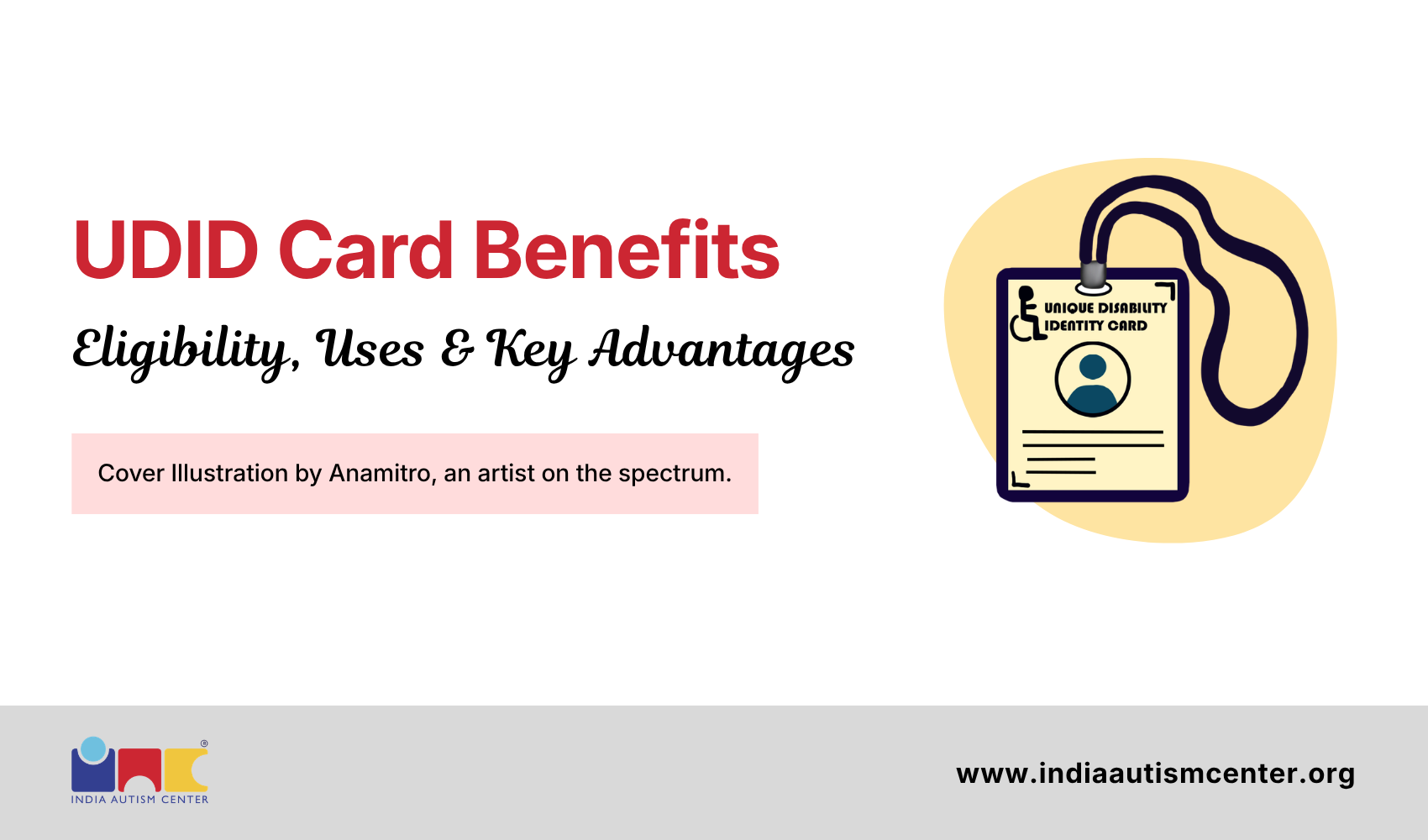
The Unique Disability ID (UDID) card helps persons with disabilities access disability-related government schemes and services through a standardised identification system.
According to reports, India’s UDID initiative reached the milestone of issuing one crore cards in December 2023.
For individuals with autism and other recognised disabilities, understanding UDID card benefits can make navigating certification, educational support and welfare schemes easier. However, the assistance available depends on the applicable scheme, eligibility criteria, and official assessment.
This guide explains the benefits of a UDID card, who can apply for one, how to obtain one, and what families should know before using it.
What Is a UDID Card?
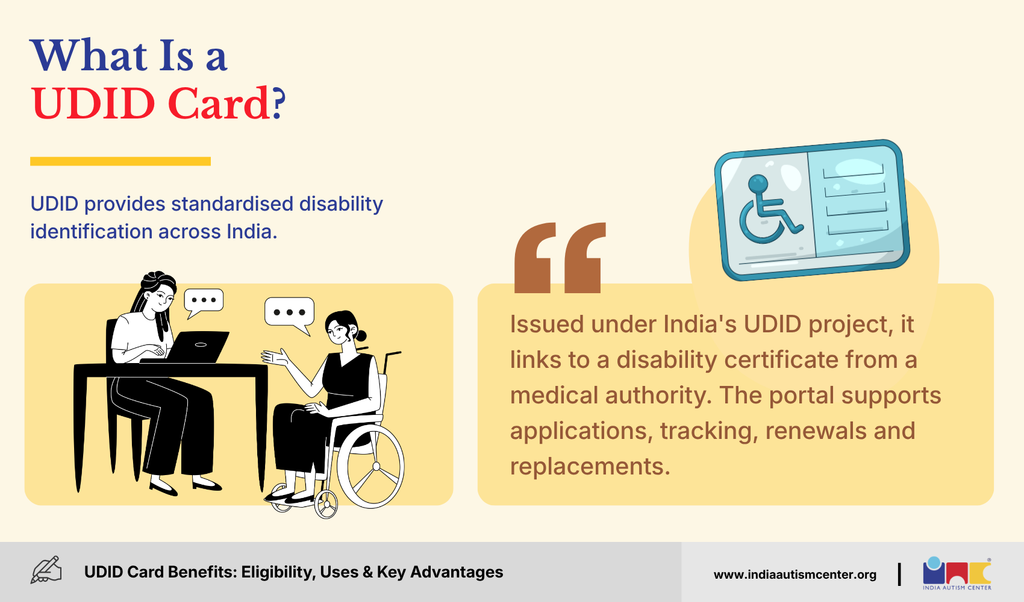
The Unique Disability ID card is an official identification document issued through the Government of India’s UDID project.
Managed by the Department of Empowerment of Persons with Disabilities under the Ministry of Social Justice and Empowerment, the initiative aims to simplify disability certification and improve access to government benefits.
The card is linked to a disability certificate issued by a competent medical authority. It provides a standardised way to verify a person’s disability-related information across India, reducing the need to maintain multiple paper documents.
One of the main benefits of the UDID card is nationwide recognition. Instead of navigating separate identification processes, eligible individuals can use their UDID card and disability certificate when applying for relevant services and schemes.
The official portal also allows applicants to submit applications, track progress, and request renewals or replacements.
What Are the Main UDID Card Benefits?
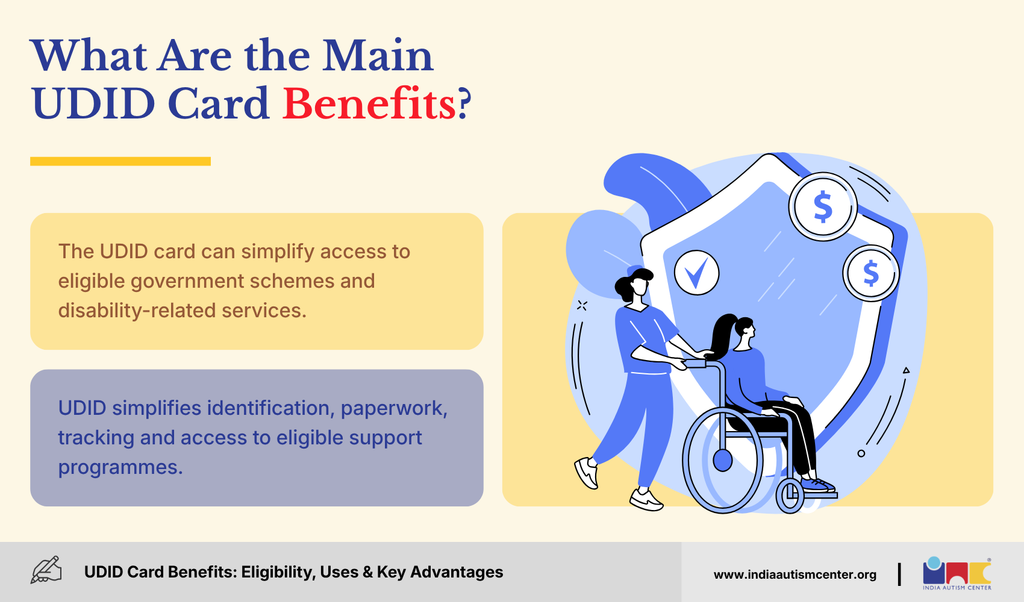
The benefits of UDID card ownership extend beyond identification. The card can make it easier to establish eligibility for disability-related support, although it does not automatically guarantee every benefit.
1. Easier Access to Government Schemes
One of the most practical UDID card benefits is using standardised disability documentation when applying for eligible government schemes. Depending on the scheme, support may include financial assistance, scholarships, pensions, rehabilitation services and assistive devices.
A valid UDID card or disability certificate may be required to establish eligibility. Applicants must still meet the individual scheme’s income limits, disability criteria, age requirements and other conditions.
2. Nationwide Disability Identification
The UDID system is designed to provide a consistent identification framework across states and Union Territories. This is particularly helpful for families who relocate for work, education or access to specialist services.
Nationwide validity does not mean every state-specific concession automatically transfers. The relevant authority may still require additional documents or compliance with local rules.
3. Reduced Paperwork
Another key advantage is reduced repetitive documentation. The card and its associated digital records can help verify disability-related information without requiring families to organise multiple copies of the same certificate for every application.
This is especially useful for parents and caregivers who manage school admissions, welfare applications, medical appointments and rehabilitation services.
4. Better Application Tracking
The UDID portal allows applicants to monitor their application status and access relevant information online. This improves transparency by making the processing stage easier to check.
The system also supports renewal, replacement and updating of records through the prescribed process. Applicants should keep their registration details and application reference numbers safe.
5. Access to Eligible Educational Support
Students with recognised disabilities may use their disability documentation when applying for eligible educational concessions, scholarships, admission-related provisions and other support.
For students with autism, this can help families establish the documentation required by an institution or scheme. However, a UDID card does not independently guarantee admission, a scholarship, a particular examination accommodation or an individualised educational support plan.
6. Support for Assistive Devices and Rehabilitation
Eligible individuals may be able to apply for assistive devices, mobility aids, rehabilitation services and other disability-related support under applicable government programmes.
The type of assistance, funding available, and assessment requirements vary. A UDID card helps establish disability-related credentials, but applicants must follow the relevant programme’s application procedure.
7. Greater Administrative Transparency
The centralised UDID database helps government authorities manage disability certification and monitor the implementation of relevant schemes. It also helps reduce duplicate records.
For families, these administrative improvements can make it easier to interact with authorised medical authorities and welfare departments.
Taken together, these unique disability ID benefits can reduce administrative barriers and help eligible individuals pursue the support available to them.
Who Is Eligible for a UDID Card?
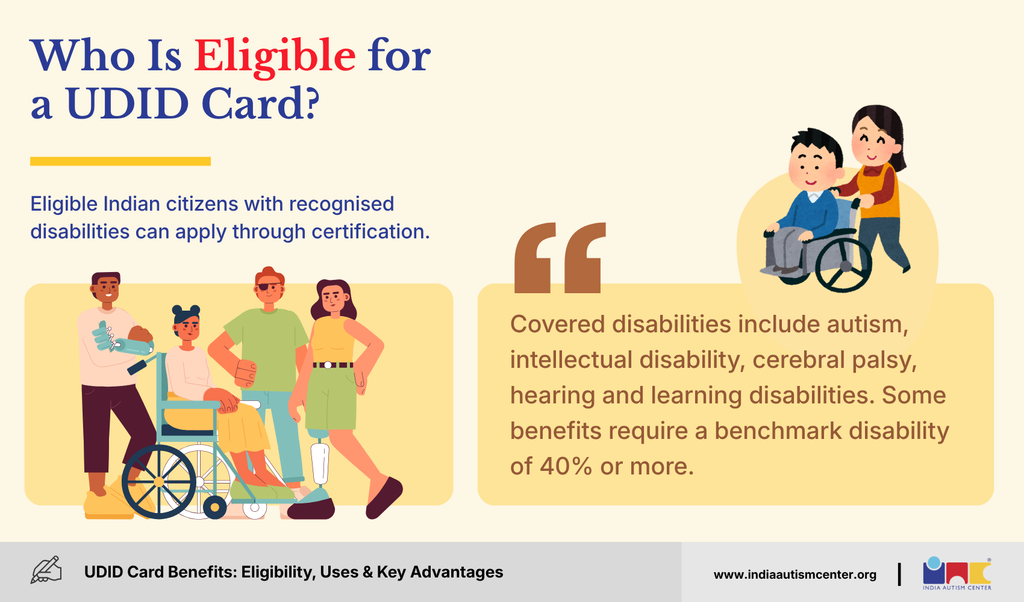
The Unique Disability ID (UDID) card is intended for eligible Indian citizens with disabilities recognised under the Rights of Persons with Disabilities Act, 2016. Applicants must undergo the prescribed disability certification process through an authorised medical authority.
Eligibility includes:
- Persons with recognised disabilities: The Act covers 21 specified disabilities, including autism spectrum disorder, intellectual disability, cerebral palsy, hearing impairment and specific learning disabilities.
- Children with disabilities: Children can apply through the prescribed process, with support from a parent or legal guardian where required.
- Individuals with autism: Autistic individuals can apply for a UDID card, subject to assessment and certification by the competent medical authority.
- Persons with benchmark disabilities: An assessed disability of 40% or more is generally required for benchmark disability status, which is necessary for certain benefits.
Important: Having a UDID card does not guarantee access to every government scheme. Eligibility depends on the specific benefit’s requirements.
Can Children Apply for a UDID Card?
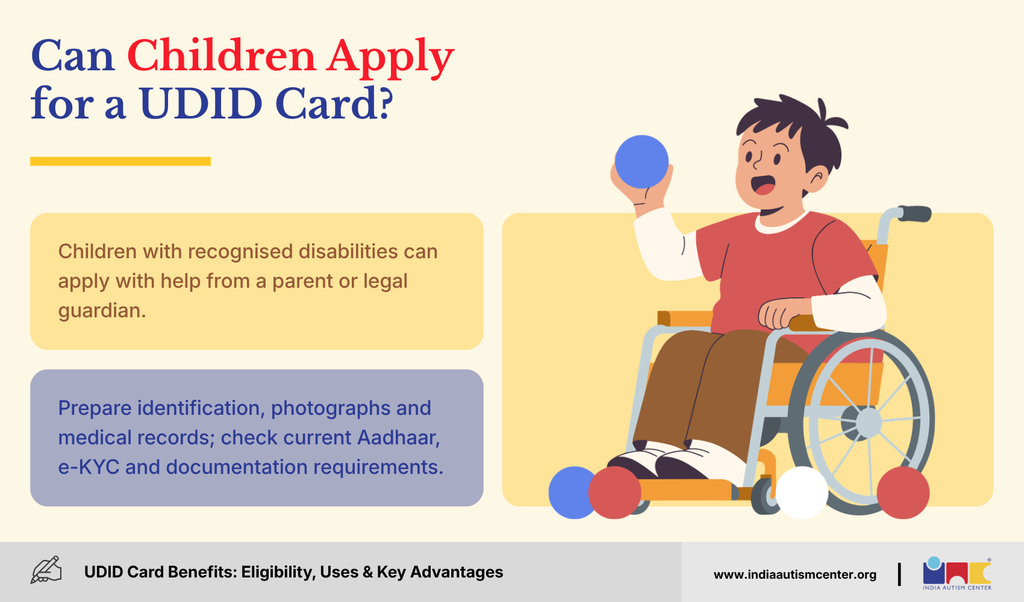
Yes. Children with recognised disabilities can apply through the prescribed process. A parent or legal guardian can assist with the application and related formalities.
Families should prepare the child’s identification details, photographs, relevant medical records, and any other documents the portal or medical authority requests. The applicable Aadhaar and e-KYC requirements should also be checked before submitting the application.
How Can Someone Apply for a UDID Card Online?
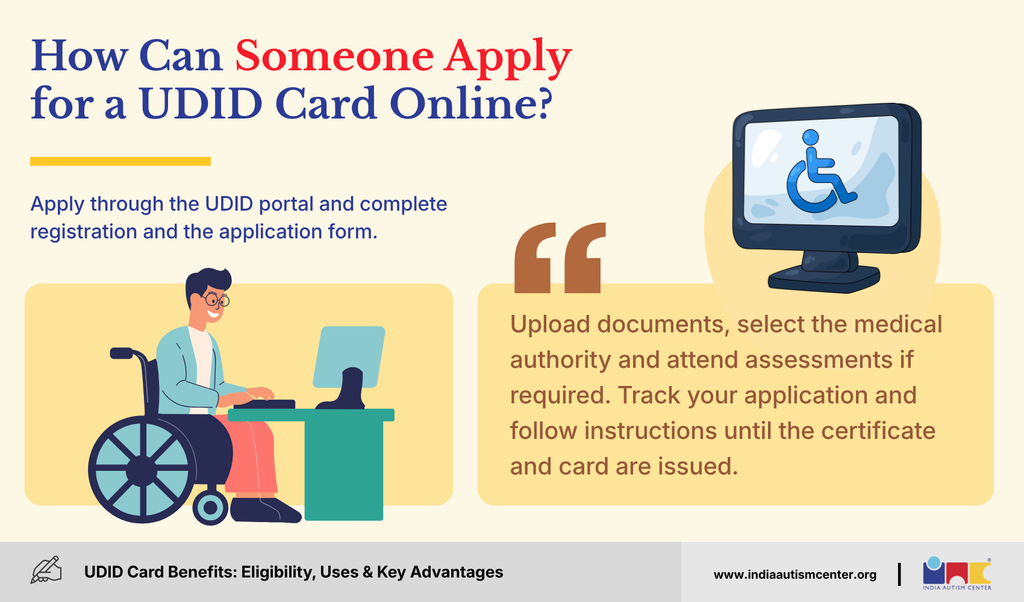
The online application process is managed via the official UDID portal. Follow these steps to get started.
Step 1: Visit the Official Portal
Go to swavlambancard.gov.in and locate the registration or application section for a disability certificate and UDID card.
Step 2: Register and Complete the Form
Enter the applicant’s details accurately, including personal information, address and other information requested by the portal. Parents or legal guardians need to ensure that the details match the supporting records.
Step 3: Upload the Required Documents
Prepare the documents requested during registration. These may include:
- Recent photograph and signature or thumb impression, as applicable.
- Identity and Aadhaar-related details required under the current rules.
- Relevant medical records and previous disability certificates, if available.
Exact requirements may also vary depending on the applicant’s circumstances and the portal’s current instructions. Also, follow the file-size requirements to avoid submission delays.
Step 4: Select the Appropriate Medical Authority
Follow the portal’s instructions to identify the authorised hospital or medical authority responsible for assessing the applicant’s disability.
Step 5: Attend the Disability Assessment
If an assessment is required, attend the appointment and provide the relevant medical documentation. The competent authority determines the disability category and assessed percentage under the notified guidelines.
Step 6: Track the Application
Use the portal’s application-tracking facility to check progress. If further information or an assessment is required, follow the instructions provided by the authority.
Once approved, the disability certificate and UDID card are issued through the prescribed system. The official portal should be consulted for current procedures on processing, delivery, and renewal.
What Documents Are Required for a UDID Card?
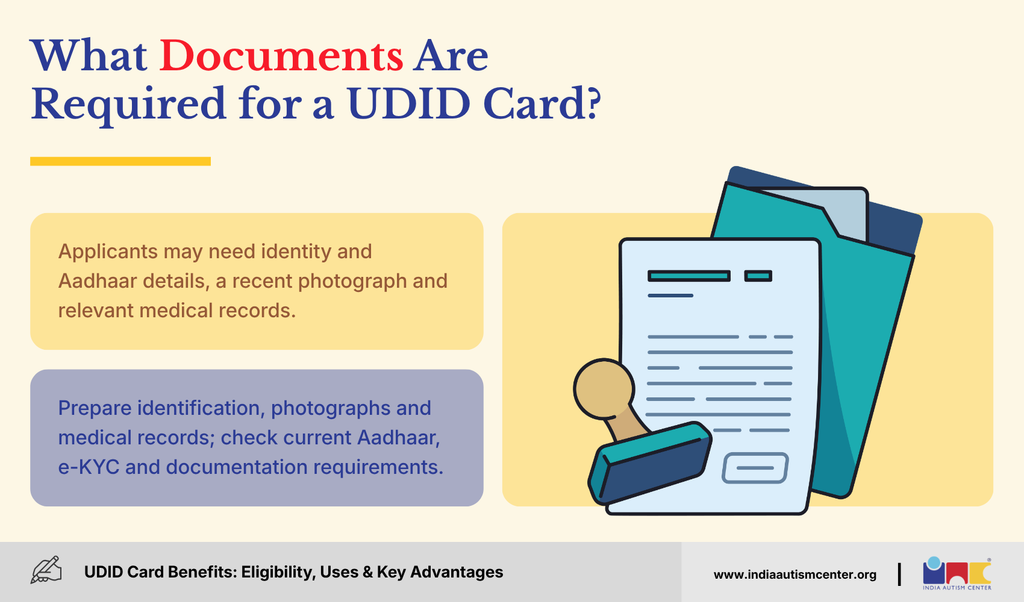
The required documents may depend on the applicant’s age, existing certification, and current portal rules. Generally, applicants should be prepared with:
- Identity and Aadhaar details, as required by the current rules.
- A recent photograph and signature or thumb impression, where applicable.
- Medical records relevant to the disability.
- An existing disability certificate, if one has already been issued.
- Details or documents requested for a minor or an applicant represented by a legal guardian.
Do not assume that every applicant needs the same documents. Check the official portal before submitting the form to avoid delays.
Where Can You Use a UDID Card?
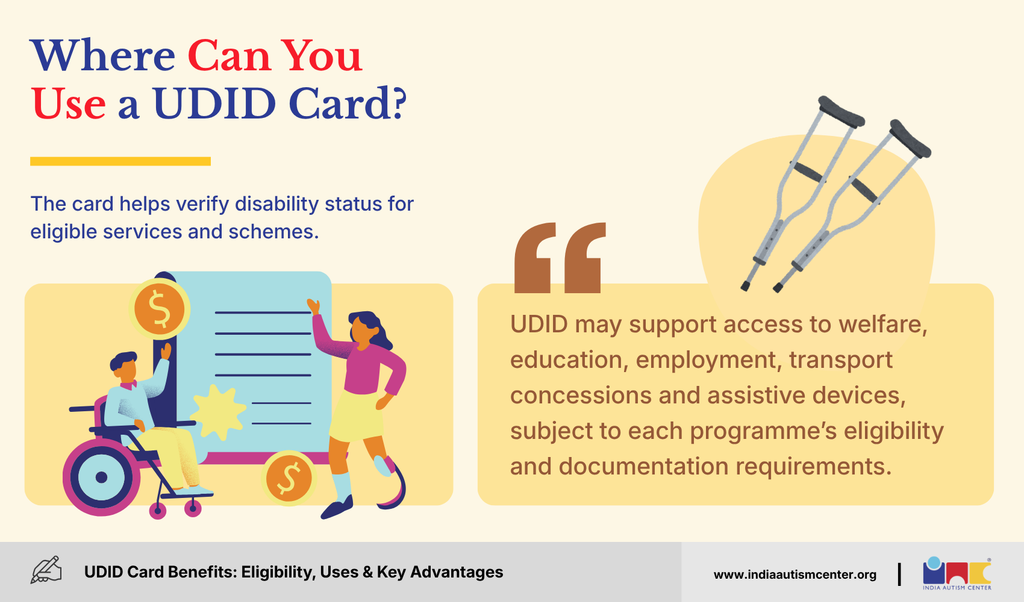
Understanding how to use a unique disability ID helps families prepare for practical situations where disability documentation may be required.
Common uses include:
- Government welfare schemes: Establishing disability status when applying for eligible financial assistance or other notified benefits.
- Education: Supporting applications for eligible scholarships, educational concessions and admission-related provisions.
- Employment: Providing disability documentation when applying for eligible vacancies or provisions for persons with benchmark disabilities.
- Transport concessions: Applying for concessions where the relevant transport authority’s eligibility and documentation rules are satisfied.
- Assistive devices: Supporting applications under eligible government programmes for assistive technology, mobility aids and related equipment.
- Disability-related services: Verifying disability status when interacting with authorised institutions and welfare departments.
These are potential UDID benefits, not automatic entitlements. Each department or scheme may request additional documentation, assess eligibility separately or impose conditions on the benefit.
Read our article on List of Several Government Schemes for Disabled Persons in India (2026).
Important Things to Know Before Applying
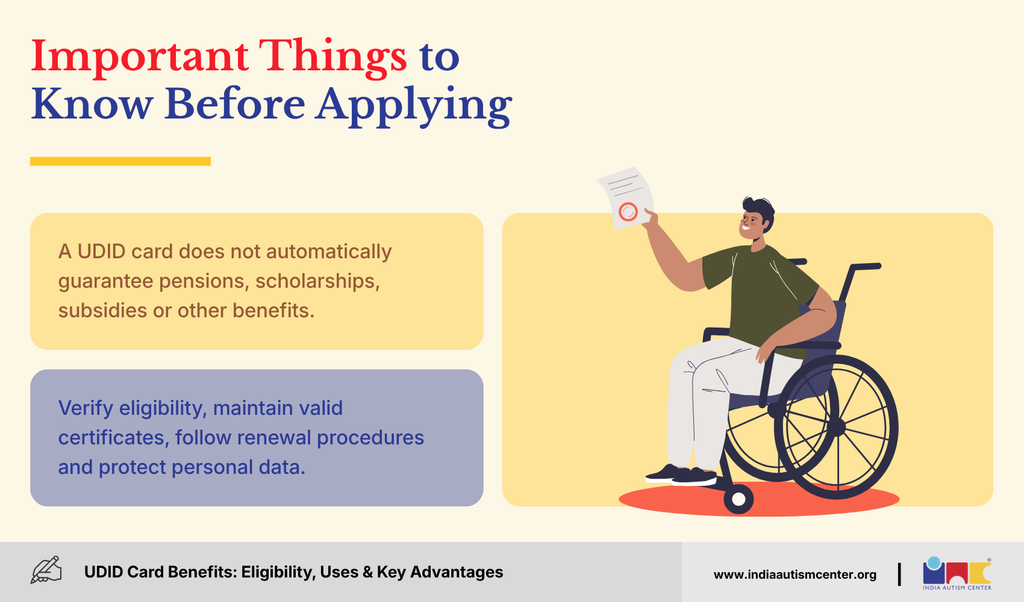
Although the UDID card benefits can simplify access to services, families should understand a few important limitations.
The card does not guarantee financial assistance.
Pensions, scholarships and subsidies have separate eligibility criteria. Some depend on income, age, residence, assessed disability percentage, or other conditions.
The disability certificate remains important.
Keep a copy of the certificate and check its validity. A UDID card and disability certificate are linked, but the documentation requested can differ between services.
Check renewal requirements
Some certificates have a specified validity period. Apply for renewal through the official system when required, rather than waiting until a benefit application is delayed.
Use official channels
Applications should be submitted through the government portal or authorised assistance channels. Avoid agents who promise guaranteed approval in exchange for unofficial payments.
Review data-sharing requirements
The UDID portal may require consent for sharing relevant records with government agencies to facilitate services. Read the applicable notice and instructions before proceeding.
These precautions can help families make better use of the benefits of UDID card ownership without assuming that certification alone resolves every administrative requirement.
How India Autism Center Supports Families
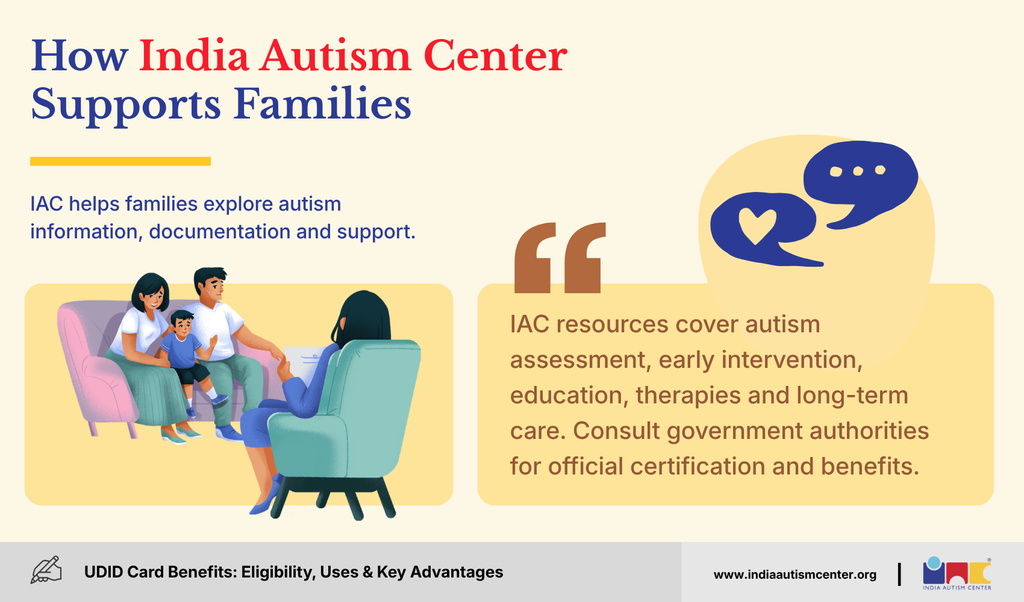
For families navigating autism diagnosis, disability certification and long-term care, reliable information can make a meaningful difference. India Autism Center works to improve understanding, support, and care for autistic individuals and their families.
Its wider focus on autism-related awareness and support complements the practical steps families may need to take when exploring disability documentation and eligible services.
Understanding UDID card benefits is one part of a broader support journey. Families may also need information about autism assessment, early intervention, special education, therapies, developmental support, and long-term care planning.
India Autism Center’s resources can help readers explore these topics and understand the broader support landscape. For official eligibility decisions, certification procedures, and government benefits, always refer to the relevant government authority.
Conclusion
The UDID card offers a standardised way for persons with disabilities to establish their disability status and apply for eligible government schemes and services. Its main advantages include nationwide identification, reduced paperwork, application tracking and easier access to relevant welfare, education and rehabilitation programmes.
For autistic individuals and their families, understanding UDID card benefits can make the process of navigating support more manageable. However, the card does not guarantee every concession or financial benefit.
Check the current requirements on the official UDID portal, keep certificates up to date, and verify eligibility with the department administering each scheme.
Frequently Asked Questions
1. What are the main UDID card benefits?
The main benefits include standardised disability identification, reduced paperwork, application tracking, and support when applying for eligible government schemes, educational provisions, pensions, assistive devices, and other services.
2. Is a UDID card valid throughout India?
Yes. The UDID system is designed to be valid nationwide. However, state-specific schemes and concessions may have additional eligibility and documentation requirements.
3. Can autistic individuals get a UDID card?
Yes. Autism spectrum disorder is a specified disability under the RPwD Act, 2016. Applicants must complete the prescribed assessment and certification process.
4. Does a UDID card guarantee a disability pension?
No. Pension eligibility depends on the rules of the relevant central or state scheme, including any age, income, residence and disability-related conditions.
5. Is a UDID card mandatory for every disability benefit?
Requirements vary by scheme and authority. Some programmes may require a UDID card, while others may accept or require a disability certificate or additional documents. Check the latest official instructions.
6. How can I check my UDID application status?
Visit the official UDID portal and use its application-tracking facility with the requested reference or identification details.