 Donate now
 Get a Call Back

 MENU
 11 MIN READ
 SHARE


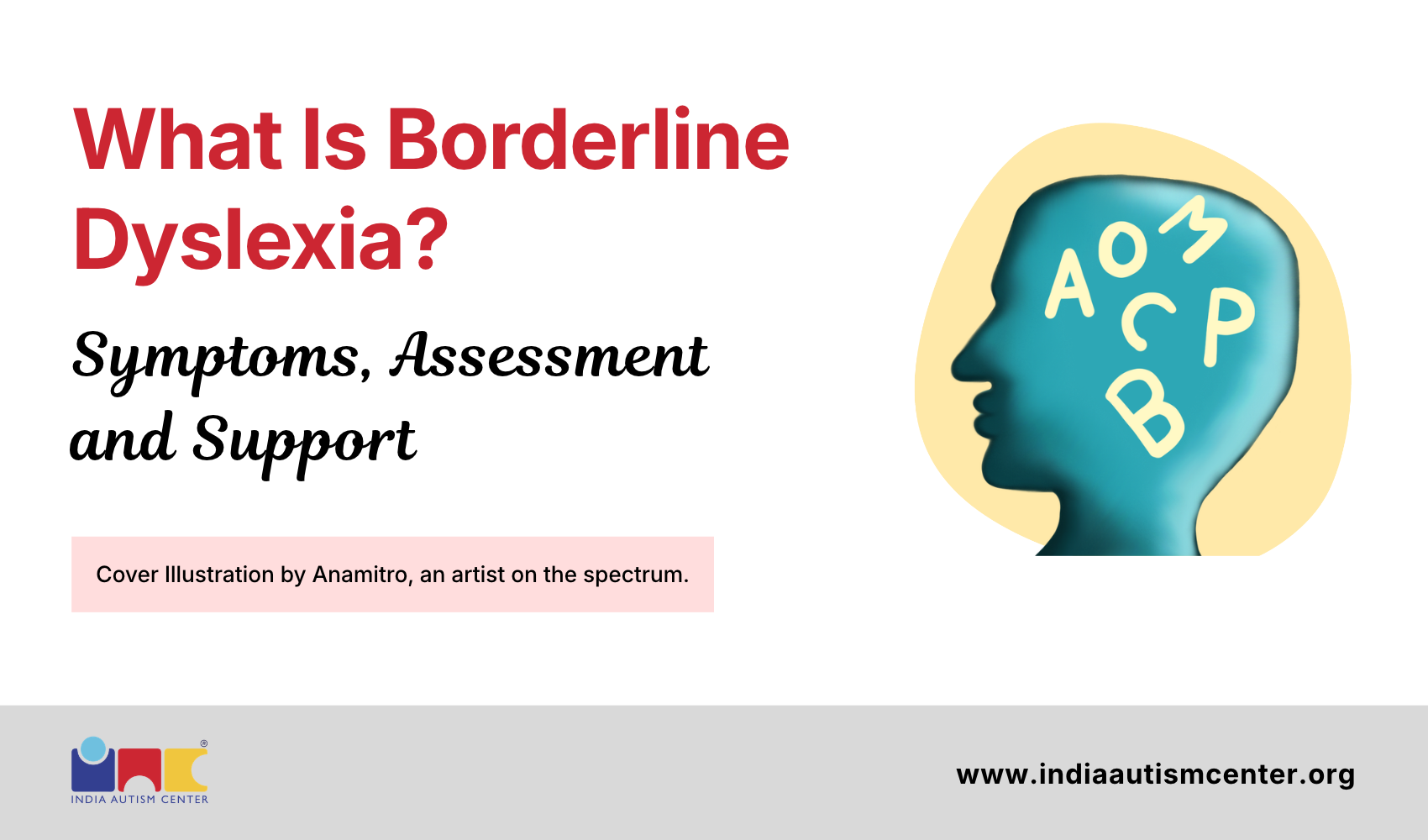
A child who understands a story when it is read aloud but struggles to read the same passage independently may need more than extra practice. Persistent difficulties with reading and spelling can sometimes indicate dyslexia, even when they appear relatively mild.
The British Dyslexia Association estimates that around 10% of the population have dyslexia, highlighting how common these learning differences are. However, not every child who struggles with literacy has dyslexia.
Understanding what borderline dyslexia is, recognising its possible signs, and knowing when to seek an assessment can help parents find the right support before learning difficulties undermine a child’s confidence.
What Is Borderline Dyslexia?
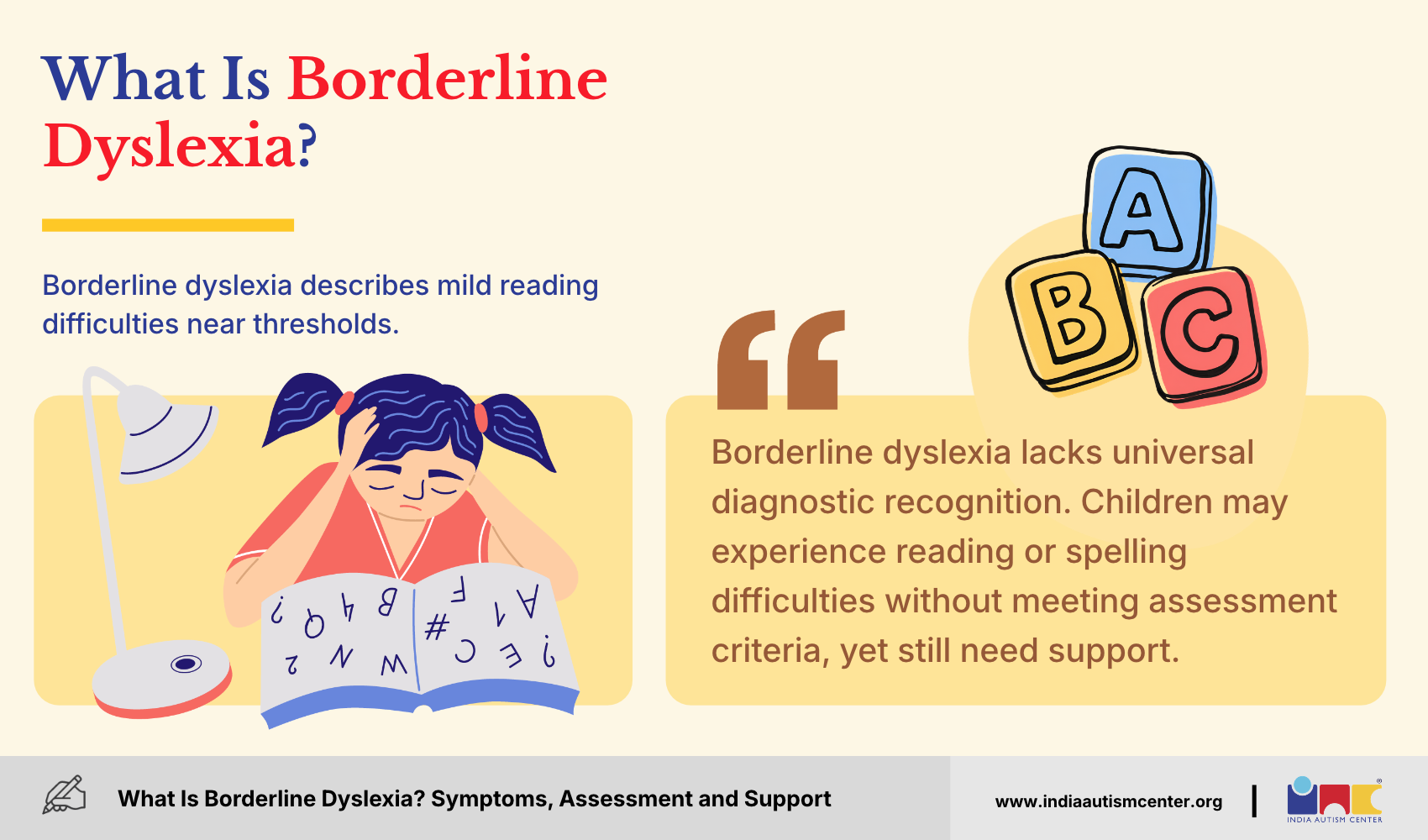
Borderline dyslexia is an informal term used to describe reading and spelling difficulties that appear mild or fall close to a threshold used during an assessment. It is not a universally recognised, standalone diagnosis.
A child described as having borderline dyslexia may struggle to recognise unfamiliar words, spell consistently or read at an age-appropriate pace without necessarily meeting the criteria applied in a particular assessment. Alternatively, the term may refer to screening results that suggest a need for further investigation.
The important distinction is that borderline does not mean that a child’s difficulties are imaginary or unimportant; the impact on learning matters as much as the label.
According to the International Dyslexia Association, dyslexia involves difficulties with word-reading accuracy, reading speed, spelling or a combination of these skills. Such difficulties exist along a continuum of severity.
For example, a child may understand complex ideas during classroom discussions but struggle to read a textbook independently. Another may read accurately but so slowly that completing examinations becomes difficult.
Neither example confirms dyslexia on its own. However, persistent difficulties deserve attention, particularly when they continue despite effective teaching.
Is Borderline Dyslexia the Same as Mild Dyslexia?
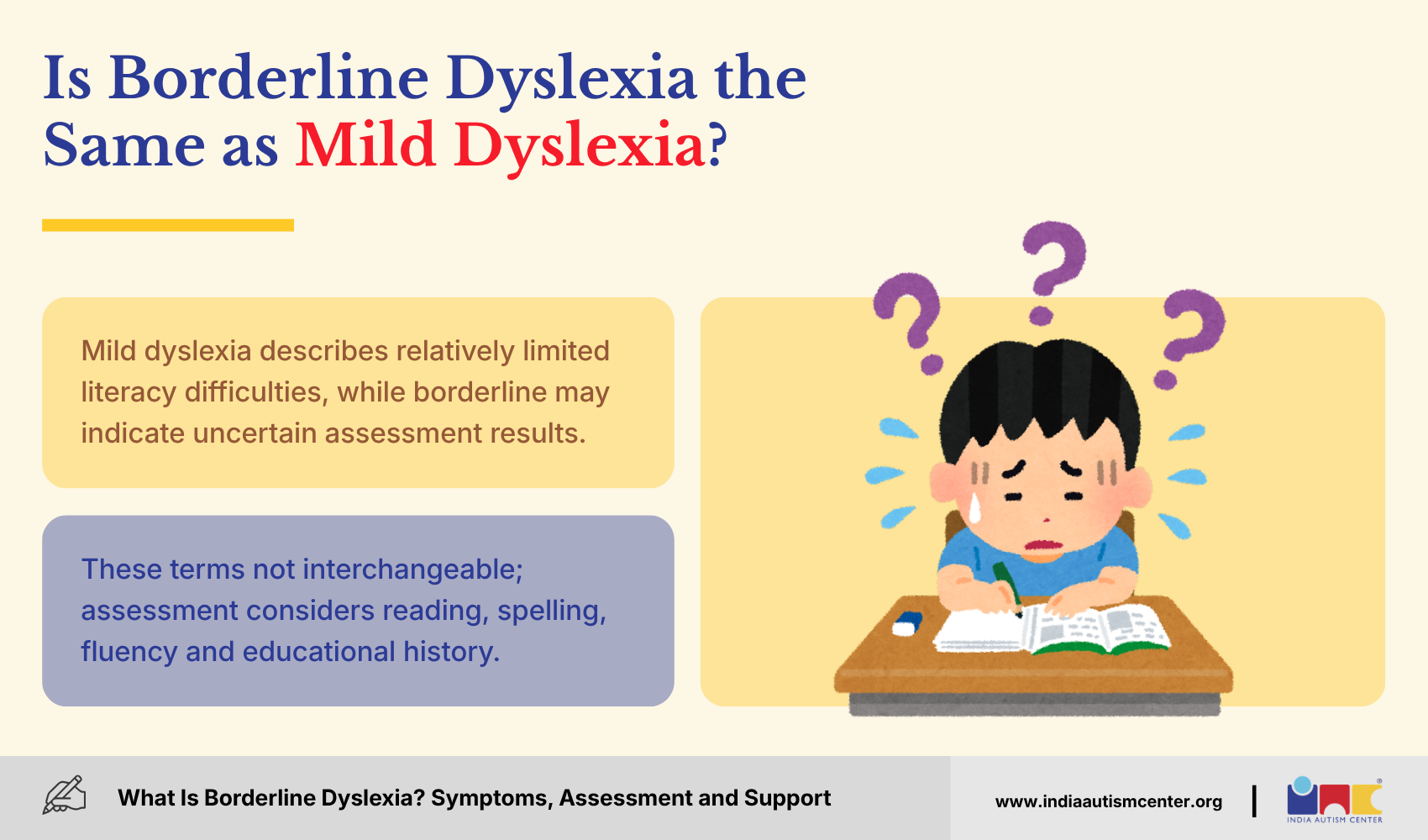
Not necessarily. Mild dyslexia describes dyslexia that has a relatively limited impact on literacy compared with more pronounced difficulties. Borderline dyslexia, meanwhile, may refer to performance near a diagnostic threshold or to difficulties that have not yet been fully assessed.
These terms should not be used interchangeably without understanding the assessment findings.
A professional should consider the child’s reading accuracy, fluency, spelling, educational history and response to teaching. A single score should not determine whether the child receives help.
Borderline Dyslexia Symptoms: What Should Parents Look For?
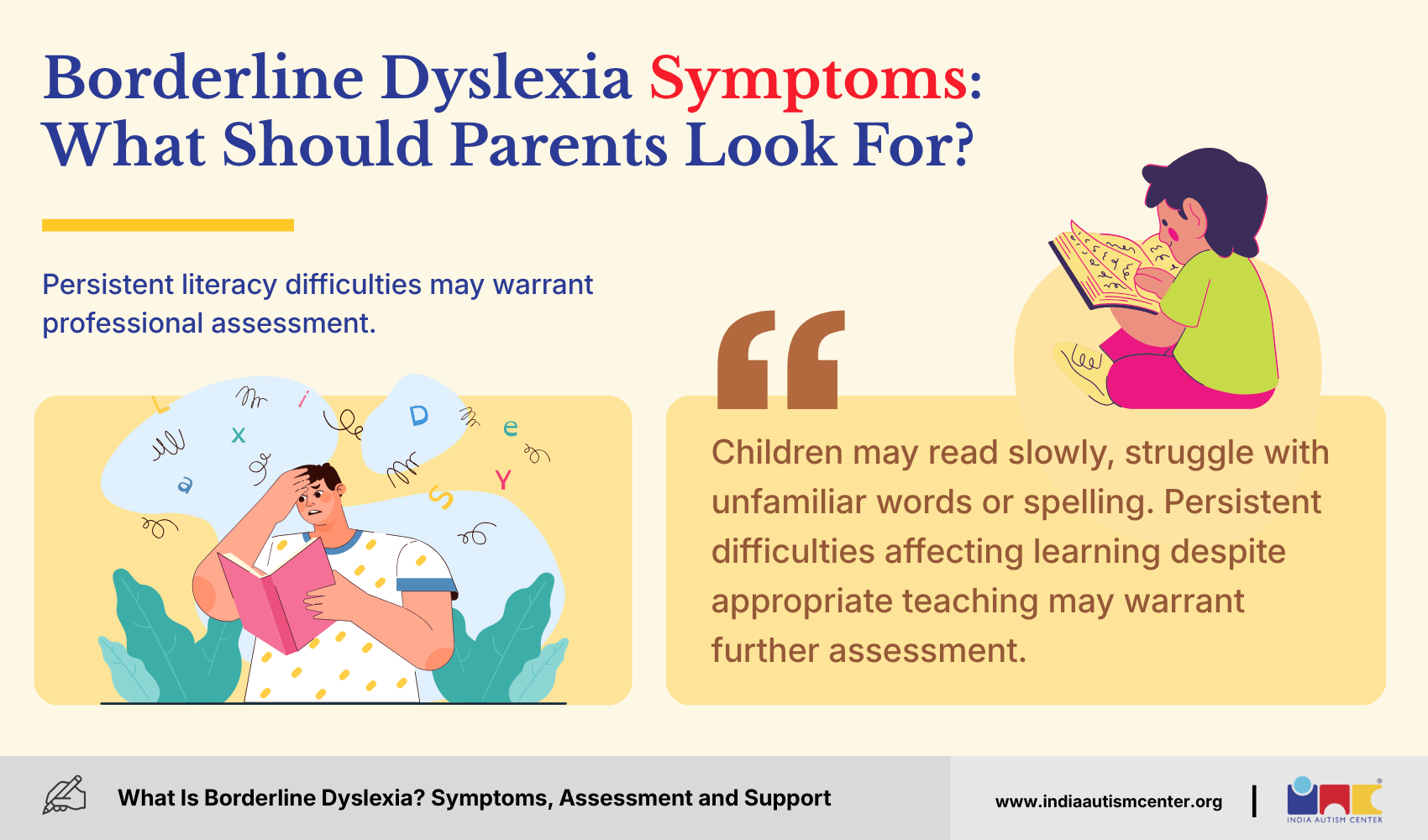
The most useful way to recognise borderline dyslexia symptoms is to look for persistent patterns rather than occasional mistakes. Many children reverse letters, misspell words or struggle with reading while developing literacy skills. These behaviours alone do not establish dyslexia.
Concern increases when difficulties continue over time and affect the child’s ability to learn.
Common indicators include:
- Reading slowly, frequently pausing to sound out words or struggling with unfamiliar vocabulary.
- Finding it difficult to connect letters with their corresponding sounds.
- Making repeated spelling mistakes in words that have been practised.
- Struggling to blend individual sounds into complete words.
- Finding reading and writing considerably harder than explaining ideas verbally.
Some children also have difficulty remembering sequences, following lengthy written instructions or organising written work. These experiences can occur alongside dyslexia, but they are not specific to it.
Parents should pay attention to how much effort a child needs to complete ordinary classroom tasks. A child who spends an unusually long time reading a short passage, avoids reading aloud or becomes distressed about spelling tests may benefit from further evaluation.
Signs of Dyslexia in Children at Different Ages
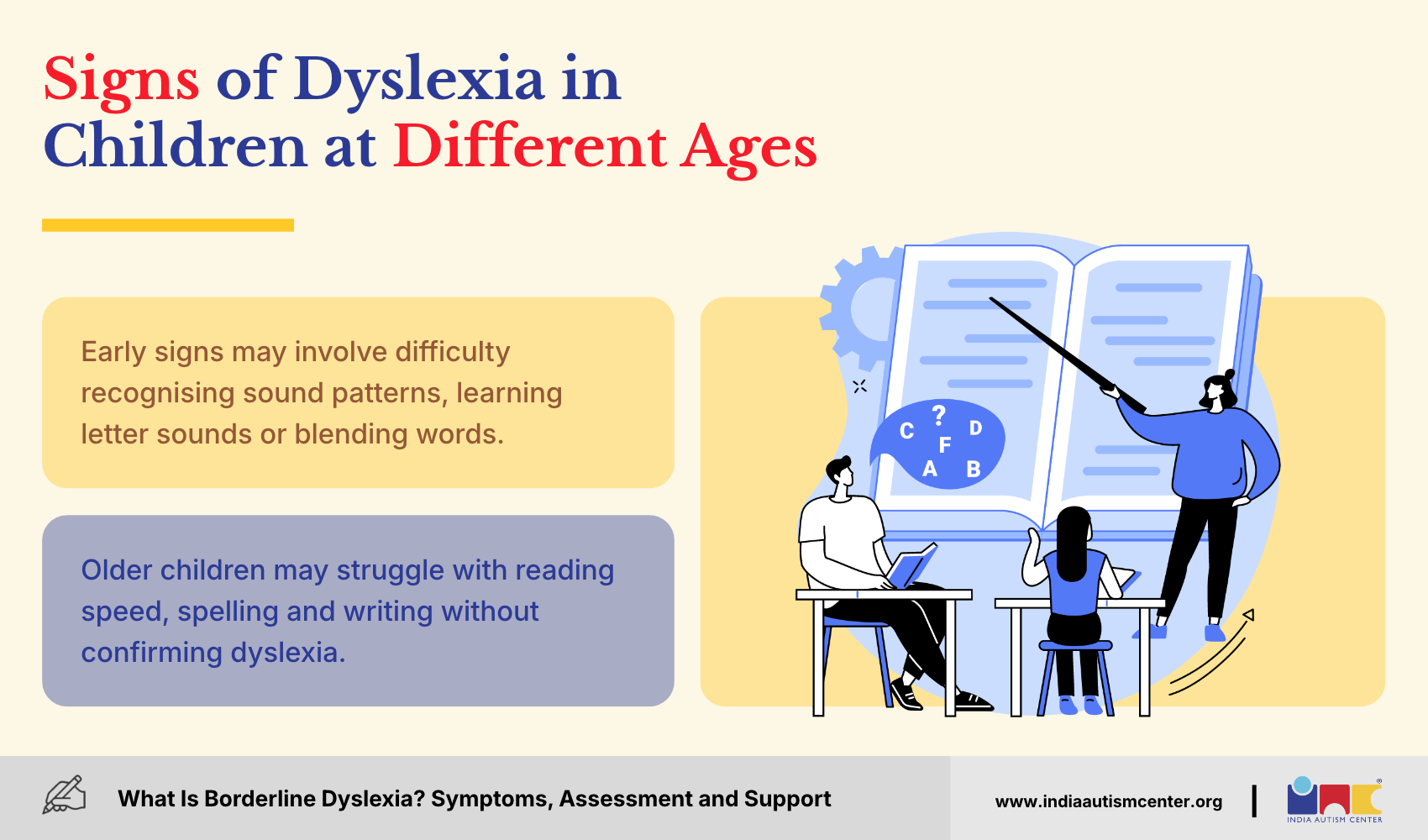
The signs of dyslexia in children can change as their literacy skills and academic responsibilities develop.
| Developmental Stage | Possible Signs |
|---|---|
| Preschool | Difficulty learning rhymes, remembering familiar word sequences or recognising sound patterns |
| Early primary school | Difficulty learning letter sounds, blending sounds and reading simple words |
| Later primary school | Persistent spelling errors, slow reading and difficulty decoding unfamiliar words |
| Secondary school | Difficulty managing lengthy reading assignments, taking notes quickly or completing written examinations on time |
These are possible indicators, not a diagnostic checklist. Some children develop coping strategies that conceal their difficulties for years.
It is also important to avoid relying on letter reversals as a defining sign. Young children commonly reverse letters while learning to write, and many children with dyslexia do not consistently reverse them.
What Causes Borderline Dyslexia?
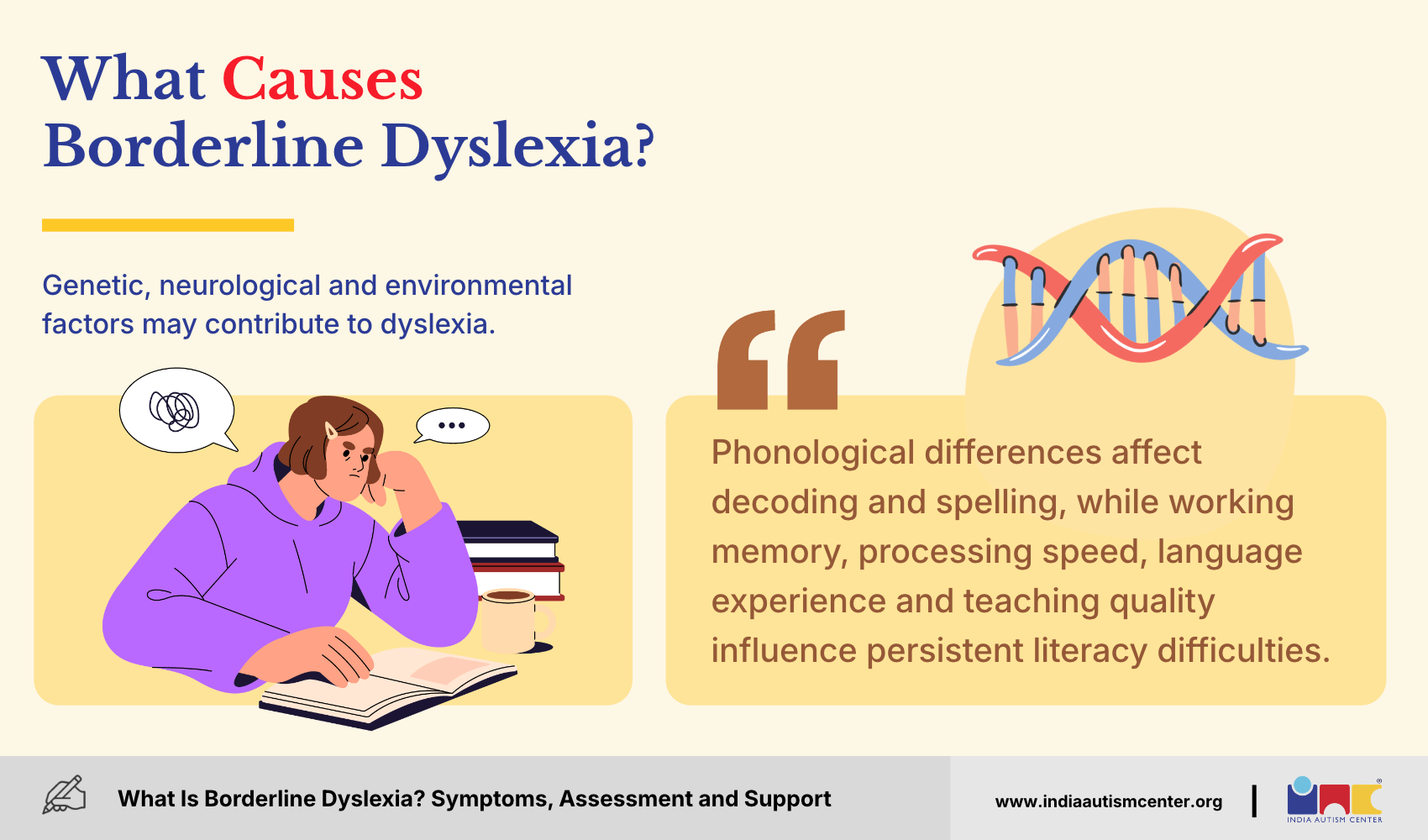
Dyslexia does not have one single cause. Research indicates that genetic, neurobiological and environmental influences interact throughout development. Children with a family history of dyslexia may have a greater likelihood of experiencing similar difficulties, although family history does not determine an outcome.
One important concept is phonological processing. This essentially refers to the ability to recognise and work with the sounds within spoken language. Difficulty connecting these sounds with written letters can make decoding unfamiliar words and learning spelling patterns more challenging.
Working memory and processing speed can also influence how a child manages literacy tasks. However, neither difficulty automatically means that a child has dyslexia.
The language of instruction matters, too. A child learning to read in English while speaking another language at home may need time and appropriate teaching to develop proficiency. Assessment should distinguish language-learning experiences from persistent difficulties with reading and spelling.
Limited access to effective literacy instruction, hearing difficulties and other learning or developmental needs should also be considered. Dyslexia is not caused by laziness, poor parenting or low intelligence.
How Is Borderline Dyslexia Assessed?
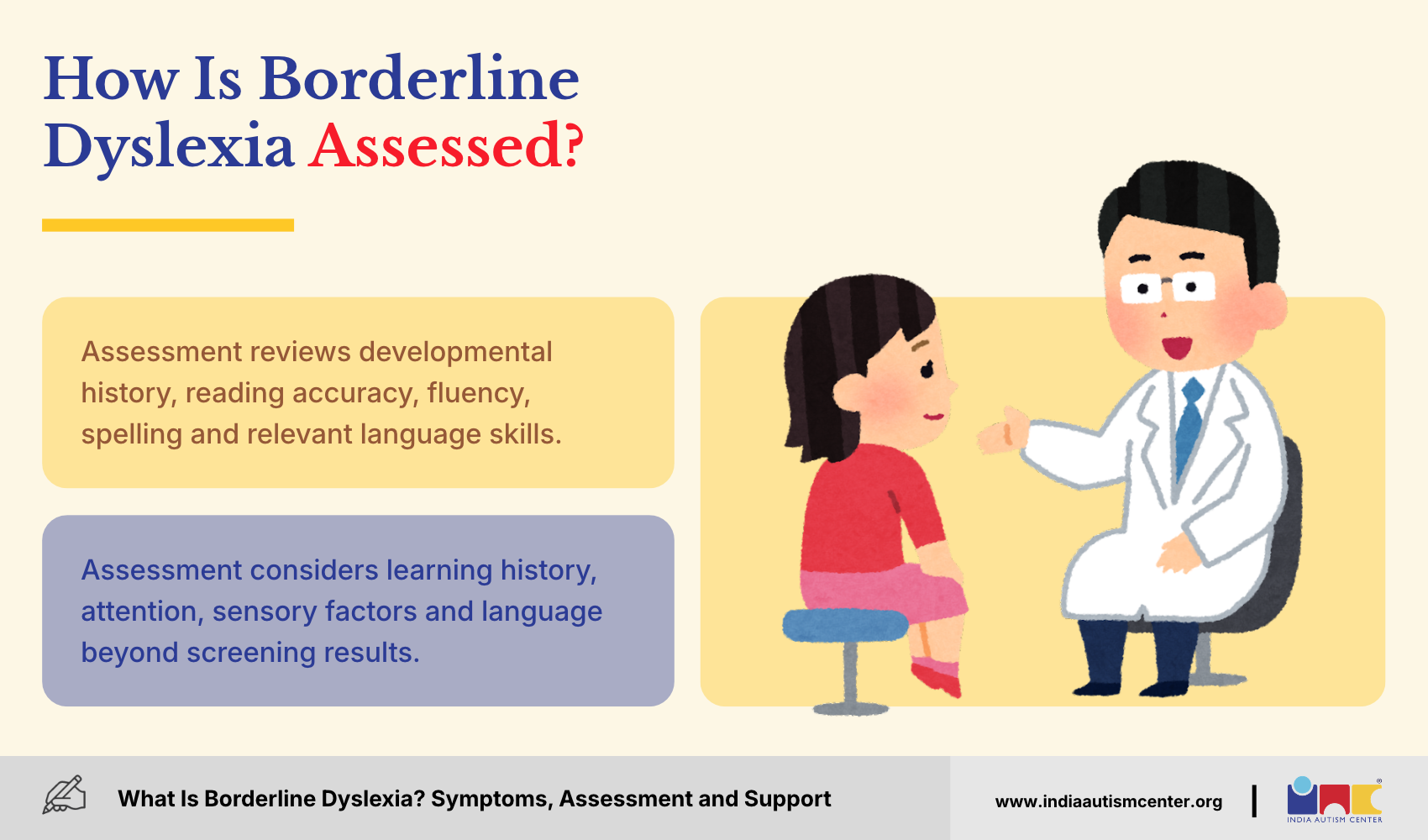
A dyslexia assessment aims to understand why a child is struggling and identify the support that may help. It should examine the child’s literacy skills in context rather than simply assigning a label.
A comprehensive assessment may include the following:
1. Developmental and educational history
The professional asks about language development, family history, school experiences, previous interventions and the child’s progress over time.
2. Reading and spelling skills
Tests may examine word recognition, decoding unfamiliar words, reading accuracy, fluency and spelling. The assessor considers both accuracy and speed because a child may read correctly but require considerably more time than expected.
3. Relevant language and processing skills
Depending on the child’s presentation, assessment may examine phonological awareness, verbal memory and other skills that influence literacy learning.
4. Other possible explanations
The assessor considers factors such as hearing, vision, language proficiency, attention and the quality of previous teaching. Where necessary, additional professional evaluations may be recommended.
5. Individualised recommendations
The findings should guide practical decisions about teaching methods, school accommodations and whether further assessment is needed.
Screening and diagnosis are not the same. Screening identifies children who may need further investigation; it does not independently confirm dyslexia.
There is no single universal score that defines borderline dyslexia. In India, parents can consult a suitably qualified psychologist or specialist experienced in specific learning difficulties. A developmental paediatrician or speech and language therapist may also be helpful when broader developmental or communication concerns are present.
How Can Borderline Dyslexia Affect Learning?
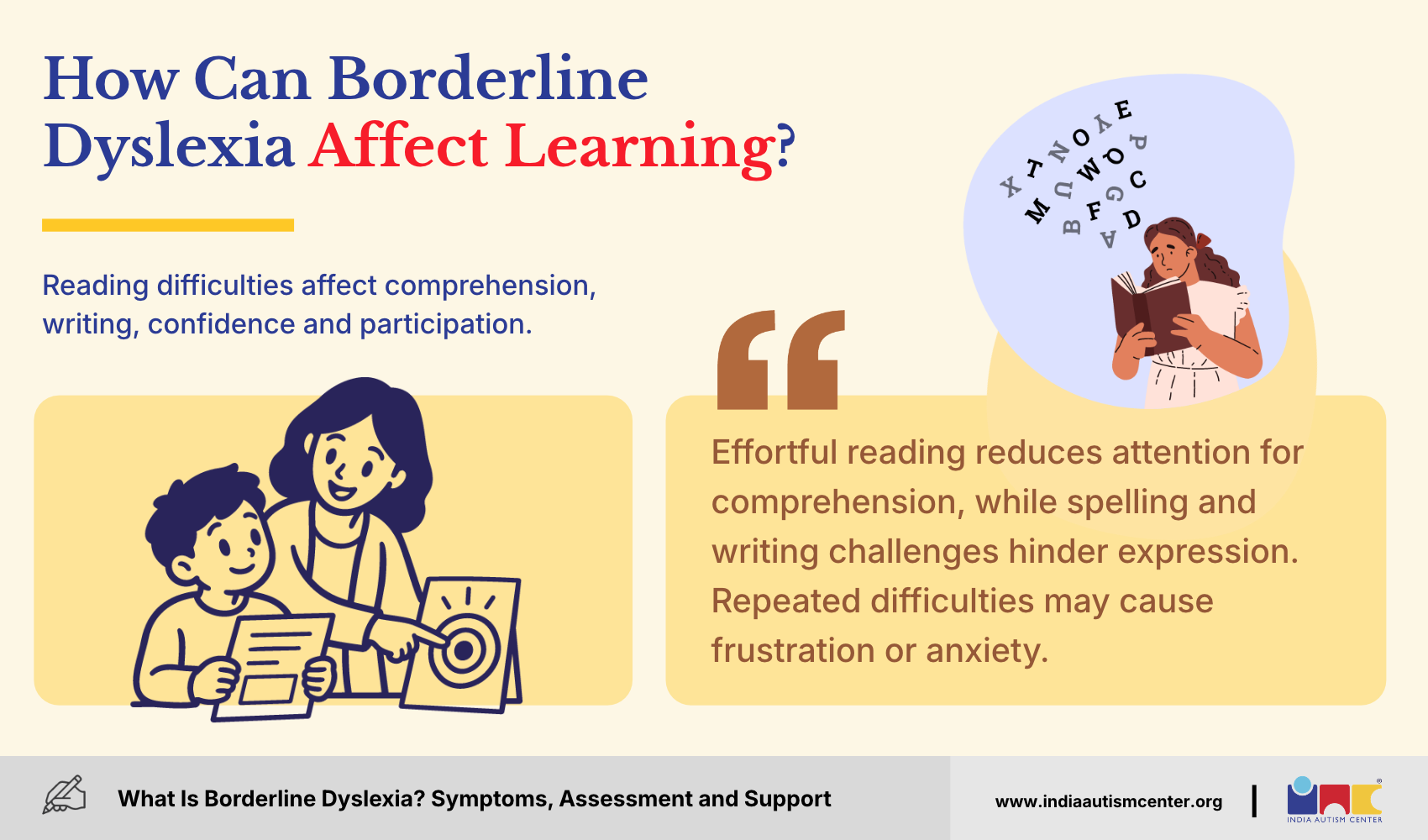
Reading difficulties can affect more than English lessons. When a child spends substantial effort decoding words, less attention may remain available for understanding the material. This can make learning across several subjects more demanding.
Common challenges include:
- Reading comprehension: Slow, effortful reading can make it harder to understand longer passages.
- Written expression: Spelling and sentence construction may prevent children from communicating their knowledge effectively.
- Working memory: Some children find it difficult to remember instructions while completing a reading or writing task.
- Confidence and emotional wellbeing: Repeated struggles may lead to frustration, anxiety or reluctance to participate in class.
These are among the possible dyslexia learning difficulties, but their severity varies from child to child.
Dyslexia may also occur alongside other conditions. Attention Deficit Hyperactivity Disorder (ADHD), other developmental language disorder, and dyscalculia, which affects mathematical learning, can coexist with dyslexia. Each condition has distinct characteristics and may require separate assessment.
What Support Helps Children with Borderline Dyslexia?
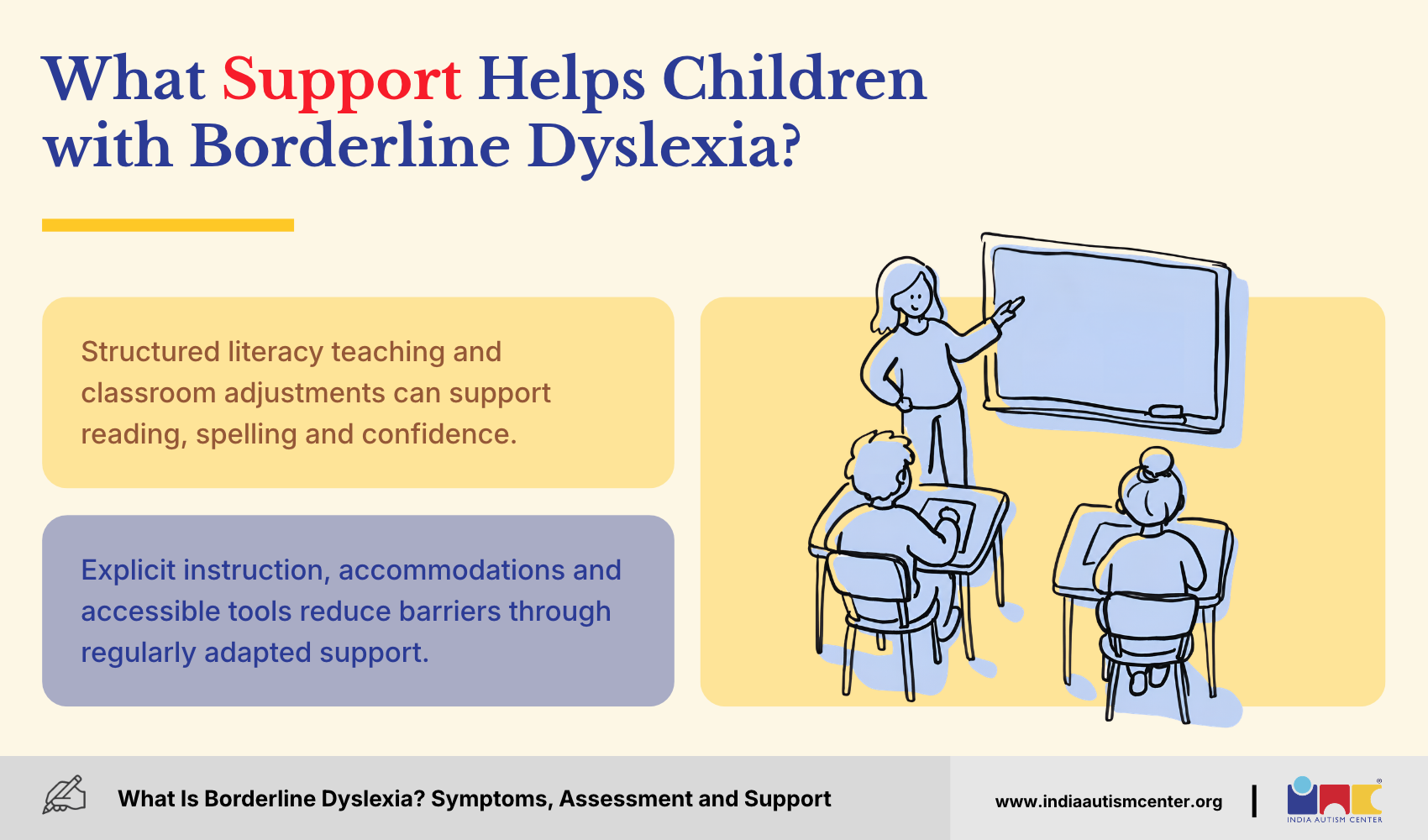
Children do not need to wait for a formal diagnosis before receiving appropriate help with reading and spelling. Support should be based on observed needs and reviewed according to progress.
Structured Literacy Instruction
Explicit, systematic teaching can help children develop the skills required for reading and spelling. Instruction may cover letter-sound relationships, blending, decoding, spelling patterns and reading fluency. Practice should be cumulative, with new skills building on previously learned ones.
Classroom and Homework Adjustments
Small changes can reduce unnecessary barriers while children develop literacy skills. Teachers and parents can provide additional time for reading-heavy tasks, break lengthy assignments into manageable steps, and give verbal explanations alongside written instructions.
Audiobooks and text-to-speech tools can also help children access age-appropriate information while they continue developing independent reading skills.
Emotional and Family Support
Children need to understand that difficulty with reading does not reflect their intelligence or potential. Praise effort, recognise progress and avoid comparisons with siblings or classmates.
Parents should communicate with teachers about persistent challenges and monitor whether interventions are improving reading accuracy, fluency and confidence. If progress remains limited, the support plan may need to be reviewed.
A Parent’s Action Plan: What to Do Next
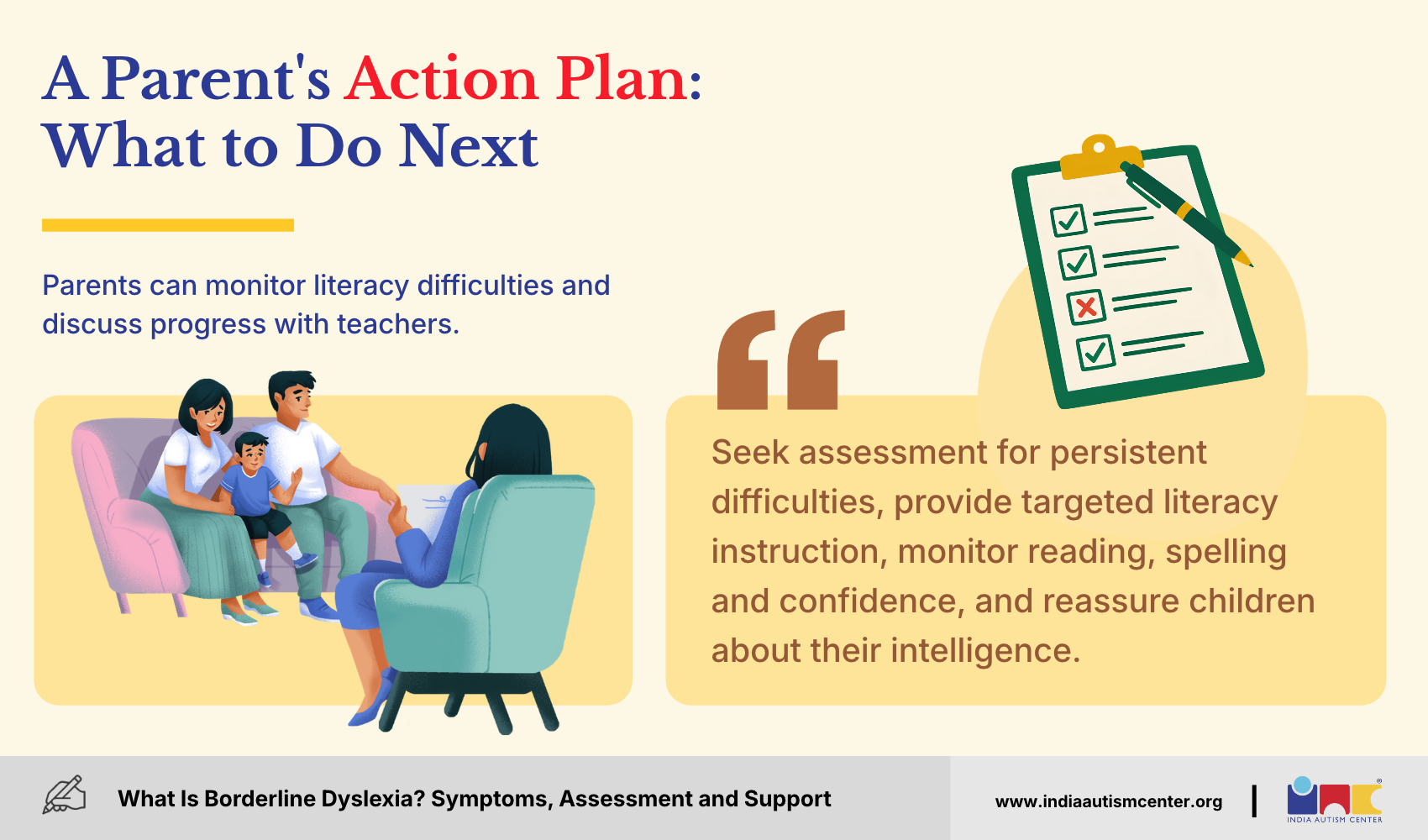
If you suspect borderline dyslexia, take these practical steps to support your child:
- Observe patterns: Note recurring difficulties with reading, spelling, sounding out words or understanding written instructions.
- Speak to teachers: Discuss your child’s classroom performance, progress and response to existing teaching methods.
- Seek an assessment: Consult a qualified professional if difficulties persist despite appropriate teaching. Screening alone cannot confirm dyslexia.
- Provide targeted support: Encourage structured literacy instruction, regular reading practice and suitable classroom adjustments.
- Monitor progress: Review improvements in reading fluency, spelling and confidence with teachers or specialists.
Most importantly, reassure your child that reading difficulties do not reflect intelligence. Early, appropriate support can help children develop literacy skills and approach learning with greater confidence.
How India Autism Center Approaches Individual Learning Needs
India Autism Center emphasises understanding each individual’s strengths, developmental profile and support requirements rather than making assumptions based on a diagnostic label. Although dyslexia is distinct from Autism Spectrum Disorder (ASD), individuals can have overlapping developmental or learning needs that require coordinated support.
Recognising these differences helps families make informed decisions about assessment, educational strategies and professional guidance. An individualised approach also helps parents and educators understand why a child may excel in some areas while requiring additional help in others.
Through educational resources and a focus on personalised support, India Autism Center encourages families to seek reliable information, understand individual needs and make informed decisions about developmental care.
Conclusion
Understanding what borderline dyslexia means can help parents respond to reading and spelling difficulties with greater clarity. Although the term is informal and does not represent a universally recognised diagnosis, the challenges it describes should not be dismissed.
Persistent literacy difficulties deserve attention, even when they appear mild or fall close to an assessment threshold. A thorough assessment, structured literacy teaching and appropriate classroom support can help children strengthen their skills and maintain confidence.
The goal is not simply to obtain a label. It is to understand how a child learns and provide the right support to help them progress.
Frequently Asked Questions
1. Is borderline dyslexia a medical diagnosis?
No. Borderline dyslexia is an informal term for relatively mild literacy difficulties or results close to a particular assessment threshold. It is not a universally recognised standalone diagnosis.
2. Can a child have dyslexia without severe symptoms?
Yes. Dyslexia varies in severity. Some children experience persistent difficulties with spelling or reading fluency even when their overall academic performance appears satisfactory.
3. Does borderline dyslexia affect intelligence?
No. Dyslexia does not indicate low intelligence. A child may have strong reasoning, creativity and spoken language skills while finding reading and spelling difficult.
4. Should a child with borderline dyslexia receive extra support?
Support should reflect the child’s actual needs. Structured literacy teaching, additional practice, and appropriate classroom adjustments may help even before a formal diagnosis is established.
5. Can borderline dyslexia improve with age?
Reading and spelling skills can improve with effective teaching and practice. Some individuals continue to experience literacy difficulties and may benefit from ongoing strategies or accommodations.
6. When should parents seek a dyslexia assessment?
Consider an assessment when reading or spelling difficulties persist despite appropriate teaching, interfere with schoolwork, or cause significant frustration. A qualified professional can investigate the difficulties and recommend suitable support.