 Donate now
 Get a Call Back
 MENU
MENU 11 MIN READ
 SHARE
SHARE


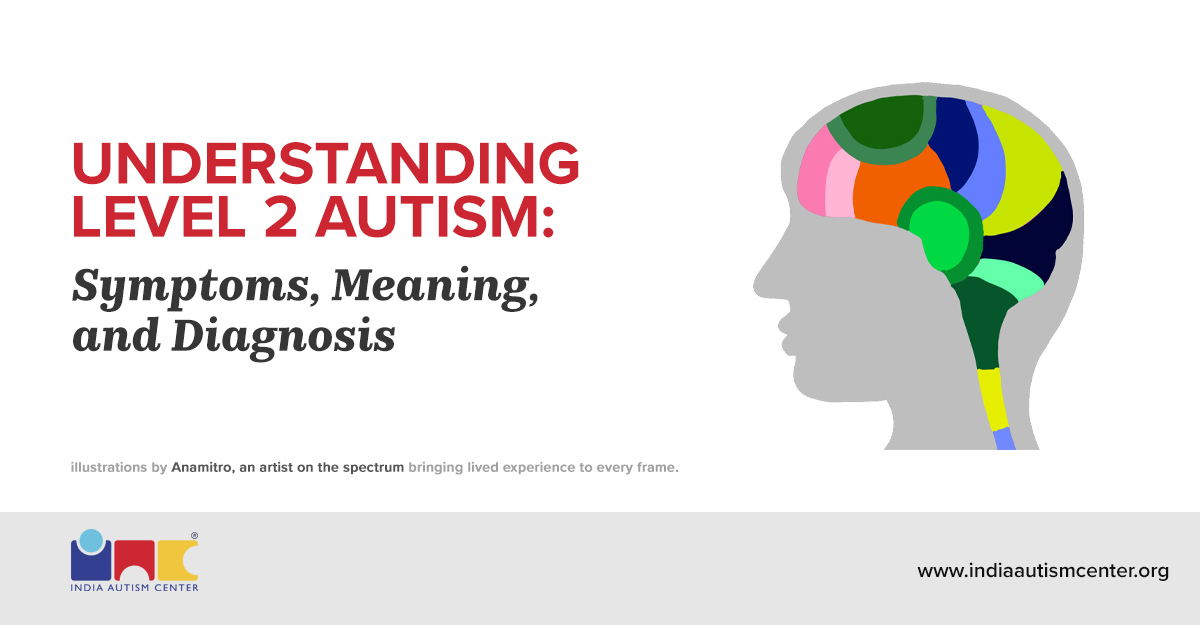
Navigating the world of neurodiversity can create many doubts for parents and caregivers. When a child or an adult receives a diagnosis of level 2 autism spectrum disorder, the terminology can often seem clinical and confusing. You might find yourself asking, what is level 2 autism, and how does it differ from other forms of the condition?
In India, estimates suggest that more than 1 in 36 children are expected to be on the autism spectrum, although large-scale national data is still evolving.
Considering the spectrum, many parents often wonder what level 2 autism is and how it is different from other levels of autism. Understanding the meaning, symptoms, diagnosis process, and long-term outlook can help families make informed decisions early.
Today, through this guide, we will explain the meaning of autistic level 2 in simple terms, offering a comprehensive look at symptoms, the diagnostic process, and what daily life looks like for those navigating this journey.
Understanding Autism Spectrum Disorder (ASD)
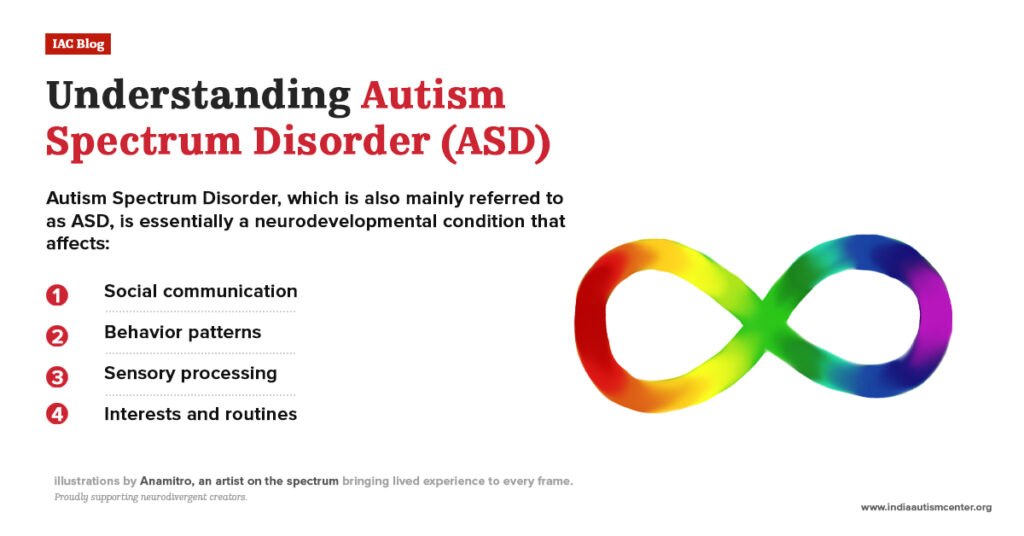
Autism Spectrum Disorder, which is also mainly referred to as ASD, is essentially a neurodevelopmental condition that affects:
- Social communication
- Behavior patterns
- Sensory processing
- Interests and routines
In 2013, the Diagnostic and Statistical Manual of Mental Disorders, Fifth Edition (DSM-5) introduced a severity-based classification system. Instead of older labels like Asperger’s syndrome, autism is now divided into three levels based on the amount of support required.
This classification has led to parents frequently asking: What is ASD level 2, and how does it fit within this system?
📥 Free download: Printable daily routine chart for autistic children
What Does Level 2 Autism Mean?
To understand what level 2 autism means, we first have to look at how the DSM-5 changed the way we talk about the spectrum. Previously, conditions like Asperger’s Syndrome and Pervasive Developmental Disorder were separate. Today, they all fall under Autism Spectrum Disorder (ASD).
The levels are not about “how autistic” someone is, but rather how much external help they need to function in a world designed for neurotypical people.
Level 2 Autism Symptoms: What to Look For?
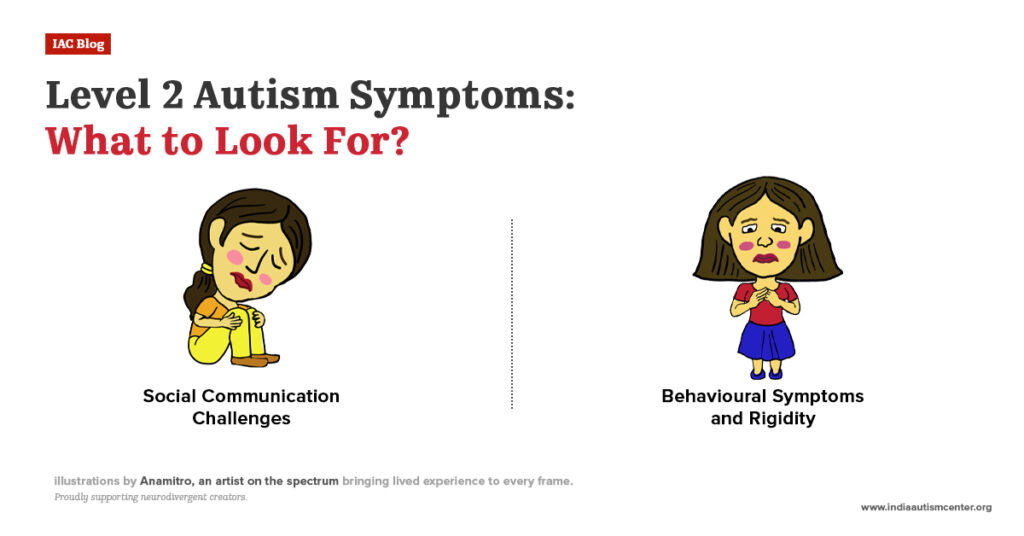
Understanding level 2 autism symptoms is crucial for parents who are trying to advocate for their child’s needs. These symptoms generally manifest in two core areas. The areas are social communication and restricted repetitive patterns of behaviour.
Social Communication Challenges
In Level 2 ASD, social communication gaps are quite visible. Here is what that often looks like:
- Limited Verbal Interaction: An individual might speak only when they need something, rather than for social pleasure.
- Atypical Nonverbal Cues: They may struggle with eye contact, or their facial expressions might not match their feelings.
- Difficulty with Social Nuances: Understanding sarcasm, idioms, or the “unwritten rules” of a conversation is very difficult.
- Reduced Response to Social Overtures: If someone greets them, they might not respond, or their response might be delayed or unusual.
Behavioural Symptoms and Rigidity
The behavioural side of autism level 2 symptoms often centres around a need for sameness.
- Distress Over Change: Switching from one activity to another (like leaving the house for school) can trigger a meltdown or a total shutdown.
- Repetitive Body Movements: This might include rocking back and forth, hand flapping, or spinning objects.
- Narrow Interests: A person might be intensely focused on one specific topic, such as train schedules or a specific cartoon, to the exclusion of everything else.
What Does Level 2 Autism Look Like at Different Ages?
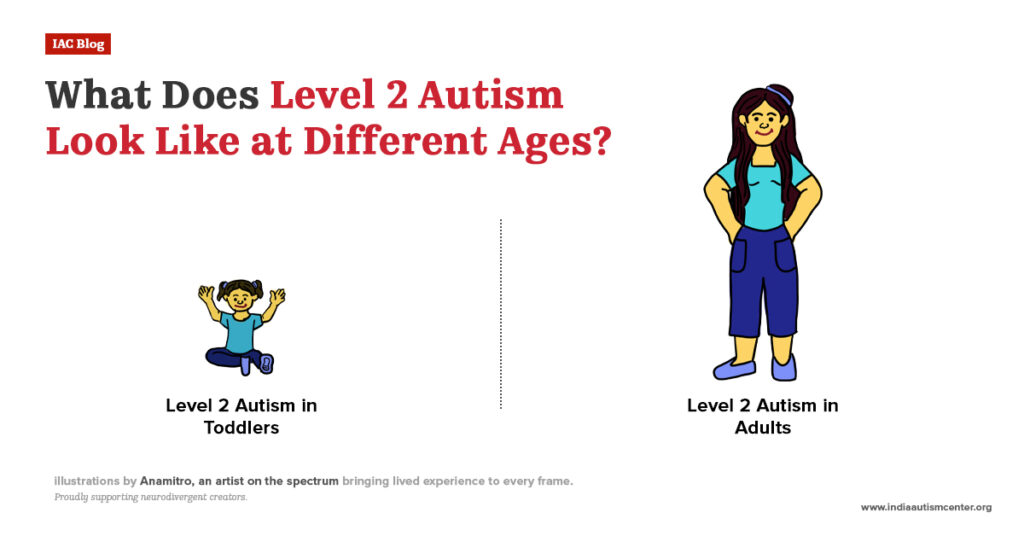
The spectrum changes as a person grows. What is visible in a toddler might look different in a working adult.
Level 2 Autism in Toddlers
While detecting level 2 autism in toddlers, parents might notice:
Delayed Speech: The child may not be meeting word-count milestones or may use “echolalia,” repeating phrases they heard elsewhere without understanding their meaning.
Lack of Functional Play: Instead of playing “house” or “cars,” a toddler might line up their toys for hours.
Sensory Sensitivities: They might scream at loud noises like that of a vacuum cleaner or refuse to wear certain fabrics because they feel painful against the skin.
Level 2 Autism in Adults
For adults who are diagnosed with level 2 autism, the challenges often shift toward independent living and social integration. While many adults with Level 2 have jobs and relationships, they usually require a support system. This could include a job coach, a therapist, or a living situation that provides a predictable routine.
Adults in this category often experience “autistic burnout” because the effort required to mask their symptoms in public is exhausting. They might still struggle with the complex social dynamics of the workplace, making traditional employment difficult without accommodations.
The Diagnostic Process: How Level 2 is Identified?

If you are wondering what ASD level 2 means in a clinical sense, the diagnosis is usually made by a team of professionals. This often includes a paediatrician, a psychologist, and a speech-language pathologist.
The process involves:
- Developmental Screening: Tools like the M-CHAT are used for diagnosis in younger children.
- Observation: Clinicians watch how the individual interacts with others and toys.
- Parental Interviews: Gathering a history of the child’s milestones and behaviours.
- The ADOS-2 Test: the “gold standard” for diagnosis, involving structured tasks that elicit specific social behaviours.
The goal of the diagnosis is not just to provide a label, but to open doors to services. In India, a formal diagnosis is necessary to access the NIRAMAYA Scheme or to apply for a disability pension for those who qualify.
Want to know more? Get in touch with us.
Level 2 Autism Life Expectancy
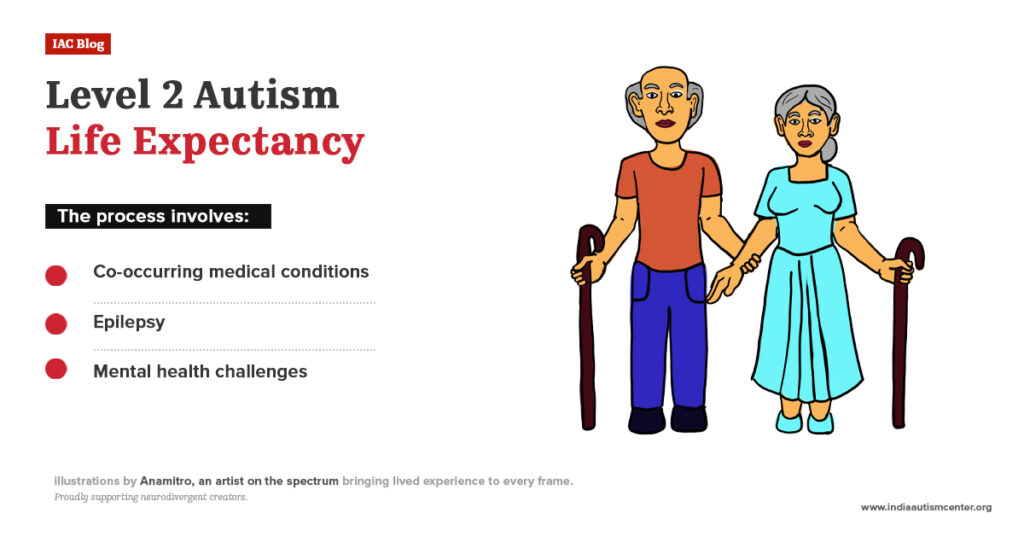
Many parents also wonder about the life expectancy of individuals with level 2 autism.
Autism itself does not reduce life expectancy directly. However:
- Co-occurring medical conditions
- Epilepsy
- Mental health challenges
It can affect how long the child or adult will live if untreated.
Studies suggest individuals with autism can also have slightly reduced life expectancy due to associated health conditions, but proper medical care helps to improve the overall outcomes.
Can Level 2 Autism Live Independently?
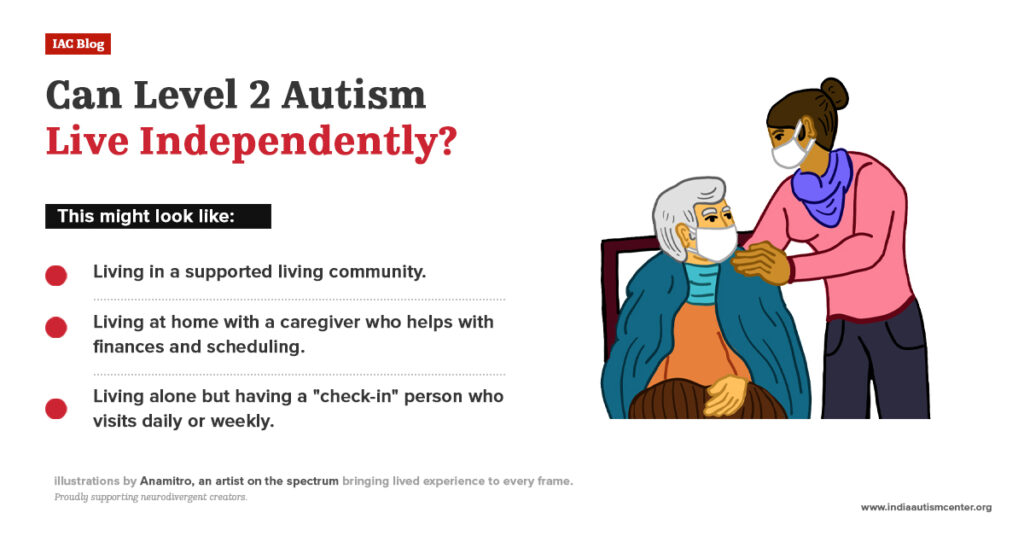
One of the most common questions parents ask is, ” Can a person with level 2 autism live independently? The answer depends heavily on the individual and the level of early intervention they received. Many people with level 2 ASD can live semi-independently. This might look like:
- Living in a supported living community.
- Living at home with a caregiver who helps with finances and scheduling.
- Living alone but having a “check-in” person who visits daily or weekly.
In total, unassisted independence is less common for Level 2 than for Level 1 Autism, but it is not impossible. With the right technology, visual schedules, and social skills training, many adults lead fulfilling, semi-autonomous lives.
Supporting Someone with Type 2 Autism
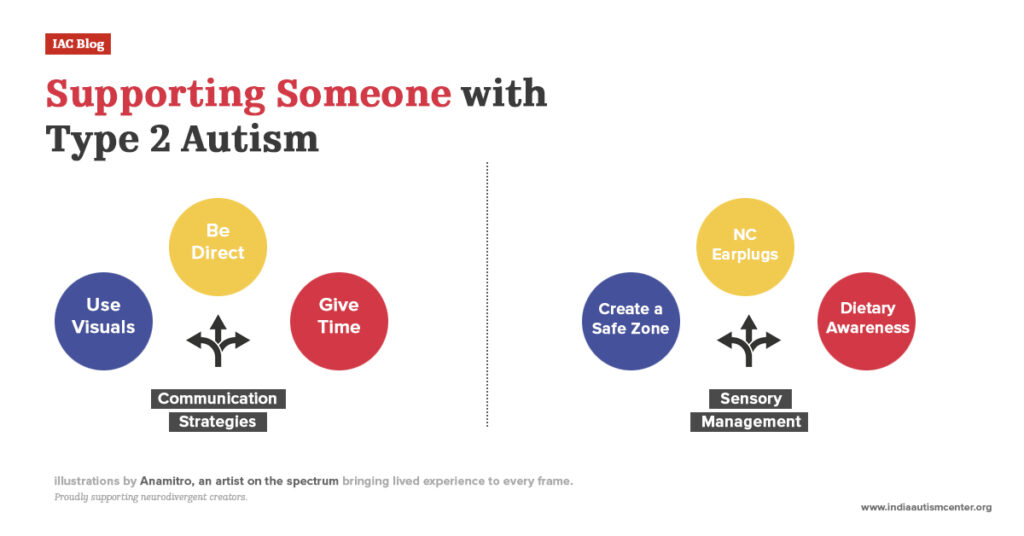
Supporting a child or an adult with type 2 autism needs patience and, more importantly, a shift in perspective. Instead of trying to force them to “act normal,” focus on creating an environment where they can thrive.
Communication Strategies
Use Visuals: Since verbal processing is often on the slower side in Level 2, it is best to use picture schedules or written lists.
Be Direct: Avoid sarcasm or “beating around the bush.” If you need them to do something, say it clearly.
Give Time: After asking a question, wait at least 10 seconds for them to process and respond.
Sensory Management
Most people with Level 2 ASD have sensory processing issues.
Create a Safe Zone: Set up a quiet corner in the house with dim lighting and sensory toys.
Noise-Cancelling Headphones: These are a lifesaver in malls, airports, or loud classrooms.
Dietary Awareness: Some individuals are highly sensitive to food texture, which can appear like “picky eating” but is actually a sensory response.
Therapies for Level 2 Autism
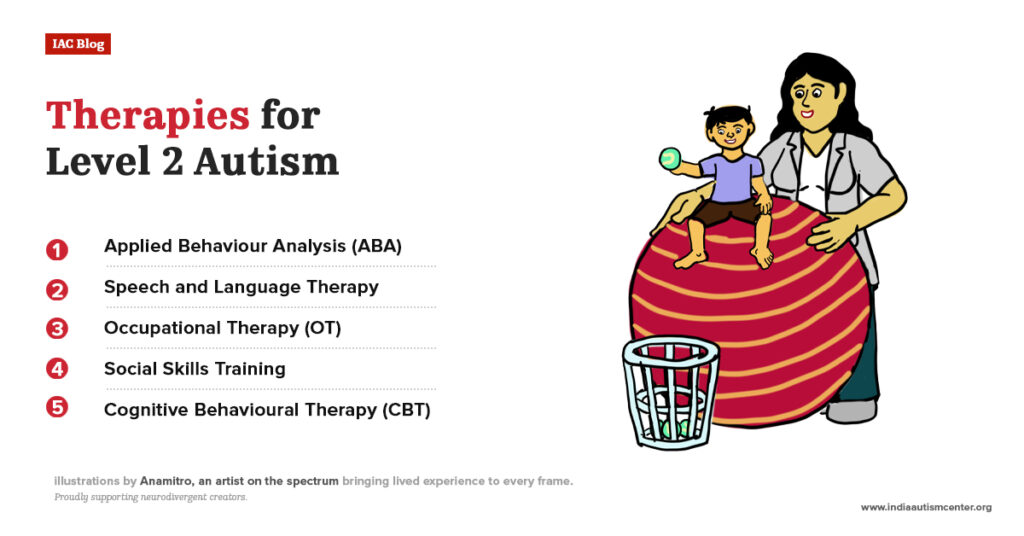
Understanding what level 2 autism is, it is important to know that therapy is essential, as this level is defined as “requiring substantial support.” The goal is not to change who the person is, but to build communication, independence, and coping skills.
- Applied Behaviour Analysis (ABA)
Applied Behaviour Analysis (ABA) is one of the most widely used approaches for level 2 autism spectrum disorder. It helps improve communication, reduce challenging behaviours, and teach daily living skills through structured, step-by-step learning.
- Speech and Language Therapy
Speech and Language Therapy is very important, especially when it comes to level 2 autism symptoms, which include delayed speech or difficulty maintaining conversations. Therapy tends to focus on expressive language, understanding instructions, or using alternative communication methods if needed.
- Occupational Therapy (OT)
Occupational Therapy (OT) supports sensory regulation and everyday skills. There are many individuals with level 2 ASD who experience sensory sensitivities or struggle with dressing, feeding, or handwriting. OT helps improve coordination, self-care, and emotional regulation.
- Social Skills Training
Social Skills Training teaches children and teens how to take turns, read facial expressions, and engage in conversations. This directly addresses common Level 2 autism symptoms, which are more related to social interaction.
- Cognitive Behavioural Therapy (CBT)
For older children and adults, Cognitive Behavioural Therapy (CBT) can help manage anxiety, rigid thinking, and emotional challenges.
Early intervention with consistent therapies significantly improves long-term outcomes. While therapy is not meant to “cure” autism, it can considerably reduce support needs over time and improve independence. With the right structured support, individuals with level 2 autism can develop meaningful skills for daily life.
Common Myths About Level 2 Autism
When parents first learn what level 2 autism is, they are often overwhelmed not just by the diagnosis but by myths and misinformation related to autism . Let us clear up some common myths.
Myth 1: Level 2 autism is just bad behaviour.
Truth: Level 2 autism spectrum disorder is a neurodevelopmental condition. The behaviours associated with level 2 autism symptoms are linked to differences in brain development, not to poor parenting or discipline.
Myth 2: Children will outgrow it.
Truth: Autism is lifelong. While therapy aims to reduce support needs, Level 2 ASD does not simply disappear with age.
Myth 3: Level 2 autism means low intelligence.
Truth: The level of intelligence is not restricted due to autism. It varies widely. Some individuals may have average or even above-average abilities but still struggle socially and behaviorally.
Myth 4: They cannot live independently.
Truth: Many families ask, ” Can a person with level 2 autism live independently? With structured therapy, life skills training, and support, some individuals achieve partial or full independence.
Myth 5: It is the same for everyone.
Truth: Every person with level 2 autism is different. Symptoms, strengths, and challenges vary significantly.
Want to know more? Get in touch with us.
Why Early Diagnosis Matters?
Understanding what level 2 autism is becomes far more meaningful when the diagnosis happens early. Early identification allows families to begin structured interventions during critical years of brain development.
Research shows that therapy started before age five can significantly improve communication, social interaction, and adaptive skills in kids with level 2 autism spectrum disorder.
When level 2 autism symptoms are recognised early, children can receive speech therapy, occupational therapy, and behavioural support before these challenges become deeply ingrained.
Early diagnosis also helps parents understand what level 2 autism means in practical terms, reducing confusion and delay in seeking help.
Most importantly, early support improves long-term independence, learning outcomes, and overall quality of life.
Conclusion
The first step toward accepting the answer to the question “What is level 2 autism?” is understanding the core concepts. While the “substantial support” label might sound daunting, it simply means that these individuals interact with the world differently.
They have a unique “autistic level 2 meaning” that involves deep passions, a different way of seeing details, and a need for a predictable, safe world.
Whether you are a parent of a toddler or an adult seeking answers, remember that a diagnosis is a tool for understanding, not a limitation on what a person can achieve. With the right support, individuals with level 2 ASD can lead lives filled with purpose, connection, and joy.
Frequently Asked Questions
What is level 2 autism?
Level 2 autism refers to a moderate form of Autism Spectrum Disorder, where an individual requires substantial support. Children and adults at this level exhibit clear social communication difficulties and repetitive behaviours that affect daily functioning.
What are the common Level 2 autism symptoms?
Common level 2 autism symptoms include limited eye contact, difficulty maintaining conversations, rigid routines, sensory sensitivities, and noticeable repetitive behaviours.
How are autism level 2 symptoms different from Level 1?
Autism level 2 symptoms are more pronounced and require structured support. Unlike Level 1, individuals at Level 2 cannot function independently without consistent assistance.
What does level 2 autism look like in daily life?
Parents often ask what level 2 autism looks like. It may involve a child who can speak but struggles socially, resists change, and becomes distressed when routines shift.
Can a person with level 2 autism live independently?
Regarding whether level 2 autism individuals live independently, some individuals achieve semi-independence with life skills training and structured support, while others may require assisted living.
Disclaimer: This article is intended for educational and informational purposes only. It is not a substitute for professional medical advice, diagnosis, or treatment. If you are pregnant or have concerns about medication use during pregnancy, please consult a qualified healthcare provider. If your child has received an autism diagnosis and you have questions about causes or support, please reach out to a trained specialist or an autism-focused organisation for guidance.
For expert insights, support services, and inclusive learning initiatives, visit the India Autism Center.