 Donate now
 Get a Call Back
 MENU
MENU 12 MIN READ
 SHARE
SHARE


Autism safety strategies are practical steps that reduce physical, emotional, and social risks for autistic children and adults. They cover home safety, sensory regulation, wandering prevention, bullying prevention, and safety in public spaces. The right strategy depends on the person’s age, sensory profile, and environment, but every plan starts with understanding individual triggers.
In this guide, I’m sharing what actually works — not generic advice, but strategies grounded in research and real-world use, including what safety looks like in an Indian context.
What Are Autism Safety Strategies and Why Do They Matter?
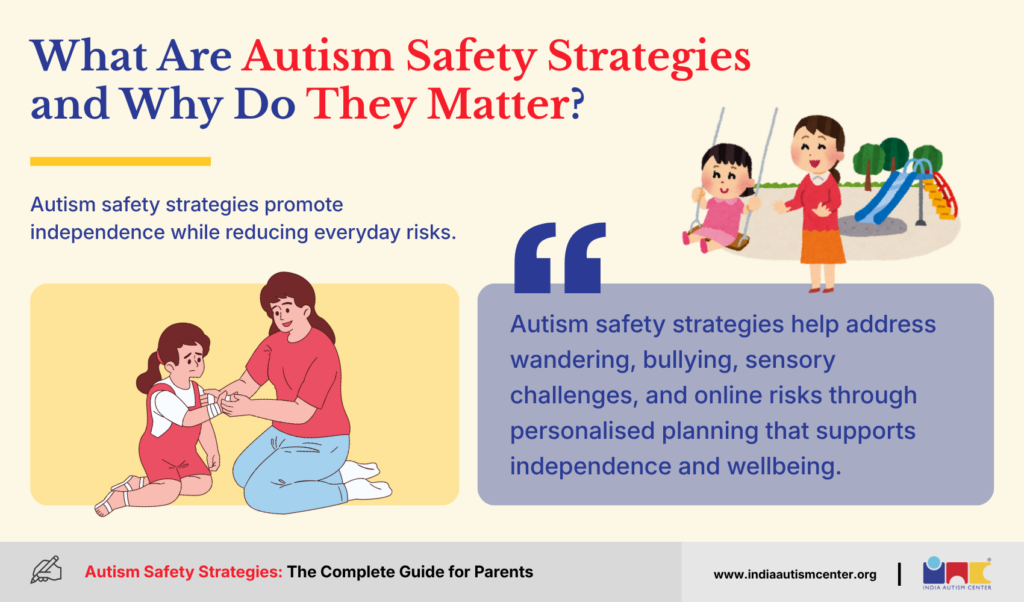
Autism safety strategies are structured approaches that help autistic individuals navigate daily life without unnecessary harm. They matter because autistic people face higher rates of wandering, bullying, and accidental injury than neurotypical peers. Safety planning isn’t about restriction. It’s about building independence with the right supports in place.
Research backs this up. A widely cited study published in Pediatrics found that nearly half of autistic children attempt to elope from a safe environment at some point. Autistic children are also significantly more likely to experience bullying than their peers, according to multiple special education surveys.
Here’s a quick snapshot of why this matters:
| Risk Area | Why It’s Elevated |
| Wandering/elopement | Attraction to water, difficulty with danger perception |
| Drowning | Leading cause of death among autistic children who wander |
| Bullying | Social communication differences make some children easier targets |
| Sensory injury | Overload can lead to disorientation in unsafe settings |
| Online safety | Difficulty reading social cues can increase scam vulnerability |
Safety isn’t one-size-fits-all. A strategy that works for a nonverbal seven-year-old won’t work for a verbal, independent adult. That’s why I’ve broken this guide down by environment, age, and specific challenge.
How Do Autism Sensory Issues Affect Safety?
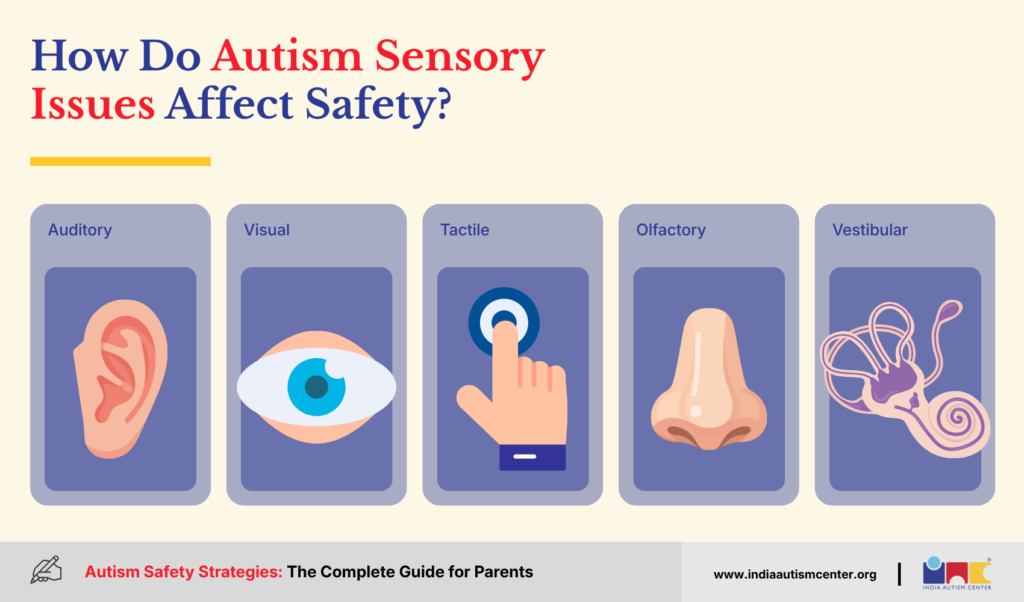
Sensory issues affect safety because sensory overload can cause disorientation, panic, or shutdown in situations that require quick, clear thinking. A person overwhelmed by noise, light, or crowds may not notice traffic, strangers, or exits. Managing sensory input is often the first layer of any safety plan.
Sensory triggers generally fall into five categories:
- Auditory — sirens, crowded restaurants, sudden loud noises
- Visual — flickering lights, crowded visual fields, bright sunlight
- Tactile — clothing textures, unexpected touch, certain food textures
- Olfactory — strong perfumes, cleaning products, food smells
- Vestibular — escalators, elevators, uneven surfaces
Identifying which triggers apply to a specific person is the real work. I recommend keeping a simple sensory log for two weeks — note the setting, the trigger, and the reaction. Patterns usually emerge quickly.
All You Need to Know About Sensory Challenges in Autistic Individuals
What Tools Help Manage Sensory Overload Safely?
Several tools can reduce sensory risk in real time. Each has a different use case:
| Tool | Best For | Notes |
| Noise-cancelling headphones | Crowded, loud spaces | More effective than earplugs for total noise blocking |
| Earplugs | Discreet, quick use | Good for unexpected noise triggers |
| Weighted lap pads | Calming during transit | Useful in cars, waiting rooms |
| Sunglasses/tinted lenses | Bright or flickering light | Helps in malls, hospitals |
| Fidget tools | Redirecting sensory need | Reduces risk of self-injury during overload |
A hug or hand-hold can help too, but only if the individual welcomes physical touch. Never assume — always ask or observe first.
What Are Effective Strategies for Preventing Wandering and Elopement?
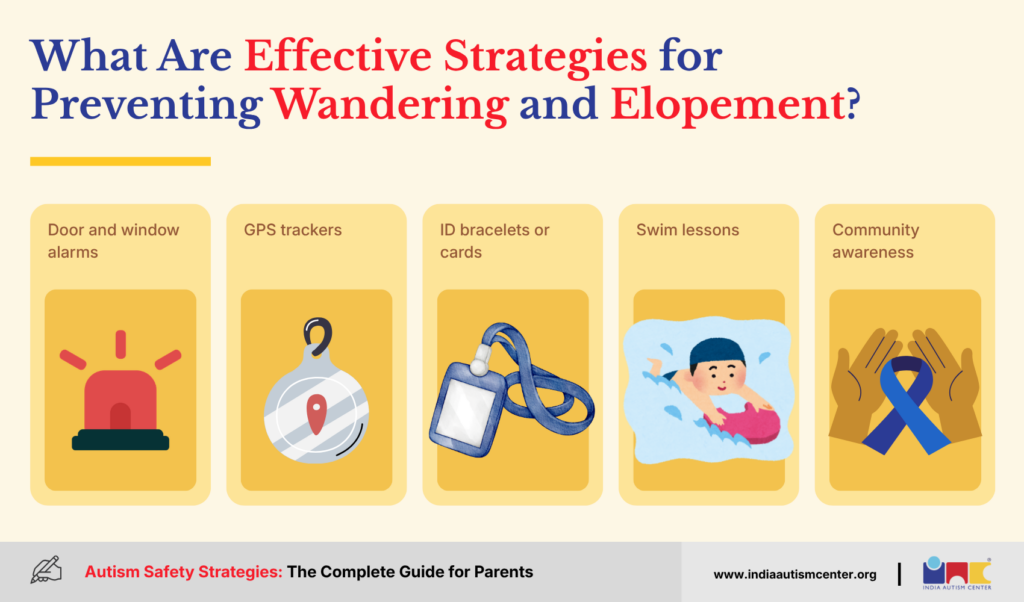
Wandering prevention starts with securing the home, using tracking tools, and teaching water safety early. Elopement is one of the most serious autism safety risks, and drowning is the leading cause of death among children who wander. A layered approach works best — no single tool is enough on its own.
Here’s what an effective wandering-prevention plan includes:
1. Door and window alarms — alert caregivers the moment an exit is used
2. GPS trackers — wearable devices or smartwatch apps that show real-time location
3. ID bracelets or cards — include name, diagnosis, and emergency contact
4. Swim lessons — adapted for sensory needs, started as early as possible
5. Neighbor and community awareness — informing nearby households reduces response time
What Should You Do If an Autistic Person Goes Missing?
Act immediately. Don’t wait to see if they return on their own. Check water sources first — pools, ponds, or nearby rivers — since drowning risk is highest in the first hour.
In India, contact your local police station and Childline at 1098 for missing children. Keep a recent photo and a written description, including any communication differences, ready in advance. Many families store this on their phone for instant access.
Want to know more? Get in touch with us.
How Can You Create Autism Safety at Home?
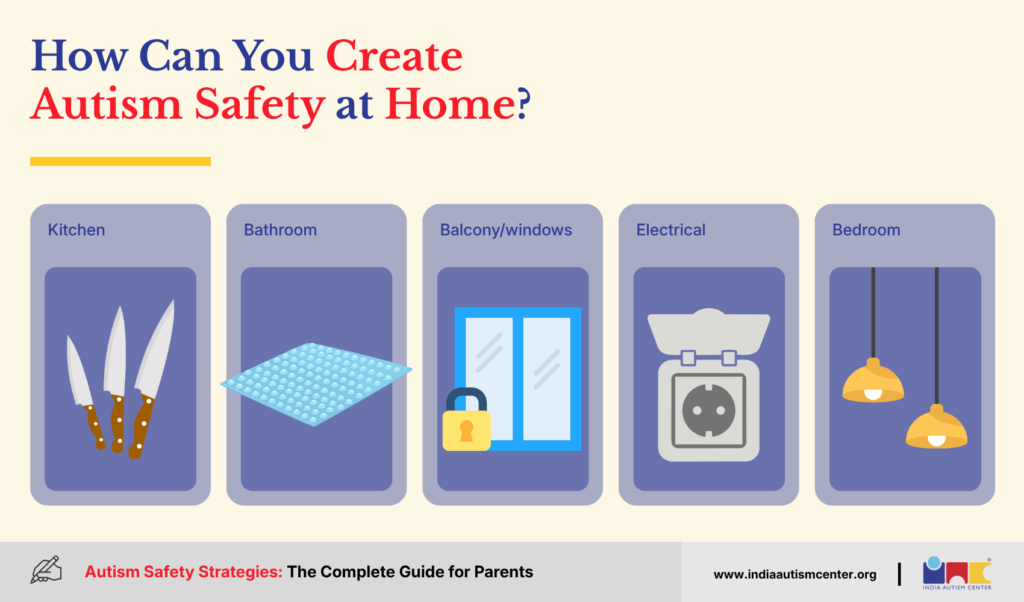
Home safety for autism means securing hazards while also creating a sensory-safe environment. This includes childproofing dangerous areas, installing alarms, and designing at least one calm space for regulation. Indian homes often have specific risks — open balconies, exposed wiring, and non-childproofed sockets — that need particular attention.
Go room by room:
| Area | Key Safety Steps |
| Kitchen | Lock away sharp objects, secure stove knobs, store cleaning chemicals high up |
| Bathroom | Non-slip mats, water temperature controls, lock medicine cabinets |
| Balcony/windows | Install grilles or safety locks, especially in multi-story homes |
| Electrical | Cover outlets, secure loose wiring, use surge protectors |
| Bedroom | Create a designated calm-down corner with soft lighting |
Fire safety deserves its own plan. Practice an escape route regularly, using visual cues or social stories if needed. Make sure smoke alarms use a sound the individual can tolerate, or pair audio alerts with visual strobe alarms.
What Does Autism Safety Look Like in Daily Life?
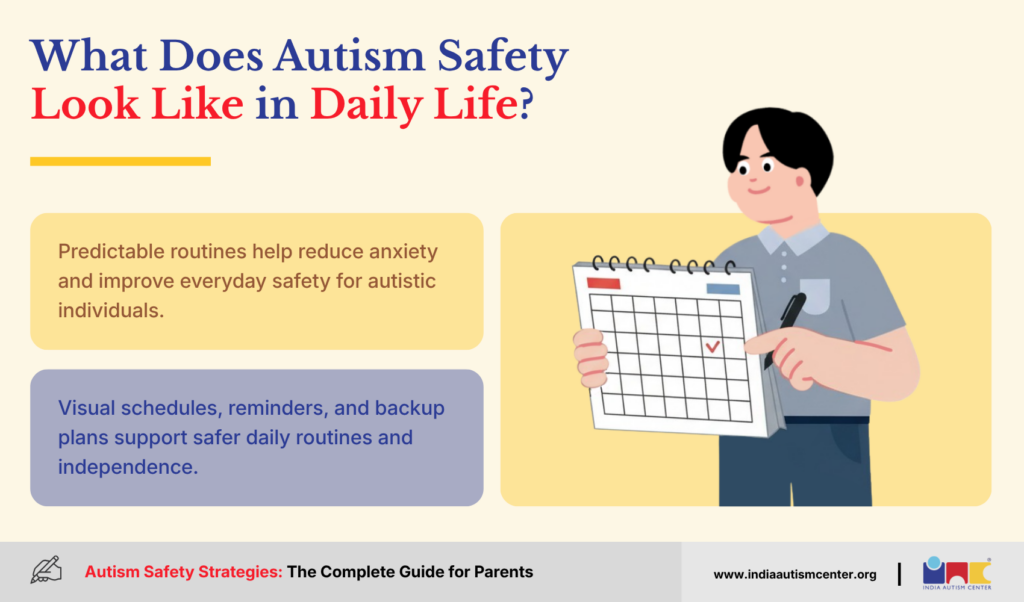
Daily safety for autism relies on predictable routines, which reduce anxiety and lower the chance of unsafe impulsive behavior. Consistent schedules for waking, eating, hygiene, and medication build a safety net around everyday tasks. When routines break down, risk tends to go up.
A strong daily safety routine typically includes:
- Fixed wake and sleep times, supported by alarms
- Visual schedules for hygiene tasks (brushing teeth, showering)
- Medication reminders, especially for adults managing their own care
- Backup plans for routine disruptions (what to do if the usual bus is late, or a store is closed)
Visual schedules and social stories aren’t just teaching tools. They’re safety tools. They reduce the uncertainty that often triggers distress in unfamiliar or changing situations.
📥 Free download: Printable daily routine chart for autistic children
How Do Autism Safety Strategies Differ Across Environments?
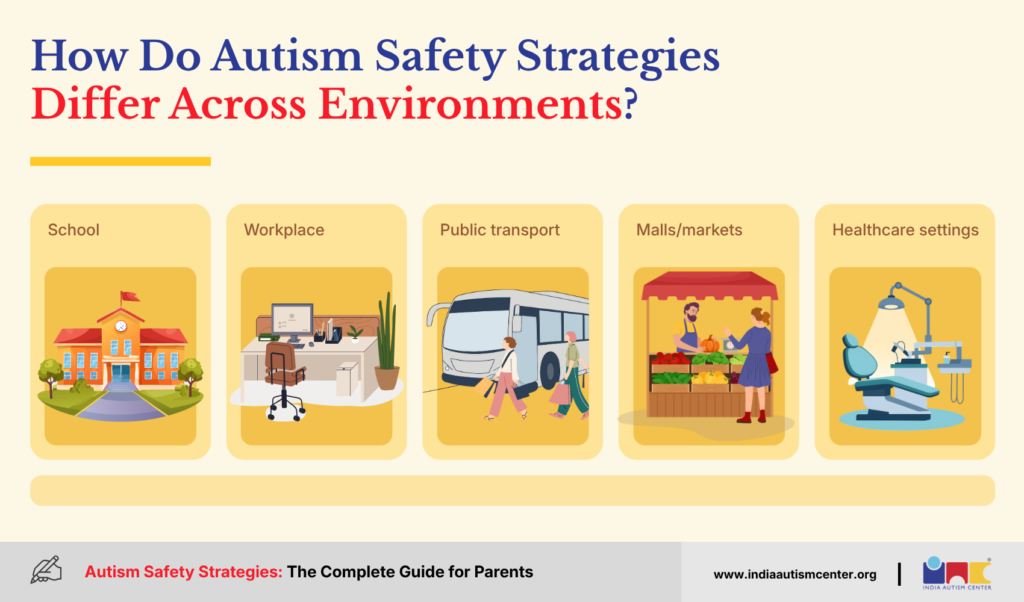
Safety strategies change depending on the environment, because each setting has different sensory demands and different risks. A school hallway poses different challenges than a crowded train platform. Matching the strategy to the setting is more effective than applying one generic rule everywhere.
| Environment | Main Risks | Key Strategies |
| School | Bullying, sensory overload, unclear rules | IEP-based accommodations, designated safe zones, peer buddy systems |
| Workplace | Miscommunication, sensory fatigue | Written instructions, noise-reducing accommodations, clear escalation paths |
| Public transport | Crowds, noise, getting lost | ID cards, offline maps, noise-cancelling headphones |
| Malls/markets | Overstimulation, separation risk | Meeting points, buddy system, visiting during off-peak hours |
| Healthcare settings | Unfamiliar procedures, sensory triggers | Pre-visit social stories, requesting quiet rooms, bringing comfort items |
In India, festivals, crowded markets, and unpredictable power cuts add extra layers of sensory risk. Planning outings around quieter hours, and carrying backup sensory tools in case of power outages, makes a real difference.
What Are Safety Tips for People on the Autism Spectrum in Public?
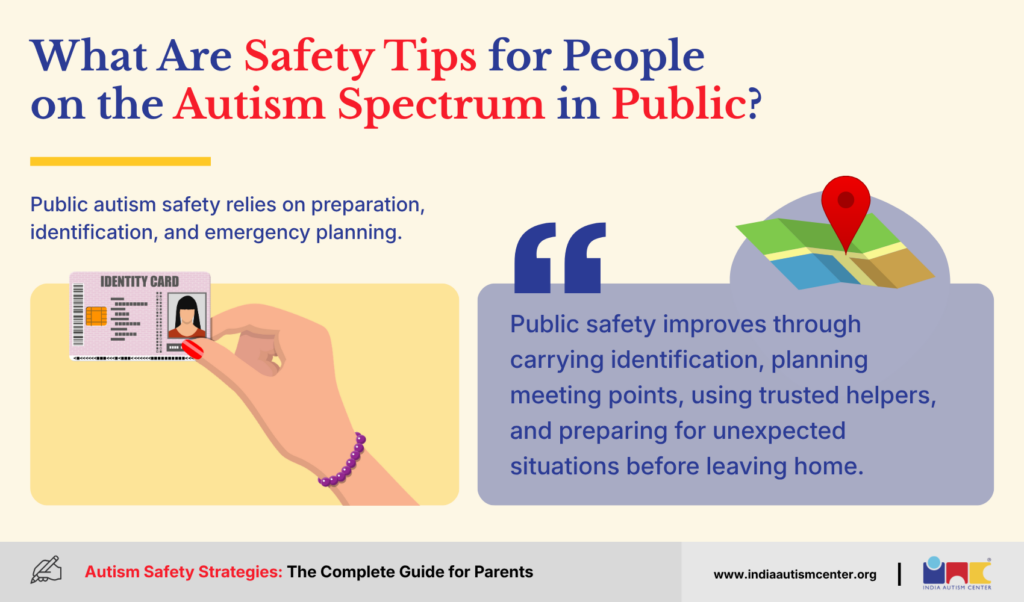
Public safety tips for autism focus on preparation: carrying identification, knowing meeting points, and understanding how to ask for help. These strategies apply to both children with a caregiver nearby and independent adults navigating public spaces alone.
Practical tips that work well:
- Carry an ID card with name, diagnosis (if disclosed), and emergency contact
- Set a meeting point before entering any crowded space
- Use offline maps in areas with poor signal
- Practice asking for help from identifiable staff — security guards, shopkeepers, or station staff
- Avoid unfamiliar shortcuts like alleys, even if they seem faster
If someone gets lost, the safest move is to stay in one place rather than searching randomly. Most safety experts recommend approaching a uniformed staff member or someone with a store badge over a random stranger.
What Safety Strategies Do Autistic Adults Need That Differ From Children’s?
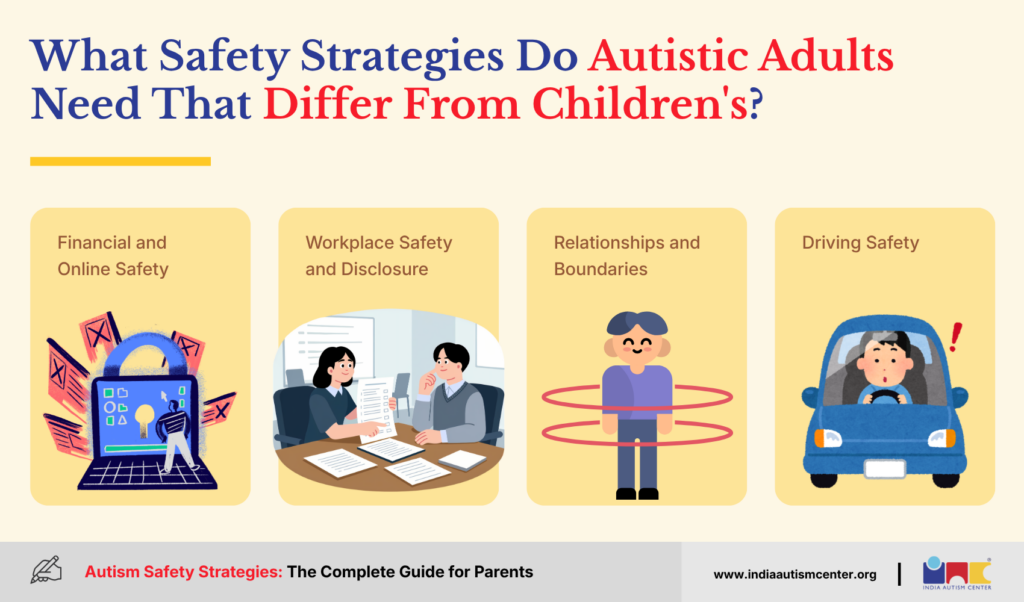
Autistic adults need safety strategies focused on independence — financial safety, workplace accommodations, and relationship boundaries — rather than constant supervision. As autonomy grows, the safety conversation shifts from prevention by caregivers to self-advocacy skills.
Financial and Online Safety
Scams and phishing attempts specifically target difficulty reading social cues. Autistic adults should:
- Never share OTPs, passwords, or bank details over calls or messages
- Treat “too good to be true” offers as red flags, always
- Use two-factor authentication on all financial apps
- Set a personal rule: wait 24 hours before responding to unexpected money requests
Workplace Safety and Disclosure
Deciding whether to disclose autism at work is personal. If accommodations are needed — noise-cancelling headphones, written instructions, or flexible seating — a formal conversation with HR, backed by medical documentation, usually works best.
Relationships and Boundaries
Healthy relationships develop slowly, with clear boundaries. It’s okay to say no to physical touch, social plans, or contact you’re not ready for. If a relationship ends, physical and mental self-care come first, and talking to a trusted person helps process the change.
Driving Safety
Some autistic adults drive confidently; others don’t drive at all. If driving, start with short, familiar routes, take regular breaks, and minimize in-car distractions like phone notifications.
Want to know more? Get in touch with us.
How Does Bullying Affect Autism and Safety, and How Can It Be Prevented?
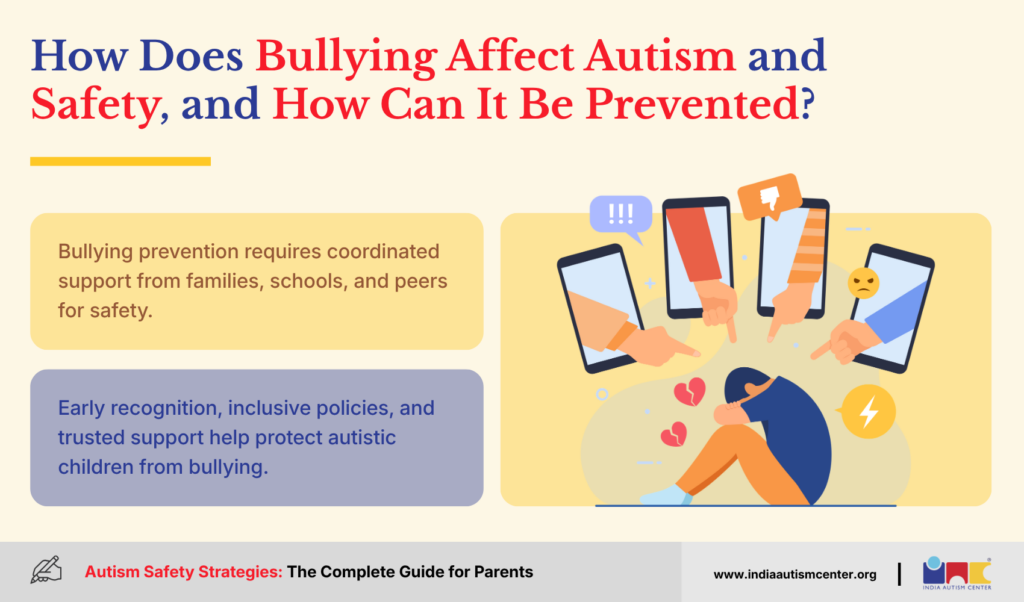
Bullying significantly affects autism safety, since autistic children are bullied at notably higher rates than their neurotypical peers, according to special education research. Left unaddressed, bullying contributes to long-term anxiety, depression, and low self-worth. Prevention requires action from schools, families, and peers together.
Warning signs parents should watch for:
- Sudden reluctance to attend school
- Unexplained injuries or missing belongings
- Withdrawal from previously enjoyed activities
- Increased meltdowns after school
What Can Schools and Families Do to Prevent Bullying?
Schools play a central role. Under India’s RPWD Act 2016, schools are required to provide an inclusive, safe environment for children with disabilities, which includes anti-bullying measures. Families can request specific accommodations through the school’s inclusion coordinator.
Effective prevention steps include:
- Training peers on neurodiversity through classroom sessions
- Assigning a trusted staff member as a point of contact
- Setting up a clear, confidential reporting system
- Connecting the child with mentors or peer support groups
If bullying has caused ongoing distress, a mental health professional can help address the emotional impact — this isn’t something to manage alone.
How Do You Manage Meltdowns and Sensory Overload Safely?
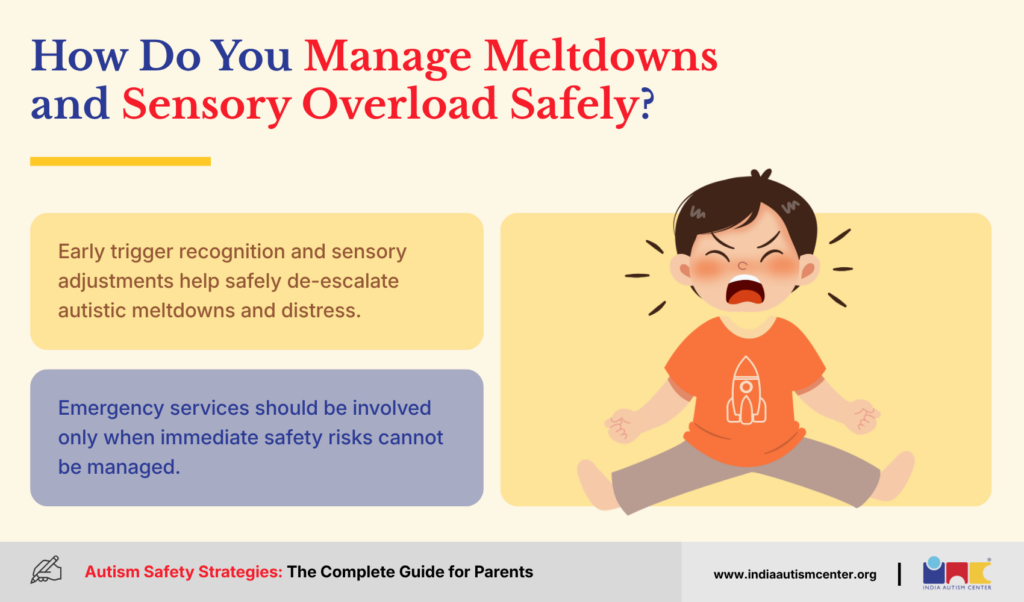
Managing a meltdown safely means recognizing early triggers, moving to a calm space, and avoiding punishment-based responses. A meltdown is a neurological response to overload, not defiance — this distinction shapes the entire safety approach.
Steps for safe de-escalation:
1. Identify the trigger early — sound, light, transition, or unexpected change
2. Move to a quieter space, if possible, before intensity peaks
3. Reduce sensory input — dim lights, lower noise, give space
4. Avoid physical restraint unless there’s immediate danger
5. Wait it out calmly — don’t demand explanations mid-meltdown
Calming tools that consistently help include weighted blankets, dim lighting, and familiar objects. Some individuals respond well to hand-holding; others need space entirely. Know the person’s preference in advance.
When Should You Involve Emergency Services?
Only when there’s a genuine risk of injury to the person or others. If police are called, tell them clearly that the person is autistic and may not respond to verbal commands the way they expect. Carrying an ID card that states this can prevent dangerous misunderstandings.
What Legal Protections and Government Resources Support Autism Safety in India?
India’s RPWD Act 2016 and the UDID card system provide legal and practical safety protections for autistic individuals. These tools aren’t just administrative — they directly support safety in emergencies, schools, and public services.
Key resources to know:
| Resource | What It Does |
| RPWD Act 2016 | Mandates reasonable accommodation and protection from discrimination |
| UDID Card | Serves as official ID, useful during emergencies and for accessing services |
| Childline 1098 | National helpline for missing or at-risk children |
| National Trust Act 1999 | Supports guardianship and welfare planning for autism |
Keeping a UDID card accessible — physically and as a phone photo — is one of the simplest, most effective safety steps a family can take.
What Should Go in an Autism Safety Plan?
A complete autism safety plan includes an emergency contact card, a medical and sensory information sheet, a home safety checklist, and a school or workplace accommodation plan. Having this written down, not just remembered, matters during high-stress moments.
At minimum, include:
- Full name, diagnosis, and emergency contacts
- Communication notes (verbal, nonverbal, uses AAC device, etc.)
- Known sensory triggers and calming strategies
- Medication list and dosages
- Preferred de-escalation approach
Review and update this plan every six months, or after any major life change.
Frequently Asked Questions
What are the most important autism safety strategies to start with?
Start with wandering prevention and a written emergency plan. These address the highest-risk areas first, before moving to daily routine and sensory strategies.
How can I keep an autistic child safe from wandering?
Use door alarms, GPS trackers, and enroll the child in adapted swim lessons early. Inform neighbors so response time stays short if wandering happens.
What should be included in an autism ID card?
Include the person’s name, diagnosis, communication style, emergency contact, and any relevant medical information. A UDID card works well for this in India.
How do I childproof a home for both safety and sensory needs?
Secure physical hazards like sharp objects and outlets, and separately create a low-sensory calm space. Both layers work together, not as replacements for each other.
Are there government safety resources for autistic individuals in India?
Yes. The RPWD Act 2016, UDID card system, and Childline 1098 all offer direct, practical support for autism safety.
How is safety different for autistic adults compared to children?
Adult safety focuses on independence — financial literacy, workplace accommodations, and relationship boundaries — rather than constant supervision.
This article is for educational purposes only and does not replace individualized guidance from a qualified medical, psychological, or legal professional. Every autistic person’s safety needs are different — please consult a specialist for advice tailored to your situation.
For expert insights, support services, and inclusive learning initiatives, visit the India Autism Center.