 Donate now
 Get a Call Back
 MENU
MENU 8 MIN READ
 SHARE
SHARE


Maternal oxytocin and autism have a crucial connection, which can change a lot of things. A 2026 study in Scientific Reports found that poor early maternal care can trigger autism-like traits in offspring. Giving oxytocin to mothers with a history of early-life stress improved their caregiving. This, in turn, prevented the same traits from appearing in their pups. The maternal environment itself may be a modifiable factor in neurodevelopmental risk.
I want to walk you through this study in plain language. I’ll explain what the researchers did, what they found, and what it actually means — and doesn’t mean — for parents and clinicians. This is animal research, not a human treatment protocol. But it’s a meaningful piece of the autism puzzle, and it deserves a clear explanation.
What Did This New Study Actually Investigate?
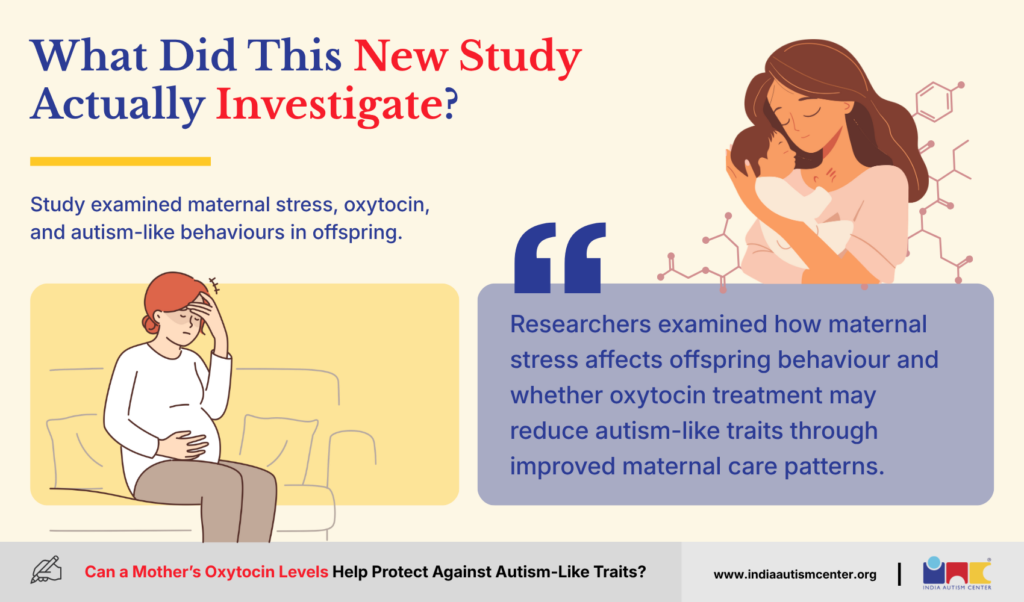
Researchers at Shahid Beheshti University in Tehran asked two connected questions. First, does poor maternal care caused by early-life stress lead to autism-like behaviour in offspring? Second, can giving oxytocin to stressed mothers reverse that effect?
The study was published in Scientific Reports on 8 July 2026. It’s authored by Fatemeh Barzi, Monireh Mansouri, Mohammadreza Bigdeli, and Hamid Reza Pouretemad. It was funded by Iran’s Cognitive Sciences & Technologies Council.
The paper is currently an early-access, unedited manuscript. That means the findings are real and peer-reviewed enough to publish, but formatting and minor edits are still pending. I’ll flag this again in the limitations section.
Why Study Rats to Understand Human Autism?
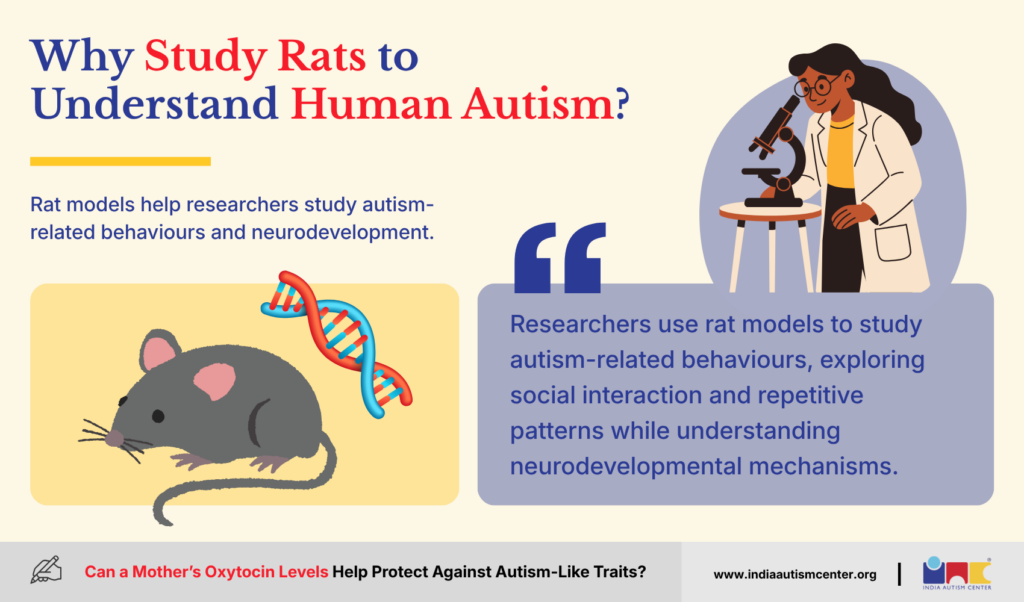
Rat models are a standard tool in neurodevelopmental research. Rats share key brain structures and hormone systems with humans, including the oxytocin system. Researchers can control variables in rats — like exact caregiving conditions — that would be impossible to control in human families.
This doesn’t mean rat behavior equals human autism. It means specific rat behaviors are used as proxies for core autism traits. Reduced social interaction and repetitive movements in rats mirror the two core domains used to diagnose autism spectrum disorder (ASD) in humans.
Want to know more? Get in touch with us.
How Did Researchers Disrupt Maternal Care in the Study?
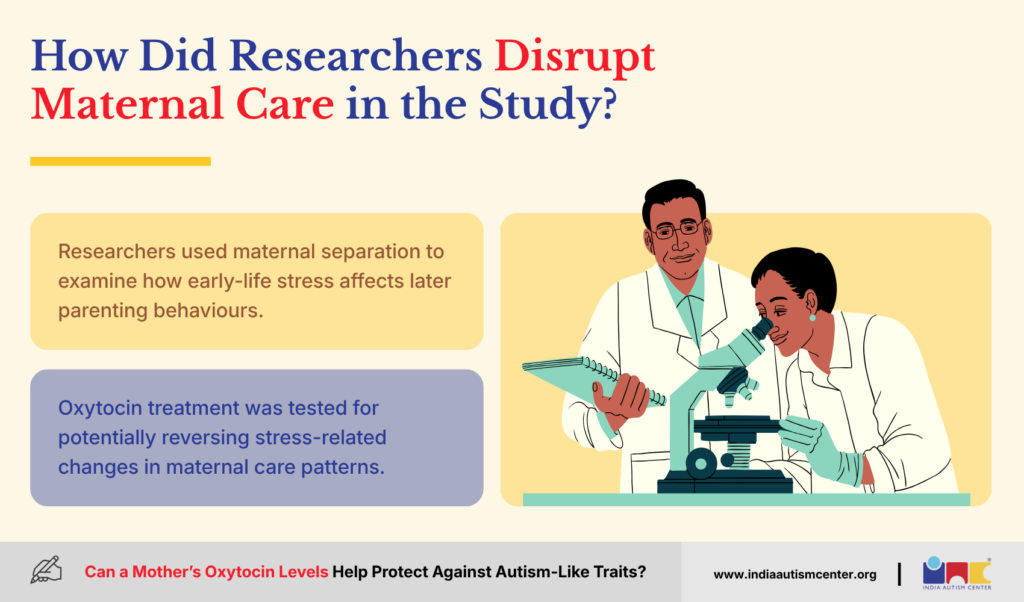
The researchers used a well-established method called maternal separation (MS). Female rat pups were separated from their mothers for three hours a day, every day, from postnatal day 1 to day 14. This is their first two weeks of life.
These separated pups grew up and eventually became mothers themselves. As adults, they were split into three groups:
- Control group: Normal rearing, no separation history, no treatment
- MS + Saline group: Separation history, given a placebo (saline) as adults
- MS + OXT group: Separation history, given intranasal oxytocin as adults
This design let researchers isolate one specific question. Does early-life stress in a mother change how she parents her own offspring later — and can oxytocin interrupt that chain?
What Happened to Mothers With a History of Early Separation?
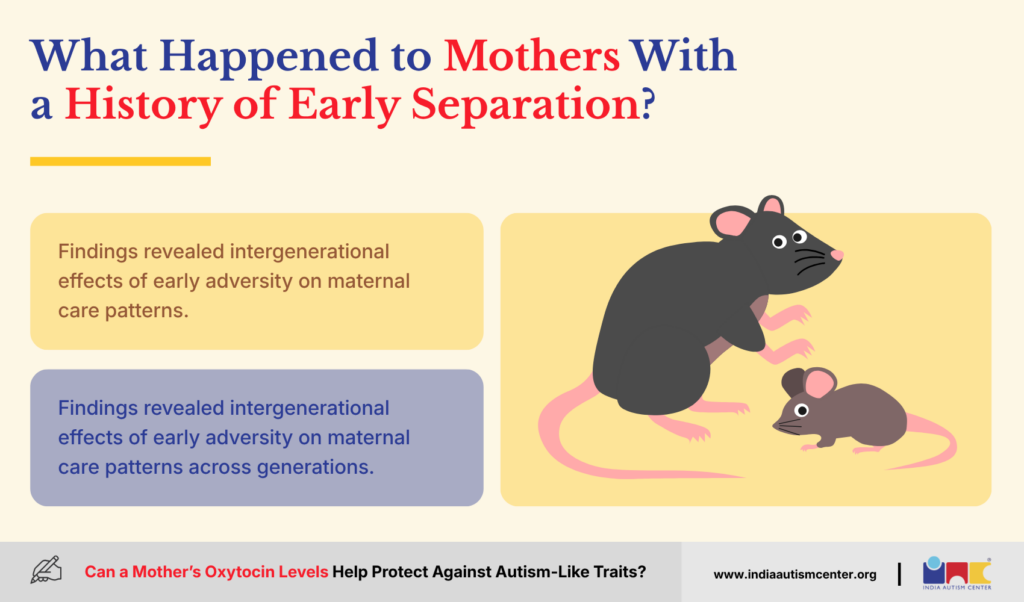
Dams (mother rats) with an MS history showed impaired maternal care toward their own pups. This showed up in two measurable ways.
- Reduced nursing behavior. MS-history mothers nursed their pups less frequently than control mothers.
- Increased harmful behaviors. These mothers displayed more rough or neglectful behaviors toward their pups compared to controls.
This finding fits a known pattern in developmental biology. Mothers who experienced poor early care themselves are more likely to show disrupted caregiving as adults. Researchers sometimes call this an intergenerational cycle of early adversity.
Did Oxytocin Actually Change Maternal Behavior?
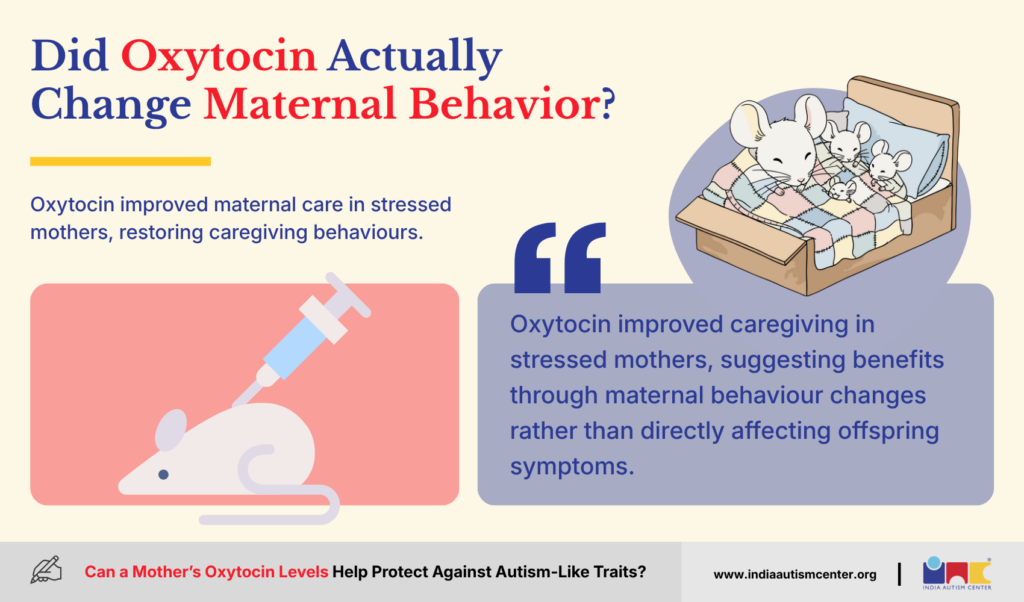
Yes. Mothers with an MS history who received intranasal oxytocin (0.8 IU/kg, given daily from postnatal day 1 to day 14 of their own pups’ lives) showed significantly improved maternal care. Their nursing and caregiving behaviours moved closer to control-group levels.
This is the study’s central mechanism. Oxytocin wasn’t given to the pups showing symptoms. It was given upstream, to the mothers, before problems could develop in the next generation. That distinction matters, and I’ll come back to it.
What Autism-Like Traits Appeared in the Offspring?
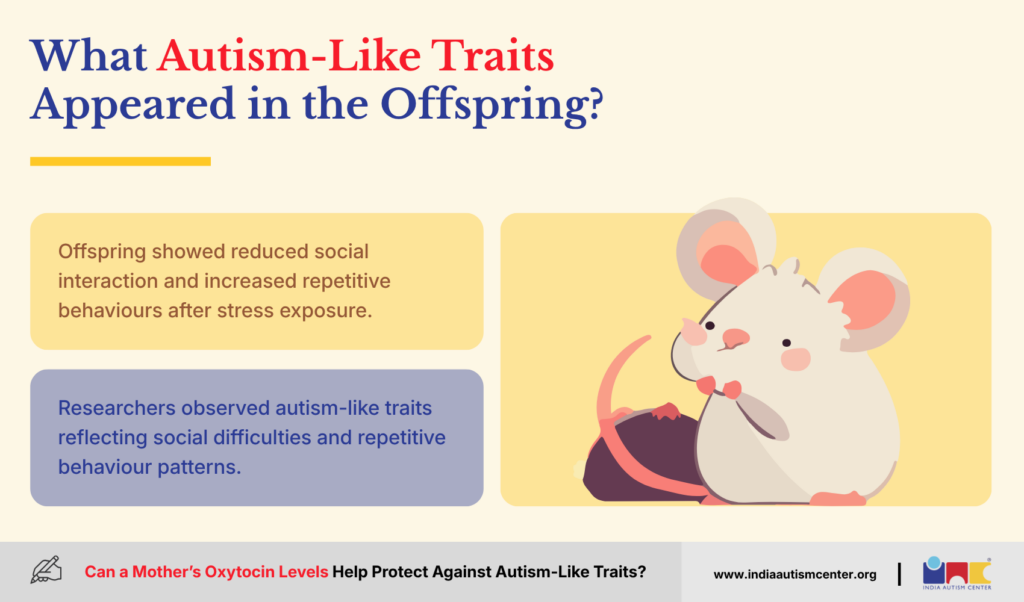
The male offspring of MS+Saline mothers were evaluated during adolescence. Researchers tested two behavior domains that map onto core ASD diagnostic criteria in humans.
| Behavior domain | What was measured | Result in MS+Saline offspring |
| Social behavior | Interaction and engagement with other rats | Significant deficits |
| Repetitive behavior | Stereotyped, repeated movement patterns | Significant increase |
These are the same two domains — social communication difficulties and restricted/repetitive behaviours — that clinicians look for when diagnosing autism in children. That parallel is why researchers describe these traits as “autism-like.”
Want to know more? Get in touch with us.
What Was Happening Inside the Offspring’s Brains?
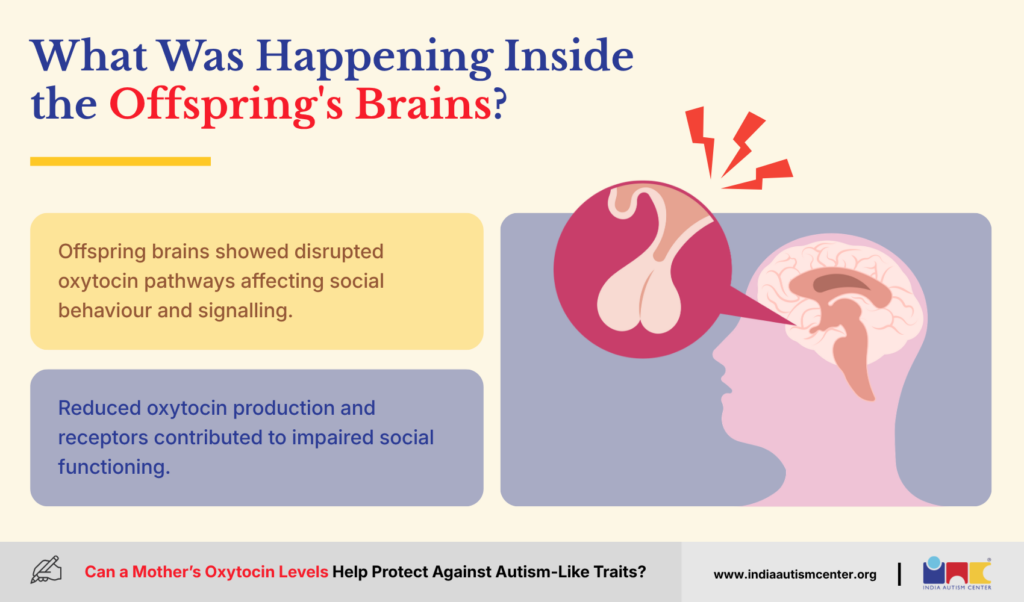
Behaviour alone doesn’t explain the mechanism. The researchers also examined two specific biomarkers in the offspring’s brains.
- Hypothalamic oxytocin (OXT) expression. The hypothalamus produces oxytocin, a hormone central to bonding and social behavior.
- Hippocampal oxytocin receptor (OXTR) expression. The hippocampus needs oxytocin receptors to actually respond to circulating oxytocin.
In MS+Saline offspring, both were reduced. Lower OXT production paired with fewer receptors to detect it. This combination likely explains why social behavior was impaired — the brain’s oxytocin signaling pathway was disrupted at two points at once.
Did Oxytocin Treatment Reverse the Brain Changes Too?
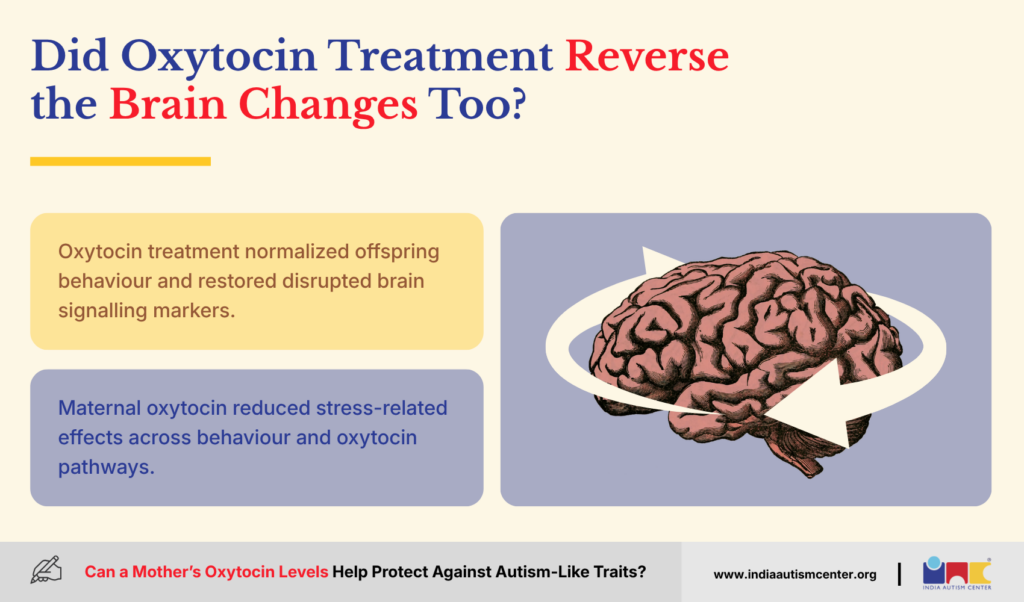
Yes. In offspring of MS+OXT mothers, both the behavioral deficits and the brain-level abnormalities were largely normalized. Their hypothalamic OXT and hippocampal OXTR expression looked closer to control-group levels than to MS+Saline levels.
Here’s the full picture in one table.
| Group | Mother’s early history | Mother’s treatment | Offspring behavior | Offspring OXT/OXTR |
| Control | Normal rearing | None | Typical social behavior | Normal levels |
| MS + Saline | Early separation | Placebo | Social deficits, repetitive behavior | Reduced OXT and OXTR |
| MS + OXT | Early separation | Intranasal oxytocin | Near-normal behavior | Near-normal OXT and OXTR |
Does This Mean Oxytocin Could Prevent Autism in Humans?
No, not directly. This is a preclinical, animal study. It doesn’t establish a human treatment protocol, and it shouldn’t be read as one.
There’s an important distinction to hold onto here. Some human oxytocin research has tested giving oxytocin directly to children with autism, with mixed results. This study did something different. It gave oxytocin to mothers, before problems developed, to improve their caregiving capacity. The mechanism is upstream and environmental, not a direct pharmacological fix for a child’s symptoms.
What this study does support is a broader idea: early caregiving quality is biologically consequential, not just a “soft” or secondary factor in neurodevelopment. That’s a testable, useful hypothesis — not a clinical recommendation.
How Does This Fit With What We Already Know About Autism Causes?
Autism has no single cause. Genetics play a substantial role, and no maternal-care study changes that. What this research adds is one more environmental variable to a complex, multi-factor picture.
Other research groups have reported related findings using different models. Studies on maternal diabetes, prenatal hormone exposure, and adverse childhood experiences have all pointed to the oxytocin system as a common downstream pathway. This Tehran-based study adds early maternal separation and maternal-directed oxytocin treatment to that growing list.
The consistent theme across this research is that the oxytocin system sits at a biological crossroads. Multiple types of early adversity — genetic, hormonal, or environmental — seem to converge on it. That makes it a promising area for further study, not a settled explanation.
What Does This Mean for Early Intervention Programs?
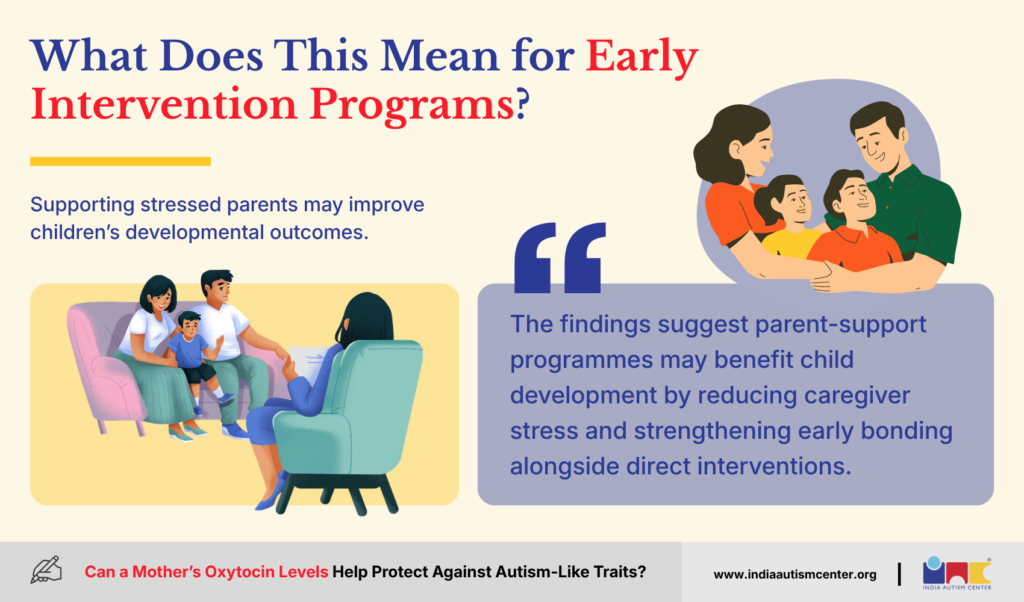
This study reinforces something many early-intervention practitioners already emphasize. Supporting parents — especially parents under stress — may have downstream benefits for child development that go beyond convenience or wellbeing.
Programs that support parental mental health, reduce caregiver stress, and strengthen early bonding aren’t just “nice to have.” This research suggests they may interact with the same biological systems implicated in neurodevelopmental risk. That’s a reason to take parent-support programs seriously as part of a broader early-intervention strategy, alongside — never instead of — direct therapeutic work with children.
What Are the Limitations of This Study?
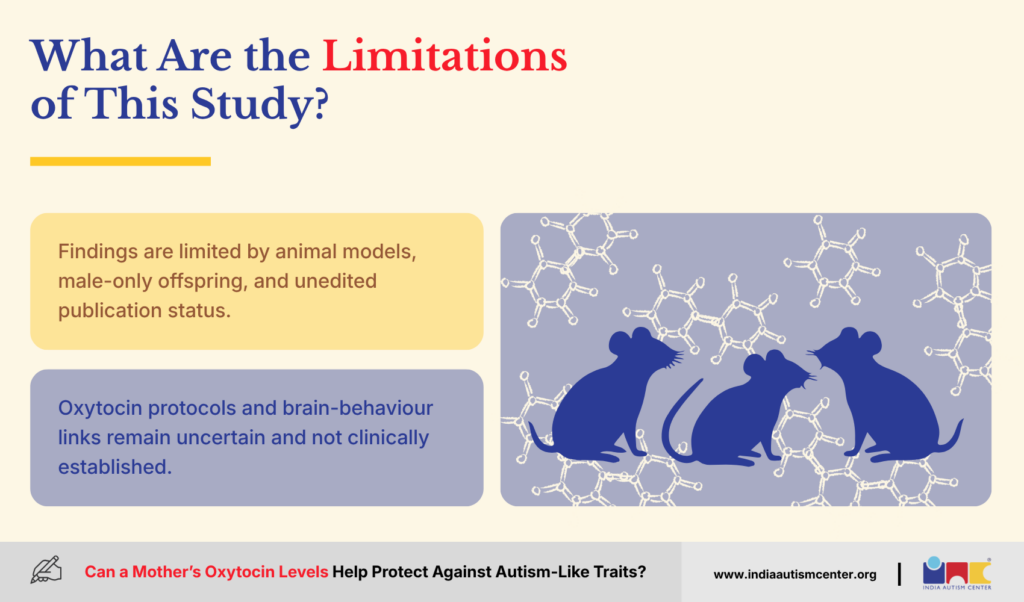
I want to be direct about what this study doesn’t tell us.
- Only male offspring were studied. Female offspring outcomes remain unknown.
- It’s a rat model. Human translation is not established or guaranteed.
- It’s an early-access, unedited manuscript. Minor details may still change before final publication.
- The oxytocin dose and timing used here don’t map onto any approved human protocol. This is a research tool, not a treatment guide.
- Correlation between brain markers and behaviour doesn’t prove a single causal pathway. Other mechanisms may contribute alongside oxytocin signalling.
📥 Free download: Printable daily routine chart for autistic children
Frequently Asked Questions
Does oxytocin cure autism?
No. This study didn’t test a cure. It tested whether treating stressed mothers with oxytocin could prevent autism-like traits from developing in their offspring, in a rat model.
What is “maternal separation” in this study?
It’s a standard research method where rat pups are separated from their mothers for a set period each day during early life, used to model early-life stress.
Was this study done on humans or animals?
Animals. Specifically, laboratory rats. No human subjects were involved.
What’s the difference between oxytocin and oxytocin receptors?
Oxytocin is the hormone itself. Oxytocin receptors (OXTR) are the proteins that let brain cells detect and respond to that hormone. Both need to be functioning for oxytocin signalling to work properly.
Can a stressed mother “cause” autism in her child?
This study doesn’t support that conclusion for humans. It identifies one modifiable environmental factor in a rat model. Autism has strong genetic underpinnings, and no single study establishes maternal stress as a human cause.
Disclaimer: This article is intended for educational purposes only. It summarises findings from a preclinical animal study and should not be interpreted as medical advice, a treatment recommendation, or a statement about the causes of autism in humans. If you have questions about autism diagnosis, intervention, or family support, please consult a qualified healthcare professional or developmental specialist.
For expert insights, support services, and inclusive learning initiatives, visit the India Autism Center.